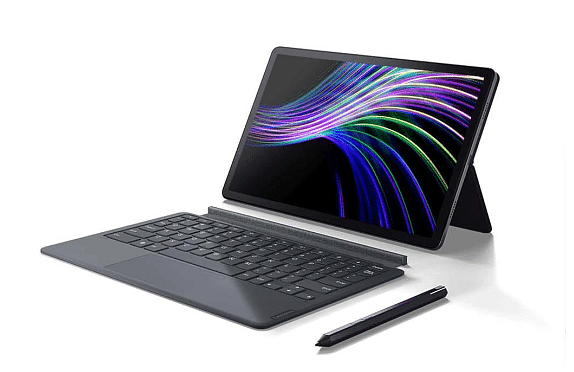
The Lenovo Tab P11 Plus comes with an 11-inch IPS LCD display, 400 nits of brightness, and a 70 percent NTSC color gamut.
The tablet comes with a MediaTek Helio G90T processor and 6GB of RAM and 128GB of internal storage.
The back camera flaunts a 13MP camera and you will find an 8MP camera on the front.
Lenovo has announced the launch of the new tablet in India on Wednesday. The Lenovo Tab P11 Plus has a 2K resolution along with a big battery. Besides, you will get Dolby Atmos speakers and a MediaTek processor.
Lenovo Tab P11 Plus Tablet: Specifications
The Lenovo Tab P11 Plus has an 11-inch IPS LCD display along with a 2000 x 1200 pixels resolution. It has 400 nits of brightness, TUV Rheinland’s blue light emission certification, and a 70 percent NTSC color gamut.
The device is powered by the MediaTek Helio G90T processor that is paired with 6GB of RAM and 128GB of internal storage. The tablet also comes with expandable memory of up to 356GB via memory card.
In addition, the tablet comes with a single LTE variant, which means you cannot insert the SIM into the tablet. On the imaging front, the newly launched tablet has a 13MP single camera on the back and an 8MP selfie camera on the front.
You will also find facial recognition support, whereas there is a fingerprint scanner. It has a 7,700mAh battery along with support for up to 20W fast charging. In addition, Lenovo said that the tablet offers 15 hours of usage on a single charge.
Also, the tablet has four stereo speakers with Dolby Atmos support. It also has a dual microphone setup. However, the tablet runs Android 11 out of the box that is because of tablet was launched in 2021 in other markets and now it has been launched in the country.
In addition, the tablet comes with dual-band Wi-Fi, Bluetooth v5.1, 4G, and GNSS. Furthermore, the tablet has 7.5 mm thick and weighs 490 grams.
Lenovo Tab P11 Plus: Price In India
The 6GB of RAM and 128GB of internal storage tablet are priced at Rs. 25,999. It is available in the Slate Grey Colour option and comes with a one-year warranty.
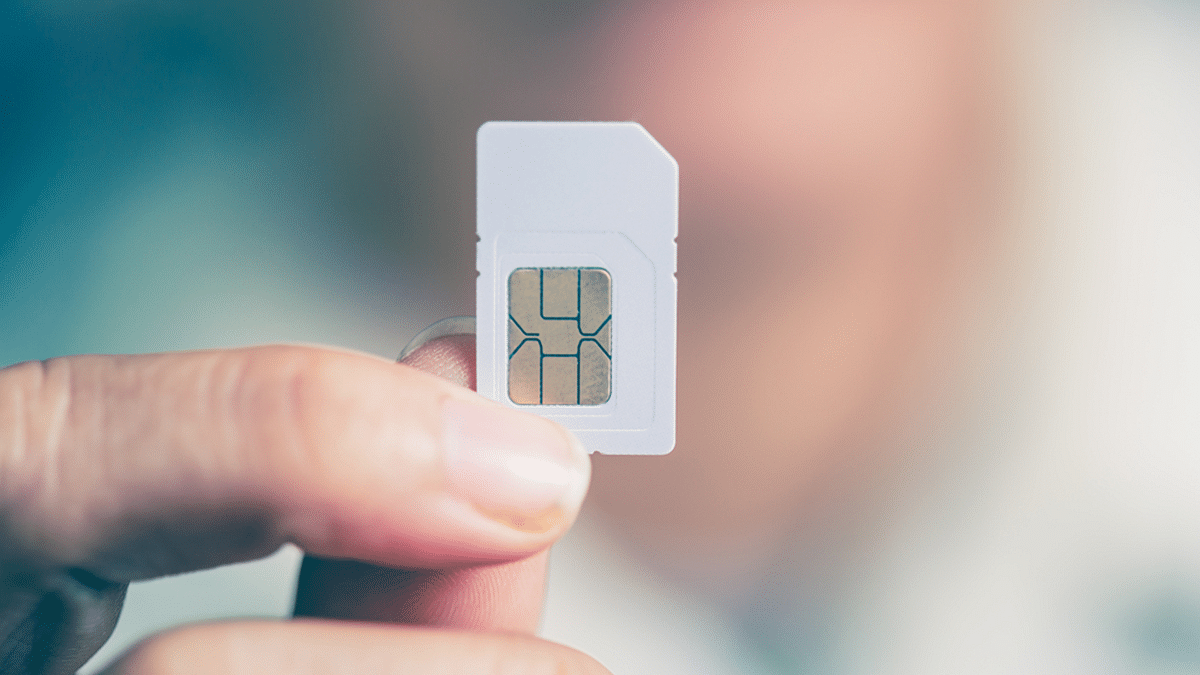
SIM or Subscriber Identity Module is a card that stores all data related to contacts, messages, and more. The SIM card allows you to enjoy several services that have been offered by the telecom operators (Reliance Jio, Airtel, Vodafone-Idea, and BSNL) to your device.
It is worth noting that SIM not provisioned message is common that arrives when customers insert a new SIM card into the phone. In addition, the same message also arrives when your SIM has not been activated. However, there are several ways that allow you to check or resolve this issue. So, in order to help you to find out the ways to resolve this same issue, you have to follow these steps.
How To Resolve SIM Provisioned Error
Step 1: First, you need to restart your phone to remove the network congestion. So, it is suggested to restart your mobile phone before trying other methods and there are high chances that the error message will be removed.
Step 2: In case restarting doesn’t solve the issue, then you have to insert your SIM again. In case SIM is not inserted properly. In fact, there are chances that you are facing network-related issues. However, you have to check before inserting the SIM. There might be a case where you have to change the SIM if you are receiving the same popo message on the other phone too.
Step 3: You also need to check the SIM activation. Notably, a new registered SIM card takes 24 to 48 hours the activation. So, this message usually appears at the time.
Step 4: Even after applying all these steps your issue has not been resolved, then, you need to call your telecom operator as there can be an issue at the server end that can be only resolved from their end.
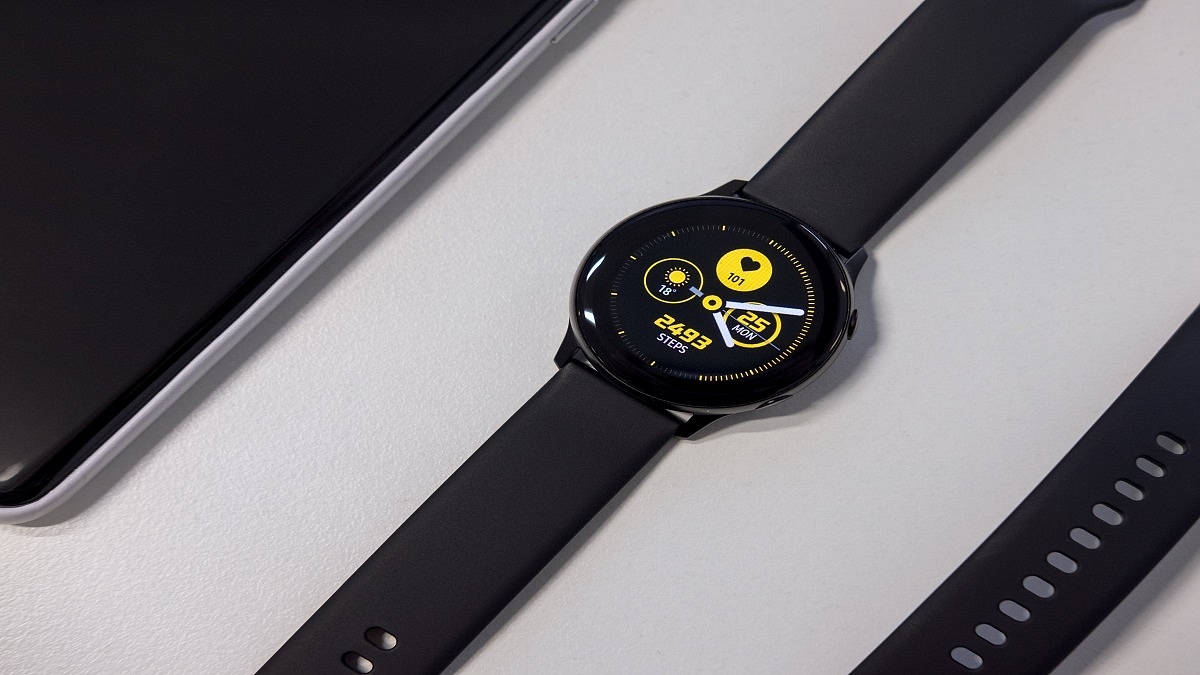
Who doesn’t love a smartwatch these days? Whether it is for fitness or health-related features or simply as a fashion accessory, now more people are looking for smartwatches than ever before.
But with so many budget options in the market right now, purchasing a smartwatch can be a little challenging. While it may appear to be a wonderful deal for buyers on a budget, there is more to it than meets the eye. To make things simpler, we have streamlined the process and provided a list of the important factors you should take into account before purchasing a new smartwatch.
Display
The display’s capabilities and quality must be taken into account. Just like smartphones, the display is a core component of any smartwatch because it shows all the information. It lets you interact with the watch itself. Therefore, it is recommended to select a smartwatch with a good display that can work well indoors and also outdoors, particularly under direct sunlight.
Make sure that the display has a responsive touch system and high-quality protective glass. The latter is crucial and worth considering because a subpar touch response might ruin the user experience.
Battery
Before purchasing a smartwatch, it’s crucial to take its battery into account. The battery in smartwatches doesn’t last as long as those in fitness bands. Smartwatches with plenty of functions such as cellular support, integrated GPS, constant heart rate monitoring, and other biometric sensors, typically require overnight charging to offer you a day’s worth of charge.
However, by disabling these features, the battery might be extended to more than a day. Budget and midrange smartwatches typically have a longer battery life, with some models claiming to operate for several days.
Connectivity
Today’s most popular smartwatches come equipped with connectivity options like Bluetooth, Wi-Fi, and a built-in GPS. Some of the more expensive ones also provide an optional cellular LTE connectivity option that allows you to set up an eSIM in addition to your standard SIM card. You can use a smartwatch without being linked to a smartphone if it has cellular and GPS connectivity. This eliminates the need for the smartphone and lets you use the smartwatch to go for walks and runs, make phone calls, or navigate with the built-in GPS.
App Support
When considering a good smartwatch, this is something that is often overlooked. A broad variety of third-party apps are supported by both Google Wear OS and Apple WatchOS with some that can be installed on the watch itself using their dedicated app stores. Rather than relying on a paired smartphone to push notifications, essentially apps can directly run on the watch.
POCO has established itself as one of the most powerful contenders in the value flagship Android smartphone segment. The Xiaomi sub-brand has created its niche with pocket-friendly 5G smartphones. The Poco M and the Poco X series are currently the brand’s bet in this market. The latter got refreshed earlier with the Poco X4 Pro 5G. It has arrived as the successor to the Poco X3 Pro which has been one of the best mid-range phones in the country.
The new-generation model is introduced with advanced hardware such as the latest Snapdragon 600 series processor, 64MP triple camera module, and 67W fast charging technology. And you pay an asking price of Rs. 18,999 for the Poco X4 Pro 5G’s base model which packs 6GB RAM+64GB storage.
If you need some additional space or RAM, you can also go for the 6GB RAM+ 128GB storage model or the 8GB/256GB variant priced at Rs. 19,999 and Rs. 21,999 respectively. With multiple 5G Android phones available in this price bracket, does the POCO X4 Pro 5G makes the cut? Here in this review, you can read our feedback on the POCO X4 Pro 5G:
POCO X4 Pro 5G Full Review: Design And Display
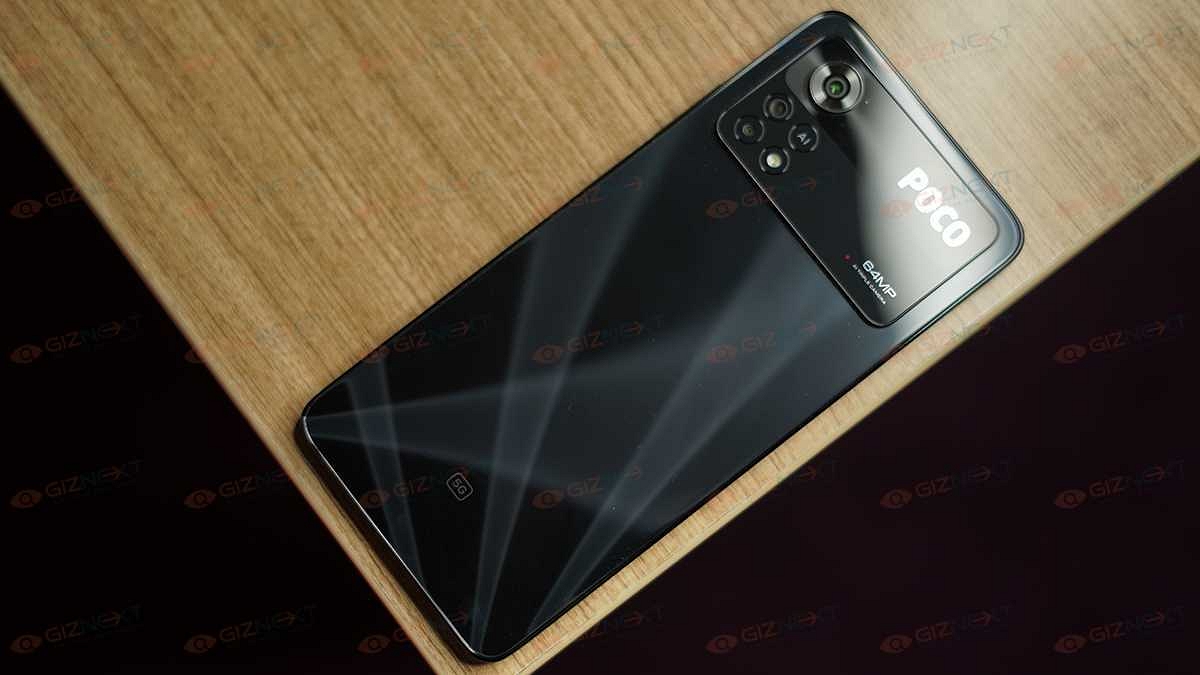
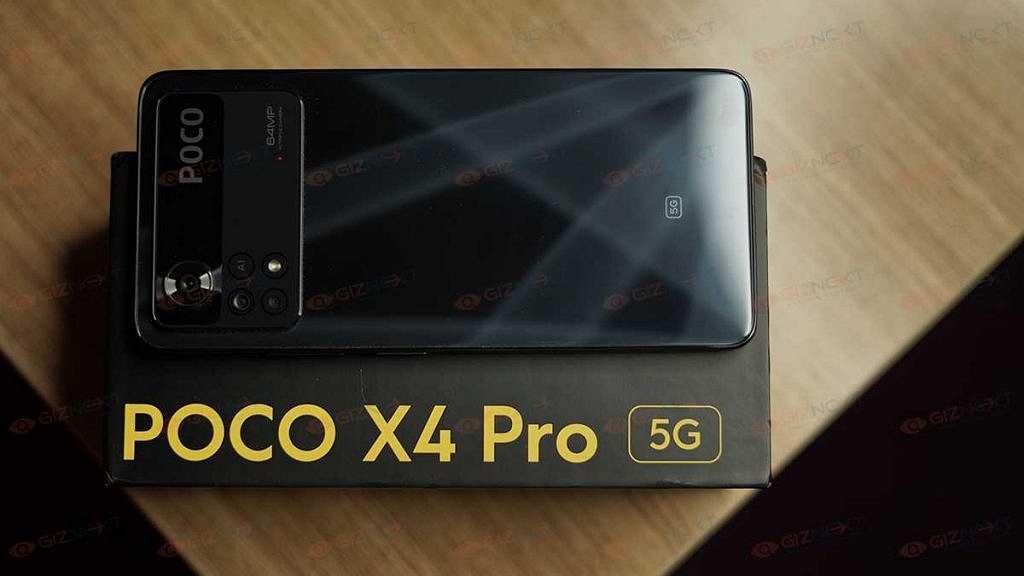
The POCO X4 Pro 5G flaunts one of the most striking designs in the mid-range segment. You can buy this phone in the iconic Poco Yellow shade, Laser Blue, and Laser Black shades. We received the black color variant of the latest POCO X series phone which wears a shimmering screen that reflects patterns with light rays falling on it. POCO has used a glass-back design which definitely is one of the USPs under Rs. 20,000.
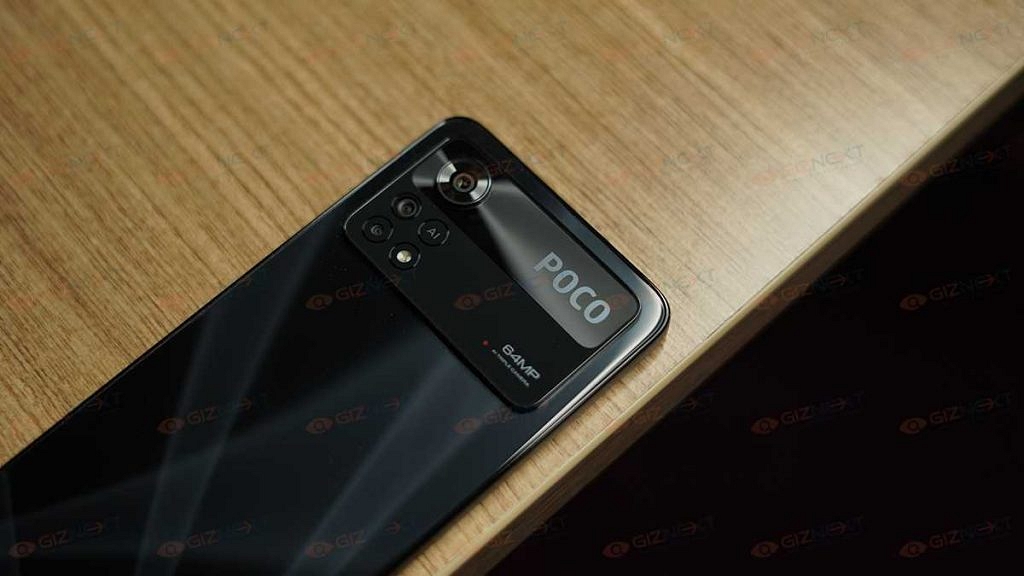
There is a large camera module that covers almost one-third of the upper panel and has a dual-tone finish and protruding design. This entire combination makes the device all premium in looks. While the glass back on the POCO X4 Pro 5G is visually appealing, it is one big fingerprint magnet.
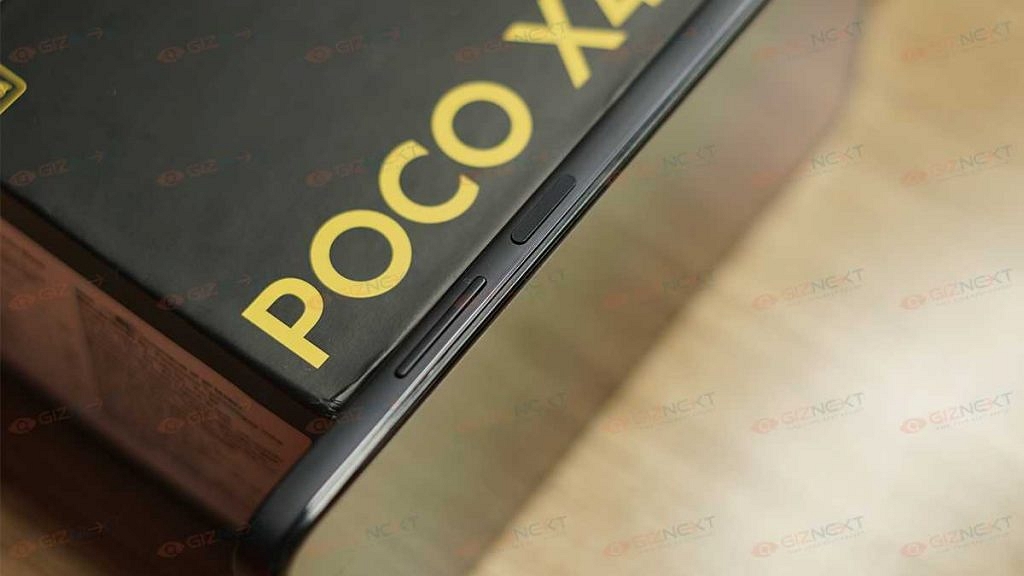
Using a transparent TPU case will not just keep fingerprints and smudges at bay but will also let you show off the cool design while adding protection against scratches and accidental drops. Poco has kept the left panel of the X4 Pro 5G barren, placing the power key and the volume rockers on the right.
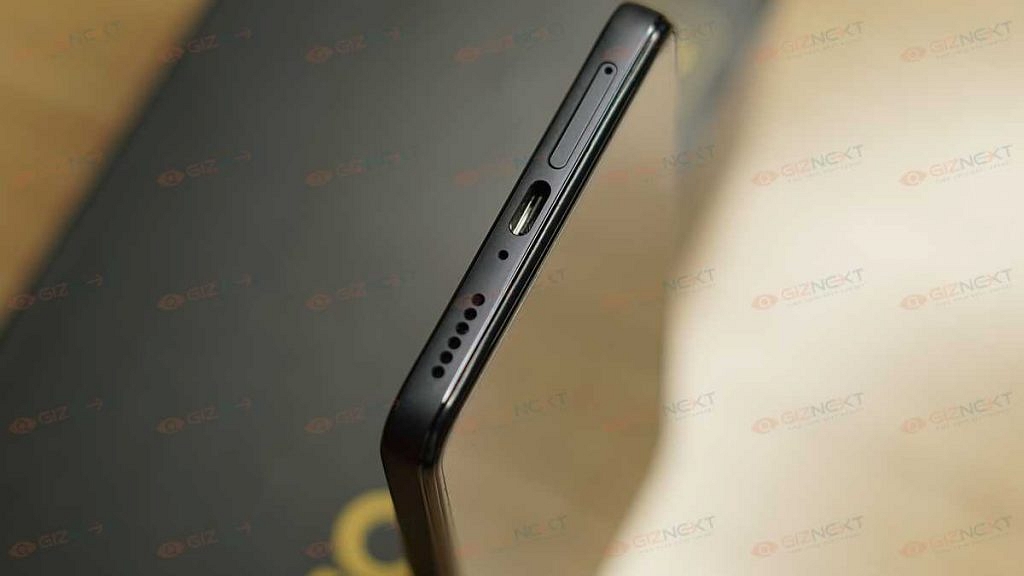
On the top panel, a 3.5mm headphone jack on the top is placed along with the speaker grille. At the bottom, you get the USB Type-C port along with the microSD card slot and another speaker grille. The IP53 certification and the flat-edge frames earn the phone’s design additional pointers. Overall, we found the POCO X4 Pro 5G’s design to be not just visually appealing but also practical for daily usage.
The panel offered by the POCO X4 Pro 5G is AMOLED. The screen size is 6.7-inches which delivers an FHD+ screen resolution of 1080 x 2400 pixels. The panel also features a high 120Hz refresh rate which along with the FHD+ resolution is definitely a good combo. The presence of the AMOLED panel itself is a big relief; specifically considering the sub Rs. 20,000 price tag.
The panel is apt for viewing shows and movies in high resolution on OTT platforms such as Netflix and Amazon Prime videos. The color production by the AMOLED panel is vivid and you will love every bit of your screen time on this POCO X series phone. The display on the POCO X4 Pro 5G is also HDR10+ certified which further enhances the overall viewing experience on online streaming platforms.
The higher refresh rate also allows for smoother frame transitions with extensive gaming. The default display profile is good enough for all content formats. However, you can also switch between standard, saturated, and vivid display models depending on the scenes.
The viewing angles are good and you won’t find the display going black if you are viewing it from the edges. The POCO X4 Pro 5G’s display panel doesn’t compromise on the brightness levels at all. Thanks to the 1300 nits peak brightness levels the panel doesn’t go dark under direct sunlight. Besides, the larger surface area courtesy of the tiny punch hole and narrow borders makes viewing the screen an enjoyable experience overall.
POCO X4 Pro 5G Review: Overall Hardware Performance
The POCO X4 Pro 5G is packed with the octa-core Snapdragon 695 5G chipset which is built on a 6nm process. This is a premium mid-range processor by Qualcomm which churns out massive power to handle daily tasks without any lags or stutters. Specifically, with general web browsing and varied application usage. POCO has introduced the X4 Pro 5G with a 6GB/8GB RAM option and 128GB/256GB storage configuration.
The multitasking experience has also been good throughout the usage. Apps fire up smoothly without any noticeable delays. We were also able to load and use multiple apps simultaneously. It is good to see that despite using a mid-range 5G chipset, the POCO X4 Pro 5G doesn’t fall short of power delivery.
The gaming experience has been decent. The gameplays don’t get jittery with the highest settings which we appreciate. The warm-up issues are mostly while charging and using the handset with extensive apps or gaming simultaneously. Otherwise, there are no prominent heating issues.
Speaking of the firmware, the POCO X4 Pro 5G boots on Android 11 OS. Now, this is an older Android version and most of the latest mid-range and even budget phones are shipping with Android 12 OS. We would have appreciated if the X4 Pro 5G also arrived with the Android 12 version out-of-the-box. But using the phone’s interface is not a bad experience.
While there is some pre-installed bloatware, the refreshed UI design with the MIUI 13 is a respite. You get a smooth user experience while scrolling through the phone’s applications. It would have been nimbler minus the pre-installed bloatware.
POCO X4 Pro 5G Camera Review: Familiar Output?
The POCO X4 Pro 5G employs triple rear cameras for primary imaging. The spec-sheet comprises a 64MP main sensor which is accompanied by an 8MP ultrawide camera and a 2MP macro sensor. Now, we have seen this setup on multiple mid-range and premium mid-range Android phones in the last few years.
The rear camera setup on the POCO X4 Pro 5G is not just good on paper but is also capable in real-life scenarios. The main sensor is capable of capturing the tiniest of details. The image clarity is specifically good with daylight shots where the cameras don’t struggle with logging the details of the subject as well as the backgrounds.
The POCO X4 Pro 5G’s AI-enabled cameras offer a high dynamic range with the captured clicks. You can also toggle on the HDR mode if you wish the images to pop out vividly. The portrait images are also good. You won’t find the background blurs artificial or gimmicky. Besides, you can also manually modify the blur intensity to further improve the output.
The camera app integrates multiple other shooting modes. The dedicated 64MP camera mode is one of them. This mode will let you capture high-resolution photos that won’t pixelate if you plan to zoom in and crop the shot later. If you scroll through the available camera modes, you’ll see the Night mode as well. Now, this mode will
help you capture detailed images in low-light backgrounds. This camera mode does a good job of reducing excess noise and grains in the night shots.
This POCO mid-range phone can record 1080p FHD videos @30fps. The camera stabilization is decent with the video recording. You also get the option to shoot slow-motion and time-lapse videos with the latest POCO X series phone. The selfie snapper offered by this phone is a 16MP lens which is also good for capturing details and color production.
Poco X4 Pro 5G: Battery Backup And Fast Charging Speeds
The POCO X4 Pro 5G has a 5,000 mAh battery unit for power delivery. Now, this battery capacity has become a standard in the mid and budget smartphone segment. The handset stores enough juice to run through an entire day on a single charge.
You would need to re-plug it to a charger twice only if you are hooked to the screen for hours for gaming or media playback (specifically high-resolution videos). The 67W fast charging technology comes to the rescue here. It can refuel the handset in just over 30 minutes (zero to 100 percent).
POCO X4 Pro 5G Review: Final Verdict
The POCO X4 Pro 5G is among the few pocket-friendly Android phones that has 5G network support in India. The asking price below Rs. 20,000 and quality internals makes the POCO X4 Pro 5G a hard-to-miss deal in its league. We have used the handset for a long and have not experienced any issues with both general as well as extensive usage. You should consider the POCO X4 Pro 5G if you have slight budget constraints yet you don’t wish to compromise on the user performance.
Display: 6.67-inch FHD+ AMOLED display with 120Hz refresh rate
Camera: Quad-camera setup with a 108MP main lens
Battery: 5,000mAh battery with 67W fast charging
Design: Sleek, modern design with Gorilla Glass 5 protection
Price: Affordable, under Rs. 20,000
With flagship-like features and low-price tags, Xiaomi has long proven itself as one of the best affordable smartphone manufacturers. And to prove this statement, we have the Redmi Note 11 pro with its promise of offering high-end specs at a budget price, it has been one of the most eagerly awaited smartphones in its category.
However, due to increased smartphone prices, Xiaomi must be forced to walk on a tight rope to ensure that the Redmi Note 11 Pro lives up to the value-for-money champion tag; typically attached to the Redmi Note series. So, is the Redmi Note 11 Pro a purchase that is worthwhile? Find out by reading this review.
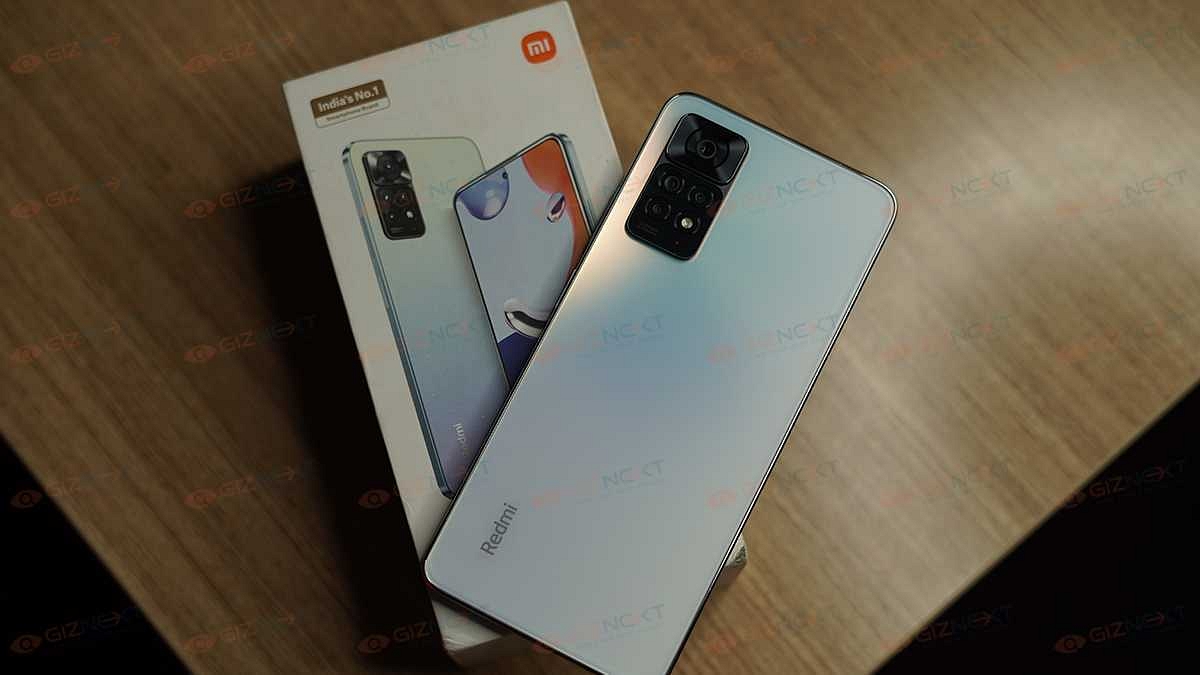
The Redmi Note 11 Pro is one of the good-looking phones out there. Although, it follows the same design language as other Note 11 series devices. The mid-range smartphone has a polycarbonate body and a flat-sided design.
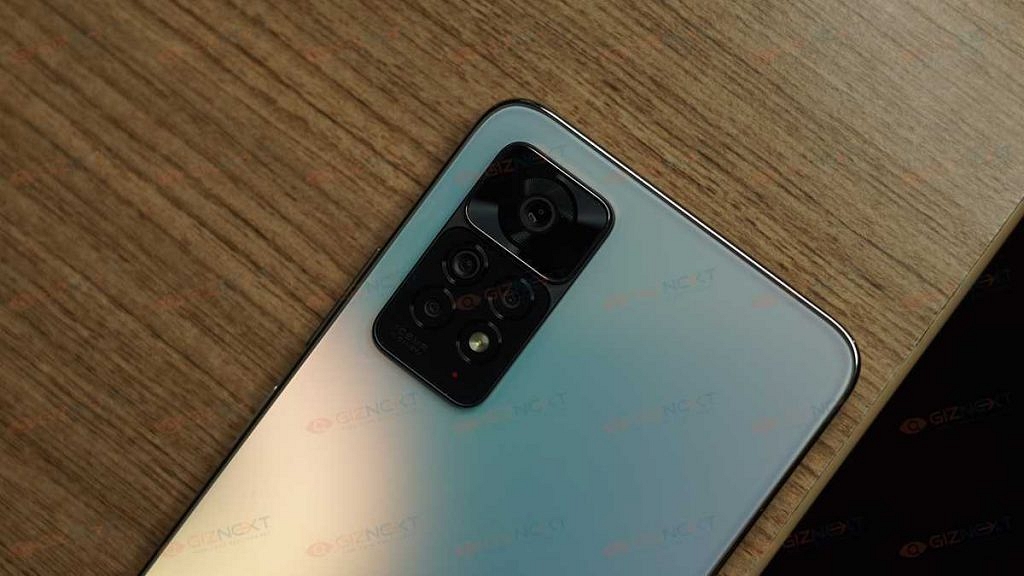
A rectangular module housing a quad-camera system is located on the top-left of the back panel. The module’s upper part has the larger primary lens while the section accommodates three additional sensors and an LED flash. The camera module protrudes out which is a welcome design approach. When kept on a flat surface, the device is wobbly. But that shouldn’t be any hassle. Also, there is the Redmi branding at the back which looks quite subtle.
The Gorilla Glass 5 shields the front making you worry less about scratches. The handset can be operated with one palm and feels just the correct size to be held in one hand.
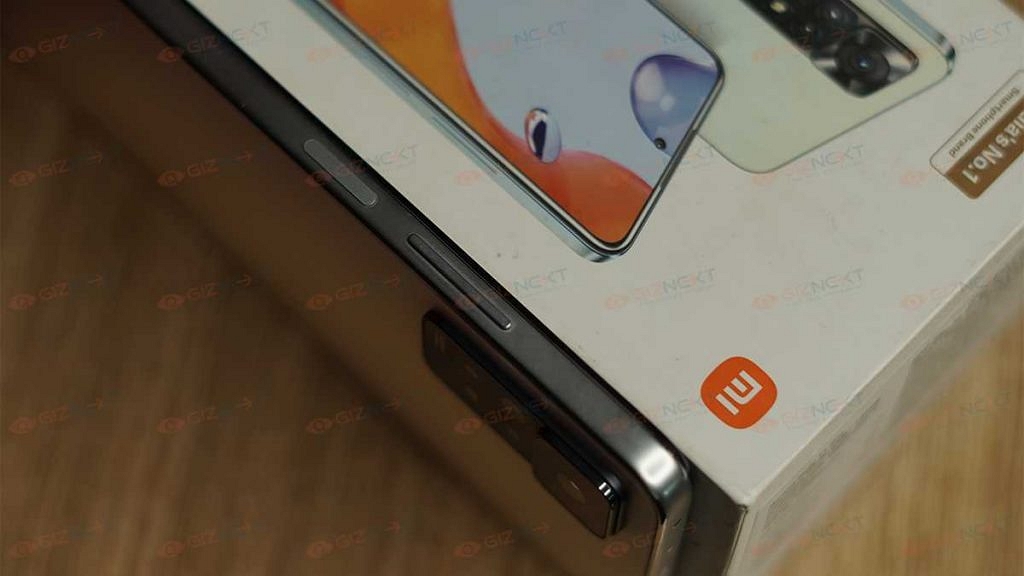
Speaking of buttons, the only buttons you find on the Redmi Note 11 Pro are the power button and the volume rocker on the right side whereas the left side is empty. The fingerprint scanner is embedded in the power button. The scanner does a good job of unlocking the handset in a jiffy.
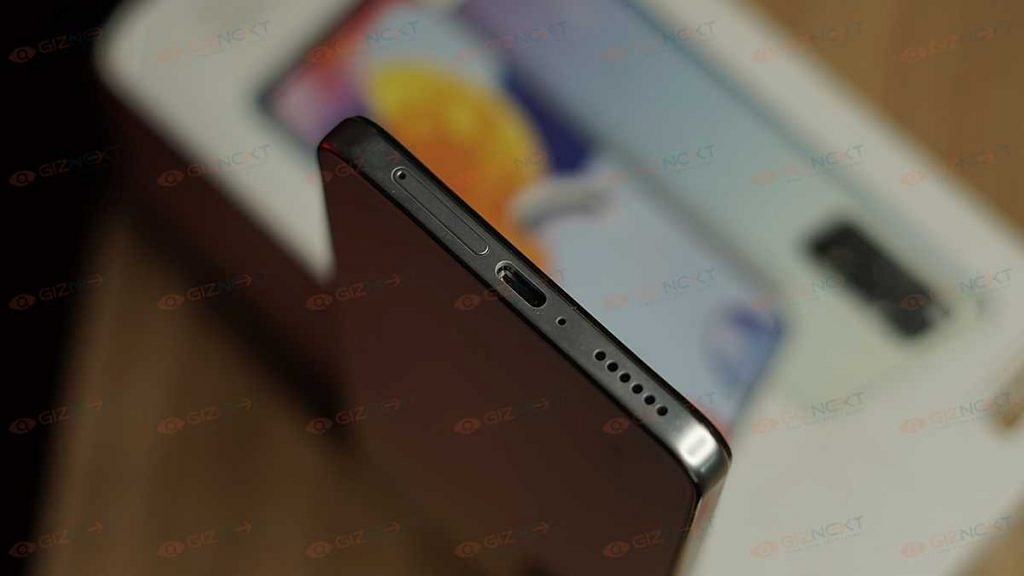
At the top, there is a speaker grille, an IR blaster, a 3.5mm headphone connector, and one microphone. On the bottom, there is a SIM card tray that doubles as a microSD card slot. Also, the USB-C port is there too.
The device’s design and quality are even more appealing as it is slim, sleek, and lightweight to hold. Overall, the Redmi Note 11 Pro is comfortable to use and looks modern.
Display
The Redmi Note 11 Pro’s display is among its strongest suits. You get an impressive 6.67-inch FHD+ AMOLED display. It has up to 120Hz of refresh rate that you can reduce to 60Hz instead if you want to save a considerable amount of battery. Unquestionably, it is the most impressive segment-leading display we have seen this far. After all, you don’t get AMOLED and 120Hz together on any other phone which is less than Rs. 20,000.
The display is protected by a layer of Gorilla Glass 5, making it robust to demanding usage. With high brightness levels, vibrant colors, and smooth animations, the screen is marvelous to look at.
Processor
The Redmi Note 11 Pro is powered by the MediaTek Helio G96 processor. To maintain things running for daily use, it provides a good performance. The multitasking is fluid and the apps open and load smoothly. The phone has 8GB RAM which combined with a processor makes the phone run smoothly. Additionally, it includes an internal storage of 128GB, which is enough to save significant files, documents, audio, videos, and more.
The smartphone launched with Xiaomi’s MIUI 13 which is an improved version of its predecessor. If you don’t require the third-party preinstalled apps, you can uninstall them. There are also a number of customization and personalization choices available.
Xiaomi released the HyperOS update for the Redmi Note 11 Pro in February 2024. This update is based on Android 13 and includes the latest February 2024 security patch. Since the Redmi Note 11 Pro has already received two major Android updates, from Android 11 to Android 13, it is unlikely that the device will be upgraded to Android 14.
In the audio department, the phone has a dual speaker system for loud output. The presence of a 3.5mm headphone port earns it some marks.
Camera
At the back of the Redmi Note 11 Pro are four cameras. A 108MP main lens, an 8MP ultrawide lens, a 2MP macro, and a 2MP depth sensor are all part of the package. Up front, there is a 16MP selfie camera as well.
There are numerous modes available to make photography even more interesting. Pro mode, night mode, extended exposure, and other modes are among them.
The primary 108MP camera performs decently. The photographs are sharp all around and appear realistic. The primary sensor performs well at night as well, producing clicks that are less noisy, bright, and crisp.
The 16MP selfie camera performs better than average by taking pictures that are detailed and vibrant. Although, the dynamic range is limited but functions nicely.
Battery
With a massive 5,000mAh battery capacity, the Redmi Note 11 Pro can last for an entire day. This included tasks such as calling, texting, browsing, using the camera, and streaming video.
Xiaomi also includes a 67W fast charger in the package. This is the fastest charging available in this segment. Besides, there is no need to bother about purchasing the adaptor separately as the charger is included in the box.
In India, the Redmi Note 11 Pro is available for less than Rs. 20,000. Xiaomi provides a respectable package under the Redmi Note 11 Pro label. The phone boasts a stylish design, good display, a big battery, and quick charging speed. The only disappointment is that it is still on Android 11. We just hope that the brand rolls out the Android 12 update soon. Overall, the smartphone is good to go with.
Asus ROG Phone 6, ROG Phone 6 Pro launched in India
Snapdragon 8+ Gen 1 chipset, up to 18GB RAM
6.78-inch AMOLED display with 2K resolution and 165HZ refresh rate
50MP triple rear cameras
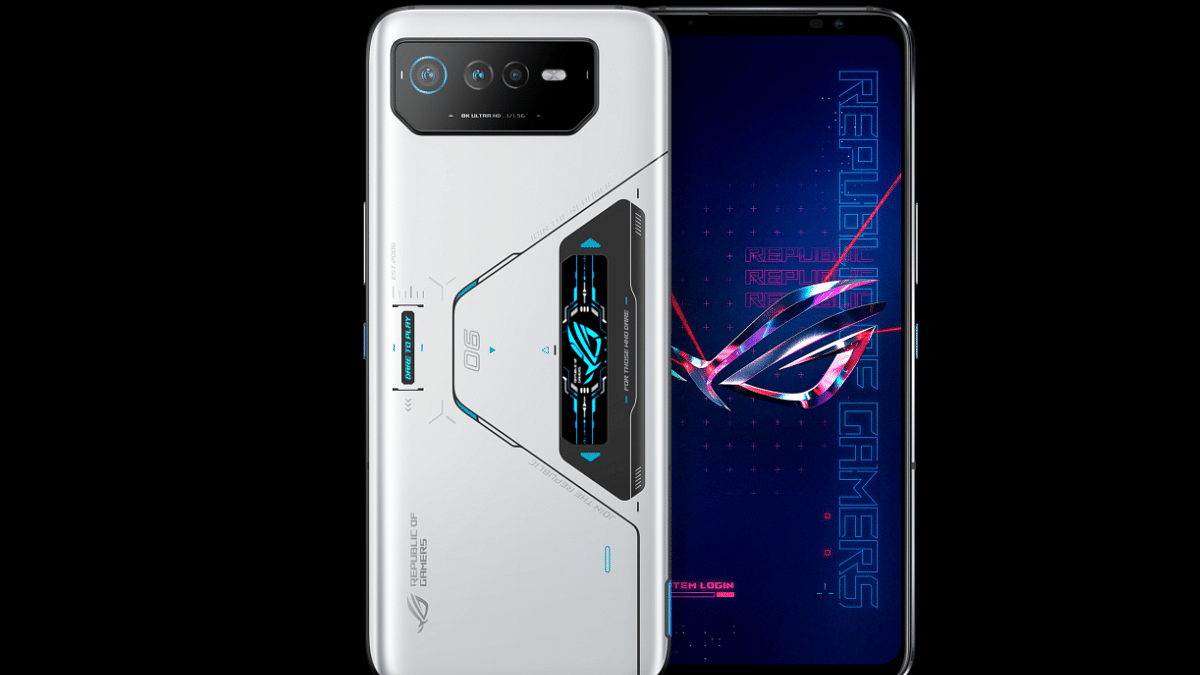
Asus has finally unveiled the much-anticipated flagship gaming smartphone series – the ROG Phone 6. As expected, the Taiwanese tech giant has announced both ROG Phone 6 and the ROG Phone 6 Pro gaming phones in the Indian market. The latest premium Asus gaming phones feature some top-of-the-line hardware such as a 165Hz AMOLED display, a new-generation Snapdragon 8+ Gen 1 chipset, and a whopping 18GB RAM capacity. Read on to know the Asus ROG 6, and ROG 6 Pro price in India and the full spec sheet:
Asus ROG Phone 6, ROG Phone 6 Pro Full Hardware Details
We’ll start with the vanilla ROG Phone 6 specifications. The standard variant uses the Snapdragon 8+ Gen 1 processor that supports Adreno 730 GPU to handle all high-end graphics smoothly. The standard ROG Phone 6 has been announced with 12GB RAM and 256GB of UFS 3.1 storage. Asus has equipped the vanilla ROG Phone 6 with a 6.78-inch AMOLED display that comes with a WQHD+ display and 165Hz refresh rate.
The handset also features a dedicated Pixelworks i6 display processor whose functionality is to offer a smooth visual experience by adding additional framed on-screen. The 2.5D curved glass also gets Corning Gorilla Glass Victus 5 protection from scratches and accidental drops.
In the camera department, the Asus ROG Phone 6 uses a triple-lens camera module at the back which features a 50MP Sony IMX766 main camera. Additional sensors include a 13MP ultrawide sensor and a macro lens. For selfies and video chats, it features a 12MP front camera. The vanilla ROG 6 variant is packed with a gigantic 6,000 mAh battery unit that has 65W fast charging support. Notably, the bundled charger’s capacity is 30W.
Moving on to the ROG Phone 6 Pro, this high-end model has almost similar internals as the standard ROG Phone 6. However, there are some differences. Specifically, in the configuration and rear panel design.
The Asus ROG Phone 7 Pro also features the same 6.78-inch 2.5D AMOLED display with WQHD resolution and 165HZ refresh rate. The imaging setup is a 50MP triple rear camera module and a 12MP selfie lens. Both smartphones also have the same Android 12 OS firmware topped with a custom user interface.
The 18GB RAM and 512GB storage option is one primary difference between the latest flagship Asus ROG gaming phones. The ROG Phone 6 Pro additionally sports a pMOLED ROG Vision secondary display and RGB illuminated back.
An in-display fingerprint scanner handles the biometrics on the latest ROG Phone 6 series. The IPX4 certification is another common factor on the ROG Phone 6 and the ROG Phone 6 Pro. Asus has also integrated new AirTrigger 6 trigger keys for enhanced gaming. The battery capacity and fast charging speeds are similar to the standard model.
Asus ROG Phone 6, ROG 6 Pro India Price, Sale Details
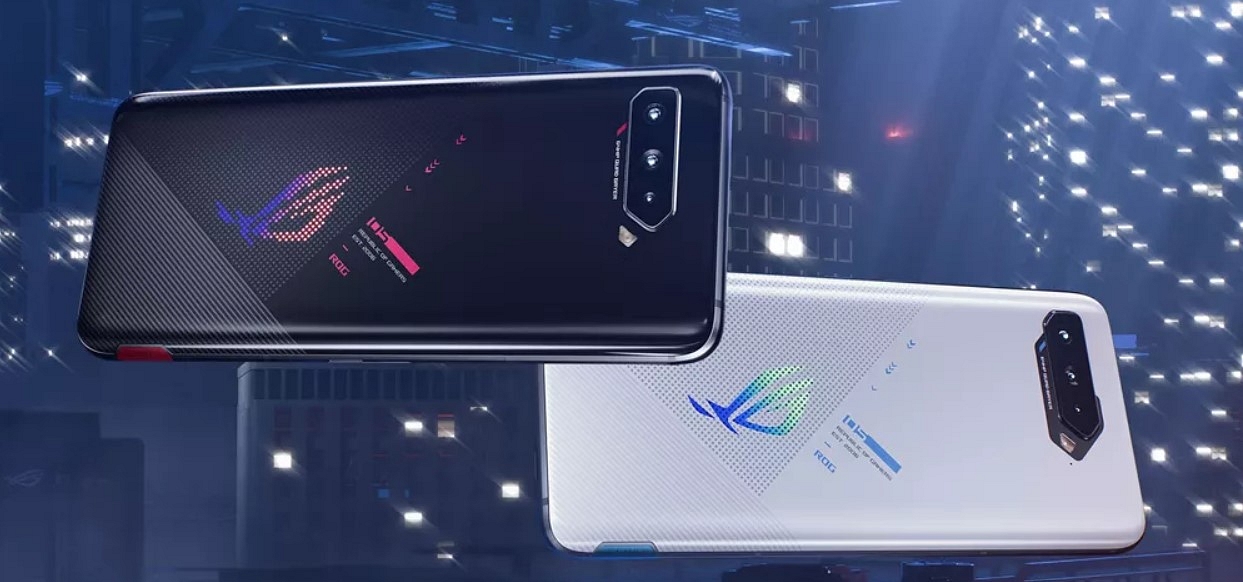
The Asus ROG Phone 6 is priced at Rs. 71,999 in India which is for the sole 12GB RAM and 256GB storage configuration. The ROG Phone 6 Pro is launched at Rs. 89,999 for the single 18GB RAM and 512GB storage option. The vanilla ROG Phone 6 will be available in black and white shades, while the Pro variant will be available only in a white color option.
Microsoft Laptop Surface Go 2 series announced in India
11th Gen Intel Core i7 processor
Price starts at Rs. 73,999
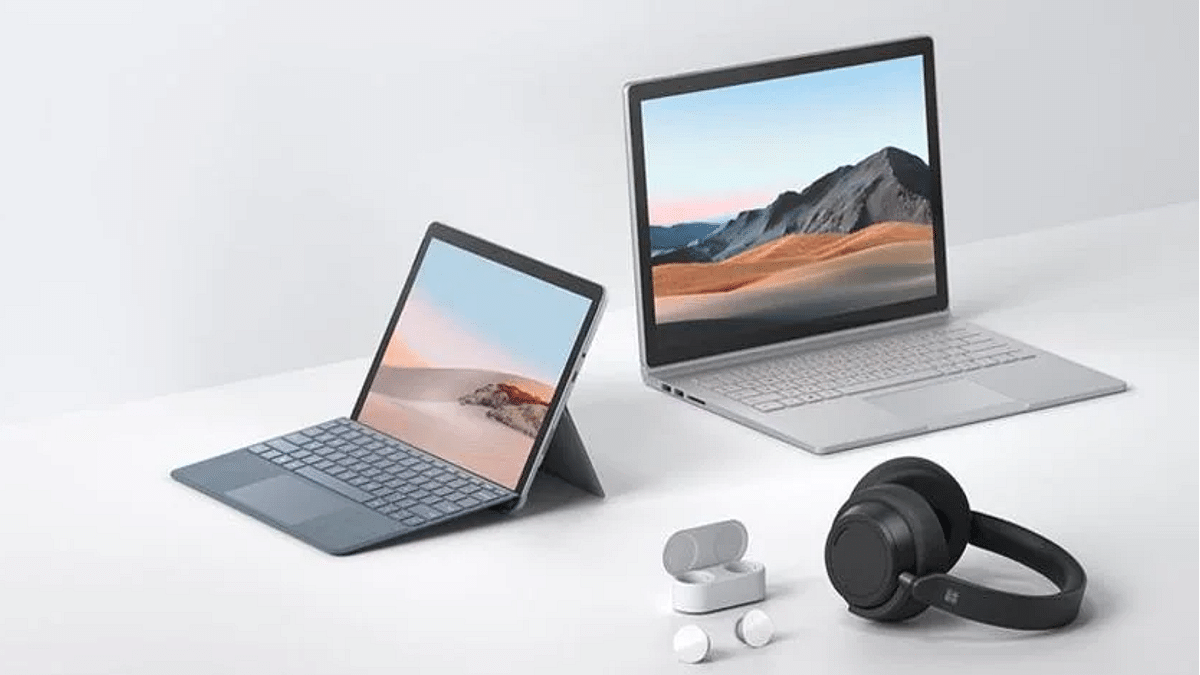
Microsoft has refreshed its laptop portfolio in India with the launch of new Surface series laptops. The Redmond giant has unveiled the latest Surface Laptop Go 2 series in the country. The brand has announced the new-generation Surface Go 2 series laptops for the affordable masses in the country with the latest 11-th Gen Intel Core i5 processors. The Surface Go 2 laptop lineup was introduced recently in the international markets and has finally arrived in the Indian market as well.
Microsoft Surface Laptop GO 2 Full Specifications And Features
The Microsoft Surface Laptop Go 2 features a compact and lightweight design. The laptop is just around 1.1 Kg in weight and flaunts a 12.4-inch PixelSense display. The Surface Laptop Go 2’s display features a 1024 x 1536 pixels screen resolution that is perfect for FHD media playback and gaming.
Under its hood, the latest Microsoft Surface Laptop Go 2 uses the 11th-gen Intel Core i5 processor. This high-end processor will allow the Laptop Surface Go 2 to deliver a lag-free performance with basic tasks and gaming. The Microsoft Surface Go 2 laptop has been announced with up to 8GB RAM which will handle all the multitasking with ease. This Microsoft laptop comes with up to 256GB storage option. The configuration can be further expanded for a better user experience.
As for the connectivity options, the Microsoft Surface Laptop Go 2 offers one USB Type-C port and one standard USB port that will allow pairing with external supported devices. For charging and data transfers, the Microsoft Surface Go 2 Laptop still features the standard Surface Connect port as the previous-generation models.
Microsoft has also refreshed the design and has equipped the Surface Go 2 with an improved keyboard and trackpad. The battery backup is also significantly improved with the new-generation model.
Microsoft Surface Laptop Go 2 Price In India
The Microsoft Laptop Surface Go 2 has been announced in India with an asking price of Rs. 73,999. You will get the base model with 8GB RAM and 128GB storage model with this price tag. On the other hand, the Surface GO 2 with 8GB RAM and 256GB storage configuration can be bought at Rs. 80,999. Notably, for business consumers, the Microsoft Laptop Surface Go 2 will be available with a starting price range of Rs. 79,990 in the country.
Asus is ready to launch its new smartphone on Tuesday ( July 5th). Notably, the company is known for launching gaming smartphones and now it is bringing new devices under its ROG phones. Yes, you read it right as the company will launch ROG 6 smartphone. So, in that way we are giving you a complete roundup of all details of the device.
How To Watch Asus ROG 6 Launch Online
The Asus ROG 6 smartphone series will be launched on July 5 in the global market. The launch will start at 8 AM EST and that is 5:30 PM IST. The global launch will be available on this link.
ASUS ROG Phone 6 Smartphone: Expected Price
According to some leaks, the smartphone is likely to be priced at EUR 799, which is close to Rs. 65,703 in India.
ASUS ROG Phone 6 Smartphone: Specifications
The upcoming smartphone series will have two devices i.e. ROG Phone 6 and ROG Phone 6 Pro. But, it is expected to have ROG Phone 6 Ultimate Edition as per some leaks. The ongoing leaks also suggested that the ROG Phone 6 will have a 6.78-inch AMOLED display, 165Hz touch sampling rate, and Full-HD+ resolution.
This can be the biggest upgrade as predecessors have a 144Hz refresh rate. Besides, the device will have Qualcomm Snapdragon 8+ Gen 1 SoC that is paired with 18GB of RAM and 512GB of storage that can be increased up to 1TB.
The device will also have a triple camera at the back, including a 64MP primary camera, ultra-wide lens, and macro unit. In addition, the primary camera will have Optical Image Stabilization (OIS) and you will find a 12MP camera on the front.
Oppo is likely to bring more foldable smartphone phones. Notably, the company has already launched Oppo Find N a foldable phone in other markets; however, the device is not available in India. This development was first reported by Digital Chat Station.
The smartphone is expected to have the same design as the Samsung Galaxy Z Flip lineup with a codename Dragonfly. However, the actual moniker has not been finalized till now. But the report said that the device will have a clamshell design, 120Hz refresh rate, and less thickness.
OPPO Two New Foldable Phone: Details
It is worth noting that the Oppo is working on the upcoming smartphones and will be known as Find N 2. Besides, the device will have a 120Hz refresh rate, optimized, and less thickness. Also, the report said that the one foldable phone will have a clamshell for design and the second phone will have a book-like design.
Apart from that, the company is planning to launch a few flagship devices in the second half of this year. The upcoming smartphones will have Qualcomm Snapdragon and MediaTek Processor. However, it is important to note that the features of the device are not known.
Oppo Find N 5G Smartphone Specifications Qualcomm Snapdragon 888 Processor 50MP + 16MP + 13MP Rear camera 32MP Selfie camera 4500 mAh Battery 8 GB RAM 7.1-inch Display
These are the first phones to use Qualcomm’s Snapdragon 8+ Gen1 chipset
The smartphones come with Leica optics
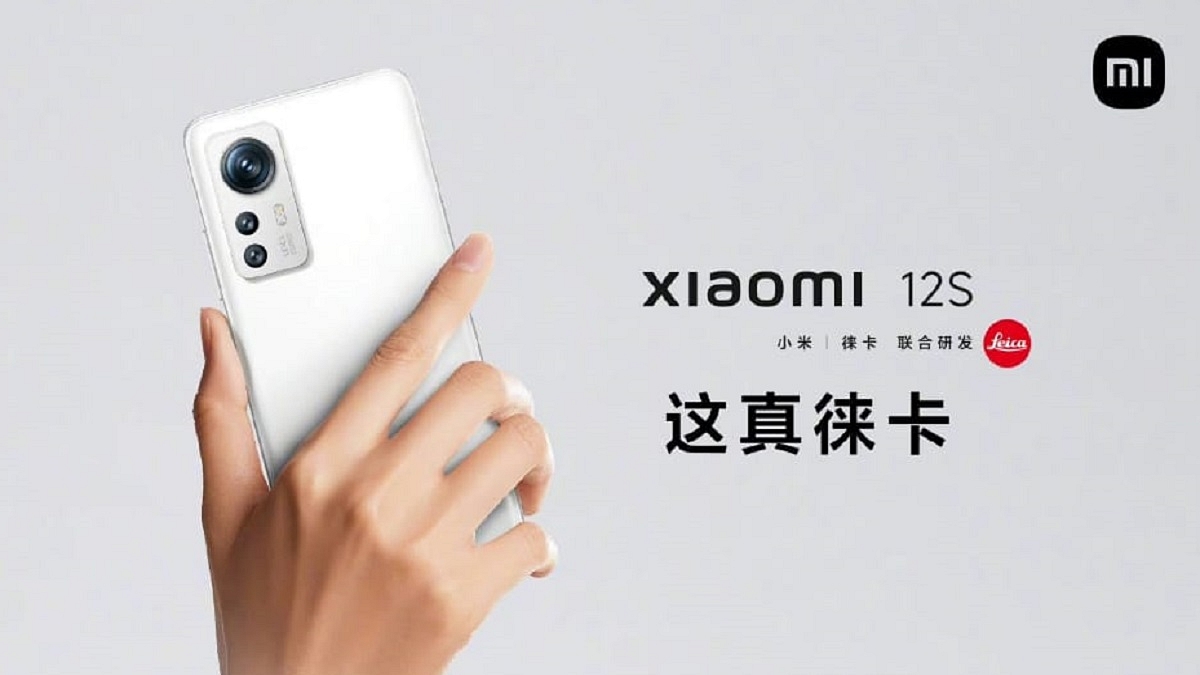
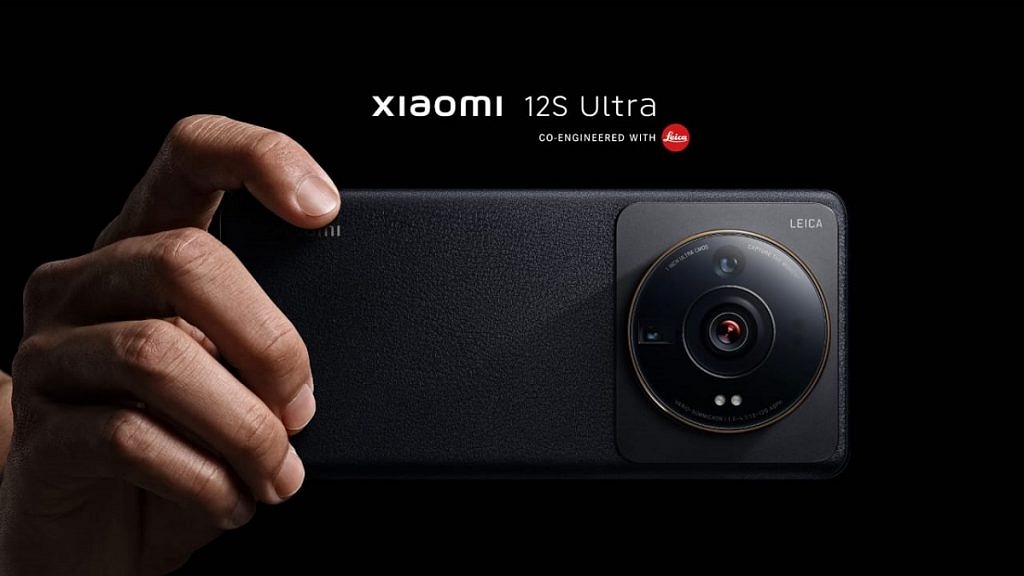
The Xiaomi 12S series has now been officially unveiled in China. These are the latest flagship offerings by the company. The lineup includes three models, i.e., the Xiaomi 12S, Xiaomi 12S Pro, and the Xiaomi 12S Ultra. All three smartphones are powered by the Qualcomm Snapdragon 8+ Gen 1 SoC and come with Leica optics. Check out the specifications and prices of the newly launched devices:
The Xiaomi 12S features a 6.2-inch FHD+ AMOLED display with a refresh rate of 120Hz. On the other hand, the Xiaomi 12S Pro comes with a larger 6.73-inch QHD+ AMOLED panel with a 120Hz refresh rate. Meanwhile, the Xiaomi 12S Ultra features a 6.73-inch AMOLED micro-curved display with up to 120Hz refresh rate. The AMOLED panel on the Xiaomi 12S series supports 1500 nits of peak brightness and comes with Gorilla Glass Victus protection.
Under the hood, the Xiaomi 12S and 12S Ultra are powered by the new Snapdragon 8+ Gen 1 chipset. On the other hand, the Xiaomi 12S Pro comes in two variants: one with the Snapdragon 8+ Gen 1 chipset and the second with the Dimensity 9000+ chipset. The Xiaomi 12S and 12S Pro have up to 256GB of UFS 3.1 storage and 12GB of LPDDR5 RAM. Meanwhile, the Xiaomi 12S Ultra has up to 12GB RAM and 512GB storage.
Further, the Xiaomi 12S boasts a 4,500mAh battery with support for 67W fast wired charging. The Xiaomi 12S Pro is housed by a 4,600mAh battery with 120W and 50W wireless fast charging support. The Xiaomi 12S Ultra packs a large 4,860mAh battery with 67W wired and 50W wireless charging support.
Moving to optics, the Xiaomi 12S has a triple camera setup. It carries a 50MP Sony IMX707 sensor, a 13MP ultrawide snapper, and a 5MP tele-macro camera. The device packs a 32MP selfie camera on the front.
The Xiaomi 12S Pro packs a triple camera setup. It includes a 50MP Sony IMX707 camera. The other two cameras are a 50MP ultra-wide shooter and a 50MP telephoto shooter.
Coming to the Xiaomi 12S Ultra, it has a triple camera array on the back. The custom 1-inch Sony IMX989 sensor is used for the first time in a phone. The device has a 50MP ultra sensor, a 48MP ultra-wide lens, and a 48MP zoom lens. For selfies, the phone has a 32MP camera on the front.
The Xiaomi 12S comes at a starting price of CNY 3,999 (around Rs. 47,194) while the Xiaomi 12S Pro has a starting price of CNY 4,699 (around Rs. 55,408). On the other hand, the Xiaomi 12S Ultra price begins at CNY 5,999 (around Rs. 70,700).
The Xiaomi 12S and the Xiaomi 12S Pro will go on sale in China from July 6. On the other hand, the Xiaomi 12S Ultra will be available in the country starting July 8.