Categories
Comparison Gaming Tablet

Best Gaming Tablets Under Rs.40,000

Key Highlights

  • Tablets offer high-resolution screens for gaming.
  • With extended battery life
  • Affordable options under Rs.40,000.

We’re checking out four top contenders under Rs.40,000: OnePlus Pad (12GB RAM + 256GB), XIAOMI PAD 6 (8GB RAM + 256GB), Lenovo Tab P11 5G (8GB RAM + 256GB), and Samsung Galaxy Tab S7 FE. These tablets are affordable but still offer great gaming experiences with good hardware and cool features.

Let’s find out which one’s the best gaming buddy for you!

TabletsPriceBuying Link
OnePlus Pad (12GB of RAM + 256GB)Rs.39,998Amazon
Xiaomi Pad 6 (8GB RAM + 256GB)Rs.41,999Amazon
Lenovo Tab P11 5G (8GB RAM + 256GB)Rs.39,999Flipkart
Samsung Galaxy Tab S7 FERs.39,999Amazon

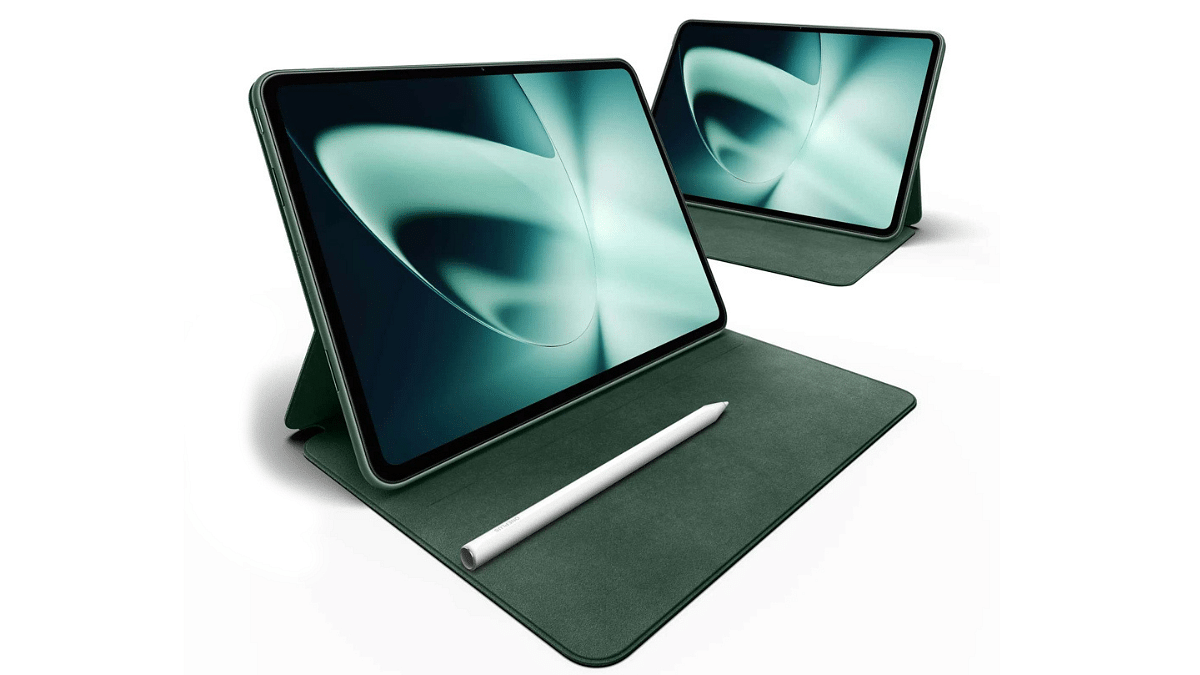
OnePlus Pad (12GB of RAM + 256GB)

The OnePlus Pad is a powerful gaming tablet with 12GB of RAM and 256GB of storage priced at Rs.39,998. It has a big 11.61-inch screen with vivid colours and smooth visuals, perfect for gaming. The tablet is built tough with an aluminium frame. It runs on Android 13 and supports Dolby Vision for great video quality. Its battery is massive, and it charges quickly, so you can game for a long time. It has decent cameras too.

Inside, it’s a strong Mediatek Dimensity 9000 chip for gaming. The tablet also has good stereo speakers and supports high-quality audio. It’s an excellent choice for gamers.

Also Read: Best Gaming Laptops Under Rs. 50,000

Xiaomi Pad 6 (8GB RAM + 256GB)
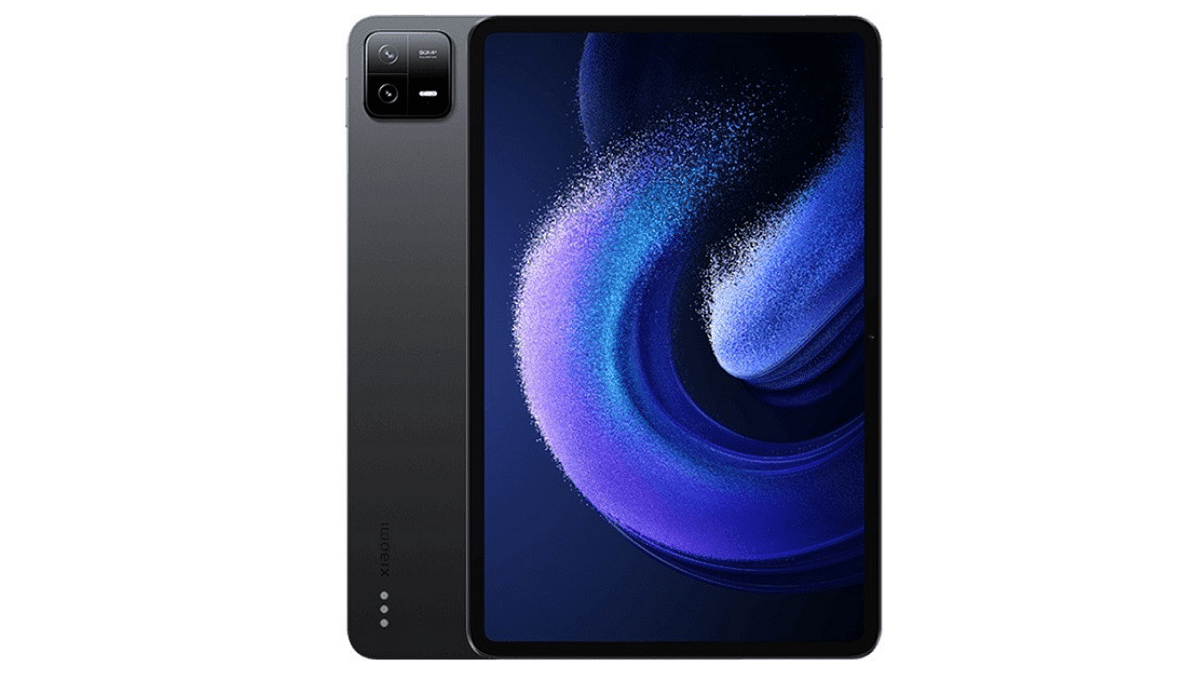
The XIAOMI PAD 6 is an excellent choice for gaming at just Rs.28,999. Its 11.0-inch IPS LCD screen offers vibrant visuals with a high resolution of 1800 x 2880 pixels and a quick 144Hz refresh rate for smooth gaming. The tablet’s sturdy aluminium frame and back ensure durability. It runs on Android 13 and supports HDR10 and Dolby Vision for immersive gaming experiences. With an 8840mAh battery and 33W fast charging, it’s perfect for extended gaming sessions.

The tablet also features good cameras, with a 13-megapixel rear camera and an 8-megapixel front camera. Its powerful Qualcomm Snapdragon 870 chipset and Adreno 650 GPU provide top-notch gaming performance. With stereo speakers and Dolby Atmos support, it delivers impressive audio.

Also Read: Best Gaming Consoles To Buy

Lenovo Tab P11 5G (8GB RAM + 256GB)
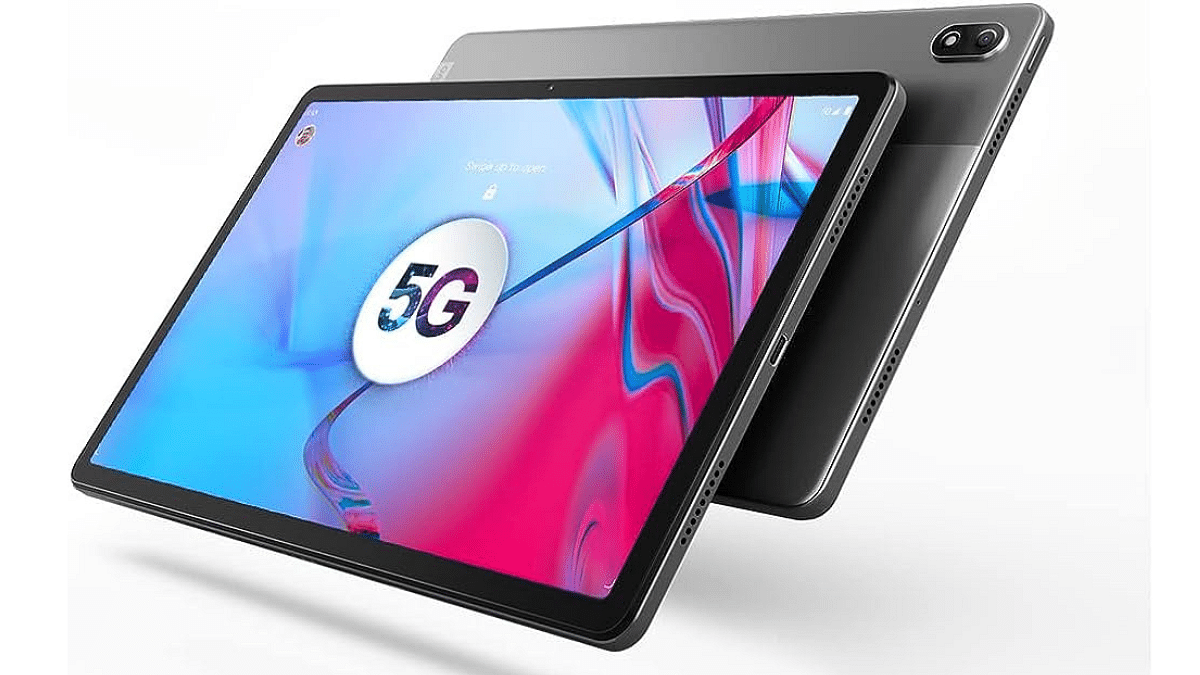
The Lenovo Tab P11 5G, with its 8GB of RAM and 256GB of storage, makes for an excellent gaming tablet at Rs.39,999. It features an 11.0-inch IPS LCD screen with a resolution of 1200 x 2000 pixels, offering good visuals. The tablet’s Dolby Vision support enhances your gaming experience, and it has a decent screen-to-body ratio of 81.9%. It’s slim and lightweight, making it easy to carry around.

With a 7700mAh battery and 20W fast charging, the tablet provides ample gaming time. While it has an average 13-megapixel rear camera, the 8-megapixel front camera is excellent for video calls. The Qualcomm Snapdragon 750G 5G chipset and Adreno 619 GPU offer decent gaming performance. It also boasts stereo speakers with Dolby Atmos and JBL Quad speakers for impressive audio.

Also Read: Best Gaming Phones To Buy In India Under Rs. 20,000

Samsung Galaxy Tab S7 FE
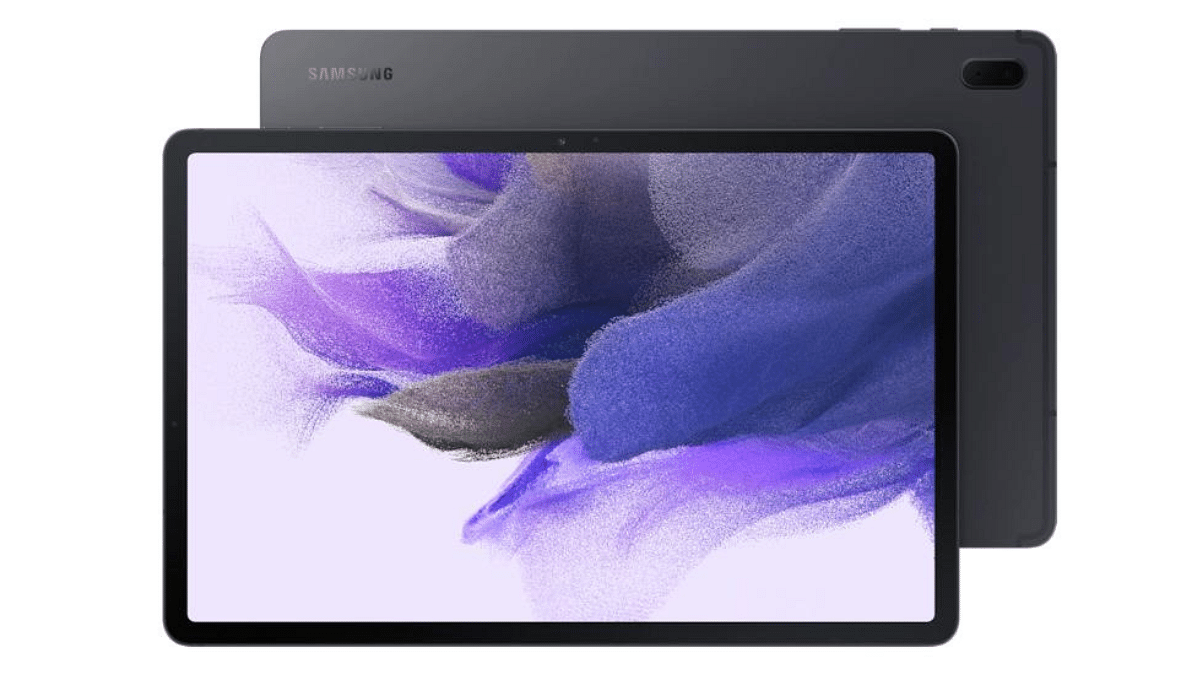
The Samsung Galaxy Tab S7 FE is a good gaming tablet available at Rs.39,999 on Amazon. It comes with Android 11 and supports voice calling and VoLTE. Its 12.4-inch TFT screen has a high resolution of 1600 x 2560 pixels, making games look great. The tablet’s slim design and lightweight build are easy to handle.

With a large 10090mAh battery and 45W fast charging, it provides long gaming hours. While it has an average 8-megapixel rear camera, the 5-megapixel front camera is suitable for video calls. The Qualcomm Snapdragon 750G chipset and Adreno 619 GPU deliver decent gaming performance. With stereo speakers and Dolby Atmos support, it offers impressive audio quality.

Also Read: Best Gaming Phones Under Rs. 35000: 2023
Categories
Auto Tech Comparison

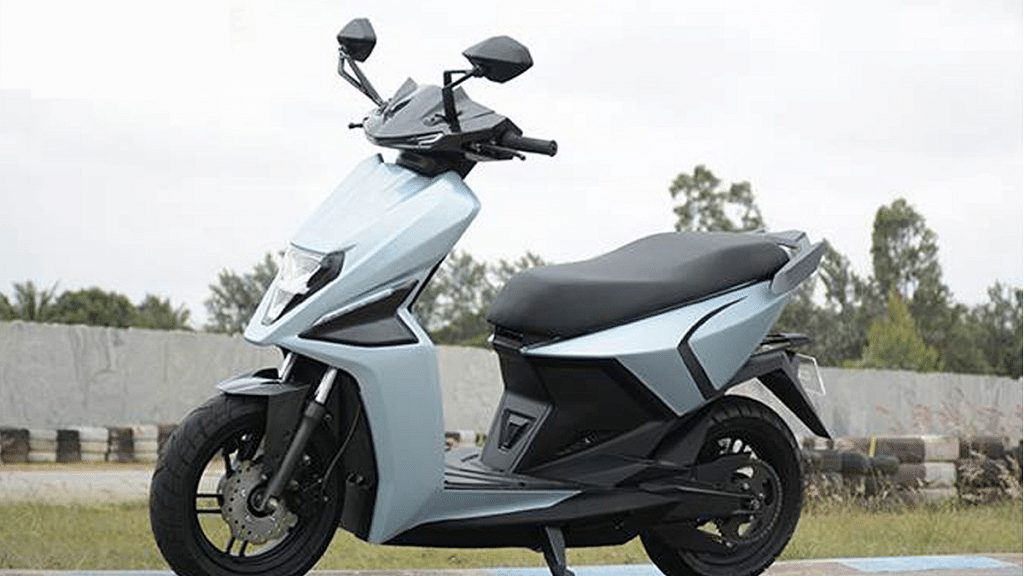
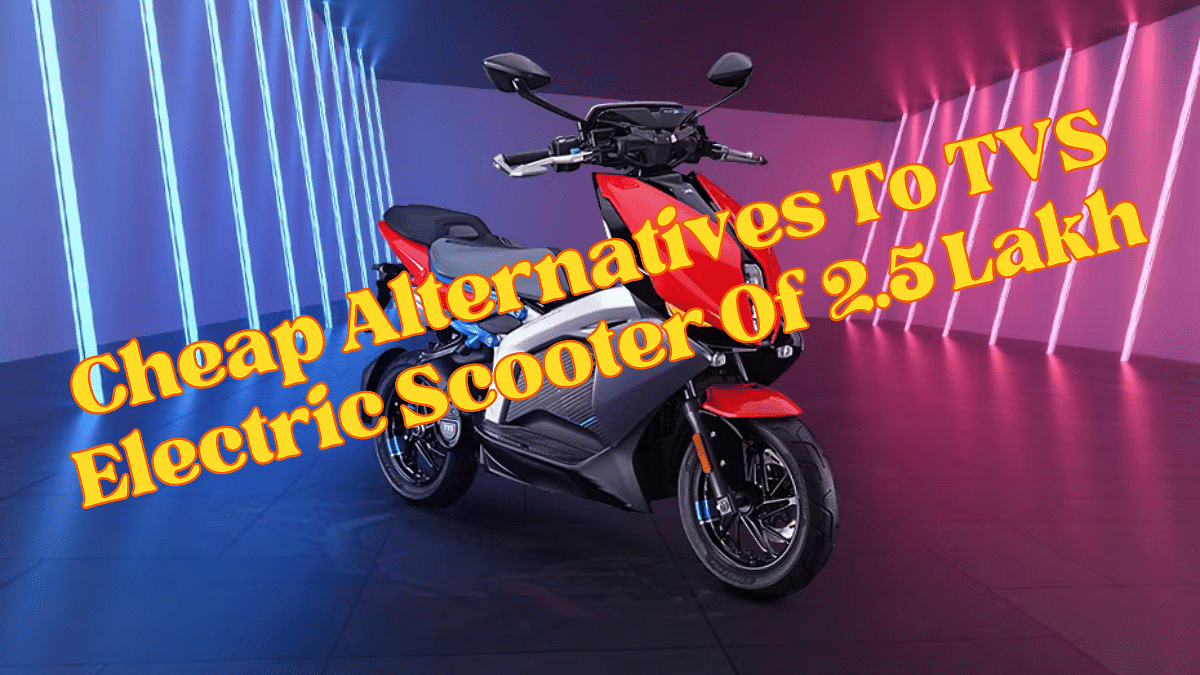
TVS X: Three Affordable Alternatives To The Luxury Electric Scooter Of 2.5 Lakh

Key Highlights

  • TVS X: One of the most expensive electric scooter.
  • Ather 450X: Solid performance, reasonable price.
  • Ola S1 Pro: Impressive range, powerful motor.
  • Simple One: Ultra-fast charging, highest range.

Electric scooters are becoming popular in India. The new fancy one, TVS X, costs a big 2.5 lakh. But, if you want something cheaper but still good, there are other options available. Let’s dive in and compare the TVS X with three other market favorites: the Ather 450X, Ola S1 Pro, and Simple One.

Also Read: TVS X Smart Electric Scooter Launched In India

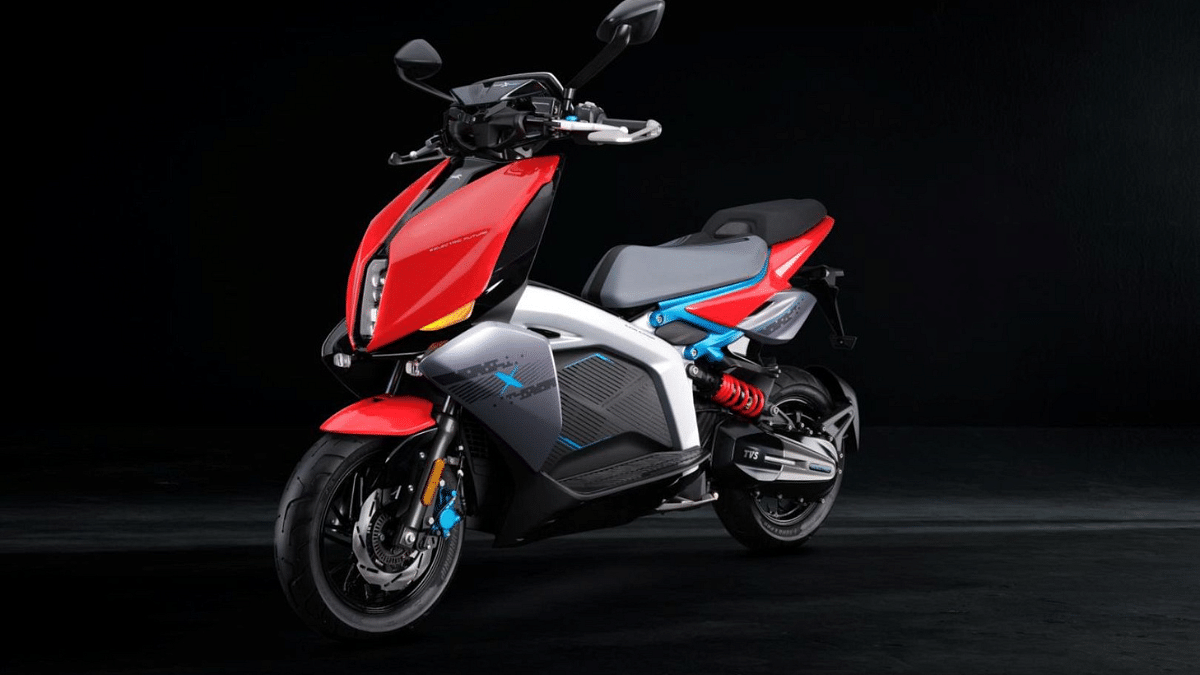
TVS X Electric Scooter: Rs.2.5 Lakh

Priced at the premium end, the TVS X offers a range of 140 km per charge, powered by a 7000W motor. It brings features like Bluetooth and WiFi connectivity, along with wired connectivity. Safety features include a single-channel ABS, ensuring better control during sudden stops. With a max power of 15 PS and a quick charging option, it’s aiming to appeal to both performance lovers and daily commuters. The digital dashboard, inclusive of an odometer, speedometer, and clock, promises a modern ride experience.

Also Read: TVS X Smart Electric Scooter With Premium Features Launched In India: Powertrain, Price

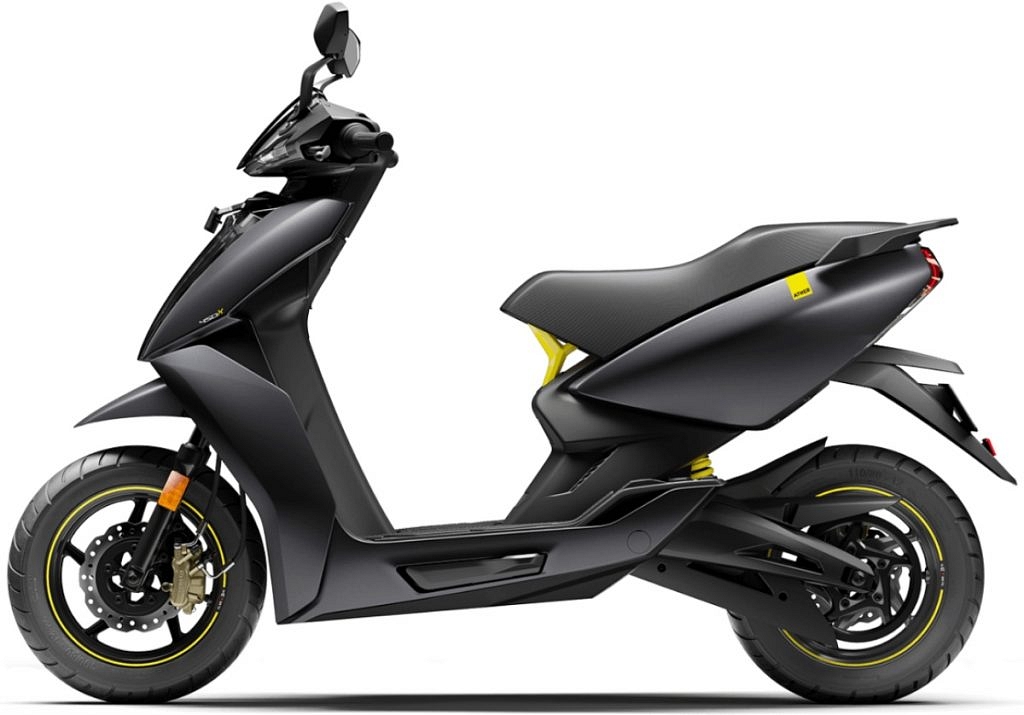
1. Ather 450X

Ather 450X Specifications:

  • Price Range: ₹1,37,950.00 to ₹1,44,871.00
  • Range: 146 km/charge
  • Motor Power: 6400W

In the more affordable segment, Ather 450X is making quite a buzz. It offers slightly more range than the TVS X at 146 km per charge. Its 6400W motor ensures a smooth city ride. While it lacks an ABS, it compensates with a double disc front brake for enhanced safety. Unique features include a digital speedometer, a combined braking system, and connectivity features similar to the TVS X, making it a contender worth considering.

Also Read: Ola S1 Pro Gets Cheaper By Rs. 10,000 In India: Why Shouldn’t You Miss This Limited Period Offer

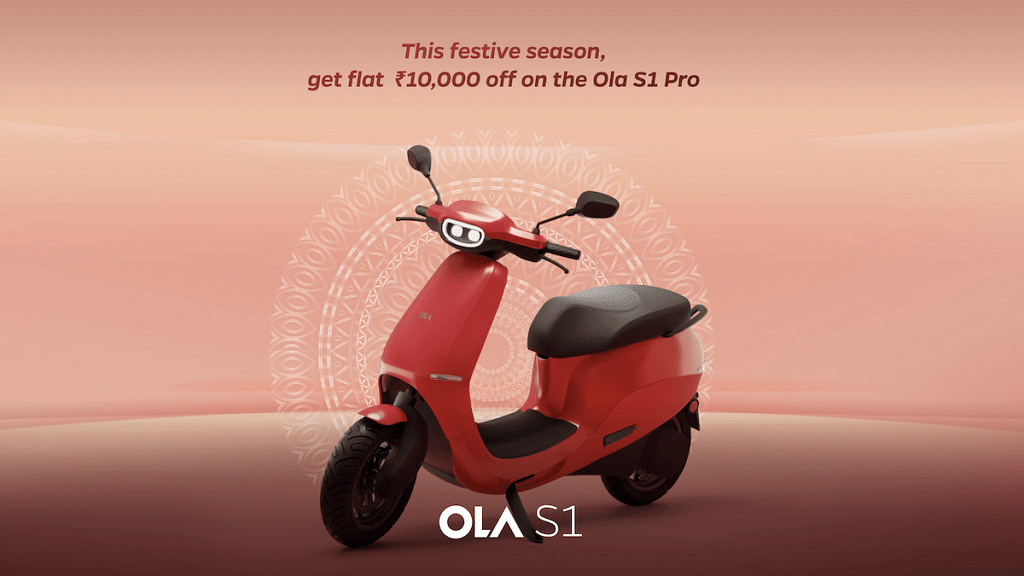
2. Ola S1 Pro

Ola S1 Pro Specifications:

  • Price: ₹1,54,468.00
  • Range: 195 km/charge
  • Motor Power: 11000W

Ola’s foray into the electric scooter market has been nothing short of impressive. The S1 Pro offers a whopping 195 km range, much higher than the TVS X. Its motor, with a power of 11000W, ensures that it doesn’t just promise distance but also performance. Charging takes slightly longer, but the impressive range might just make up for it. Its features list, like mobile connectivity and a digital dashboard, is on par with its counterparts, making it a robust alternative to the TVS X.

Also Read: Simple One Electric Vs Ola S1 Pro Vs Hero Vida V1: Top E-Scooter Model That You Can Buy In 2023
3. Simple One

Simple One Specifications:

  • Price Range: ₹1,45,000.00 to ₹1,50,000.00
  • Range: 212 km/charge
  • Motor Power: 8500W

Don’t let the name deceive you. Simple One is a performance beast, offering the highest range among the lot at 212 km. The motor power stands at 8500W, bridging the gap between the Ather 450X and Ola S1 Pro. The key highlight? Its ultra-fast charging time of just over an hour. Feature-wise, it brings unique additions like a boot light and a service due indicator, besides the standard offerings of its competitors.

Also Read: Simple One Electric Scooter Test Mule Spotted Ahead of Official India Launch: Everything You Should Know

Categories
Chipset Comparison

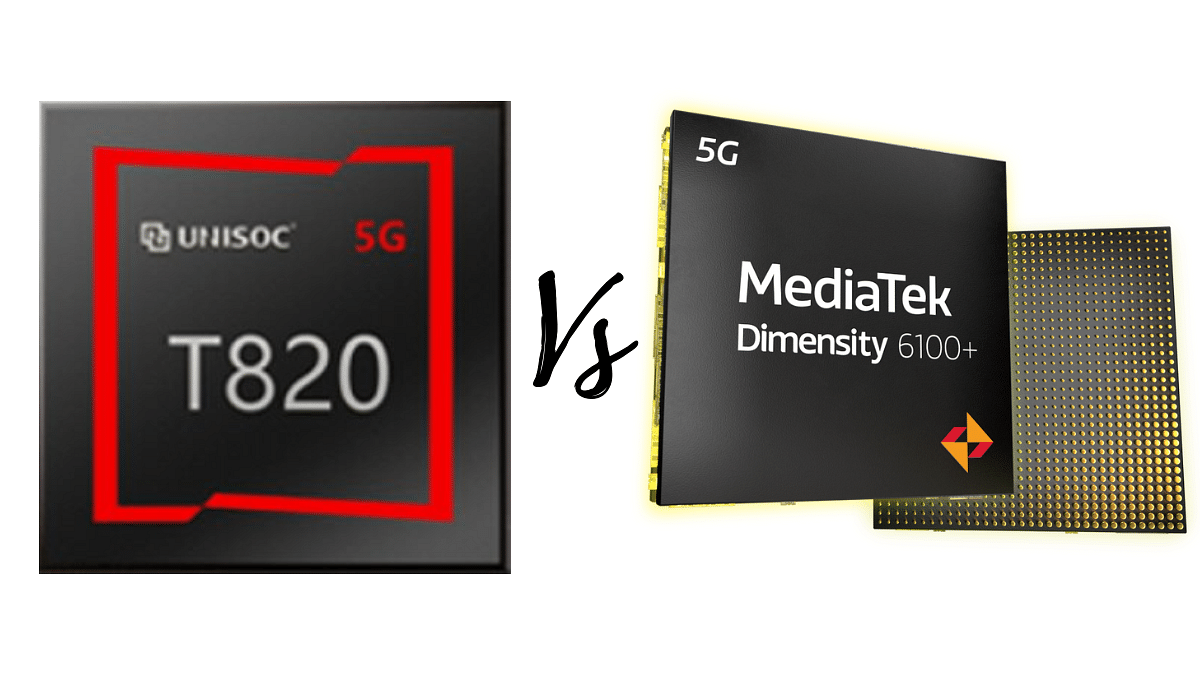
Unisoc T820 Vs MediaTek Dimensity 6100 Plus: Mid-Range Chipset Comparison 2023
Key Highlights

  • Both chipsets use 6-nanometer TSMC fabrication.
  • T820 offers superior GPU and video performance.
  • T820 supports up to 32GB memory, Dimensity 6100 Plus caps at 12GB.
  • Dimensity 6100 Plus boasts broader navigation support.

As mid-range chipsets continue to power an increasing number of smartphones and devices, the competition heats up. Let’s dive into a comparison between two heavyweights in the mid-range spectrum for 2023: the Unisoc T820 and the MediaTek Dimensity 6100 Plus.

Also Read: Qualcomm Snapdragon 695 Vs MediaTek Dimensity 7050: Top Powerful Mid-Range 5G Chipset 2023
Unisoc T820 Vs MediaTek Dimensity 6100 Plus: Fabrication, CPU Architecture

Both the Unisoc T820 and MediaTek Dimensity 6100 Plus are crafted on a 6-nanometer process by TSMC, ensuring cutting-edge performance and efficiency.

The T820 boasts a tri-cluster CPU setup with a high-performance Cortex-A76 core clocked at 2.7 GHz, three more Cortex-A76 cores at 2.3 GHz, and four energy-efficient Cortex-A55 cores at 2.1 GHz. This setup allows for balanced multitasking and high-speed processing.

On the other hand, the Dimensity 6100 Plus takes a different approach with its dual-cluster design: two Cortex-A76 cores at 2.2 GHz and six Cortex-A55 cores at 2 GHz. The T820’s higher frequency Cortex-A76 cores give it a slight edge in raw performance.

Also Read: Qualcomm Snapdragon 870 Vs MediaTek Dimensity 8200: Which Is A Better Premium Range Chipset ?

Unisoc T820 Vs MediaTek Dimensity 6100 Plus: GPU Comparison

In the graphics department, both chipsets sport Mali-G57 GPUs based on the Valhall 1st gen architecture. The T820 has the Mali-G57 MP4, with four execution units and 256 shaders, reaching 435.2 Gigaflops. The Dimensity 6100 Plus houses the Mali-G57 MP2, featuring two execution units and 128 shaders, achieving 243.2 Gigaflops. Despite the Dimensity 6100 Plus having a higher GPU frequency (950 MHz vs. 780 MHz), the T820 offers a superior GPU, leading to better gaming and graphics performance.

Also Read: MediaTek Dimensity 7050 Vs Snapdragon 8 Gen 1: Best Mid-Range Gaming Chipset 2023
Unisoc T820 Vs MediaTek Dimensity 6100 Plus: Memory, Multimedia (ISP) Comparison

When it comes to memory, both chipsets support LPDDR4X RAM with a 2133 MHz frequency. The T820 has an edge with support for up to 32GB, whereas the Dimensity 6100 Plus is capped at 12GB. The memory bandwidth for both is identical at 17.07 Gbit/s.
For multimedia capabilities, both chipsets have neural processors for AI tasks. The T820 leads in video with 4K at 60FPS for both capture and playback, while the Dimensity 6100 Plus maxes out at 2K at 30FPS. However, the Dimensity 6100 Plus offers additional video codec support with VP9.

For camera capabilities, both chipsets can handle a 108MP main sensor. Yet, the T820 can support dual 20MP sensors, while the 6100 Plus peaks at dual 16MP sensors.

Also Read: Redmi Pad SE Tablet Launched Snapdragon 680 Chipset, 90Hz Display, And More

Unisoc T820 Vs MediaTek Dimensity 6100 Plus: Final Verdict

While both the Unisoc T820 and MediaTek Dimensity 6100 Plus offer impressive features and capabilities for mid-range chipsets, the T820 appears to have an edge in many aspects, particularly in CPU performance, GPU power, memory support, and multimedia capacities.

However, the final choice between the two will largely depend on specific user requirements and preferences. For instance, users prioritizing gaming or heavy multitasking might lean towards the T820, while those looking for balanced performance with more focus on connectivity (given Dimensity 6100 Plus’s broader navigation support and faster download speeds) might prefer the Dimensity 6100 Plus.

Also Read: MediaTek Dimensity 9000 Vs Qualcomm Snapdragon 870 Processor: Best Chipset For Value Flagship

Categories
Chipset Comparison Featured

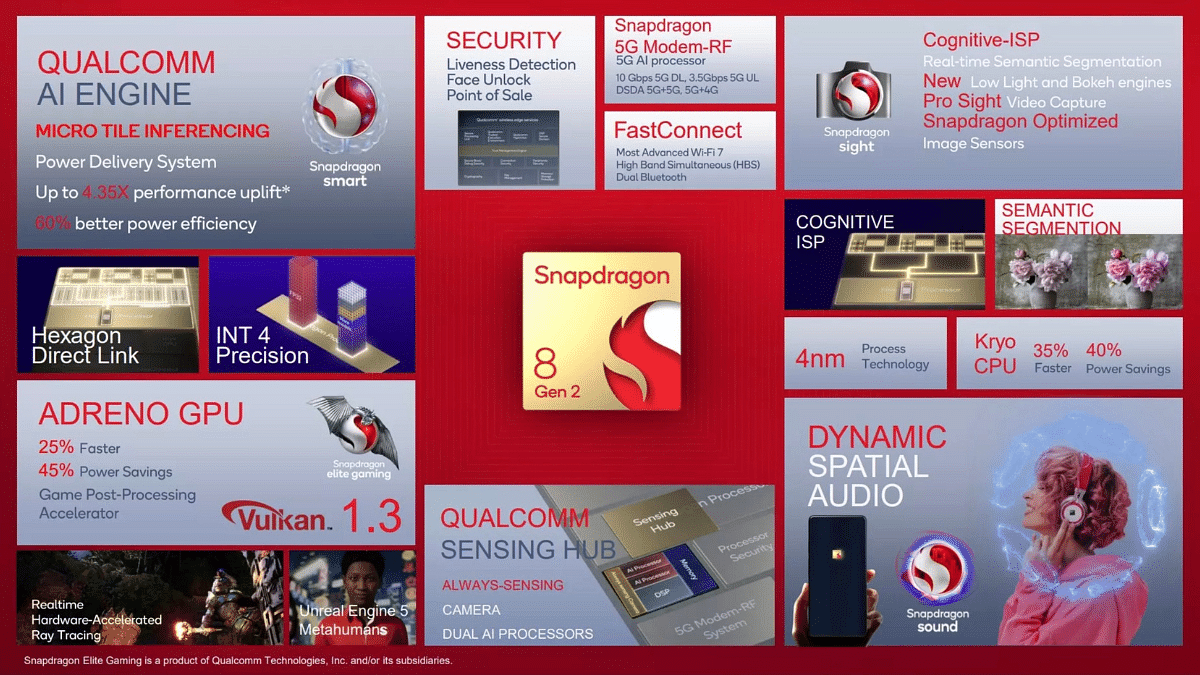
Snapdragon 8 Gen 2 Vs MediaTek Dimensity 9200 Plus: Which Processor Is Best For Flagship Gaming Phones ?

Key Highlights

  • Dimensity 9200 boasts superior GPU raw power.
  • Snapdragon offers higher 4K video playback.
  • Both employ efficient 4nm TSMC process.

Two of the front-runners in this space are the Snapdragon 8 Gen 2 and the MediaTek Dimensity 9200 Plus. For gaming enthusiasts, especially those looking for mid-range phones, the choice of chipset can greatly influence the gaming experience.

Let’s dive deep into the specifics and understand which one of these is the best pick for mid-range gaming phones.

Also Read: Qualcomm Snapdragon 695 Vs MediaTek Dimensity 7050: Top Powerful Mid-Range 5G Chipset 2023

Snapdragon 8 Gen 2 Vs MediaTek Dimensity 9200 Plus: Fabrication, CPU Architecture

Feature Snapdragon 8 Gen 2MediaTek Dimensity 9200 Plus
Manufacturing Process4 nanometers (TSMC)4 nanometers (TSMC)
Core Count88
Prime CoreCortex-X3Cortex-X3
Prime Core Clock Speed3.2 GHz3.35 GHz
High-performance Cores2x Cortex-A715 @ 2.8 GHz<br>2x Cortex-A710 @ 2.8 GHz3x Cortex-A715 @ 3 GHz
Power-efficient Cores3x Cortex-A510 @ 2 GHz4x Cortex-A510 @ 2 GHz

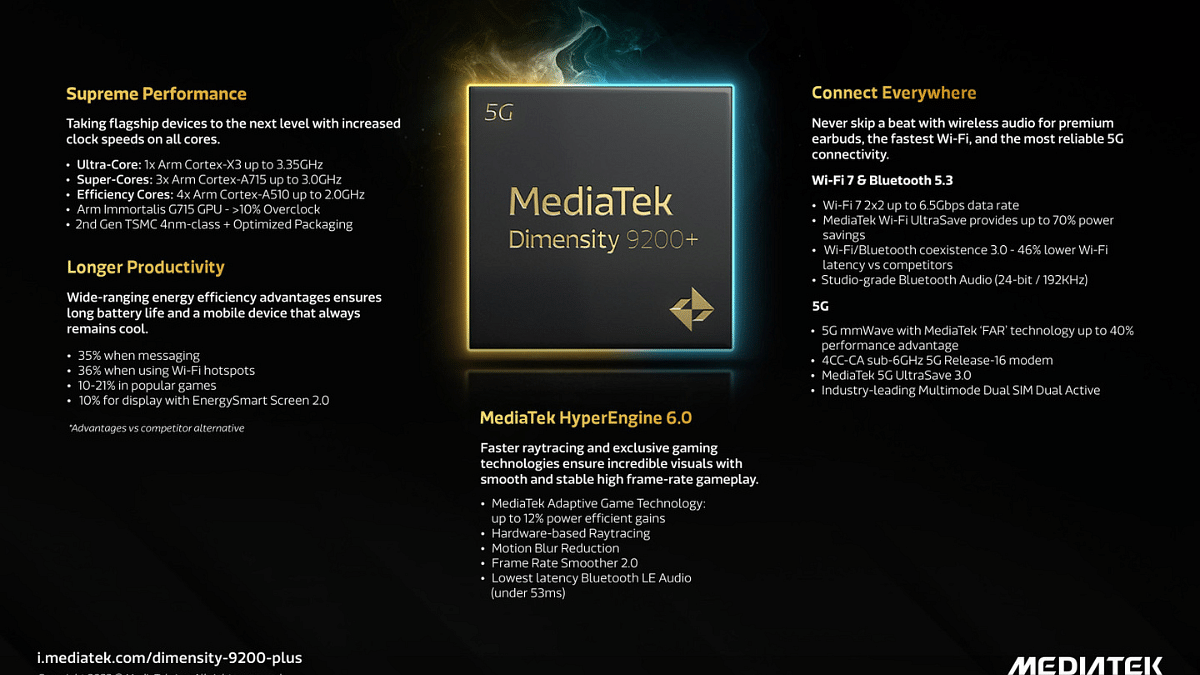
The Snapdragon 8 Gen 2 and the MediaTek Dimensity 9200 Plus, both are built on the 4-nanometer process by TSMC, promising efficient power consumption. In terms of architecture, the Snapdragon offers a varied configuration with the high-performing Cortex-X3 at 3.2 GHz, complemented by two sets of mid-tier cores (Cortex-A715 and Cortex-A710) and energy-efficient Cortex-A510 cores. On the other hand, the Dimensity 9200 Plus takes the lead in raw performance with its Cortex-X3 running at 3.35 GHz and a robust triad of Cortex-A715 cores. Both chips are designed with 8 cores, but the Dimensity’s slightly higher peak frequency could give it a minor edge in bursty tasks.

Also Read: Qualcomm Snapdragon 870 Vs MediaTek Dimensity 8200: Which Is A Better Premium Range Chipset ?

Snapdragon 8 Gen 2 Vs MediaTek Dimensity 9200 Plus: GPU Comparison

Feature Snapdragon 8 Gen 2MediaTek Dimensity 9200 Plus
GPU NameAdreno 740Mali-G715 Immortalis MP11
GPU FrequencyNot Specified995 MHz

The Snapdragon boasts the Adreno 740, an impressive unit operating at 680 MHz. With a whopping 2560 shaders, it has a computational capacity of 3481.6 Gigaflops. The Dimensity, however, sports the Mali-G715 Immortalis MP11 based on the Valhall 4th gen architecture. With a higher frequency of 995 MHz and 2112 shaders, it clocks in at 4202.8 Gigaflops, giving it an advantage in raw graphical power, which might translate to smoother gameplay and better graphics in demanding games.

Also Read: MediaTek Dimensity 7050 Vs Snapdragon 8 Gen 1: Best Mid-Range Gaming Chipset 2023

Snapdragon 8 Gen 2 Vs MediaTek Dimensity 9200 Plus: Memory, Multimedia (ISP) Comparison

Feature Snapdragon 8 Gen 2MediaTek Dimensity 9200 Plus
Memory TypeLPDDR5XLPDDR5X
Memory Frequency4200 MHz4266 MHz
Max Display Resolution3840 x 21602960 x 1440
Max Camera Resolution200MP320MP
8K Video Capture30FPS30FPS
4K Video Playback120FPS60FPS

Both processors support LPDDR5X memory, but the Dimensity marginally outperforms with its 4266 MHz frequency compared to the Snapdragon’s 4200 MHz. Additionally, the Dimensity offers a slightly greater max bandwidth. When considering multimedia capabilities, both chips support UFS 3.1 and 4.0 for faster storage. However, the Dimensity takes the crown in camera support with a whopping 320MP resolution, whereas the Snapdragon caps at 200MP. Both chips can capture 8K at 30FPS, but Snapdragon provides a superior 4K capture at 120FPS against the Dimensity’s 60FPS.

Also Read: Snapdragon 7 Gen 1 Vs MediaTek Dimensity 6080: Battle Of Top Mid- Range Chipset 2023

Snapdragon 8 Gen 2 Vs MediaTek Dimensity 9200 Plus: Final Verdict

For those prioritizing raw CPU and GPU power, particularly for gaming, the MediaTek Dimensity 9200 Plus appears to be the stronger contender with its slightly better CPU frequency and significantly higher GPU performance. Additionally, it offers a bit more in terms of camera capabilities, which might appeal to photography enthusiasts.

However, the Snapdragon 8 Gen 2 is no slouch. Its diverse core configuration ensures efficient multitasking, and its superior 4K video recording could be a determining factor for content creators. Moreover, it boasts a slightly more advanced modem, ensuring faster download speeds.

Also Read: Snapdragon 4 Gen 2 Budget 5G Chipset Launched

Categories
Chipset Comparison Featured

Qualcomm Snapdragon 695 Vs MediaTek Dimensity 7050: Top Powerful Mid-Range 5G Chipset 2023

Key Highlights

  • Both utilize efficient 6nm TSMC fabrication process.
  • Dimensity 7050 boasts higher CPU clock speeds.
  • Snapdragon 695 GPU frequency surpasses Dimensity 7050.

The mid-range chipset market has grown exponentially with the arrival of 5G. Two giants in the industry, Qualcomm and MediaTek, have released their offerings: the Snapdragon 695 and Dimensity 7050, respectively. Let’s dive into a comparison between the two.

Also Read: Qualcomm Snapdragon 870 Vs MediaTek Dimensity 8200: Which Is A Better Premium Range Chipset ?

Qualcomm Snapdragon 695 Vs MediaTek Dimensity 7050: Fabrication, CPU Architecture

Feature/SpecificationQualcomm Snapdragon 695MediaTek Dimensity 7050
Fabrication
Process (nm)66
ManufacturingTSMCTSMC
CPU
Architecture2x Cortex-A78, 6x Cortex-A552x Cortex-A78, 6x Cortex-A55
Cores88
Max Frequency (MHz)22002600
Instruction SetARMv8.2-AARMv8.2-A

The Qualcomm Snapdragon 695 and MediaTek Dimensity 7050 are two of the most powerful mid-range 5G chipsets available, both manufactured by TSMC using a 6-nanometer process. This ensures reduced energy consumption and better performance.

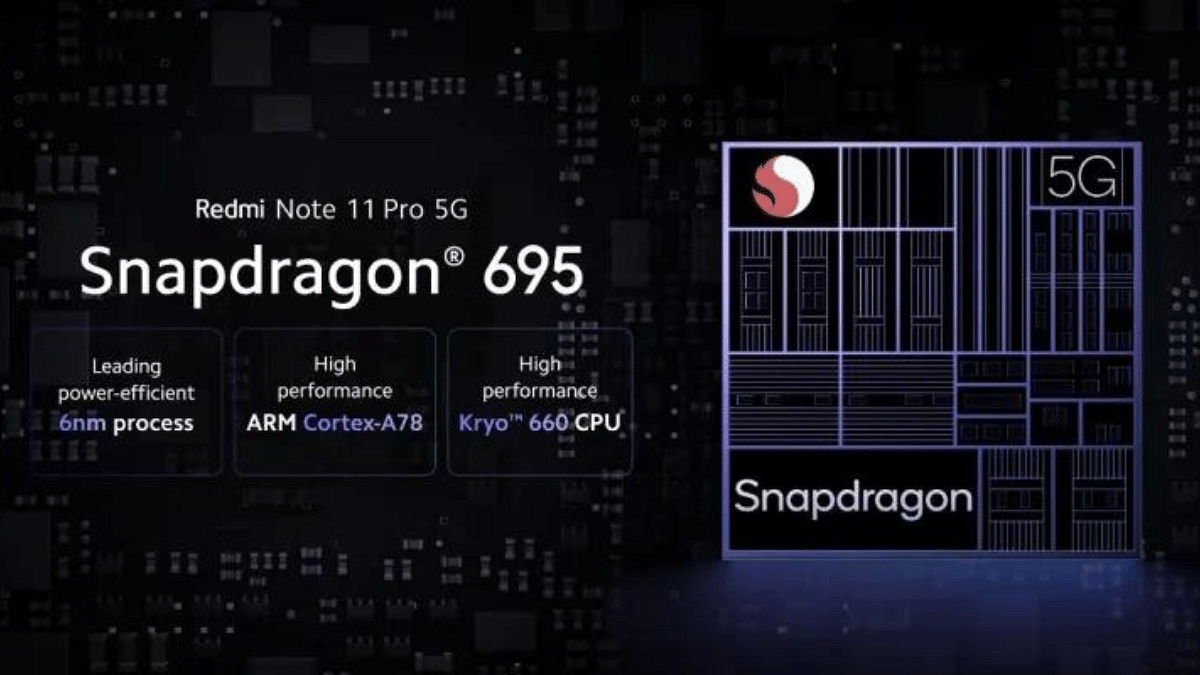
In terms of CPU architecture, the Snapdragon 695 is equipped with 2 Kryo 660 Gold cores (Cortex-A78) clocked at 2.2 GHz and 6 Kryo 660 Silver cores (Cortex-A55) running at 1.8 GHz. Meanwhile, the Dimensity 7050 edges slightly ahead with its 2 Cortex-A78 cores hitting a frequency of 2.6 GHz and its 6 Cortex-A55 cores running at 2 GHz. This suggests a potentially better performance for the Dimensity 7050 due to its higher clocked cores.

Also Read: MediaTek Dimensity 7050 Vs Snapdragon 8 Gen 1: Best Mid-Range Gaming Chipset 2023

Qualcomm Snapdragon 695 Vs MediaTek Dimensity 7050: GPU Comparison

SpecificationQualcomm Snapdragon 695MediaTek Dimensity 7050
GPUAdreno 619Mali-G68 MC4
GPU Frequency (MHz)950800
Shaders256Not specified
ArchitectureAdreno (not specified)Valhall 2nd gen
FLOPS486.4 Gigaflops686 Gigaflops
API SupportVulkan 1.1, OpenCL 2.0, DirectX 12.1Vulkan 1.3

For graphics, the Snapdragon 695 is paired with the Adreno 619, having a GPU frequency of 950 MHz and 256 shaders. This GPU supports Vulkan 1.1, OpenCL 2.0, and DirectX 12.1. The Dimensity 7050, on the other hand, boasts the Mali-G68 MC4, part of the Valhall 2nd gen architecture. Despite a lower GPU frequency at 800 MHz, it has higher FLOPS (686 Gigaflops compared to Snapdragon’s 486.4 Gigaflops), hinting at better raw performance. The Mali-G68 also supports the newer Vulkan 1.3.

Also Read: Redmi Pad SE Tablet Launched Snapdragon 680 Chipset, 90Hz Display, And More

Qualcomm Snapdragon 695 Vs MediaTek Dimensity 7050: Memory, Multimedia (ISP) Comparison

SpecificationQualcomm Snapdragon 695MediaTek Dimensity 7050
Memory
RAM TypeLPDDR4XLPDDR5
Max RAM Frequency (MHz)21333200
Max RAM Size8 GB16 GB
Multimedia (ISP)
Display Resolution2520 x 10802520 x 1080
Max Camera Resolution108 MP200 MP
Video Capture1K at 60FPS4K at 30FPS
Video Playback1080p at 60FPS4K at 30FPS
Audio and Video CodecsSimilar supportSimilar support

When it comes to memory, the Dimensity 7050 has an evident advantage. It supports the faster LPDDR5 memory with frequencies up to 3200 MHz and a maximum size of 16 GB, while the Snapdragon 695 supports LPDDR4X with frequencies up to 2133 MHz and a maximum of 8 GB.

For multimedia, both chipsets offer support for high-resolution displays at 2520 x 1080. The Dimensity 7050 pulls ahead in camera support, allowing for a 200MP single camera, compared to the 108MP support of the Snapdragon 695. In terms of video, while Snapdragon 695 captures 1K at 60FPS and plays back at 1080p 60FPS, the Dimensity 7050 offers 4K capture and playback at 30FPS. Both have similar audio and video codec supports.

Also Read: MediaTek Dimensity 7050 Vs Snapdragon 6 Gen 1: Top Mid-Range Gaming Chipset Comparison

Qualcomm Snapdragon 695 Vs MediaTek Dimensity 7050: Final Verdict

Considering the specs, both the Qualcomm Snapdragon 695 and MediaTek Dimensity 7050 offer impressive performances for mid-range chipsets. However, in terms of raw power, the Dimensity 7050 seems to have an edge. It offers higher CPU frequencies, superior GPU performance, faster and larger memory support, and advanced multimedia capabilities.

On the other hand, the Snapdragon 695, while slightly behind, is no slouch and might offer better optimization in certain scenarios, especially given Qualcomm’s reputation for efficient software integration.

For users deciding between devices powered by these chipsets, the choice might ultimately come down to brand preference, device build, camera quality, and software experience. But purely on chipset prowess, the MediaTek Dimensity 7050 takes the lead in this comparison.

Also Read: Qualcomm Snapdragon 4 Gen 1 Vs MediaTek Dimensity 6020: Latest Affordable 5G Chipset For Android Devices

Categories
Chipset Comparison Featured

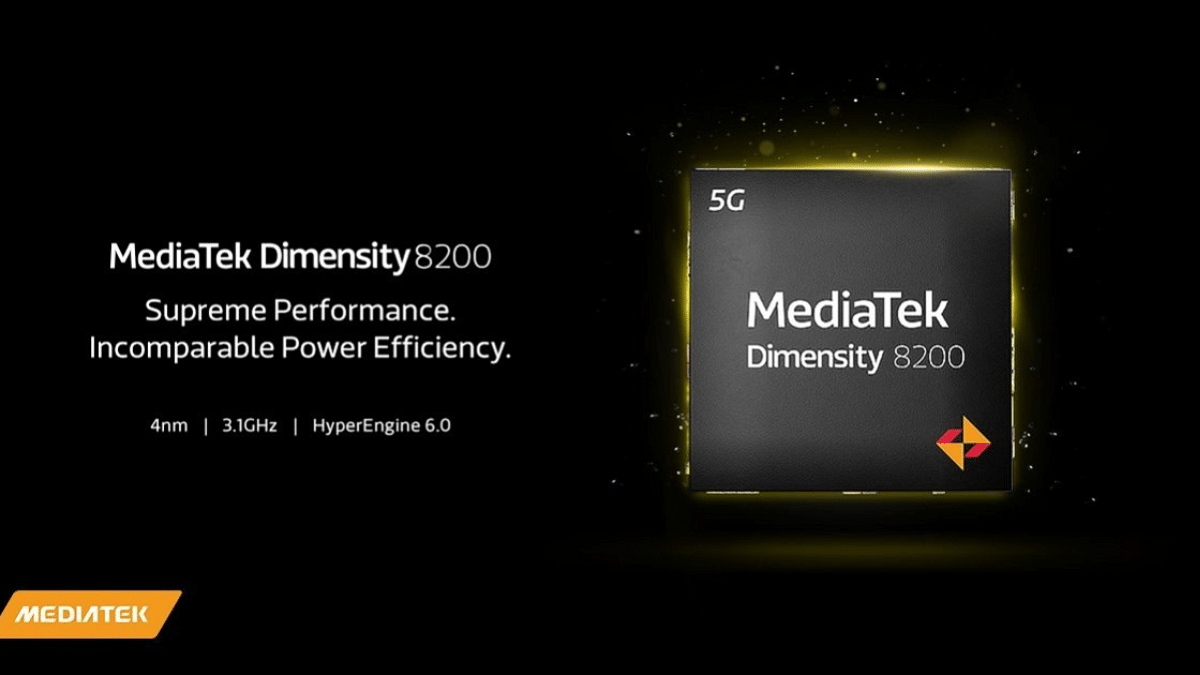
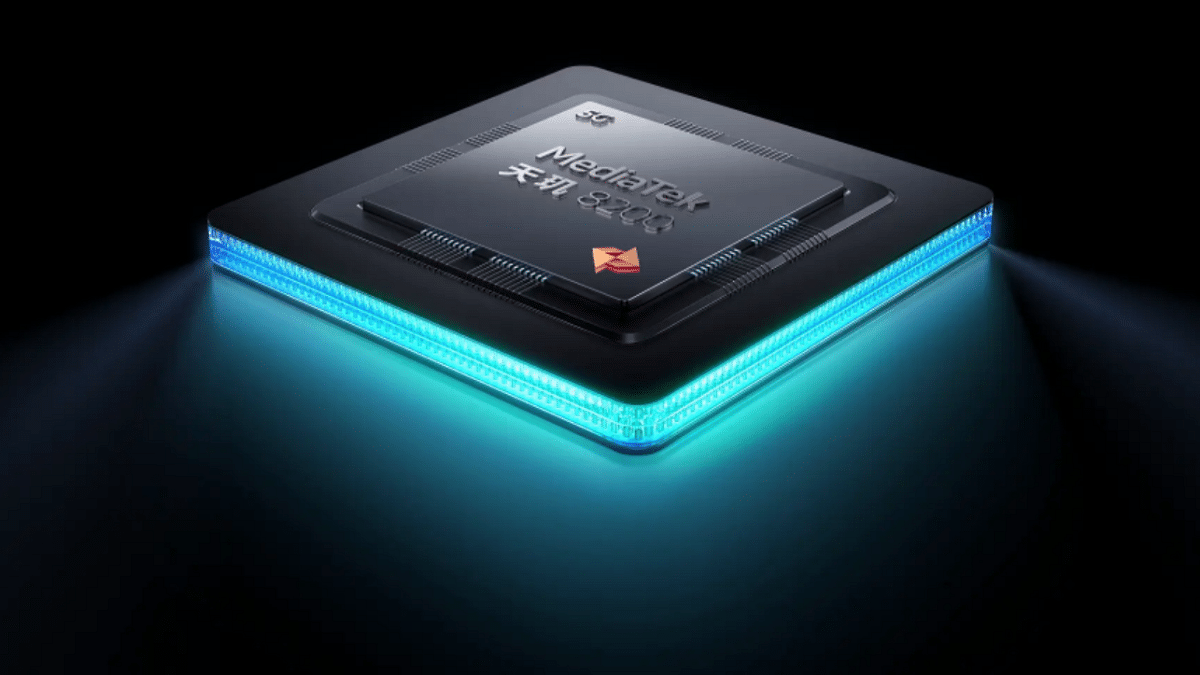
Qualcomm Snapdragon 870 Vs MediaTek Dimensity 8200: Which Is A Better Premium Range Chipset ?

Key Highlights

  • Dimensity 8200 boasts advanced 4nm fabrication.
  • Snapdragon 870 offers superior 8K videography.
  • Dimensity’s GPU delivers higher raw power.

The battle between Qualcomm’s Snapdragon and MediaTek’s Dimensity series has been heating up in recent years, and 2023 is no exception. With the introduction of the Snapdragon 870 and the Dimensity 8200, we are witnessing a fierce competition in the mid-range chipset segment. This article will dissect the two contenders to decide which stands out as the better option.

Also Read: MediaTek Dimensity 7050 Vs Snapdragon 8 Gen 1: Best Mid-Range Gaming Chipset 2023

SpecificationQualcomm Snapdragon 870MediaTek Dimensity 8200
Fabrication Process7 nanometers4 nanometers
GPUAdreno 650 @ 670 MHzMali-G610 MP6 @ 950 MHz
GPU Shading Units51296
GPU Gigaflops1372.1 Gigaflops1442 Gigaflops
Memory Type & FrequencyLPDDR5 @ 2750 MHzLPDDR5 @ 3200 MHz
Maximum Bandwidth44 Gbit/s51.2 Gbit/s
Max Camera Resolution200MP320MP
Video Recording Capabilities8K @ 30FPS4K @ 60FPS

Qualcomm Snapdragon 870 Vs MediaTek Dimensity 8200: Fabrication, CPU Architecture

The Snapdragon 870 boasts an 8-core configuration, splitting its cores between the high-performing Cortex-A77 and the power-efficient Cortex-A55. The prime core clocks at a swift 3.2 GHz. On the other hand, the Dimensity 8200 operates on a similar octa-core setup, though its top Cortex A78 core runs slightly slower at 3.1 GHz. Both chipsets utilize ARMv8.2-A instruction sets.

From a fabrication standpoint, while Snapdragon 870 uses a 7-nanometer process, Dimensity 8200 ups the game with a more advanced 4-nanometer process, hinting at potentially better power efficiency and performance.

Also Read: Snapdragon 7 Gen 1 Vs MediaTek Dimensity 6080: Battle Of Top Mid- Range Chipset 2023

Qualcomm Snapdragon 870 Vs MediaTek Dimensity 8200: GPU Comparison

When it comes to graphics, Snapdragon 870 employs the Adreno 650 GPU clocking at 670 MHz. The GPU has 512 shading units and offers 1372.1 Gigaflops in terms of floating-point operations.

Dimensity 8200, in contrast, runs on the Mali-G610 MP6 GPU with a faster 950 MHz clock speed. However, it has fewer shading units at 96 but delivers slightly better performance with 1442 Gigaflops. With both supporting DirectX version 12, the GPUs are neck and neck, with the Dimensity 8200 edging ahead in raw power.

Also Read: MediaTek Dimensity 6100+ Chipset Launched: New SoC For Mid-Range 5G Phones?

Qualcomm Snapdragon 870 Vs MediaTek Dimensity 8200: Memory, Multimedia (ISP) Comparison

On the memory front, both chipsets support LPDDR5 RAM, but Dimensity 8200 takes a slight lead with a higher frequency of 3200 MHz compared to Snapdragon 870’s 2750 MHz. This translates to faster data transfers with Dimensity’s maximum bandwidth reaching 51.2 Gbit/s against Snapdragon’s 44 Gbit/s.

For multimedia enthusiasts, the Snapdragon 870 can support a camera with up to 200MP resolution and offers 8K video recording at 30FPS. The Dimensity 8200 raises the bar with support for a whopping 320MP camera, although it sticks to 4K video recording at 60FPS. Both chips cover a wide array of video and audio codecs, ensuring compatibility with diverse multimedia formats.

Also Read: MediaTek Dimensity 7050 Vs Qualcomm Snapdragon 870: Best Value Flagship Chipset

Qualcomm Snapdragon 870 Vs MediaTek Dimensity 8200: Final Verdict

Selecting a winner between these two chipsets is no simple task. While the Snapdragon 870 offers marginally better CPU speeds and superior camera support, the Dimensity 8200 stands out with its advanced fabrication process, slightly superior GPU, and faster memory.

For users prioritizing camera features, especially videography, Snapdragon 870 might be the more attractive choice. However, for general performance, gaming, and multitasking, the Dimensity 8200 appears to offer better overall capabilities.

Also Read: Qualcomm Snapdragon 4 Gen 1 Vs MediaTek Dimensity 6020: Latest Affordable 5G Chipset For Android Devices

Categories
Comparison Featured Tablet

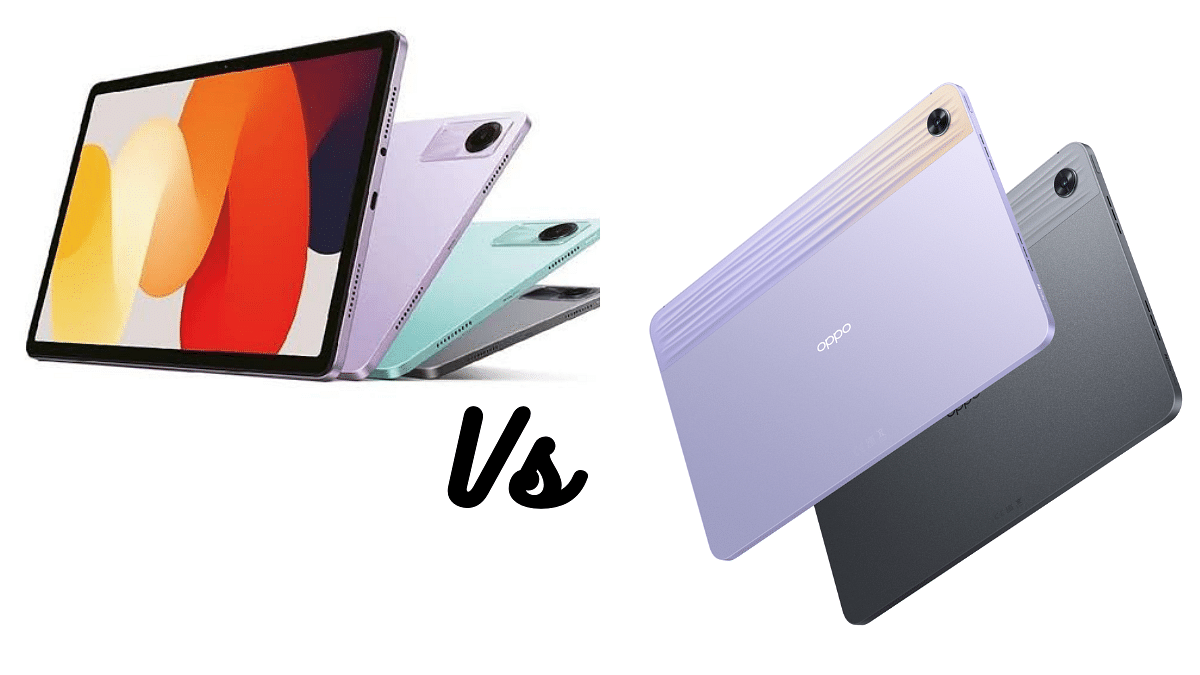
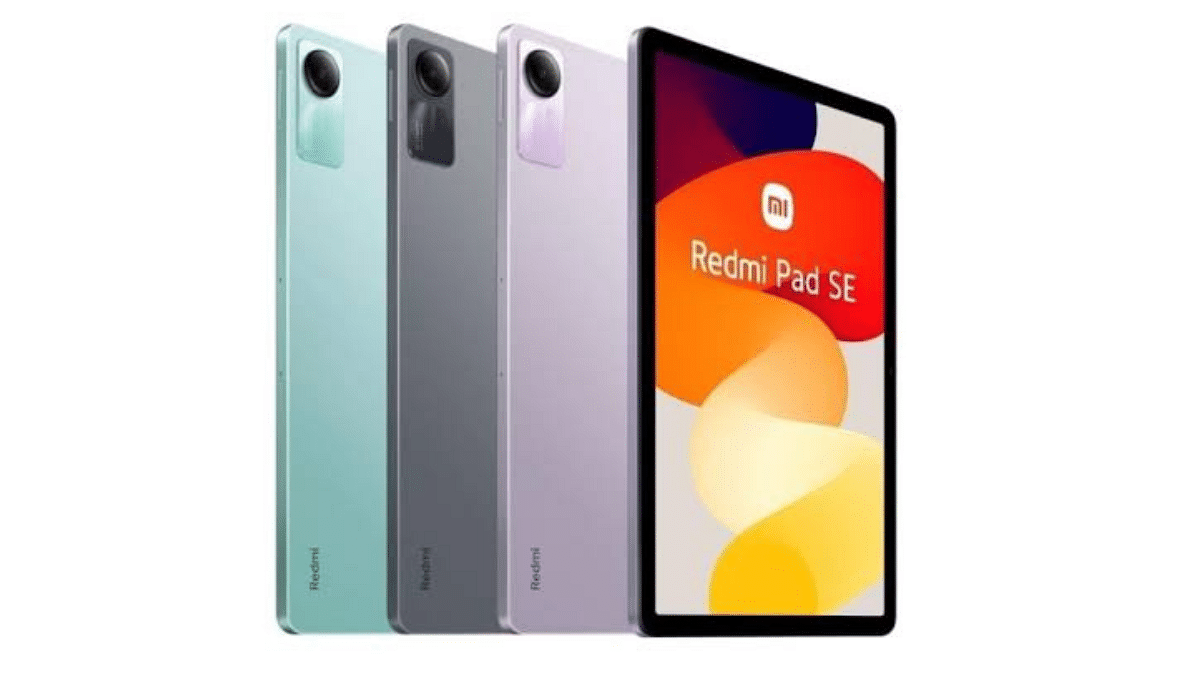
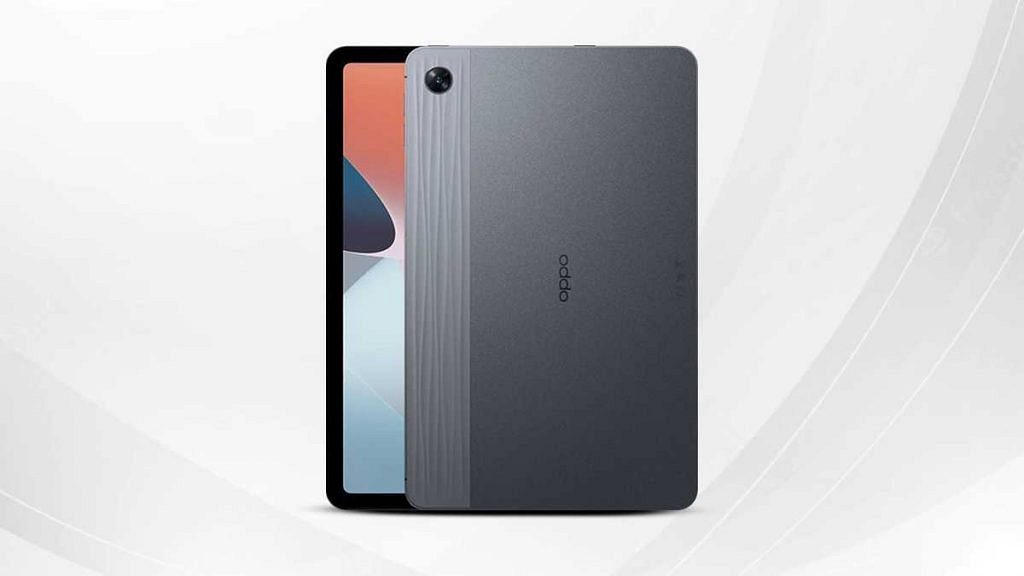
Redmi Pad SE Vs OPPO Pad Air Tablet Comparison: New-Gen Mid-Range Tablet For Daily Use

Key Highlights

  • Redmi Pad SE debuted as the latest mid-range Android tablet from Xiaomi
  • Competes against the OPPO Pad Air tablet
  • Both tablets pack equivalent hardware for performance delivery

Xiaomi recently unveiled two new tablet including the Xiaomi Pad 6Max and the Redmi Pad SE. The former is targeted at the premium audience, while the latter has been introduced for the mid-range consumers. We already have witnessed multiple new tablet launches in the mid-tier segment out of which a few have emerged as a potent daily driver. While the Redmi Pad SE fits well in this category, it certainly has got some stiff competition out there. The OPPO Pad Air powered by the Snapdragon 680 chipset is one of the rivals that goes directly up against the Redmi Pad SE. Which model out of these two fairs well in competition? Read on below:

Redmi Pad SE Vs OPPO Pad Air: Display Specs

Display Parameters Xiaomi Redmi Pad SEOPPO Pad Air
Size11-inch10.36-inch
Panel typeLCDLCD
Resolution 1200 x 19201200 x 2000
Refresh rate 90Hz 60Hz

The newly launched Redmi Pad SE tablet model features an 11-inch display. The panel type is LCD which supports 90Hz refresh rate and 1200 x 1920 pixels screen resolution. This tablet’s screen offers a 400 nots peak brightness and 207 PPI pixel density.

The OPPO Pad Air has a slightly smaller 10.36-inch display which is also an IPS LCD panel similar to the Pad SE. The screen resolution is 1200 x 2000 pixels and the peak brightness levels are 360 nits which is again slightly lower compared to the Redmi Pad SE tablet variant. The refresh rate is also standard with the Pad Air, i.e., 60Hz. While both the tablets offer a decent display hardware, the higher refresh rate and resolution allows the Redmi Pad SE to take a lead here.

Also Read: Best Tablets Under Rs. 20,000 Available In India

Redmi Pad SE Vs OPPO Pad Air: Chipset Comparison

Performance MetricsRedmi Pad SEOPPO Pad Air
ChipsetSnapdragon 680 4G chipsetSnapdragon 680 4G chipset
RAMUp to 8GBUp to 6GB
StorageUp to 128GBUp to 128GB

Both Redmi Pad SE and the OPPO Pad Air uses the same Snapdragon 680 4G chipset for performance delivery. The mid-range Qualcomm chipset has octa-cores and is combined with Adreno 610 GPU for graphics.

While the Xiaomi Pad SE can be purchased with up to 8GB RAM and 128GB storage, the OPPO Pad Air offers up to 6GB RAM and 128GB storage option. The power delivery is almost similar with both Redmi pad SE and the OPPO Pad Air tablet models, but multitasking would be slightly better with the high-end 8GB RAM variant of the Redmi Pad SE.

Also Read: Buying A New Tablet: Here’s The List OF Best Tablets With Keyboard In India

Redmi Pad SE Vs OPPO Pad Air: Camera Features Comparison

Camera Parameters Redmi Pad SEOPPO Pad Air
Rear camera 8MP8MP
Front camera 5MP5MP

The Redmi Pad SE tablet is launched with a basic set of camera hardware. It comes with a single 8MP rear camera that has an f/2.2 aperture. It is capable of recording 1080p@30 fps videos. This new Redmi tablet sports a 5MP selfie snapper upfront. On the other hand, the OPPO Pad Air tablet also has a similar camera hardware where the back panel features an 8MP main sensor with an f/2.0 aperture, while the front panel accommodates a 5MP lens for selfies.

Also Read: Google Pixel Tablet Vs OnePlus Pad Vs Vivo Pad 2: Top Value Flagship Android Tablet In 2023

Redmi Pad SE Vs OPPO Pad Air: Battery Specs

The Redmi Pad SE tablet is packed with an 8,000 mAh battery pack which gets a standard 10W charging support. This tablet can easily last more than half a day with a single charge if being used moderately. On the other hand, the OPPO Pad Air features a smaller 7,100 mAh battery pack with 18W quick charging technology.

Also Read: Best Budget Android Tablets Under Rs. 10,000 In India In 2023

Categories
Chipset Comparison Featured

MediaTek Dimensity 7050 Vs Snapdragon 8 Gen 1: Best Mid-Range Gaming Chipset 2023

Key Highlights

  • Dimensity 7050: Balanced mid-range gaming.
  • Snapdragon 8 Gen 1: Flagship gaming prowess.
  • Full comparison below

In the rapidly evolving world of smartphone technology, gaming performance has become a crucial aspect for consumers. MediaTek and Snapdragon, two prominent chipset manufacturers, have released their latest offerings – the Dimensity 7050 and Snapdragon 8 Gen 1, both vying for the title of the best gaming chipset in 2023.

Let’s delve into a comprehensive comparison of these two contenders across various parameters.

Also Read: Snapdragon 7 Gen 1 Vs MediaTek Dimensity 6080: Battle Of Top Mid- Range Chipset 2023

MediaTek Dimensity 7050 Vs Snapdragon 8 Gen 1: Fabrication, CPU Architecture

The MediaTek Dimensity 7050 is built on the 6-nanometer process and features an octa-core CPU configuration. It comprises two powerful Cortex-A78 cores clocked at 2.6 GHz and six energy-efficient Cortex-A55 cores running at 2 GHz. On the other hand, the Snapdragon 8 Gen 1 takes advantage of the 4-nanometer process, featuring an octa-core CPU as well. This setup includes one Cortex-X2 core at 3 GHz, three Cortex-A710 cores at 2.5 GHz, and four Cortex-A510 cores at 1.8 GHz. The Snapdragon 8 Gen 1’s newer ARMv9-A instruction set provides a potential advantage in future-proofing.

Also Read: MediaTek Dimensity 7050 Vs Snapdragon 6 Gen 1: Top Mid-Range Gaming Chipset Comparison

MediaTek Dimensity 7050 Vs Snapdragon 8 Gen 1:GPU Comparison

In terms of graphical prowess, the MediaTek Dimensity 7050 boasts the Mali-G68 MC4 GPU based on the Valhall 2 architecture, operating at 800 MHz. With 4 execution units and 64 shading units, it delivers a respectable 686 Gigaflops of computing power. The Snapdragon 8 Gen 1, however, sports the Adreno 730 GPU from the Adreno 700 series, running at 818 MHz. With 3 execution units and 768 shading units, it significantly surpasses the Dimensity 7050 with 2513 Gigaflops of performance. This makes the Snapdragon 8 Gen 1 a more formidable choice for graphically intensive gaming.

Also Read: MediaTek Dimensity 7050 Vs Snapdragon 7 Gen 1: Best Mid-Range Gaming Chipset

MediaTek Dimensity 7050 Vs Snapdragon 8 Gen 1:Memory, Multimedia (ISP) Comparison

Both chipsets employ LPDDR5 memory with a frequency of 3200 MHz and support for up to 16 GB of RAM. However, the Snapdragon 8 Gen 1 takes a lead in memory bandwidth, boasting a max bandwidth of 51.2 Gbit/s compared to Dimensity 7050’s unspecified bandwidth. In terms of multimedia capabilities, both chips support 200MP camera resolutions and 4K video capture at 30FPS. The Snapdragon 8 Gen 1 surges ahead with its 8K video capture and playback capabilities at 30FPS and 4K at 120FPS, while the Dimensity 7050 sticks with the standard 4K at 30FPS for both capture and playback.

Also Read: Qualcomm Snapdragon 8 Gen 3 More Details Leaked: New CPU, GPU To Improve Performance Efficiency

MediaTek Dimensity 7050 Vs Snapdragon 8 Gen 1: Final Verdict

The MediaTek Dimensity 7050 is positioned as a mid-range chipset, offering a balanced performance profile with a focus on power efficiency. Its Mali-G68 MC4 GPU and octa-core CPU configuration deliver commendable gaming performance, making it a solid choice for mid-range smartphones.

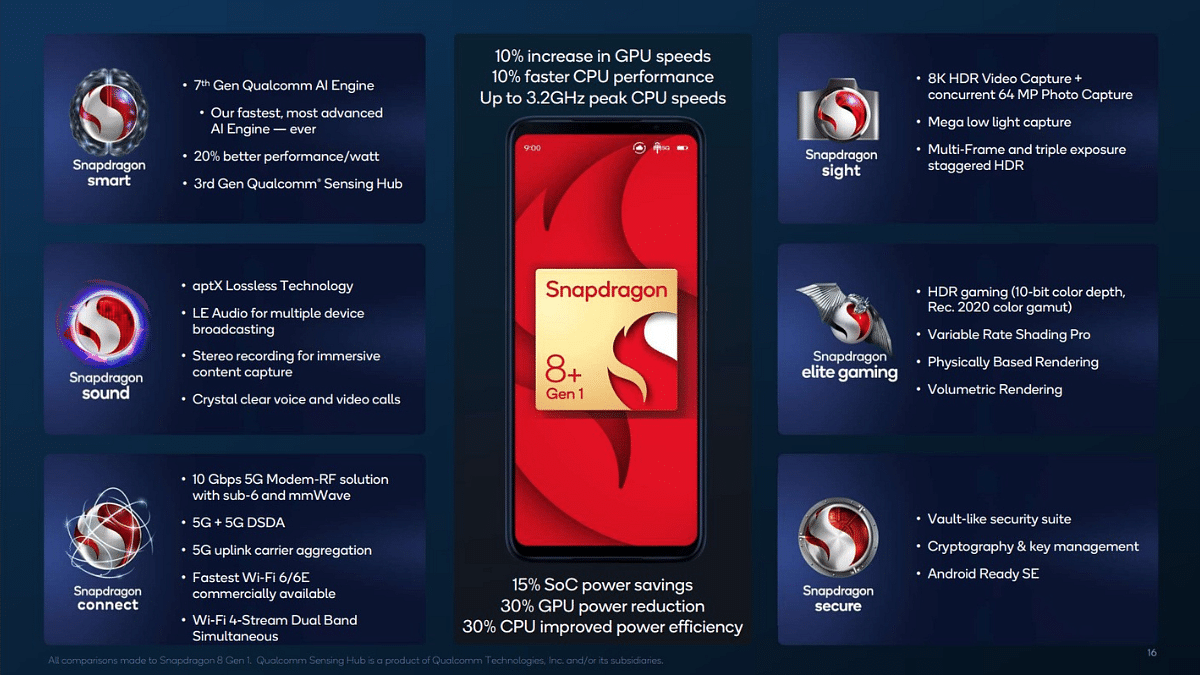
However, the Snapdragon 8 Gen 1 is a top competitor with stronger tools. Its Adreno 730 GPU, improved CPU design, and better memory power create a gaming experience that stands out from the rest. It can also handle 8K videos, making it great for people who enjoy multimedia content.

Also Read: Vivo Pad Air With Snapdragon 870 Chipset, 12GB RAM Goes Official: Price, Global Availability

Categories
Chipset Comparison Featured

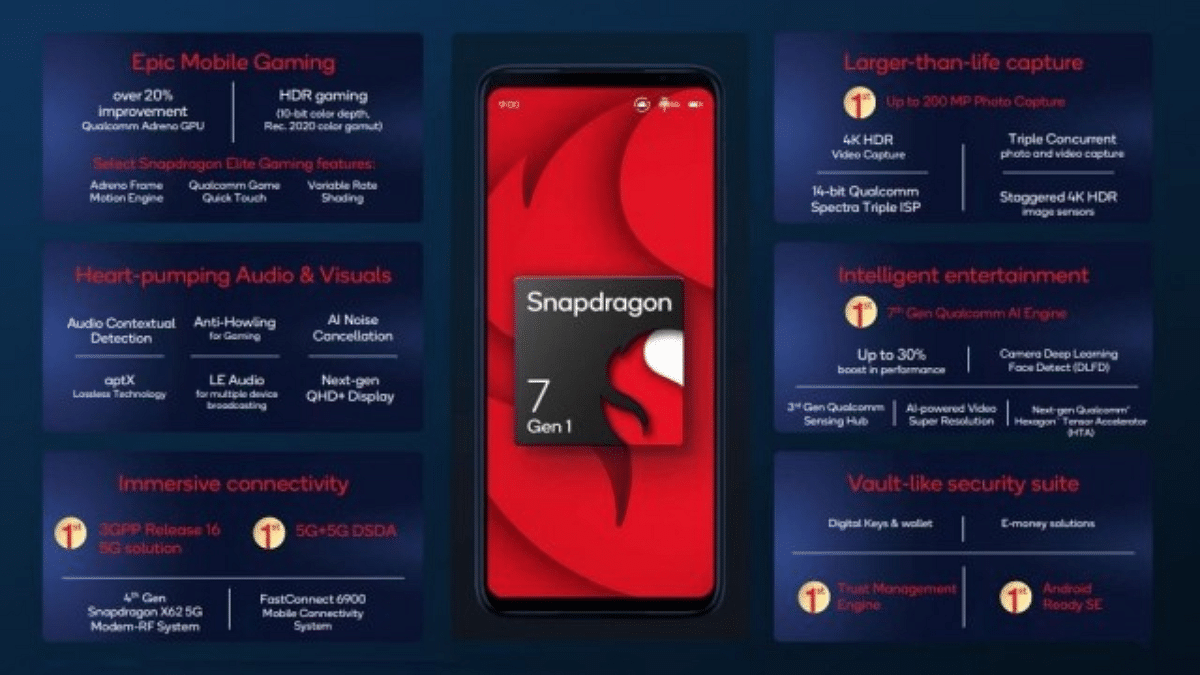
Snapdragon 7 Gen 1 Vs MediaTek Dimensity 6080: Battle Of Top Mid- Range Chipset 2023

Key Highlights

  • Snapdragon 7 Gen 1: 4nm Powerhouse
  • MediaTek Dimensity 6080: Cost-Effective Performance
  • Comparison of Top Mid-Range Chipsets 2023

The mid-range devices are becoming increasingly popular due to their impressive performance without the hefty price tags of flagship devices. Two of the most anticipated mid-range chipsets of 2023 are the Snapdragon 7 Gen 1 from Qualcomm and the MediaTek Dimensity 6080.

In this comparison article, we will dive into the key features of both chipsets to determine which one stands out as the top mid-range gaming chipset.

SpecificationSnapdragon 7 Gen 1MediaTek Dimensity 6080
Fabrication Process4 nm6 nm
CPU ArchitectureOcta-coreOcta-core
CPU Cores1x 2.4 GHz – Cortex-A7102x 2.4 GHz – Cortex-A76
3x 2.36 GHz – Cortex-A7106x 2 GHz – Cortex-A55
4x 1.8 GHz – Cortex-A510
GPUAdreno 644ARM Mali-G57 MC2
Memory TypeLPDDR5LPDDR4x
Memory Frequency3200 MHz2133 MHz
Max Bandwidth25.6 Gbit/s25.6 Gbit/s
Multimedia (ISP)Dual Camera up to 16MP+16MPSingle Camera up to 108MP
Video Capture4K at 30FPS2K at 30FPS
Connectivity5G support5G support
Wi-FiWi-Fi 6Wi-Fi 5
Bluetooth5.35.1
Max Display Resolution3360 x 16002520 x 1080
GPU ArchitectureAdreno 600Valhall

Also Read: MediaTek Dimensity 7050 Vs Snapdragon 6 Gen 1: Top Mid-Range Gaming Chipset Comparison

Snapdragon 7 Gen 1 Vs MediaTek Dimensity 6080: Fabrication, CPU Architecture

The Snapdragon 7 Gen 1 is manufactured on an advanced 4-nanometer process by TSMC, featuring an octa-core CPU configuration. It consists of one Cortex-A710 core clocked at 2.4 GHz, three Cortex-A710 cores running at 2.36 GHz, and four Cortex-A510 cores clocked at 1.8 GHz.

On the other side, MediaTek Dimensity 6080 is built on a 6-nanometer process and sports an octa-core CPU architecture, combining two high-performance Cortex-A76 cores running at 2.4 GHz and six power-efficient Cortex-A55 cores operating at 2.0 GHz.

While both chipsets offer excellent performance for mid-range devices, the Snapdragon 7 Gen 1’s advanced 4nm process may provide a slight edge in power efficiency and heat management.

Also Read: MediaTek Dimensity 7050 Vs Snapdragon 7 Gen 1: Best Mid-Range Gaming Chipset

Snapdragon 7 Gen 1 Vs MediaTek Dimensity 6080: GPU Comparison

The Snapdragon 7 Gen 1 is equipped with the Adreno 644 GPU from Qualcomm’s Adreno 600 series. It features two execution units and 384 shading units, delivering up to 1014 Gigaflops of computing power.

On the other hand, the MediaTek Dimensity 6080 boasts the ARM Mali-G57 MC2 GPU based on the Valhall architecture. With two GPU cores, this configuration offers capable gaming performance.

Though both GPUs excel at handling mobile games with ease, the Snapdragon 7 Gen 1’s Adreno 644 leaps forward, showcasing a slight edge in graphical prowess.

Also Read: MediaTek Dimensity 7050 Vs Qualcomm Snapdragon 870: Best Value Flagship Chipset

Snapdragon 7 Gen 1 Vs MediaTek Dimensity 6080: Memory, Multimedia (ISP) Comparison

The Snapdragon 7 Gen 1 supports LPDDR5 RAM running at 3200 MHz, providing fast and efficient multitasking. It has a 2x 16 Bit memory bus, offering a maximum bandwidth of 25.6 Gbit/s.

On the other hand, MediaTek Dimensity 6080 supports LPDDR4x RAM with a frequency of 2133 MHz and a 2x 16 Bit memory bus, allowing a maximum bandwidth of 25.6 Gbit/s.

Both chipsets offer competitive memory performance for mid-range devices, ensuring smooth multitasking and gaming experiences.

In terms of multimedia capabilities, both chipsets are equipped with advanced ISP (Image Signal Processor) to handle camera functionalities. The Snapdragon 7 Gen 1 supports up to 16MP + 16MP dual-camera setups, capturing videos at 4K resolution at 30FPS. The Dimensity 6080 can handle up to 108MP single-camera resolution and offers 2K video capture at 30FPS.

Also Read: MediaTek Dimensity 6100+ Chipset Launched: New SoC For Mid-Range 5G Phones?

Snapdragon 7 Gen 1 Vs MediaTek Dimensity 6080: Final Verdict

Both the Snapdragon 7 Gen 1 and MediaTek Dimensity 6080 are impressive mid-range chipsets designed to deliver powerful and efficient performance for mid-range smartphones. The Snapdragon 7 Gen 1 boasts an advanced 4-nanometer fabrication process and a capable Adreno 644 GPU, offering excellent power efficiency and graphical performance.

On the other hand, MediaTek Dimensity 6080 stands out with its cost-effective 6-nanometer process, providing commendable CPU and GPU capabilities. Its support for up to 108MP single-camera resolution makes it appealing to photographers.

Also Read: Qualcomm Snapdragon 4 Gen 1 Vs MediaTek Dimensity 6020: Latest Affordable 5G Chipset For Android Devices

Categories
Chipset Comparison Featured Info

MediaTek Dimensity 7050 Vs Snapdragon 6 Gen 1: Top Mid-Range Gaming Chipset Comparison

Key Highlights

  • Dimensity 7050: Powerful AI and Multimedia
  • Snapdragon 6 Gen 1: Advanced 4nm Fabrication
  • Best Mid-Range Chipsets for Gaming

When it comes to mid-range smartphones, having a powerful and efficient chipset is crucial, especially for gamers. MediaTek and Qualcomm are renowned for their cutting-edge processors, and in this comparison article, we’ll evaluate the MediaTek Dimensity 7050 against the Snapdragon 6 Gen 1 to determine which one reigns as the top mid-range gaming chipset.

SpecificationMediaTek Dimensity 7050Snapdragon 6 Gen 1
Fabrication Process6 nm4 nm
CPU Cores2x Cortex-A78 @ 2.6 GHz4x Cortex-A78 @ 2.2 GHz
6x Cortex-A55 @ 2.0 GHz4x Cortex-A55 @ 1.8 GHz
GPUMali-G68 MC4Adreno 710
Memory TypeLPDDR5LPDDR5
Memory Frequency3200 MHz3200 MHz
Memory Bus4x 16 Bit2x 16 Bit
Multimedia (ISP)MediaTek APU 550Hexagon NPU
Storage Types SupportedUFS 2.1, 2.2, 3.0, 3.1UFS 2.2

Also Read: MediaTek Dimensity 7050 Vs Snapdragon 7 Gen 1: Best Mid-Range Gaming Chipset

MediaTek Dimensity 7050 Vs Snapdragon 6 Gen 1: Fabrication, CPU Architecture

The MediaTek Dimensity 7050 is fabricated on a 6-nanometer process, while the Snapdragon 6 Gen 1 boasts a more advanced 4-nanometer process, giving it an edge in power efficiency and thermal management.

In terms of CPU architecture, the Dimensity 7050 features an octa-core configuration, comprising two powerful Cortex-A78 cores clocked at 2.6 GHz and six efficient Cortex-A55 cores running at 2.0 GHz. On the other hand, the Snapdragon 6 Gen 1 also offers an octa-core setup but with four Cortex-A78 cores clocked at 2.2 GHz and four Cortex-A55 cores running at 1.8 GHz.

The Snapdragon 6 Gen 1’s advanced 4-nanometer process and slightly higher CPU clock speeds give it a minor advantage in overall CPU performance over the Dimensity 7050.

Also Read: Snapdragon 4 Gen 2 Budget 5G Chipset Launched

MediaTek Dimensity 7050 Vs Snapdragon 6 Gen 1: GPU Comparison

The MediaTek Dimensity 7050 is equipped with the Mali-G68 MC4 GPU, featuring four execution units and 64 shading units, operating at a frequency of 800 MHz. On the other hand, the Snapdragon 6 Gen 1 comes with the Adreno 710 GPU, which has an architecture from the Adreno 700 series and supports Vulkan version 1.1 and OpenCL version 2.0.

Although both GPUs are capable of handling modern mobile games, the Adreno 710 in the Snapdragon 6 Gen 1 offers slightly better graphical performance than the Mali-G68 MC4, giving it an advantage for gamers.

Also Read: MediaTek Dimensity 6100+ Chipset Launched: New SoC For Mid-Range 5G Phones?

MediaTek Dimensity 7050 Vs Snapdragon 6 Gen 1: Memory, Multimedia (ISP) Comparison

Both chipsets support LPDDR5 RAM with the same frequency of 3200 MHz. However, the Snapdragon 6 Gen 1 has a narrower memory bus, allowing a maximum bandwidth of 22 Gbit/s, while the Dimensity 7050 has a wider bus with a maximum bandwidth of 64 Gbit/s. This grants Dimensity 7050 a slight advantage in memory performance.

Moving on to multimedia, the Dimensity 7050 is equipped with the MediaTek APU 550 Neural Processor, offering excellent AI processing power. It supports various storage types, including UFS 2.1, UFS 2.2, UFS 3.0, and UFS 3.1, and it can handle a maximum display resolution of 2520 x 1080 and up to 200MP single-camera resolution.

Meanwhile, the Snapdragon 6 Gen 1 features a Hexagon Neural Processor (NPU) and supports UFS 2.2 storage. It can also handle a maximum display resolution of 2520 x 1080 and up to 200MP single-camera resolution.

While both chipsets offer impressive multimedia capabilities, the Dimensity 7050’s wider memory bus gives it a slight edge in memory performance, making it favourable for multitasking and handling memory-intensive tasks during gaming.

Also Read: Qualcomm Snapdragon 4 Gen 1 Vs MediaTek Dimensity 6020: Latest Affordable 5G Chipset For Android Devices

MediaTek Dimensity 7050 Vs Snapdragon 6 Gen 1: Final Verdict

Both the MediaTek Dimensity 7050 and Snapdragon 6 Gen 1 are powerful mid-range gaming chipsets with their strengths. The Snapdragon 6 Gen 1’s advanced 4-nanometer fabrication process and slightly higher CPU clock speeds contribute to a minor advantage in overall CPU performance. Additionally, the Adreno 710 GPU provides better graphical performance for an enhanced gaming experience.

On the other hand, the Dimensity 7050 shines with its wider memory bus, offering better memory performance and multitasking capabilities. Its MediaTek APU 550 Neural Processor delivers excellent AI processing power, making it appealing for multimedia-focused tasks during gaming.

Also Read: MediaTek Dimensity 7200 Vs Qualcomm Snapdragon 870 Premium Mobile Processor Comparison: CPU, GPU, Memory, And More