Categories
Accessories Comparison

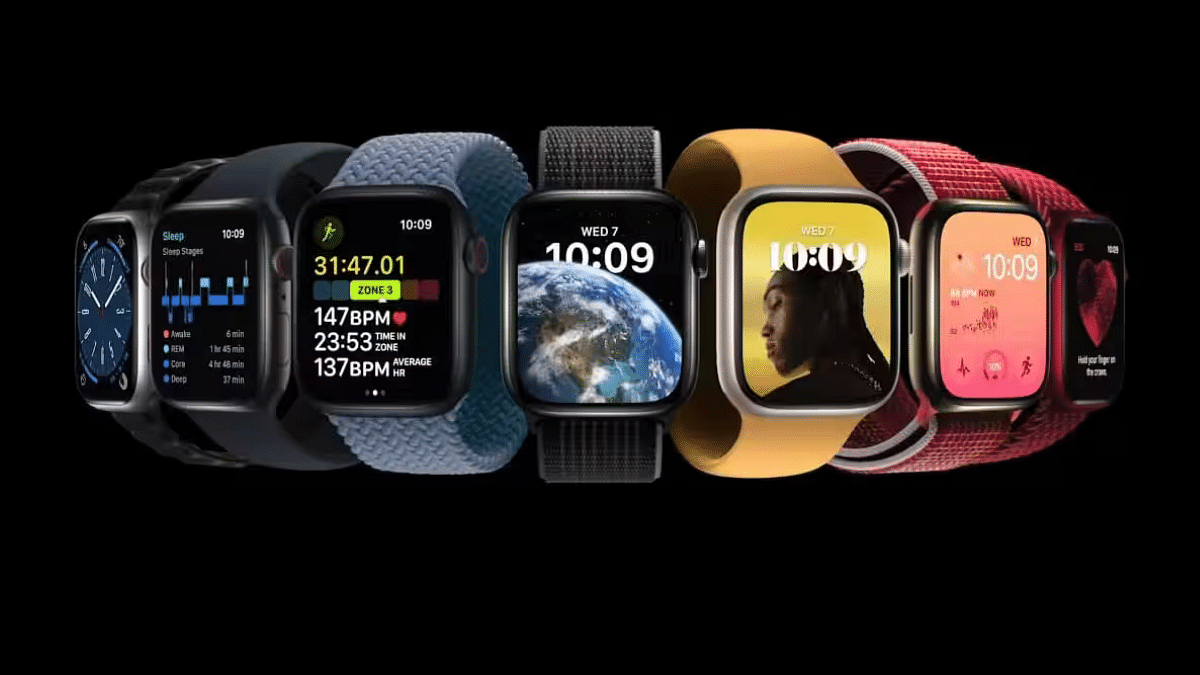
Apple Watch Series 8 Vs Apple Watch Series 9 Comparison

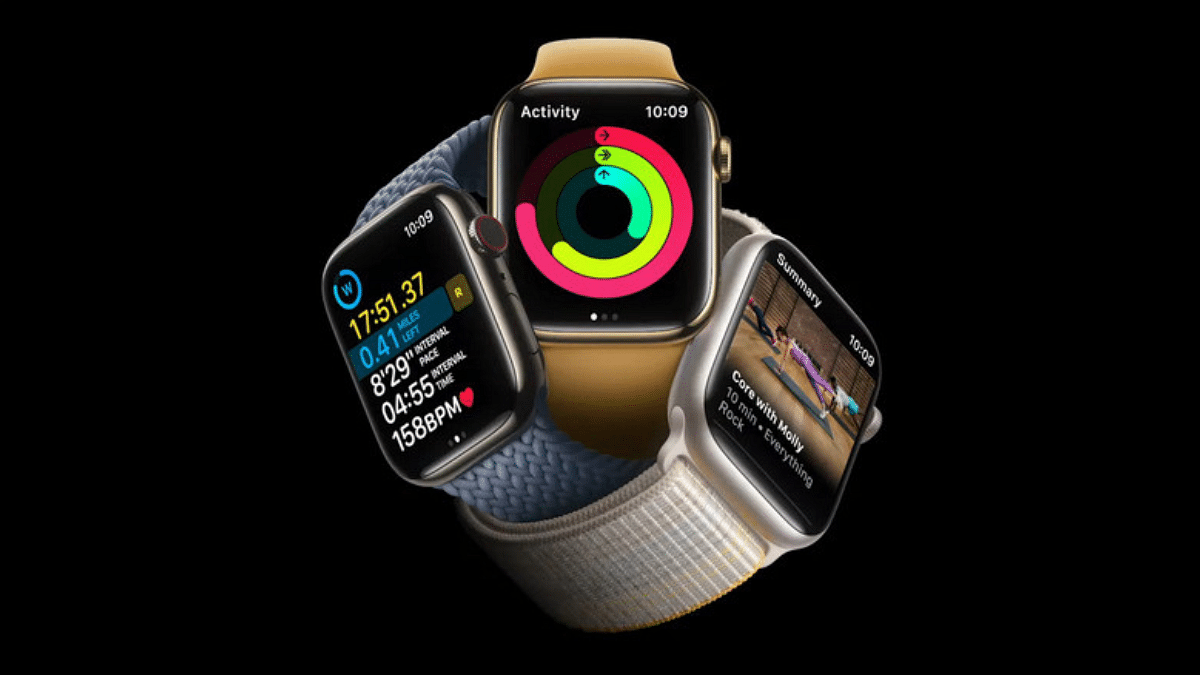
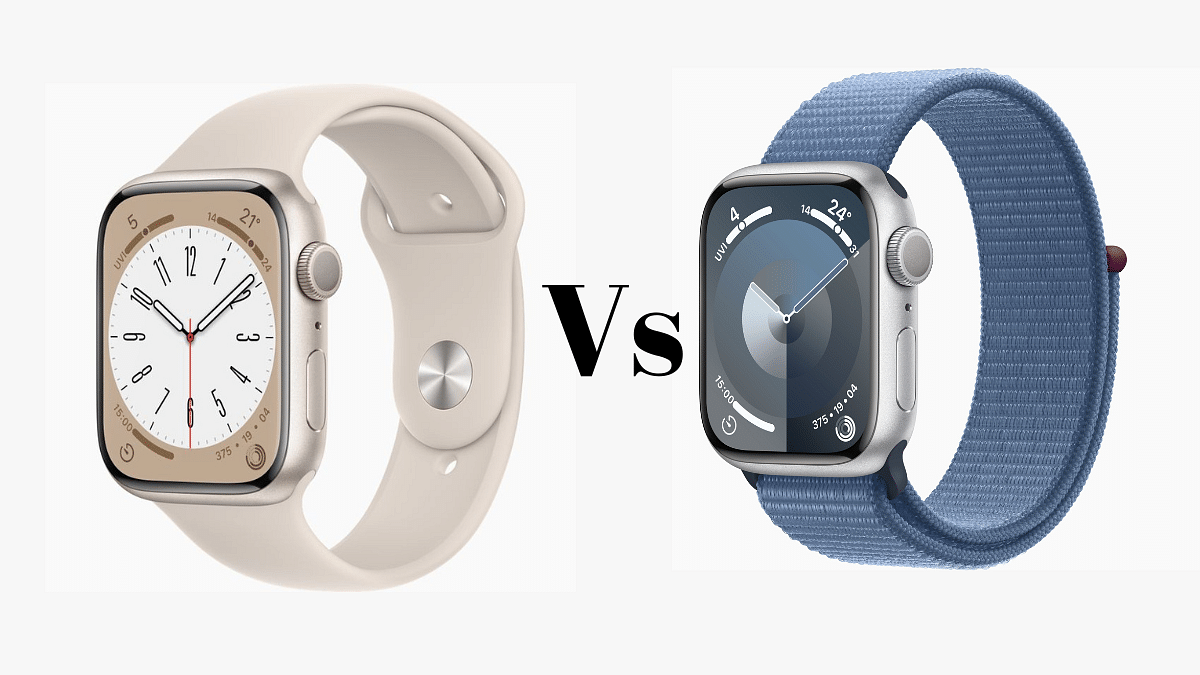
Apple keeps making better smartwatches, and now we have the Apple Watch Series 9, which builds on the Series 8. But what’s the difference? We’re here to explain it in simple terms. We’ll compare these two watches in terms of how they look, what their screens are like, how fast they are, what features they have, and more. By the end, you’ll have a clearer idea of which one suits you best.

Also Read: Apple Watch Ultra 2 Launched At Wanderlust 2023 Event: Apple’s Most Rugged Outdoor Smartwatch

Apple Watch Series 8 Vs Apple Watch Series 9: Design and Build

SpecificationApple Watch Series 8Apple Watch Series 9
Dimensions45 x 38 x 10.7 mm45 x 38 x 10.7 mm
Weight42.3 g (41mm), 51.5 g (45mm)42.3 g (41mm), 51.5 g (45mm)
BuildGlass front, ceramic/sapphire crystal back, stainless steel frameGlass front, ceramic/sapphire crystal back, stainless steel frame
IP CertificationIP6X certifiedIP6X certified
Water Resistance50m water resistance50m water resistance
ECG CertificationRegion dependent SW application; HW available on all modelsRegion dependent SW application; HW available on all models

In terms of design and build, both the Series 8 and Series 9 remain nearly identical. They feature the same dimensions, weight, and build materials, making them sleek, durable, and stylish. However, there is one notable change in the Series 9, which is the introduction of a more powerful display.

Also Read: Apple Welcomes Watch Series 8: Check Out Features, Price, And More Details

Apple Watch Series 8 Vs Apple Watch Series 9: Display

SpecificationApple Watch Series 8Apple Watch Series 9
TypeRetina LTPO OLED, 1000 nits (peak)Retina LTPO OLED, 2000 nits (peak)
Size1.9 inches1.9 inches
Resolution484 x 396 pixels484 x 396 pixels
ProtectionSapphire crystal glassSapphire crystal glass
Always-on DisplayYesYes

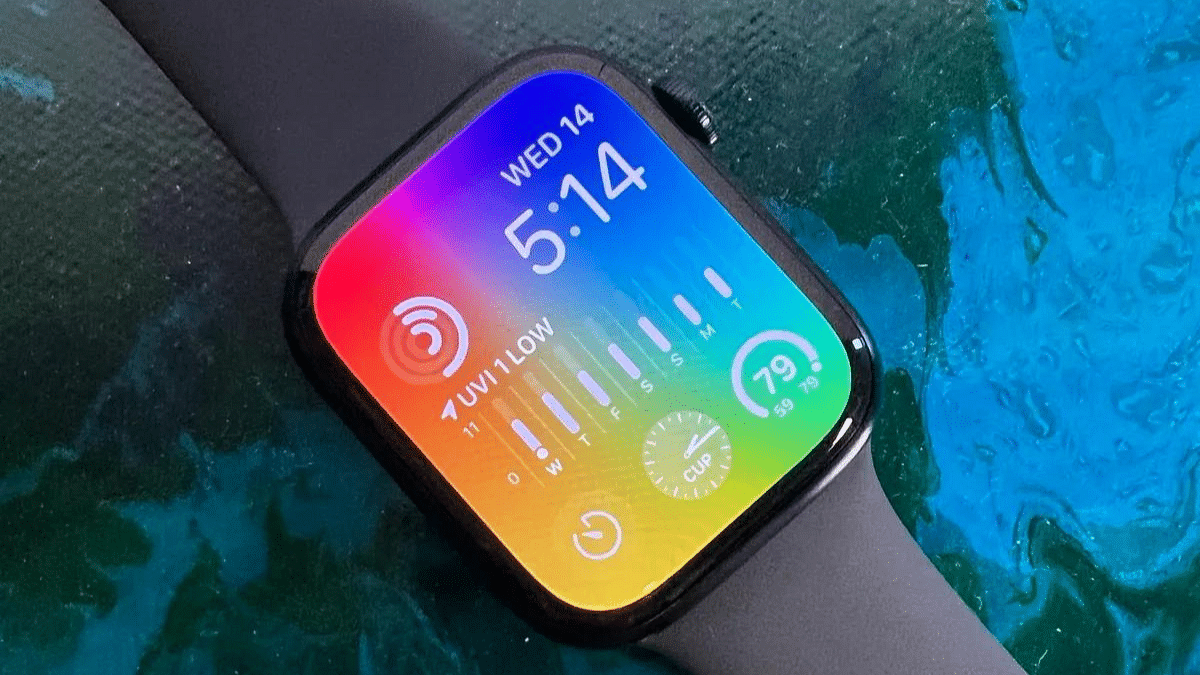
The Series 9 takes the lead with a significantly brighter display, offering a peak brightness of 2000 nits compared to the Series 8’s 1000 nits. This enhancement ensures better visibility in bright sunlight and more vibrant colors.

Also Read: iPhone 15 Series Price Comparison In India, US, UK, Dubai, Vietnam: Where It’s The Cheapest?

Apple Watch Series 8 Vs Apple Watch Series 9: Performance

SpecificationApple Watch Series 8Apple Watch Series 9
Operating SystemwatchOS 9.0, upgradable to 9.6.2watchOS 10
ChipsetApple S8Apple S9
CPUDual-coreDual-core
GPUPowerVRPowerVR
Internal Storage32GB, 1GB RAM64GB

The Series 9 comes with an improved chipset and doubled internal storage, offering a boost in performance and the ability to store more apps and data. The updated watchOS version also indicates that the Series 9 is optimized for the latest software features.

Both the Series 8 and Series 9 maintain the same set of connectivity options and sensors, including Wi-Fi, Bluetooth, GPS, heart rate monitoring, and more. They also support ultra-wideband technology for enhanced spatial awareness.

Also Read: iPhone 14, iPhone 13 Get Major Price Drops In India After iPhone 15 Debut

Apple Watch Series 8 Vs Apple Watch Series 9: Battery, Charging
SpecificationApple Watch Series 8Apple Watch Series 9
Battery TypeLi-Ion 308 mAh, non-removableLi-Ion 308 mAh, non-removable
ChargingWirelessWireless

There is no significant difference in battery life or charging capabilities between the two series. They both comes with 308 mAh battery and offers the convenience of wireless charging.

Also Read: iPhone 15, iPhone 15 Plus Is Here: 48MP Camera, Satellite Roadside Assistance And More Features

Apple Watch Series 8 Vs Apple Watch Series 9: Final Verdict

In the Apple Watch Series 8 vs. Series 9 comparison, we see that the Series 9 brings some notable improvements in display brightness, performance, and internal storage. However, the design, build quality, and core features remain largely the same. Whether you should upgrade from the Series 8 to the Series 9 depends on your specific needs and preferences, but the Series 9 offers a compelling upgrade for those who desire a brighter display and additional storage capacity.

Also Read: Apple Watch Ultra 2 Launched At Wanderlust 2023 Event: Apple’s Most Rugged Outdoor Smartwatch
Categories
Comparison Mobile

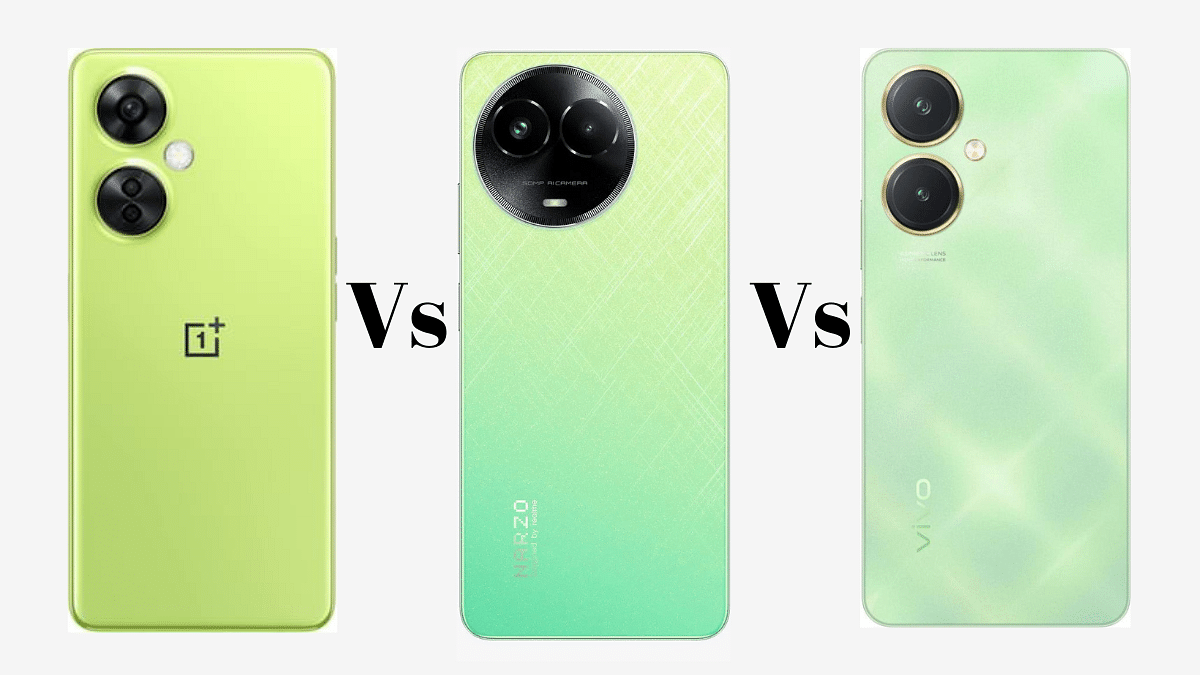
OnePlus Nord CE 3 Lite Vs Realme Narzo 60X 5G Vs Vivo Y27 Comparison: All Under Rs. 20,000

The mid-range smartphone market three contenders have recently entered: OnePlus Nord CE 3 Lite, Realme Narzo 60X 5G, and Vivo Y27. All priced under Rs. 20,000, these devices promise a balance of performance, features, and affordability.

In this comparison, we will look into their key aspects and help you decide which one suits your needs best.

Also Read: OnePlus Nord CE 3 With Snapdragon 782G Chipset, 80W Fast Charging Launched In India: Specification, Price & Availability

OnePlus Nord CE 3 Lite Vs Realme Narzo 60X 5G Vs Vivo Y27: Design, Display

FeatureOnePlus Nord CE 3 LiteRealme Narzo 60X 5GVivo Y27
Display TypeIPS LCDIPS LCDIPS LCD
Display Size (inches)6.726.726.64
Resolution1080 x 2400 pixels1080 x 2400 pixels1080 x 2388 pixels
Screen-to-Body Ratio~87.1%N/A~85.4%
Refresh Rate120Hz120Hz60Hz
Peak Brightness (nits)680 (typ), 680 (peak)680 (typ)600 (peak)

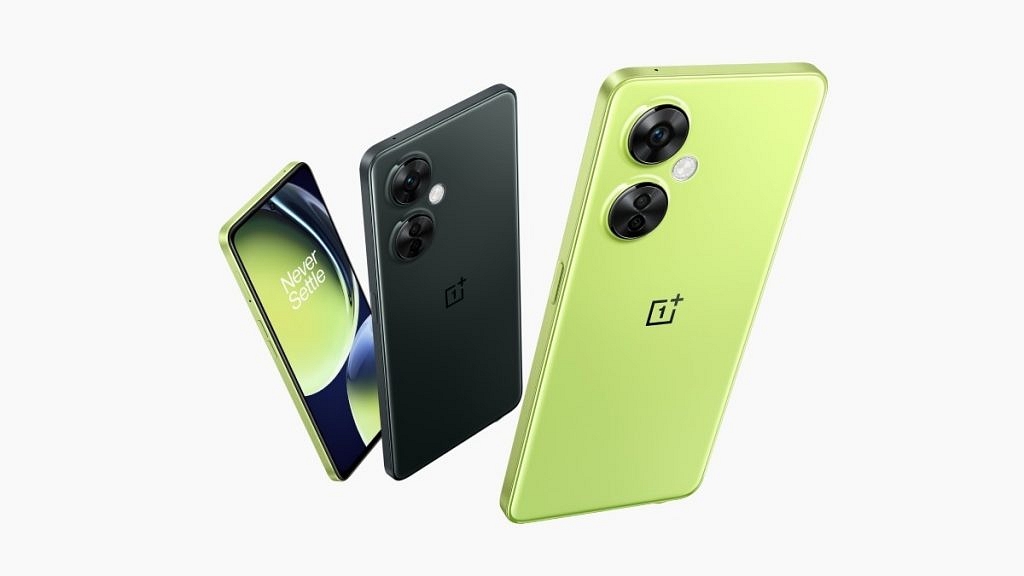
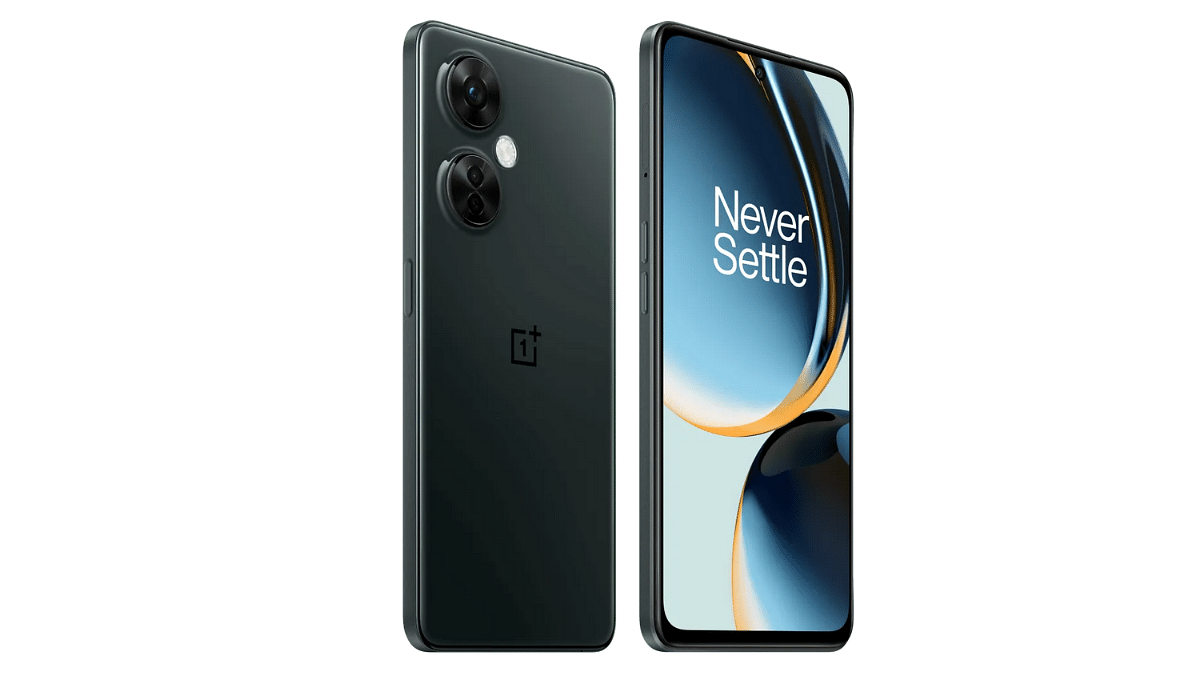
OnePlus Nord CE 3 Lite: The Nord CE 3 Lite features a sleek design with a glass front and a plastic frame and back. It’s a relatively slim device, measuring 165.5 x 76 x 8.3 mm and weighing 195g. The 6.72-inch IPS LCD display offers a smooth 120Hz refresh rate and impressive brightness at 680 nits peak. The device also boasts a Corning Gorilla Glass protection for added durability.

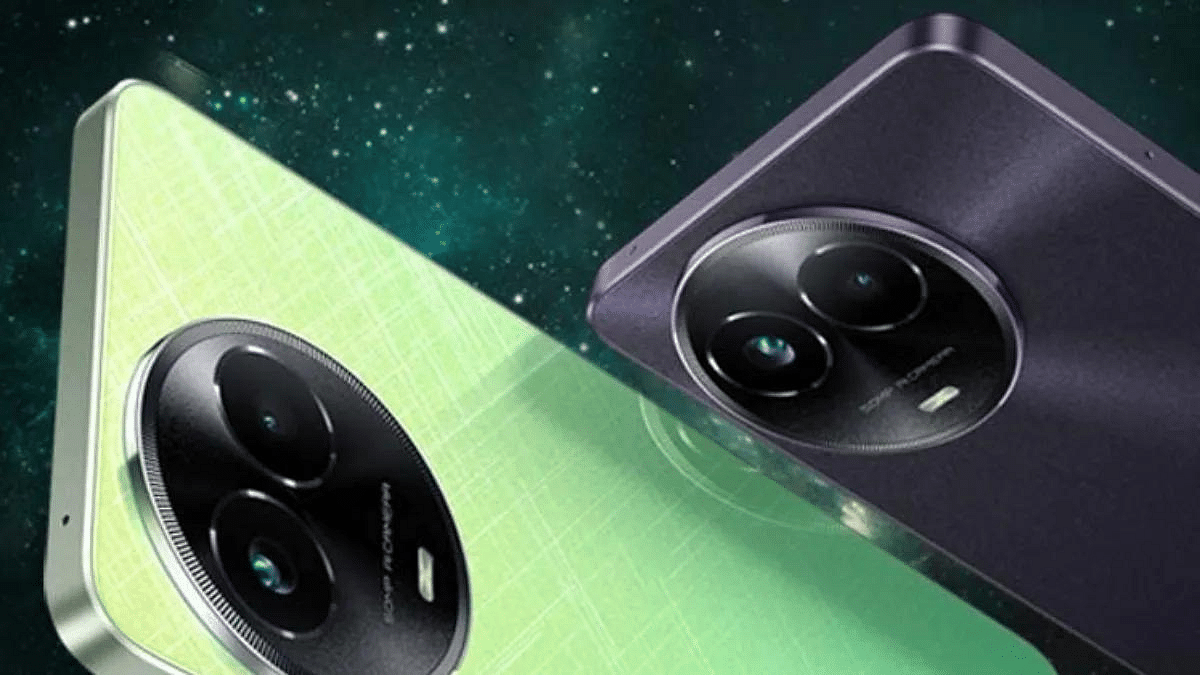
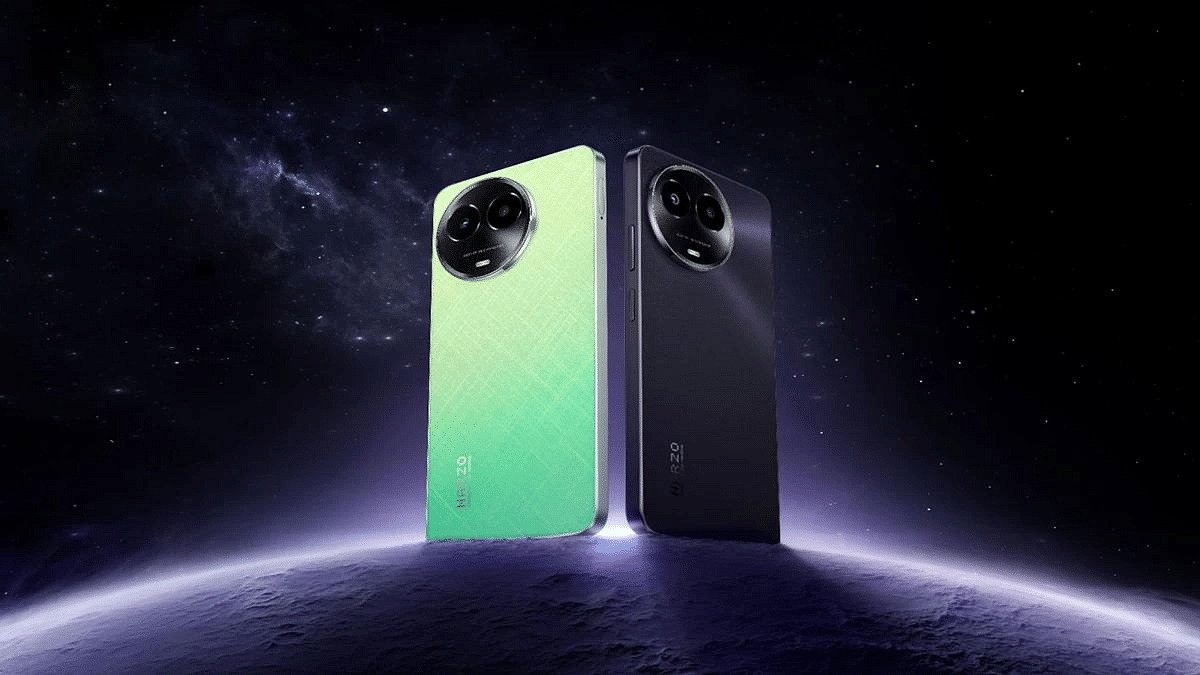
Realme Narzo 60X 5G: Realme Narzo 60X 5G comes in two attractive colors, Stellar Green and Nebula Purple. It features a 6.72-inch IPS LCD display with a punch-hole design, offering a high-resolution experience with a pixel density of 392 ppi and a brightness of 680 nits. The device is both stylish and visually appealing.

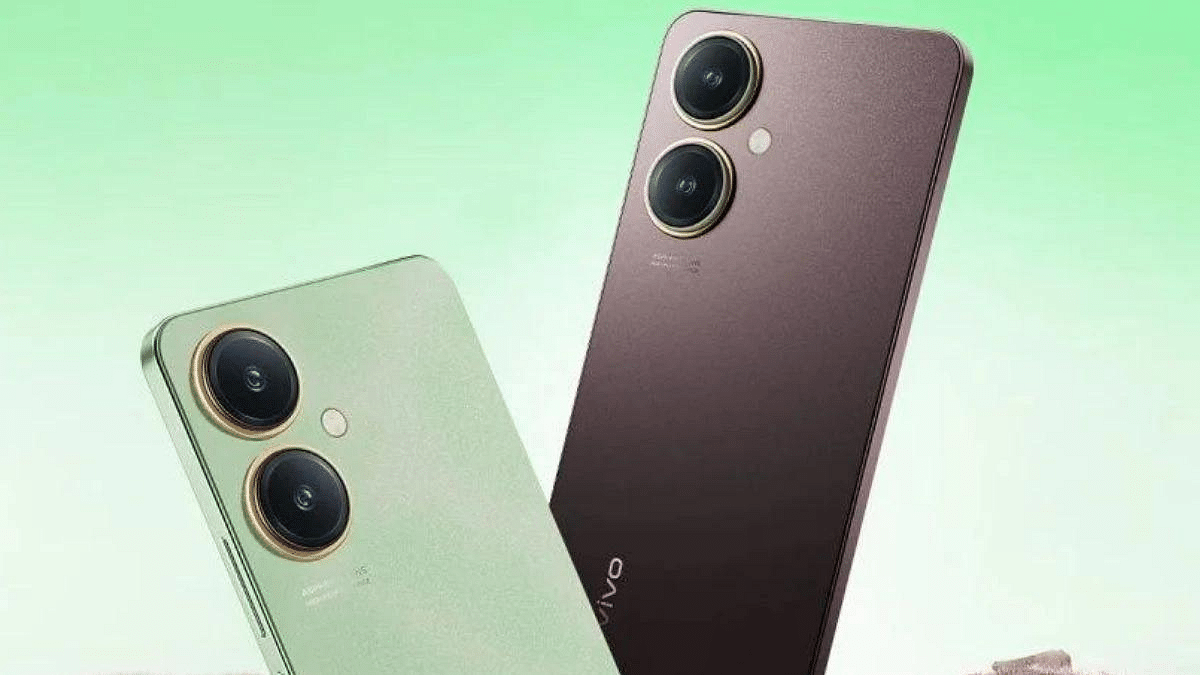
Vivo Y27: Vivo Y27 combines a glass front with a plastic frame and back. It has a 6.64-inch IPS LCD display with a peak brightness of 600 nits. The screen offers good visuals with a pixel density of 395 ppi. While it doesn’t have the high refresh rate of the Nord CE 3 Lite, it still delivers a satisfying display.

Also Read: Xiaomi Pad 6 Vs Vivo Pad Air: Best Mid-Range Tablet Comparison

OnePlus Nord CE 3 Lite Vs Realme Narzo 60X 5G Vs Vivo Y27: Processor, Memory

FeatureOnePlus Nord CE 3 LiteRealme Narzo 60X 5GVivo Y27
ChipsetQualcomm Snapdragon 695 5GMediaTek Dimensity 6100 PlusMediaTek MT6769 Helio G85
CPUOcta-core (2×2.2 GHz Kryo 660 Gold & 6×1.7 GHz Kryo 660 Silver)Octa-core (2.2 GHz, Dual core, Cortex A76 + 2 GHz, Hexa Core, Cortex A55)Octa-core (2×2.0 GHz Cortex-A75 & 6×1.8 GHz Cortex-A55)
RAM8GB4GB6GB
Internal Storage128GB / 256GB UFS 2.2128GB UFS 2.2128GB UFS 2.2
Operating SystemAndroid 13 with OxygenOS 13.1Android 13 with Realme UIAndroid 13 with Funtouch 13

OnePlus Nord CE 3 Lite: Under the hood, the Nord CE 3 Lite is powered by the Qualcomm Snapdragon 695 5G chipset, coupled with either 8GB of RAM and 128GB of storage or 8GB of RAM and 256GB of storage. The device runs on Android 13 with OxygenOS 13.1, ensuring smooth performance and regular software updates.

Realme Narzo 60X 5G: Realme Narzo 60X 5G packs the MediaTek Dimensity 6100 Plus chipset with 4GB of RAM, which is slightly less powerful than the Nord CE 3 Lite. However, it should still handle most tasks well. The device runs on Android 13 with Realme UI for a customized user experience.

Vivo Y27: Vivo Y27 features the MediaTek MT6769 Helio G85 chipset paired with 6GB of RAM. While it’s a capable mid-range processor, it may not match the performance of the other two devices in this comparison. The phone runs on Android 13 with Funtouch 13, offering a unique interface.
Also Read: Best Mobile Apps For Learning A New Language

OnePlus Nord CE 3 Lite Vs Realme Narzo 60X 5G Vs Vivo Y27: Camera

FeatureOnePlus Nord CE 3 LiteRealme Narzo 60X 5GVivo Y27
Main CameraTriple: 108MP (wide), 2MP (macro), 2MP (depth)Dual: 50MP (wide), 2MP (depth)Dual: 50MP (wide), 2MP (depth)
Front CameraSingle: 16MP (wide)Single: 8MP (wide)Single: 8MP (wide)
Video Recording (Main)1080p@30fps1920×1080 @ 30fps1080p@30fps
Video Recording (Front)1080p@30fps1920×1080 @ 30fps1080p@30fps

OnePlus Nord CE 3 Lite: The Nord CE 3 Lite sports a versatile triple-camera setup with a 108MP main camera, a 2MP macro lens, and a 2MP depth sensor. This setup allows for detailed and vibrant photos. On the front, it has a 16MP selfie camera, ensuring great selfies.

Realme Narzo 60X 5G: Realme Narzo 60X 5G features a dual-camera system with a 50MP main camera and a 2MP depth sensor. While it may have fewer lenses, the high-resolution main camera should produce sharp and detailed shots. The front camera is an 8MP shooter, capable of decent selfies.

Vivo Y27: Vivo Y27 comes with a dual-camera setup comprising a 50MP main camera and a 2MP depth sensor. It captures good photos in well-lit conditions. For selfies, it has an 8MP front camera.

Also Read: Realme C53 Vs Realme Narzo N53

OnePlus Nord CE 3 Lite Vs Realme Narzo 60X 5G Vs Vivo Y27: Battery

FeatureOnePlus Nord CE 3 LiteRealme Narzo 60X 5GVivo Y27
Battery Capacity5000 mAh5000 mAh5000 mAh
Charging67W wired, 80% in 30 min (advertised)33W Super VOOC, 50% in 29 minutes (advertised)44W wired, 29% in 15 min (advertised)

OnePlus Nord CE 3 Lite: The Nord CE 3 Lite packs a robust 5000mAh battery with 67W fast charging, allowing you to juice up to 80% in just 30 minutes. This is ideal for heavy users and those constantly on the move.

Realme Narzo 60X 5G: Realme Narzo 60X 5G boasts a 5000mAh battery with 33W Super VOOC fast charging, delivering 50% charge in just 29 minutes. It’s a commendable feature in this price range.

Vivo Y27: Vivo Y27 also houses a 5000mAh battery but with 44W fast charging, providing a 29% charge in 15 minutes. While not as fast as the Nord CE 3 Lite, it’s still quite impressive for quick top-ups.

Also Read: Vivo Y27 Launched In India: Top Features Offered By Latest Vivo Budget Phone

OnePlus Nord CE 3 Lite Vs Realme Narzo 60X 5G Vs Vivo Y27: Final Verdict

Each of these smartphones offers a unique set of features, and the choice depends on your priorities. If you prioritize performance and display quality, the OnePlus Nord CE 3 Lite is a strong contender. Realme Narzo 60X 5G, on the other hand, offers a good balance of features and affordability, while Vivo Y27 is an excellent option for those seeking a solid all-rounder at an attractive price point.

Also Read: OnePlus Pad Go Affordable Tablet Model Launching Soon In India: BIS Listing Leaked

Categories
Comparison Tablet

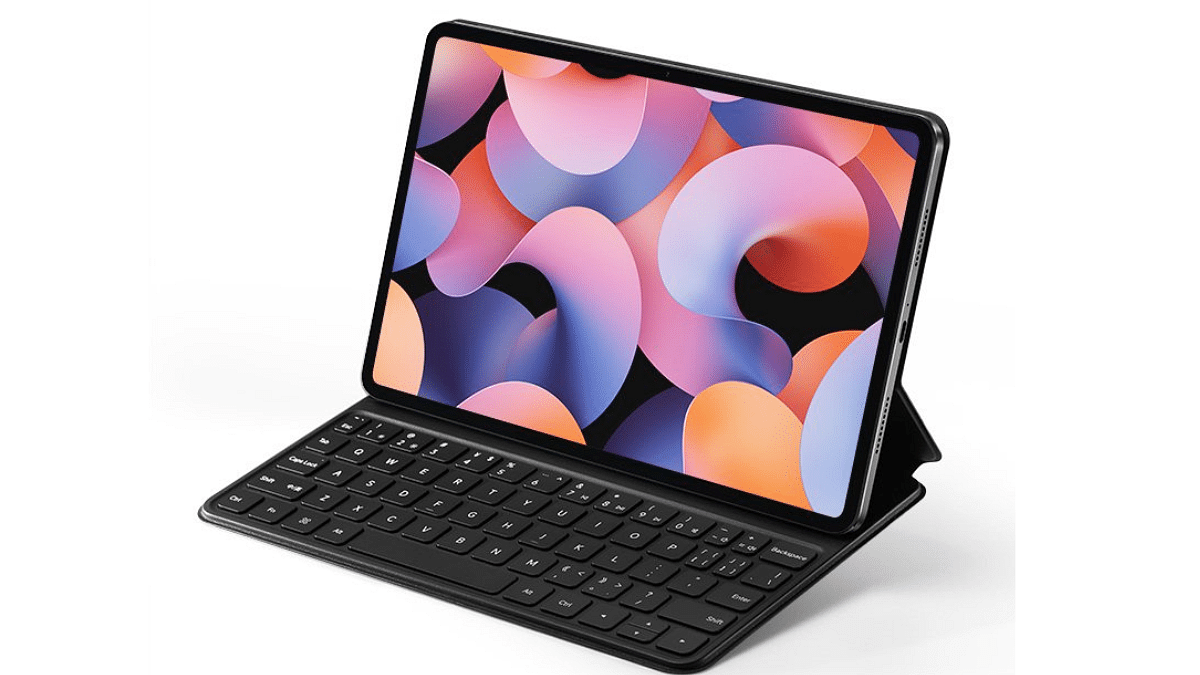
Xiaomi Pad 6 Vs Vivo Pad Air: Best Mid-Range Tablet Comparison

Tablets are now powerful tools for work, entertainment, and creativity. Two tablets, the Xiaomi Pad 6 and the Vivo Pad Air, have recently become popular among tech enthusiasts and professionals.

In this detailed review, we will examine every aspect of these tablets to help you decide which one might be the right choice for you.

Features Xiaomi Pad 6Vivo Pad Air
DISPLAY11 inches, 1800 x 2880p (Quad HD+), IPS LCD11.5 inches, 1840 x 2800p (Quad HD+), IPS LCD
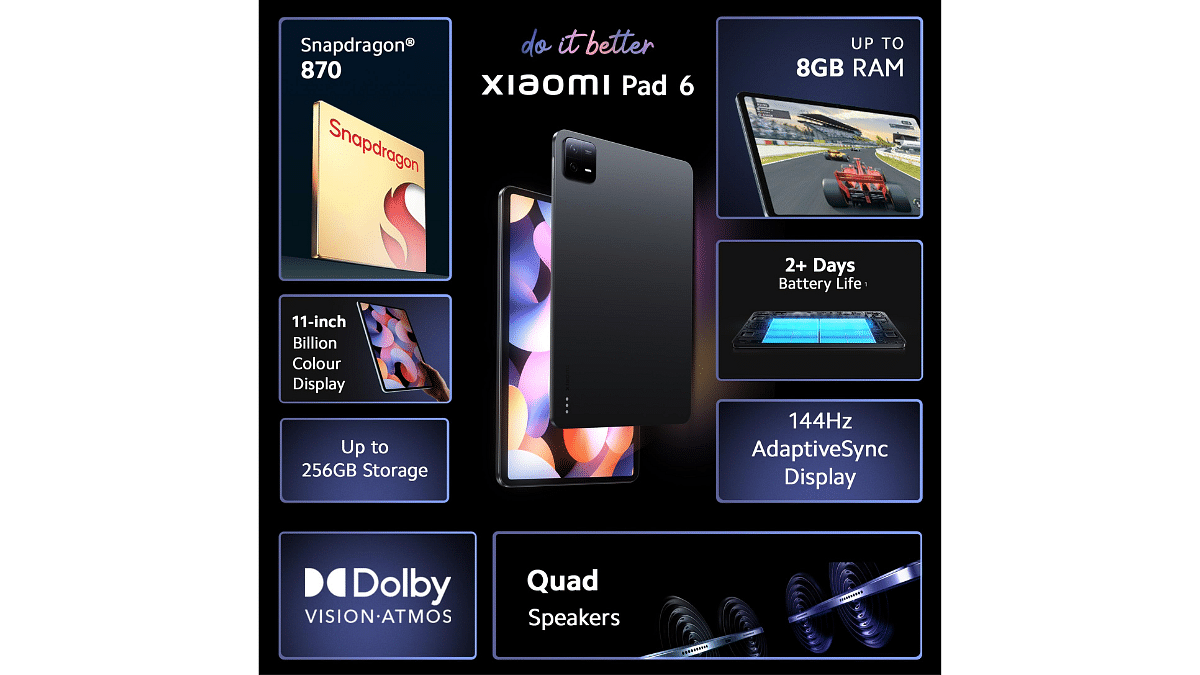
PROCESSORQualcomm Snapdragon 870 5G, octa-core 3.2 GHzQualcomm Snapdragon 870, octa-core 3.2 GHz
MEMORYup to 8GB RAM, 256 GB up to 12GB RAM, 512GB
SOFTWAREAndroid 13, MIUIAndroid 13, OriginOS
CAMERA13 MP f/2.2 (rear), 8 MP f/2.2 (front)Single 8 MP (rear), 5 MP (front)
BATTERY8840 mAh, fast charging 33W8500 mAh, fast charging 44W

Also Read: Best Gaming Tablets Under Rs.40,000

Xiaomi Pad 6 Vs Vivo Pad Air: Design, Display

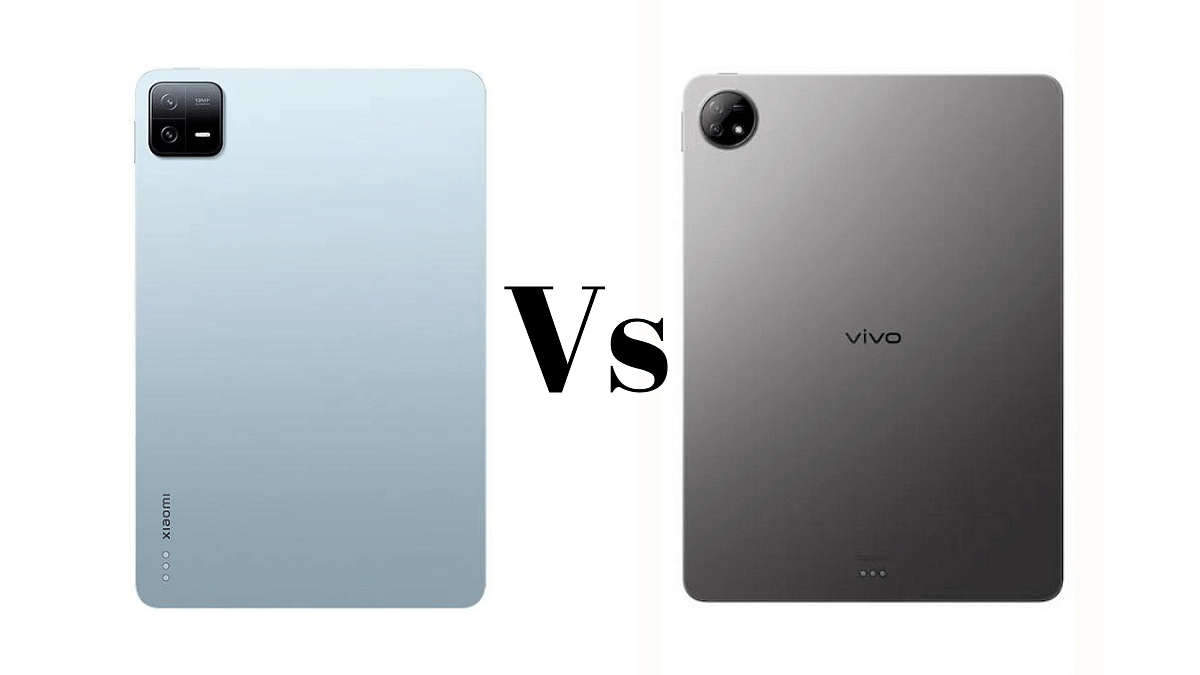
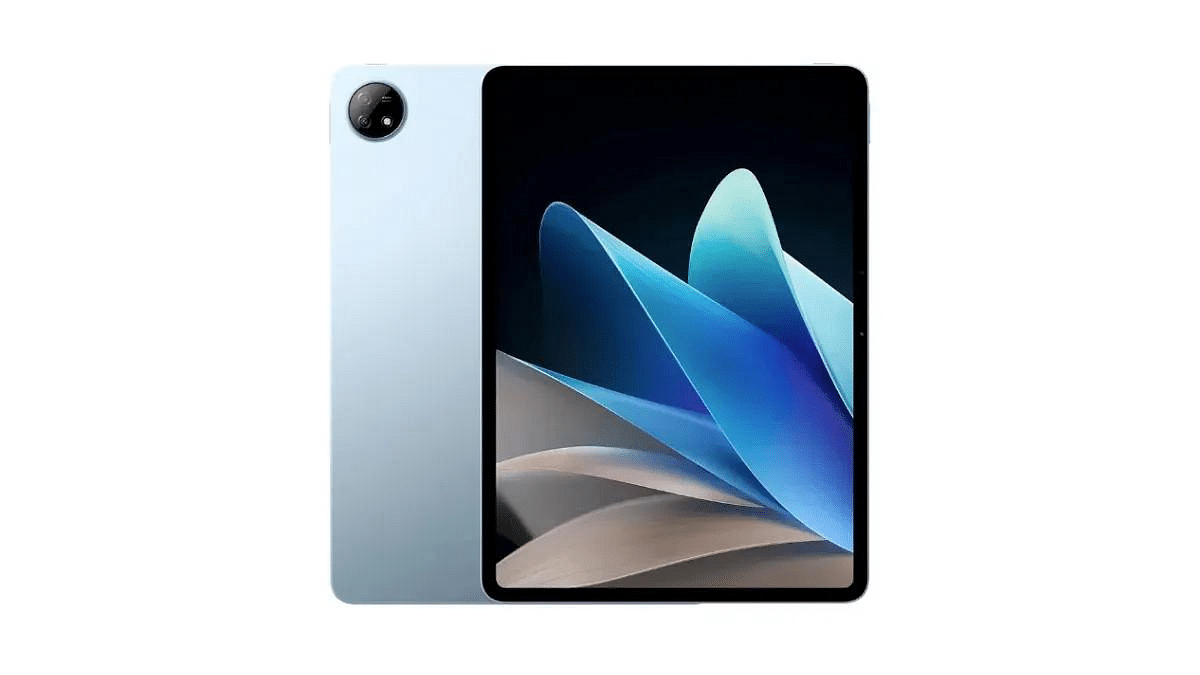
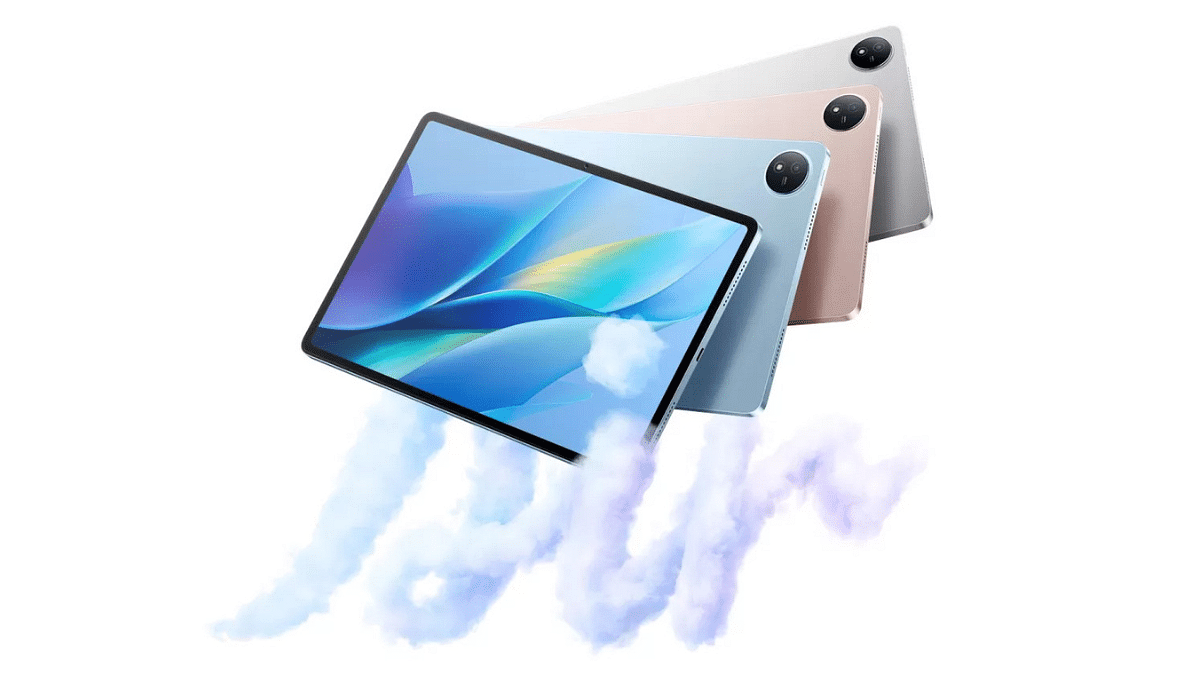
Xiaomi’s Pad 6, weighing 490 grams and measuring 254 x 165.2 x 6.5 mm, prioritizes portability without compromising on screen size. Its aluminium body exudes a premium feel. On the other hand, the Vivo Pad Air, at 530 grams and with dimensions of 259.7 x 176 x 6.7 mm, offers a heftier, substantial feel that many users equate with durability and luxury.

The Vivo Pad Air comes with an 11.5-inch display boasting a Quad HD+ resolution of 1840 x 2800p. This IPS LCD panel ensures crisp details and lifelike colours for various tasks. The Xiaomi Pad 6, while slightly smaller at 11 inches, offers a resolution of 1800 x 2880p.

Also Read: Best New Budget Android Tablets In India That You Can Buy: iTel, Nokia, And More

Xiaomi Pad 6 Vs Vivo Pad Air: Performance

Both tablets are powered by the Qualcomm Snapdragon 870 chipset which ensures smooth app performance, multitasking, and gaming. The octa-core 3.2 GHz processor can handle demanding tasks effortlessly. Memory configurations vary, with the Vivo Pad Air offering an edge for power users with 12 GB RAM and 512 GB storage. This is ideal for those working with large files or running multiple apps simultaneously.

In terms of software, both tablets run on Android 13. Xiaomi Pad 6 features MIUI, while Vivo Pad Air uses OriginOS.

Also Read: Honor Pad X8 Vs Realme Pad Tablet: Best Budget Android Tablet Under Rs. 15,000 In 2023

Xiaomi Pad 6 Vs Vivo Pad Air: Camera, Battery

Xiaomi Pad 6 boasts a 13 MP rear camera and an 8 MP front camera, ensuring clear video calls and decent photos. Vivo Pad Air, with its 8 MP rear and 5 MP front camera, may seem inferior on paper, but for the average user, the difference might not be significant.

Vivo Pad Air houses an 8500 mAh battery with 44W fast charging whereas Xiaomi Pad 6 comes with an 8840 mAh battery with slightly slower 33W charging.

Also Read: Vivo Pad Air With Snapdragon 870 Chipset, 12GB RAM Goes Official: Price, Global Availability

Xiaomi Pad 6 Vs Vivo Pad Air: Final Verdict

Deciding between the Xiaomi Pad 6 (starting from about ₹35,000) and the Vivo Pad Air (starting from about ₹20,000) can be a tough choice. Both tablets have good features and come at reasonable prices.

If you want a tablet with a bigger screen, more memory options, and faster charging, then Vivo Pad Air might be better for you. On the other hand, if you prefer a smaller tablet with a better camera and a user-friendly interface like MIUI, then Xiaomi Pad 6 could be the right choice for your next tablet.

Also Read: Redmi Pad SE Vs OPPO Pad Air Tablet Comparison: New-Gen Mid-Range Tablet For Daily Use

Categories
Info Printers

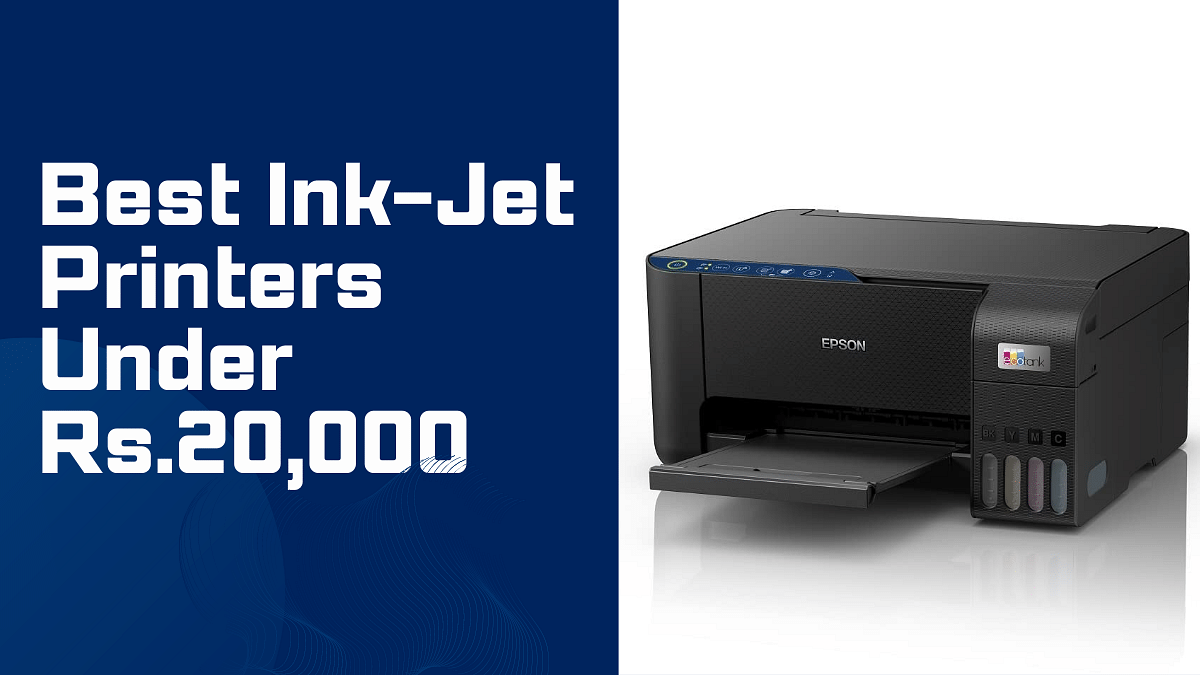
Best Ink-Jet Printers Under Rs.20,000 In 2023

Key Highlights

  1. List of affordable printers available.
  2. High-quality color output.
  3. Suitable for homes and small offices.

If you’re looking for an affordable printer, you’re in the right place! We’re going to talk about the best inkjet printers you can get for under Rs. 20,000. These printers use special ink to create colourful and clear pictures or documents. Let’s explore some great options available in the market.

Also Read: Top Three Printers For Students In India In 2023

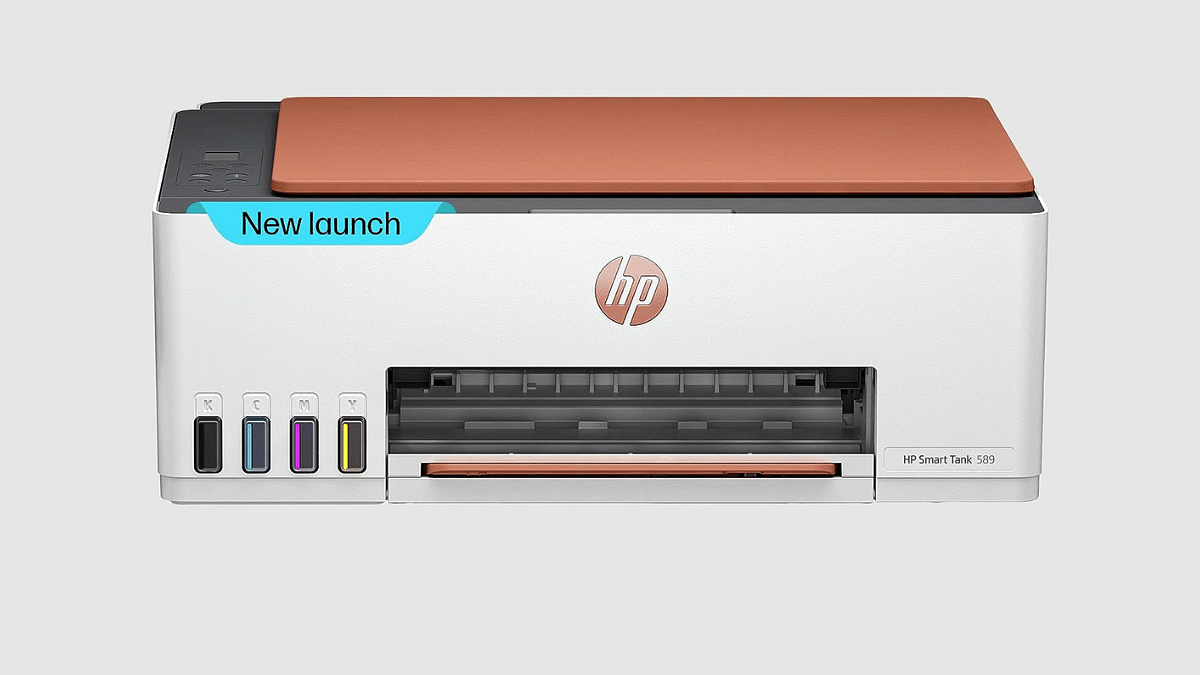
HP Smart Tank 589 AIO WiFi Color Printer

  • All-in-One: Functions as a printer, scanner, and copier, including ID copy.
  • Supports both colour and monochrome print outputs.
  • Offers Self-Healing Wi-Fi, Wi-Fi Direct, USB, and Bluetooth.
  • Works with various operating systems, including Windows, Android, and macOS.
  • Handles various paper types, sizes, and weights.
  • Comes with ink bottles for 6,000 black and colour pages.
  • Price: Rs.17,828

Buying Link: Amazon

Canon PIXMA G3020 NV All-in-One WiFi Inktank Colour Printer

  • Combines printing, scanning, and copying functions.
  • Features Wi-Fi and USB for versatile connections.
  • Comes with a scanner with a resolution of 600 x 1200 dpi.
  • Works with Windows, macOS, and Chrome OS.
  • Low print cost at Rs 0.13 for monochrome and Rs 0.24 for colour.
  • Offers Airprint, Mopria, and PictBridge support for added convenience.
  • Price: Rs.19,265

Buying Link: Amazon

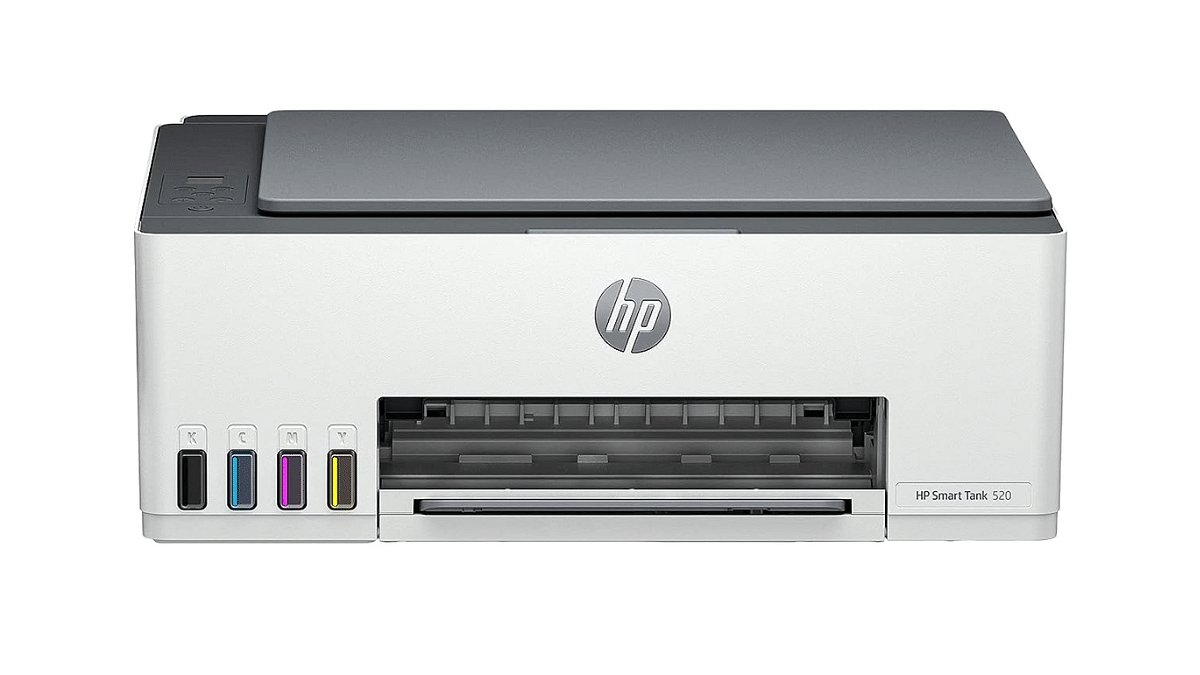
HP Smart Tank 520 All-in-one Colour Printer

  • Inktank All-in-One: Functions as a printer, scanner, and copier.
  • Produces both colour and monochrome prints.
  • Connects via Hi-Speed USB 2.0.
  • Compatible with Windows 11, 10, and 7.
  • Supports various paper types and sizes.
  • Price: Rs. 15,980.

Buying Link: Amazon

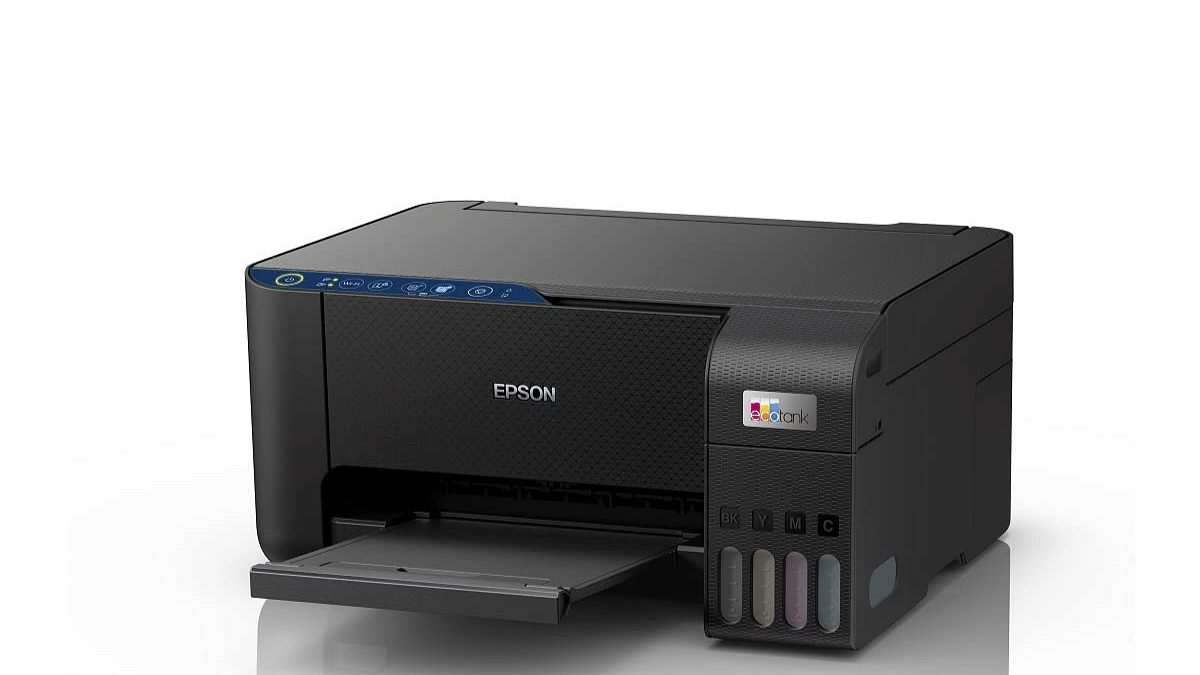
Epson EcoTank L3252 Wi-Fi All-in-One Ink Tank Printer

  • Performs printing, scanning, and copying, with duplex printing.
  • Utilizes heat-free technology for low-cost, eco-friendly printing.
  • Equipped with smart Wi-Fi and app support.
  • Offers a print resolution of 5760 x 1440.
  • Works with Windows and Mac operating systems.
  • Price: Rs.17,999

Buying Link: Amazon

Also Read: Best Wireless Printers To Buy In India

Categories
Comparison Gaming Tablet

Best Gaming Tablets Under Rs.40,000

Key Highlights

  • Tablets offer high-resolution screens for gaming.
  • With extended battery life
  • Affordable options under Rs.40,000.

We’re checking out four top contenders under Rs.40,000: OnePlus Pad (12GB RAM + 256GB), XIAOMI PAD 6 (8GB RAM + 256GB), Lenovo Tab P11 5G (8GB RAM + 256GB), and Samsung Galaxy Tab S7 FE. These tablets are affordable but still offer great gaming experiences with good hardware and cool features.

Let’s find out which one’s the best gaming buddy for you!

TabletsPriceBuying Link
OnePlus Pad (12GB of RAM + 256GB)Rs.39,998Amazon
Xiaomi Pad 6 (8GB RAM + 256GB)Rs.41,999Amazon
Lenovo Tab P11 5G (8GB RAM + 256GB)Rs.39,999Flipkart
Samsung Galaxy Tab S7 FERs.39,999Amazon

OnePlus Pad (12GB of RAM + 256GB)

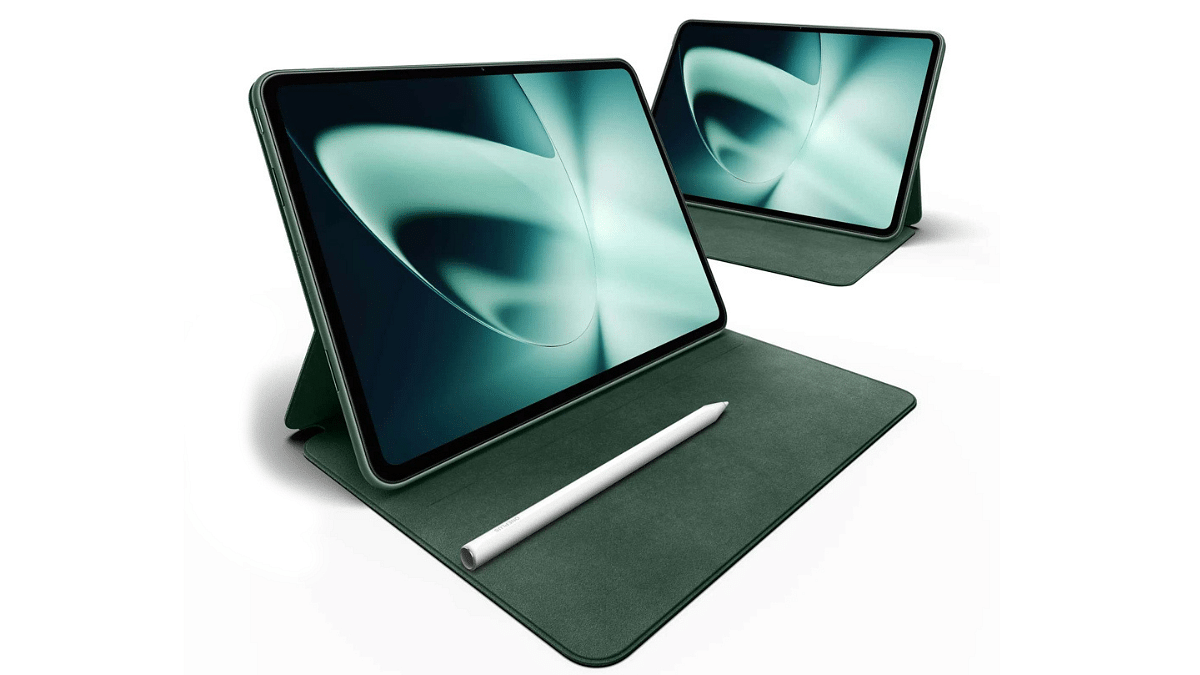
The OnePlus Pad is a powerful gaming tablet with 12GB of RAM and 256GB of storage priced at Rs.39,998. It has a big 11.61-inch screen with vivid colours and smooth visuals, perfect for gaming. The tablet is built tough with an aluminium frame. It runs on Android 13 and supports Dolby Vision for great video quality. Its battery is massive, and it charges quickly, so you can game for a long time. It has decent cameras too.

Inside, it’s a strong Mediatek Dimensity 9000 chip for gaming. The tablet also has good stereo speakers and supports high-quality audio. It’s an excellent choice for gamers.

Also Read: Best Gaming Laptops Under Rs. 50,000

Xiaomi Pad 6 (8GB RAM + 256GB)

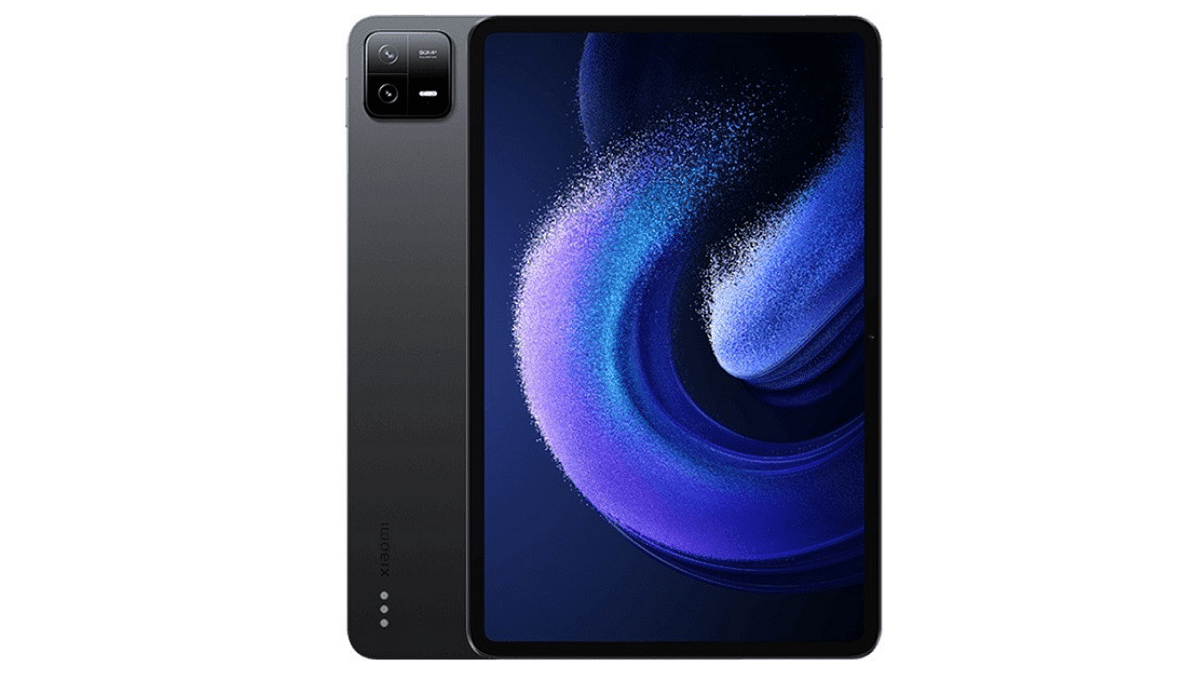
The XIAOMI PAD 6 is an excellent choice for gaming at just Rs.28,999. Its 11.0-inch IPS LCD screen offers vibrant visuals with a high resolution of 1800 x 2880 pixels and a quick 144Hz refresh rate for smooth gaming. The tablet’s sturdy aluminium frame and back ensure durability. It runs on Android 13 and supports HDR10 and Dolby Vision for immersive gaming experiences. With an 8840mAh battery and 33W fast charging, it’s perfect for extended gaming sessions.

The tablet also features good cameras, with a 13-megapixel rear camera and an 8-megapixel front camera. Its powerful Qualcomm Snapdragon 870 chipset and Adreno 650 GPU provide top-notch gaming performance. With stereo speakers and Dolby Atmos support, it delivers impressive audio.
Also Read: Best Gaming Consoles To Buy

Lenovo Tab P11 5G (8GB RAM + 256GB)

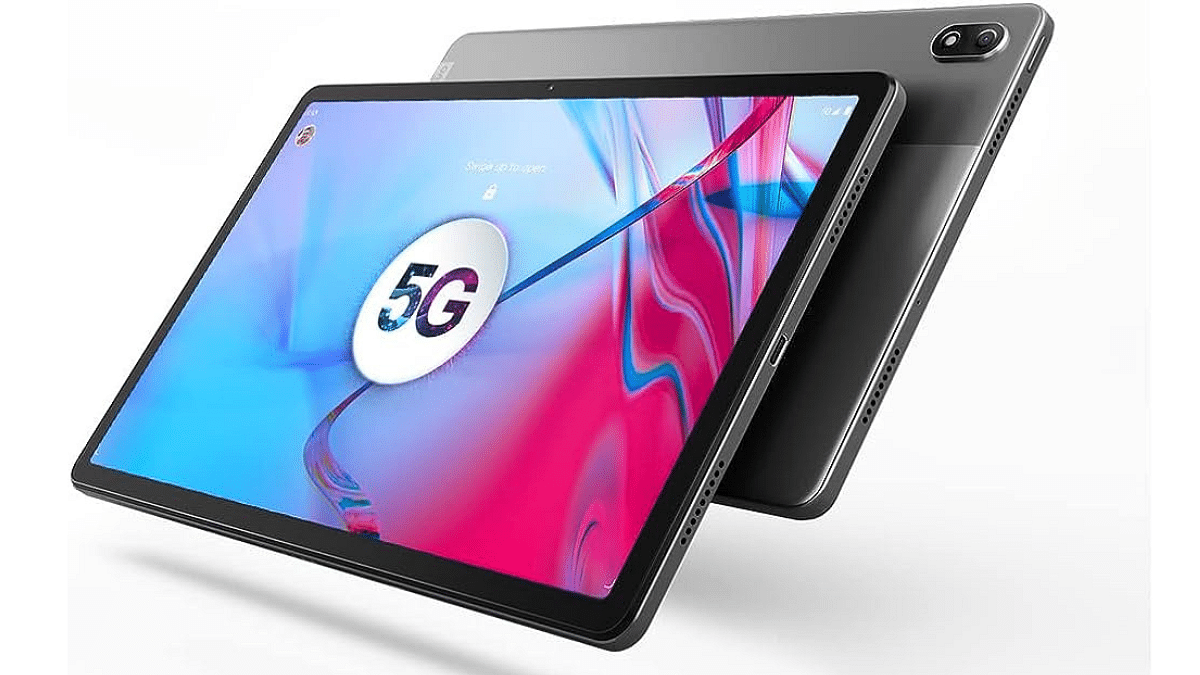
The Lenovo Tab P11 5G, with its 8GB of RAM and 256GB of storage, makes for an excellent gaming tablet at Rs.39,999. It features an 11.0-inch IPS LCD screen with a resolution of 1200 x 2000 pixels, offering good visuals. The tablet’s Dolby Vision support enhances your gaming experience, and it has a decent screen-to-body ratio of 81.9%. It’s slim and lightweight, making it easy to carry around.
With a 7700mAh battery and 20W fast charging, the tablet provides ample gaming time. While it has an average 13-megapixel rear camera, the 8-megapixel front camera is excellent for video calls. The Qualcomm Snapdragon 750G 5G chipset and Adreno 619 GPU offer decent gaming performance. It also boasts stereo speakers with Dolby Atmos and JBL Quad speakers for impressive audio.

Also Read: Best Gaming Phones To Buy In India Under Rs. 20,000

Samsung Galaxy Tab S7 FE

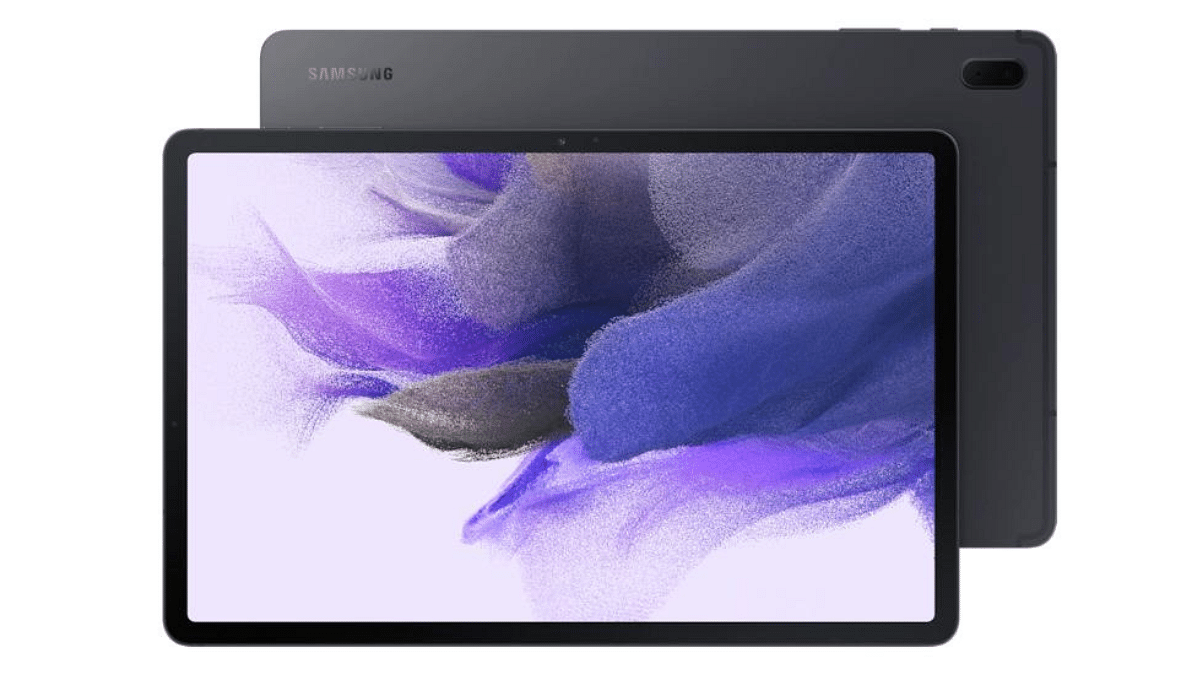
The Samsung Galaxy Tab S7 FE is a good gaming tablet available at Rs.39,999 on Amazon. It comes with Android 11 and supports voice calling and VoLTE. Its 12.4-inch TFT screen has a high resolution of 1600 x 2560 pixels, making games look great. The tablet’s slim design and lightweight build are easy to handle.

With a large 10090mAh battery and 45W fast charging, it provides long gaming hours. While it has an average 8-megapixel rear camera, the 5-megapixel front camera is suitable for video calls. The Qualcomm Snapdragon 750G chipset and Adreno 619 GPU deliver decent gaming performance. With stereo speakers and Dolby Atmos support, it offers impressive audio quality.

Also Read: Best Gaming Phones Under Rs. 35000: 2023

Categories
Auto Tech Comparison

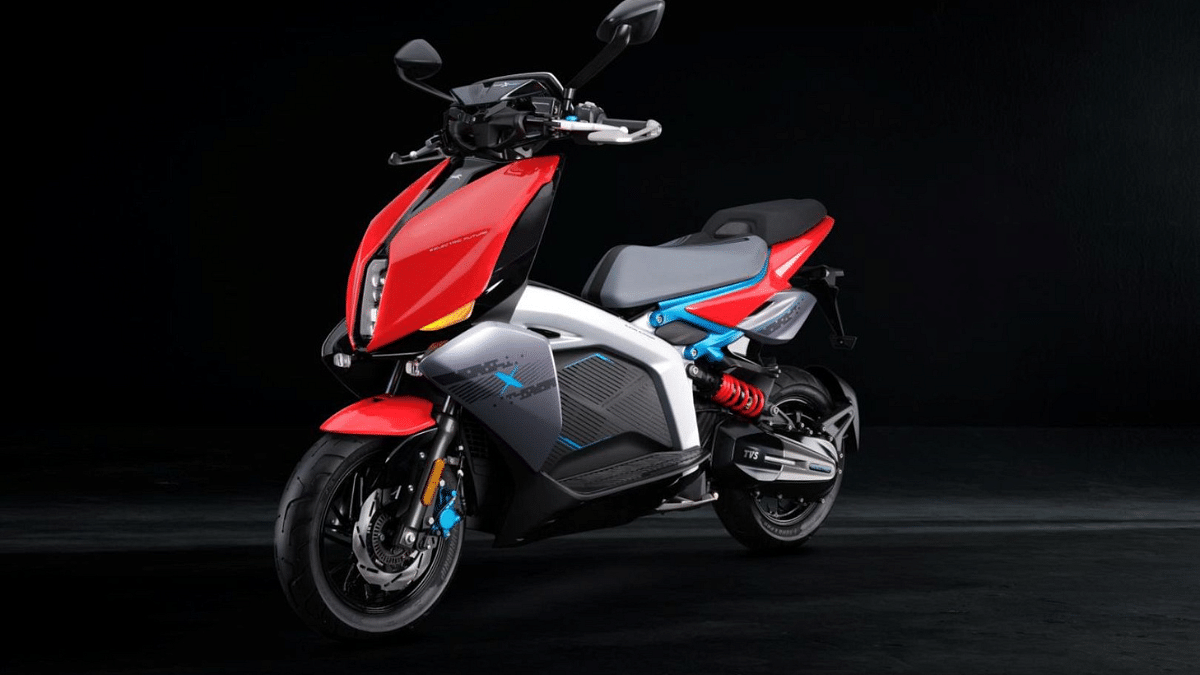
TVS X: Three Affordable Alternatives To The Luxury Electric Scooter Of 2.5 Lakh

Key Highlights

  • TVS X: One of the most expensive electric scooter.
  • Ather 450X: Solid performance, reasonable price.
  • Ola S1 Pro: Impressive range, powerful motor.
  • Simple One: Ultra-fast charging, highest range.

Electric scooters are becoming popular in India. The new fancy one, TVS X, costs a big 2.5 lakh. But, if you want something cheaper but still good, there are other options available. Let’s dive in and compare the TVS X with three other market favorites: the Ather 450X, Ola S1 Pro, and Simple One.

Also Read: TVS X Smart Electric Scooter Launched In India

TVS X Electric Scooter: Rs.2.5 Lakh

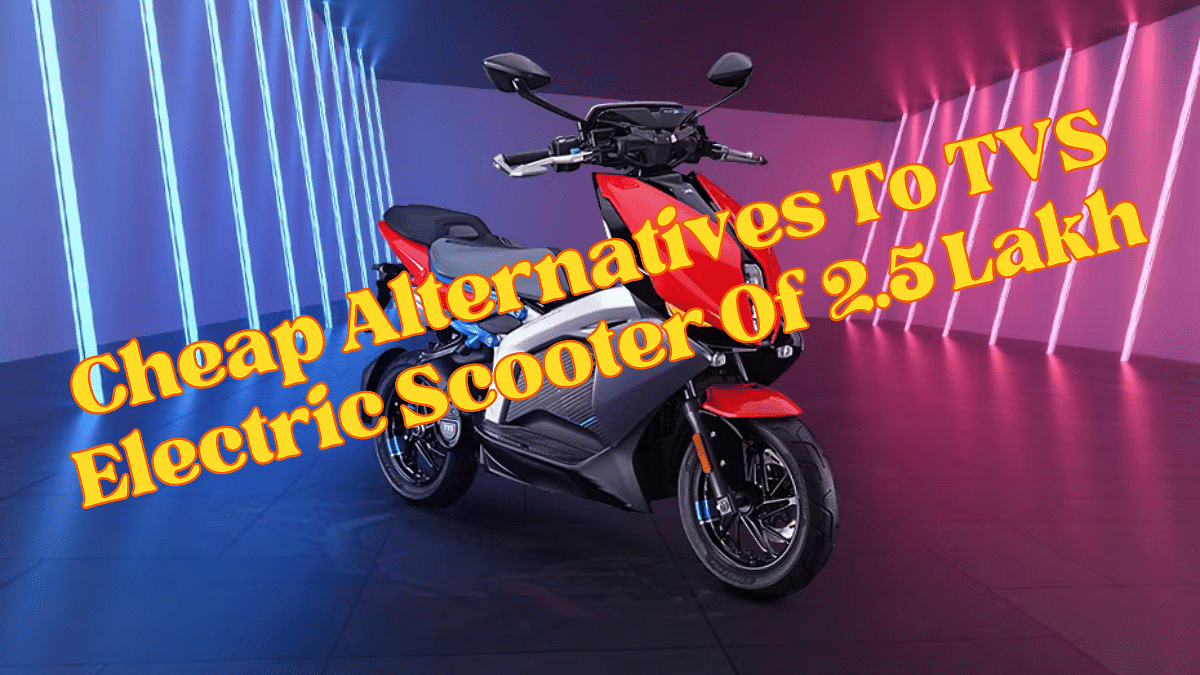
Priced at the premium end, the TVS X offers a range of 140 km per charge, powered by a 7000W motor. It brings features like Bluetooth and WiFi connectivity, along with wired connectivity. Safety features include a single-channel ABS, ensuring better control during sudden stops. With a max power of 15 PS and a quick charging option, it’s aiming to appeal to both performance lovers and daily commuters. The digital dashboard, inclusive of an odometer, speedometer, and clock, promises a modern ride experience.

Also Read: TVS X Smart Electric Scooter With Premium Features Launched In India: Powertrain, Price

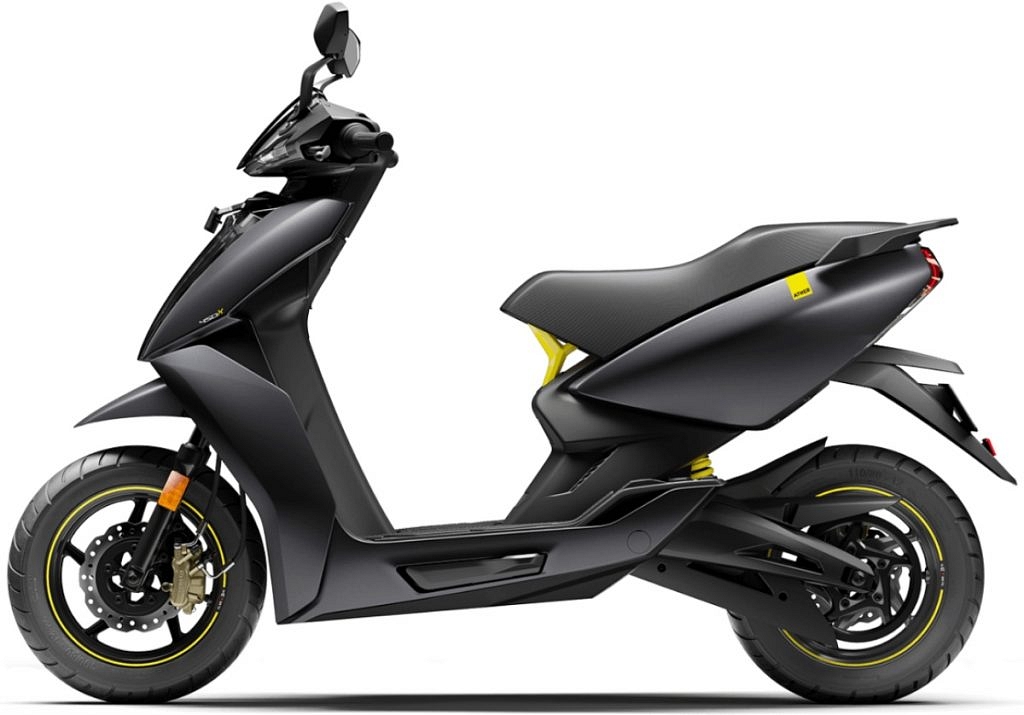
1. Ather 450X

Ather 450X Specifications:

  • Price Range: ₹1,37,950.00 to ₹1,44,871.00
  • Range: 146 km/charge
  • Motor Power: 6400W

In the more affordable segment, Ather 450X is making quite a buzz. It offers slightly more range than the TVS X at 146 km per charge. Its 6400W motor ensures a smooth city ride. While it lacks an ABS, it compensates with a double disc front brake for enhanced safety. Unique features include a digital speedometer, a combined braking system, and connectivity features similar to the TVS X, making it a contender worth considering.

Also Read: Ola S1 Pro Gets Cheaper By Rs. 10,000 In India: Why Shouldn’t You Miss This Limited Period Offer

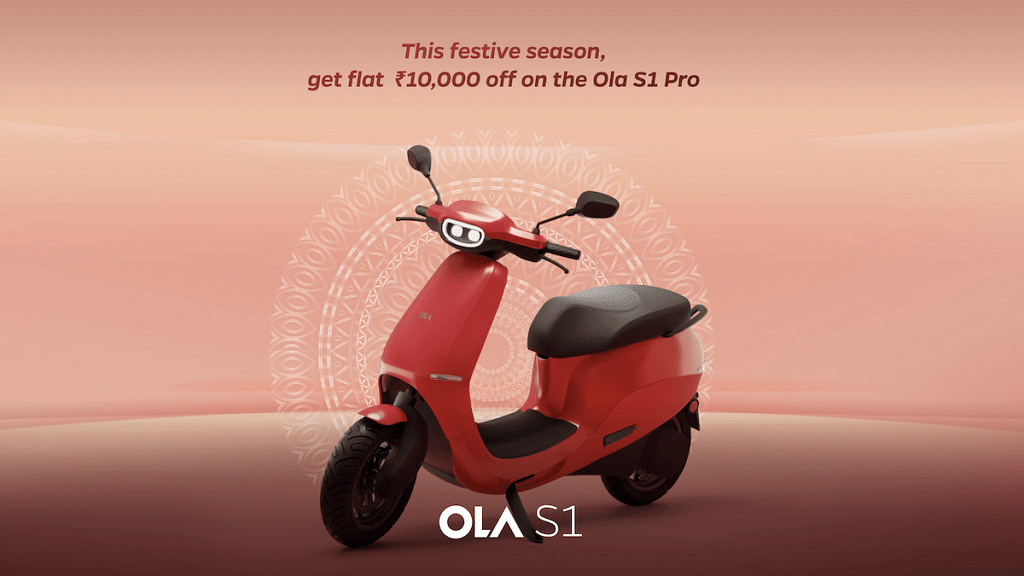
2. Ola S1 Pro

Ola S1 Pro Specifications:

  • Price: ₹1,54,468.00
  • Range: 195 km/charge
  • Motor Power: 11000W

Ola’s foray into the electric scooter market has been nothing short of impressive. The S1 Pro offers a whopping 195 km range, much higher than the TVS X. Its motor, with a power of 11000W, ensures that it doesn’t just promise distance but also performance. Charging takes slightly longer, but the impressive range might just make up for it. Its features list, like mobile connectivity and a digital dashboard, is on par with its counterparts, making it a robust alternative to the TVS X.

Also Read: Simple One Electric Vs Ola S1 Pro Vs Hero Vida V1: Top E-Scooter Model That You Can Buy In 2023

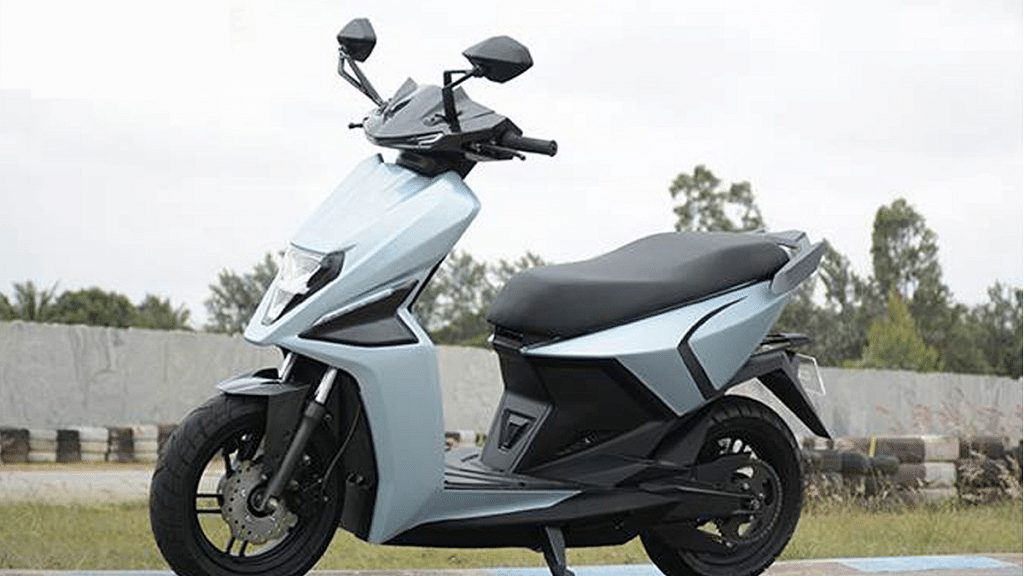
3. Simple One

Simple One Specifications:

  • Price Range: ₹1,45,000.00 to ₹1,50,000.00
  • Range: 212 km/charge
  • Motor Power: 8500W

Don’t let the name deceive you. Simple One is a performance beast, offering the highest range among the lot at 212 km. The motor power stands at 8500W, bridging the gap between the Ather 450X and Ola S1 Pro. The key highlight? Its ultra-fast charging time of just over an hour. Feature-wise, it brings unique additions like a boot light and a service due indicator, besides the standard offerings of its competitors.

Also Read: Simple One Electric Scooter Test Mule Spotted Ahead of Official India Launch: Everything You Should Know

Categories
Chipset Comparison

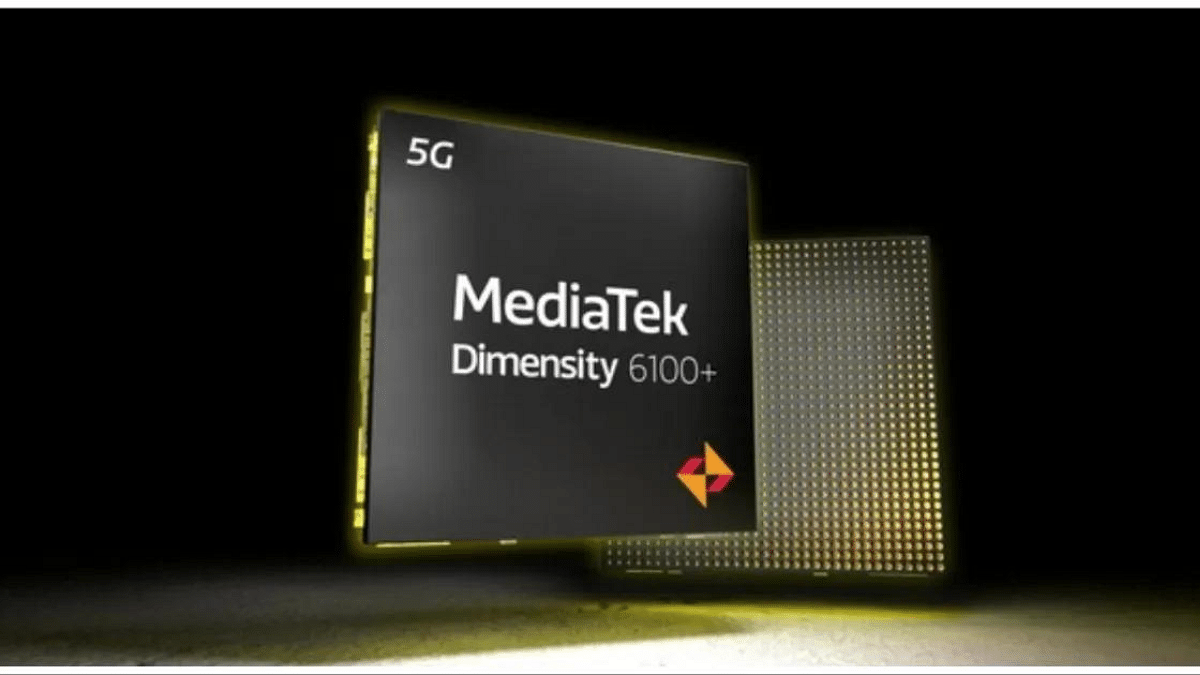
Unisoc T820 Vs MediaTek Dimensity 6100 Plus: Mid-Range Chipset Comparison 2023

Key Highlights

  • Both chipsets use 6-nanometer TSMC fabrication.
  • T820 offers superior GPU and video performance.
  • T820 supports up to 32GB memory, Dimensity 6100 Plus caps at 12GB.
  • Dimensity 6100 Plus boasts broader navigation support.

As mid-range chipsets continue to power an increasing number of smartphones and devices, the competition heats up. Let’s dive into a comparison between two heavyweights in the mid-range spectrum for 2023: the Unisoc T820 and the MediaTek Dimensity 6100 Plus.

Also Read: Qualcomm Snapdragon 695 Vs MediaTek Dimensity 7050: Top Powerful Mid-Range 5G Chipset 2023

Unisoc T820 Vs MediaTek Dimensity 6100 Plus: Fabrication, CPU Architecture

Both the Unisoc T820 and MediaTek Dimensity 6100 Plus are crafted on a 6-nanometer process by TSMC, ensuring cutting-edge performance and efficiency.

The T820 boasts a tri-cluster CPU setup with a high-performance Cortex-A76 core clocked at 2.7 GHz, three more Cortex-A76 cores at 2.3 GHz, and four energy-efficient Cortex-A55 cores at 2.1 GHz. This setup allows for balanced multitasking and high-speed processing.

On the other hand, the Dimensity 6100 Plus takes a different approach with its dual-cluster design: two Cortex-A76 cores at 2.2 GHz and six Cortex-A55 cores at 2 GHz. The T820’s higher frequency Cortex-A76 cores give it a slight edge in raw performance.

Also Read: Qualcomm Snapdragon 870 Vs MediaTek Dimensity 8200: Which Is A Better Premium Range Chipset ?

Unisoc T820 Vs MediaTek Dimensity 6100 Plus: GPU Comparison

In the graphics department, both chipsets sport Mali-G57 GPUs based on the Valhall 1st gen architecture. The T820 has the Mali-G57 MP4, with four execution units and 256 shaders, reaching 435.2 Gigaflops. The Dimensity 6100 Plus houses the Mali-G57 MP2, featuring two execution units and 128 shaders, achieving 243.2 Gigaflops. Despite the Dimensity 6100 Plus having a higher GPU frequency (950 MHz vs. 780 MHz), the T820 offers a superior GPU, leading to better gaming and graphics performance.

Also Read: MediaTek Dimensity 7050 Vs Snapdragon 8 Gen 1: Best Mid-Range Gaming Chipset 2023

Unisoc T820 Vs MediaTek Dimensity 6100 Plus: Memory, Multimedia (ISP) Comparison

When it comes to memory, both chipsets support LPDDR4X RAM with a 2133 MHz frequency. The T820 has an edge with support for up to 32GB, whereas the Dimensity 6100 Plus is capped at 12GB. The memory bandwidth for both is identical at 17.07 Gbit/s.

For multimedia capabilities, both chipsets have neural processors for AI tasks. The T820 leads in video with 4K at 60FPS for both capture and playback, while the Dimensity 6100 Plus maxes out at 2K at 30FPS. However, the Dimensity 6100 Plus offers additional video codec support with VP9.

For camera capabilities, both chipsets can handle a 108MP main sensor. Yet, the T820 can support dual 20MP sensors, while the 6100 Plus peaks at dual 16MP sensors.

Also Read: Redmi Pad SE Tablet Launched Snapdragon 680 Chipset, 90Hz Display, And More

Unisoc T820 Vs MediaTek Dimensity 6100 Plus: Final Verdict

While both the Unisoc T820 and MediaTek Dimensity 6100 Plus offer impressive features and capabilities for mid-range chipsets, the T820 appears to have an edge in many aspects, particularly in CPU performance, GPU power, memory support, and multimedia capacities.

However, the final choice between the two will largely depend on specific user requirements and preferences. For instance, users prioritizing gaming or heavy multitasking might lean towards the T820, while those looking for balanced performance with more focus on connectivity (given Dimensity 6100 Plus’s broader navigation support and faster download speeds) might prefer the Dimensity 6100 Plus.

Also Read: MediaTek Dimensity 9000 Vs Qualcomm Snapdragon 870 Processor: Best Chipset For Value Flagship

Categories
Featured Gaming Mobile

Best Gaming Phones Under Rs. 35000: 2023

Key Highlights

  • Great gaming for under Rs. 35000.
  • Quick battery charging for games.
  • Good cameras for the price.

Looking for a good gaming phone under Rs. 35000?

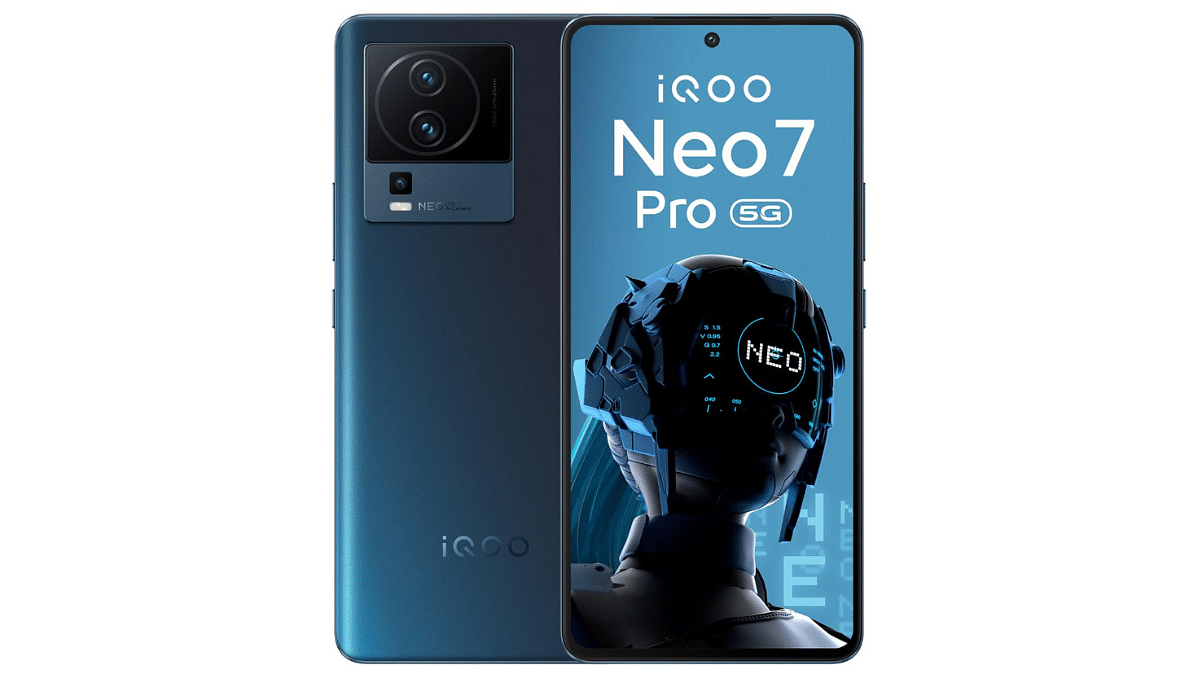
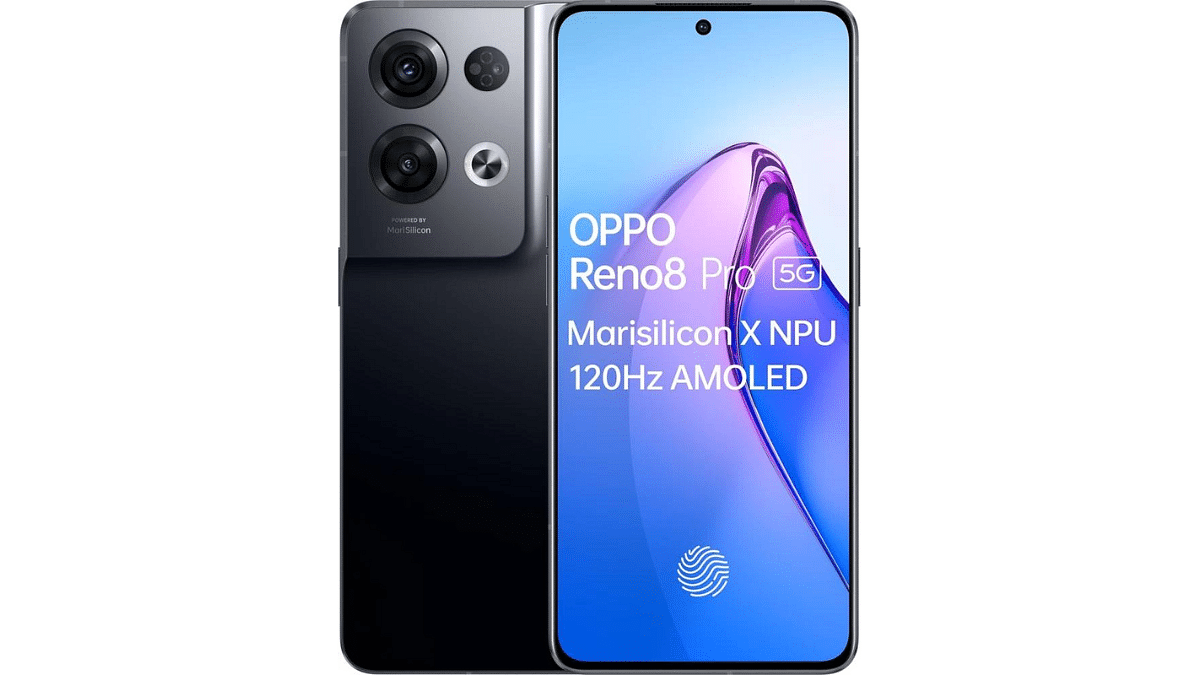
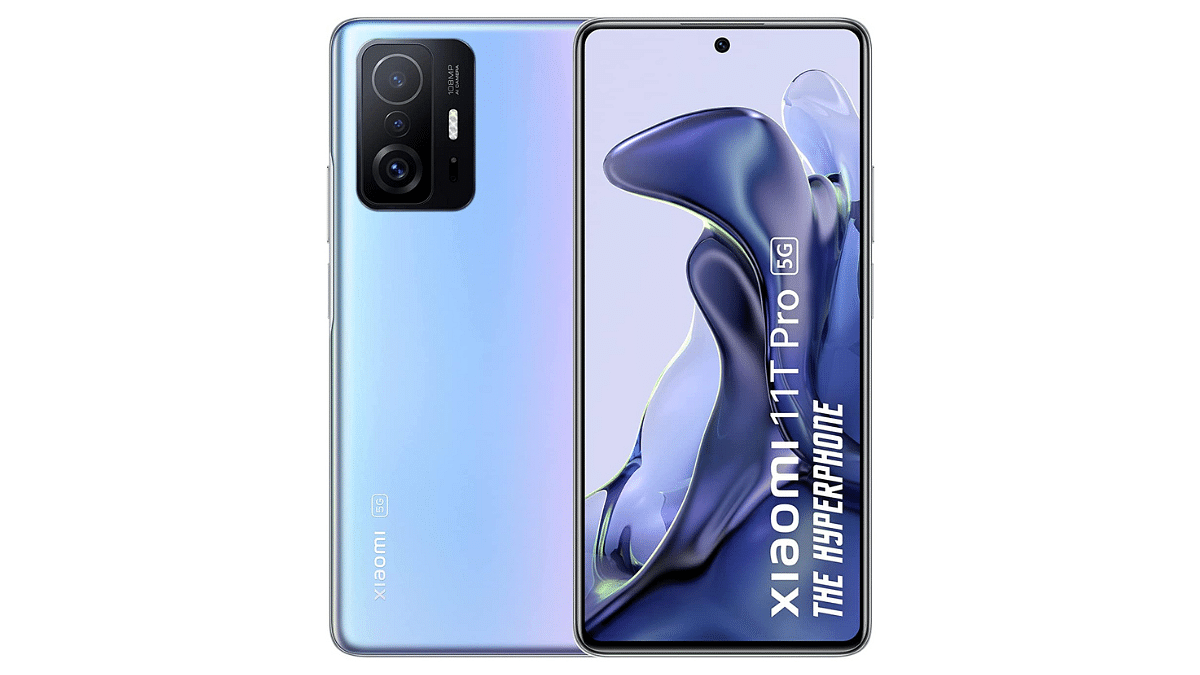
We’ve done the research for you and put together an in-depth comparison of five leading smartphones in this range. In this article, we’ll dive deep into the features of OnePlus Nord 3 5G, POCO F5 5G, Vivo iQOO Neo 7 Pro, Oppo Reno8 Pro 5G, and Xiaomi 11T Pro 5G.

From processing power to camera quality and battery life, we’ll break down everything you need to know to make an informed choice for your gaming needs.

Also Read: Tecno Spark Go 2023 Vs Nokia C12: Best Phone Under Rs. 6,000

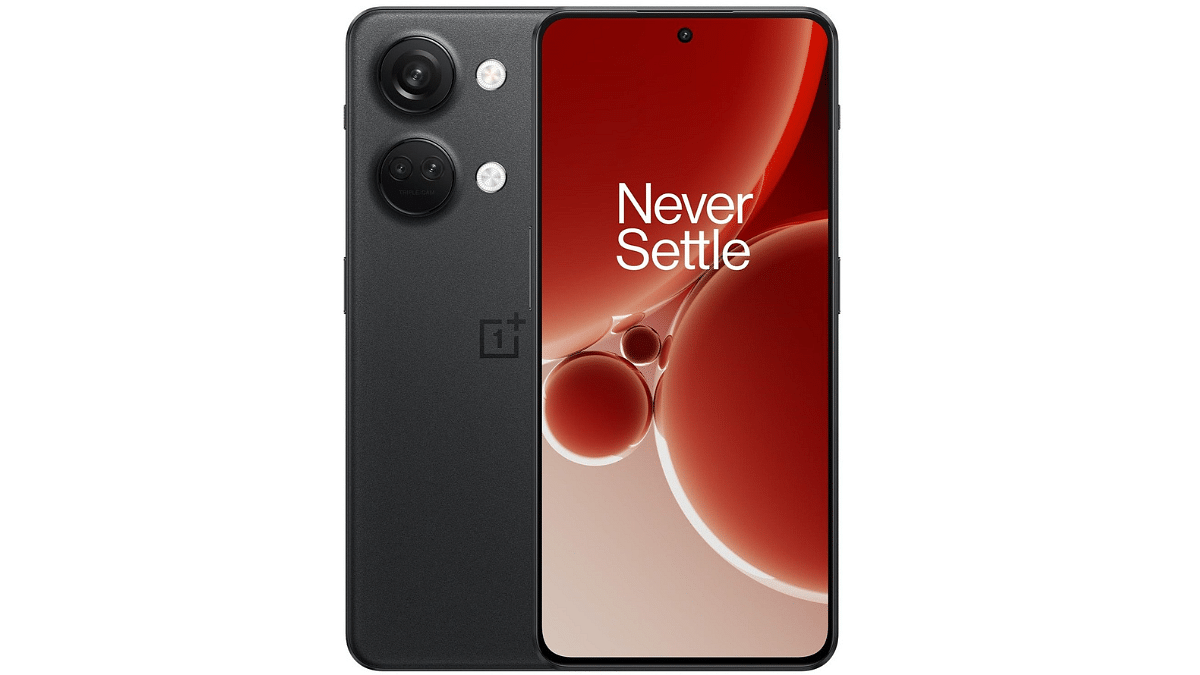
OnePlus Nord 3 5G

SpecificationOnePlus Nord 3 5G
ChipsetMediatek Dimensity 9000
Processor64-bit Octa-core 3.05 GHz
RAM8GB
Display6.74″ Fluid AMOLED (120Hz refresh rate)
Rear Camera50 MP + 8 MP + 2 MP
Front Camera16 MP
Internal Storage128GB
Battery5000 mAh (80W fast charging)
PriceRs. 33,999

The OnePlus Nord 3 5G priced at Rs. 33,999, is a strong contender. It’s powered by the Mediatek Dimensity 9000 chipset with an octa-core processor and 8GB RAM. The device flaunts a 6.74″ Fluid AMOLED Screen with a 120Hz refresh rate, ensuring dazzling visuals for games. Moreover, its triple rear camera setup (50 MP + 8 MP + 2 MP) and a 16 MP front camera make it a versatile device. With 128GB internal storage, it offers ample space, and the 5000 mAh battery with 80W fast charging ensures extended gameplay.

Also Read: OnePlus Nord 3’s New Details Emerge From Latest Geekbench Leaks

POCO F5 5G

SpecificationPOCO F5 5G
PriceRs. 30,999
ChipsetQualcomm Snapdragon 7 Plus Gen 2
RAM12GB
Display6.67″ AMOLED (120Hz refresh rate)
Rear Camera64 MP + 8 MP + 2 MP
Front Camera16 MP
Internal Storage256GB
Battery5000 mAh (67W fast charging)

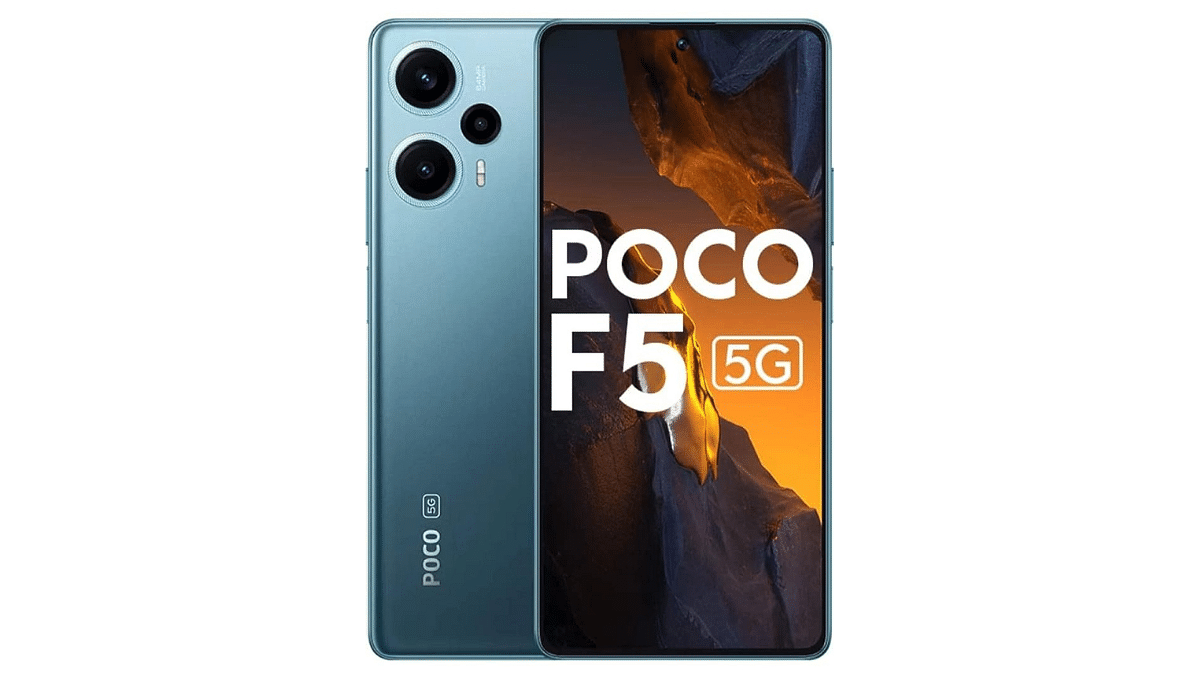
Next up, POCO F5 5G offers excellent value at Rs. 30,999. It’s armed with the Qualcomm Snapdragon 7 Plus Gen 2, complemented by a generous 12GB RAM. The 6.67″ AMOLED Screen with a 120Hz refresh rate is perfect for immersive gaming. Cameras are impressive too, with a triple setup (64 MP + 8 MP + 2 MP) at the back and a 16 MP selfie snapper. A massive 256GB storage ensures you never run out of space, and the 5000 mAh battery with 67W fast charging keeps the device juiced up.

Also Read: Poco F5 5G Official India Launch Possibly On April 6: Expected Specfications, Price In India

Vivo iQOO Neo 7 Pro

SpecificationVivo iQOO Neo 7 Pro
PriceRs. 34,999
ChipsetQualcomm Snapdragon 8 Plus Gen 1
RAM8GB
Display6.78″ AMOLED (120Hz refresh rate)
Rear Camera50 MP + 8 MP + 2 MP
Front Camera16 MP
Internal Storage128GB
Battery5000 mAh (120W fast charging)

The Vivo iQOO Neo 7 Pro priced at Rs. 34,999, is another noteworthy mention. Under the hood, it boasts the Qualcomm Snapdragon 8 Plus Gen 1 with 8GB RAM. Its 6.78″ AMOLED Screen with 120Hz refresh rate makes gaming a delight. Camera-wise, it houses a triple setup (50 MP + 8 MP + 2 MP) and a 16 MP front camera. The 128GB storage might seem standard, but its 5000 mAh battery with a whopping 120W super-fast charging is a game-changer.

Also Read: OPPO F23 5G With 64MP Triple Rear Camera, 67W Fast Charging India Launch On May 15: Expected Price, Specifications

Oppo Reno8 Pro 5G

SpecificationOppo Reno8 Pro 5G
PriceRs. 34,990
ChipsetMediaTek Dimensity 8100 Max
RAM12GB
Display6.7″ AMOLED
Rear Camera50 MP + 8 MP + 2 MP
Front Camera32 MP
Internal Storage256GB
Battery4500 mAh (80W fast charging)

Oppo Reno8 Pro 5G, coming in at Rs. 34,990, shouldn’t be overlooked. With the MediaTek Dimensity 8100 Max and 12GB RAM, this phone is built for multitasking and intense gaming. It features a 6.7″ AMOLED screen, a triple camera array (50 MP + 8 MP + 2 MP), and a high-resolution 32 MP front camera. While it offers a robust 256GB of storage, its 4500 mAh battery with 80W fast charging ensures it stays powered for longer.

Also Read: OPPO Reno8 5G: Top reasons why this Ultra-tech Masterpiece Should Be Your Next Buy

Xiaomi 11T Pro 5G

SpecificationXiaomi 11T Pro 5G
PriceRs. 33,880
ChipsetQualcomm Snapdragon 888
RAM12GB
Display6.67″ AMOLED (120Hz refresh rate)
Rear Camera (Primary)108 MP
Internal Storage256GB
Battery5000 mAh (120W fast charging)

Lastly, the Xiaomi 11T Pro 5G, priced at Rs. 33,880, runs on the mighty Qualcomm Snapdragon 888 with 12GB RAM, making it a beast in performance. It stands out with its camera setup, boasting a 108 MP primary lens. The device also sports a 6.67″ AMOLED Screen with a 120Hz refresh rate. With 256GB storage and a 5000 mAh battery backed by 120W charging, it’s designed for prolonged gaming sessions.

Also Read: Best Gaming Laptops Under Rs. 50,000

Categories
Chipset Comparison Featured

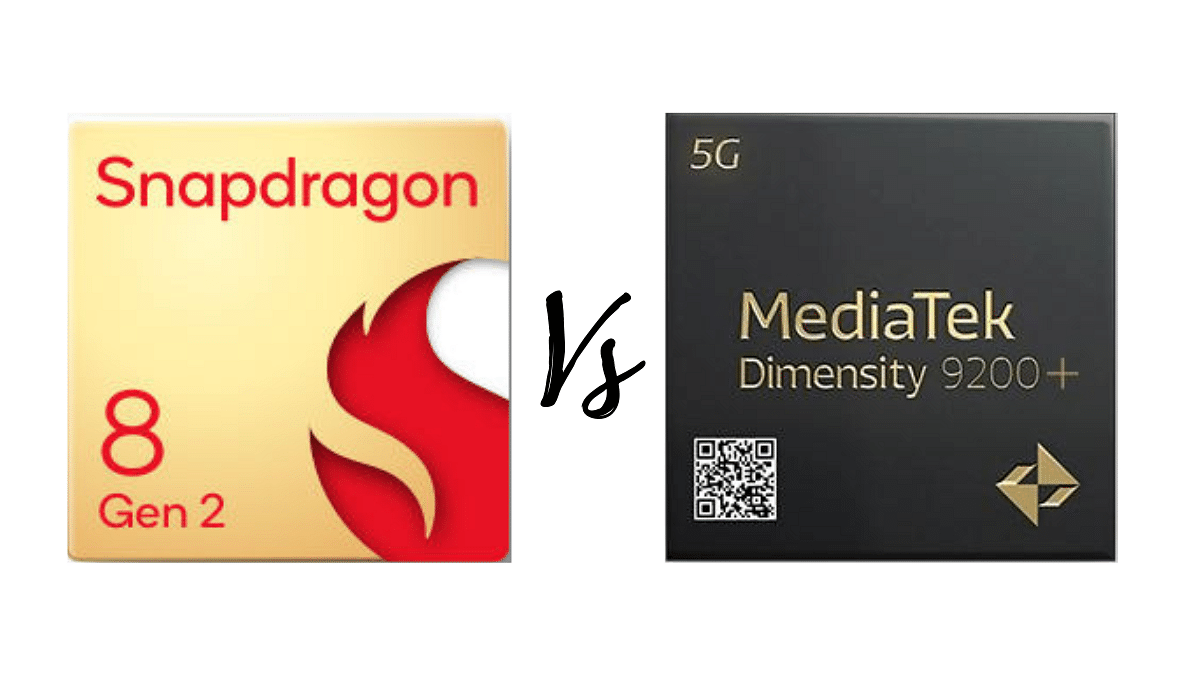
Snapdragon 8 Gen 2 Vs MediaTek Dimensity 9200 Plus: Which Processor Is Best For Flagship Gaming Phones ?

Key Highlights

  • Dimensity 9200 boasts superior GPU raw power.
  • Snapdragon offers higher 4K video playback.
  • Both employ efficient 4nm TSMC process.

Two of the front-runners in this space are the Snapdragon 8 Gen 2 and the MediaTek Dimensity 9200 Plus. For gaming enthusiasts, especially those looking for mid-range phones, the choice of chipset can greatly influence the gaming experience.

Let’s dive deep into the specifics and understand which one of these is the best pick for mid-range gaming phones.

Also Read: Qualcomm Snapdragon 695 Vs MediaTek Dimensity 7050: Top Powerful Mid-Range 5G Chipset 2023

Snapdragon 8 Gen 2 Vs MediaTek Dimensity 9200 Plus: Fabrication, CPU Architecture

Feature Snapdragon 8 Gen 2MediaTek Dimensity 9200 Plus
Manufacturing Process4 nanometers (TSMC)4 nanometers (TSMC)
Core Count88
Prime CoreCortex-X3Cortex-X3
Prime Core Clock Speed3.2 GHz3.35 GHz
High-performance Cores2x Cortex-A715 @ 2.8 GHz<br>2x Cortex-A710 @ 2.8 GHz3x Cortex-A715 @ 3 GHz
Power-efficient Cores3x Cortex-A510 @ 2 GHz4x Cortex-A510 @ 2 GHz

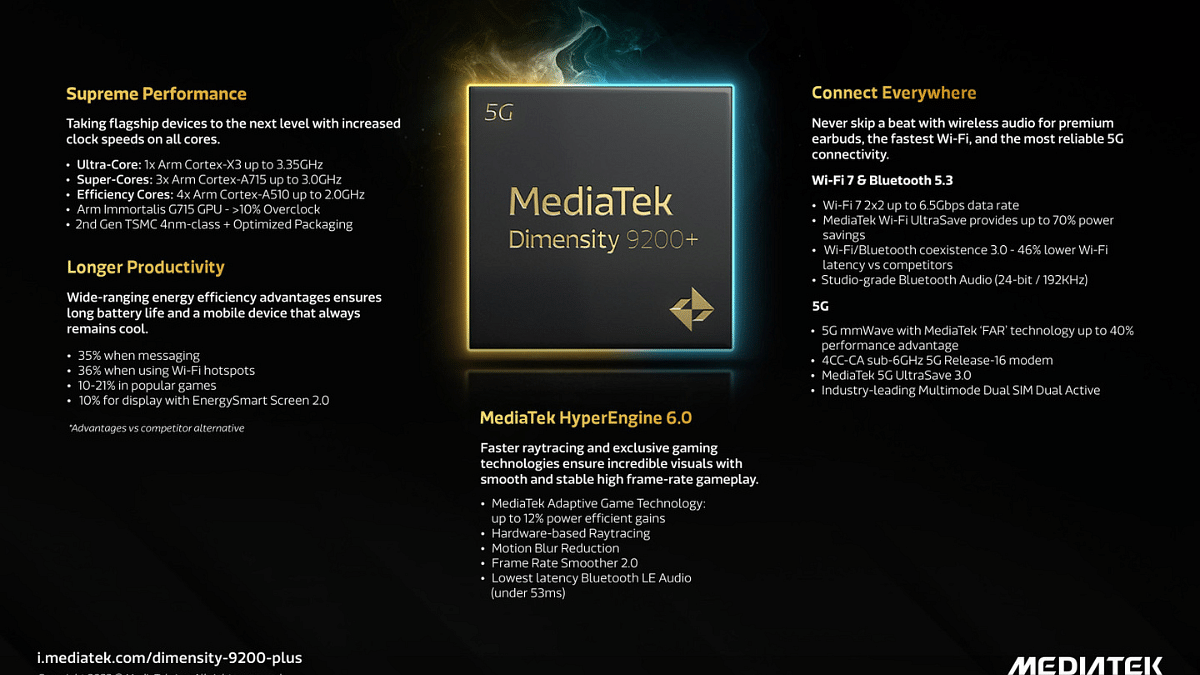
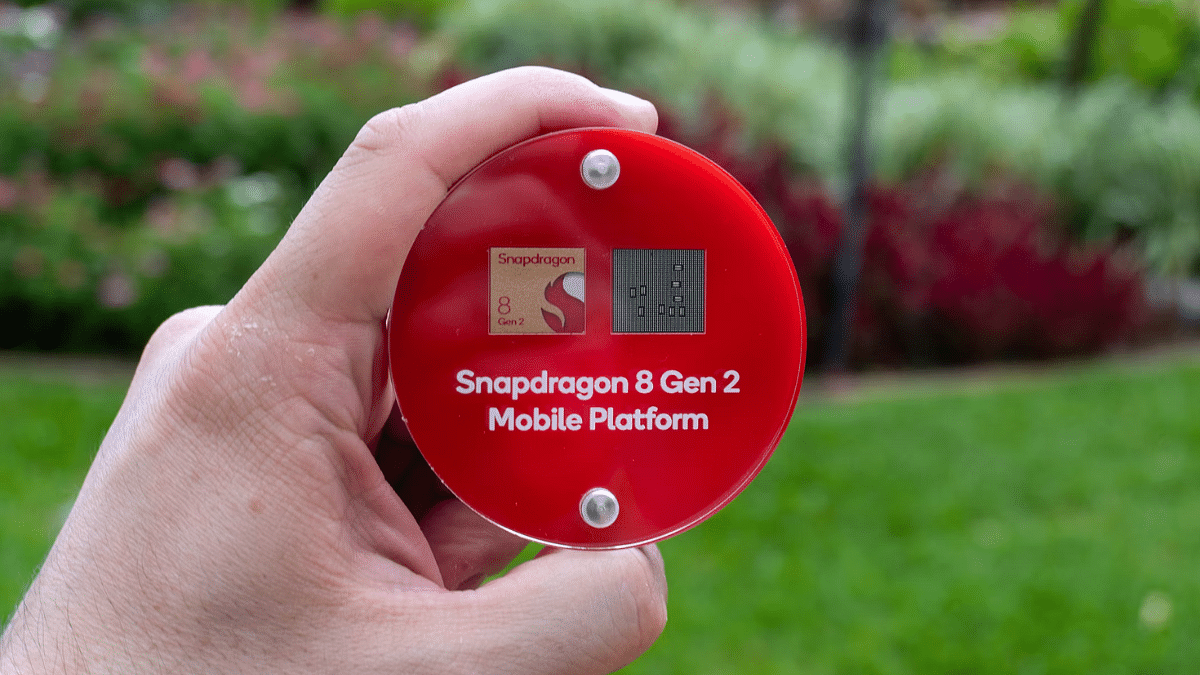
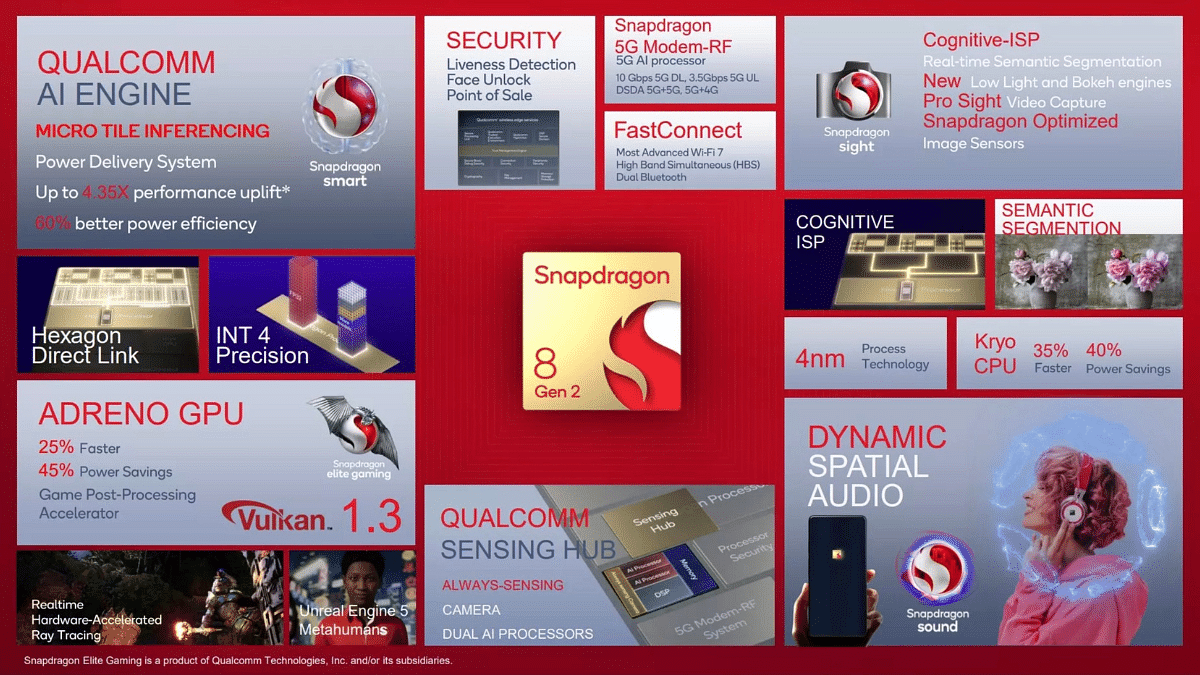
The Snapdragon 8 Gen 2 and the MediaTek Dimensity 9200 Plus, both are built on the 4-nanometer process by TSMC, promising efficient power consumption. In terms of architecture, the Snapdragon offers a varied configuration with the high-performing Cortex-X3 at 3.2 GHz, complemented by two sets of mid-tier cores (Cortex-A715 and Cortex-A710) and energy-efficient Cortex-A510 cores. On the other hand, the Dimensity 9200 Plus takes the lead in raw performance with its Cortex-X3 running at 3.35 GHz and a robust triad of Cortex-A715 cores. Both chips are designed with 8 cores, but the Dimensity’s slightly higher peak frequency could give it a minor edge in bursty tasks.

Also Read: Qualcomm Snapdragon 870 Vs MediaTek Dimensity 8200: Which Is A Better Premium Range Chipset ?

Snapdragon 8 Gen 2 Vs MediaTek Dimensity 9200 Plus: GPU Comparison

Feature Snapdragon 8 Gen 2MediaTek Dimensity 9200 Plus
GPU NameAdreno 740Mali-G715 Immortalis MP11
GPU FrequencyNot Specified995 MHz

The Snapdragon boasts the Adreno 740, an impressive unit operating at 680 MHz. With a whopping 2560 shaders, it has a computational capacity of 3481.6 Gigaflops. The Dimensity, however, sports the Mali-G715 Immortalis MP11 based on the Valhall 4th gen architecture. With a higher frequency of 995 MHz and 2112 shaders, it clocks in at 4202.8 Gigaflops, giving it an advantage in raw graphical power, which might translate to smoother gameplay and better graphics in demanding games.

Also Read: MediaTek Dimensity 7050 Vs Snapdragon 8 Gen 1: Best Mid-Range Gaming Chipset 2023

Snapdragon 8 Gen 2 Vs MediaTek Dimensity 9200 Plus: Memory, Multimedia (ISP) Comparison

Feature Snapdragon 8 Gen 2MediaTek Dimensity 9200 Plus
Memory TypeLPDDR5XLPDDR5X
Memory Frequency4200 MHz4266 MHz
Max Display Resolution3840 x 21602960 x 1440
Max Camera Resolution200MP320MP
8K Video Capture30FPS30FPS
4K Video Playback120FPS60FPS

Both processors support LPDDR5X memory, but the Dimensity marginally outperforms with its 4266 MHz frequency compared to the Snapdragon’s 4200 MHz. Additionally, the Dimensity offers a slightly greater max bandwidth. When considering multimedia capabilities, both chips support UFS 3.1 and 4.0 for faster storage. However, the Dimensity takes the crown in camera support with a whopping 320MP resolution, whereas the Snapdragon caps at 200MP. Both chips can capture 8K at 30FPS, but Snapdragon provides a superior 4K capture at 120FPS against the Dimensity’s 60FPS.

Also Read: Snapdragon 7 Gen 1 Vs MediaTek Dimensity 6080: Battle Of Top Mid- Range Chipset 2023

Snapdragon 8 Gen 2 Vs MediaTek Dimensity 9200 Plus: Final Verdict

For those prioritizing raw CPU and GPU power, particularly for gaming, the MediaTek Dimensity 9200 Plus appears to be the stronger contender with its slightly better CPU frequency and significantly higher GPU performance. Additionally, it offers a bit more in terms of camera capabilities, which might appeal to photography enthusiasts.

However, the Snapdragon 8 Gen 2 is no slouch. Its diverse core configuration ensures efficient multitasking, and its superior 4K video recording could be a determining factor for content creators. Moreover, it boasts a slightly more advanced modem, ensuring faster download speeds.

Also Read: Snapdragon 4 Gen 2 Budget 5G Chipset Launched

Categories
Apps Featured

Best Apps And Tools To Download High Quality Instagram Status On Any Phone

Key Highlights

  • Effortless Status Saving for Instagram Stories
  • Versatile Tools for Downloading IG Status
  • Quality Downloads Anytime, Anywhere: Easy Solutions

Instagram has emerged as a online platform for sharing moments, stories, and status updates. While the platform itself offers a user-friendly interface, it lacks a built-in feature to download the status updates of others. Fortunately, several third-party apps and tools have come to the rescue, allowing users to easily download high-quality Instagram status updates on any phone.

Here are some of the best options:

Also Read: Instagram Privacy: How To Hide Online/ Active Status, Last Seen On Instagram

1. InstaSave

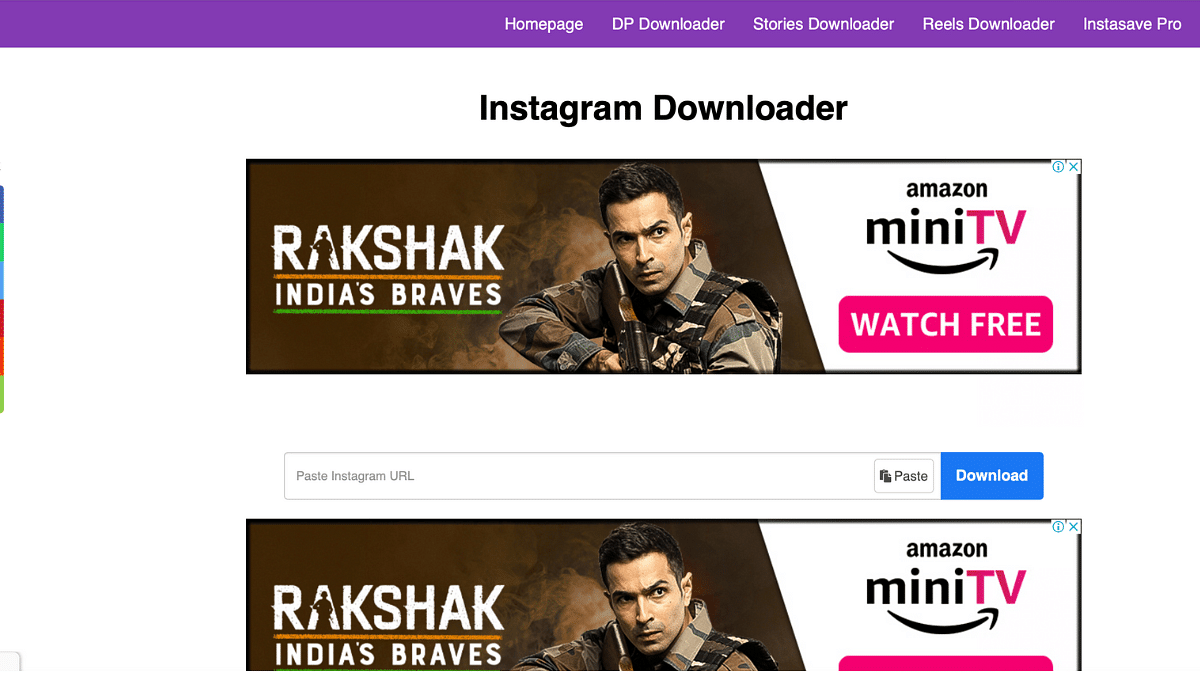
InstaSave has gained popularity due to its simplicity and efficiency. Available for both Android and iOS, this app enables users to download Instagram status updates with just a few taps. Its intuitive interface lets you browse through the statuses of your friends and contacts, and saving a status is as easy as pressing a download button. With InstaSave, you can maintain a personal collection of your favorite moments without compromising on quality.

Also Read: 100+ Cool And Creative Art Studio Name Ideas For Your Instagram Account

2. StorySaver

StorySaver is another versatile app that supports not only Instagram but also other social media platforms. Along with downloading status updates, it lets you repost, share, and organize the downloaded content. Its user-friendly design and multi-platform compatibility make it a powerful tool for users who wish to curate their digital experiences.

Also Read: 100+ Fun And Unique Instagram Name Ideas For Book Lovers

3. DownloadGram

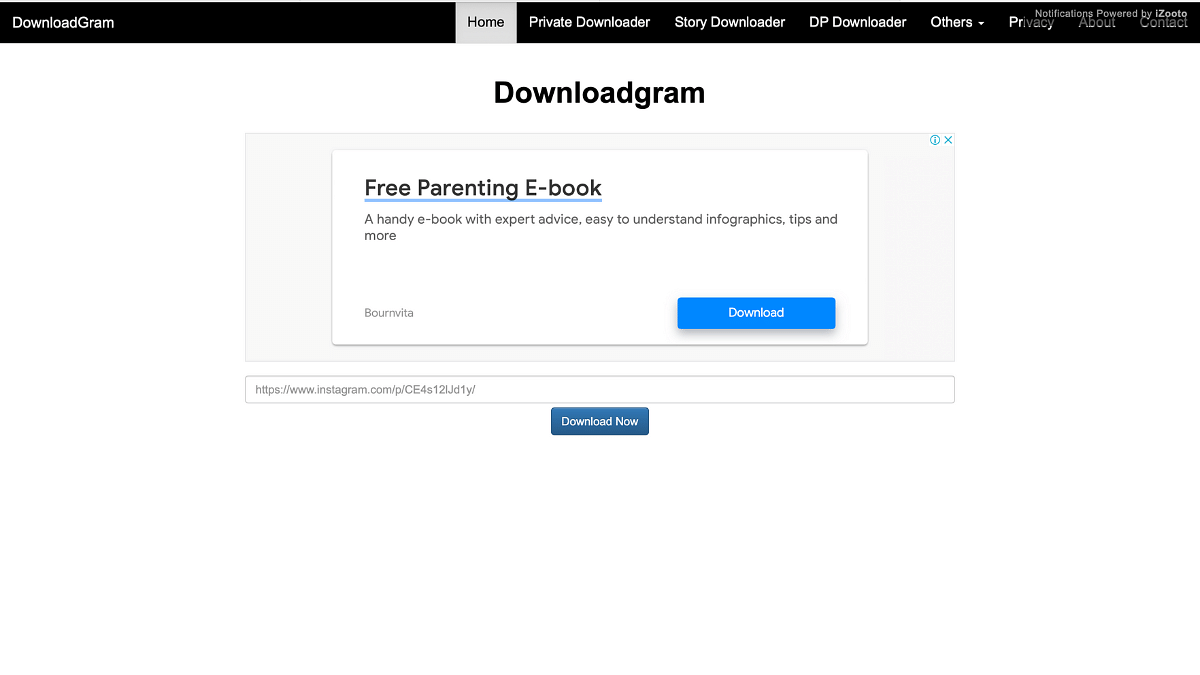
For those who prefer not to clutter their phones with additional apps, DownloadGram comes to the rescue as a web-based solution. This tool allows users to download Instagram photos, videos, and status updates by simply pasting the post’s URL. This method is not only device-agnostic but also ensures privacy as you don’t need to grant app permissions.

Also Read: Best 100+ Instagram Names for Film and Cinema Fans

4. Shortcuts (iOS)

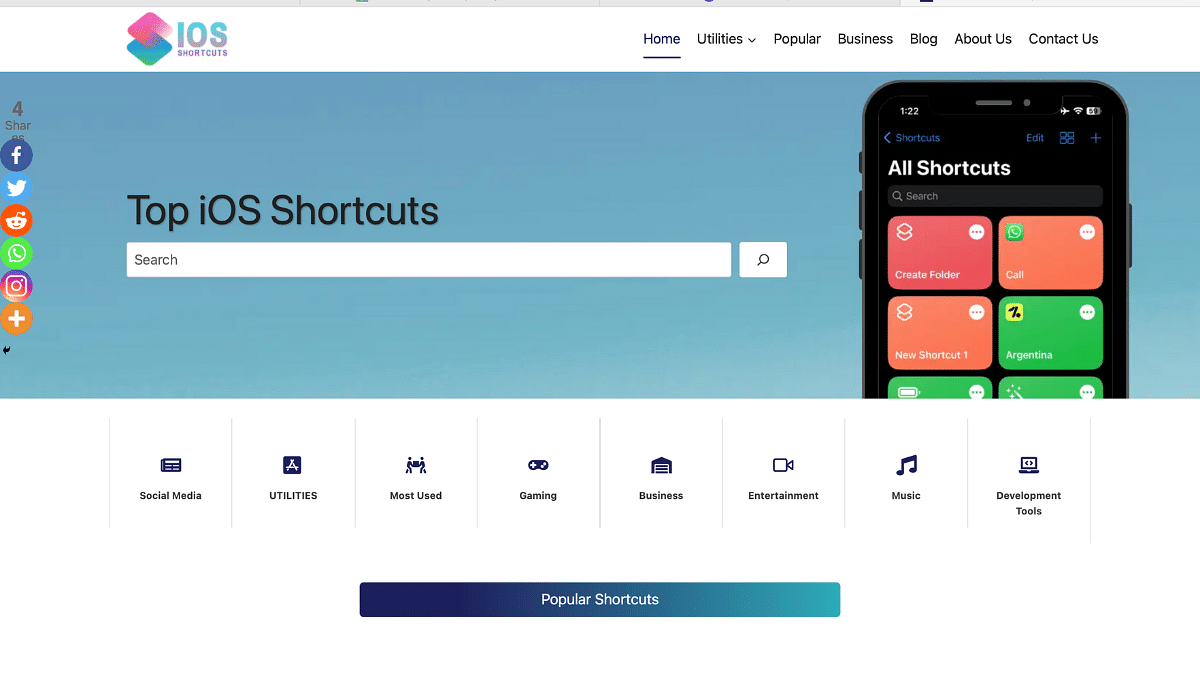
iOS users can take advantage of the Shortcuts app, which offers a way to automate various tasks, including downloading Instagram status updates. By creating a custom shortcut, users can input the profile link and let the automation do the rest. This method adds an extra layer of customization and control to the downloading process.

Also Read: 100+ Best Instagram Gaming Names For Boys

5. InstaG Downloader

For desktop users who wish to save Instagram status updates, the InstaG Downloader Chrome extension proves to be a handy tool. Once installed, it adds a “Download” button below each status update on Instagram’s web interface. This extension streamlines the downloading process for those who prefer using a computer.

Also Read: 100+ Best Instagram Names For Pet Parents