Categories
Comparison Info Mobile

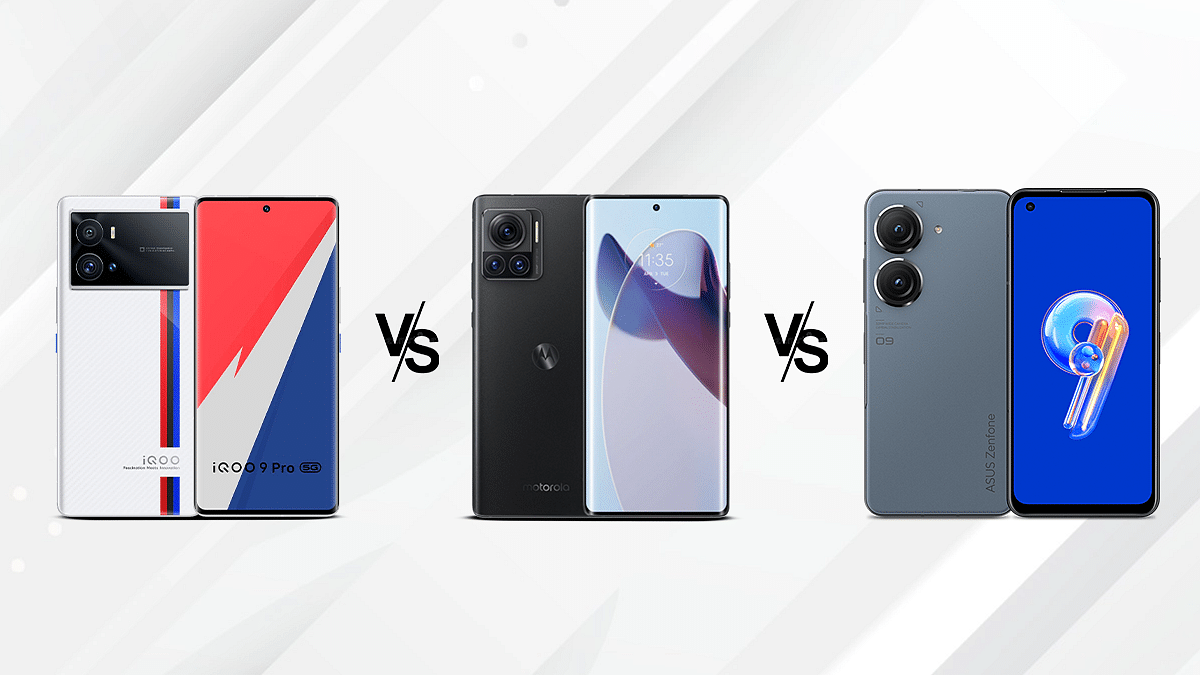
iQOO 9T Vs Motorola Edge 30 Ultra Vs Asus ZenFone 9: Premium Android Mobile Comparison

The flagship smartphone industry is getting ramped up with the launch of powerful Android smartphones from some of the popular brands. Motorola recently ramped its game in the premium smartphone market with the Moto Edge 30 Ultra which is the world’s first 200MP camera phone. Motorola isn’t just elevating the camera experience with the Edge 30 Ultra but also the overall user experience by equipping it with top-tier hardware.

The Motorola Edge 30 Ultra has joined the list of a few Snapdragon 8+ Gen 1 chipset-powered phones in the country. Amongst the previously introduced models are the iQOO 9T and the Asus ZenFone 9 both of which are also driven by Qualcomm’s new-age flagship Snapdragon 8+ Gen 1 processors. If you are confused about which out of three models makes for the best buy, this spec-sheet-based comparison will help you decide.

iQOO 9T Vs Motorola Edge 30 Ultra Vs Asus ZenFone 9: Display Specifications

Starting with the iQOO 9T, the flagship gaming handset has been launched with a massive 6.67-inch display, which is an AMOLED panel with an FHD+ resolution of 1080 x 2400 pixels. The screen on the iQOO 9T further supports HDR10+ certification and has 1500 nits peak brightness levels which allow for good visibility under direct sunlight. It has a 120Hz refresh rate for a fluid touch response. The panel on this iQOO phone is protected by a Corning Gorilla Glass 5 protection.

Motorola has released the Moto Edge 30 Ultra with an OLED display which is also tall and measures 6.67-inches. The Motorola Edge 30 Ultra’s screen also offers 1080 x 2400 pixels FHD+ screen resolution and has a standard 20:9 aspect ratio. The screen on the Moto Edge 30 Ultra supports a higher 144Hz refresh rate which is best suited for gaming visuals. The display on the Edge 30 Ultra has 1250 nits peak brightness which is lower than the iQOO 9T. However, the sunlight visibility is still good with this phone.

Asus has used a Super AMOLED screen on the ZenFone 9 that supports the same 1080 x 2400 pixels FHD+ resolution and 20:9 aspect ratio. The refresh rate on this phone is equal to the iQOO 9T, i.e., 120Hz. However, the ZenFone 9 has the smallest screen size out of all models on this list. It features a 5.9-inch display that is protected by Corning Gorilla Glass. The iQOO 9T has the brightest panel, while the Motorola Edge 30 Ultra has the highest refresh rate.

iQOO 9T Vs Motorola Edge 30 Ultra Vs Asus ZenFone 9: Camera Specifications

If you are looking for the best-in-class camera hardware, the Motorola Edge 30 Ultra with a 200MP triple rear camera is the best option. The flagship Moto handset’s main camera (200MP) combines a 12MP telephoto lens and a 50MP ultrawide sensor. The triple rear camera module on the Motorola Edge 30 Ultra can not only capture detailed daylight but also night images. The camera setup on the premium Motorola phone has up to 8K@30fps video recording support and has a bunch of shooting modes for an enhanced camera experience.

The iQOO 9T also ships with a triple rear camera setup where the primary lens is a 50MP sensor with an f/1.9 aperture. The iQOO 9T additionally features a 12MP secondary telephoto lens with an f/2.7 aperture and 2x optical zoom support and a 13MP ultrawide sensor with 120-degree FoV. This phone offers up to 4K@30fps video recording.

The Asus ZenFone 9 also ships with a 50MP main camera that has an f/1.9 aperture with gimbal OIS support. It is aided by a 12MP ultrawide camera that has a 113-degree FoV. In the selfie camera race as well, the Motorola Edge 30 Ultra takes the lead with the 60MP selfie snapper. The iQOO 9T and the Asus ZenFone 9 offers a 16MP and a 12MP selfie camera respectively.  

iQOO 9T Vs Motorola Edge 30 Ultra Vs Asus ZenFone 9: Chipset, Battery, Fast Charging Comparison

Under the hood, all these three phones, i.e., the iQOO 9T, Motorola Edge 30 Ultra, and the Asus ZenFone 9 use the latest generation Qualcomm premium chipset – the Snapdragon 8+ Gen 1 chipset. Fabricated using an ultra-thin 4nm process, the Snapdragon 8+ Gen 1 chipset makes sure power delivery is ample for basic as well as extensive tasks. The chipset further is integrated with Adreno 730 GPU. All three phones are launched with Android 12 OS and feature a custom user interface.

Both iQOO 9T and the Motorola Edge 30 Ultra offers up to 12GB RAM capacity, while the Asus ZenFone 9 comes with up to 16GB RAM option. As for the storage capacity, its 256GB with the iQOO 9T and the Asus ZenFone 9 and up to 512GB with the Motorola Edge 30 Ultra.

Speaking of the battery capacity and fast charging technology, the iQOO 9T ships with a 4,700 mAh battery unit with 120W fast charging, whereas the Motorola Edge 30 Ultra features a 4,610 mAh battery with 125W fast charging technology. Rounding off the Asus ZenFone 9’s spec-sheet is a compact 4,300 mAh battery with 30W fast charging technology.
Categories
Chipset Comparison Featured

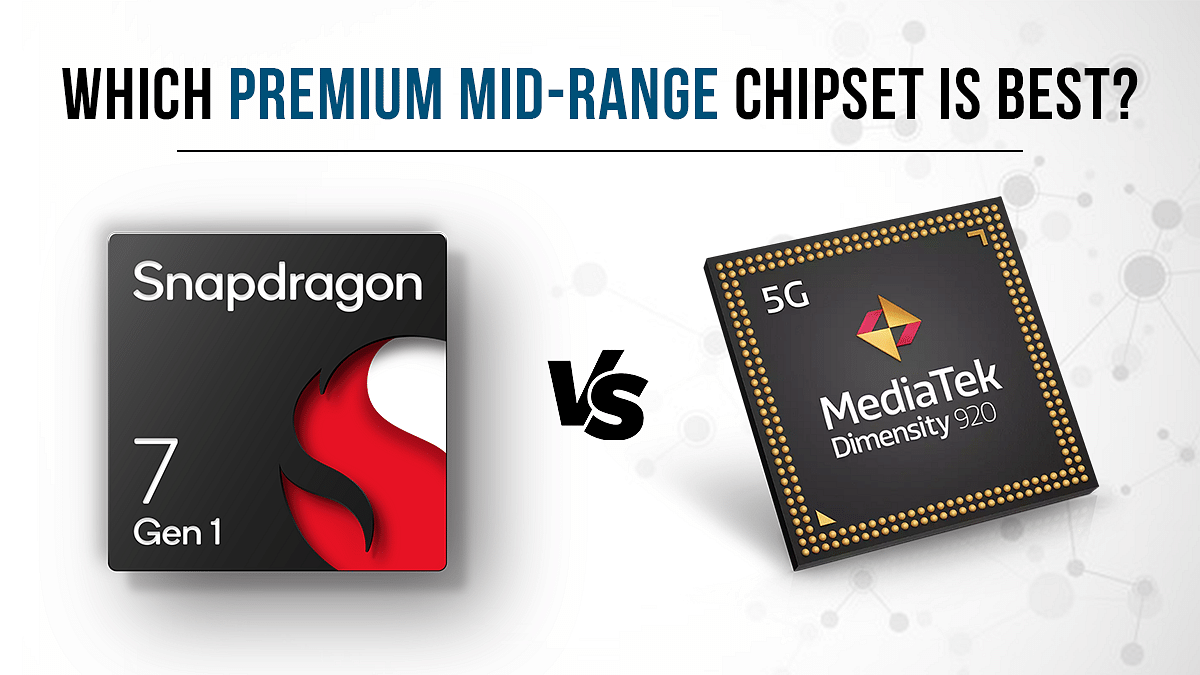
Qualcomm Snapdragon 7 Gen 1 Vs MediaTek Dimensity 920 Chipset: Which Premium Mid-Range Chipset Is Best?

Qualcomm is a known name in the mobile chipset industry with it catering to smartphone OEMs in all segments. The company is gradually replacing the older Snapdragon chipset lineups with the new one. The Snapdragon 6 Gen 1 and the Snapdragon 4 Gen 1 are the brand’s latest mobile processors for budget and mid-range smartphones. Earlier, Qualcomm released the Snapdragon 7 Gen 1 and the Snapdragon 8 Gen 1 series processors for premium mid-range and flagship grade smartphones.

The Snapdragon 7 Gen 1 performance delivery is suitable to carry out extensive tasks and also gaming. This Qualcomm premium mid-range chipset gets some serious competition from MediaTek’s Dimensity 920 processor which is also designed to be a powerhouse for premium mid-range Android phones in the market.

Smartphone OEMs are yet to flood the market with Snapdragon 7 Gen 1 processors, whereas, we already have seen a couple of Dimensity 920 chipset-powered phones in the market. If you are given an option to either buy a new Snapdragon 7 Gen 1 or Dimensity 920 chipset-powered phone which one should you go for? This chipset comparison article will help you decide.

Key FeaturesSnapdragon 7 Gen 1MediaTek Dimensity 920
CPUocta-coreocta-core
GPUAdreno 662Mali G68 MC4
MemoryLPPDR5LPPDR5
StorageUFS 3.1UFS 2.1, UFS 2.2, and UFS 3.1 storage

Qualcomm Snapdragon 7 Gen 1 Vs MediaTek Dimensity 920 SoC: CPU Architecture

Qualcomm’s latest premium mid-range Snapdragon 7 Gen 1 processor is fabricated using a thin 4nm process, while the MediaTek Dimensity 920 chipset is based on a 6nm fabrication process. The Qualcomm SD 7 Gen 1 chipset has octa-cores with a 2400MHz frequency range. The cores are a single Cortex-A710 core with a 2.4GHz clock speed, three Cortex-A710 cores clocked at 2.36GHz, and four Cortex-A510 cores clocked at 1.8GHz.

MediaTek’s Dimensity 920 chipset has the ARMv8.2A instruction set with 2500MHz base frequency. This chipset also has octa-cores out of which there are two Cortex-A78 cores with 2.5GHz clock speed and six Cortex-A55 Cores with 2GHz clock speed. The CPU architecture and the overall performance is slightly better with the Snapdragon 7 Gen 1 compared to the Dimensity 920 processor.

Also Read: Qualcomm Snapdragon 778G Vs Dimensity 9000 Chipset: Premium Mid-Range Mobile Processors

Qualcomm Snapdragon 7 Gen 1 Vs MediaTek Dimensity 920 Chipset: GPU Support

For graphics, the Qualcomm Snapdragon 7 Gen 1 processor integrates an Adreno 662 GPU which is based on the Adreno 600 architecture. The exact GPU frequency is not revealed for the SD 7 Gen 1 chipset. However, the remaining details are available including the 1.1 Vulkan version, 2.0 OpenCL version, and 12 DirectX version.

MediaTek has embedded the Mali-G68 MC4 GPU on the Dimensity 920 chipset which has 950MHz GPU frequency and Valhall 2 architecture.  This mid-range MediaTek processor has the same 1.1 Vulkan version, OpenCL 2.0 version, and DirectX 12 version. GPU performance is good on both processors with each of them packing ample punch for graphics rendering.

Also Read: MediaTek Dimensity 700 Vs Qualcomm Snapdragon 732G Chipset: Budget Android Mobile Processor Comparison

Qualcomm Snapdragon 7 Gen 1 Vs MediaTek Dimensity 920 Processor: Memory, Multimedia (ISP) Comparison

The Qualcomm Snapdragon 7 Gen 1 processor has LPDDR5 RAM compatibility with 3200MHz memory frequency. The Dimensity 920 processor also has LPDDR5 RAM and a 3200 MHz frequency similar to the SD 7 Gen 1. The maximum memory frequency support with both these Qualcomm and MediaTek processors is up to 16GB. The storage support is UFS 3.1 with the Qualcomm processor, while the MediaTek Dimensity 920 integrates UFS 2.1, UFS 2.2, and UFS 3.1 storage support.

Moving on to the memory compatibility, the Snapdragon 7 Gen 1 processor offers a 1600 x 3360 pixels max display resolution and 1 x 200MP max camera resolution. The chipset further supports 4K@30fps video recording and playback. The video and audio codecs supported are H.264, H.265, and VP9, and AAC, AIFF, CAF, MP3, MP4, and WAV.

The MediaTek Dimensity 920 processor has 1080 x 2520 pixels max screen resolution and a max camera resolution of 1x 10⁸MP and 2x20MP. The audio video codecs compatible with this processor are AAC, AIFF, CAF, MP3, WA, V and H.264, H.265, and VP9.

Also Read | Qualcomm Snapdragon 695 Vs MediaTek Dimensity 920 Mid-Range Mobile Chipset Comparison

Categories
Featured Info Mobile

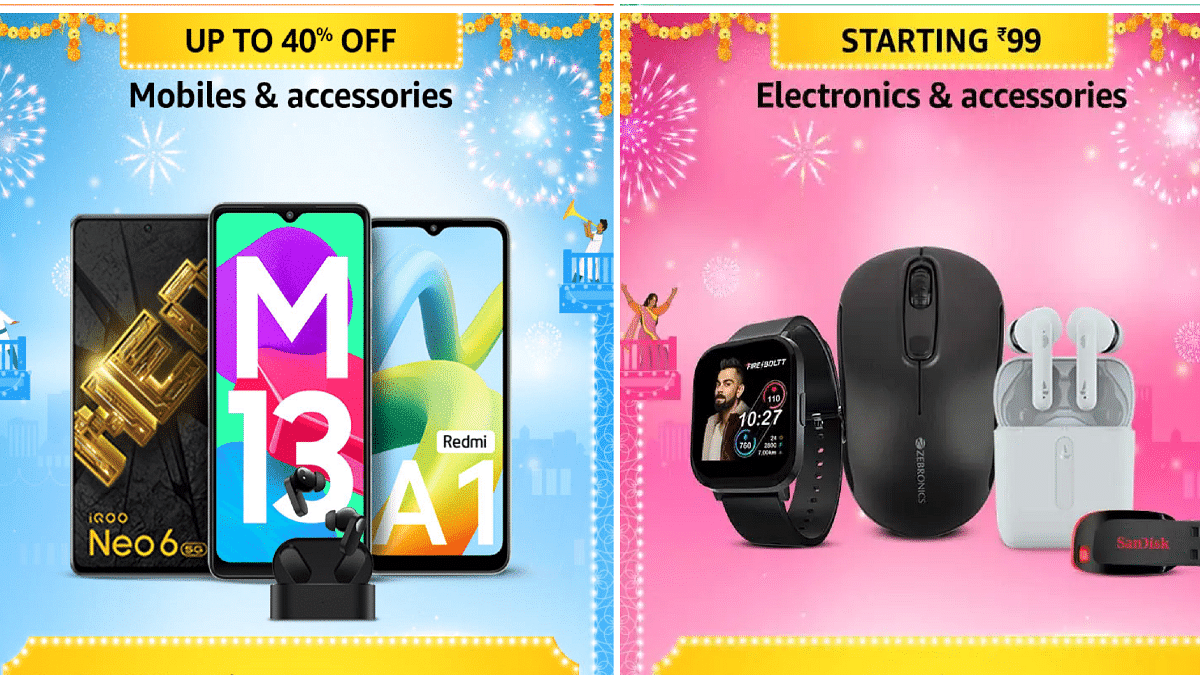
Amazon Great Indian Festival Sale 2022: Best Offers And Deals You Should Grab

With the festive season just a few weeks away, online and offline retailers have started announcing celebratory sales offers in India. Flipkart has been teasing its Big Billion Days sale 2022 offers on smartphones, tablets, and other lifestyle goods. Amazon, another major player in the Indian e-commerce sector, is also hosting the Great Indian Festival sale to mark the upcoming festive season in India.

Amazon has been announcing the Great Indian Festival Season sale each year and like always, the online retailing giant is offering massive discounts, no-cost EMI, exchange bonuses, and more on consumer gadgets including smartphones, tablets, laptops, smart TVs, and digital accessories. You will get products from some of the popular homegrown and international brands at cheaper rates during the Amazon Great Indian Festival sale. Interested in knowing the offers? This article has some of the best deals mentioned along with the sale date. Below are the details and offers.

Amazon Great Indian Festival Sale 2022: Sale Timings And Offer Details

The Amazon Great Indian Festival Sale will start on September 23 in India. You can grab the deals and offers on consumer electronics and other lifestyle and fashion products during the upcoming festive season sale. Amazon has announced a 10 percent instant cashback and discount for SBI Bank credit and debit card holders. Amazon is also offering special deals on Amazon Pay ICICI bank credit card and Amazon Pay Later.

With the former, you can get up to Rs. 2,500 worth of rewards, whole for the Pay Later users, the company has announced up to Rs. 60,000 credit limit and Rs. 150 instant cashback. If you buy an Amazon Pay Gift card, you will get an additional 10 percent discount. The Amazon Great Indian 2022 Festival sale is a limited period sale, therefore, you should make the most of it and get your favorite products at a much cheaper rate.

Amazon Great Indian Festival Sale 2022 Offers On Smartphones, Smart TVs, And More

Amazon has announced up to 40 percent discount on smartphones and accessories. Some of the best deals have been announced on smartphones from popular brands such as Samsung, OnePlus, Xiaomi, Redmi, Realme, OPPO, Tecno, and others. You can get your hands on some of the latest releases such as the iQOO Z6 Lite 5G, Realme Narzo 50i, the upcoming OPPO F21S Pro, and more.

You can buy electronic accessories from the e-commerce website starting at Rs. 95 during the festive season sale on Amazon. On smart TVs, you’ll get up to 70 percent discount and also avail additional no-cost EMI and bank offers.

Categories
Comparison Featured Mobile

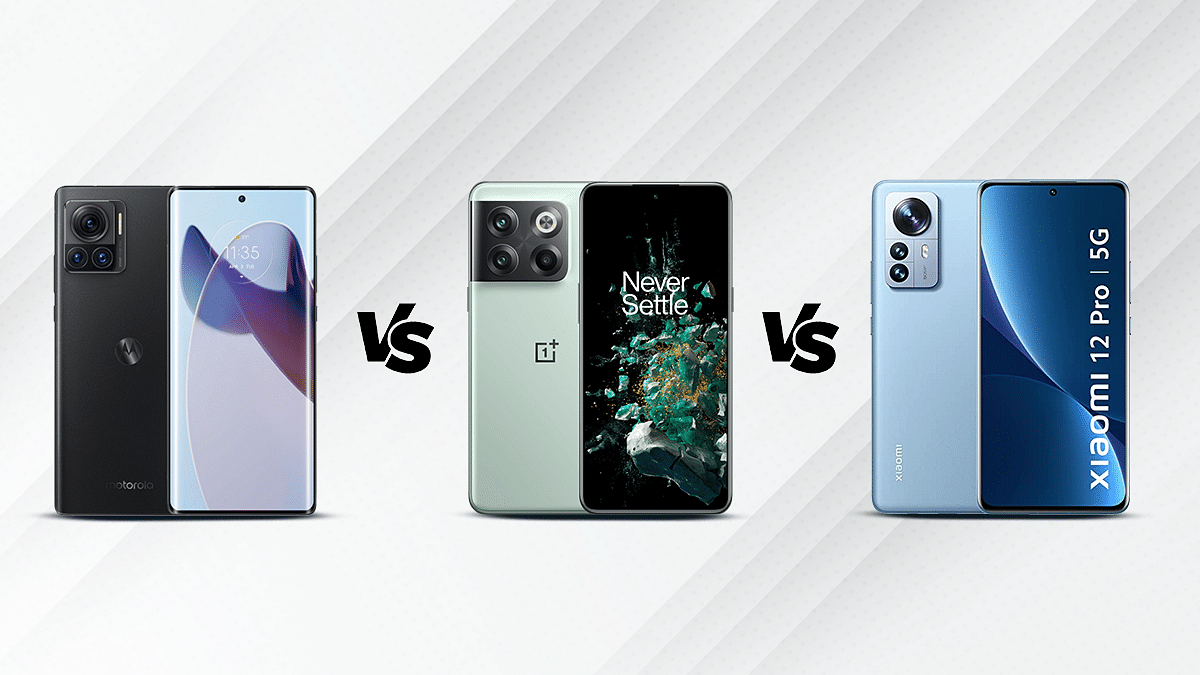
Motorola Edge 30 Ultra Vs OnePlus 10T Vs Xiaomi 12 Pro: Flagship Mobile Comparison

Motorola has leveled up its game in the mobile industry with the launch of the latest flagship Edge 30 lineup. The  Moto Edge 30 Ultra is the brand’s most premium offering for the Indian audience. Specifically, for mobile photography enthusiasts, the Moto Edge 30 Ultra stands out from the crowd for being the world’s first 200MP camera phone.

Besides the powerful camera setup, the Moto Edge 30 Ultra’s remaining spec sheet is also top-notch. It’s one of the few Snapdragon 8+ Gen 1 chipset-powered phones in the Indian market. The OnePlus 10T comes as one of the biggest rivals of the Motorola Edge 30 Ultra with the same Snapdragon 8+ Gen 1 processor and high-grade camera hardware.

We are comparing the two most premium Android phones that you can buy in India for a rich user experience. We have added the Xiaomi 12 Pro to the list to give you more choices if you plan to upgrade to a top-notch Android phone.

Motorola Edge 30 Ultra Vs OnePlus 10T Vs Xiaomi 12 Pro: Display Specifications

Starting with the freshest of the lot, i.e., the Motorola Edge 30 Ultra. This premium Motorola Edge series phone bestows a massive 6.67-inch display which is an OLED panel with an FHD+ resolution of 1080 x 2400 pixels and a 20:9 aspect ratio. The OLED screen is HDR 10+ certified to play 1080p videos on OTT websites. The display offers a high 144Hz refresh rate and 1250 nits of peak brightness levels for better outdoor visibility. The screen is protected by Corning Gorilla Glass 5 protection and sports a punch-hole cutout that accommodates the selfie snapper.

The OnePlus 10T competes with the Motorola Edge 30 Ultra with its 6.7-inch Fluid AMOLED display. The screen size is similar but the specs are slightly different compared to the Motorola Edge 30 Ultra. The OnePlus 10T’s display also comes with an FHD+ resolution of 1080 x 2412 pixels but has a lower 120Hz refresh rate compared to the Motorola model. The display on this phone is also HDR10+ certified and is protected by a Corning Gorilla Glass layer on top.

The third model, i.e, the Xiaomi 12 Pro ships with a similar sized screen, i.e., a 6.73-inch LTPO AMOLED panel. Xiaomi has added support for Dolby Vision and HDR10+ on this flagship Xiaomi 12 series phone. The panel here offers a 1000 nits peak brightness and a 120Hz refresh rate. The screen resolution offered by the Xiaomi 12 Pro is 1440 x 3200 WQHD+.

All three phones mentioned in this list are perfect for media consumption and gaming. You can consider any of the models if you need a top-notch viewing experience. The Motorola Edge 30 Ultra still gets a step ahead with its 144Hz OLED screen.

Motorola Edge 30 Ultra Vs OnePlus 10T Vs Xiaomi 12 Pro: Camera Hardware

Motorola has raised all the bars in the mobile camera segment with the Edge 30 Ultra. It has become the first brand in the world to launch a 200MP camera phone. The Motorola Edge 30 Ultra rear panel has three cameras. The primary 200MP camera has an f/1.9 aperture and is combined with a 12MP depth sensor with 2x optical zoom, and a 50MP ultrawide sensor.

This potent camera hardware can easily record up to 8K@30fps videos and also has several shooting modes to enhance the overall imaging experience in daylight as well as low-light scenarios.

OnePlus is also known for its powerful camera system with its flagship smartphones. The OnePlus 10T is no different and offers a triple-lens rear camera module with a 50MP main Sony IMX766 main sensor. The primary camera is accompanied by an 8MP ultrawide sensor and a 2MP macro lens.

The camera hardware on the OnePlus 10T is less powerful compared to the Motorola Edge 30 Ultra. The primary sensor alone on the latter is massive and the remaining sensors are big too compared to the latter. The camera features include Nightscape Mode, Ultra HDR, Smart Scene Recognition, Portrait, and Pro mode.

The Xiaomi 12 Pro also has capable camera hardware like the remaining two models. It positions itself between the Motorola Edge 30 Pro and the OnePlus 10T with its triple rear camera module that has a 50MP main sensor with an f/1.9 aperture, a 50MP telephoto sensor with an f/1.9 aperture with PDAF and 2x optical zoom, and another 50MP sensor which is an ultrawide lens with 115-degree FoV.

The Motorola Edge 30 Ultra is a winner in the selfie camera race as well with its massive 60MP front camera. The Xiaomi 12 Pro takes the second spot with its 32MP selfie snapper, while the OnePlus 10T takes the last position with a 16MP selfie camera.

Motorola Edge 30 Ultra Vs OnePlus 10T Vs Xiaomi 12 Pro: Chipset, Battery, Fast Charging

The Motorola Edge 30 Ultra and the OnePlus 10T employ Qualcomm’s most premium Snapdragon series mobile chipset for power delivery. The Snapdragon 8+ Gen 1 processor drives both these phones. This octa-core Qualcomm processor on the Motorola Edge 30 Ultra and the OnePlus 10T gets Adreno 730 GPU support. Whereas, the Xiaomi 12 Pro uses the standard Snapdragon 8 Gen 1 chipset for all the tasks.

Battery capacity is 4,610 mAh on the Motorola Edge 30 Ultra which is further supported by 125W fast charging support.

Categories
Featured Info Mobile

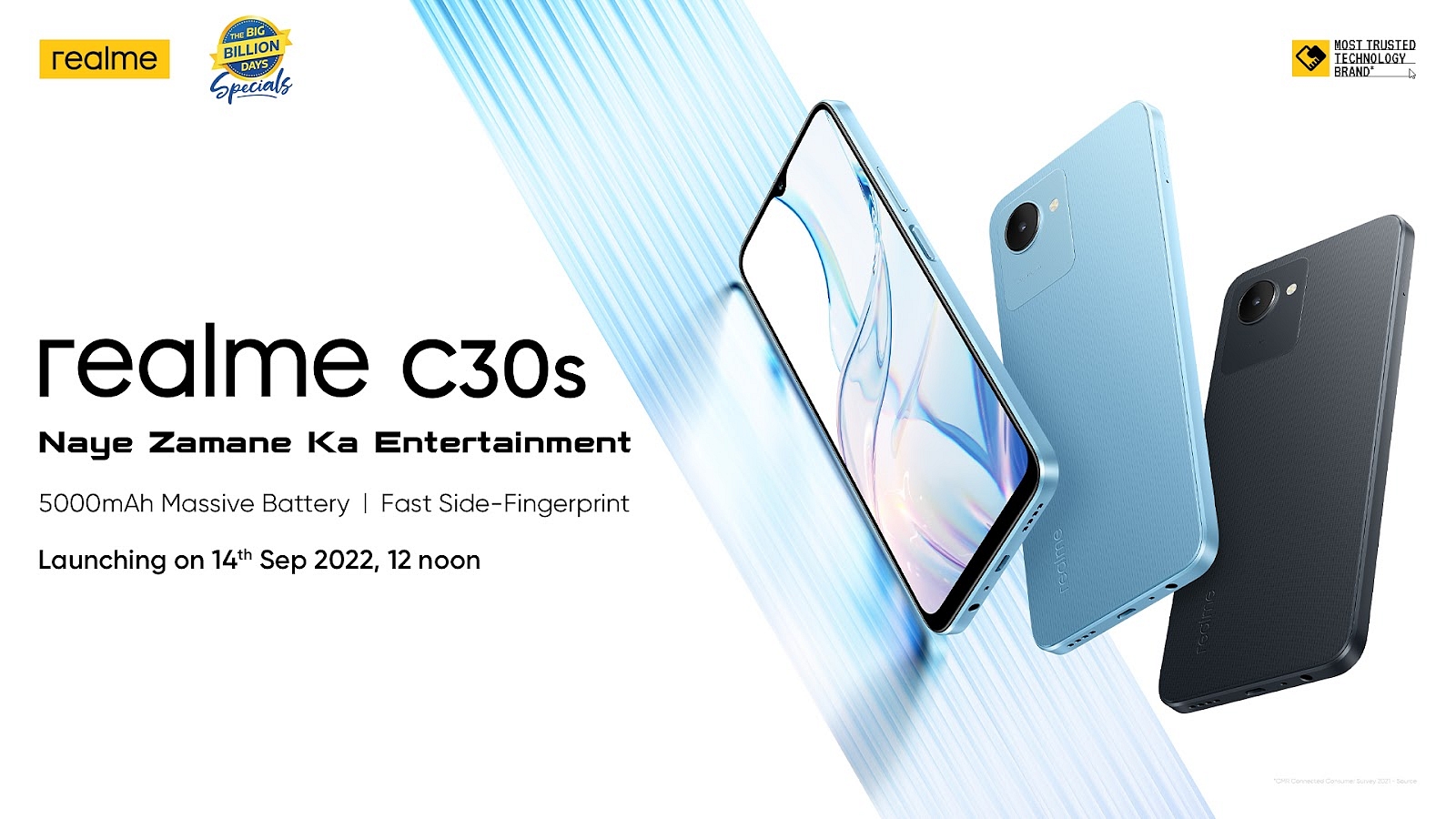
Realme C30s To Disrupt Budget Smartphone Market: Here’s How

Realme is ready to ramp up the competition in the budget Android smartphone market with the launch of a new Realme C series phone. Following the Realme C33, Realme is all set to introduce the C30s in the country. Realme is launching the C30s on September 14 in India and the device has been splashing via leaks consistently ahead of the official India launch. The handset has now paid a visit to a benchmark website confirming its final testing phase. Some of the key features have also been detailed. But how is Realme planning to disrupt the budget smartphone market with its upcoming budget phone? Read on here for details:

Arriving With A Cheaper Price Tag

The Realme C30s will be debuting as one of the cheapest Android phones in the Indian market. Going by the rumors, the base model of the Realme C30s will cost Rs. 7,999, while the high-end model might cost Rs. 8,999. This is speculation the exact cost could differ.

Realme C30s Features Reaffirmed Ahead Of Launch

The Realme C30s latest sighting has been at Geekbench with the Realme RMX3690 model number. We have seen the device listed on other mobile authentication and benchmark websites with the same model number. According to the Geekbench database, the Realme C30s will draw its power from an octa-core chipset that has a base frequency of 1.20Ghz. The benchmark listing also confirms the chipset will integrate a PowerVR Rogue GE8322 GPU.

While the exact name of the chipset is not listed on the Geekbench website, the specifications mentioned suggest it’s the UNISOC SC9865A processor. This entry-level processor will be combined with up to 4GB RAM on the Realme C30s. Now, the benchmark website only mentions the single 4GB RAM capacity. It remains to be seen if the Realme C30s will ship with any other RAM variant or not.

The storage capacity is also not listed on the official website. But we can expect this budget handset to be available with at least a 64GB onboard storage space. Of course, we can’t rule out the possibility of expandable microSD card support via a dedicated 3-way SIM slot. The benchmark website also confirms Android 12 OS which will be topped with a custom Realme UI interface.

The Realme C30s’ Geekbench listing has also shared the benchmark scores it achieved during the testing. The Realme C30s logged 126 points in the single-core test, while the multi-core test logged 463 points. That’s all the latest details that have surfaced courtesy of Geekbench.

But the information available isn’t just limited to this. The brand has teased several details, while the leaks and rumors have shared the pricing details. Based on the available information, it can be assumed that Realme is all set to rattle the budget smartphone market.

Other Known Realme C30s Features

The Realme C30s will be competing against the popular budget phones with a standard HD+ display with 720P screen resolution. The display will be an LCD panel that will measure 6.5-inches and will offer a standard 60Hz refresh rate. We will see a waterdrop-style notch for the 5MP selfie camera. The camera sensor will be single at the back which will be an 8MP lens. At an asking price of Rs. 7,999 Realme is offering a fully loaded phone that can be used as a daily driver.

Categories
Chipset Comparison Featured

Qualcomm Snapdragon 695 Vs MediaTek Helio G96 Chipset: Best Mid-Range Android Mobile Processor

Qualcomm has recently upgraded its mobile chipset portfolio with two new-generation budget chipsets including the Snapdragon 6 Gen 1 and the Snapdragon 4 Gen 1 processors. The former is replacing the Snapdragon 695 octa-core 5G chipset, while the latter is taking the place of the Snapdragon 4 Gen 1 processor. Smartphone OEMs are yet to introduce the new range of smartphones that will be driven by the Snapdragon 6 Gen 1 and the SD 4 Gen 1 processors.

However, the Snapdragon 695 SoC has been used on some of the recent phones and tablets in the premium mid-range segment. The SD 695 5G-powered phones are getting some stiff competition from the Helio G96-powered mobiles.  Introduced by MediaTek, the Helio G96 is also used by premium mid-tier Android phones. But which of these two mobile processors is better than the other? Read this comparison article to know:

Also Read: Qualcomm Snapdragon 750G Vs Snapdragon 732G: Premium Mid-Tier Gaming Chipset Comparison

Qualcomm Snapdragon 695 Vs MediaTek Helio G96 Processor: CPU Architecture Comparison

Qualcomm has designed the Snapdragon 695 processor on a 6 nm fabrication process, while MediaTek has used a 12nm fabrication to design the Helio G96 chipset. Both these mobile processors have octa-cores and ARMv8.2-A architecture. The SD 695 has two 2.2GHz Cortex-A78 cores with a 2.2GHz clock speed and six 1.7GHz Cortex-A55 cores with a 1.7GHz clock speed. This Qualcomm mid-range processor has a 2200MHz CPU frequency.

MediaTek’s Helio G96 processor has the same ARMv8.2-A Instruction set and octa-cores where two Cortex-A78 cores are clocked at 2.05GHz and six Cortex-A55 cores clocked at 2GHz. The frequency range of this processor is 2050MHz. The Qualcomm Snapdragon 695 5G processor has better CPU architecture compared to the Helio G96 chipset.

Qualcomm Snapdragon 695 Vs MediaTek Helio G96 Chipset: GPU Comparison

The Snapdragon 695 processor has Adreno 619 GPU support that is from the Adreno 600 series. The MediaTek Helio G96 features the Mali-G57 MC2 GPU which has the Valhall architecture. The Snapdragon 695 processor comes with 840MHz GPU frequency, while the Helio G96 offers 950Mhz GPU frequency.

The shading units are 132 with the former and 32 with the latter. The Vulkan, OpenCL, and DirectX versions are 1.1, 2.0, and 12 respectively on both processors. Similar to the CPU, the GPU performance is also good with the Snapdragon 695 chipset compared to the Helio G96.

Qualcomm Snapdragon 695 5G Vs MediaTek Helio G96 SoC: Memory, Multimedia (ISP) Compatibility

Speaking of memory compatibility, the Qualcomm Snapdragon 695 processor ships with LPDDR4X RAM support. This is the same with the MediaTek Helio G96 chipset as well. The memory frequency is also identical on both these mid-range processors, i.e., 2133MHz. However, the maximum RAM support is just 8GB with the Snapdragon 695 and up to 10GB with the Helio G96.

The storage compatibility is eMMC 5.1 and UFS 2.2 with both Qualcomm and MediaTek Helio processors. Speaking of the multimedia aspects, Qualcomm has added a maximum display resolution of 1080 x 2520 pixels and a maximum camera resolution of 1x10⁸MP and 2x16MP. The maximum display resolution on the MediaTek Helio G96 is the same as the SD 695 and also the max camera resolution.

The primary difference is in the video capture and recording support. The Snapdragon 695 processor has 1080p@60fps video recording and playback support, while the Helio G96 offers a higher 2K@30fps and 1K@60fps video recording and playback. The audio and video codecs are AAC, AIFF, CAF, MP3, MP4, and WAV, and H.264, H.265, VP8, and VP9 on the SD 695.

The Helio G96 has compatibility with H.264, H.265, and VP9 video codecs and AAC, AIFF, CAF, MP3, MP4, and WAV audio codecs. The memory and multimedia features are almost the same on both processors, therefore, you wouldn’t notice any major differences with the media playback on smartphones powered by both SD 695 and the Helio G96.

Also Read: Qualcomm Snapdragon 732G Vs MediaTek Helio G88 Chipset Comparison: Which One Fairs The Competition?

Categories
Chipset Comparison Featured

Qualcomm Snapdragon 695 Vs Snapdragon 778G Chipset: Premium Mid-Range Mobile Processors

The majority of the smartphone OEMs; specifically Android, rely on Qualcomm and MediaTek for mobile chipsets and processors. Qualcomm is contending in the chipset market with its Snapdragon processors, while MediaTek has the Helio and Dimensity processor series. Both these brands have been revamping their chipset lineups to meet the requirements of modern-day smartphone OEMs and users. Powerful and thinner chipsets are the latest trend with smartphones.

Qualcomm is currently catering to the affordable and mid-range audience with the Snapdragon 778G chipset. This game-centric processor has been driving some of the most popular Android phones. The Qualcomm Snapdragon 695 is another premium-range mobile chipset by Qualcomm that is being used in the latest Android handsets in the mid-range segment. We have done a quick comparison between both these chipsets to see which one offers better performance.

Also Read: Unisoc T820 Vs MediaTek Dimensity 6100 Plus: Mid-Range Chipset Comparison 2023

Qualcomm Snapdragon 695 Vs Snapdragon 778G Chipset: CPU Architecture

The Qualcomm Snapdragon 695 processor is designed in a 6nm fabrication process. The same fabrication process is also used to develop the Snapdragon 778G processor. The Qualcomm Snapdragon 695 processor’s CPU is built on the ARMv8.4A Instruction set and has octa-cores with a 2400MHz frequency range. The cores are a single 2.4GHz Cortex-A78 core, three Cortex-A78 Cores with 2.2GHz clock speed, and four Cortex-A55 cores with 1.9GHz clock speed.

On the other hand, the Snapdragon 695 chipset also has octa-cores and has the ARMv8.2 Instruction set. This premium mid-range Qualcomm processor has Cortex-A78 cores with 2.2 GHz clock speed, and six Cortex-A55 Cores clocked at 1.7GHz. This chipset has a maximum frequency response range of 2200MHz, slightly lower than the Snapdragon 778G. Both the Snapdragon 778G and the Snapdragon 695 chipset have a powerful CPU architecture and the power delivery is equal more or less.

Also Read: Qualcomm Snapdragon 695 Vs MediaTek Dimensity 7050: Top Powerful Mid-Range 5G Chipset 2023

Qualcomm Snapdragon 695 Vs Snapdragon 778G Processor: GPU Comparison

Qualcomm has added the Adreno 619 GPU support with the Snapdragon 695 chipset. This Adreno 600 series GPU has 840MHz GPU frequency. The GPU on the SD 695 chipset has 128 shading units, 1.1 Vulkan version, 2.0 OpenCL version, and 12 DirectX version.

The older Snapdragon 778G processor integrates the Adreno 642L GPU support which is also based on the Adreno 600 GPU architecture as the Adreno 619. This processor offers a 490MHz GOU frequency, 384 shading units, 1.1 Vulkan version, 2.0 OpenCL version, and 12 DirectX version. Expect a good graphic performance from both these mobile processors.

Also Read: MediaTek Dimensity 7050 Vs Snapdragon 8 Gen 1: Best Mid-Range Gaming Chipset 2023

Qualcomm Snapdragon 695 Vs Snapdragon 778G SoC: Memory, Multimedia (ISP)

Qualcomm has added LPDDR5 RAM support with the Snapdragon 778G processor. This chipset has a 3200MHz memory frequency and maximum RAM compatibility of up to 16GB. On the contrary, the Qualcomm Snapdragon 695 processor has LPDDR4X memory compatibility and 2133 MHz memory frequency.

The SD 695 supports lower maximum RAM compatibility of up to 8GB RAM. In the storage department, the SD 778G gets UFS 2.1, UFS 2.2, UFS 3.0, and UFS 3.1 storage support, while the SD 695 just gets the eMMC 5.1 and the UFS 2.2 storage support.

The max display resolution with the Snapdragon 778G is 1080 x 2530 pixels and the max camera resolution is 1x 192MP, 2x 36MP. The max display resolution support with the Snapdragon 695 chipset is 1080 x 2520 pixels and the camera resolution is 1x 10⁸MP and 2z 16MP. The Snapdragon 778G offers better display and camera compatibility than the SD 695.

The Snapdragon 778G processor comes with 4K@30fps video recording and playback. The video codecs are AAC, AIFF, CAF, MP3, MP4, and WAV. The Snapdragon 695 chipset gets 1x10⁸MP, 2x16MP max camera resolution, and can record and play 1080p@60fps videos. The video codecs supported by this chipset are H.264, H.265, VP8, and VP9, while the audio codecs are AAC, AIFF, CAF, MP3, MP4, and WAV.

Also Read: MediaTek Dimensity 7050 Vs Qualcomm Snapdragon 888 Chipset Comparison: Best Mobile Processor For Power Performance

Categories
Chipset Comparison Featured

Apple A16 Bionic Vs Apple 15 Bionic Chipset: Latest Premium Apple Chipset Comparison

Apple has just refreshed its much anticipated iPhone lineup with the iPhone 14 series. This time, the tech behemoth has unveiled four models in the new smartphone series including the iPhone 14, iPhone 14 Plus, iPhone Pro, and the iPhone Pro Max. The new-age iPhones have been introduced with advanced hardware technologies, improved cameras, and the latest custom Bionic processors.

The Apple iPhone 14 and the iPhone 14 Plus have been announced with the A15 Bionic processor. However, for the top-end models, i.e., the iPhone 14 Pro and the iPhone 14 Pro Max, Apple has opted the upgraded A16 Bionic Hexa-core chipset. Apple’s custom mobile processors are all powerful and can offer a lag-free user experience in all scenarios.

But if you are considering buying any of the new-generation Apple iPhone 14 models and are confused about which model you should consider based on the chipset, then you should know the CPU and GPU differences between both of them. This is a quick comparison between the Apple A15 Bionic and the A16 Bionic processor.

Apple A15 Bionic Vs Apple A16 Bionic Chipset: CPU Architecture

The Apple A16 Bionic chipset which is driving the latest iPhone 14 Pro and the iPhone 14 Pro Max models is a Hexa-core chipset that is based on a 4nm fabrication process. The A16 Bionic processor has two Avalanche cores clocked at 3.24GHz and four Blizzard cores clocking at 1.8GHz. This chipset has a frequency range of 3200MHz.

The Apple A16 Bionic chipset is built on ARMv8.5-A instruction set which 3240MHz frequency range. This chipset is also Hexa-cores similar to the A16 Bionic and has two Avalanche cores with 3.24GHz clock speed and six Blizzard cores with 1.82GHz clock speed. This processor is built on a 5nm fabrication process unlike the 4nm process of the A16 Bionic. CPU performance is good with both these chipsets, but the new architecture makes the A16 Bionic slightly better compared to the A15 Bionic.

Apple A16 Bionic Vs Apple A15 Bionic: GPU Comparison

As for the graphics, the Apple A16 Bionic and the Apple A15 Bionic processors ship with an integrated Apple GPU. The former has six execution units, while the latter features five macro units with 1200MHz GPU frequency. The GPU on both these Apple processors is powerful to render extensive graphics smoothly.

Apple A16 Bionic Vs Apple A15 Bionic: Memory, Multimedia (ISP)

The Apple A16 Bionic chipset comes with LPDDR5 RAM support and has a maximum memory capacity of up to 8GB. The Apple A15 Bionic features LPDDR4X RAM compatibility with 4266MHz memory frequency. The maximum memory support on this chipset is 8GB which is the same as the A16 Bionic processor. Both processors are compatible with NVMe storage

In the multimedia department, the Apple A16 Bionic processor has a max display resolution of 1290 x 2796 pixels. It supports 4K@60fps video recording and has H.264, H.265, VP8, VP9, and Motion JPEG video codec support. The A16 Bionic is compatible with AAC, AIFF, CAF, MP3, WAV, AC-3, E-AC-3, AAX, and AAX+.

On the other hand, the Apple A15 Bionic offers 2048 x 2732 pixels max display resolution compatibility and 4K@60fps video recording/ playback support. The video codecs offered by this chipset are H.264, H.265, VP8, VP9, and Motion JPEG.

Categories
Featured Info Mobile

Editing Videos On iPhone: Here Are The Best Free Third-Party Video Editor Apps For iPhone And iPad

With the onset of smartphones, we have seen a rising trend in mobile photography across the globe. Social media apps and platforms like YouTube have opened up opportunities for the general public to showcase their expertise with content creation using just smartphones and no high-end DSLR and other professional-grade cameras. Smartphone OEMs have made sure the mobile photography experience is elevated with their products which is why we have seen some of the advanced camera hardware with the new-generation smartphones including Android and iPhones.

While Android smartphone brands are undeniably bringing in the best-in-class camera hardware even in the budget and mid-range segment, Apple iPhones are still the user’s preference in the flagship camera race. The video quality offered by an iPhone camera can give some high-end cameras a run for money.

And since iPhones now are all-capable, you won’t always need a PC or laptop to edit videos shot by your iPhone. The in-house video editor on iPhone is quite potent. But, you still have the provision to download and use third-party apps for video editing on your iPhones if you wish to further improve the quality by adding different effects and more. If you are one of those emerging social media content creators who is relying on an iPhone for good-quality videos, the following list of the best video editing apps should be of great use:

List of Best Video Editing Apps You Can Download On Your iPhone

The apps mentioned here can be downloaded from the Apple App Store. You can install these apps on all new generation models including the iPhone 13 series, iPhone 12 series, iPhone 11, and iPhone X series.

iMovie Video Editor For iPhones

The iMovie is an in-house video editor that you can easily find in the Apple App Store. This video editor is the best option if you are looking for a free video editing tool for not just your iPhones, but also iPads and Mac laptops/ desktops. This app is already pre-installed on the new-generation iPhone and iPad models. For the remaining devices, the App Store is the option to download and use this video editing tool.

With the iMovie video editor, you can easily import your videos from the gallery and other sources and then compile them as per your requirements. You can also use transitions and increase brightness levels to enhance the video quality.

Splice Video Editing App For iPhone

Splice is another highly rated video editor app for iPhones. The video editing app has been developed by GoPro which is known for its world-class action cameras in the market. The Splice video editor is also a full-fledged video editor with which you can add several effects including music and transitions and also highlight the important scenes in the video. Splice is rated 4.6 stars on the App Store which indicates its popularity amongst the audience.

FimoraGo Video Editor & Maker Editing App For iPhones/ iPads

Filmora is one of the most popular video editing apps for smartphones. The FilmoraGo app can be downloaded for not just on iPhones or iPads but also on Android smartphones and tablets. This app offers an easy-to-use interface to add different effects and transition frames to the video. You can easily create a high-quality video using the FlimoraGo application if you are at the beginner or intermediate level. This app is shining with 4.7 stars in the Apple App store.

KineMaster Video Editor For iPhones

One of the best video apps that you can download and use on your iPhone is the KineMaster video editor. This video editing tool is free to download on the App Store and has a similar star rating as the Splice video editing app, i.e, 4.7 stars. If you wish to create a professional grade videos by adding transition effects and more, this is the app you should install on your respective iPhones. What gives this video editing app an edge over the remaining is the support for landscape, portrait, and also square video type.

Categories
Apps Featured How To

Delete WhatsApp Account: Here’s How You Can Permanently Delete Your WhatsApp Account

WhatsApp is crawling up all the ladders in terms of popularity amongst users globally. And Meta has got aggressive with releasing new features and services so that the masses get the best user experience throughout. WhatsApp has also been ramping up privacy aspects on its Android and iOS apps. The same set of new features has also been added to the WhatsApp web version.

Using WhatsApp has its own set of perks which is why it is still preferred over other similar instant messaging applications. But despite all the merits, you might wish to uninstall or stop using this application due to several reasons. Compromised security in most cases is one of the biggest reasons for WhatsApp users to delete their accounts or break from social networks. Most of you must be aware of the procedure to download and use WhatsApp and also create a user account.

But what if you want to permanently get rid of WhatsApp and not just rely on uninstalling the app? Deleting the user account in such scenarios is the only workaround. No stalker or unwanted person will be able to find your account and stalk you unnecessarily. If you aren’t aware of the procedure to delete your WhatsApp account. We have listed the method below. Take a look:

Steps To Permanently Delete WhatsApp Account

Step 1: On your mobile or laptop/PC, open the WhatsApp application.

Step 2: Select the menu option from the app’s homepage (three dots).

Step 3: Tap on the Settings tab.

Step 4: Select the Account option.

Step 5: Scroll down to the “Delete my account” option.

Step 6: Enter the phone number registered with your WhatsApp account. Make sure you enter the country code along with the mobile number. For India, the country code is +91.

Step 7: Now, click on the Delete My Account option. As soon as you perform this step, WhatsApp will initiate the process to delete your account.

Notably, once you delete the account, WhatsApp will complete this process within 90 days. However, your account will be unavailable for other users during this period. Also, deleting your account won’t remove the chat history or media sent to other contacts.