Categories
Chipset Featured Laptop

CES 2022: Asus Expands ZenBook Laptop Series With ZenBook 14 OLED, ZenBook 17 Fold

The last few years in the CES (Consumer Electronics Show) have been majorly dominated by smartphones amongst other gadgets. While we are coming across new 5G devices and concept phones by the smartphone OEMs, laptops and tablets seem to be everyone’s new focus. Take for instance Asus, the Taiwanese tech giant yesterday introduced its flagship gaming tablet called the ROG Flow Z13. The brand is also showcasing its premium range of laptops. Following the ROG Zephyrus G14 gaming laptop, the company has introduced two other models in the ZenBook series named ZenBook 14 OLED and ZenBook 17 Fold.

Asus ZenBook 14 OLED, ZenBook 17 Fold Design, Key Features

The Asus ZenBook 14 OLED has been announced with a 14-inch OLED display. If we speak of the display specifications, this OLED panel supports a 16:10 aspect ratio and 1800 x 2880 pixels screen resolution. The panel refresh rate is 90Hz and the peak brightness level is 550 nits. The ZenBook 14 OLED is driven by the 12th Gen Core H series processor. There is also an AMD Ryzen variant. The Intel Core H series model is equipped with a Thunderbolt 4.0 port which is missing from the AMD Ryzen variant.

On the contrary, the ZenBook 17 Fold as the name suggests offers a bigger screen size and foldable design unlike the ZenBook 14. Asus has used a 17.3-inch display here which is an OLED panel. Notably, this is the screen size when the laptop is in an unfolded state.

Furthermore, the unfolded display (17.3-inch). To use the secondary display you’ll need to partially fold the laptop. This display type is also OLED but the screen size is reduced to 12.5-inches. The larger display comes with a QHD+ screen resolution of 1920 x 2560 pixels Whereas, the partially folded panel which is also OLED supports an FHD+ screen resolution. The refresh rate offered by the ZenBook 17 Fold’s display is the same as the ZenBook 14 OLED, i.e, 90Hz.

It is worth mentioning that Asus has only revealed a new-generation Intel processor and has not specified the exact version. But 16GB RAM and up to 1TB NVMe M.2 SSD storage along with 75W battery is confirmed.

Asus ZenBook 14 OLED, ZenBool 17 Fold Pricing Details

As is the case with most of the recent launches at the CES (including Asus’), the pricing details of the new ZenBook 14 OLED and the ZenBook 17 Fold have been kept a mystery; so is the availability details. But, we will make sure we update you with the details as soon as they are available.
Categories
Chipset Mobile Tech News

Vivo V23 5G, Vivo V23 Pro 5G Launched With MediaTek Chipset, Dual Selfie Cameras: Check Here For Price And Specification

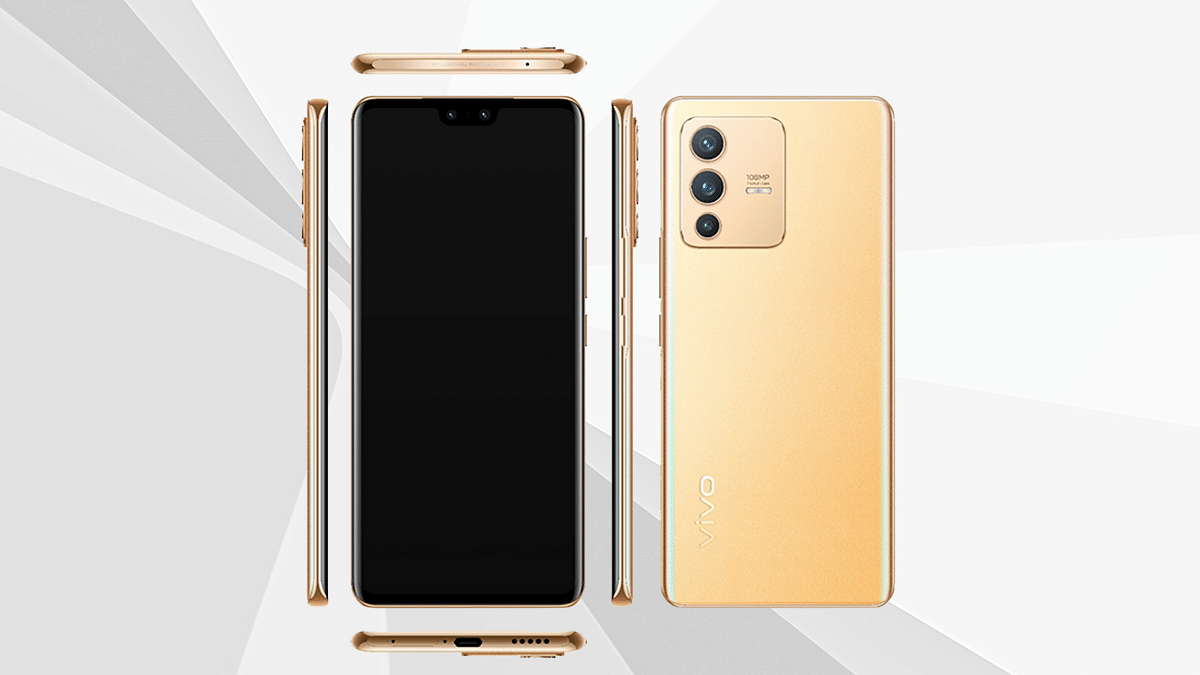
Vivo has announced the launch of two smartphones on Wednesday in India. The Vivo V23 5G and the Vivo V23 Pro 5G come with an AG glass back, which the company claims can change the colours when exposed to sunlight. Both devices come with a MediaTek Dimensity processor. These products feature 5G connectivity, dual selfie cameras, and 50MP primary sensor.

Vivo V23 5G And Vivo V23 Pro 5G: Specifications

The Vivo V23 5G comes with a 6.44-inch full-HD+ AMOLED display. Also, it is powered by the MediaTek Dimensity 920 processor and has 12GB of RAM and 256GB of storage. On the optics front, the device will have a 64MP primary camera, 8MP wide-angle lens, and a 2MP macro sensor.

Upfront, it has a double camera setup at the front, a 50MP primary sensor and 8MP wide-angle sensor along with an f/2.28 aperture lens.

The Vivo V23 Pro comes with a 6.56-inch full HD AMOLED display, MediaTek Dimensity 1200 processor, 12GB of RA, and 256GB of onboard storage. Both smartphones support USB Type-C, USB OTG, 5G, 4G LTE, dual-band Wi-Fi, and Bluetooth v5.2.

Additionally, Vivo V23 5G and the Vivo V23 Pro 5G include e-compass, gyroscope, GPS, Beidou, GLONASS, Galileo, QZSS, in-display fingerprint sensor, accelerometer, ambient light sensor, proximity sensor, and NavIC.

Furthermore, Vivo V23 5G is backed up by a 4,200 mAh battery, whereas Vivo V23 Pro 5G comes with a 4,300 mAh battery. Both devices come with a 44W fast charging support. The Vivo V23 5G weighs 179 grams and measures 157.2×72.42×7.39mm, while Vivo V23 Pro 5G weighs 171 grams and measures 159.46×73.27×7.36mm.

Vivo V23 5G And Vivo V23 Pro 5G: Price And Availability

The 8GB of RAM and 128GB storage variant of the Vivo V23 5G will cost you Rs. 29,900, while 12GB+ 256GB storage variant will cost you Rs. 34,990. The Vivo V23 Pro 5G will cost you Rs. 38,990 and RS. 43,990 for the 8GB+ 128GB of storage and 12GB+ 256GB variant. Both devices are available in two colour options: Sunshine Gold and Stardust Black.

The devices will be available on the company’s website and the e-commerce platform Flipkart. Devices are available for pre-orders; however, Vivo V23 5G will be available from January 19 and the Vivo V23 Pro 5G will be available from January 13th, 2022.

Categories
Chipset Info Tech News

MediaTek Launches Dimensity 9000 5G Chipset: Oppo, Vivo, Honor, And Xiaomi Plans To Bring Devices In Q1 2022

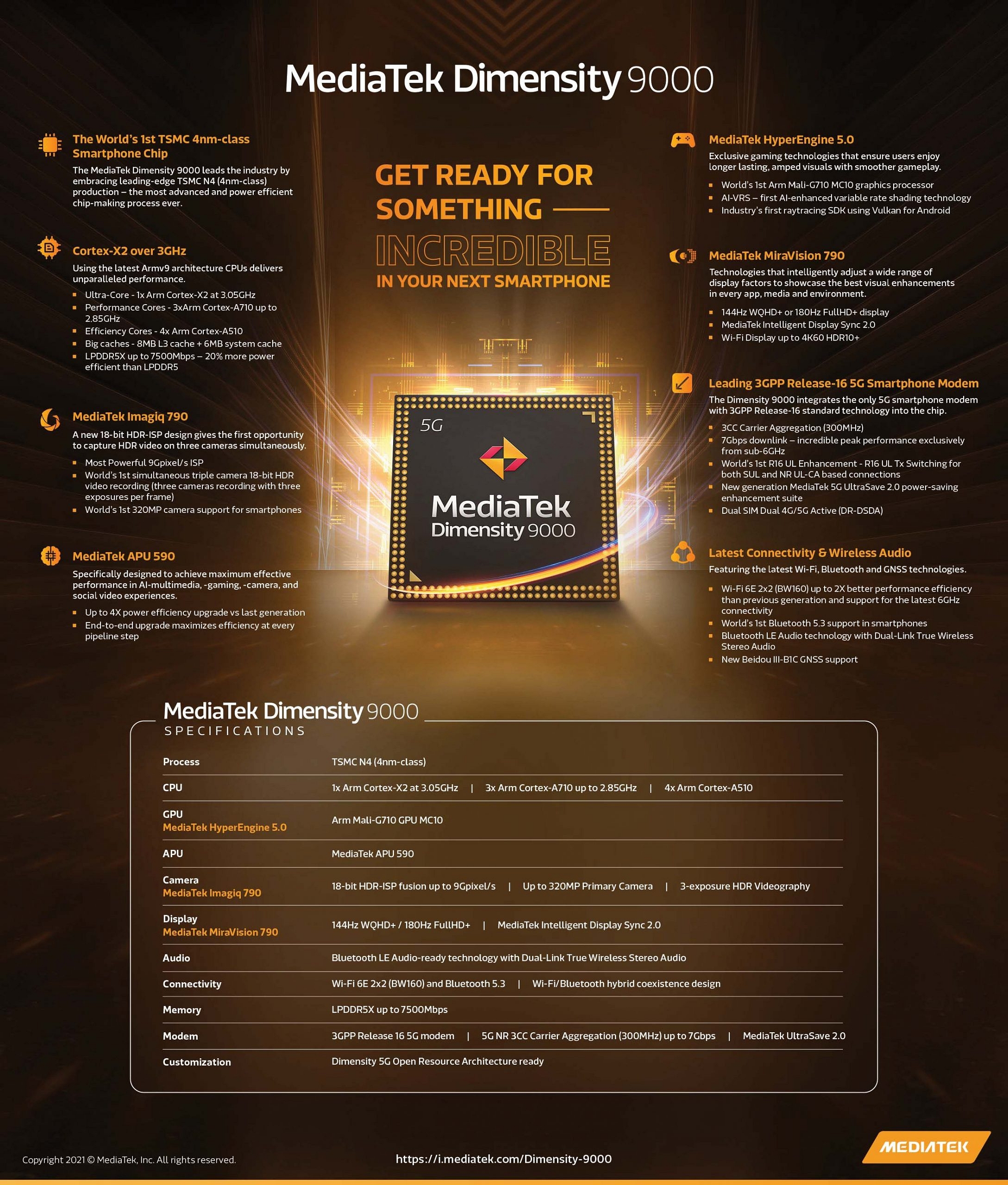
MediaTek has finally announced the launch of the Dimensity 9000 5G processor. The semiconductor company giant has announced that major smartphones like Oppo, Vivo, Honor, and Xiaomi will bring their devices on the same platform. The newly launched chipset is expected to hit the market in the Q1 of the next year.

The chipset integrates a 10-core ARM Mali-G710 GPU. It has an octa-core architecture with ARM Cortex CPUs and is built on TSMC’s 4nm process. In addition, the company claims that the smartphone with MediaTek Dimensity 9000 chipset will be launched in the Q1 of the next year.

The chipset integrates a 10-core Arm Mali-G710 MC10 GPU. It also has Armv9 architecture along with one Arm Cortex-X2 CPU. In addition, LPDDR5x RAM that can provide 7,500Mbps speeds.

Additionally, it has a fifth-gen Application Processor Unit (APU 5.0) that can provide 4x power efficiency as compared to earlier-gen APUs. Furthermore, it has MediaTek HyperEngine 5.0 that can increase graphic reproduction and decrease the load on GPU.

Oppo, Vivo, Honor, And Xiaomi Plans For MediaTek 9000 5G SoC

“The next Find X flagship will be the first to be launched with the Dimensity 9000 flagship platform. This is a premium device that brings together so many cutting-edge features in one device and we know users will be impressed with its breakthrough performance and outstanding energy efficiency,” said Henry Duan, Vice President at OPPO.

“In 2022, we look forward to continuing to work closely with MediaTek to launch vivo’s first product powered by Dimensity 9000 flagship chip. We believe that the Dimensity series will continue to push the envelope on 5G applications and innovations,” Shi Yujian, Senior Vice President & CTO at Vivo said.

“It is currently one of the most advanced ‘ultra-flagship’ SoCs in terms of performance, video, gaming, communications, or AI capabilities. I am very excited for the official commercialization of this chipset on our Redmi K50 series,” Lu Weibing, General Manager of Redmi shared.

“MediaTek’s new generation of flagship 5G mobile platforms offer impressive performance and energy efficiency. In the future, we look forward to deepening our cooperation with MediaTek to create even more innovative experiences for our fans,” said Fang Fei, president of a product line, HONOR Device Co., Ltd said.

Categories
Chipset Info

MediaTek Launches Filogic 130, Filogic 130A Chipsets For IoT Products

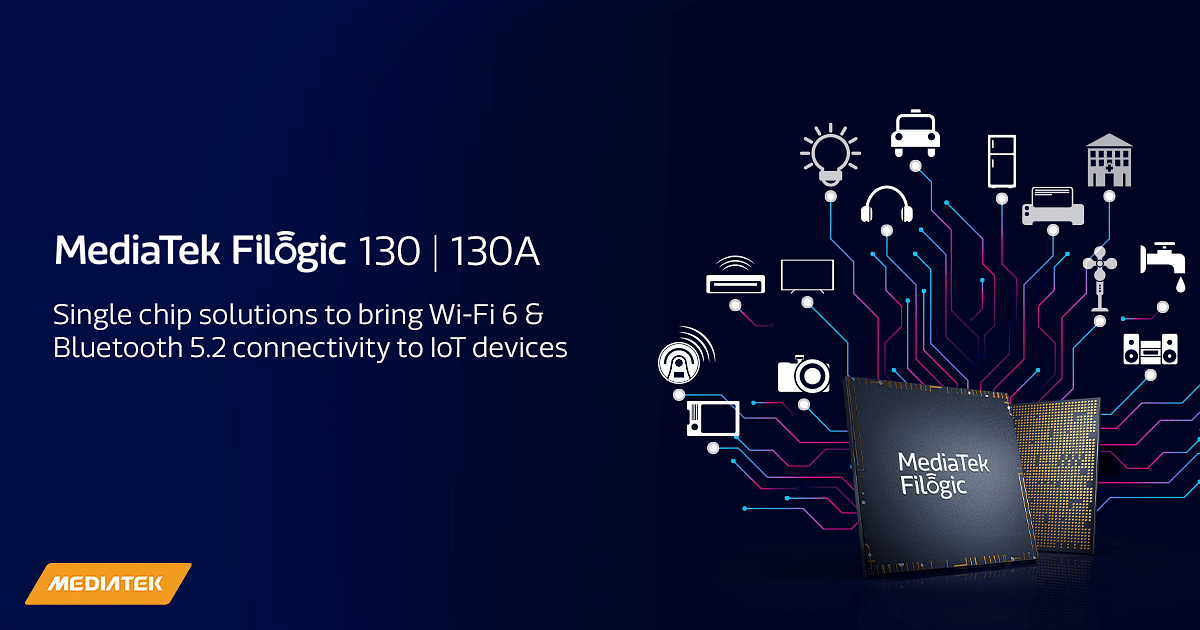
MediaTek has announced the launch of new chipsets for IoT devices. The Filogic 130 and Filogic 130A chipsets are comes with a Wi-Fi 6, microprocessor, AI engine, Bluetooth 5.2 subsystems and power management unit. In addition, the company has joined with AMD to develop the RZ600 series Wi-Fi 6E modules.

In addition, the Filogic 130A has a digital audio signal processor that will enable companies to add voice assistant support along with other services in their IoT products.

MediaTek Filogic 130, Filogic 130A Details

Notably, the Filogic 130 and Filogic 130A features 1T1R Wi-Fi 6 connectivity, Wi-Fi, dual-band (2.4GHz and 5GHz) support, WPA3 Wi-Fi security, MU-MIMO, MU-OFDMA, and quality of service (QoS). In addition, both chipsets come with an ARM Cortex-M33 microcontroller paired with RAM, front-end module, and external flash.

The Filogic 130A has an extra HiFi4 that provides accurate far-field voice processing, voice activity detection, and trigger word support.

MediaTek And AMD Partnership

Apart from launching chipsets, the chipset maker has joined maker AMD to produce or create a new Wi-Fi solution for both laptops and desktops. The new AMD RZ600 series is expected to provide high-speed Wi-Fi connectivity, reduced latency, and reduced interference.

The MediaTek Filogic 330P also supports Bluetooth 5.2 (BT/BLE) and Wi-Fi 6E (6GHz band up to 7.125GHz.

Alan Hsu, Corporate Vice President & General Manager, Intelligent Connectivity at MediaTek said, “Each solution has a highly integrated design that packs the latest on-chip processing and power-management technologies into an ultra-small design no bigger than the size of a thumbnail.”

Categories
Chipset Comparison

Exynos Vs Snapdragon: Which One Is better? Pros, Cons, And More

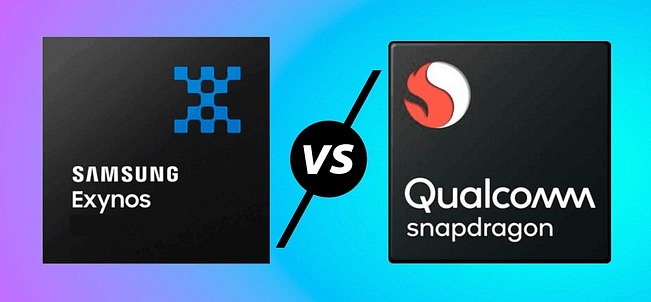
Snapdragon is in a long-standing competition with Exynos. It can be argued that public perception prefers the Qualcomm Snapdragon chip, but it’s undeniable that Samsung has made many innovations in connection with its own Exynos chipset. Let’s take a closer look at what each is good for and which one is more suitable for your application, Exynos vs Snapdragon.

Exynos Vs Snapdragon

Exynos processors are manufactured in-house by Samsung for use in their Samsung smartphones, with a few exceptions. Snapdragon SoCs are being manufactured by Qualcomm for use in third-party mobile devices.

The majority of smartphone manufacturers are using Snapdragon as the leading SoC for their devices. Samsung is using the Exynos processor in the Asian market, but the Snapdragon SoC is used in Europe and North America. This distinction is due to a deal between Samsung and Qualcomm that forces Samsung to use Snapdragon in its location.

Also read: Wrong Name Appears On Caller ID, How To Change Your Name In Truecaller?

Comparing The Snapdragon And Exynos Chipsets

Processor

Companies don’t start from scratch while designing their processors. Instead, they usually take the help of ARM (Advanced RISC Machines), which utilize the technology of RISC (Reduced Instruction Set Computer). 

We’ve managed to build a computer (smartphone) the size of our hands only because of this reduced instruction set.

By reduced instructions, it means around only a million instructions every second. If we compare it with the 6th Gen Intel i7 6700k, it can perform over 161,000 million instructions every second. However, this large performance gap is because the 6th Gen Intel Chip is a lot bigger.

The processor cores are referred to as “Cortex” by ARM, which is mainly supplied to  Qualcomm and Samsung. Samsung then makes some twerks and refers to them as “Mongoose.” And similarly, Qualcomm calls their “Kryo cores.” Both “Mongoose” and “Krypto cores” have better performance than the Cortex core.

GPU

The Exynos processors have also faced defeat from the Qualcomm Soc in terms of GPU performance and by a considerable margin.

Qualcomm bundles a custom GPU with its SoCs, which is known as “Adreno,” which has significantly performed better than the ARM’s stock Mali GPUs which are used in Exynos processors. However, Samsung is looking forward to overcoming this gap with its upcoming Exynos 2100, as it could with AMD graphics.

Setting the CPUs and GPUs aside, a custom unit in Qualcomm processors called the Hexagon DSP is great for image processing and has consistently performed better than its competitors.

Samsung Vs Exynos: The Main Debate

For those who don’t know, Samsung is shipping two variants of its flagship. One has Exynos processors, which are typically intended for Asian countries. However, in the US, the latest Qualcomm processors are included. But why does Samsung use both Exynos and Snapdragon? 

The reason Samsung is doing this has to do with the overall profit the company gets. Qualcomm’s monopoly in the SoC market has made it impossible to sell new processors at higher prices, but Exynos’s counterparts don’t cost that much. To balance the equation, selling an Exynos device can yield higher returns than selling a Qualcomm device.

Conclusion

So to simply answer the question, of whether Exynos is better than Snapdragon or not? The answer will be that Qualcomm Snapdragon processors are far superior to Exynos in almost all sectors. However, people will look forward to Samsung’s upcoming Exynos 2100, which is rumored to arrive along with the S21 series.

If you get confused about which variant of the processor is installed in your Samsung device. The answer is simple, and if you brought it to the US, it’s likely powered by the Qualcomm Snapdragon processor. Whereas if you have bought it in European or Asian countries like India or the UK, then your device will contain one of the Exynos variants.

Do let us know your thoughts in the comments below. You can follow the GizNext Tech Enthusiast Telegram group and GizNext Tech Enthusiast WhatsApp group for fresh technology updates.