Categories
Chipset Comparison

Qualcomm Snapdragon 680 Vs MediaTek Helio G99 Chipset: Which Mid-Range SoC Fairs The Battle?

We have seen multiple new mobile processors getting announced in the last few years. 2022 has been eventful for the chipset brands and we have got to see new SoC for affordable, mid-range, and flagship smartphones and tablets. In India, the trend has seen an all-time high with mid-range and premium mid-tier mobile chipsets. MediaTek Helio G99 is a potent mid-range gaming chipset used by popular phones such as the Infinix Zero 20, Realme 10, and the Moto G72.

Qualcomm is also strengthening its portfolio with a new range of 5G mobile chipsets. However, it still has a stronghold in the affordable and mid-range segments with 4G processor. The Snapdragon 680 is one of the processors that competes head-on with the aforementioned Helio G99 SoC from MediaTek and has been used by several popular Android phones and tablets. Let’s quickly look at the comparison between the Helio G99 and the Snapdragon 680 4G’s CPU and GPU performance along with multimedia capabilities.

Qualcomm Snapdragon 680 Vs MediaTek Helio G99 Chipset: CPU Architecture

Chipset NameQualcomm Snapdragon 680MediaTek Helio G99
Fabrication6nm TSMC6nm TSMC
coresOcta-coreOcta-core
GPUAdreno 610Mali-G57 GPU
StorageeMMC 5.1, UFS 2.2UFS 2.2
MemoryLPDDR4xLPDDR4x

When we speak of the fabrication, a 6nm TSMC process is used by both MediaTek and Qualcomm for the Helio G99 and the Snapdragon 680 SoC respectively. While both these mobile processors come with an octa-core cluster design, the core clusters are different. The processor comes with four Cortex A-73 cores with 2.4GHz clock speed and four Cortex-A53 cores with 1.9Ghz clock speed.

MediaTek Helio G99 processor features dual Cortex-A76 cores with 2.2GHz clock speed and six Cortex-A76 cores with 2GHz clock speed. The frequency response range is 2400MHz delivered by the Snapdragon 680, whereas the Helio G99 offers 2200MHz clock speed. Performance delivery is good if we consider both these mobile processors and they can easily take on a different set of tasks swiftly.

Also Read: Qualcomm Snapdragon 695 Vs MediaTek Helio G96 Chipset: Best Mid-Range Android Mobile Processor

Qualcomm Snapdragon 680 Vs Helio G99 Chipset: GPU Architecture

Qualcomm has integrated the Snapdragon 680 chipset with the Adreno 610 GPU. This graphics processor unit delivers 1114MHz of GPU frequency and is deemed fit to render extensive graphics with fluid speeds. On the other hand, the MediaTek Helio G99 processor features a Mali-G57 MC2 GPU that comes with 2 execution and 32 shading units. This GPU packed inside the Helio G99 is also capable to render rich graphics with ease.

Also Read: Qualcomm Snapdragon 732G Vs MediaTek Helio G88 Chipset Comparison: Which One Fairs The Competition?

Snapdragon 680 Vs Helio G99 Processor: Memory, Multimedia (ISP)
The memory type used is same by both Snapdragon 680 and the Helio G99 processor. These processors employ an LPDDR4X memory type with the former offering 2133MHz frequency and the latter offering 4266MHz frequency. The maximum RAM allocation size for the Snapdragon 680 is 8GB, while the MediaTek Helio G99 has 10GB maximum RAM support.

Storage type supported by the Snapdragon 680 chipset is eMMC 5.1 and UFS 2.2, while the Helio G99 comes with UFS 2.2 storage type only. The maximum display resolution compatible with both these processors is 1080 x 2520 pixels. Whereas, the maximum camera resolution supported by the SD 680 is up to 64MP and up to 108MP with the Helio G99. While the Snapdragon chipset can record 1080P @60fps videos, the latter can record and playback 2K@30fps videos.
Also Read: MediaTek Helio G99 Vs Dimensity 700 Chipset Comparison: Best Budget Mobile Processor For Android Phones?

Categories
Chipset Comparison Featured

Qualcomm Snapdragon 778G Vs MediaTek DImensity 1080 5G Mobile Chipsets: 2022’s Best Premium Mid-Tier 5G Mobile Processor

Key Highlights

  • Qualcomm Snapdragon and Dimensity 1080 SoC uses the same 6nm fabrication
  • Octa-core CPUs on both chipsets
  • LPPDR5 memory type also common
  • SD 778G supports Adreno 642l GPU
  • Dimensity 1080 features Mali-G68 MC4 GPU support

Dimensity 1080 is the newest mobile processor from MediaTek which has specifically developed for premium mid-tier Android phones and tablets. This new octa-core 5G chipset is expected to be the powerhouse for some of the popular smartphones. In fact, we might see multiple renowned smartphone and tablet OEMs sourcing this new MediaTek processor in the coming years.

Until now, Qualcomm had a stronger grip in this league with its capable Snapdragon 700 series mobile processors. While the brand has released a new-gen Snapdragon 7 Gen 1 mobile chipset for high-end mid-tier Android phones, the Snapdragon 778G is still one of those chipsets that most of the brands bet on. We have compared the SD 778G with several mobile chipsets but not the Dimensity 1080. This article has all the differences listed below:

Qualcomm Snapdragon 778G Vs MediaTek Dimensity 1080: CPU Architecture And Performance

ModelSnapdragon 778G Dimensity 1080
CPUocta-coreocta-core
GPUAdreno 642LMali G68 MC4
MemoryLPDDR5LPDDR5
StorageUFS 2.1, UFS 2.2, UFS 3.0UFS 2.2 and UFS 3.1
TSMC Fabrication6nm6nm

An octa-core cluster design has been used for the Dimensity 1080 and the Snapdragon 778G mobile processors. The fabrication process is also the same, i.e., 6nm TSMC. However, the core clusters are different on both of these mobile processors. The Qualcomm Snapdragon 778G ships with a single 2.4GHz Cortex-A78 core, three Cortex-A78 2.2GHz cores, and four Cortex-A55 cores with 1.9GHz clock speed.

The MediaTek Dimensity uses two Cortex-A78 cores with 2.6GHz clock speed and six Cortex-A55 cores with 2GHz clock speed. The frequency range is 2400MHz delivered by the SD 778G and 2600MHz with the Dimensity 1080. Only a minute difference between both these chipsets feature in terms of CPU performance.

Also Read: MediaTek Dimensity 8200 Chipset Vs Qualcomm Snapdragon 778G Chipset Comparison: Which Performs Better?

Snapdragon 778G Vs Dimensity 1080 Chipset: GPU

The Snapdragon 778G chipset comes packed with Adreno 642L GPU that can operate with around 490Mhz GPU frequency using two execution and 384 shading units. The Dimensity 1080 processor employs a Mali GPU, Mali-G68 MC4 GPU to be precise which has four execution and 64 shading units. The Vukan, OpenCL, and DirectX versions offered by both SD778G and the Dimensity 1080 SoC are 1.1, 2.0, and 12 respectively. Just like the CPU, the GPU performance is also equivalent on these mobile processors.

Also Read: Qualcomm Snapdragon 7 Gen 1 Vs MediaTek Dimensity 1080 Chipset: Best Premium Mid-Range Mobile Chipset Released In 2022

Snapdragon 778G Vs MediaTek Dimensity 1080 SoC: Memory, Multimedia (ISP)

Qualcomm and MediaTek both have used an LPDDR5 memory type for the Snapdragon 778G and the Dimensity 1080 SoC respectively. The memory frequency that both the premium mid-tier Android phones offer is 3200MHz. So, expect an equivalent multitasking experience on both of these chipsets. Also, a 16GB maximum memory type can be accommodated by the Snapdragon 778G and the Dimensity 1080 processor.

The storage type compatible with the Snapdragon 778G is UFS 2.1, UFS 2.2, UFS 3.0, and UFS 3.1. Whereas, only UFS 2.2 and UFS 3.1 storage type is supported by the Dimensity 1080 chipset When we speak of multimedia aspects, the SD 778G comes with a maximum display and camera resolution of 1080 x 2520 pixels and 192MP respectively. The Dimensity 1080 chipset offers better camera support by integrating up to 200MP maximum camera resolution support. Video recording and playback compatibility is 4K@30fps with both these chipsets.

Also Read: Qualcomm Snapdragon 695 5G Vs MediaTek Dimensity 1080 5G: Top 5G Mid-Range Chipset For Android Smartphones And Tablets

Categories
Chipset Comparison Featured

Qualcomm Snapdragon 695 5G Vs MediaTek Dimensity 1080 5G: Top 5G Mid-Range Chipset For Android Smartphones And Tablets

Key Highlights

  • Both Snapdragon 695 and Dimensity 1080 are premium mid-range mobile SoCs
  • Snapdragon 680 chipset features Adreno 619 GPU
  • Dimensity 1080 SoC comes with Mali

Snapdragon 695 chipset is one of the most powerful mid-range 5G chipsets for Android devices released by Qualcomm this year. It has been used in several popular smartphones and even tablets this year. We have seen a bunch of other high-end mid-range chipsets launched in 2022 including the Dimensity 1080. If you have been following us, we have done multiple comparison articles between multiple mobile processors. This article is centered around the CPU, GPU, and hardware differences between the Dimensity 1080 and the Snapdragon 695.

Also Read: Qualcomm Snapdragon 780G Vs MediaTek Dimensity 8200 5G: Best Future Ready Gaming Chipset Comparison

Qualcomm Snapdragon 695 Vs MediaTek Dimensity 1080: CPU Comparison

FeaturesQualcomm Snapdragon 695MediaTek Dimensity 1080
CPUocta-coreocta-core
GPUAdreno 619Mali-G68 MC4
MemoryLPDDR4LPDDR5
StorageeMMC 5.1 and UFS 2.2UFS 2.2 and UFS 3.1
Fabrication6nm6nm

A 6nm TSMC process has been by both Qualcomm and MediaTek to design the Snapdragon 695 5G and Dimensity 1080 5G processor. The core cluster is octa-core with the Snapdragon 695 chipset featuring Cortex-A78 cores with 2.2GHz and six Cortex-A55 cores with 1.7 GHz. The Dimensity 1080 5G chipset’s CPU cluster features two Cortex-A78 cores with 2.6GHz clock speed and six Cortex-A55 cores with 2GHz clock speed.

The frequency response range is 2200MHz delivered by the SD 695 SoC using the ARMv8.2-A instruction set. The same instruction set is used by the Dimensity 1080 chipset and the frequency response is 2600MHz. Both the chipsets have an equivalent CPU performance that is powerful to handle all the required tasks.

Also Read: MediaTek Dimensity 8200 Chipset Vs Qualcomm Snapdragon 778G Chipset Comparison: Which Performs Better?

Snapdragon 695 Vs Dimensity 1080 Chipset: GPU Comparison

In terms of GPU, the Snapdragon 695 5G processor comes with Adreno 619 GPU to handle all demanding graphics with apps. GPU frequency with this processor is 840MHz and the shading units are 128. The Mali-G68 MC4 GPU is used by the Dimensity 1080 chipset with 64 shading units. Both these processors’ GPUs have 1.1 Vulkan, 2.0 OpenCL, and 12 DirectX versions.

Also Read: Qualcomm Snapdragon 7 Gen 1 Vs MediaTek Dimensity 1080 Chipset: Best Premium Mid-Range Mobile Chipset Released In 2022

Qualcomm Snapdragon 695 Vs Dimensity 1080 SoC: Memory, Multimedia (ISP)

MediaTek has opted for a better memory type for the Dimensity 1080 chipset compared to Qualcomm. While the Snapdragon 695 chipset features LPDDR4 RAM, the Dimensity 1080 processor has the LPDDR5 RAM type which is comparatively better than what the SD 695 offers. The memory frequency offered is 2133 MHz and 3200 MHz by Snapdragon 695 and Dimensity 1080 chipset respectively. The former supports up to 8GB maximum memory type, while the latter integrates up to 16GB maximum memory.

Also Read: Qualcomm Snapdragon 778G Vs MediaTek Dimensity 900 Chipset Quick Comparison

When we speak of storage compatibility, the Snapdragon 695 5G features eMMC 5.1 and UFS 2.2, whereas, the Dimensity 1080 5G processor comes with up to UFS 2.2 and UFS 3.1 storage support. Max display and camera resolution support is 2520 x 1080 pixels and up to 108MP respectively with the Snapdragon 695 5G processor. On the other hand, the Dimensity 1080 processor supports up to 200MP camera. Video recording and playback is 1080p@60fps and 4K@30fps with the SD 695 5G and the Dimensity 1080 SoC respectively.

Also Read: Qualcomm Snapdragon 695 Vs MediaTek Dimensity 1300 5G Chipset: Quick Comparison

Categories
Chipset Comparison Featured

Qualcomm Snapdragon 7 Gen 1 Vs MediaTek Dimensity 1080 Chipset: Best Premium Mid-Range Mobile Chipset Released In 2022

Key Highlights

  • Qualcomm Snapdragon is a premium mid-range 5G chipset based on 4nm process
  • Dimensity 1080 is fabricated with 6nm TSMC process
  • LPDDR5 memory compatibility with both chipsets
  • Up to 200MP camera resolution support on both chipsets

Realme just released its latest premium mid-range phone called the Realme 10 Pro 5G powered by the Dimensity 1080 chipset. Several other OEMs are also planning to launch their new devices packed with this MediaTek 5G chipset going forward. With the Dimensity 1080 processor, MediaTek is promising to deliver reliable performance and faster connectivity speeds which is why it is being considered by multiple popular smartphone brands for their upcoming handsets.

The Snapdragon 7 Gen 1 chipset launched earlier this year has emerged as one of the strongest rivals of the MediaTek Dimensity 1080 processor. This updated Snapdragon chipset also brings along 5G network connectivity along with fast and reliable performance. A comparison between these two powerful mid-range mobile chipsets is listed below.

Qualcomm Snapdragon 7 Gen 1 Vs MediaTek Dimensity 1080: CPU Performance, Architecture

FeaturesQualcomm Snapdragon 7 Gen 1MediaTek Dimensity 1080
CPUocta-coreocta-core
GPUAdreno 662Mali G68
MemoryLPDDR5LPDDR5
StorageUFS 3.1UFS 2.1, UFS 3.1
Fabrication4nm6nm

Starting with the Snapdragon 7 Gen 1, a thin 4nm fabrication process has been used by Qualcomm to develop this processor. It is designed on an octa-core CPU cluster which comprises a single 2.3GHz Cortex-A710 core, three 2.36GHz Cortex-A710 cores, and four Cortex A510 cores with up to 1.8GHz clock speed.

On the contrary, MediaTek has used a slightly thicker 6nm fabrication process to design the Dimensity 1080 processor. This chipset’s octa-core CPU cluster features dual Cortex-A78 cores with 2.6GHz clock speed and six Cortex-A55 cores with 2GHz clock speed. The SD 7 Gen 1 offers a 2400MHz frequency range, while the Dimensity 1080 delivers 2600MHz. Out of the two, the Qualcomm Snapdragon 7 Gen 1 is better which is closely followed by the Dimensity 1080 SoC.

Also Read: Samsung Exynos 850 Vs MediaTek Helio G80 SoC: Budget Mobile Chipset Comparison

Dimensity 1080 Vs Snapdragon 7 Gen 1: GPU Performance

Moving on to the GPU, the SD 7 Gen 1 has the Adreno 662 GPU integrated which comes with 384 execution units. MediaTek has embedded the Mali-G68 MC4 GPU inside the Dimensity 1080 chipset with 64 execution units. Both these processors’ GPU is powerful and graphics rendering is a fluid experience.

Also Read: Qualcomm Snapdragon 782G Vs MediaTek Dimensity 1080 Chipset Quick Comparison: Latest Premium Mid-Range Mobile Processor Battle

Snapdragon 7 Gen 1 Vs Dimensity 1080 Chipset: Memory, Multimedia (ISP) Comparison

Speaking of memory compatibility, the Snapdragon 7 Gen 1 chipset ships with LPDDR5 RAM support. The MediaTek Dimensity 1080 processor also has the same LPDDR5 memory compatibility. A 3200MHz memory frequency is delivered by both of these chipsets, while the maximum RAM support is 16GB.

Storage compatibility is UFS 3.1 with the Snapdragon 7 Gen 1 and UFS 2.2, UFS 3.1 with the Dimensity 1080 chipset. Coming to the multimedia aspects, the former comes with a 1600 x 3360 pixels maximum display resolution, while the latter’s display resolution is not known. Both these premium mid-range mobile processors come with up to 200MP maximum camera resolution support and 4K@30fps video recording, and playback support.

Also Read: MediaTek Dimensity 8200 Chipset Vs Qualcomm Snapdragon 778G Chipset Comparison: Which Performs Better?

Categories
Chipset Comparison Featured

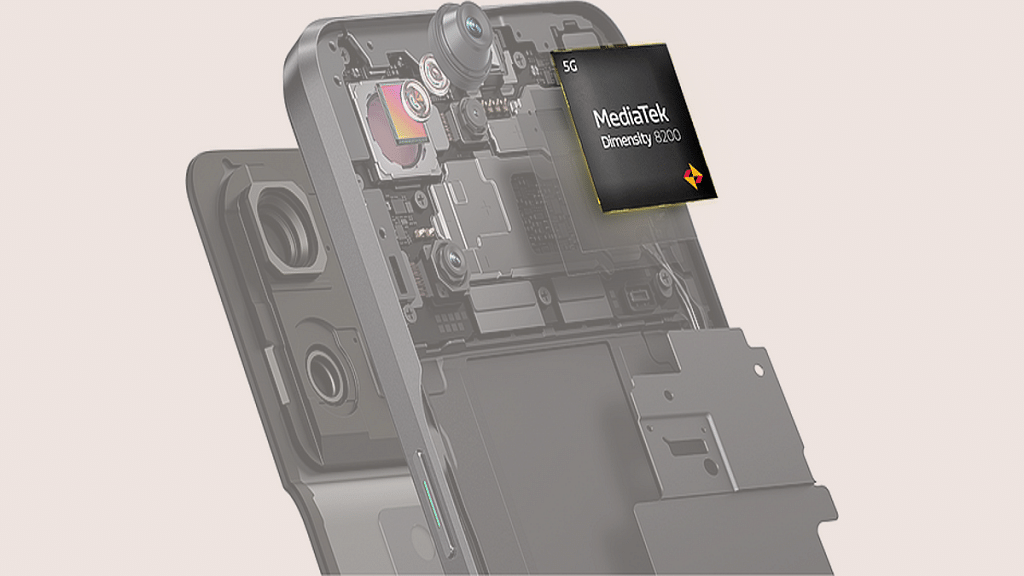
MediaTek Dimensity 8200 Chipset Vs Qualcomm Snapdragon 778G Chipset Comparison: Which Performs Better?

MediaTek is gradually strengthening its mobile chipset portfolio with the new range of 5G processors. The brand has launched several mid-range and premium mobile chipsets backed with 5G network technology under its Dimensity lineup. The Dimensity 8200 is one of the latest mobile processors from MediaTek which has been introduced for premium mid-tier Android phones and tablets.

On the other hand, Qualcomm is also populating its 5G mobile chipset range and has released multiple new chipsets with the latest network capabilities. While Qualcomm has unveiled new mobile processors this year, the Snapdragon 778G remains the popular choice amongst the smartphone OEMs and also buyers.

We are doing a quick comparison between MediaTek’s latest 5G-ready Dimensity 8200 chipset and the Snapdragon 778G. Let’s see which offers a better CPU and GPU performance.

MediaTek Dimensity 8200 Chipset Vs Qualcomm Snapdragon 778G Processor: CPU

Features MediaTek Dimensity 8200Snapdragon 778G
CPU octa-coreocta-core
GPUMali G610 Adreno 642l
Memory LPDDR5LPDDR5
Storage UFS 3.1UFS 2.1, UFS 2.2, UFS 3.0, and UFS 3.1
Fabrication4nm 6nm

Starting with the architecture design, both MediaTek Dimensity 8200 and the Snapdragon 778G chipset feature an octa-core CPU cluster design. The Dimensity 8200 has a single Cortex-A78 core with 3.1GHz clock speed, three Cortex-A78 cores with 3GHz clock speed, and four Cortex-A55 cores with two GHz clock speed.

Whereas, the Snapdragon 778G comprises a single Cortex-A78 core with 2.4GHz clock speed, three 2.2GHz Cortex-A78 cores, and four Cortex A-55 cores with 1.9GHz clock speed.  The CPU frequency is higher with the Dimensity 8200 chipset at 3100MHz, while the Snapdragon 778G chipset features a 2400MHz CPU frequency. Also, the MediaTek Dimensity 8200 chipset is fabricated using a thinner 4nm process compared to the 6nm process used by the Snapdragon 778G chipset. CPU performance is slightly better with the Dimensity 8200 chipset.

Also Read: Qualcomm Snapdragon 782G Vs MediaTek Dimensity 1080 Chipset Quick Comparison: Latest Premium Mid-Range Mobile Processor Battle

Dimensity 8200 Vs Snapdragon 778G Chipset: GPU Performance

The MediaTek Dimensity 8200 chipset is aided by the Mali-G610 MC6 GPU, while the Qualcomm Snapdragon 778G chipset uses Adreno 642l GPU. The memory frequency range is not revealed for the Dimensity 8200, but the SD 778G offers 490MHz memory frequency. The Vulkan version is 1.1 with the Dimensity 8200, 2.0 OpenCL, and DirectX version is 12 on the Snapdragon 778G. Only the Vilkan version is upgraded on the Dimensity 8200 (1.2) rest all aspects remain the same.

MediaTek Dimensity 8200 Vs Qualcomm Snapdragon 778G Chipset: Memory, Multimedia

In terms of memory compatibility, the MediaTek Dimensity uses the same LPPDR5 memory support as the Snapdragon 778G chipset. Despite the same memory format, the memory frequency offered by both these chipsets is different. The MediaTek Dimensity 8200 chipset offers around 6400 Mhz memory frequency, while the Snapdragon 778G processor only has a 3200MHz memory frequency range.

The storage compatibility with the Dimensity 8200 chipset is UFS 3.1, whereas, the SD 778G supports UFS 2.1, UFS 2.2, UFS 3.0, and UFS 3.1 storage support. Speaking of multimedia compatibilities, the maximum display resolution supported by the Snapdragon 778G chipset is 1080 x 2520 pixels and the maximum camera resolution support is 192MP.

The Dimensity 8200 chipset has 1440 x 2960 pixels maximum display resolution support and up to 320MP maximum camera resolution. Both these processors support 4K video recording and playback. However, the Snapdragon 778G only supports 30fps, while the Dimensity 8200 supports 60fps recording and playback.

Also Read: Qualcomm Snapdragon 8 Gen 2 Vs MediaTek Dimensity 9200 Chipset Comparison: Most Advanced 5G Flagship Mobile Processor?

Qualcomm Snapdragon 778G Vs MediaTek Dimensity 8200: Which One Is Better?

If we speak of performance delivery, both Qualcomm Snapdragon 778G and the MediaTek Dimensity 8200 chipset are fully capable to handle any kind of task. But the Dimensity 8200 has an edge for being a new-generation chipset with slightly better performance capabilities.  

Also Read: Qualcomm Snapdragon 750G Vs MediaTek Dimensity 800 Chipset Comparison: Which Mid-Range 5G Chipset Is Better?

Categories
Chipset Comparison

Qualcomm Snapdragon 782G Vs MediaTek Dimensity 1080 Chipset Quick Comparison: Latest Premium Mid-Range Mobile Processor Battle

Key Highlights

  • Qualcomm Snapdragon 782G and MediaTek Dimensity 1080 are both mid-range mobile chipsets
  • Snapdragon 782G has a slightly better CPU and GPU performance
  • Dimensity 1080 has better 5G connectivity and camera features

Qualcomm and MediaTek processors are two of the most popular brands for mobile and tablet processors. Both these brands have launched multiple new mobile chipsets for new-generation Android smartphones and tablets. The former has just introduced the Snapdragon 782G octa-core chipset for gaming-oriented devices, whereas, the latter has introduced the Dimensity 1080 chipset.

Both Snapdragon 782G and the Dimensity 1080 processors are designed to offer high-end performance and are designed using the same fabrication process. A quick comparison between these chipsets’ CPU, GPU, and other aspects is done in this article. Take a look:

Also Read: MediaTek Dimensity 9200 Processor Vs Qualcomm Snapdragon 8 Gen 1 Chipset: High-End Mobile Chipset Comparison

Qualcomm Snapdragon 782G Vs MediaTek Dimensity 1080 Chipset: CPU Performance

ChipsetQualcomm Snapdragon 782GMediaTek Dimensity 1080
Fabrication6nm TSMC6nm TSMC
CPU octa-coreocta-core
GPUAdreno 642LValhall 2
Memory LPDDR5LPDDR5

Qualcomm and MediaTek both have uses the same 6nm TSMC fabrication process to design the Snapdragon 782G and the Dimensity 1080 processor respectively. While the fabrication process is the same, the instruction set and frequency range is different. The Snapdragon 782G uses an ARMv8.4-A instruction set, whereas, the Dimensity 1080 chipset features an ARMv8.2A instruction set.

The former offers a higher frequency range of 2700MHz, while the latter delivers a 2600MHz frequency range. If we speak of the CPU cores, both these chipsets feature an octa-core cluster. Qualcomm has used one 2.7GHz Cortex-A78 core, three Cortex-A78 cores, and four Cortex-A55 cores with 1.9 GHz clock speed for the Snapdragon 782G processor.

The MediaTek Dimensity 1080 chipset has two Cortex-A78 cores with 2.6GHz clock speed and six Cortex-A55 cores with 2GHz clock speed. CPU performance offered is adequate and equivalent by these two processors and task handling would be swift by these two chipsets.

Also Read: Qualcomm Snapdragon 782G Vs Snapdragon 778G Chipset: Quick Comparison

Snapdragon 782G Vs Dimensity 1080 Processor: GPU Performance

Qualcomm Snapdragon 782G employs the Adreno 642L GPU for graphics handling. This latest Qualcomm chipset’s GPU is fully capable of rendering extensive graphics with demanding apps and games flawlessly. The frame drops and lags would be the least with the SD 782G’s GPU. On the other hand, MediaTek Dimensity 1080 processor has the Valhall 2 GPU integrated for graphics with 64 shading units. Both SD 782G and the Dimensity 1080’s GPU is a premium ranges to offer a swift experience with graphics.

Also Read: Qualcomm Snapdragon 8 Gen 2 Vs MediaTek Dimensity 9200 Chipset Comparison: Most Advanced 5G Flagship Mobile Processor?

Qualcomm Snapdragon 782G Vs Dimensity 1080 Chipset: Memory, Multimedia (ISP)

In terms of memory configurations, the Snapdragon 782G has LPDDR5 RAM memory type support. Interestingly, the Dimensity 1080 chipset also has the same LPDDR5 memory compatibility. Not just the memory type, but the performance and maximum memory support are also identical on both these chipsets. The MediaTek Dimensity 1080 and the Snapdragon 782G processors also offer the same 3200MHz memory frequency and up to a maximum of 16GB maximum RAM.

Storage compatibility doesn’t differ much. The Snapdragon 782G chipset has UFS 2.2, UFS 3.0, and UFS 3.1 storage support. On the other hand, octa-core Dimensity 1080 processor has the UFS 2.2 and UFS 3.1 storage type.

The maximum display resolution compatibility with the Snapdragon 782G is 1080 x 2520 pixels, while the Dimensity 1080 chipsets aren’t revealed. Both these processors support up to 200MP maximum camera resolution. The video playback and capturing support is 4K@30fps with both these processors.

For the tech geeks, stay updated with the latest cutting-edge gadgets in the market, exclusive tech updates, gadget reviews, and more right on your phone’s screen. Join Giznext’s WhatsApp channel and receive the industry-first tech updates.

Categories
Chipset Comparison Featured

Qualcomm Snapdragon 782G Vs Snapdragon 870 SoC: Falsghip Qualcomm Chipset Comparison

Key Highlights

  • Qualcomm Snapdragon 782G is the newest octa-core premium mid-range chipset fabricated using 6nm process
  • The Snapdragon 870 processor features octa-core CPU cluster and is based on 7nm fabrication
  • GPU compatibility is Adreno 642L with the SD 782G chipset and Adreno 650 with the SD 870
  • Memory support is LPDDR5 on both chipsets

Qualcomm has launched several new mobile processors for Android smartphones as well as tablets. The Snapdragon 8 Gen 1 and the Snapdragon 782 processors are the brand’s latest generation chipsets for Android gadgets. Both these octa-core processors are designed for premium 5G phones oriented toward gaming.

The latter comes as an upgrade to the Snapdragon 778G which is the most popular premium mid-tier chipset with gaming capabilities. We previously compared both these chipsets to analyze the performance difference. Now, we are doing a comparison between the Snapdragon 782G and the Snapdragon 870 SoC to see which one offers better performance.

Qualcomm Snapdragon 782G Vs Snapdragon 870: CPU and GPU Differences

ChipsetQualcomm Snapdragon 782GQualcomm Snapdragon 870
CPUocta-core CPUocta-core CPU
GPUAdreno 642LAdreno 650
Memory LPDDR5LPDDR5
Fabrication6nm7nm

Like most of the premium mid-range and flagship chipsets, the Snapdragon 782G and the Snapdragon 870 processors feature an octa-core CPU cluster but with a different fabrication process. The Snapdragon 782G chipset uses a 6nm process, contrary to the 7nm TSMC fabrication used by the Snapdragon 870 chipset. The frequency range is 2700 and 3200 MHz respectively.

If we speak of the core clusters, the Snapdragon 782G features one Cortex-A78 core with 2.7GHz clock speed, three Cortex-A78 cores with 2.2GHz clock speed, and four Cortex-A55 cores with 1.9GHz clock speed. The Snapdragon 870 chipset has a single Cortex-A77 core with 2,42GHz clock speed, three 2.42Ghz Cortex-A77 cores, and four Cortex-A55 cores with 1.8GHz clock speed. Power delivery is equivalent by both Snapdragon 782G and the Snapdragon 870 chipsets. But the thinner fabrication process is an advantage for the SD 782G.

Also Read: Qualcomm Snapdragon 782G Vs Snapdragon 778G Chipset: Quick Comparison

Snapdragon 782G Vs Snapdragon 870 SoC: GPU Comparison

In terms of GPU, the Snapdragon 870 takes the lead with the Adreno 650GPU integration. On the other hand, the Snapdragon 782G processor has the Adreno 642L GPU compatibility which has 1.1 Vulkan, 2.0 OpenCL, and 12 DirectX versions. The Snapdragon 870 chipset’s GPU frequency is around 675MHz, but this statistic is currently not confirmed by Qualcomm. Nevertheless, the graphics rendering capacity is good with both of these chipsets with the least lags and stutters while gaming and with other graphic extensive tasks.

Also Read: Qualcomm Snapdragon 778G Vs Dimensity 9000 Chipset: Premium Mid-Range Mobile Processors

Snapdragon 782G Vs Snapdragon 870 Processor: Memory. Multimedia (ISP)

Both Snapdragon 782G and the Snapdragon 870 processor have the same memory compatibility. Qualcomm has used the same LPDDR5 RAM support, however, the memory frequency delivered is different. While the Snapdragon 782G chipsets offers a 3200MHz memory frequency, the Snapdragon 870 processor offers a 2750 MHz memory frequency. The maximum memory compatibility remains the same with both processors, i.e, 16GB.

Storage compatibility differs with the Snapdragon 782G processor supporting UFS 2.2, UFS 3.0, and UFS 3.1 memory types, while the Snapdragon 870 processor supports just UFS 3.0 and UFS 3.1 memory.

Moving on to display resolution., the Snapdragon 870 supports 2160 x 3840 pixels max display resolution. The Snapdragon 782G comes with 1080 x 2520 pixels max display resolution support. Maximum camera resolution is up to 200MP with both these chipsets. The Snapdragon 870 gets an edge with up to 8K video recording and playback support instead of 4K@30fps supported by the Snapdragon 782G chipset.

Also Read: Qualcomm Snapdragon 870 Vs Dimensity 9000 Premium Chipset Comparison: Which Is Better?

Snapdragon 782G Vs Snapdragon 870: Final Verdict

Performance delivery is undeniably high-end when we speak of these two processors. The CPU and GPU performance is powerful and both these processors deem fit for gaming and even general tasks.

Also Read: Qualcomm Snapdragon 8 Gen 2 Vs MediaTek Dimensity 9200 Chipset Comparison: Most Advanced 5G Flagship Mobile Processor?

Categories
Chipset Featured

Qualcomm Unveils Premium Mid-Range Snapdragon 782G Gaming Chipset: What Are The Latest Upgrades?

Qualcomm Snapdragon 778G is an advanced premium mid-range chipset that is driving multiple popular Android phones in the market. Brands such as Vivo, iQOO, Samsung, Nothing, and others have used this premium mid-range chipset for their devices. Qualcomm has now released an upgraded version of this chipset in the form of the Snapdragon 782G. This is also a premium range gaming processor which brings multiple performance enhancements compared to the previous-gen chipsets.

Qualcomm Snapdragon 782G Processor Key Features

Qualcomm Snapdragon 782GSpecifications
Fabrication6nm TSMC
CPUocta-core
GPU Adreno 642l
MemoryLPDDR5
5G Yes

The Qualcomm Snapdragon 782G processor like the previous-gen versions features an octa-core CPU cluster. The fabrication process is 6nm TSMC. The thin fabrication process and new architecture allow this processor to deliver around 5 percent improved CPU and 10 percent better CPU and GPU performance over the Snapdragon 778G chipset.

Starting with the GPU, the Qualcomm Snapdragon 782G’s octa-core cluster features one high-performance Cortex A-78 core with 2.7GHz clock speed, three Cortex-A78 cores at 2.2GHz, and four Cortex A55 efficiency cores with 1.9GHz clock speed. Moving on to the GPU, the Snapdragon 782G chipset is equipped with an Adreno 642L GPU which is highly capable of rendering extensive graphics.

This new Snapdragon chipset will deliver a better gaming experience than the previous-gen chipset. The available support for HDR10+ and HDR 10 gaming combined with 10-bit color depth support makes sure the gaming isn’t compromised.

The imaging capabilities of the Snapdragon 782G processor include up to 200MP sensor added support. This chipset comes with support for 720p  slow-motion video recording @ up to 40 fps. The camera capabilities also include additional support for HDR HEIF formats. Video recording and playback compatibility is up 4K HDR @30 fps.

Furthermore, the SD 782G processor is integrated with an LPDDR5 RAM memory type with 3200MHz memory frequency. The maximum memory compatibility is 16GB. In terms of connectivity, the Snapdragon 782G processor has 5G network support as the previous gen models. But it supports sub-6 5G range. Bluetooth version is v5.2 and Wi-Fi support is Wi-Fi 6E.

Also Read: Qualcomm Snapdragon 8 Gen 2 Vs MediaTek Dimensity 9200 Chipset Comparison: Most Advanced 5G Flagship Mobile Processor?

List Of Smartphones Powered By Snapdragon 782G Launching Next Year

The Qualcomm Snapdragon 782 is the most recent premium mid-range gaming chipset that is yet to be employed officially. Smartphone OEMs have not yet revealed their exact plans to use this new gaming chipset. It currently remains a mystery as to which all brand will be first in the lot to use the SD 782G chipset. Once some developments are out, we will share the updates.

Categories
Chipset Comparison Featured

Qualcomm Snapdragon 778G Vs Dimensity 9000 Chipset: Premium Mid-Range Mobile Processors

Key Highlights

  • Qualcomm Snapdragon 778G chipset is a premium mid-range chipset built on 6nm process
  • MediaTek Dimensity 9000 SoC is fabricated using a 4nm process
  • Both chipsets offer 5G network support

Qualcomm Snapdragon 778G might be an older release but is still one of the most preferred mobile chipsets by OEMs for their premium mid-range handsets. We have compared this mobile chipset with several other popular counterparts. MediaTek has multiple chipsets that compete with the SD 778G in different performance aspects including CPU, GPU, and Multimedia (ISP). We are now comparing the Snapdragon 778G with MediaTek’s Dimensity 9000 processor which is a recent release.

Qualcomm Snapdragon 778G Vs MediaTek Dimensity 9000 Chipset: CPU Architecture Comparison

Starting with the Snapdragon 778G processor, it is a 6nm chipset which has octa-core CPU cluster featuring one Cortex-A78 core with 2.4GHz clock speed, three Cortex-A78 cores with 2.2GHz speed, and four Cortex-A55 cores with 1.9GHz clock speed. MediaTek has fabricated the Dimensity 9000 chipset using a thinner 4nm process and octa-core CPU cluster comprising a 2.05GHz Cortex-X2 core, three 2.85GHz Cortex-A710 cores, and four Cortex-A510 cores with 1.85 GHz speed. The Dimensity 9000 processor gets an edge in terms of CPU design and performance.

Also Read: Qualcomm Snapdragon 8 Gen 2 Advanced Mobile Chipset With Ray Tracing, WiFi 7 Unveiled: List Of Phones To Launch With SD 8 Gen 2 Processor

Qualcomm Snapdragon 778G Vs Dimensity 9000 Processor: GPU Performance

The premium mid-range Snapdragon 778G processor has an Adreno 642L GPU support. This processor’s GPU has 490MHz frequency with two execution and 384 shading units. On the contrary, the Snapdragon 778G processor features the Mali-G710 GPU with 850MHz frequency range, 10 execution, and 512 shading units. Both processors have an identical 1.1 Vulkan version, 3.0 OpenCL version, and 12 DirectX version.

Snapdragon 778G Vs MediaTek Dimensity 9000 SoC: Memory, Multimedia (ISP)

The Qualcomm Snapdragon 778G chipset has LPDDR5 RAM support, while the MediaTek Dimensity 9000 processor features advanced LPDDR5X RAM. The memory frequency range is 3200MHz with the former and 3750MHz with the latter. The maximum memory support is 16GB with the SD 778G and 24GB with the Dimensity 9000 processor. Memory compatibility is UFS 2.1, UFS 2.2, and UFS 3.0/3.1 with the SD 778G and just UFS 3.1 with the Dimensity 9000 processor.

Maximum display resolution is 1080 x 2520 pixels and 1440 x 2960 pixels with the Snapdragon 778G and Dimensity 9000 chipsets respectively. The former supports 4K@30fps video recording and playback, while the latter supports 4K@30fps videos.

Also Read: MediaTek Dimensity 9200 Processor Vs Qualcomm Snapdragon 8 Gen 1 Chipset: High-End Mobile Chipset Comparison

Snapdragon 778G Vs Dimensity 9000 Processor: Final Verdict

The Qualcomm Snapdragon 778G is undeniably a powerful option for premium mid-tier smartphones. However, the Dimensity 9000 chipset has a better CPU architecture, GPU performance, and a thin fabrication process making it a better alternative compared to the Snapdragon 778G chipset.

Also Read: Qualcomm Snapdragon 750G Vs Snapdragon 732G: Premium Mid-Tier Gaming Chipset Comparison
Categories
Chipset Comparison Featured

Qualcomm Snapdragon 8 Gen 2 Vs MediaTek Dimensity 9200 Chipset Comparison: Most Advanced 5G Flagship Mobile Processor?

Key Highlights

  • Both Snapdragon 8 Gen 2 and MediaTek Dimensity 9200 processors have an octa-core CPU
  • 4nm fabrication process used to manufacture both these flagship chipsets
  • Qualcomm has integrated the latest Adreno GPU
  • Dimensity 9200 features Mali-G75 Immortalis MC11 GPU

Qualcomm has just strengthened its portfolio in the premium mobile chipset category with the launch of the Snapdragon 8 Gen 2 processor. The successor of the Snapdragon 8 Gen 1 processor brings multiple upgrades and is claimed to offer around 35 percent better CPU performance along with a 25 percent improved GPU performance with all tasks. It integrates the latest Adeno GPU and advanced features such as Ray Tracing for a smooth gaming experience, and Wi-Fi 7 wireless network support.

The war between the flagship mobile processors is quite evident nowadays with the chipset OEMs integrating advanced features allowing for a top-notch user experience. While the Snapdragon 8 Gen 2 doesn’t have multiple rivals, the recently launched Dimensity 9200 processor is its strongest contender. How do both these chipsets compete when we consider the overall CPU, GPU, and Multimedia (ISP) performance? This comparison articles lists out all the differences.

Qualcomm Snapdragon 8 Gen 2 Vs MediaTek Dimensity 9200 Processor: CPU Comparison

These two premium mobile chipsets are fabricated using the same 4nm thin fabrication technology. They both also feature an octa-core CPU cluster design. Qualcomm has used one prime core with 3.2GHz clock speed, four performance cores with a 2.0GHz base frequency, and three efficiency cores with up to 2.0GHz clock speed.

Comparatively, the Dimensity 9200 chipset’s core cluster features one prime Cortex-X3 core clocked at 3.05 GHz, three Cortex-A715 cores with 2.85 GHz clock speed, and four 1.8GHz Cortex-A510 cores. Qualcomm hasn’t specified the maximum CPU frequency offered by the Snapdragon 8 Gen 2 chipset.

Also Read: Qualcomm Snapdragon 8 Gen 2 Advanced Mobile Chipset With Ray Tracing, WiFi 7 Unveiled: List Of Phones To Launch With SD 8 Gen 2 Processor

However, the Dimensity 9200 processor offers a 3050MHz frequency range. Performance-wise, both Snapdragon 8 Gen 2 and the Dimensity 9200 offer a top-notch response. The exact CPU performance can be compared once the flagship smartphones integrated with these chipsets are launched officially.

Snapdragon 8 Gen 2 Vs Dimensity 9200 Chipset: GPU Differences

Qualcomm has just confirmed the presence of the latest Adreno series GPU inside the Snapdragon 8 Gen 2 processor. The exact name of the GPU is yet to be confirmed. Nevertheless, the Snapdragon 8 Gen 2 processor’s GPU is said to bring around 25 percent better performance when compared to the last model. Also, it has become the first Qualcomm mobile processor that has a 1.3 Vulkan version.

Also Read: MediaTek Dimensity 9200 Processor Vs Qualcomm Snapdragon 8 Gen 1 Chipset: High-End Mobile Chipset Comparison

MediaTek has used the Mali-G75 Immortalis MC11 GPU which is also a premium range graphics processing unit for fluid frame transitions with gaming and video playback. Similar to the SD 8 Gen 2, the Dimensity 9200 also has a 1.3 Vulkan version making it the first MediaTek chipset with this option. You can expect both these GPUs to easily take on extensive graphics with ease without hampering the quality anyhow.

Snapdragon 8 Gen 2 Vs Dimensity 9200 Processor: Memory, Multimedia (ISP)

In terms of memory compatibility, the Qualcomm Snapdragon 8 Gen 2 is enabled with LPDDR5x RAM compatibility. This memory type supports up to 4200MHz memory frequency range. Whereas, the MediaTek Dimensity 9200 processor also has the LPDDR5x RAM memory type with a maximum frequency range of 8533MHz which is higher compared to the SD 8 Gen 2 chipset.

The storage type supported by the latest Snapdragon flagship processor is UFS 4.0. The Dimensity 9200 also features the same UFS 4.0 storage support. Moving on to the display resolutions, the maximum on-device display support is 4K@60Hz and QHD+@144Hz, while the max external display compatibility is up to 4K@60Hz.

It further has HDR10, HDR10+, and HDR Vivid support. MediaTek Dimensity 9200 processor features a maximum display resolution of 1440 x 2960 pixels. It is capable of recording and playing up to 8K@30fps videos.

Qualcomm Snapdragon 8 Gen 2 Vs Dimensity 9200 processor Final Verdict: Which Is Better?

FeaturesQualcomm Snapdragon 8 Gen 2MediaTek Dimensity 9200
CPUocta-core 64-bitocta-core 64-bit
GPULatest Adreno series GPUMali-G75 Immortalis MC11 GPU
Memory LPDDR5xLPDDR5x
Storage UFS 4.0UFS 4.0
5G supportYes Yes

When we consider all the factors such as CPU and GPU performance, both Snapdragon 8 Gen 2 and the Dimensity 9200 have a neck-to-neck competition. While both these processors are designed to offer the best-in-class user experience, the Ray Tracing feature available with the Snapdragon 8 Gen 2 gives it an edge.