Categories
Comparison Featured Mobile

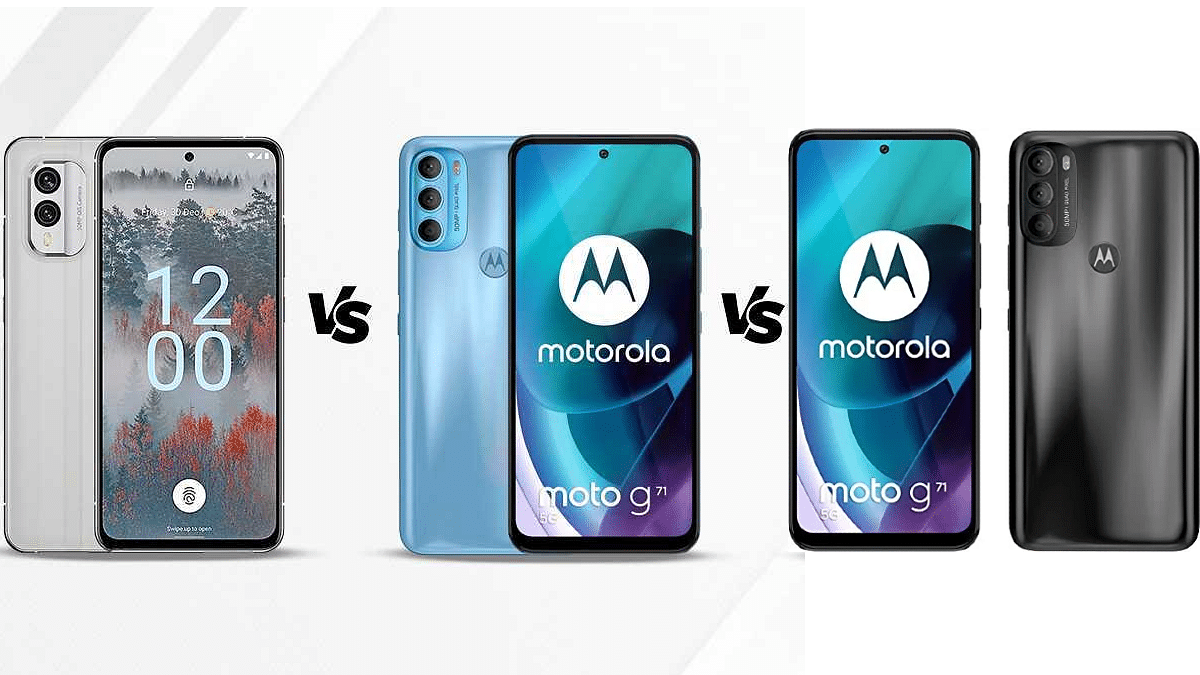
Nokia X30 5G Vs Nokia G60 Vs Motorola Moto G71 5G: Top Latest Premium Mid-Range Mobile Comparison

Nokia just got done with new product launches at the IFA 2022 event. The Finnish tech giant refreshed its popular X series with the Nokia X30 and also released the Nokia G30, Nokia C30, and the Nokia T1. Out of all these models, the Nokia X30 is grabbing all the attention for its environment-friendly design and premium mid-tier hardware. The Nokia G60 is also a capable mid-range phone that has marked its entry into the mobile space.

But which of these two Nokia launches packs all the punch? Well, this comparison article will answer your queries. Also, we are throwing in another popular mid-range 5G model to the mix that has the same chipset as the Nokia X30 5G. The Moto G71 5G is the model we are speaking of. Let’s take a look at the hardware differences between the Nokia X30 5G, Nokia G60, and the Motorola Moto G71 5G.

Nokia X30 5G Vs Nokia G60 Vs Motorola Moto G71: Display Specs

Starting with the newest of the lot, i.e., the Nokia X30 5G, it is packed with an AMOLED display which is 6.43-inches in size. The panel comes with an 85 percent screen-to-body ratio and an FHD+ resolution of 1080 x 2400 pixels. The display is layered with the Corning Gorilla Glass Victus protection and has a peak brightness level of 700 nits. The display also offers a 90Hz refresh rate that allows for a smooth gameplay experience and also scrolling feedback.

The Nokia G60 is a step behind the Nokia X30 5G in the display department. Instead of an AMOLED panel like the Nokia X30, the Nokia G60 offers a standard IPS LCD screen that is 6.58-inches in size. The Nokia G60’s LCD screen supports an FHD+ resolution (1080 x 2400 pixels) and has Corning Gorilla Glass 5 protection against scratches. The refresh rate here is higher compared to the X30 at 120Hz.

Lastly, the Motorola Moto G71 also has an AMOLED display. The screen size and resolution is similar to the Nokia X30. It has a 6.4-inch AMOLED display with an 80.3 percent screen-to-body ratio and a 20:9 aspect ratio.

The Moto G71 5G screen has a pixel density of 411 PPI and an FHD+ resolution (1080 x 2400). If bigger screen size is your requirement rather than the panel quality, you can consider the Nokia G60. However, for better visual feedback, the Nokia X30 makes for the best choice besides the Moto G71 5G.

Nokia X30 5G Vs Nokia G60 Vs Motorola Moto G71: Camera Specification Comparison

Photography is another major factor why smartphone users are opting for models that offer a premium imaging experience. And brands have been improving camera hardware with mobile devices. The Nokia X30 is embedded with a dual rear camera setup where the primary sensor is a 50MP wide lens with an f/1.8 aperture and PDAF (Phase Detection Autofocus) support.

The main camera is combined with a 13MP ultrawide angle sensor with an f/2.4 aperture. The camera app has a bunch of advanced shooting modes that elevate the photography experience. The video recording capabilities with the Nokia X30’s rear camera is 1080p@30/60fps.

Moving to the Nokia X30, this model has a triple rear camera module, unlike the X30 5G which offers just two cameras. This Nokia phone is packed with a 50MP primary camera with an f/1.8 aperture and PDAF support. The additional sensors include a 5MP ultrawide sensor with an f/2.2 aperture and a 2MP depth lens with an f.2.4 aperture. This model supports 1080p@30fps video recording and also has extra shooting modes for improved imaging experience.

The Moto G71 5G’s camera hardware also comprises three sensors at the back. The setup comes with a 50MP main sensor that has an f/1.8 aperture and PDAF support. Additional sensors include an 8MP ultrawide angle sensor and a 2MP macro lens. This variant gets the same 1080p@30fps video recording support as the Nokia G60.

Talking of the selfie cameras, the Nokia X30 5G and the Moto G71 5G features a 16MP camera for self-portraits, while the Nokia X30 5G is equipped with a smaller 8MP selfie lens. The camera performance is good on all three handsets in this list. But the presence of additional sensors on the Moto G71 5G and the Nokia G60 should impress more consumers.

Nokia X30 5G Vs Nokia G60 Vs Motorola Moto G71 5G: Processor, RAM, Storage Configuration

The processor powering all three models, i.e., the Nokia X30 5G, Nokia G60, and the Motorola Moto G71 5G is the same. They all are powered by the Snapdragon 695 processor. This is a new 5G chipset by Qualcomm designed for premium mid-range phones fabricated using a 6nm process.

The octa-core chipset gets Adreno 619 GPU support which is capable to render intensive graphics without any hiccups. Performance delivery is good with this chipset and all three phones can easily take on extensive tasks and gaming with ease.

Speaking of the configurations, the Nokia X30 5G comes with up to 8GB RAM and 256GB native storage capacity. The RAM capacity is the same on the Moto G71 5G as well. However, the onboard storage capacity offered is up to 128GB. Whereas, the Nokia G60 comes with up to 6GB RAM and 128GB storage capacity.

Nokia X30 5G Vs Nokia G60 Vs Motorola Moto G71 5G: Battery Comparison

The battery capacity of the Nokia X30 is 4,200 mAh which has 33W fast charging support. The Nokia G60 features a slightly bigger 4,500 mAh battery but has a lower 20W charging speed. On the other hand, the Moto G71 5G has a 5,000 mAh battery unit which gets 33W fast charging support.
Categories
Chipset Comparison Featured

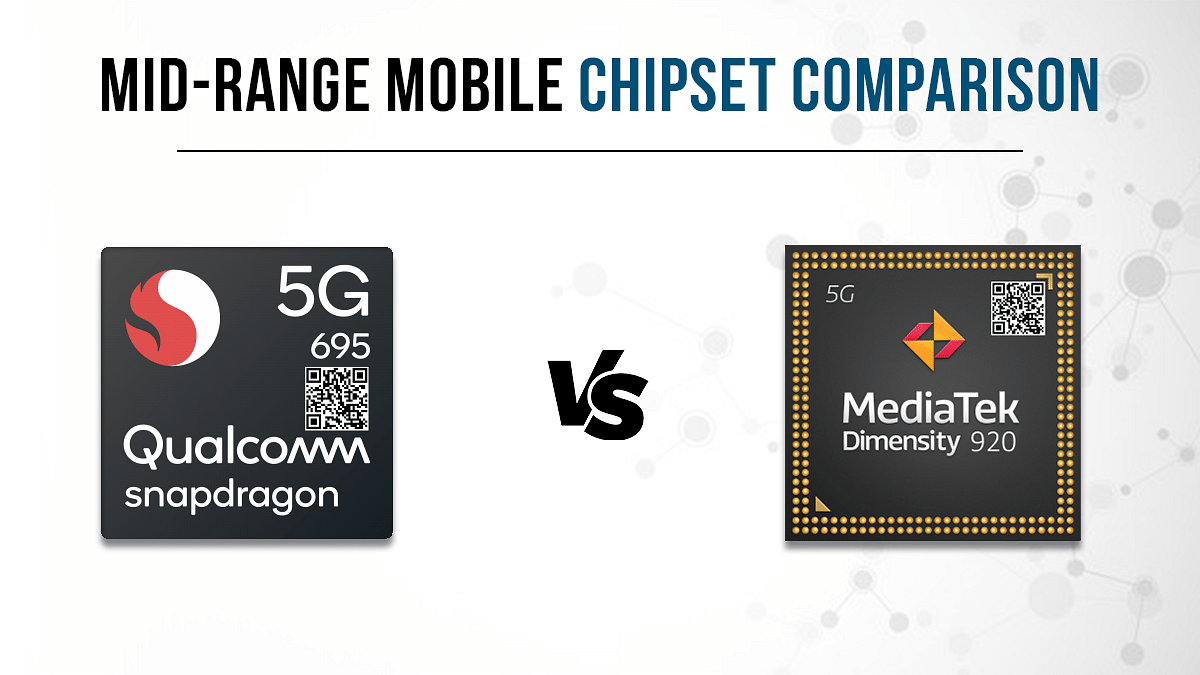
Qualcomm Snapdragon 695 Vs MediaTek Dimensity 920 Mid-Range Mobile Chipset Comparison

Key Highlights

  • The octa-core 5G Snapdragon 600 series processor is 5G enabled
  • Realme unveiled its first-ever 5G tablet called the Realme Pad X 5G powered by the Snapdragon 695 processor
  • Dimensity 920 is the finest bet in the mid-range mobile chipset department

Qualcomm Snapdragon 695 chipset is a new mobile processor that is driving the new-generation mid-range Android phones. The octa-core 5G Snapdragon 600 series processor is 5G enabled and is even being used with tablets. Realme recently unveiled its first-ever 5G tablet called the Realme Pad X 5G powered by the Snapdragon 695 processor. Several other competent handsets are integrated with this chipset for a powerful daily performance.

MediaTek, on the other hand, has the Dimensity 920 as its finest bet in the mid-range mobile chipset department. The Xiaomi 11i Hyper Charge, Redmi Note 11 Pro/ Pro Plus, and the Poco X4 (NFC) are a few of the popular handsets equipped with the octa-core Dimensity 920 chipset. This 5G processor is also well known for its powerful performance delivery. We have compared both of these popular mid-range chipsets in this article in terms of CPU, GPU, Memory, and Multimedia (ISP).

Qualcomm Snapdragon 695 Vs MediaTek Dimensity 920: CPU Comparison

Qualcomm and MediaTek both fabricated the Snapdragon 695 and the Dimensity 920 chipset using a 7nm fabrication process. The Qualcomm chipset has octa-cores including two Cortex-A78 cores clocked at 2.2GHz and six Cortex-A55 cores clocked at 1.7GHz. The Dimensity 920 is also an octa-core chipset that has the same two Cortex-A78 cores clocked at 2.2GHz and six Cortex-A55 cores clocked at 2GHz.

The Snapdragon 695 chipset is designed on the ARMv8.2-A Instruction set and has a frequency range of 2200MHz, while, the Dimensity processor also has the same Instruction set (ARMv8.2-A) and the frequency range, i.e., 2200MHz. Both these 5G chipset pack ample punch for multitasking and gaming.

Snapdragon 695 Vs Dimensity 920: GPU Comparison

The Qualcomm Snapdragon 695 chipset has the Adreno 619 GPU support which is designed on Adreno 600 architecture. The GPU delivers around 840MHz of frequency range and has 128 shading units. This processor has a 1.1 Vulkan version, 2.0 OpenCL version, and 12 DirectX version. On the other hand, the Dimensity 920 processor has the IMG BXM-8-256 GPU compatibility which is based on the PowerVR B-series chipset. The Vulkan, OpenCL, and DirectX version is the same as the Qualcomm processor. Similar to the CPU, the GPU performance is also similar on both these chipsets. They both are capable of easily rendering intense graphics with multimedia as well as gaming.

Also Read | Qualcomm Snapdragon 695 Vs MediaTek Dimensity 1300 5G Chipset: Quick Comparison

Categories
Chipset Comparison Featured

MediaTek Helio G35 Vs Qualcomm Snapdragon 662 Processor: Mid-Range Mobile Chipset Comparison

MediaTek Helio G series has some powerful chipsets for budget and premium Android smartphones. The Helio G37 is one of the brand’s gaming chipsets for mid-range smartphones. The Infinix Hot 12 and Motorola Moto G22 are some of the recent Android budget phones equipped with this gaming MediaTek processor.

Qualcomm, on the other hand, has been marking its presence in the mobile chipset industry with Snapdragon series processors. The Snapdragon 662 is the company’s bet in the mid-range segment. A bunch of popular phones with this processor have been competing with the lot mentioned above. The Poco M3, Xiaomi Redmi 9 Power, and the Vivo Y51A are a few of examples. But, why are we speaking of both these chipsets? Well, we have done a quick comparison between both these mid-range chipsets. Read on here:

MediaTek Helio G35 Vs Qualcomm Snapdragon 662 Chipset: CPU, GPU Differences

MediaTek’s Helio G35 processor is built on 12nm fabrication with a 2300MHz frequency range. The processor has octa-cores including four Cortex-A53 cores clocked at 2.3GHz and the other four clocked at 1.8GHz. The Qualcomm Snapdragon 662 processor is also an octa-core chipset but is fabricated using 11nm process and has 2000MHz frequency range. This processor has four Cortex A73 cores and four Cortex A53 cores clocked at 2.3GHz and 1.8GHz respectively.

The Helio G35 gets PowerVR GE8320 GPU integration with 650MHz base frequency. The processor has two execution units and 96 shading units. The GPU integrated within the Helio G35 is the Adreno 610, a part of Adreno 600 Architecture. It has a 650MHz GPU frequency, two execution units, and 32 shading units. Both these MediaTek and Qualcomm processors feature the same 1.1 Vulkan version and DirectX 12 version. Both the chipset brands have designed the SD 662 and the Helio G37 as a capable processors that can offer a smooth daily user experience and also perform lag-free with apps.

Helio G37 Vs Snapdragon 662 Processor: Memory, Multimedia (ISP)

The MediaTek Helio G37 processor comes with LPDDR4X RAM support. This is the same with the Snapdragon 662 processor. The memory frequency range is different. The Helio G37 processor has a 1866MHz memory frequency range, while the Qualcomm Snapdragon chipset has a 1600MHz memory frequency.

Both Helio G37 and the SD 662 have up to 8GB maximum RAM support. The storage compatibility is eMMC 5.1 on both chipsets. However, the Snapdragon variant has an additional UFS 2.1 storage. The Helio G37 has 1080 x 2400 pixels max display resolution support, while the Snapdragon 662 has 1080 x 2520 pixels display resolution compatibility (maximum).

The former offers 1 x 25MP and 2x 13MP max camera resolution whereas, the SD 662 has 1x 48MP and 2x 16MP max camera resolution. The video playback compatibility is 4K@30fps with the Snapdragon chipset and 1k@30fps with the MediaTek processor.

Categories
Chipset Comparison Featured

Unisoc T606 Vs MediaTek Helio G35 Entry-Level Chipset Comparison

Key Highlights

  • Unisoc T606 vs. MediaTek Helio G35 Comparison
  • Entry-Level Chipset: Features and Specs
  • You can make Informed Choices for Budget Smartphones

Unisoc is one of the emerging players in the mobile chipset market. The brand has created its niche with budget smartphone processors and we have seen multiple popular OEMs integrating a Unisoc series chipset into their entry-level phones. Realme, Micromax, and a couple of noted Android mobile players are a few examples.

On the other hand, primary mobile chipset players, including MediaTek and Qualcomm, are also frequently designing new mobile chipsets for entry-level phones. The former even has game-centric chipsets for affordable Android phones. The MediaTek Helio G35 is of the most commonly found chipsets in the entry-level segment. How well does it compete against the Unisoc T606 in terms of GPU and CPU performance? Let’s find out:

Unisoc T606 Vs MediaTek Helio G35 Processor: CPU Comparison

The Unisoc T606 entry-level chipset has octa-cores and is designed using a 12nm fabrication process. The Instruction set is ARMv8.1-A with a base frequency of 1600MHz. The chipset is equipped with two Cortex A-75 cores and six Cortex-A55 cores clocked at 1.6GHz respectively.

MediaTek has also fabricated the Helio G35 processor on a 12nm fabrication process. This processor is based on an ARMv8.2-A Instruction set and has a 2300MHz base frequency. This low-end gaming processor has eight Cortex-A53 cores clocked at 2.3GHz. Both these chipsets’ CPU performance is powerful for daily tasks such as web browsing, media playback, and also occasional gaming. But the Helio G35 is a bit better with performance optimization.

Unisoc T606 Vs MediaTek Helio G35 Chipset: GPU Comparison

The GPU integrated with the Helio G35 is the IMG PowerVR GE8320 which is based in Rougue Architecture and has a 680MHz frequency range. The MediaTek Helio G35 has the Mali-G57 MP1 GPU integration which uses Valhall architecture and offers a 650MHz frequency range.  

The Unisoc T606’s GPU has 16 shading units compared to 32 shading units of the Helio G35. The former’s OpenCL version is 2.0, OpenCL version is 1.0, and DirectX version is 11. The latter’s Vulkan version is 1.1, OpenlCl version is 1.2, and DirectX version is 12.

Unisoc T606 Vs MediaTek Helio G35 Processor: Memory, Multimedia (ISP)

The Unisoc T606 and the MediaTek Helio G35 have the same LPDDR4X RAM memory support. Both chipsets have also identical 1600MHz memory frequency but the max memory size support is different. The Unisoc T606 only supports up to 8GB RAM, whereas, the MediaTek Helio G35 has up to 6GB RAM compatibility. The former supports eMMC 5.1, UFS 2.0, and UFS 2.1 storage types, while the latter comes with only eMMC 5.1 storage.

Unisoc has made the T606 compatible with a max display resolution of 1080 x 2160 pixels and a max camera resolution of 1x24MP and 2x16MP. The display resolution support with the Helio G35 is 1080 x 2400 pixels, while the camera resolution is 1x25MP and 2x 16MP. The video recording and video playback compatibility is the same with both processors, i.e., 1K@30fps and 1080p@60fps respectively.

Categories
Chipset Comparison Featured

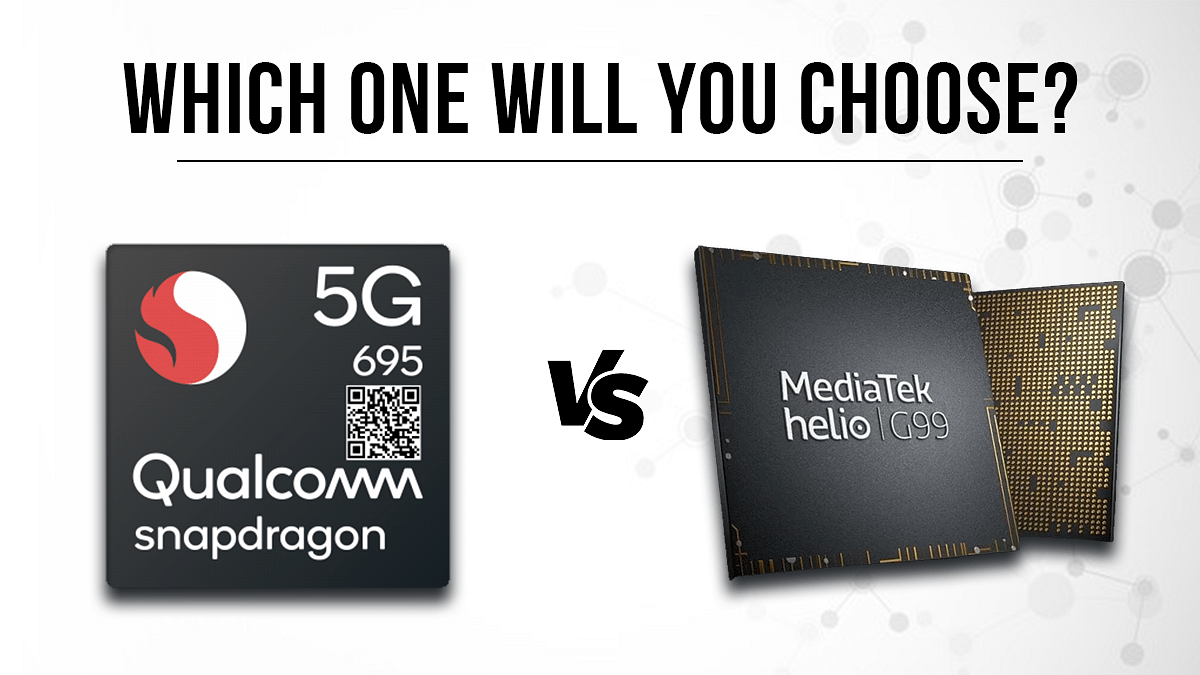
Qualcomm Snapdragon 695 Vs MediaTek Helio G99 Chipset: Quick Comparison

Key Highlights

  • Qualcomm Snapdragon 695 is built on the ARMv8-A Instruction set and has a total frequency of 2000MHz.
  • The SD 695 is built on an 11nm fabrication process
  • Below is the comparison of Qualcomm Snapdragon 695 Vs MediaTek Helio G99 Chipset.

Qualcomm had released the Snapdragon 665 octa-core 5G chipset for mid-range Android smartphones. Multiple smartphone OEMs have used this chipset in recent times for their new product lineup. MediaTek is one of Qualcomm’s biggest contenders in this race and has the Helio G99 processor to take on the Snapdragon 665 processor. In this article, we compare these processors’ CPU, GPU, and Memory compatibility.

Key Features Snapdragon 695 5G Helio G99
CPUocta-coreocta-core
GPUAdreno 610 GPUMali-G57 GPU
MemoryLPDDR4X RAMLPDDR4X RAM
StorageeMMC 5.1 and UFS 2.1.UFS 2.1

Qualcomm Snapdragon 695 Vs Helio G99 Chipset: CPU Performance

The Qualcomm Snapdragon 695 processor is built using 11nm fabrication process, whereas, the Helio G99 gaming chipset is built using a thinner 6nm process. The SD 695 is built on the ARMv8-A Instruction set and has a total frequency of 2000MHz. This mid-range Qualcomm octa-core chipset has four Cortex-A73 cores clocked at 2GHz and four Cortex A53 cores clocking at 1.8GHz.

MediaTek’s Helio G99 is based on the ARMv8.2-A instruction set and has a 2200MHz base frequency. This processor has two Cortex A-76 Cores clocked at 2.2GHz and six Cortex-A55 cores clocked at 2GHz. Both chipsets are good with power delivery and can handle media playback and gaming decently.

Also Read: Qualcomm Snapdragon 8 Gen 2 Vs MediaTek Dimensity 9200 Chipset Comparison: Most Advanced 5G Flagship Mobile Processor?

Snapdragon 695 Vs MediaTek Helio G99 Processor: GPU Performance

The Qualcomm Snapdragon 695 processor ships with the Adreno 610 GPU which is designed on the Adreno 600 architecture. This GPU has a frequency range of 600MHGz and offers two execution units. The MediaTek Helio G99’s Mali-G57 MC2 GPU is designed on the Valhall architecture with two execution units and 32 shading units. The GPU performance of both the Qualcomm Snapdragon 695 and the Helio G99 is good with the hardware being apt to render even extensive graphics smoothly.

Also Read: MediaTek Dimensity 9200 Processor Vs Qualcomm Snapdragon 8 Gen 1 Chipset: High-End Mobile Chipset Comparison

Qualcomm Snapdragon 695 Vs MediaTek Helio G99: Memory, Multimedia (ISP)

The memory compatibility with both Qualcomm Snapdragon 695 and the Helio G99 processor is LPDDR4X. The maximum RAM memory allocation with the Snapdragon chipset here is 8GB, while the Helio G99 chipset has up to 10GB memory support. The former has a memory frequency of 1866MHz, while the latter has a 4266MHz memory frequency. The storage compatibility with the SD 695 is eMMC 5.1 and UFS 2.1. The MediaTek Helio G99 comes with single UFS 2.2 memory compatibility.

The multimedia aspects of the Snapdragon 695 and the Helio G99 is same with the max display resolution (1080 x 2520). The max camera resolution varies with the Snapdragon chipset offering support for 1x 48MP and 2x 16MP cameras. The MediaTek chipset offers 1x 10⁸MP and 2x 16MP max camera resolution compatibility. The video recording supports is 4K@30fps with the Snapdragon 695 and 2K@30fps with the Helio G99.

Also Read: MediaTek vs Exynos Chipset Comparison: Which one is Better? Pros, Cons, And More
Categories
Comparison Featured TV

Samsung HD Ready LED Smart TV Wondertainment Series Vs LG HD Ready Smart LED TV Vs Sony Bravia HD Ready Smart LED TV: Best 32-Inch Smart TV?

Key Highlights

  • The Samsung HD Ready LED Smart TV Wondertainment Series is perfect for families with children.
  • Comes with mega contrast, PurColor, and HD picture quality.

Unlike smartphones, TVs have significantly decreased in price, making the great new TV technology affordable to everyone. Additionally, three stand out among the various TV manufacturers on the market, i.e., Samsung, LG, and Sony. They set the bar for the best TVs out there with smart TV technology, high picture quality, a sleek and elegant design, and some pretty remarkable screen sizes.

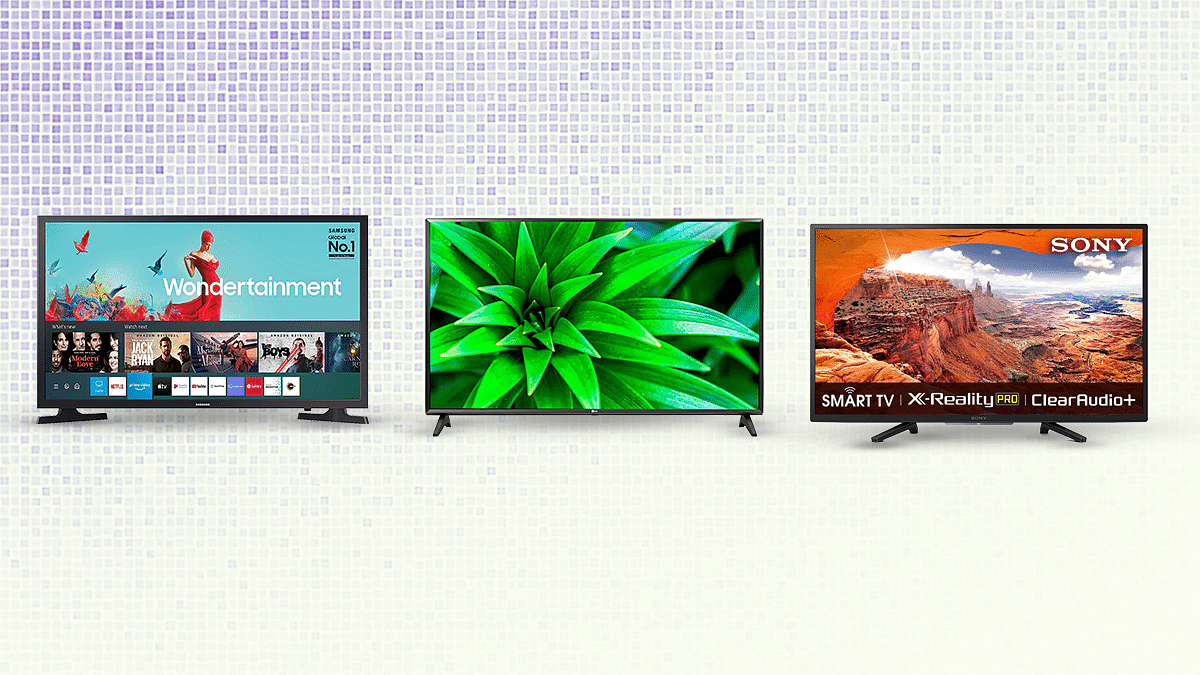
In this article, we are comparing three smart TVs, i.e., Samsung 32 Inches HD Ready LED Smart TV Wondertainment Series, LG 32 Inches HD Ready Smart LED TV and Sony Bravia 32 inches HD Ready Smart LED TV. Every brand has models that stand out in particular categories. But the bottom line? We’ll tell you here.

Design And Display

The Samsung HD Ready LED Smart TV Wondertainment Series sports a slim and stylish design. It has a 32-inch HD Ready (1366 × 768) LED panel with a 60Hz of refresh rate. The display further has mega contrast, PurColor, and HD picture quality.

On the other hand, the LG HD Ready Smart LED TV has a standard plastic frame style. If hung on a wall or even just placed on a flat surface, its wider and blockier shape takes up room. It is a 32-inch Smart TV with an HD resolution that is natively supported. This TV’s feature set is better than most entry-level 32-inch TVs.

Moving to the Sony Bravia HD Ready Smart LED TV, its design is more classical with narrow bezels on all four sides and an elongated chin underneath the company logo on the bottom bezel. It has a 32-inch panel with a resolution of 1366 x 768 pixels and a 50Hz refresh rate.

Also Read: LG India Launches OLED 2022 Smart TV Series: See Here For Price And Other Details

OS And Features

The Samsung HD Ready LED Smart TV Wondertainment Series comes equipped with features like voice assistants, SmartThings app, personal computer, home cloud, live cast, screen share, and music system. As for connectivity, it has two HDMI ports to connect the set-top box, Blu-Ray players, and gaming console. Also, it comes with one USB port to connect hard drives and other USB devices.

The Samsung TV has 20W sound output with Dolby Digital Plus. It further has Alexa built-in. Simply ask Alexa to play music, control smart home devices, find movies, get sports updates, and more.

On the other hand, the LG TV’s latest version of the operating system has received a webOS Notify feature that works like the notification feature on our phones. From texts, incoming calls, and emails, to software updates, you can check notifications right away. The LG TV’s AI ThinQ function is its most intriguing feature. The built-in AI features in this TV, according to LG, will handle more than 800 voice search requests. It includes three HDMI ports in total, including one HDMI ARC port, and one USB port.

The quad-core processor within the Sony Bravia HD Ready Smart LED TV has four ARM Cortex A55 cores and a Mali-G31 GPU. You get 1.5GB RAM and 16GB of internal storage, of which the OS and preinstalled apps use around half and the remaining third is left over for your use. Moving on to connectivity, this Sony TV has the majority of common input/output ports. A 3.5mm headphone jack, an optical audio out, coaxial A/V inputs, a LAN connector, and three HDMI ports, one of which supports ARC, two USB 2.0 ports, and other ports are included.

Also Read: Samsung HD Ready LED Smart TV Wondertainment Series Vs LG HD Ready Smart LED TV Vs Sony Bravia HD Ready Smart LED TV: Best 32-Inch Smart TV?

Verdict

All three models, i.e., Samsung HD Ready LED Smart TV Wondertainment Series, LG HD Ready Smart LED TV, and Sony Bravia HD Ready Smart LED TV, are priced under Rs. 30,000. However, the LG Smart TV is filled to the brim with premium features. A motion remote, HDR and other technologies like AI ThinQ are uncommon on low-cost TVs or any other models with a comparable price. The LG HD Ready Smart LED TV is a serious contender if you were looking to upgrade to a smart TV because it offers great value for the money along with a good picture and audio quality.

Categories
Chipset Comparison Featured

Qualcomm Snapdragon 778G Vs MediaTek Helio G96 Chipset: Quick Comparison

Smartphones are modern gadgets that have become more of a necessity than a luxury. You get many options ranging from gaming to photograph-oriented handsets in the market if you step out to buy one. The ecosystem is primarily divided between Android and iOS smartphones. The former gets power delivery either from a Qualcomm or MediaTek series chipset.

The Snapdragon series processors compete with MediaTek’s Helio and Dimensity processor lineups in all segments including budget, mid-range, and premium. Qualcomm’s Snapdragon 778G chipset is one of the most popular smartphone OEMs for premium mid-range products. MediaTek has Dimensity 800 series and the Helio G80/90 series processors that rival this octa-core 5G Qualcomm processor. If you wish to read their CPU and GPU performance comparison, read on below:

Qualcomm Snapdragon 778G Vs Helio G96: CPU Performance

Qualcomm and MediaTek have designed the Snapdragon 778G and the Helio G96 octa-core processors on ARMv8.4-A and ARMv8.2-A instruction sets respectively. The SD 778G is built on a thinner 6nm fabrication process, whereas, the Helio G96 is based on a 12nm fabrication process.

The octa-core Qualcomm SD 778G has one 2.4GHz Cortex-A78 core, three Cortex-A78 cores with 2.2GHz clock speed, and four Cortex-A55 cores with 1.9GHz clock speed. MediaTek’s octa-core Helio G96 processor comprises two Cortex-A76 cores with 2.05GHz clock speed and six Cortex-A55 cores clocked at 2GHz. CPU performance is good with both these chipsets. Since they both are game-centric processors, expect a good gameplay session with smartphones integrated with these two chipsets.

Snapdragon 778G Vs Helio G96 SoC: GPU Support

Speaking of the GPUs, Qualcomm has packed the Snapdragon 778G chipset with Adreno 642L GPU. This GPU Is built on Adreno 600 architecture with two execution units and 384 shading units. On the contrary, the Helio G96 has the Mali G57 MC2 GPU integrated which is based on Valhall architecture. This octa-core MediaTek processor has 32 shading units. Graphics rendering will be decent with both these chipsets; specifically the Snapdragon 778G which can deliver some high-end graphics smoothly.

Snapdragon 778G Vs Helio G96 Chipset: Memory, Multimedia (ISP)

In terms of memory, the Qualcomm Snapdragon 778G processor has LPDDR5 RAM compatibility compared to the LPDDR4X RAM support on the Helio G96. The memory frequency of the Qualcomm processor is 3200MHz, while, the Helio G96 comes with 2133a MHz memory frequency.

The max memory allocation on the Qualcomm Snapdragon 778G processor is 16GB, whereas, the Helio HG96 has 10GB max memory allocation size. Qualcomm has added UFS 2.1, UFS 2.2, UFS 3.0, and UFS 3.1 storage support. However, MediaTek has only added support for eMMC 5.1 and UFS 2.2 storage support.

In terms of memory (ISP) compatibility, the Qualcomm Snapdragon 778G chipset has a 1080 x 2520 pixels max display resolution and 1x192MP, 2x36MP max camera resolution. This processor can record 4K@30fps videos and has H.264, H.265, VP8, and VP9 video codes.

The audio codec support with this processor is AAC, AIFF, CAF, MP3, MP4, and WAV. The Helio G96 supports these same audio codecs. However, the MediaTek processor supports a lower max camera resolution of 1x 10⁸MP, 2x 16MP, and also 2k@30fps/ 1K@60fps video recording.

Categories
Chipset Comparison Featured

Qualcomm Snapdragon 870 Vs Dimensity 920 Chipset: Best Flagship Grade Mobile Processor

Qualcomm and MediaTek have a wide portfolio of mobile chipsets. The former is catering to the mobile brands with Snapdragon series processors, whereas, the latter provides Helio and Dimensity series mobile chipsets. A major chunk of Android smartphone OEMs source chipsets from these two brands for their product lineups. Both these chipset brands are integrating some of the best technologies with new-generation offerings.

Qualcomm and MediaTek compete with each other in the flagship range segment with their Snapdragon 870 and the Dimensity 920 SoCs. Both these mobile processors are known for their powerful performance and 5G network capabilities. Let’s see how the Snapdragon 870 and the Dimensity 920 chipsets compare in terms of CPU and GPU performance.

Qualcomm Snapdragon 870 Vs MediaTek Dimensity 920: CPU Comparison

Starting with the Snapdragon 870 processor, this high-end Qualcomm processor comes with octa-cores including one Cortex-A77 core with a 3.2GHz clock speed, three 2.42GHz Cortex-A77 cores, and four Cortex-A55 cores with 1.8Ghz clock speed. This processor is designed using ARMv8.2-A Instruction set with a frequency range of 3200MHz.

The MediaTek Dimensity 920 processor is based on a 6nm fabrication process, unlike the Snapdragon 870 SoC which is built on a 7nm fabrication process. The premium MediaTek processor also has octa-cores with two Cortex-A78 cores clocked at 2.5GHz and six Cortex A-55 cores clocked at 2GHz.

This processor is also built on the same ARMv8.2-A Instruction set and has a 2500MHz frequency range. Performance delivery by both these chipsets is premium where you experience minimum lags with gaming and multitasking.

Snapdragon 870 Vs Dimensity 920 Chipset: GPU Comparison

Qualcomm’s flagship grade Snapdragon 870 chipset employs Adreno 650 GPU to render graphics. This GPU is based on the Adreno 600 architecture and has two execution units and 512 shading units. MediaTek has integrated the Dimensity 920 processor with the Mali-G68 MC4 GPU which is based on Vallhall 2 architecture.

This octa-core processor has four execution units and 64 shading units which is lower compared to the Snapdragon processor. Both processors have identical 1.1 Vulkan version, 2.0 OpenCL version, and 12 DirectX version. Similar to the CPU, both these chipsets are packed with powerful GPUs for rich graphics on the screen.

Snapdragon 870 Vs Dimensity 920 Processor: Memory, Multimedia (ISP)

The memory type supported by both Qualcomm Snapdragon 870 and the Dimensity 920 chipset is LPDDR5. However, the former offers a 2750MHz memory frequency, while the latter has a 3200MHz memory frequency range. The maximum memory allocation on both chipsets is 16GB. The storage compatibility with the Snapdragon 870 is UFS 3.0 and UFS 3.1, whereas, the Dimensity 920 comes with UFS 2.1, UFS 2.2, and UFS 3.1 storage. The additional storage format support is one of the perks of the MediaTek chipset.

Moving on to multimedia compatibility, the Qualcomm SD 870 offers 2160 x 3840 pixels max display resolution and 1x 200MP/ 2x 25MP maximum camera resolution. This 5G Qualcomm chipset is capable of recording and playing 8K@30fps and 4K@60fps videos. It has the H.264, H.265, VP8, and VP9 video codecs and AAC, AIFF, CAF, MP3, MP4, and WAV audio codec support.

The MediaTek Dimensity 920 processor has 1080 x 2520 pixels max display resolution and 1x 10⁸MP/ 2x 20MP max camera resolution support. This processor is capable of recording and rendering 4K@30fps videos. The audio codecs with this chipset are AAC, AIFF, CAF, MP3, MP4, and WAV, whereas the video codecs are H.264, H.265, AV1, and VP9.

Categories
Chipset Comparison Featured

Qualcomm Snapdragon 778G Vs MediaTek Dimensity 930 Chipset: Battle Of Premium Mid-Range Mobile Processors

Smartphones are all evolved today with brands implementing the best technologies in their new product lineups. Most smartphone OEMs are using a modern range of hardware for a boosted experience with photography, media playback, gaming, and web surfing. Users have a wide range of options to select if they step out to buy a new phone; specifically, Android.

And you’ll find most of these handsets being driven by a Qualcomm or MediaTek processor. Exynos and Unisec are also found on several Android phones, but the larger chunk uses the former. We have compared multiple Qualcomm and MediaTek chipsets in the past. This time we are comparing two of the most popular mobile processors from these two brands driving the premium mid-tier Android phones called the Snapdragon 778G and the Dimensity 930.

Qualcomm Snapdragon 778G Vs MediaTek Dimensity 930: CPU Comparison

Both Snapdragon 778G and the Dimensity 930 processors are based on a 7nm fabrication process and have octa-cores. The Qualcomm SD 778G has one Cortex-A78 core clocked at 2.4GHz frequency, three Cortex-A78 cores clocked at 2.2GHz, and four Cortex-A55 cores clocked at 1.9GHz. This chipset is based on the ARMv8.4-A Instruction set and has an overall frequency range of 2400MHz.

The MediaTek Dimensity 930 processor is built on ARMv8.2-A Instruction set which has a 2200MHz frequency. The chipset has two Cortex-A78 cores clocked at 2.2GHz and six Cortex-A55 cores clocking at 2 GHz.

Snapdragon 778G Vs Dimensity 930: GPU Compatibility

Qualcomm has used the Adreno 642L GPU support with 490MHz GPU frequency. This GPU is built on Adreno 600 architecture and has two execution and 384 shading units. The GPU used by this premium mid-range Snapdragon processor is capable enough to handle all kinds of extensive graphics with any lags or jitters.

On the other hand, MediaTek has added support for IMG BXM-8-256 GPU on the Dimensity 930 processor. The octa-core processor’s GPU is based on the PowerVR-B-series architecture and has 1.1 Vulkan version, 2.0 OpenCL version, and 12 DirectX version which is identical to the SD 778G chipset.

Snapdragon 778G Vs Dimensity 930: Memory, Memory ISP

The Qualcomm Snapdragon 778G processor has LPDDR5 RAM with a 3200MHz base frequency. The maximum RAM allocation size is 16GB on the Snapdragon 778G chipset. The same LPDDR5 RAM support is present on the Dimensity 930 chipset. The Qualcomm Snapdragon 778G processor has UFS 2.1, UFS 2.2, UFS 3.0, and UFS 3.1 storage compatibility, whereas, the Dimensity 930 processor has just the UFS 3.1 storage support.

In terms of multimedia, the Qualcomm Snapdragon 778G processor has 1080 x 2520 pixels max display resolution and 1x 192MP, 2x 36MP max camera resolution support. This processor is capable of recording and playback 4K@30fps videos. The video codecs compatibility on this chipset is H.264, H.265, VP8, and VP9, while the audio codec support is AAC, AIFF, CAF, MP3, MP4, and WAV.

The Dimensity 930 processor comes with 1080 x 2520 pixels max display resolution and 1x 10⁸MP max camera resolution. This chipset has slight lower camera capabilities and can record and play 2K@30fps videos. This processor has H.264, H.265, and VP9 video codes and AAC, AIFF, CAF, MP3, MP4, and WAV audio codecs. The Qualcomm Snapdragon 778G is a bit better with media playback and camera capabilities compared to the Dimensity 930 chipset.

Categories
Comparison Featured Laptop

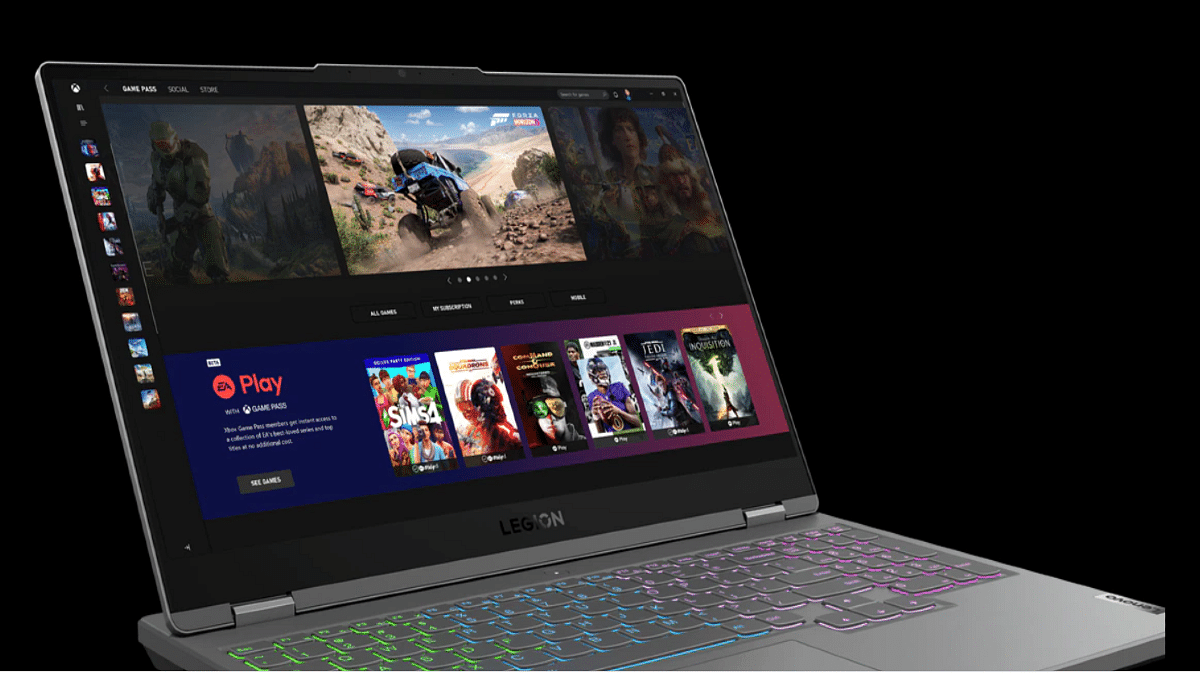
Asus TUF Gaming F15 Vs Lenovo Legion 5i 15-inch Gaming Laptops: Best Option For Gamers?

The laptop industry has grown exponentially in the last decade with the brands integrating the latest hardware and software technologies. Rampant growth has also been recorded with the consumer-oriented budget laptop models from some popular smartphone OEMs. But the major chunk is still dominated by the prime players such as Asus, Acer, Dell, Lenovo, HP, and others. We have just covered the hardware differences between two of the most popular laptops including the Asus Vivobook Pro 14 OLED and the Dell Inspiron 16. Here, we are comparing two of the best gaming laptops that you can buy for under Rs. 80,000 in India. The Asus TUF Gaming F15 and the Lenovo Legion 5i are the models whose spec-sheet comparison you can read below:

Asus TUF Gaming F15 Vs Lenovo Legion 5i 15-inch: Display Comparison

The Asus TUF Gaming F15 laptop is packed with an IPS LCD screen that is 15.6-inch in size. The display on the Asus gaming laptop comes with a 1080 x 1920 pixels screen resolution and has a pixel density of 141 PPI. The screen gets a standard 60Hz refresh rate and comes void of HDR 10 certification. This laptop also has variants with 1920 x 1200 pixels resolution and 144Hz refresh rate and 2560 x 1440 pixels resolution. The prices vary according to the models.

On the other hand, the Lenovo Legion 5i features the same 15.6-inch IPS LCD screen. However, the display specs are slightly better compared to the Asus gaming laptop. While the screen size and panel type remain the same as the Asus TUF Gaming F15 laptop, the refresh rate here is higher at 165Hz. This allows for smoother feedback with the frame transitions during gaming. The Lenovo Legion F15’s display is also HDR certified and has Dolby Vision support.

Asus TUF Gaming F15 Vs Lenovo Legion 5i 15-inch: Processor, Firmware

The Asus TUF Gaming F15 and the Lenovo Legion 5i can be purchased with different configurations and processors. The Asus TUF 15 comes with Intel Core i5 12450H, Core i5 12500H, and Core i7 12700H processor options. The octa-core processor on this laptop is integrated with the Intel Iris Xe graphics card. The RAM option for the Asus gaming laptop is 8GB, 16GB, and 32GB, whereas the storage options are 512GB and 1TB.

It also has support for NVIDIA GeForce RTX300 series GPUs.  The Lenovo Legion 5i also comes with an Intel Core i5 (11260H/11400H) chipset. It can also be purchased with Intel Core i7 (1180H) and Core i9 11900H chipset. This laptop has integrated Intel UHD Graphics along with NVIDIA GeForce RTX 3000 series GPUs.

The RAM capacity you can select on this Lenovo gaming laptop is 16GB, 32GB, and 64GB, whereas, the storage capacity is 512GB, 1TB, and 2TB. Both laptops are well equipped to handle high-end games and deliver a premium experience during general usage as well as gaming.

Asus TUF Gaming F15 Vs Lenovo Legion 5i: Connectivity, Battery

The Asus TUF Gaming F15 laptop is packed with three USB Type-A ports, one USB 4.0 Type-C port, one Thunderbolt 4 port, and one HDMI 2.0 port. The Lenovo Legion 5i features three USB 3.2 Type-A ports, three USB Type-C ports, one Thunderbolt 4 port, and one HDMI 2.0 port. The battery capacity of the Lenovo Legion 5i laptop is 80Wh. It is a Li-Po battery that is aided by fast charging technology. Asus, on the other hand, offers the TUF 15 Gaming laptop with 48Wh and 90Wh battery capacities along with fast charging support.