Categories
Comparison Featured Laptop

Asus Vivobook Pro 14 OLED Vs Dell Inspiron 16 Laptop: Which Laptop Is Best Under Rs. 70,000 In India?

The laptop industry is also advancing like the smartphone and other consumer IoT products with the latest technologies. From conventional bulky laptops, we now have options to select from ultrathin and 2-in-1 convertible designs. And that too without compromising on the hardware. Acer, Asus, Dell, Lenovo, and HP are amongst a few of the established players in the laptop market that are offering Windows-powered laptops with Intel and AMD series processors. However, there has been a recent trend with smartphone OEMs foraying into the laptop space and bringing in some pocket-friendly options for the audience.

We have done several gadget comparison articles including smartphones, smart TVs, tablets, and also chipsets. Now, we are starting with laptop comparisons as well. In this article, we are pitting down two of the most popular laptops in the Indian market. The spec sheet of the Asus Vivobook Pro 14 OLED and the new Dell Inspiron 16 models are compared in this article. If you are looking to buy a new machine for yourself and one of these models has been on your list then this comparison article is a must-read.

Asus Vivobook 14 Pro OLED Vs Dell Inspiron 16: Display Specification Comparison

Display game is getting stronger with laptops as it is being with smartphones. Laptop brands are making sure they are using a high-end panel for an immersive viewing experience with their products. The Asus Vivobook 14 Pro is one of the best examples of a mid-range laptop with a high-resolution panel. Asus has packed the Vivobook 14 Pro with a 14-inch compact display.

The panel type is OLED that offers a screen resolution of 1800 x 2880 pixels and has an aspect ratio of 16:10. The Asusu Vivobook 14 Pro OLED display also supports a 90Hz refresh rate and has a picel density of 243 ppi. It is HDR10 certified with which it can smoothly render FHD content via OTT platforms.

On the other hand, the Dell Inspiron 16 features an IPS LCD screen that is 16-inches in size. The screen resolution and the refresh rate is slightly lower here compared to the Asus Vivobook Pro 14 OLED variant. This laptop model supports 1920 x 1200 pixels resolution and has a standard 60Hz refresh rate.

The pixel density is also a bit lower compared to the Asus model at 142 PPI and also comes void of HDR10 support. The display size is bigger on the Dell laptop, but if you need better specs, opt for the Asus Vivobook Pro 14 OLED out of these two.

Asus Vivobook 14 Pro OLED Vs Dell Inspiron 16: Processor, Software Version

The Asus Vivobook 14 Pro OLED runs on the Intel Core i5-11300H quad-core processor with a 3.1GHz (up to 4.4Ghz) clock speed. The Asus Vivobook 14 Pro has integrated Intel Iris XE graphics, and NVIDIA GeForce GTX 1650 GPU support. This laptop comes with an onboard 16GB DDR4 RAM and has 512GB M.2 NVMe PCIe 3.0 SSD storage.

The Asus Vivobook 14 Pro OLED has the Windows 10 Home/ Pro edition pre-installed for home and professional users respectively. The software is upgradable to Windows 11 for free.

Moving to the Dell Inspiron 16, this laptop runs on the 12th Gen Intel Core processor. You can select from Core i3, Core i5, and Core i7 variants depending on the budget and user requirement. You can also select the integrated graphic card depending on the requirements including Intel UHD, Intel Iris Xe, and NVIDIA GeForce MX570, 2GB GDDR6 GPUs.

The memory version is also dual including 8GB DDR4 3200MHz and 16GB 3200MHz DDR4 RAM. The device has 512GB M.2 PCIe NVMe SSD storage.

Asus Vivobook 14 Pro OLED Vs Dell Inspiron 16: Connectivity Ports, Battery Capacity

Both Asus Vivobook 14 Pro and the Dell Inspiron 16 come with multiple connectivity ports.  The Asus Dell Inspiron 16 ships with two USB-A, one USB Type-C, one HDMI 1.4, and an SD card reader. On the other hand, the Asus Vivobook Pro 14 OLED ships with three USB-A, one USB Type-C, one HDMI 1.4, and one 3.5mm headphone jack.

As far as the battery capacity is concerned, the Asus Vivobook 14 Pro is packed with a 63wh battery whereas the Dell Inspiron 16 comes with 41whr and 54whr battery units. Both laptops comes with fast charging support.

Categories
Chipset Comparison Featured

Qualcomm Snapdragon 8+ Gen 1 SoC Vs Samsung Exynos 2100: Which Is Better?

Qualcomm is one of the biggest names in the mobile chipset industry with MediaTek and Exynos as its prime rivals in the Android mobile race. Qualcomm has a wide range of mobile chipsets for all price ranges of smartphones. Samsung’s proprietary Exynos processor also powers different segments of the brand’s Android phones. The Exynos 2100 is Samsung’s bet in the premium mobile chipset segment, whereas Qualcomm has several of them in this league including the most recent Snapdragon 8+ Gen 1 SoC. We are comparing both Exynos 2100 with Qualcomm’s most premium Snapdragon chipset. Read on the differences below:

Qualcomm Snapdragon 8+ Gen 1 Vs Samsung Exynos 2100: CPU Comparison

Qualcomm has fabricated the Snapdragon 8+ Gen 1 processor on a 4nm process and has built it using the ARMv9-A Instruction set. The processor has a 3200MHz frequency range and octa-cores including one Cortex-X2 core clocked at 3.2GHz, three Cortex A710 cores clocked at 1.75GHz, and four Cortex-A510 cores clocked at 2GHz.

The Samsung Exynos 2100 processor also has octa-cores with one Cortex-X1 core clocked at 2.9GHz, three Cortex A78 cores clocked at 2.8GHz, and four Cortex-A55 cores clocked at 2.2 GHz. This chipset is built using ARMv8.4-A architecture and has a frequency range of 2900Mhz. The CPU performance is good with both these flagship chipsets, but the Snapdragon 8+ Gen 1 is slightly better compared to the Exynos 2100.

Snapdragon 8+ Gen 1 Vs Samsung Exynos 2100: GPU Differences

The Qualcomm Snapdragon 8+ Gen 1 chipset employs Adreno 730 GPU for graphics based on Adreno 700 architecture. The Samsung Exynos 2100 has the Mali-G78 MP14 GPU support which is based on Vallhall 2 architecture. The Qualcomm Snapdragon processor here has a GPU frequency of 900MHz, whereas, the Samsung Exynos chipset has 760MHz. The Vulkan version on both chipsets is 1.1, while the OpenCL and DirectX version is 2.0 and 12 respectively.

Snapdragon 8+ Gen 1 Vs Samsung Exynos 2100: Memory, Multimedia (ISP)

In terms of memory support, the Snapdragon 8+ Gen 1 and the Exynos 2100 chipset have the same LPDDR5 memory support, each offering a 3200MHz memory frequency. However, the max memory allocation size is 24GB with the Snapdragon 8+ Gen 1 and 16GB with the Exynos 2100. The storage type supported by both Snapdragon 8+ Gen 1 and the Exynos 2100 is UFS 3.1.

As for the multimedia aspects, the SD 8+ Gen 1 chipset offers a max display resolution of 2160 x 3840. The Samsung processor also has the same max display resolution. The maximum camera resolution compatibility with both these processors is 1X200MP

. The Exynos 2100 additionally supports 2X32MP max camera resolution. Similarly, the video recording capability of both these flagship mobile processors is 8K@30fps and 4K@120fps. The Samsung chipset only supports the former. Speaking of the audio and video codecs, the SD 8+ Gen 1 and the Exynos 2100 get H.264, H.265, VP8, and VP9 video codecs and AAC, AIFF, CAF, MP3, MP4, and WAV audio codecs.

Categories
Chipset Comparison Featured

Apple A15 Bionic Vs Qualcomm Snapdragon 888 Chipset Comparison: How Do These Flagship Mobile Processors Compare?

The smartphone industry is rapidly evolving with two major mobile ecosystems available for the audience including Android and Apple iOS. For the former, most of the OEMs rely on chipsets from Qualcomm and MediaTek, while the latter manufactures in-house Bionic chipsets for its iPhones. Apple has been using an A15 Bionic processor for the current generation of iPhones (iPhone 13 series).

This premium Apple processor competes head-on with Qualcomm’s top-tier Snapdragon 888 processor. We already have compared the A15 Bionic with Qualcomm’s most powerful Snapdragon 8+ Gen 1 processor. This article is a quick comparison between the Snapdragon 888 and the Apple A15 Bionic. Here’s how both these processors compare in terms of CPU, GPU, memory, and multimedia (ISP) services.

Apple A15 Bionic Vs Qualcomm Snapdragon 888: CPU Differences

Both Apple A15 Bionic and the Qualcomm Snapdragon 888 are fabricated using a 5nm process. The Apple A15 Bionic is a Hexa-core chipset contrary to the Snapdragon 888 SoC’s octa-cores. Apple has constructed the A15 Bionic on ARMv8.5-A Instruction set. The premium Apple chipset offers a frequency of 3240MHz. The hexa-cores comprise two Avalanche cores clocked at  3.24GHz and four Blizzard cores at 1.82GHz.

The Qualcomm Snapdragon 888 chipset’s octa-cores include one Kyro 680 Prime Cortex-X1 core with a 2.84GHz clock speed, three Kyro 680 Gold Cortex A-78 cores clocked at 2.42 GHz, and four Kyro 690 Silver Cortex-A55 cores clocked at 1.8GHz.

Apple A15 Bionic Vs Snapdragon 888: GPU Comparison

The GPU used by Apple A15 Bionic is an in-house Apple GPU that has a frequency range of 1200MHz. This flagship-grade Apple mobile chipset has a total of five execution units which is more than that of the Snapdragon 888 SoC. Speaking of which, the Qualcomm Snapdragon 888 has the Adreno 660 GPU support which has a frequency range of 840MHz and only two execution units. The GPU performance with both chipsets is good, with each of them capable of rendering rich graphics smoothly.

Apple A15 Bionic Vs Snapdragon 888: Memory, Multimedia (ISP) Comparison

The Apple A15 Bionic comes with LPDDR4X RAM compatibility with a memory frequency response range of 4266MHz. Its max memory allocation size is 8GB. The Qualcomm Snapdragon 888 ships with LPDDR5 RAM capacity and has a frequency response range of 3200MHz. However, the max memory allocation is higher with this chipset at 24GB.

The storage type supported by the Apple A15 Bionic is NVMe, whereas, the Snapdragon 888 ships with UFS 3.0 and UFS 3.1 storage type support. The A15 Bionic ships deliver a max display resolution of 2048 x 2732 which is slightly lower than the Qualcomm processor.

The Snapdragon 888 chipset offers a max display resolution of 2160 x 3840 pixels, max camera resolution of 1x 200MP, 2X25MP. While the A15 Bionic is capable of recording 4K@60fps videos, the Snapdragon 888 can capture 8K@30fps and 4K@120fps videos.

Moving on to the codecs, the Apple A15 Bionic has H.264, H.265, VP8, VP9, Motion JPEG video codecs, and AAC, AIFF, MP3, MP4, WAV, AC-3, E-AC-3, AAX, AAX+ audio codecs. On the other hand, the SD 888 offers H.264, H.265, VP8, and VP9 video codecs, and AAC, AIFF, CAF, MP3, MP4, and WAV audio codecs.

Categories
Chipset Comparison Featured

Qualcomm Snapdragon 888 Vs MediaTek Dimensity 9000 Processor: Flagship Mobile Chipset Comparison

Qualcomm is one the largest players in the mobile chipset market with MediaTek as its biggest rival. The former is offering Snapdragon series chipsets for all categories of smartphones, while the latter is competing in this space with its Helio and Dimensity lineup of processors. We already have done multiple chipset comparisons from both these brands.

In this article, we are again bringing two of the prominent mobile chipsets from both of these brands that are driving the modern-day flagship Android smartphones. We are comparing the CPU and GPU performance of the Snapdragon 888 and the Dimensity 9000 processor. Read on the differences below:

Qualcomm Snapdragon 888 Vs MediaTek Dimensity 9000: CPU Comparison

Qualcomm has designed the premium Snapdragon 888 processor using the ARMv8.4-A Instruction set. This is an octa-core processor with a 2840MHz base frequency with one Cortex-X1 core clocked at 2.84GHz, three Cortex-A78 cores clocked at 2.42GHz, and four 1.8GHz Cortex-A55 cores.

The MediaTek Dimensity 9000 is also an octa-core processor that is built using 5nm fabrication technology and is based on the ARMv8.2A Instruction set. The Dimensity 9000 offers a 2850Mhz frequency and has four Cortex A-78 cores clocked at 2.85GHz and four Cortex-A55 Cores clocked at 2GHz.

Snapdragon 888 Vs Dimensity 9000: GPU Comparison

The Qualcomm Snapdragon 888 chipset gets Adreno 660 GPU support which is based on Adreno 600 Architecture and has two execution units. On the contrary, the MediaTek Dimensity comes with Mali-G610 MC6 GPU support to render extensive graphics with ease.

The GPU frequency of the Snapdragon chipset is 840MHz, whereas the Dimensity 9000 chipset has a 600MHz GPU frequency with six execution units. Both chipsets have a 1.1 Vulkan version, 2.0 OpenCL version, and 12 DirectX version. These flagship-grade processors are easily capable of rendering intensive graphics for immersive gaming visuals.

Snapdragon 888 Vs Dimensity 9000: Memory, Multimedia (ISP)

Speaking of the memory and multimedia (ISP) connectivity, the Snapdragon 888 chipset has UFS 3.0 and UFS 3.1 storage support. It offers a maximum display resolution of 2160 x 3840, a max camera resolution of 1X200MP, 2X25MP, and a video capture/recording capability of 8K@30fps.

The MediaTek Dimensity 9000 only comes with UFS 3.1 storage support. The maximum display resolution is slightly lower than the Snapdragon 888 at 1440 x 2960 pixels. The camera resolution is 1X200MP and video capture/playback support is 4K@60fps.

Moving on to the video and audio codecs, the Snapdragon 888 has H.264x H.265, VP8, VP9 video codec support and AAC, AIFF, CAF, MP3, MP4, and WAV audio codecs. The video codecs are the same on the MediaTek Dimensity 9000, so are the audio codecs; except for the additional HE-AACv1, HE-AACv2, and FLAC codecs.

Categories
Comparison Featured Mobile

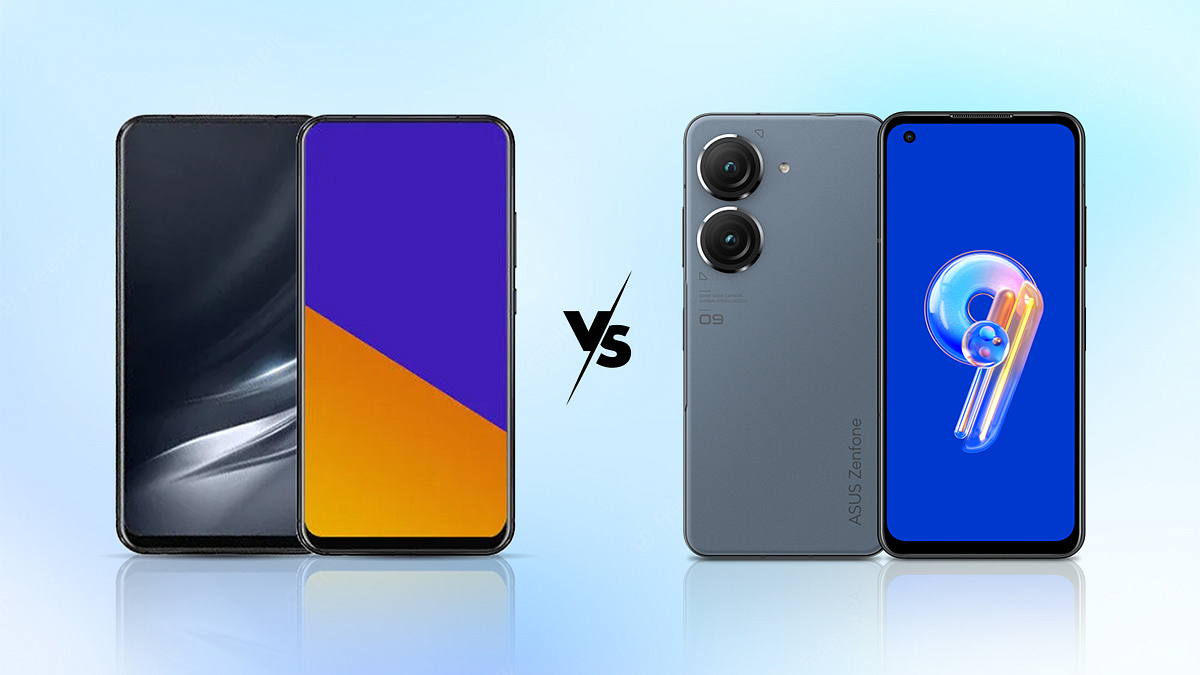
Asus Zenfone 9 Vs Asus 9Z 5G: Check The Difference Here

Asus has recently launched the successor of the Zenfone 8. The Asus Zenfone 9 has been launched in July, which comes in a compact size and provides top-of-the-line specifications. However, several reports claim that Asus Zenfone 9 might be launched as Asus 9z 5G in India. But, still, the company has not made any official announcement on the same, which is why we are listing all differences between both smartphones.

Asus Zenfone 9 Vs Asus 9Z 5G: Expected Price And Launch

It is worth noting that Asus Zenfone 9 and the Asus 9Z 5G are not available in India. But, Asus Zenfone 9 is expected to price at Rs. 64,490 and the Asus Zenfone 9Z 5G is likely to be priced at Rs. 44,990.

The launch date is not fined, but the Asus Zenfone 9 is expected to launch on September 24th, 2022, whereas the Asus 9Z might launch on September 2nd, 2022. Both devices will run Android v12 OS.

Asus Zenfone 9 Vs Asus 9Z 5G: Expected Specifications

Moving to the specifications of the devices, where Asus Zenfone 9 is likely to have a Snapdragon 8+ Gen 1 processor, while the Asus 9Z will have a Snapdragon 8 Gen 1 processor as per several reports. The report claims that the Asus Zenfone 9 will support a 5.9-inch AMOLED screen along with 1080×2400 pixels, and 446 PPI.

On the other hand, the Asus 9Z 5G will have a 6.21-inch Super AMOLED screen along with 1080×2408 pixels, and 425 PPI. On the optics front, the Asus Zenfone 9 will have a dual camera setup, including a 50MP+ 12MP camera, whereas Asus 9Z 5G will have a triple camera at the back, including 50 MP + 12 MP + 5 MP.

Both smartphones will have a 12MP camera for selfies and video chats on the front. The Asus Zenfone 9 will have a 4300mAh battery inside, whereas Asus 9Z might have a 4500mAh battery.

In addition, you will find 128GB storage in both smartphones without any expandable options. Similarly, both devices will have 8GB of RAM.

Asus Zenfone 9 Vs Asus 9Z 5G: Expected Connectivity Options

Moreover, both smartphones will provide 5G connectivity, dual SIM GSM+ GSM, Wi-Fi, Bluetooth v5.2, with A-GPS, Glonass, and USB charging options. 3.5mm audio jack, and fingerprint sensor.

However, Asus Zenfone 9 will have a fingerprint sensor on the side of the smartphone, whereas Asus 9Z 5G will support a screen fingerprint sensor option.

Categories
Chipset Comparison

MediaTek Vs Snapdragon Vs Exynos Vs Tensor: See Here For The Difference

Qualcomm and MediaTek processors are really famous when it comes to smartphones; however, there are chipsets in the markets. Yes, read it right. Exynos and Tensor chipsets are owned by two technology giants called Samsung and Google.

In fact, the Pixel 6 and the Pixel 6 Pro come with Tensor chipsets. So, in that way, we are listing the differences between all leading processors.

MediaTek Chipsets Known For Affordable And Mid-Range Smartphones

For the unaware, MediaTek is a Taiwanese fabless semiconductor company that is known for chipsets for affordable and medium-range smartphones. The company also provides a chipset for televisions, tablets, IoT products, and more.

It is worth noting that the chipset takes care of everything in the electronic product and becomes the largest chipset maker in the world. In fact, you will find MediaTek chipset in almost all affordable and mid-range products. However, the chipset maker has recently launched flagship processors in the country such as Dimensity 9000 and Dimensity 9000+ SoCs.

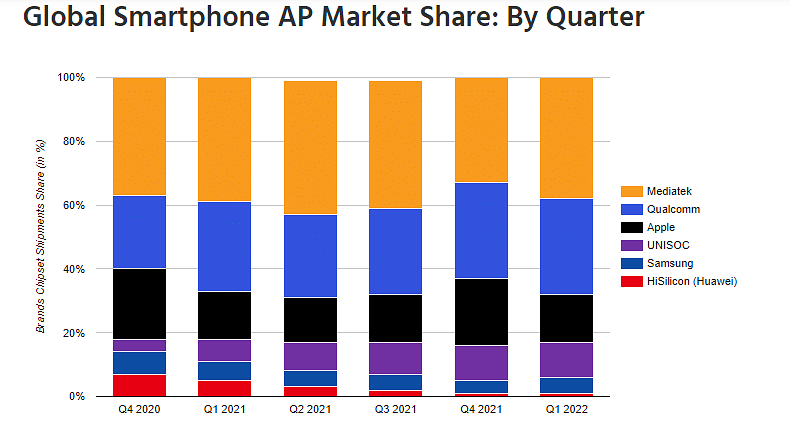
According to the Counterpoint report, MediaTek has managed to get a 38 percent market share in the first quarter of 2022. For the unaware, all smartphone makers, including Oppo, Realme, Infinix, Tecno, Xiaomi, Lava, and more have launched products on the MediaTek platform.

Qualcomm Snapdragon For Mid-Range And High-End Phones

Qualcomm is known for mid and high-end smartphones. Almost all high-end smartphones have been launched on Qualcomm processors. All smartphone makers like Xiaomi, Google Samsung, Realme, Vivo, Oppo, and more.

However, the shipments of the Qualcomm processors has been declined slightly in Q1 of this year. The main reason behind the decline is China’s lockdown and higher inflation in the developed market, as per the Counterpoint report. The report said that it has an 80 percent market share in Q1 2022.

The chipset maker has launched two flagships SoCs for the flagship devices. For the unaware, the Snapdragon 8-series includes Snapdragon 8+ Gen 1 Mobile Platform, Snapdragon 8 Gen 1 Mobile Platform, Snapdragon 888+ 5G Mobile Platform, Snapdragon 888 5G Mobile Platform, and more. There are also 700- series and 600-series of chipsets.

Chipsets In India

Exynos Chipset : Manufactured By Samsung

It is important to note that the Exynos processor is made by Samsung and it is used in their phones. The company is using Exynos processors in their phones in the Asian markets; however, several reports claim that Samsung used Snapdragon processors in the global markets.

Exynos processors are Octa-core, while Qualcomm uses Quad-core chips. In addition, Exynos SoCs come with a Mali GPU and it is faster due to its semiconductor. The company has recently launched Exynos 2200, Exynos 1280, and Exynos 850 processors.

Tensor Chipset: Made By Google

It is worth noting that Google has recently launched Tenor chipsets. In fact, the company has launched Pixel 6 and the Pixel 6 Pro smartphones on the Tenor processor.

Categories
Chipset Comparison

Qualcomm Snapdragon 778G Vs MediaTek Helio G99 Mid-Range Chipset Comparison

Qualcomm and MediaTek are the driving force behind Android smartphones across the global markets. All major smartphone OEMs opt for either a Qualcomm or MediaTek series chipset to power their products. We have been comparing the latest mobile chipsets from both these brands. This article is a quick comparison between the Snapdragon 778G processor and the Helio G99 processor. How do both the chipsets compare in terms of CPU and GPU performance? Read on here:

Qualcomm Snapdragon 778G Vs MediaTek Helio G99: CPU Performance

Both Qualcomm Snapdragon 778G processor and the Helio G96 chipset are built on a 6nm fabrication process. The Qualcomm mid-range processor has octa-cores including one 2.4GHz Cortex-A78 core, three Cortex-A78 cores clocked at 2.2GHz, and four Cortex-A55 cores at 1.9GHz. The MediaTek Helio G99 also has octa-cores which there are two Cortex-A75 cores clocked at 2.2GHz and six Cortex-A55 cores clocked at 2GHz. The frequency range for Qualcomm Snapdragon 778G is 2400 MHz, while the Helio chipset has a 2200MHz frequency range.

Snapdragon 778G Vs Helio G99: GPU Comparison

The Qualcomm Snapdragon 778G processor has the Adreno 642L GPU which is built on Adreno 600 architecture. On the contrary, the Helio G99 comes with Mali-G57 MC2 GPU support which is based on Valhall architecture with each of them offering 2 execution units. The SD 778G has 384 shading units, while the Helio G99 has only 32 shading units. Both chipsets have a 1.1 Vulkan version, 2.0 OpenCL Version, and 12 DirectX version.

Snapdragon 778G Vs Helio G99: Memory, Multimedia (ISP) Comparison

Moving on to the memory type, the octa-core Snapdragon 778G processor comes with LPDDR5 RAM with a max memory frequency and bandwidth of 3200 MHz and 25.5 Gbit/s respectively. The maximum memory size is 16GB with the Qualcomm chipset. Moving on to the Helio G99, it has LPDDR4X RAM support with 4266MHz memory frequency and 10GB max memory size. Qualcomm has added support for UFS 2.1, UFS 2.2, UFS 3.0, ad UFS 3.1 storage, whereas MediaTek has added support for just UFS 2.2 storage.

As for the Multimedia, the max display and camera resolution supported by the Qualcomm Snapdragon 778G processor are 2520 x 1080 pixels and 1x192MP/ 2x36MP respectively. The MediaTek Helio G99 processor offers the same max display resolution but slightly different max camera resolution, i.e., 1x10⁸MP and 2x 16MP. The video recording and playback capability is 4K@30fps with the Snapdragon 778G chipset and 2K@30fps with the MediaTek Helio G99 processor.

Categories
Chipset Comparison Featured

Qualcomm Snapdragon 695 Vs MediaTek Dimensity 820: Which Mid-Range 5G Chipset Is Better?

Smartphones have proved to be one of the most essential commodities for communication and entertainment on the go.  And if we speak of the market it’s majorly Android and Apple iPhones that are ruling the smartphone industry. For Android smartphones, the prime mobile chipset providers are Qualcomm and MediaTek.

Both these brands are ramping up the competition by integrating the latest technologies in their SoCs. We have done several comparisons between MediaTek and Qualcomm processors. This time, we are pitting two of the best mid-range 5G processors from both brands against each other. From Qualcomm, we have selected the Snapdragon 695 chipset, whereas, the Dimensity 820 will take up the slot for MediaTek.

Qualcomm Snapdragon 695 Vs MediaTek Dimensity 820: CPU Comparison

The Snapdragon 695 is an octa-core chipset like most of the mid and premium-range Qualcomm processors. It is built on an ARMv8.2-A Instruction set and a 6nm fabrication process. The SD 695 architecture comprises two Cortex-A78 Kyro 60 Gold cores clocked at 2.2 GHz and six Cortex-A55 cores with 1.7GHz clock speed. It offers a total frequency range of 2200MHz.

On the other hand, the MediaTek Dimensity 820 processor is fabricated using a 7nm process and is based on the ARMv8.3-A Instruction set. The Dimensity 820 chipset also has octa cores including four Cortex-A76 cores clocked at 2.6GHz and four Cortex-A55 cores clocked at 2GHz.

Snapdragon 695 Vs Dimensity 820 Chipset: GPU Differences

Qualcomm has integrated Adreno 619 GPU with the Snapdragon 695 processor which is based on Adreno 600 architecture. The total GPU frequency is 840 MHz with 128 shading units. The MediaTek Dimensity 820 processor comes with Mali-G57 MC5 GPU support which is based on Valhall architecture and has a 650 MHz GPU frequency with 5 execution units. The Vulkan version, OpenCL version, and the DirectX version are 1.1, 2.0, and 12 respectively on both chipsets.

Snapdragon 695 Vs Dimensity 820 Processor: Memory, Multimedia (ISP)

The Snapdragon 695 processor supports LPDDR4X memory type with 2133MHz memory frequency. The same is supported by Dimensity 820 processor. The Max memory allocation size is 8GB for the Snapdragon 695 and 16GB for the Dimensity 820. The storage type is eMMC 5.1 and UFS 2.2 for the Snapdragon chipset, whereas, the Dimensity processor only has UFS 2.2 support.

Moving on to the display and camera resolution, the Snapdragon 695 has a 2520 x 1080 max display resolution and 108MP, 2x16MP camera resolution. The Dimensity 820 supports 2520 x 1080 pixels max display resolution and 1x80MP, 2x 32MP max camera resolution. The Qualcomm chipset can record up to 1080p@60fps videos, while the Dimensity 820 supports 4K@30fps video capturing.

Categories
Chipset Comparison

Qualcomm Snapdragon 888 Vs MediaTek Helio G95 Gaming Chipset Comparison

Qualcomm and MediaTek are the major contributors to the mobile chipset industry. Both these brands have created their strong base with smartphone processors and have launched SoCs for all categories of mobile including affordable and premium. MediaTek has dual chipset series for smartphones including Helio and Dimensity. The latter is the brand’s latest bet in this race and is designed specifically for 5G Android phones.

Whereas, the Helio series is MediaTek’s oldest processor series for Android smartphones. MediaTek just refreshed the Helio series with the Helio G95 which is a game-centric chipset for premium range phones. In this article, we are comparing it with Qualcomm’s high-end Snapdragon 888 processor. Take a look:

Qualcomm Snapdragon 888 Vs Helio G95: CPU Comparison

The Qualcomm Snapdragon 888 is an octa-core chipset that is built on a 5nm fabrication process. It has one Kyro 680 Prime Cortex-X1 core clocked at 2.84GHz, three Kyro 680 Gold Cortex-A78 cores clocked at 2.42Ghz, and four Cortex A55 cores at 1.8Ghz.

On the other hand, the MediaTek Helio G95 is also an octa-core chipset that is built using a 12nm fabrication process. It has dual Cortex-A76 cores clocked at 2.05GHz and six Cortex-A55 cores clocked at 2GHz.

The frequency response range offered by the Qualcomm chipset is higher compared to the MediaTek processor. The Snapdragon 888 chipset has a 2480 MHz frequency based on the ARMv8.4-A Instruction set. On the other hand, the Helio G95 has a 2050 MHz frequency and ARMv8.2-A instruction set.

Snapdragon 888 Vs Helio G95: GPU

Speaking of the GPU, the Qualcomm Snapdragon 888 processor has Adreno 660 GPU support for graphics rendering. The GPU is based on Adreno 600 Architecture and has 840MHz GPU frequency with two execution and 512 shading units. The MediaTek Helio G95 comes with Mali-G76 3EEMC4 GPU which is built on Bifrost Architecture. The Helio G95 gaming processor has a 900MHz GPU frequency with 4 execution and 64 shading units. Both chipsets run 1.1 Vulkan version, 2.0 OpenCL version, and 12 DirectX version.

Snapdragon 888 Vs Helio G95: Memory, Multimedia (ISP)

The Qualcomm Snapdragon 888 supports LDDR5 RAM with 3200 MHz memory frequency, while the Helio G95 comes with LPDDR4X RAM and 2133 MHz memory frequency. The maximum size supported by Qualcomm SD 888 is 24GB, whereas the Helio G95 has 10GB max memory size support.

The Qualcomm Snapdragon 888 chipset gets UFS 3.0 and UFS 3.1 storage support, whereas, the Helio G95 has eMMC 5.1 and UFS 2.1 storage. The max display and camera resolution offered by the Snapdragon chipset is 3840 x 2160 pixels and 1 x 200MP, 2x 25MP. The Qualcomm chipset’s max video capturing capability is 8K@30fps and 4K@120fps. It supports 8K230fps video playback and H.264, H.263, VP8, and VP9 video codecs. The audio codecs supported by the SD 888 include AAC, AIFF, CAF, MP3, MP4, and WAV.

As for the Helio G95, it offers a max display and camera resolution of 2520 x 1080 and 1X64MP, 2X 24MP respectively. This premium mid-range MediaTek processor supports 4K@30fps videos and H.264, H.265, and VP9 video codecs. The audio codecs supported by this chipset are AAC, AIFF, CAF, MP3, MP4, and WAV.

Categories
Comparison Featured Mobile

Realme 9 5G Vs Vivo T1 5G Vs Oppo K10: Best Phone Under Rs. 20,000?

The best smartphone around Rs. 20,000 should have a feature set that is amazing and was previously only found in high-end smartphones. However, times have evolved. The greatest mobiles under Rs. 20,000 have never been more accessible to consumers thanks to technological improvements in mobile phones throughout the years. One of the most fiercely contested market categories today is the best phone under Rs. 20,000 in India, with many potential consumers interested in purchasing one.

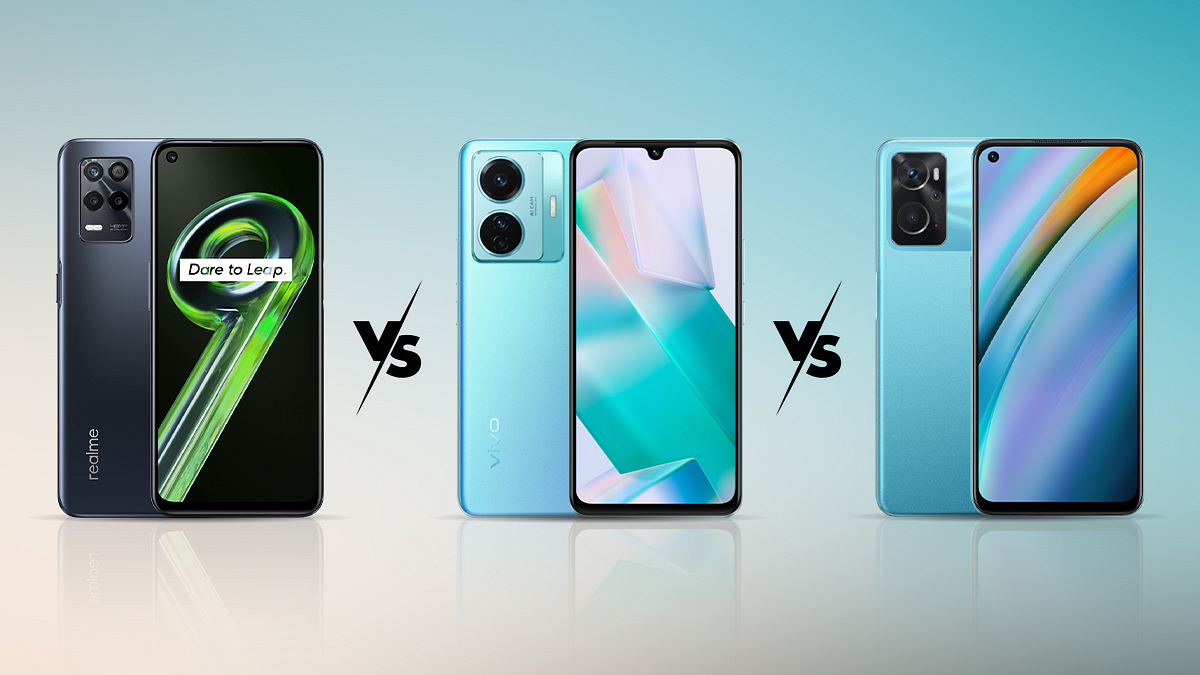
In this article, we will compare the three smartphones – Realme 9 5G, Vivo T1 5G, and Oppo K10. These phones offer almost the same specifications under a similar price range. Let’s get to know which one to go for.

Design & Display

The Realme 9 5G has a very simple and elegant design. It is pretty similar to that of previous Realme smartphones. It has a 6.5-inch LCD screen with a maximum refresh rate of 90Hz and full-HD+ resolution. Depending on what you do, the display switches between 60Hz and 90Hz.

Moving to the Vivo T1 5G, the flat edge design language of the phone makes it stand out. Similar to the high-end V and X series models, it has a robust rail around the edges and a matte finish. It sports a screen-to-body ratio of 83.9 percent and a 6.58-inch full HD+ LCD display on the display front.

On the other hand, the Oppo K10 5G is a phone with a striking visual appeal. The smartphone’s back panel, which has a soft glow to it, will draw your attention from a distance. The 6.56-inch LCD display panel of the Oppo K10 5G has HD+ resolution. It has a 90Hz refresh rate.

Processor

Realme uses the MediaTek Dimensity 810 5G octa-core SoC under the hood. Its operating system, Realme UI 2.0, is based on Android 11. Especially if you’re a first-time Realme user, the UI is easy and simple to use.

The Vivo T1 runs FuntouchOS 12 on Android 12 and is powered by an 8nm class Qualcomm Snapdragon 695 octa-core CPU with Adreno 619L GPU. It also has 128GB of internal storage.

The Oppo K10 5G is equipped with an 8GB RAM and MediaTek Dimensity 810 CPU. Together, they provide quick and effective performance with seamless multitasking. There is enough room on a 128GB storage device to store anything you want or need. In terms of software, the Oppo K10 5G runs an augmented version of Android 12.1, called Color OS 12.1. There are choices for modification and personalization, and the UI is colorful and neat.

Camera

The Realme 9 5G packs a 48MP primary camera. You don’t get an ultra-wide-angle camera on the Realme 9 5G which we think is a big miss. The other two are a macro camera and a black-and-white portrait camera. For selfies, it has a 16MP camera.

The triple camera module in the Vivo T1 has a main 50MP wide sensor, a 2MP macro camera, and a 2MP depth sensor with dual-LED light. It boasts a 16MP wide-angle camera on the front, and yes, it makes taking large group selfies easier.

At the back of the Oppo K10 5G, there is a dual camera arrangement. It has a 2MP depth sensor in addition to a 48MP primary camera. At the front is an 8MP selfie camera as well.

Battery

Realme 9 phone has a 5,000mAh battery and supports 18W fast charging. A compatible charger is also included in the box. On the other hand, both the Vivo T1 5G and Oppo K10 5G have a 5,000mAh battery. While the Vivo T1 5G supports 18W fast charging, the Oppo K10 5G comes with a 33W power adapter bundled inside the box.

Verdict

If you are a casual user, you could consider going for the Realme 9 5G. On the other hand, Oppo K10 5G is a mid-range device that has an attractive design, good battery life, a fast processor, and decent gaming performance. But if you want a smartphone that looks and feels good and performs decently, Vivo T1 5G can be your choice in this 20k segment.