Categories
Chipset Comparison Featured

Qualcomm Snapdragon 695 Vs MediaTek Helio G96 Chipset: Best Mid-Range Android Mobile Processor

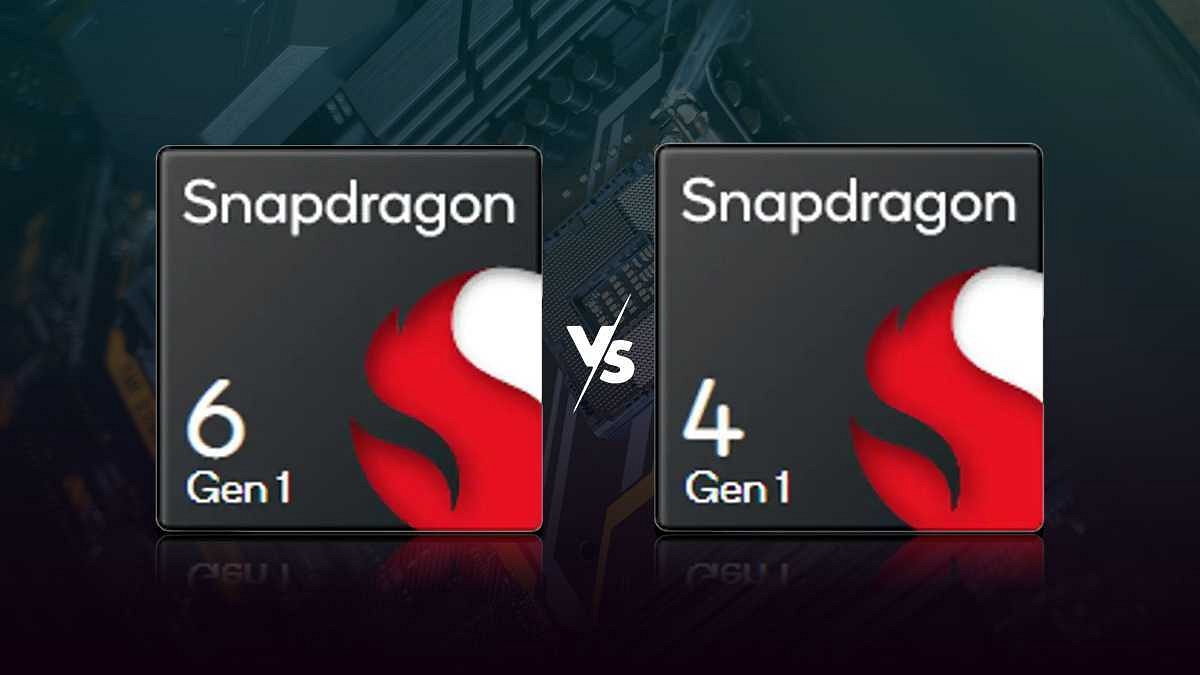
Qualcomm has recently upgraded its mobile chipset portfolio with two new-generation budget chipsets including the Snapdragon 6 Gen 1 and the Snapdragon 4 Gen 1 processors. The former is replacing the Snapdragon 695 octa-core 5G chipset, while the latter is taking the place of the Snapdragon 4 Gen 1 processor. Smartphone OEMs are yet to introduce the new range of smartphones that will be driven by the Snapdragon 6 Gen 1 and the SD 4 Gen 1 processors.

However, the Snapdragon 695 SoC has been used on some of the recent phones and tablets in the premium mid-range segment. The SD 695 5G-powered phones are getting some stiff competition from the Helio G96-powered mobiles.  Introduced by MediaTek, the Helio G96 is also used by premium mid-tier Android phones. But which of these two mobile processors is better than the other? Read this comparison article to know:

Also Read: Qualcomm Snapdragon 750G Vs Snapdragon 732G: Premium Mid-Tier Gaming Chipset Comparison

Qualcomm Snapdragon 695 Vs MediaTek Helio G96 Processor: CPU Architecture Comparison

Qualcomm has designed the Snapdragon 695 processor on a 6 nm fabrication process, while MediaTek has used a 12nm fabrication to design the Helio G96 chipset. Both these mobile processors have octa-cores and ARMv8.2-A architecture. The SD 695 has two 2.2GHz Cortex-A78 cores with a 2.2GHz clock speed and six 1.7GHz Cortex-A55 cores with a 1.7GHz clock speed. This Qualcomm mid-range processor has a 2200MHz CPU frequency.

MediaTek’s Helio G96 processor has the same ARMv8.2-A Instruction set and octa-cores where two Cortex-A78 cores are clocked at 2.05GHz and six Cortex-A55 cores clocked at 2GHz. The frequency range of this processor is 2050MHz. The Qualcomm Snapdragon 695 5G processor has better CPU architecture compared to the Helio G96 chipset.

Qualcomm Snapdragon 695 Vs MediaTek Helio G96 Chipset: GPU Comparison

The Snapdragon 695 processor has Adreno 619 GPU support that is from the Adreno 600 series. The MediaTek Helio G96 features the Mali-G57 MC2 GPU which has the Valhall architecture. The Snapdragon 695 processor comes with 840MHz GPU frequency, while the Helio G96 offers 950Mhz GPU frequency.

The shading units are 132 with the former and 32 with the latter. The Vulkan, OpenCL, and DirectX versions are 1.1, 2.0, and 12 respectively on both processors. Similar to the CPU, the GPU performance is also good with the Snapdragon 695 chipset compared to the Helio G96.

Qualcomm Snapdragon 695 5G Vs MediaTek Helio G96 SoC: Memory, Multimedia (ISP) Compatibility

Speaking of memory compatibility, the Qualcomm Snapdragon 695 processor ships with LPDDR4X RAM support. This is the same with the MediaTek Helio G96 chipset as well. The memory frequency is also identical on both these mid-range processors, i.e., 2133MHz. However, the maximum RAM support is just 8GB with the Snapdragon 695 and up to 10GB with the Helio G96.
The storage compatibility is eMMC 5.1 and UFS 2.2 with both Qualcomm and MediaTek Helio processors. Speaking of the multimedia aspects, Qualcomm has added a maximum display resolution of 1080 x 2520 pixels and a maximum camera resolution of 1x10⁸MP and 2x16MP. The maximum display resolution on the MediaTek Helio G96 is the same as the SD 695 and also the max camera resolution.

The primary difference is in the video capture and recording support. The Snapdragon 695 processor has 1080p@60fps video recording and playback support, while the Helio G96 offers a higher 2K@30fps and 1K@60fps video recording and playback. The audio and video codecs are AAC, AIFF, CAF, MP3, MP4, and WAV, and H.264, H.265, VP8, and VP9 on the SD 695.

The Helio G96 has compatibility with H.264, H.265, and VP9 video codecs and AAC, AIFF, CAF, MP3, MP4, and WAV audio codecs. The memory and multimedia features are almost the same on both processors, therefore, you wouldn’t notice any major differences with the media playback on smartphones powered by both SD 695 and the Helio G96.

Also Read: Qualcomm Snapdragon 732G Vs MediaTek Helio G88 Chipset Comparison: Which One Fairs The Competition?


Categories
Chipset Comparison Featured

Qualcomm Snapdragon 695 Vs Snapdragon 778G Chipset: Premium Mid-Range Mobile Processors

The majority of the smartphone OEMs; specifically Android, rely on Qualcomm and MediaTek for mobile chipsets and processors. Qualcomm is contending in the chipset market with its Snapdragon processors, while MediaTek has the Helio and Dimensity processor series. Both these brands have been revamping their chipset lineups to meet the requirements of modern-day smartphone OEMs and users. Powerful and thinner chipsets are the latest trend with smartphones.

Qualcomm is currently catering to the affordable and mid-range audience with the Snapdragon 778G chipset. This game-centric processor has been driving some of the most popular Android phones. The Qualcomm Snapdragon 695 is another premium-range mobile chipset by Qualcomm that is being used in the latest Android handsets in the mid-range segment. We have done a quick comparison between both these chipsets to see which one offers better performance.

Also Read: Unisoc T820 Vs MediaTek Dimensity 6100 Plus: Mid-Range Chipset Comparison 2023

Qualcomm Snapdragon 695 Vs Snapdragon 778G Chipset: CPU Architecture

The Qualcomm Snapdragon 695 processor is designed in a 6nm fabrication process. The same fabrication process is also used to develop the Snapdragon 778G processor. The Qualcomm Snapdragon 695 processor’s CPU is built on the ARMv8.4A Instruction set and has octa-cores with a 2400MHz frequency range. The cores are a single 2.4GHz Cortex-A78 core, three Cortex-A78 Cores with 2.2GHz clock speed, and four Cortex-A55 cores with 1.9GHz clock speed.

On the other hand, the Snapdragon 695 chipset also has octa-cores and has the ARMv8.2 Instruction set. This premium mid-range Qualcomm processor has Cortex-A78 cores with 2.2 GHz clock speed, and six Cortex-A55 Cores clocked at 1.7GHz. This chipset has a maximum frequency response range of 2200MHz, slightly lower than the Snapdragon 778G. Both the Snapdragon 778G and the Snapdragon 695 chipset have a powerful CPU architecture and the power delivery is equal more or less.

Also Read: Qualcomm Snapdragon 695 Vs MediaTek Dimensity 7050: Top Powerful Mid-Range 5G Chipset 2023

Qualcomm Snapdragon 695 Vs Snapdragon 778G Processor: GPU Comparison

Qualcomm has added the Adreno 619 GPU support with the Snapdragon 695 chipset. This Adreno 600 series GPU has 840MHz GPU frequency. The GPU on the SD 695 chipset has 128 shading units, 1.1 Vulkan version, 2.0 OpenCL version, and 12 DirectX version.

The older Snapdragon 778G processor integrates the Adreno 642L GPU support which is also based on the Adreno 600 GPU architecture as the Adreno 619. This processor offers a 490MHz GOU frequency, 384 shading units, 1.1 Vulkan version, 2.0 OpenCL version, and 12 DirectX version. Expect a good graphic performance from both these mobile processors.

Also Read: MediaTek Dimensity 7050 Vs Snapdragon 8 Gen 1: Best Mid-Range Gaming Chipset 2023

Qualcomm Snapdragon 695 Vs Snapdragon 778G SoC: Memory, Multimedia (ISP)

Qualcomm has added LPDDR5 RAM support with the Snapdragon 778G processor. This chipset has a 3200MHz memory frequency and maximum RAM compatibility of up to 16GB. On the contrary, the Qualcomm Snapdragon 695 processor has LPDDR4X memory compatibility and 2133 MHz memory frequency.

The SD 695 supports lower maximum RAM compatibility of up to 8GB RAM. In the storage department, the SD 778G gets UFS 2.1, UFS 2.2, UFS 3.0, and UFS 3.1 storage support, while the SD 695 just gets the eMMC 5.1 and the UFS 2.2 storage support.

The max display resolution with the Snapdragon 778G is 1080 x 2530 pixels and the max camera resolution is 1x 192MP, 2x 36MP. The max display resolution support with the Snapdragon 695 chipset is 1080 x 2520 pixels and the camera resolution is 1x 10⁸MP and 2z 16MP. The Snapdragon 778G offers better display and camera compatibility than the SD 695.

The Snapdragon 778G processor comes with 4K@30fps video recording and playback. The video codecs are AAC, AIFF, CAF, MP3, MP4, and WAV. The Snapdragon 695 chipset gets 1x10⁸MP, 2x16MP max camera resolution, and can record and play 1080p@60fps videos. The video codecs supported by this chipset are H.264, H.265, VP8, and VP9, while the audio codecs are AAC, AIFF, CAF, MP3, MP4, and WAV.

Also Read: MediaTek Dimensity 7050 Vs Qualcomm Snapdragon 888 Chipset Comparison: Best Mobile Processor For Power Performance

Categories
Chipset Comparison Featured

Apple A16 Bionic Vs Apple 15 Bionic Chipset: Latest Premium Apple Chipset Comparison

Apple has just refreshed its much anticipated iPhone lineup with the iPhone 14 series. This time, the tech behemoth has unveiled four models in the new smartphone series including the iPhone 14, iPhone 14 Plus, iPhone Pro, and the iPhone Pro Max. The new-age iPhones have been introduced with advanced hardware technologies, improved cameras, and the latest custom Bionic processors.

The Apple iPhone 14 and the iPhone 14 Plus have been announced with the A15 Bionic processor. However, for the top-end models, i.e., the iPhone 14 Pro and the iPhone 14 Pro Max, Apple has opted the upgraded A16 Bionic Hexa-core chipset. Apple’s custom mobile processors are all powerful and can offer a lag-free user experience in all scenarios.

But if you are considering buying any of the new-generation Apple iPhone 14 models and are confused about which model you should consider based on the chipset, then you should know the CPU and GPU differences between both of them. This is a quick comparison between the Apple A15 Bionic and the A16 Bionic processor.

Apple A15 Bionic Vs Apple A16 Bionic Chipset: CPU Architecture

The Apple A16 Bionic chipset which is driving the latest iPhone 14 Pro and the iPhone 14 Pro Max models is a Hexa-core chipset that is based on a 4nm fabrication process. The A16 Bionic processor has two Avalanche cores clocked at 3.24GHz and four Blizzard cores clocking at 1.8GHz. This chipset has a frequency range of 3200MHz.

The Apple A16 Bionic chipset is built on ARMv8.5-A instruction set which 3240MHz frequency range. This chipset is also Hexa-cores similar to the A16 Bionic and has two Avalanche cores with 3.24GHz clock speed and six Blizzard cores with 1.82GHz clock speed. This processor is built on a 5nm fabrication process unlike the 4nm process of the A16 Bionic. CPU performance is good with both these chipsets, but the new architecture makes the A16 Bionic slightly better compared to the A15 Bionic.

Apple A16 Bionic Vs Apple A15 Bionic: GPU Comparison

As for the graphics, the Apple A16 Bionic and the Apple A15 Bionic processors ship with an integrated Apple GPU. The former has six execution units, while the latter features five macro units with 1200MHz GPU frequency. The GPU on both these Apple processors is powerful to render extensive graphics smoothly.

Apple A16 Bionic Vs Apple A15 Bionic: Memory, Multimedia (ISP)

The Apple A16 Bionic chipset comes with LPDDR5 RAM support and has a maximum memory capacity of up to 8GB. The Apple A15 Bionic features LPDDR4X RAM compatibility with 4266MHz memory frequency. The maximum memory support on this chipset is 8GB which is the same as the A16 Bionic processor. Both processors are compatible with NVMe storage

In the multimedia department, the Apple A16 Bionic processor has a max display resolution of 1290 x 2796 pixels. It supports 4K@60fps video recording and has H.264, H.265, VP8, VP9, and Motion JPEG video codec support. The A16 Bionic is compatible with AAC, AIFF, CAF, MP3, WAV, AC-3, E-AC-3, AAX, and AAX+.

On the other hand, the Apple A15 Bionic offers 2048 x 2732 pixels max display resolution compatibility and 4K@60fps video recording/ playback support. The video codecs offered by this chipset are H.264, H.265, VP8, VP9, and Motion JPEG.

Categories
Comparison Mobile

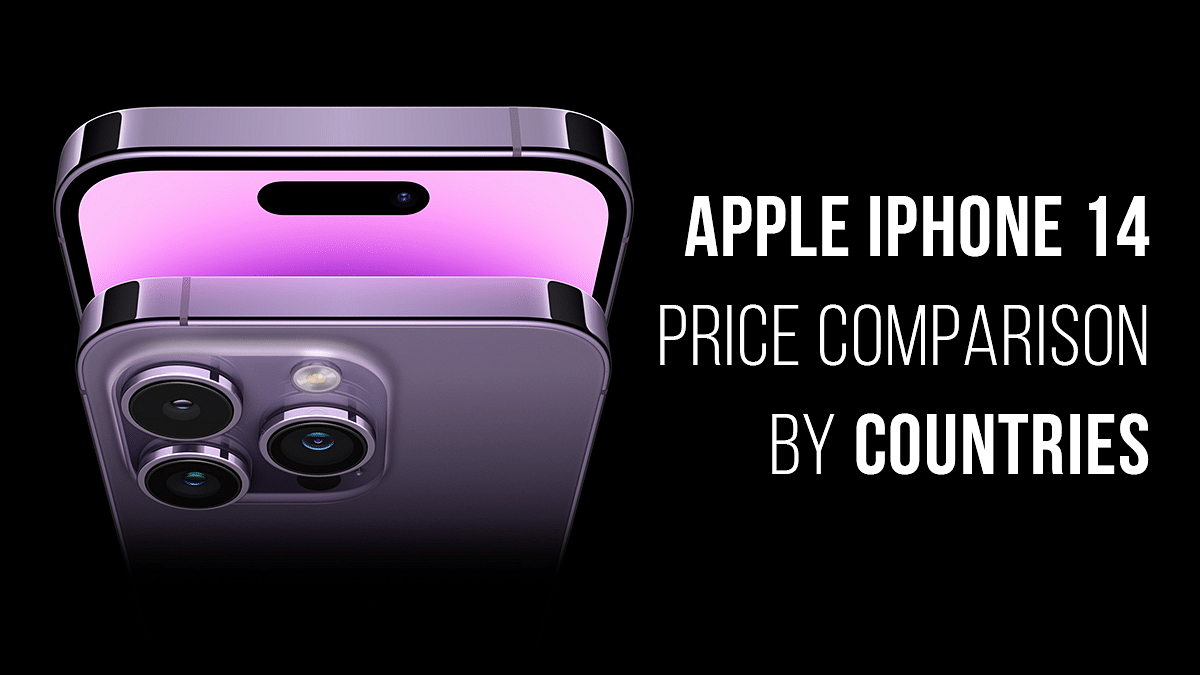
Apple iPhone 14 Price in India Compared to the US, China, Dubai, and Other Countries

Key Highlights

  • Find out the cost if you purchase the iPhone 14 in another country
  • In comparison to other international markets including the US, the UK, and China, Apple’s most recent iPhone 14 series costs more in India
  • In India, the iPhone 14 series costs 79,900 rupees

Apple has recently launched iPhone 14 smartphone series in India and other markets. The newly launched smartphone series include iPhone 14, iPhone 14 Plus, iPhone 14 Pro, and the iPhone 14 Pro Max. Notably, the iPhone 14 smartphone series is priced higher than in any other market, such as China, UAE, the UK, and New Zealand.

Also Read: List Of Best Budget 5G Phones Driven By MediaTek Dimensity Chipsets In India

iPhone 14 Smartphone Series Price In India

iPhone 14iPhone 14 PlusiPhone 14 ProiPhone 14 Pro Max
Rs. 79,900Rs. 89,900Rs. 1,29,900Rs. 1,39,900
Rs. 89,900Rs. 99,900Rs. 1,39,900Rs. 1,49,900
Rs. 1,09,900Rs. 1,19,900Rs. 1,59,900Rs. 1,69,900
NANARs. 1,79,900Rs. 1,89,900

Let’s start with the iPhone 14 smartphone pricing in India, the iPhone 14 smartphone is priced at Rs. 79,900, Rs. 89,900, and Rs. 1,09,900. The iPhone 14 Plus will cost you Rs. 89,900, Rs. 99,900, and Rs. 1,19,900. The iPhone 14 Pro device is priced at Rs. 1,29,900, Rs. 1,39,900, Rs. 1,59,900, and Rs. 1,79,900, whereas the iPhone 14 Pro Max will cost you Rs. 1,39,900, Rs. 1,49,900, Rs. 1,69,900, and Rs. 1,89,900.

Also Read: Best Entry-Level Android Phones Under Rs. 10,000 In India In 2023

iPhone 14 Smartphone Series Price In China

The iPhone 14 is priced at CNY 5,999, which is close to Rs. 68,820.41. The iPhone 14 Plus starts from CNY 6,999 which is close to Rs. 80,292.39, whereas the iPhone 14 Pro is priced at CNY 7,999 is around Rs. 91,764.37 and the iPhone Pro Max will cost you CNY 8,999 is around Rs. 1,03,236.35. This shows that the price of the iPhone 14 smartphone series is quite less in China.

Also Read: iPhone Running Slow? Here’s How to Clear Safari/ App Cache on iOS

iPhone 14 Smartphone Series Price In The United States

The iPhone 14 smartphone starts from $ 799 is around Rs. 63,710.14, while the iPhone 14 Plus is priced at $899 is around Rs. 71,683.88 and the iPhone 14 Pro starts at $999 is close to Rs. 79,657.61. The iPhone 14 Pro Max will cost $1,099 and that is Rs. 87,631.35.

Also Read: Use ChatGPT On Apple Watch? Here’s The Step-By-Step Guide

iPhone 14 Smartphone Series Price In Dubai

The iPhone 14 smartphone starts at AED 3,399 which is around Rs. 73,818.38 in India, while the iPhone 14 Plus is priced at AED 3,799 which is around Rs. 93,364.28. The iPhone 14 Pro will cost AED 4,299 which is around Rs. 93,364.28, whereas the iPhone 14 Pro Max will cost AED 4,699 which is around Rs. 1,02,051.35.

Also Read: How Can You Pair OnePlus Buds, Nord Buds TWS With Apple Macbook Laptops (All Models)

Categories
Comparison Mobile

Apple iPhone 14 Vs iPhone 14 Plus Vs iPhone 14 Pro Vs iPhone 14 Pro Max: Quick Comparison

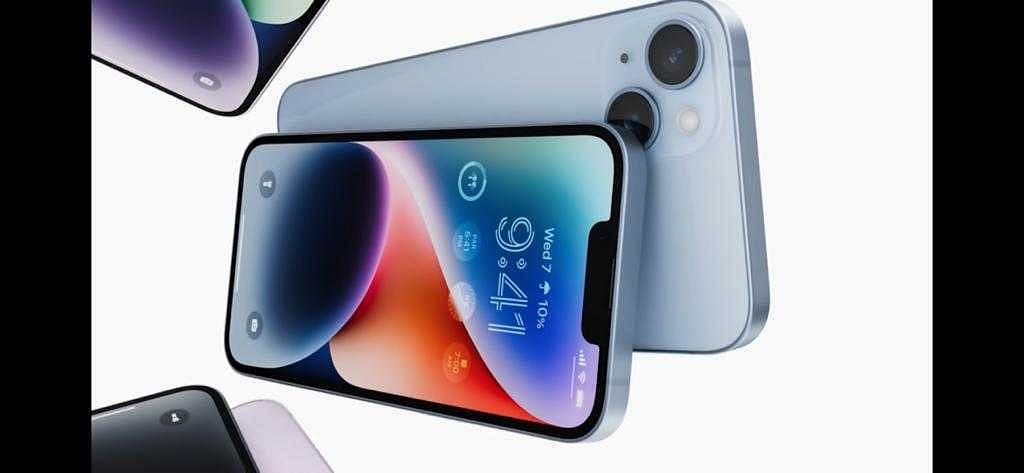
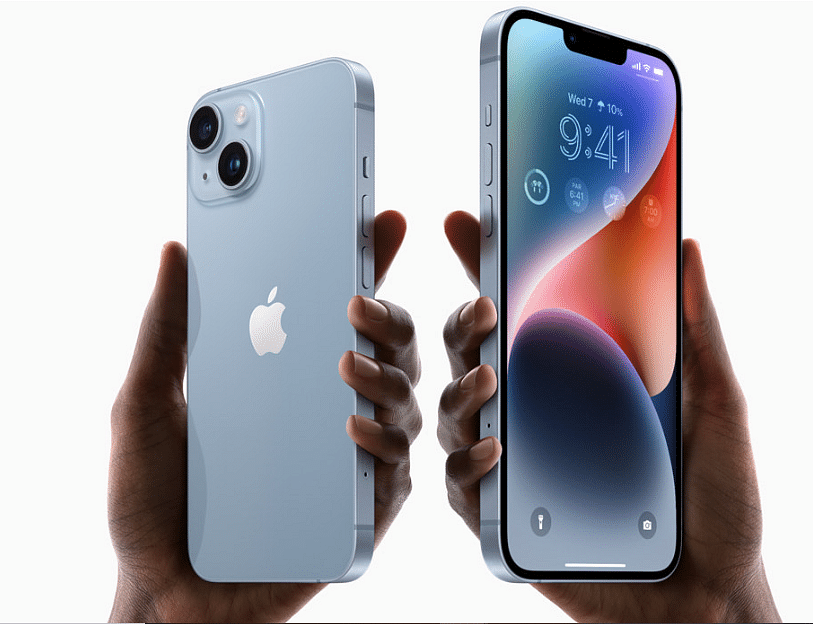
Apple has recently launched iPhone 14 smartphone series along with Watch Series 8, the new Watch SE, and Watch Ultra. In addition, the Cupertino-based tech giant has announced the launch of the AirPods Pro 2 TWS. As expected, the newly launched iPhone 14 smartphone series took the entire limelight and which is why we are listing the differences between all four models (iPhone 14, iPhone 14 Plus, iPhone 14 Pro, the iPhone 14 Pro Plus) that have been launched. 

Apple iPhone 14 Smartphone Series

Apple iPhone 14 Vs Apple iPhone 14 Plus Vs Apple iPhone 14 Pro Vs Appl iPhone 14 Pro Max: Specifications 

It is worth noting that both iPhone 14 and the iPhone 14 Plus comes with 6.1-inch and 6.7-inch display, whereas iPhone 14 Pro and the iPhone 14 Pro Max also features 6.1- inch and 6.7-inch screen sizes.

 On the other hand, the Pro and Max models support a 120Hz LTPO display, whereas iPhone 14 and the iPhone 14 Plus feature a 60Hz panel. Under the hood, the iPhone 14 and the iPhone 14 Plus comes with an A15 Bionic processor, whereas the Pro and Pro Max variant has upgraded A16 Bionic processors.

On the optics front, the iPhone 14 and the iPhone 14 Plus smartphone support a 12MP main sensor along with an f/1.5 aperture and ultrawide camera. The iPhone 14 Pro and the iPhone Pro Max support a 48MP primary camera along with quad-pixel sensor technology. 

Apple iPhone 14 Smartphone Series

Apple iPhone 14, Vs Apple iPhone 14 Plus, Vs Apple iPhone 14 Pro Vs Apple iPhone 14 Pro Max: Price In India

The iPhone 14 and the iPhone 14 Plus smartphones are priced at Rs. 79,900 and Rs. 1,29,900 in India. Both smartphones are available on Apple. com/ in India for pre-order from today (September 9th). However, soon both will be available on Flipkart and Amazon for pre-orders. 

The iPhone 14 devices will be available from September 16th, whereas the iPhone 14 Plus will be available from October 7th. Furthermore, all smartphone comes with a 128GB, 256GB, 512GB, and 1TB storage variant. 

Apple iPhone 14 Smartphone Series Price In India

Apple iPhone 14 Series128 GB256GB512GB1 TB
iPhone 14Rs. 79,900Rs. 89,900Rs. 1,09,900——
iPhone 14 PlusRs. 89,900Rs. 99,900Rs. 1,19,900——
iPhone 14 ProRs. 1,29,900Rs. 1,39,900Rs. 1,59,900Rs. 1,79,900
IPhone 14 Pro MaxRs. 1,39,900Rs. 1,49,900Rs. 1,69,900Rs. 1,89,900
Categories
Comparison Mobile

Apple iPhone 14 Vs iPhone 13: See Differences In The Specifications And Price In India

Apple has finally announced the launch of its new smartphone series. The newly launched smartphone series includes iPhone 14, iPhone 14 Plus, iPhone 14 Pro, and the iPhone 14 Pro Max. Notably, the price of smartphones starts from Rs. 63,650 and goes up to Rs. 139,900. 

The devices have been launched in several countries, including India. However, you’ll be surprised to know that the price of the iPhone 13 has decreased in the country. So, in that case, we are highlighting major differences between the iPhone 13 and the iPhone 14.

Apple iPhone 14 Vs iPhone 13: Specifications

It is worth noting that iPhone 14 and the iPhone 13 comes with an identical 6.1-inch OLED display, 1,2000 nits of peak brightness with HDR content 800 nits of brightness, and HDR support. However, the iPhone 14 Plus features a 6.7-inches display.

On the design front, both smartphones come with the same design and glossy backs. Besides, the iPhone 14 has Ceramic Shield on the front side of the smartphone.

The iPhone 14 has a Ceramic Shield on the front glass for added durability, just like the previous model, and comes in five color options, such as Midnight, Starlight, Blue, Purple, and (Product) Red. On the other hand, the iPhone 13 is already available in  Pink, Blue, Midnight, Starlight, Red, and Green color options.

Apple iPhone 13

On the optics front, the iPhone 14 comes with a 12MP front camera along with an f/1.9 aperture. Similarly, the iPhone 13 features 12MP selfie camera.  Under the hood, you will find 128GB, 256GB, and 512GB storage options in the iPhone 14 and the iPhone 14 Plus. Again, iPhone 13 comes with similar RAM and storage options.

Moving to the battery front, the newly launched iPhone 14 is likely to have a 3,279mAh battery inside, whereas iPhone 13 comes with a 3,240 mAh. This clearly shows that the iPhone 14 comes with a big battery inside.

Furthermore, the iPhone 14 and the iPhone 14 Plus come with the same A15 Bionic chip as the iPhone 13. On the other hand, the iPhone 14 features a much better modem, which is expected to provide better efficiency and connectivity. The iPhone 14 also has a crash detection feature that alerts all close contacts and emergency services in case of a car crash.

Apple iPhone 14 Is Worth Buying Or Not?

It is important to note that the iPhone 14 is priced at Rs. 79,900, while iPhone 14 Plus will cost you Rs. 89,900 in India. This means iPhone 14 Plus is Rs. 10,000 higher than the iPhone 14.  But still, iPhone 14 comes with a few upgrades from its predecessor.

Categories
Chipset Comparison Featured

Qualcomm Snapdragon 6 Gen 1 Vs Snapdragon 4 Gen 1 Processor: Latest Qualcomm Mobile Chipset Comparison

Key Highlights

  • Qualcomm Snapdragon 6 Gen 1 and Snapdragon 5 Gen 1 chipset launched
  • Snapdragon 6 Gen 1 replaces Snapdragon 695 5G chipset and is fabricated using a 4nm process
  • Snapdragon 4 Gen 1 replaces Snapdragon 440 Plus chipset and is fabricated using a 6nm process

Qualcomm is rapidly improving its game with mobile chipsets and has released multiple new processors for different segments of Android mobiles in the global market. The Snapdragon 400 and the Snapdragon 600 series have been powering the affordable and mid-range phones in the market. The company is gradually replacing its older Snapdragon chipset lineups by releasing new-generation processor models.

Previously, the Snapdragon 8 Gen 1 chipset series had replaced the Snapdragon 800 mobile chipset lineup. Qualcomm has now announced the Snapdragon 4 Gen 1 and the Snapdragon 6 Gen 1 chipsets that will take over the existing Snapdragon 400 and the Snapdragon 600 series. How do both the latest Qualcomm Snapdragon processors compare in the CPU, GPU, Memory, and Multimedia (ISP) segments? Read on below:

Qualcomm Snapdragon 6 Gen Vs Snapdragon 4 Gen 1 Chipset: CPU Architecture

Just for reference, the Qualcomm Snapdragon 6 Gen 1 chipset is said to bring over 40 percent CPU and 35 percent improved GPU performance over the Snapdragon 695 5G processor. This latest Snapdragon 5G chipset will be replacing the SD 695 5G SoC and will power the upcoming premium mid-range Android phones in the market. Qualcomm has not specified the exact CPU architecture.

However, the processor is based on 4nm fabrication and has 64-bit Kyro CPU with up to 2.2GHz clock speed. Similarly, Qualcomm has not specified the exact architecture details for the Snapdragon 4 Gen 1 chipset. The chipset is built on a 6nm fabrication process and has a 64-bit Kyro CPU architecture with up to 2.0 GHz clock speed.

Similar to the Qualcomm Snapdragon 6 Gen 1, the Snapdragon 4 Gen 1 will also be replacing the existing Snapdragon 400 series; Snapdragon 480 Plus chipset specifically. The performance improvements are high with this processor as well compared to the SD 480 Plus.

Also Read: Qualcomm Snapdragon 778G Vs MediaTek Helio G88 Chipset: Which Mid-Range Mobile Processor Wins?

The Snapdragon 4 Gen 1 processor will deliver 15 percent better CPU and 10 percent GPU performance over the previous-gen model. But out of these Snapdragon 6 Gen 1 and the Snapdragon 4 Gen 1, the former will offer a powerful user experience combined with 5G network connectivity.

Qualcomm Snapdragon 6 Gen Vs Snapdragon 4 Gen 1 Processor: GPU Performance

Qualcomm has also not defined the exact GPU version with neither the Snapdragon 6 Gen 1 nor the Snapdragon 4 Gen 1 processors. However, an Adreno GPU is confirmed for both these processors. The SD 6 Gen 1’s GPU features OpenCL 2.0 FP API support and has Vulkan 1.1 and OpenGL ES 3.2 version support.

The Snapdragon 4 Gen 1 processor also has the same 1.1 Vulkan version, OpenGL ES 3.2 version, and OpenCL 2.0 FP API support as the Snapdragon 6 Gen 1 chipset. We will update this section once the exact GPU models for both these new Qualcomm chipsets are revealed.

Also Read: Qualcomm Snapdragon 750G Vs MediaTek Dimensity 800 Chipset Comparison: Which Mid-Range 5G Chipset Is Better?

Qualcomm Snapdragon 6 Gen 1 Vs Snapdragon 4 Gen 1 SoC: Memory Compatibility

The Qualcomm Snapdragon 6 Gen 1 processor has LPPDR5 memory compatibility. The processor will support a maximum memory capacity of 12GB and will have a max frequency range of 2750MHz. This chipset comes with UFS 3.1 storage support. On the other hand, Qualcomm has added LPDDR4X RAM support with the Snapdragon 4 Gen 1 chipset.

The processor offers up to a 2133MHz memory frequency range. The SD 4 Gen 1 offers compatibility with eMMC 5.1 and UFS 2.2 storage support.  We will be updating the other prime difference between the Snapdragon 6 Gen 1 and the Snapdragon 4 Gen 1 processor including the Multimedia (ISP) and connectivity aspects.

Also Read: Qualcomm Snapdragon 888 Vs MediaTek Dimensity 1300 Chipset Quick Comparison
Categories
Comparison Info Mobile

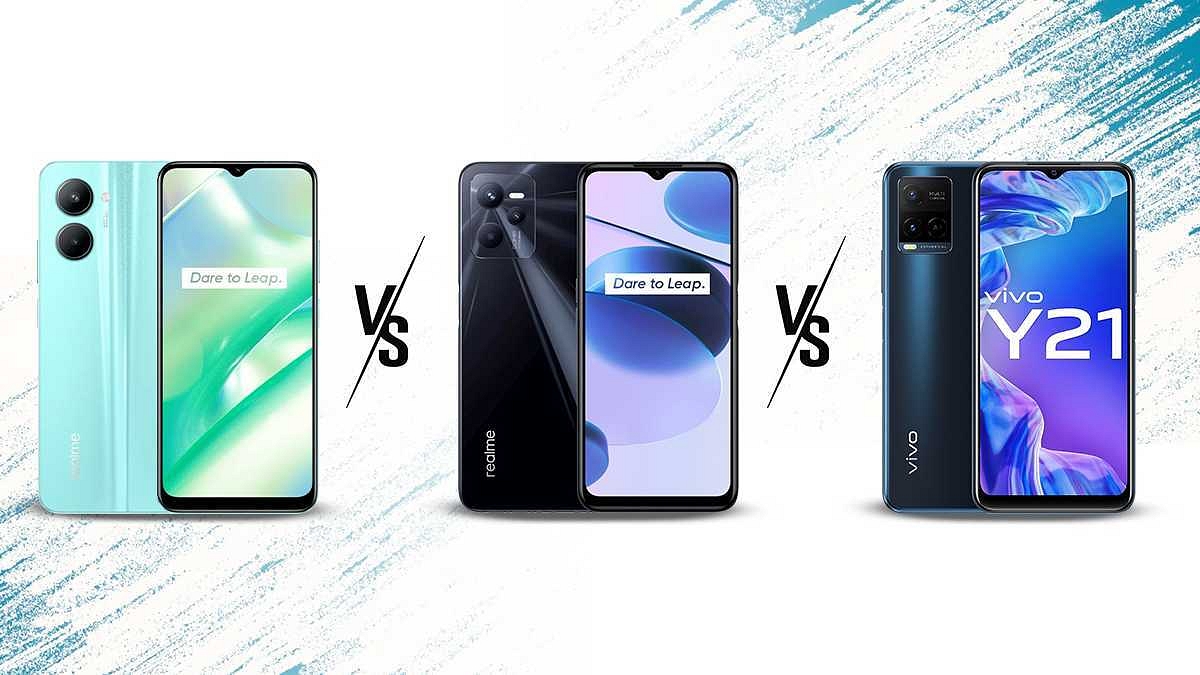
Realme C33 Vs Realme C35 Vs Vivo Y21: Trending Budget Mobile Comparison

Realme has been aggressive with new smartphone launches; specifically in the budget segment. The company has just unveiled its latest bet in the entry-level segment in the form of the Realme C33. The Realme C series has been popular in the budget segment and we have multiple models in this lineup that are selling like hot cakes.

The Realme C35 is another good example of a popular budget Realme phone which has an affordable price tag and modern hardware features. Vivo is one of the prime rivals for Realme in all smartphone categories. The Chinese tech giant has been in this game for a long and has specialized in bringing feature-rich pocket-friendly phones to the market.

The Vivo Y21 is another top contender in the budget segment with features such as dual cameras and a 720p display. How do these three phones compare in terms of hardware features, find out the details in this comparison article:

Realme C33 Vs Realme C35 Vs Vivo Y21: Display Specifications

All three budget Android phones in this list use an IPS LCD screen for visuals. However, the screen size and resolution vary. The Realme C33 which is the latest model in this lot features a 6.5-inch display that supports a standard 720 x 1600 pixels HD+ resolution.

The display offers a 20:9 aspect ratio and 270 PPI pixel density. The Realme C35’s IPS LCD panel is 6.6-inches in size but supports 1080 x 2408 pixels FHD+ screen resolution. The display has a 401 PPI pixel density and an 80.4 percent screen-to-body ratio. The display on this Realme C series phone has Panda Glass protection.

The Vivo Y21 also has a standard 720p HD+ display that delivers an aspect ratio of 81.8 percent and has 270 PPI pixel density. The large screen size is the biggest benefit of all three models in this list. But for better quality with the visuals, it would be wise to select the Realme C35.

Realme C33 Vs Realme C35 Vs Vivo Y21: Camera Specification Comparison

The Realme C33 is an entry-level handset that has dual rear cameras. The main camera packed inside the Realme C33 is a 50MP AI lens that has PDAF (Phase Detection Autofocus) and an f/2.8 aperture support. There is also an additional 0.3MP sensor for bokeh effects with an f/2.8 aperture. Realme has added multiple camera modes and support for 720p@30fps video recording.

The Realme C35 has three cameras like its sibling where the main sensor is a 50MP lens with an f/1.8 aperture and PDAF. It is clubbed with a 2MP macro sensor that has an f/2.4 aperture and a 0.3MP depth lens with an f/2.8 aperture. It has a higher video recording support of 1080p@30fps.

Vivo has also used a dual camera setup on the Y21. This budget Vivo phone features a 13MP main camera sensor with PDAF and an f/2.2 aperture and a 2MP additional lens for macro photography. The imaging setup is more powerful on the Realme C35 with the handset offering an extra sensor compared to the remaining two models.

However, the imaging performance will be decent with the Realme C33 and the Vivo Y21 in general. In the selfie camera department, the Realme C35 and the Vivo Y21 take the lead with an 8MP selfie snapper. The Realme C33 ships with a smaller 5MP selfie camera.

Realme C33 Vs Realme C35 Vs Vivo Y21: Chipset, RAM, Storage

Realme has used a Unisoc Tiger series chipset to power the Realme C35 and the Realme C33. The former runs on the Unisoc Tiger T616 processor which is built on a 12nm fabrication process. The Realme C33 also uses this same chipset under the hood for power delivery. However, Vivo has instead used the MediaTek Helio P35 chipset which is also based on a 12nm fabrication process like the Unisoc T612 octa-core chipset.

The Realme C33 is available with 3GB / 4GB RAM and 32GB/64GB storage, while the Realme C35 can be purchased with up to 6GB RAM and 128GB storage configuration. The firmware version is different with both these chipsets.

The former is released with Android 12 OS, while the latter has the older Android 11 OS pre-loaded. The Vivo Y21 comes with a single 4GB RAM option. However, the storage options are dual including 64GB and 128GB. Note, all these budget phones also feature dedicated microSD card support in case of extra space requirements.

Realme C33 Vs Realme C35 Vs Vivo Y21: Battery, Fast Charging

The battery capacity packed inside the Realme C33, Realme C35, and the Vivo Y21 is 5,000 mAh. Only the Realme 35 and the Vivo Y21 come with fast charging support. They both offer 18W fast charging. All three phones are equally capable, however, the Realme C35 has slightly better camera hardware and display specifications.

Categories
Comparison Featured Mobile

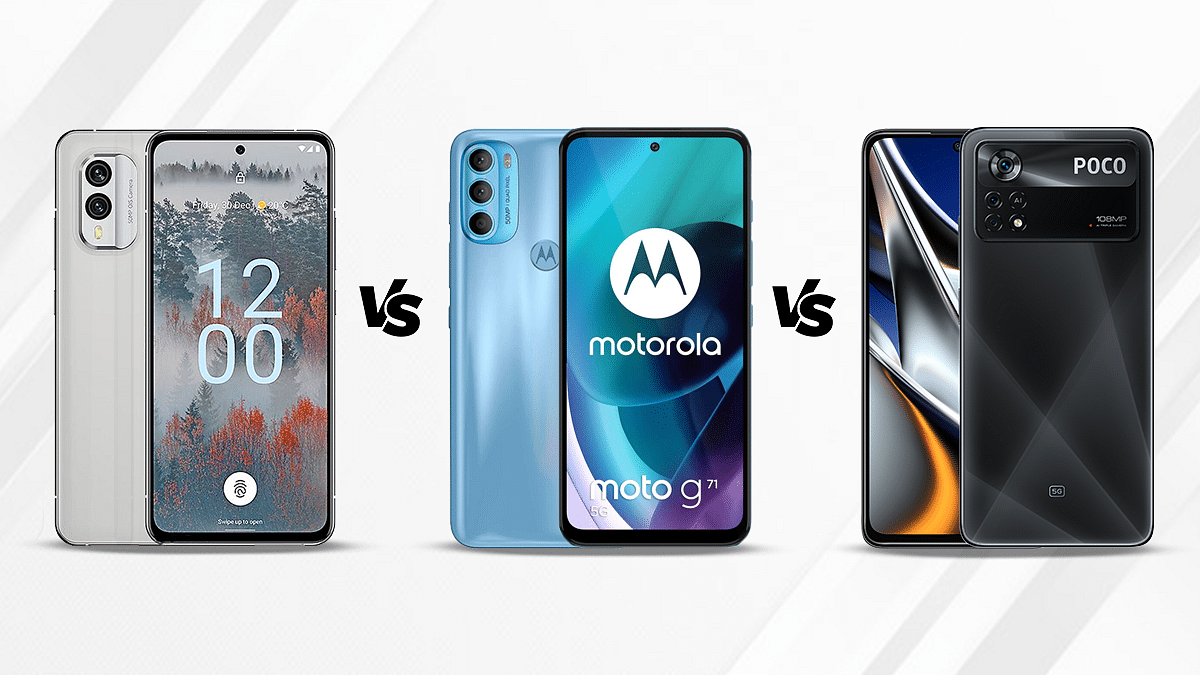
Nokia X30 5G Vs Poco X4 Pro 5G Vs Nokia G60 Comparison: Mid-Range 5G Phone You Should Consider

The mid-range smartphone industry is getting all the attention from smartphone OEMs and general consumers. The trend has seen a surge with the integration of 5G chipsets with new-generation mid-range and premium mid-range products. HMD Global is the latest brand to add multiple new products to this lineup including the Nokia X30 5G and the Nokia G60 5G.

We already have compared these two models along with the Motorola Moto G71 5G. In this article, we have replaced the Moto G71 5G with the Poco X4 Pro 5G which is another popular mid-range phone with a 5G network and capable hardware features. Let’s see which out of these three Android smartphones is best for daily usage:

Nokia X30 5G Vs Poco X4 Pro 5G Vs Nokia G60: Display Comparison

Nokia X30 5G flaunts a premium AMOLED display which is 6.43-inches in size. The display gets 1080 x 2400 pixels FHD+ screen resolution and has a 20:9 aspect ratio. The screen offers a screen-to-body ratio of 85 percent and has 409 PPI pixel density. It is layered by a Corning Gorilla Glass Victus protection and offers 700 nits peak brightness level and 90Hz refresh rate.

The Poco X4 Pro 5G is packed with a Super AMOLED display that is 6.67-inches and has an 86 percent screen-to-body ratio. The panel offers a 1080 x 2400 pixels screen resolution and 120Hz refresh rate which is higher that that of the Nokia X30 5G. The Poco X4 Pro 5G’s display is protected by the Corning Gorilla Glass 5 Victus protection.

The Nokia G60 is the only model in this list that features an IPS LCD screen instead of an AMOLED or Super AMOLED panel. The display measures 6.58-inches in size and has the same 1080 x 2400 pixels FHD+ screen resolution as the remaining two models.

The display has a 120Hz refresh rate and 400 nits of peak brightness levels. Out of the three models, the Poco X4 Pro 5G has the best screen for gaming as well as video playback (FHD). The Nokia X30 is the second and the Nokia G60 is the last on this list.

Nokia X30 5G Vs Poco X4 Pro 5G Vs Nokia G60: Camera Hardware Comparison

In terms of imaging hardware, the Nokia X30 5G is packed with two rear cameras and the setup includes a 50MP main camera with an f/1.8 aperture and OIS support. The secondary sensor at the back is a 13MP ultrawide sensor that has an f/2.4 aperture and 123-degree FoV. The camera setup offers several shooting modes along with 1080p@30 and 1080p@60fps video recording.

The Poco X4 Pro 5G uses three rear cameras for primary photography. The main camera is a bigger 64MP lens with PDAF and an f/1.8 aperture which gets additional support from an 8MP ultrawide angle sensor with 118-degree FoV, and a 2MP macro sensor with an f/2.4 aperture. The camera setup here also offers multiple shooting modes including HDR and others for a better photography experience. However, the video recording capability with this model is limited to 1080p@30fps only.

The Nokia G60 competes with these two models with its triple lens camera setup that comprises a 50MP main sensor. Accompanying the main camera is a 5MP ultrawide angle sensor and a 2MP lens. The video recording support here is identical to the Poco X4 Pro 5G, i.e., 1080p@30 fps.

Speaking of the selfie cameras, the Nokia X30 5G and the Poco X4 Pro 5G uses a 16MP selfie snapper, while the Nokia G60 has an 8MP snapper for self-portraits. Again, the Poco X4 Pro 5G takes the lead in the camera department as well followed by the Nokia X30 5G and the Nokia G60.

Nokia X30 5G Vs Poco X4 Pro 5G Vs Nokia G60: Chipset, RAM, Storage

Nokia has used the same Snapdragon 695 processor to drive both the X30 5G and the G60. This 5G chipset by Qualcomm is based on a 6nm fabrication process and has octa-cores. Poco has also packed the Snapdragon 695 chipset inside the X4 Pro 5G. So, you get the same power delivery and performance aspects from all three phones in this list.

The octa-core 5G mid-range chipset gets Adreno 619 GPU support which is used to render all the graphics. The firmware pre-installed is Android 12 OS on the Nokia X30 5G and the Nokia G60, whereas, the Poco X4 Pro 5G ships with the dated Android 11 OS.

Speaking of the configurations, the Nokia X30 5G can be purchased with 6GB/8GB RAM and 128GB/256GB storage. Notably, this handset doesn’t come with external microSD card support. Poco has launched the X4 Pro 5G with 6GB/8GB RAM and up to 256GB storage option. The Nokia G60 has 4GB/6GB RAM and 64GB/128GB storage.

Nokia X30 5G Vs Poco X4 Pro 5G Vs Nokia G60: Battery Specifications

The Nokia X30 5G is equipped with a 4,200 mAh battery with 33W fast charging support. Poco has used a bigger 5,000 mAh battery unit which gets 67W fast charging support, while the Nokia G60 has a 4,500 mAh battery unit with 20W fast charging technology. The Poco X4 Pro 5G is the safest bet in terms of battery backup and faster-charging speeds. Overall as well, the Poco X4 Pro 5G is better than the remaining two in the camera and display department.

Categories
Comparison Featured Tablet

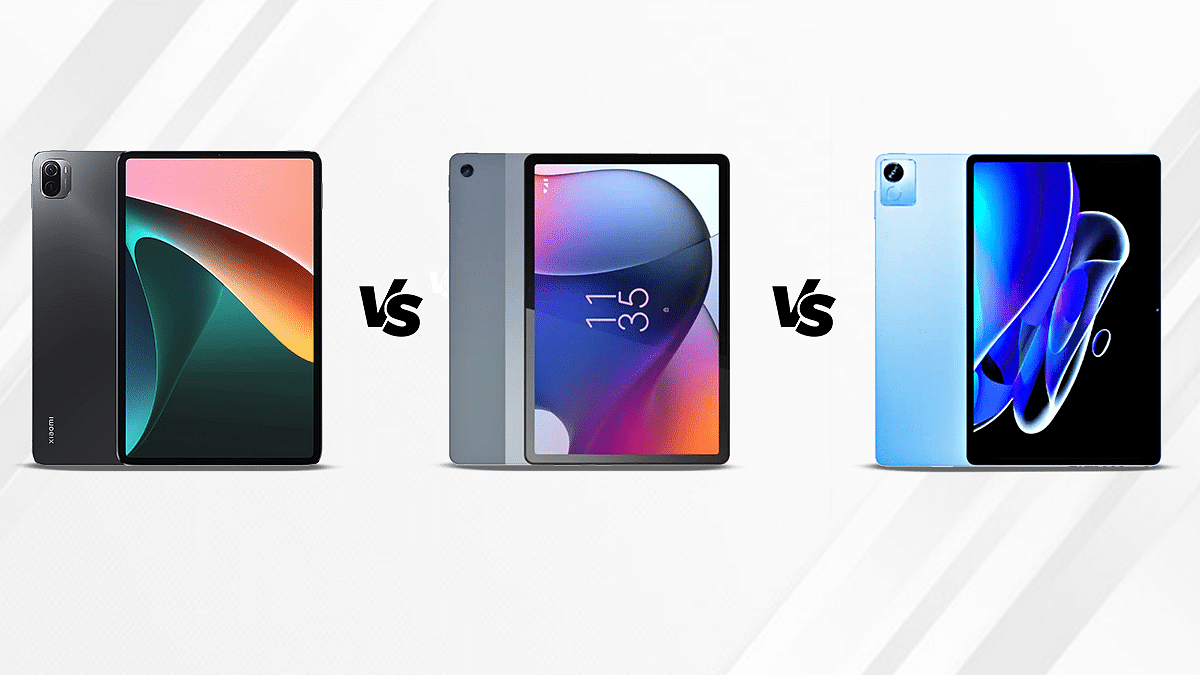
Xiaomi Pad 5 Vs Moto Tab G62 Vs Realme Pad X Tablet Comparison: Which Premium Mid-Range Tablet Leads?

We have seen multiple new tablet launches in India in the last few months. Even smartphone OEMs have started flooding this market with new products in all categories. Xiaomi Pad 5 is one of the best premium mid-range Android tablets available in the country below Rs. 30,000 price mark. Realme and Motorola, known for introducing high-end smartphones, are also strengthening their tablet portfolio with new variants. The former had recently released the Realme Pad X which is the first mid-range 5G tablet in the country, while the latter introduced the Moto Tab G62 a few weeks earlier. We are comparing all three tablet models in this article. Check the hardware differences here:

Xiaomi Pad 5 Vs Moto Tab G62 Vs Realme Pad X: Display Specification Comparison

The Xiaomi Pad 5 has a massive 11-inch screen which has an 82.8 percent screen-to-body ratio. The Xiaomi tablet’s display comes with an aspect ratio of 16:10 and delivers a 2K resolution of 1600 x 2560 pixels. The screen is HDR10 certified and also has Dolby Vision support. Further enhancing the visual experience is a 120Hz refresh rate.

Motorola has also used an IPS LCD display on the Moto Tab G62. The display is slightly smaller compared to the Xiaomi tablet. It measures 10.6-inches and has a screen-to-body ratio of 80.2 percent. The display further supports 1200 x 2000 pixels screen resolution and 220PPI pixel density.

As for the Realme Pad X 5G, the tablet is packed with a 10.95-inch display. It is also an IPS LCD panel like the remaining two models. The Realme tablet’s display supports the same pixel resolution as the Motorola tablet, i.e., 1200 x 2000 pixels. The LCD screen on this tablet doesn’t have HDR certification. The overall visual experience would be best with the Xiaomi Pad 5 in this list, the remaining two models will offer a decent viewing experience.

Xiaomi Pad 5 Vs Moto Tab G62 Vs Realme Pad X: Chipset, RAM, Storage Differences

The Xiaomi pad 5 has been launched with the Snapdragon 860 chipset. The octa-core Qualcomm processor is built on a 7nm fabrication process and has Adreno 640 GPU support for graphics. The processor used by the Realme Pad X is the Snapdragon 695, also an octa-core chipset by Qualcomm that is built on a 6nm fabrication process. The processor on both these tablets comes with 5G network compatibility and can easily handle multitasking and gaming.

The power delivery on the Motorola Tab G62 is handled by the octa-core Qualcomm Snapdragon 680 chipset. Unlike the other two models, this chipset offers standard 4G network support. The processor gets Adreno 610 GPU compatibility for graphics. While this is a standard 4G chipset, it is powerful enough for all daily and extensive tasks. 

Speaking of the configurations, the Xiaomi Pad 5 tablet has 6GB/ 128GB, 6GB/256GB RAM, and storage variants. The Moto Tab G62 offers a single 4GB RAM and 128GB storage configuration, whereas the Realme Pad X comes with 4GB RAM/ 64GB storage option and 6GB RAM/ 128GB storage option. The Android version pre-installed in the Xiaomi Pad 5 is Android 11 OS. Only this tablet has the older Android firmware, while the remaining two models (Moto Tab G62 and the Realme Pad X 5G) ships with the Android 12 OS. All these models have a custom user interface on top of the Android firmware.

Xiaomi Pad 5 Vs Moto Tab G62 Vs Realme Pad X: Camera Specifications

The camera sensor is single on all three tablets. The Xiaomi Pad 5 offers a 13MP main camera that has an f/2.0 aperture. It has a dual-LED flash system, HDR, Panorama, and Portrait shooting modes, and can record 4K@30fps and 1080p@30fps videos. Motorola, on the other hand, has used an 8MP single rear camera with a f/2.2aperture on the Moto Tab G62.

This tablet’s camera also has multiple shooting modes to improve the photography experience. The video recording capabilities with the Moto Tab G62 is 1080p@30fps. Lastly, the Realme Pad X 5G also features a single 13MP main rear camera that can record 1080p@30fps videos.

The selfie camera packed inside the Xiaomi Pad 5 is an 8MP lens. This same snapper is used by the remaining two tablets for self-portraits and video chats.

Xiaomi Pad 5 Vs Moto Tab G62 Vs Realme Pad X: Battery, Fast Charging Specifications

The Xiaomi Pad 5 draws power from an 8,720 mAh battery unit which is clubbed with 33W fast charging. The Moto Tab G62 features a 7,700 mAh battery unit which has 20W fast charging support. The Realme Pad X 5G is equipped with an 8,340 mAh battery unit which has 33W fast charging support.