Categories
Chipset Comparison

Qualcomm Snapdragon 870 Vs MediaTek Dimensity 8100 5G Processor: Flagship 5G Chipset Face Off

Key Highlights

  • Dimensity 8100 processor is one of the latest Android mobile chipsets
  • MediaTek Dimensity is built on a 5nm TSMC process
  • Snapdragon 870 processor has a memory frequency of 3200MHz

MediaTek recently revamped its mobile chipset lineup with the release of the Dimensity 8000 and the Dimensity 9000 series 5G processors for premium Android smartphones. OPPO and OnePlus are amongst the first brands to unveil their new-generation flagship phones powered by these chipsets. The Dimensity 8100 processor is one of the latest Android mobile chipsets that go up against Qualcomm’s top-end Snapdragon 870 processor. We have compared several Qualcomm and MediaTek processors. In this article, we are pitting down the Dimensity 8100 chipset and the Qualcomm Snapdragon 870 against each other. Let’s see which one out of the two has a better overall CPU and GPU performance.

Qualcomm Snapdragon 870 Vs MediaTek Dimensity 8100: CPU Performance

Starting with the CPU architecture, both Qualcomm Snapdragon 870 and the MediaTek Dimensity 8100 processors have octa-cores with the former designed on 1+3+ cluster, while the latter on 4+4 cluster. The Qualcomm Snapdragon 870 features one 3.2GHz Cortex-A77 core, three 2.42GHz Cortex-A77 cores, and four Cortex-A55 cores. The chipset is built on a 7nm TSMC fabrication process and has a frequency of 3200Mhz.

The MediaTek Dimensity is built on a 5nm TSMC process which makes it slightly better than the Snapdragon 870 chipset. This MediaTek Dimensity processor has four Cortex-A78 cores clocked at 2.85GHz and four Cortex_A55 cores clocked at 2GHz. This chipset has a maximum frequency of 2850MHz. Both processors are well equipped to handle extensive apps and games without any noticeable lags in performance.

Qualcomm Snapdragon 870 Vs MediaTek Dimensity 8100: GPU Performance

In the graphics department, the Qualcomm Snapdragon 870 chipset is equipped with the Adreno 650 GPU that is based on the Adreno 600 architecture and has a 675MHz GPU frequency. The Snapdragon 870 comes with two execution and 512 shading units. Whereas, the MediaTek Dimensity 8100 chipset combined Mali-G610 MC6 GPU is built on Valhall 3 architecture and delivers a max GPU frequency of 600MHz.

The Vulkan, OpenCL, and DirectX versions are the same on both processors, i.e., 1.1, 2.0, and 12 respectively. The GPU clubbed with both Snapdragon 870 and the MediaTek Dimensity 8100 processor can easily render some of the toughest graphics thrown at them.

Qualcomm Snapdragon 870 Vs MediaTek Dimensity 8100: Memory, Multimedia (ISP) Compatibility

The Snapdragon 870 mobile chipset comes with LPDDR5 RAM compatibility; so does the MediaTek Dimensity 8100 chipset. However, the primary difference is in the memory frequency and the maximum bandwidth. The Snapdragon 870 processor has a memory frequency of 3200MHz, while the Dimensity 8100 comes with a 2750MHz memory frequency.

The Qualcomm chipset delivers 44Gbit/s max bandwidth which is 51.2Gbit/s with the MediaTek Dimensity processor. As for the storage type, the Qualcomm Snapdragon processor is compatible with UFS 3.0 and UFS 3.1 storage, whereas the Dimensity 8100 comes with a single UFS 3.1 storage support.

Speaking of the media compatibility, the Qualcomm Snapdragon 870 chipset delivers a max display resolution of 3840 x 2160 pixels, while the Dimensity processor has a lower 1440 x 2960 pixels resolution support. The camera capabilities are better with the Snapdragon 870 chipset which can capture 1 x 200MP and 2 x 25MP images compared to the single 1 x 200MP camera resolution with the Dimensity 8100 chipset.

The Snapdragon 870 chipset can capture 8K and 4K video at 30fps and 60fps respectively. This is only 4K@60fps with the Dimensity 8100 Max. The video and audio codecs are almost the same with both chipsets.

The video codecs supported are H.264, H.265, VP8, and VP9 on the Snapdragon 870, while the Dimensity 8100 has an additional AV1 video codec. The common audio codec profiles on both these chipsets are AAC, AIFF, CAF, MP3, MP4, and WAV (Snapdragon 870) and AAC LC, MP3 HE-AACv1, HE-AACv2-FLAC (Dimensity 8100).

Qualcomm Snapdragon 870 Vs MediaTek Dimensity 8100: Connectivity

Qualcomm has used an integrated X55 modem with the Snapdragon 870 processor. This premium Qualcomm processor gets both 4G (LTE Cat.24) and 5G network support. The download speed offered by the Qualcomm chipset is up to 2500Mbps, while the download speeds are up to 316Mbps. Both chipsets come with the latest Wi-Fi 6. The Snapdragon features Bluetooth 5.2, while the Dimensity 8100 offers Bluetooth 5.3 support.

Also Read | Qualcomm Snapdragon 870 Vs Dimensity 9000 Premium Chipset Comparison: Which Is Better?
Categories
Chipset Comparison

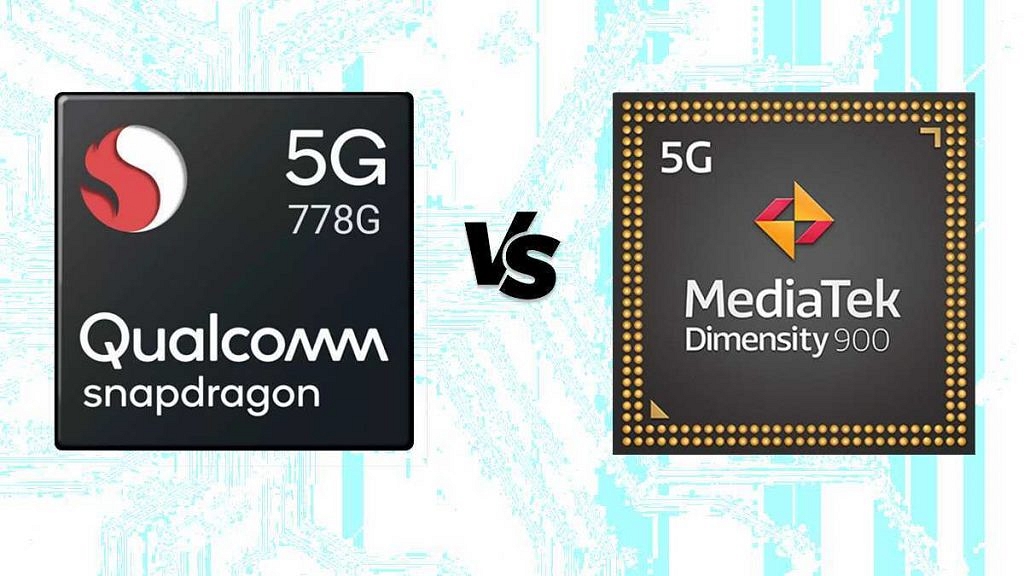
Qualcomm Snapdragon 778G Vs MediaTek Dimensity 920 SoC: Premium Mid-Range Chipset Comparison

Key Highlights

  • MediaTek Dimensitu 920 and SD 778G SoC are premium mid-range SoC
  • Both chipset support 5G network
  • CPU is octa-core on both chipsets
  • Fabrication process is 6nm for both SD 778G and Dimensity 920

Android mobile ecosystem is primarily driven by Qualcomm and MediaTek processors globally. Unisoc and Exynos are the two other prime players with mobile processors in the global markets. However, the majority of smartphones today ship either with a Qualcomm Snapdragon or MediaTek Helio/ Dimensity chipset. MediaTek had recently started the Dimensity chipset series which is designed specifically for premium mid-range Android phones with 5G network support.

One of the latest processors that MediaTek has unveiled for the new-generation premium mid-tier Android phones is the octa-core Dimensity 920 chipset. There have been frequent queries where users have been asking which Qualcomm Snapdragon series chipset makes up the strongest contenders against this MediaTek Dimensity 900 series chipset.

Well, the Snapdragon 778G is one of the capable rivals that goes up directly against the Dimensity 920 chipset. Here’s how these two Qualcomm and MediaTek processors compare in terms of CPU, GPU, and network performance:

Features Snapdragon 778GDimensity 920
CPUocta-coreocta-core
GPUAdreno 642lMali-G68 MC4
MemoryLPDDR5 LPDDR5
StorageUFS 2.1, UFS 2.2, UFS 3.0, and UFS 3.1UFS 2.1, UFS 2.2, and UFS 3.1
FabricationTSMC 6nmTSMC 6nm

Read More: Qualcomm Snapdragon 8 Gen 2 Vs MediaTek Dimensity 9200 Chipset Comparison: Most Advanced 5G Flagship Mobile Processor?

Qualcomm Snapdragon 778G Vs MediaTek Dimensity 920 SoC: CPU Performance

Both Qualcomm Snapdragon 778G and the MediaTek Dimensity 920 are octa-core processors that are crafted using TSMC 6nm fabrication processor. The CPU performance isn’t entirely different n these two processors. The Qualcomm Snapdragon 778G processor comes with one 2.4GHz Cortex-A78 core, three 2.2GHz Cortex-A78 cores, and quad 1.9 Cortex-A55 cores with a total base frequency of 2.4GHz.

The MediaTek Dimensity 920 chipset’s octa-cores are broken down to two 2.5GHz Cortex-A78 cores, and six 2GHz Cortex-A55 cores. The total base frequency offered by the Dimensity 920 processor is 2.5GHz. Both smartphones deliver good CPU performance and also offer 5G network support following the modern norms with mobile communication.

Also Read: Apple A15 Bionic Vs Qualcomm Snapdragon 888 Chipset Comparison: How Do These Flagship Mobile Processors Compare?

Qualcomm Snapdragon 778G Vs MediaTek Dimensity 920 Chipset: GPU Performance

Coming to the GPUs, the Snapdragon 778G chipset clubs Adreno 642L GPU that is based on Adreno 600 architecture. The GPU frequency offered by the SD 778G is 490MHz with two execution and 384 shading units.

On the contrary, the MediaTek Dimensity 920 processor combines the Mali-G68 MC4 GPU for graphics which has a maximum frequency of 950Hz with four execution and 64 shading units. Both chipsets come with the 1.1 Vulkan version, 2.0 Vulkan version, and DirectX version 12. The GPU support on both chipsets is decent to handle powerful graphics smoothly.

Also Read: Samsung Exynos 850 Vs MediaTek Helio G80 SoC: Budget Mobile Chipset Comparison

Snapdragon 778G Vs MediaTek Dimensity 920 Chipset: Memory, Media (ISP) Compatibility

The Qualcomm Snapdragon 778G is a game-centric processor which supports LPDDR5 RAM with up to 3200MHz frequency and 25.6Gbit/s max bandwidth. The maximum RAM size that the Snapdragon 778G can support is up to 16GB. The storage option compatible with this premium mid-range Qualcomm chipset is UFS 2.1, UFS 2.2, UFS 3.0, and UFS 3.1.

The MediaTek Dimensity 920 octa-core processor also supports an LPDDR5 RAM with 3200MHz memory frequency and a max bandwidth of 25.6Gbit/s. The Maximum RAM allocation size is 16GB which is the same as the Snapdragon 778G. The storage support here includes UFS 2.1, UFS 2.2, and UFS 3.1.

In terms of media compatibility, the maximum display resolution offered is 1080 x 2520 by both Snapdragon 778G and the Dimensity 920 processor. The camera resolution is 1 x 192MP and 2 x 36MP with the Snapdragon processor and 1 x 10⁸MP, 2 x 20MP with the MediaTek chipset. The audio and video codecs are almost identical on both these chipsets. The video codec profiles are H.264, H.265, VP8, and VP9 (AV1 is additional on the MediaTek Dimensity 920). Whereas, the audio codecs are AAC, AIFF, CAF, MP3, MP4, and WAV.

Also Read: Qualcomm Snapdragon 782G Vs MediaTek Dimensity 1080 Chipset Quick Comparison: Latest Premium Mid-Range Mobile Processor Battle

Snapdragon 778G Vs MediaTek Dimensity 920 SoC: Connectivity

The Snapdragon 778G’s comes with an integrated X53 modem which is compatible with both 4G (LTE Car.24) and 5G network support. The Snapdragon 778G processor delivers up to 1200Mbps download and up to 210Mbps upload speeds. It comes with Wi-Fi 6 and Bluetooth 5.2 wireless network technology.

The modem is unspecified for the DImensity 920 chipset. However, this processor is also compatible with both 4G (LTE Cat.18) and 5G networks. The download speed is the same as the Snapdragon processor (1200Mbps). However, it offers a slightly higher upload speed of up to 316Mbps. The Wi-Fi 6 and Bluetooth 5.2 wireless technology remains common here.

Read More: Qualcomm Snapdragon 8 Gen 2 Advanced Mobile Chipset With Ray Tracing, WiFi 7 Unveiled: List Of Phones To Launch With SD 8 Gen 2 Processor

Categories
Chipset Comparison

Qualcomm Snapdragon 888 Vs MediaTek Dimensity 8100: Which Is Better?

Key Highlights

  • We put Snapdragon 888 Plus against Dimensity to find out which is better
  • Dimensity 8100 is used by the OnePlus 10R, Redmi K50i, and more
  • Snapdragon 888 can be found in the Samsung Galaxy S series

MediaTek debuted the Dimensity 8100 a few months ago. The Dimensity 8100 has been found in many smartphones including the OnePlus 10R, Redmi K50i, Oppo Reno8 Pro, Realme GT Neo 3, and others. The Snapdragon 888 is this chip’s major rival. For those who are unaware, Qualcomm’s flagship chip for 2021 was the Snapdragon 888, which can be found in many popular smartphones including the Galaxy S series from Samsung.

Therefore, it is quite difficult to choose between these chips if you are willing to get a phone with one of them. But don’t worry, here’s a detailed comparison between the Qualcomm Snapdragon 888 and MediaTek Dimensity 8100 to help you choose the best one for you.

Qualcomm Snapdragon 888 Vs MediaTek Dimensity 8100: CPU Performance

Both chips have 8-core designs. While the Qualcomm Snapdragon 888 uses the Kryo 680 architecture, the Dimensity 8100 uses a Cortex A78 and A55 architecture.

The single powerful Cortex-X1 running at 2.84GHz in Qualcomm’s Kryo 680 CPU cluster has a large 1MB L2 cache. Below that are three large Cortex-A78 cores, each with a 2.4GHz peak clock and a 512KB L2 cache.

On the other hand, the MediaTek Dimensity 8100 is a mid-tier flagship chip based on a 5nm fabrication process. It is an 8-core CPU with high-performance Cortex-A78 cores clocked at 4x 2.85GHz and Cortex-A55 efficiency cores clocked at 4x 2GHz.

Qualcomm Snapdragon 888 Vs MediaTek Dimensity 8100: GPU Performance

Now getting to the GPU side of things, the Snapdragon 888 features the Qualcomm Adreno 660, whereas the Dimensity 8100 features the Mali-G610 MC6 GPU.

With regard to the Adreno 680 GPU, Qualcomm is quite secretive about its internal workings. The company, however, boasts the highest performance increase in generations—a 35 percent increase—while also providing a 25 percent improvement in power efficiency.

The core architecture of the MediaTek Dimensity 8100 is 1 x Ultra-powerful core, 3 x cores, and 4 Power efficient cores. It has LPDDR5X RAM with a 20 percent increase in power efficiency over the prior generation.

Qualcomm Snapdragon 888 Vs MediaTek Dimensity 8100: Connectivity

Sticking with networking, both chips are 5G enabled. While the Snapdragon 888 has an integrated 5G modem, built together on a 5nm manufacturing process. The R16 5G modem is used by the Dimensity 8100.

The FastConnect 6900 function in the Snapdragon 888 enables Wi-Fi 6, Wi-Fi 6E, and dual radio Bluetooth 5.2 functionality. The latest Bluetooth LE Audio standard is also supported by this. On the other hand, the Dimensity 8100 supports Bluetooth v5.3 and Wi-Fi 6E. It also has a tri-band GPS.

Categories
Chipset Comparison

Qualcomm Snapdragon 8 Gen 1 Vs Apple A15 Bionic Processor: Who’s The Winner?

Apple unlike most smartphone OEMs is known for designing custom mobile chipsets for all its iPhone models. The latest flagship grade processor announced by the Cupertino tech giant is the Apple A15 Bionic processor which is expected to power the upcoming Apple iPhone 14 series. One of the strongest rivals of the Apple A15 Bionic is the Qualcomm Snapdragon 8 Gen 1 chipset which is currently powering the new-age Android flagships.

We have seen several new premium Android phones equipped with Qualcomm’s powerful Snapdragon 8 Gen 1 chipset. But when we have to compare it with Apple’s premium A15 Bionic processor, which one do you think wins the title of the best premium mobile chipset? This comparison article will clear the confusion:

Qualcomm Snapdragon 8 Gen 1 Vs Apple A15 Bionic: CPU Performance

We’ll start with the CPU architecture comparison between the Qualcomm Snapdragon 8 Gen 1 chipset and the Apple A15 Bionic. Qualcomm has designed the Snapdragon 8 Gen 1 on a 4nm TSMC fabrication process. The Apple A15 Bionic chipset is fabricated using a 5nm TSMC process. The Snapdragon 8 Gen 1 has two additional cores compared to the A15 Bionic.

The Qualcomm chipset offers octa-cores comprising a 1+3+4 cluster, while the Apple chipset has a 2+4 cores cluster design. The Snapdragon 8 Gen 1 processor has one 3Ghz-Cortex-X2 core, three 2.5GHz-Cortex-A710 cores, and four 1.8GHz-Cortex-A510 cores.

The overall frequency is 3.0GHz here. The Apple A15 Bionic packs dual 3.24GHz Avalanche and four 1.82GHz Blizzard cores. The total base frequency offered by the Apple chipset is 3.2GHz. The CPU performance offered by both these premium Qualcomm and Apple processors is powerful and you can expect flawless performance with every kind of task.

Qualcomm Snapdragon 8 Gen 1 Vs Apple A15 Bionic: GPU Performance

The Qualcomm Snapdragon chipset employs Adreno 730 GPU simultaneously to help with easy rendering of extensive graphics. This GPU is based on the Adreno 700 architecture and offers a frequency of 818MHz with three execution and 768 shading units.

The Apple A15 Bionic processor is integrated with a custom Apple GPU which has a maximum GPU frequency of 1200MHz (more than the Snapdragon 8 Gen 1) with five execution and 640 shading units. Similar to the Qualcomm Snapdragon 8 Gen 1, the Apple A15 Bionic also embeds a powerful GPU that helps with the smooth graphic transition with each frame.

Qualcomm Snapdragon 8 Gen 1 Vs Apple A15 Bionic: Memory, Media (ISP) Compatibility

Speaking of memory compatibility, the Qualcomm Snapdragon 8 Gen 1 processor supports LPDDR5 RAM with 3200MHz memory frequency and 51.2Gbit/s max bandwidth. The Maximum RAM size it can support is 24GB. The storage support here is UFS 3.1. The Apple A15 Bionic processor only supports LPDDR4X RAM. The Snapdragon chipset definitely gets an edge here.

Furthermore, the memory frequency offered by the Apple A15 Bionic is 4266MHz with a max bandwidth of 42.7GB. The maximum RAM capacity that is supported by the Apple chipset is 8GB, while the storage compatibility is NVMe.

Coming to the Multimedia (ISP) features, the Snapdragon 8 Gen 1 supports a maximum display resolution of 3840 x 2160 pixels and a 200MP max camera resolution. This processor supports video recording and playback of up to 8K@30fps. It has compatibility with H.264, H.265, VP8, VP9 video codecs, and AAC, AIFF, CAF, MP3, MP4, and WAV audio codecs.

The Apple A15 Bionic processor is compatible with a max display resolution of 2732 x 2048 pixels. The video playback and recording capability with this new Apple mobile chipset is 4K@30fps. The Apple A15 Bionic processor offers H.264, H.265, VP8, VP9, and Motion JPEG video codes and AAC, AIF, CAF, MP3, MP4, WAV, AC-3, E-AC-3, AAX, AAX+ audio codecs.

Qualcomm Snapdragon 8 Gen 1 Vs Apple A15 Bionic: Connectivity Aspects

The Qualcomm Snapdragon 8 Gen 1 processor is equipped with a custom Snapdragon X65 modem that supports both 4G (LTE CAT.24) and 5G networks. This flagship Snapdragon chipset offers a max download speed of up to 2500Mbps and an upload speed of up to 316Mbps. This chipset comes with Bluetooth 5.2 wireless network support.

The Apple A15 Bionic’s modem is unspecified but this processor also supports both 4G (LTE Cat.24) and 5G network support. The Bluetooth version is slightly older, i.e., Bluetooth 5.0.

Categories
Chipset Comparison

Snapdragon 8 Gen 1 Vs Snapdragon 888 Processor: Premium Android Phones Chipset Comparison

Key Highlights

  • Snapdragon 8 Gen 1 is the new-age flagship chipset series
  • Snapdragon 888 is older mobile chipset for premium Android devices
  • SD 8 Gen 1 has 4nm fabrication
  • SD 888 has 5nm fabrication

Smartphones are the most commonly used gadgets for mobile communication. With the new-age smartphones, the possibilities are endless and you can do a lot more than just calls and texts. Thanks to the mobile chipset OEMs, these pocket-sized gadgets. Qualcomm and MediaTek are the two major chipset giants that are driving the Android phones in the global markets.

Both Qualcomm and MediaTek have been designing some powerful mobile processors that can deliver an exceptional user experience with general tasks as well as gaming. Qualcomm Snapdragon 800 series is the driving force behind the flagship grade Android smartphones.  

The Snapdragon 888 chipset has been the last year’s high-end chipset by Qualcomm which has already been replaced with the Snapdragon 8 Gen 1 chipset. This year, the latter has been the first choice by several smartphone OEMs for their premium models. If you are wondering which out of the Snapdragon 888 or the Snapdragon 8 Gen 1 processor is better? This comparison article will help you decide.

Snapdragon 8 Gen 1 Vs Snapdragon 888: CPU Performance

ChipsetSnapdragon 8 Gen 1Snapdragon 888
CPUocta-coreocta-core
GPUAdreno 730Adreno 640
MemoryLPDDR5 RAMLPDDR5 RAM
StorageUFS 3.0, UFS 3.1UFS 3.1

We’ll start this flagship chipset comparison with CPU. Speaking of the architecture, both Qualcomm Snapdragon 8 Gen 1 and the Snapdragon 888 SoC have octa-cores with a base frequency of 3.0Ghz and 2.84Gz respectively. The Snapdragon 8 Gen 1 chipset comprises one 3Ghz Cortex-X2 core, three 2.5Ghz Cortex-A710 cores, and four 1.8GHz Cortex-A510 CPU cores.

The Snapdragon 888 SoC features one 2.28Gz Cortex-X1 core, three 2.42GHz Cortex-A78 cores, and four 1.8GHz Cortex-A55 cores. Both Snapdragon 8 Gen 1 and the Snapdragon 888 processor offer powerful performance and are 5G enabled. Qualcomm has manufactured the SD 8 Gen 1 SoC on a 4nm fabrication process, while the Snapdragon 888 is built on 5nm fabrication.

Also Read: MediaTek Dimensity 9000 Vs Qualcomm Snapdragon 870 Processor: Best Chipset For Value Flagship

Snapdragon 8 Gen 1 Vs Snapdragon 888: GPU Performance

Coming to GPU performance, it is one integral hardware aspect that determines how smoothly the device can render extensive graphics. The flagship Snapdragon 8 Gen 1 processor is clubbed with Adreno 730 GPU, while the Snapdragon 888 processor employs the Adreno 660 GPU. The total GPU frequency offered by the Snapdragon 8 Gen 1 chipset is 840MHz, while the Snapdragon 888 delivers 818MHz of GPU frequency. The DirectX and OpenCL version of both GPUs is 12 and 2.0 respectively. The graphics architecture Adreno 700 and Adreno 600 respectively on both chipsets is capable to render any extensive graphics without hiccups or lags.

Also Read: Qualcomm Snapdragon 780G Vs MediaTek Dimensity 8200 5G: Best Future Ready Gaming Chipset Comparison

Snapdragon 8 Gen 1 Vs Snapdragon 888: Memory Compatibility, Multimedia (ISP)

Moving on to the memory and multimedia ISP compatibility, both Snapdragon 8 Gen 1 and the Snapdragon 888 processor supports LPDDR5 RAM with a maximum memory frequency of 3200MHz and a bandwidth of 51.2 Gbit/s. The NPU (Neural processor unit) is Hexagon 780 on both chipsets and the storage type supported is UFS 3.0/ UFS 3.1 for the Snapdragon 888 and UFS 3.1 for the Snapdragon 8 Gen 1 chipset.

The max display resolution supported by the Snapdragon 8 Gen 1 processor is 3840 x 2160. The same is supported by the Snapdragon 888 as well. Coming to the camera resolution, the Snapdragon 8 Gen 1 processor can capture 1 x 200MP photos, and up to 8K@30fps videos. The Snapdragon 888 chipset can capture 200MP photos, and up to 8K@30fps videos. The video and audio codecs with both processors are the same. The video codecs available with both these flagship Qualcomm processors are H.264, H.265, VP8, and VP9, while the audio codecs are AAC, AIFF, CAF, MP3, MP4, and WAV.

Also Read: MediaTek Dimensity 8200 VsQualcomm Snapdragon 870: Best 5G Chipset For Value Flagships

Snapdragon 8 Gen 1 Vs Snapdragon 888: Connectivity Speeds

Qualcomm has integrated the Snapdragon X65 modem on the Snapdragon 8 Gen 1 chipset which supports LTE Cat.24 (4G) and dual-band 5G. The 5G speeds offered by the Snapdragon 8 Gen 1 chipset are up to 2500MBPS, while the upload speeds offered are up to 316MBPS. On the other hand, the Snapdragon 888 processor features the Snapdragon X60 modem with LTE Cat. 22 4G network. The internet download and upload speeds here are the same as the Snapdragon 8 Gen 1. Both chipsets come with Bluetooth 5.2 wireless network support as well.

Also Read: MediaTek Vs Snapdragon Vs Exynos Vs Tensor: See Here For The Difference

Categories
Chipset Comparison

Snapdragon 8 Gen 1 Vs MediaTek Dimensity 8100: Flagship Chipset Face-Off

With its Dimensity line of chipsets, MediaTek in recent years has democratized the 5G market. It wouldn’t be inaccurate to argue that the MediaTek chipsets outperformed the rival Qualcomm Snapdragon chipsets in 5G. However, the snapdragon chipsets continued to hold their authority thanks to their better all-around performance.

The TSMC’s 5nm architecture is used to create the MediaTek Dimensity 8100 chipset. On the other hand, the foundry’s 4nm technology is used to create the Snapdragon 8 Gen 1. For those who are unaware, a lower process node typically means increased performance and power efficiency. Additionally, the Snapdragon 8 Gen 1 SoC features the ARM Cortex-X1 primary which is meant to provide improved performance.

So, how do these two chips compare? In this article, we will compare Snapdragon 8 Gen 1 with MediaTek Dimensity 8100, evaluate their advantages, and decide which one is better.

Snapdragon 8 Gen 1 Vs MediaTek Dimensity 8100: CPU Performance

The Snapdragon 8 Gen 1 is powered by a single Cortex-X2 powerhouse CPU core running at a higher 3GHz than last year. It has two large Cortex-A710 cores running at 2.5GHz and four energy-efficient Cortex-A510 cores operating at a more restrained 1.8GHz. Qualcomm is continuing to use its well-proven 1+3+4 tri-cluster CPU configuration.

On the other hand, the MediaTek Dimensity 8100 employs the Cortex A78 and A55 architecture. With its four Arm Cortex-A78 super cores, it offers an Octa-core processor with a maximum clock speed of 2.85GHz.

Snapdragon 8 Gen 1 Vs MediaTek Dimensity 8100: GPU Performance

Thanks to its Adreno 730 GPU with a frequency of 800MHz, the Snapdragon 8 Gen 1 has plenty of GPU horsepower. The chipset is designed for gaming at an ultimate level to run games in Ultra HD resolution at max 90FPS. Qualcomm’s AI Engine technology is further used to improve the power and performance capabilities.

On the other hand, the MediaTek Dimensity 8100 has a powerful Arm Mali-G610 MC6 graphics core which is also designed for gaming. The core architecture of the processor is 1 x Ultra-powerful core, 3 x cores, and 4 Power efficient cores. It has LPDDR5X RAM with 20 percent power efficiency compared to the previous gen.

The Snapdragon 8 Gen 1 has an Adreno 730 GPU for graphics. In terms of performance, Qualcomm claims a notable 30 performance improvement over its previous generation SoC and an equally noteworthy 25 percent power savings.

Snapdragon 8 Gen 1 Vs MediaTek Dimensity 8100: Connectivity

The Snapdragon 8 Gen 1 feature Qualcomm’s latest Snapdragon X65 5G modem. This can deliver up to 10Gbps of speeds with support for high-frequency mm-wave 5G at close range. It is equipped with Qualcomm’s latest FastConnect 6900 mobile connectivity system. This means it is responsible for handling all types of wireless connectivity features including Bluetooth and Wi-Fi. It supports the Wi-Fi 6 and Wi-Fi 6E radio standards which offer a maximum bandwidth of 3.6 Gbps. Besides, the chipset also supports Bluetooth 5.2 and LE audio.

On the other hand, the MediaTek HyperEngine 5.0 provides a wide-ranging suite of gaming-related optimizations. This covers 5G and Wi-Fi networking, MediaTek Intelligent Display Sync 2.0, and exclusive AI-VRS. Additionally, it covers wireless earbud latency improvements in Bluetooth LE Audio technology with Dual-Link True Wireless Stereo Audio.

Categories
Chipset Comparison

MediaTek Dimensity1300 Vs Qualcomm Snapdragon 870 Processor: Check All Details Here

Oppo and OnePlus have recently launched their smartphones on MediaTek Dimensity 1300 processor. The Oppo Reno8 and the OnePlus Nord 2T device have been launched on the same processor. However, Qualcomm 870 5G processor seems the biggest competitor of the MediaTek 1300 processor, which is why we are comparing both processors to find out which is better?

Also Read: MediaTek Dimensity 9000 Vs Snapdragon 8 Gen 1 Processor: Which Is Better?

MediaTek 1300 Vs Qualcomm 870 Processor: Connectivity, Display, And Camera Specifications

It is worth noting that both chipsets offer 5G connectivity. The MediaTek support 2G / 3G / 4G / 5G Multi-Mode, 4G Carrier Aggregation (CA), and 5G Carrier Aggregation (CA), while Qualcomm Snapdragon supports Global 5G Multi-SIM.

On the display front, the MediaTek 1300 chipset supports max display resolution up to 2520 x 1080 and 168Hz refresh rate, while Qualcomm Snapdragon comes with 4K @ 60 Hz, QHD+ @ 144 Hz, HDR10+, and HDR10.

Moving to the optics front, where MediaTek 1300 chipset support 32MP + 16MP, and 200MP, maximum video capture, and 3840 x 2160 video resolution. In addition, the chipset has features like HDR-ISP (3+2) / Video HDR / Video NR / Video Bokeh / Video EIS / AI-Shutter / AI-AE / AI-AF / AI-AWB / AI-NR HDR / AI-HDR / AI-FD.

Also Read: Upcoming Phones With MediaTek Dimensity 9000 Plus Chipset

On the other hand, the Qualcomm Snapdragon 870 processor supports dual cameras up to 25MP, single camera MFNR, ZSL, 30fps up to 64MP, and a single camera up to 200MP. It can capture slow-motion video and has formats like Dolby Vision, HDR10, HDR10+, and HLG.

Additionally, it supports or captures video features like Rec. 2020 color gamut video capture, Up to 10-bit color depth video capture and 4K video capture with simultaneous 64MP photo capture.

MediaTek 1300 Vs Qualcomm 870 Processor: GPU And CPU Details

It is important to note that the MediaTek Dimensity 1300 supports ARM Mali G77 MC9 GPU. On the other hand, Qualcomm Snapdragon 870 processor supports Adreno 650 GPU. The MediaTek 1300 chipset has 1X Ultra Core: Arm Cortex-A78 up to 3GHz, 3X Super Cores: Arm Cortex-A78 up to 2.6GHz, and 4X Efficiency Cores: Arm Cortex-A55 up to 2GHz, and 9-core Arm Mali GPU.

The Qualcomm Snapdragon 870 processor has Volumetric VR video playback, and 8K 360 VR video playback. Moving to the CPU performance where MediaTek 1300 chipset supports TSMC’s newer 6nm fabrication process, whereas Qualcomm Snapdragon 870 processor has a 7nm fabrication process by TSMC.

Categories
Comparison Mobile

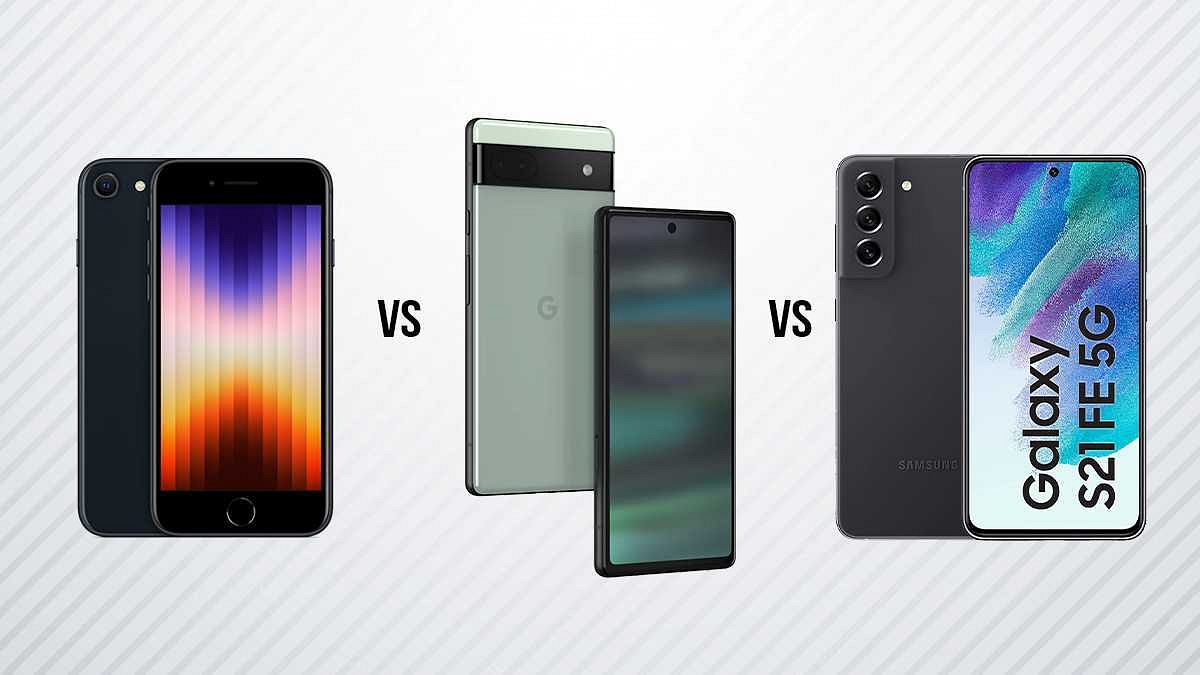
Google Pixel 6a Vs iPhone SE 2022 Vs Samsung Galaxy S21 FE: Best Premium Mid-Range Phone To Buy

Google Pixel 6a is the latest hotshot in town. After all, Google has refreshed its affordable Pixel series in the Indian market after a break. The Pixel 6a has been released as a powerful premium mid-tier Android handset with a dual camera module and a custom Tensor chipset. The iPhone SE 2022 is a direct competition with the Pixel 6a. This face-off is between the value flagships offered by the two prominent tech giants in the smartphone industry. We are comparing both these high-end mid-rangers in this article. But the list would be incomplete without Samsung which is also popular with its flagship Galaxy S series. The Galaxy S21 FE fits the best contender against the iPhone 2022 and the Google Pixel 6a. Here’s how these three phones compare:

Google Pixel 6a Vs iPhone SE 2022 Vs Samsung Galaxy S21 FE: Display Specifications

The portability factor is on point with the Pixel 6a, iPhone SE 2022, and the Samsung Galaxy S21 FE. Google has used an OLED panel on the Pixel 6a that measures 6.1-inches and supports 1080 x 2400 pixels FHD+ resolution. The iPhone SE 2022 is the most compact on this list with its 4.7-inch Retina IPS LCD screen.

The iPhone SE 2022’s display supports a slightly lower pixel resolution of 750 x 1334 pixels. The Samsung Galaxy S21 FE has a 6.4-inch AMOLED screen with 1080 x 2400 pixels resolution, a 120Hz refresh rate, and HDR 10+ certification. The display panel is good on all three phones, but the Galaxy S21 is more powerful here in terms of features.

Google Pixel 6a Vs iPhone SE 2022 Vs Samsung Galaxy S21 FE: Camera Comparison

All three brands in this list are known for using top-tier camera hardware with their premium devices. The Google Pixel 6a follows the footprints of the new-generation flagship Pixel 6 series and offers a dual rear camera setup. It features a 12.2MP wide-angle main camera with an f/1.7 aperture and a 12MP secondary ultrawide sensor with an f/2.2 aperture.

The iPhone SE 2022 uses a single 12MP rear camera for optics. The main sensor is a wide-angle lens with an f/1.8 aperture and PDAF and OIS support. The Samsung Galaxy S21 has the most powerful camera hardware comprising three sensors at the back.

The Galaxy S21 FE packs a 12MP main camera at the back with Dual Pixel PDAf and OIS support. It is clubbed with an 8MP telephoto sensor with PDAF, OIS, and a 12MP ultrawide sensor with 123-degree FoV. The Galaxy S21 is a step ahead with rear camera hardware compared to the iPhone SE 2022 and the Google Pixel 6a.

Pixel 6a Vs iPhone SE 2022 Vs Galaxy S21 FE: Performance Delivery

You get a flagship performance with all three phones. The Google Pixel 6a delivers on all tasks with a custom Tensor 5nm chipset with Mali-G78 MP20 GPU support. The Pixel 6A comes with 6GB RAM and a 128GB storage option. The iPhone SE 2022 also uses a custom 5nm chipset, i.e., Apple A15 Bionic with Apple quad-core GPU.

The iPhone SE 2022 is available with up to 4GB RAM and 256GB storage configuration. The Galaxy S21 FE is packed with the premium Snapdragon 888 chipset which is also based on a 5nm process. This model has the highest RAM configuration in this list (up to 8GB).

The storage option is up to 256GB. In the case of firmware, both Google Pixel 6a and the Samsung Galaxy S21 FE have the Android 12 OS. However, the Apple iPhone SE 2022 ships with iOS 15.4 which is upgradable to the latest iOS 16.

Categories
Comparison Smart Watch

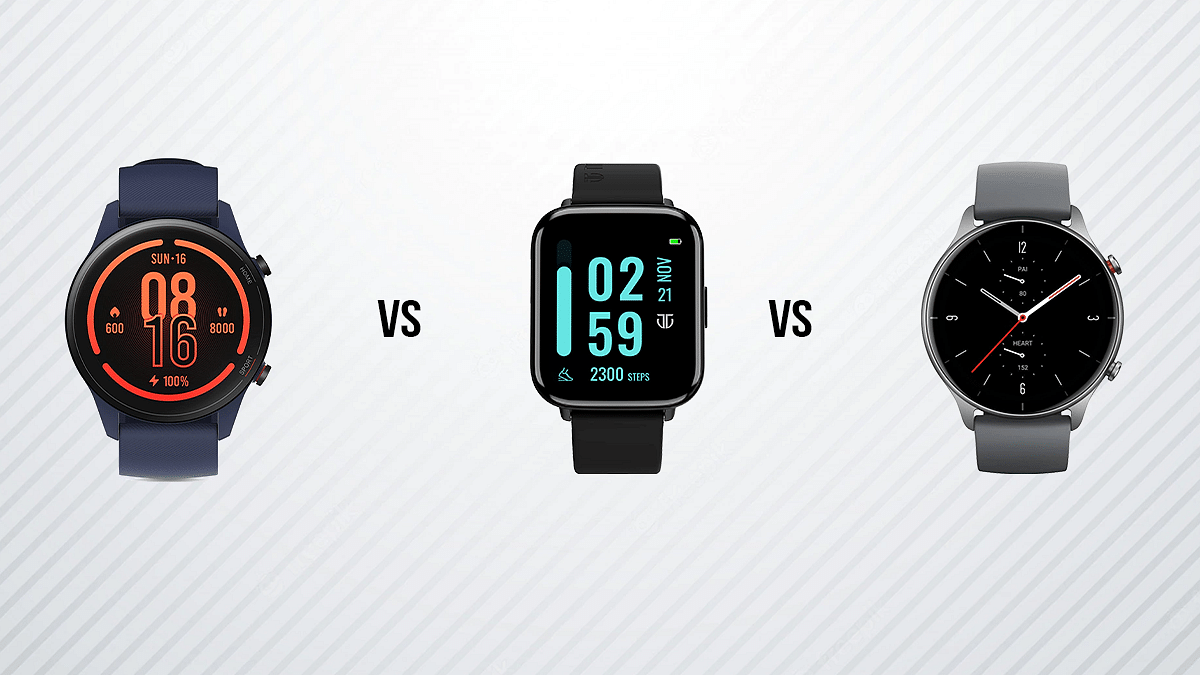
Xiaomi Mi Watch Revolve Active Vs Titan Smart 2 Vs Amazfit GTR 2e: Which One To Go For?

In addition to being a fancier version of a regular watch, smartwatches have developed into an important accessory for smartphone users. They provide a variety of tracking and fitness capabilities while still looking like conventional watches.

Smartwatches today are capable of tracking a variety of data, including sleep, steps, heart rate, and notification alerts. The best part is that a decent smartwatch doesn’t have to cost a lot of money.

To make it easier for you to decide which smartwatch you should buy, we have come up with this article where we will compare three smartwatches, i.e., Xiaomi Mi Watch Revolve Active, Titan Smart 2 Smartwatch, and Amazfit GTR 2e. Let’s begin:

Design And Display

The Mi Watch Revolve Active has a circular dial that gives a traditional look. A 1.39-inch AMOLED display and 2.5D curved glass are included on top of the frame. The display has a thin bezel with Sport and Home inscribed on it near the two buttons on the right side. The left side is completely blank.

The Titan Smart 2, on the other hand, sports a sizable screen with thin bezels that is fairly acceptable. This 1.78-inch AMOLED display has a responsive touch screen. In general, watches feel sluggish because their processors are weak but this is definitely good.

Now let’s talk about the Amazfit GTR 2e which is a gorgeous smartwatch. It has a 1.39-inch AMOLED display with tempered glass and an anti-fingerprint coating. The watch boasts a borderless 2.5D curved glass display. You can access various features and modes by using the two buttons on the watch’s one side. The smartwatch’s display and color accuracy are quite impressive.

Features And Operating System

The Mi Watch Revolve runs a custom OS. SpO2 tracking on the Mi Watch Revolve Active is a handy tool to have during these times. The Mi Watch Revolve Active lets you keep track of a wide variety of workouts. While you exercise, it continuously displays your heart rate and the number of calories burned. The wearer’s energy and stress levels can also be monitored via the Mi Watch Revolve Active. You can utilize the guided breathing widget on the watch to try to lower your stress levels.

On the other hand, the Titan Smart 2 offers all the functionality of a smartwatch, such as a step counter and blood oxygen levels. It also has breathing reminders, stress monitoring, a period tracker for women, and more. You can even get updates and 100+ watch faces that are growing more in number.

Moving to the Amazefit GTR 2, there are multiple sports modes inside the smartwatch. If you are working out inside your home, you can even activate a mode that’s built into the watch specifically for that. The Amazfit GTR 2e automatically tracks all the steps that you take in a day. Besides, it has a SpO2 sensor that helps to monitor your blood oxygen levels. The Amazfit GTR 2e’s sleep tracking feature is one of its best features.

Battery And Connectivity

In the battery department, the Mi Watch Revolve Active can last less than two weeks on a full charge. If you have the always-on display turned on for a day or two, it will drain the battery slightly quicker. As for connectivity, you need to pair the Mi Watch Revolve Active with a smartphone during the setup process to start using it. Using the Xiaomi Wear app for Android or the Xiaomi Wear Lite app for iOS, you can pair the watch with a smartphone.

Moving to the Titan Smart 2 smartwatch, it’s got BT 5.1 which is decent. It seems average in terms of battery life with a 280mAh battery that lasts for seven days. And yes, it features AOD as well, thus you are not required to keep the display on constantly.

Now, we come to the Amazfit GTR 2e. On a single charge, it could easily run more than 10 days on average. For completely charging the smartwatch, it might take you around two hours.

Price Comparison

The Mi Watch Revolve Active is targeted at those who are regularly on the move. Beige, Blue, and Black are the three color choices Xiaomi gives for the Mi Watch Revolve Active.

Also, the Titan Smart Pro Watch comes packed with features. It delivers on its promises of having an accurate body temperature sensor, blood oxygen monitoring, and a wealth of fitness tracking features. Besides, the Amazfit GTR 2e is almost a perfect smartwatch because it offers a lot for the price it comes for; however, the GPS issue is a big turn-off.

Overall, all three smartwatches are priced under Rs. 10,000 in India. Considering all the things, all three smartwatches give hard competition to each other with the onboard productivity and health features. However, the Mi Watch Revolve Active offers a bigger display experience and better battery life. In our opinion, the Mi Watch Revolve Active makes it a good value for money.

Categories
Comparison Mobile

Google Pixel 6a Vs OPPO Reno8 Pro Vs Xiaomi 11T: Best Premium Mid-Range Camera Phone In India?

After a long break, Google revamped its smartphone portfolio in India with the launch of the Google Pixel 6a. The latest affordable Pixel handset has been launched with Google’s in-house Tensor chipset and improved hardware features compared to the last model. The Google Pixel 6a has been announced at an asking price of Rs. 43,999 in the country and is one of the most powerful camera phones in the Indian market.

Recently, OPPO also upgraded its photography-centred Reno8 series in the country with two models namely the Reno8 Pro and the Reno8 Pro 5G. The Pro variant goes up against the Google Pixel 6a with its premium hardware features including flagship-grade cameras. Now, both these smartphones are powerful contenders in the premium mid-tier smartphone market.

We are pitting down both the OPPO Reno8 Pro 5G and the Google Pixel 6a alongside the Xiaomi 11T to see which one fairs the competition. This spec-sheet based comparison will also help you decide which is the best buy under Rs. 45,000 price range.

Google Pixel 6A Vs OPPO Reno8 Pro Vs Xiaomi 11T Pro: Display Features Comparison

The display on all three smartphones is high-end in this list. But if you are bent toward a compact form factor then the Google Pixel 6a with a 6.1-inch pOLED display will be the best fit. Both OPPO Reno8 Pro and the Xiaomi 11T Pro flaunt a massive 6.7-inch AMOLED display which is rather best for high-resolution video consumption on the go. The Google Pixel 6a’s display offers 1080 x 2400 pixels screen resolution and a 429 PPI pixel density.

On the other hand, the OPPO Reno8 Pro and the Xiaomi 11T Pro’s display also offer an FHD+ resolution of 1080 x 2412 pixels and 1080 x 2400 pixels respectively. The brightness levels of the Reno8 Pro and the Xiaomi 11T Pro are higher compared to the Pixel 6a. Overall, if you wish to buy a high-resolution big-screen phone, the OPPO Reno8 Pro and the Xiaomi 11T Pro will make for a good pick on this list.

Google Pixel 6A Vs OPPO Reno8 Pro Vs Xiaomi 11T Pro: Camera Configuration

All three phones in this list offer the best photography experience. If you go by the spec sheet, the Google Pixel 6a is packed with a dual-lens camera module comprising a 12.2MP main sensor with an f/1.7 aperture. The main camera on the Google Pixel 6a further supports PDAF (Phase Detection Autofocus), and OIS (Optical Image Stabilization) and is combined with a 12MP additional sensor with an f/2.2 aperture. The Google Pixel 6a’s dual-lens camera module can record both 4K and 1080p videos and have multiple built-in shooting modes.

The OPPO Reno8 Pro 5G shows its camera expertise with the triple rear camera module housing a 50MP main sensor with an f/1.8 aperture with multi-directional PDAF. The primary sensor on the Reno8 Pro 5G is accompanied by an 8MP secondary ultrawide sensor with an f/1.4 aperture and a 2MP macro sensor with an f/2.4 aperture.

Moving on to the Xiaomi 11T Pro, it has the biggest primary camera sensor of all three. It is packed with a 108MP main camera which has an f/1.8 aperture combined with an 8MP ultrawide sensor with an f/2.2 aperture, and a 5MP macro lens with an f/2,4 aperture. The Xiaomi 11T Pro is capable of recording up to 8K@30fps videos.

Google Pixel 6a Vs OPPO Reno8 Pro Vs Xiaomi 11T Pro: Chipset, Software Comparison

The Google Pixel 6a is packed with the Google custom-made Tensor chipset which is built in 5nm fabrication processor. The octa-core processor is combined with Mali-G78 MO20 GPU which helps with smooth graphics rendering in all scenarios. The Pixel 6a comes with 6GB RAM and 128GB storage configuration which is sufficient for multitasking and gaming without any lags. The Pixel 6a boots on Android 12 OS and offers a stock Android user experience.

The OPPO Reno8 Pro 5G gets its power from the MediaTek Dimensity 8110-5G Max chipset. This processor is also built on 5nm fabrication process which has Mali-G610 MC6 GPU support. The smartphone is capable of delivering powerful performance with no noticeable lags. The chipset on the Reno8 Pro 5G is clubbed with up to 12GB RAM and 256GB storage configuration. This handset also boots on Android 12 OS and has a custom ColorOS interface on top.

The Xiaomi 11T Pro has an equally capable chipset. It is powered by the Qualcomm Snapdragon 888 5G chipset which is based on 5nm fabrication like the remaining two models. The octa-core flagship Qualcomm processor is combined with Adreno 660 GPU for graphics and up to 12GB RAM for multitasking. The Xiaomi 11T Pro firmware is dated compared to the remaining two models in this list, i.e, Android 11 OS topped with MIUI interface.

Google Pixel 6a Vs OPPO Reno8 Pro Vs Xiaomi 11T Pro: Battery, Fast Charging

The battery capacity is the smallest on the Google Pixel 6a. It packs a 4,410 mAh battery unit with 18W fast charging. The OPPO Reno8 Pro 5G has a bigger 4,500 mAh battery unit which is accompanied by 80W fast charging. The Xiaomi 11T Pro has the largest battery in this list which measures 5,000 mAh and is combined with the fastest 120W fast charging. The Xiaomi 11T Pro is the clear winner in the battery race.