Categories
Chipset Comparison mobile

Qualcomm Snapdragon 8 Plus Gen 1 Vs MediaTek Dimensity 9000 Chipset: Flagship Mobile Chipset Battle

MediaTek has marked its presence as the largest mobile chipset provider globally. The company has gradually ramped up competition for Qualcomm in all segments. With the Dimensity 9000 chipset, MediaTek has gone up against Qualcomm’s most premium mobile processor, i.e., the Snapdragon 8 Plus Gen 1 processor. Let’s compare both the flagship processors’ CPU and GPU performance along with the memory and multimedia compatibilities.

Qualcomm Snapdragon 8 Plus Gen 1 Vs Dimensity 9000 : CPU Comparison

Qualcomm’s Snapdragon 8 Plus Gen 1 chipset is a slim 4nm processor with an octa-core CPU cluster. This chipset has the ARMv9-A instruction set with a 3200MHz CPU frequency. Speaking of the core cluster, the SD 8 Plus Gen 1 chipset has one Cortex-X2 core with 3.2GHz speed, three Cortex-A710 processors with 2.75GHz clock speed, and four 2GHz Cortex A510 cores.

The Dimensity 9000 offers a 3050MHz frequency with its octa-core CPU cluster and ARMv9-A instruction set. The most premium MediaTek chipset has one Cortex-X2 core with 3.05GHz clock speed, three 2.85GHz Cortex-A710 cores, and four Cortex-A510 cores with 1.8GHz clock speed. MediaTek has also used a thinner 4nm fabrication processor like Qualcomm to design the Dimensity 9000 chipset. Performance-wise, both Snapdragon 8 Plus Gen 1 and the Dimensity 9000 processor are strong and can handle the most extreme of tasks fluidly.

Snapdragon 8 Plus Gen 1 Vs Dimensity 9000 Processor: GPU Comparison

Moving on to the GPU performance, the Qualcomm Snapdragon 8 Plus Gen 1 has the Adreno 730 GPU. This is one of the fastest GPUs from the Adreno 700 series with a 900MHz frequency range. On the contrary, the MediaTek Dimensity 9000 processor has the Mali-G710 GPU which is also potent enough to render extensive graphics without any stutter. Both these chipsets have the same 1.1 Vulkan, 2.0 OpenCL, and 12 DirectX versions.

Snapdragon 8 Plus Gen 1 Vs Dimensity 9000 SoC: Memory, Multimedia (ISP)

In the memory department, the Qualcomm Snapdragon 8 Plus Gen 1 has the standard LPDDR5 memory support. The MediaTek Dimensity 9000 chipset takes a lead with the advanced LPDDR5X RAM. The memory frequency is higher with the latter at 3,750 MHz, whereas with the former it’s 3200MHz. Both Snapdragon 8 Plus Gen 1 and the Dimensity 9000 processor have the same 24GB max memory and UFS 3.1 storage support.

If we speak of the multimedia aspects, the Snapdragon 8 Plus Gen 1 features a 2160 x 3840 pixels maximum display resolution and 1 x 200MP full camera resolution. These figures stand at 1440 x 2960 pixels and 1x320MPz 3x32MP respectively for the Dimensity 9000 chipset. Also, the video recording and playback support are higher with the Snapdragon 8 Plus Gen 1 compared to the Dimensity 9000 processor. The Qualcomm processor supports up to 8K@30fps videos, while the MediaTek chipset has just 4K@30fps video support.
Categories
Chipset Comparison Featured

Qualcomm Snapdragon 695 Vs MediaTek Dimensity 1300 5G Chipset: Quick Comparison

Qualcomm and MediaTek are flooding in options for smartphone OEMs and general users with mobile processors. Both these brands are making the most of the new technology innovations and designing the best-in-class chipsets for Android smartphones. While we do have a couple of other players in this market such as Samsung and Unisoc, MediaTek and Qualcomm are the preferred choices for a large segment of global smartphone brands as well as the audience.

 In continuation with the series of chipset comparisons, we are now pitting down the Snapdragon 695 5G processor from Qualcomm against the Dimensity 1300 chipset by MediaTek. Which of the two premium mid-range mobile chipsets outperforms the other in terms of CPU and GPU performance? Let’s find out:

Qualcomm Snapdragon 695 Vs MediaTek Dimensity 1300 5G Chipset: CPU Architecture, Performance

Qualcomm has used an octa-core CPU cluster for the Snapdragon 695 featuring two Cortex-A78 cores clocked at 2.2 GHz and six Cortex-A55 cores with 1.7GHz clock speed. The base frequency offered by the SD 695 5G is 2200MHz, while the Instruction set used is ARM8.2-A. This premium mid-range chipset is fabricated using a 6nm fabrication process.

Even MediaTek has used the same fabrication process for the Dimensity 1300 chipset along with an 8-core cluster. This processor offers a 3200MHz frequency range and has the ARMv8.2-A instruction set which is also the same as the Snapdragon 695 5G chipset. Overall, the CPU performance will be more or less similar with both these chipsets.


Snapdragon 695 SoC Vs Dimensity 1300 Chipset: GPU Performance

Qualcomm has packed an Adreno 600 series GPU inside the Snapdragon 695 processor; Adreno 619 GPU to be precise. This GPU frequency is 840MHz with 128 shading units, 1.1 Vulkan version, OpenCL 2.0, and DirectX 12. The MediaTek Dimensity 1300 processor has the Mali-G77 MC9 GPU based on Valhall architecture.

It delivers an 850MHz frequency range which isn’t much different from the SD 695. Also, the other aspects including the Vulkan version, OpenCL, and DirectX version are the same. The GPU performance with the Snapdragon 695 and the Dimensity 1300 chipset is equally powerful to render extensive graphics.

Qualcomm Snapdragon 695 Vs Dimensity 1300 Processor: Memory, Multimedia

The memory compatibility is identical on both Snapdragon 695 5G and the Dimensity 1300 processor, i.e., LPDDR4X RAM. However, the memory frequency is different. The former offers 2133MHz, while the latter delivers around 4266 MHz of memory frequency. The maximum memory size supported is 8GB with the Snapdragon 695 and 16GB with the Dimensity 1300. The higher memory support is an advantage of the MediaTek processor. The storage support is eMMC 5.1 and UFS 2.2 with the SD 695 and just UFS 3.1 with the Dimensity 1300 processor.

Coming to the memory features, the Snapdragon and the Dimensity processor has an identical 1080 x 2520 pixel max display resolution. The max camera resolution is different with the Qualcomm processor offering support for 1 x 10⁸MP and 2 x 16MP max camera resolution and 1 x 200MP camera resolution.

Categories
Comparison Featured Tablet

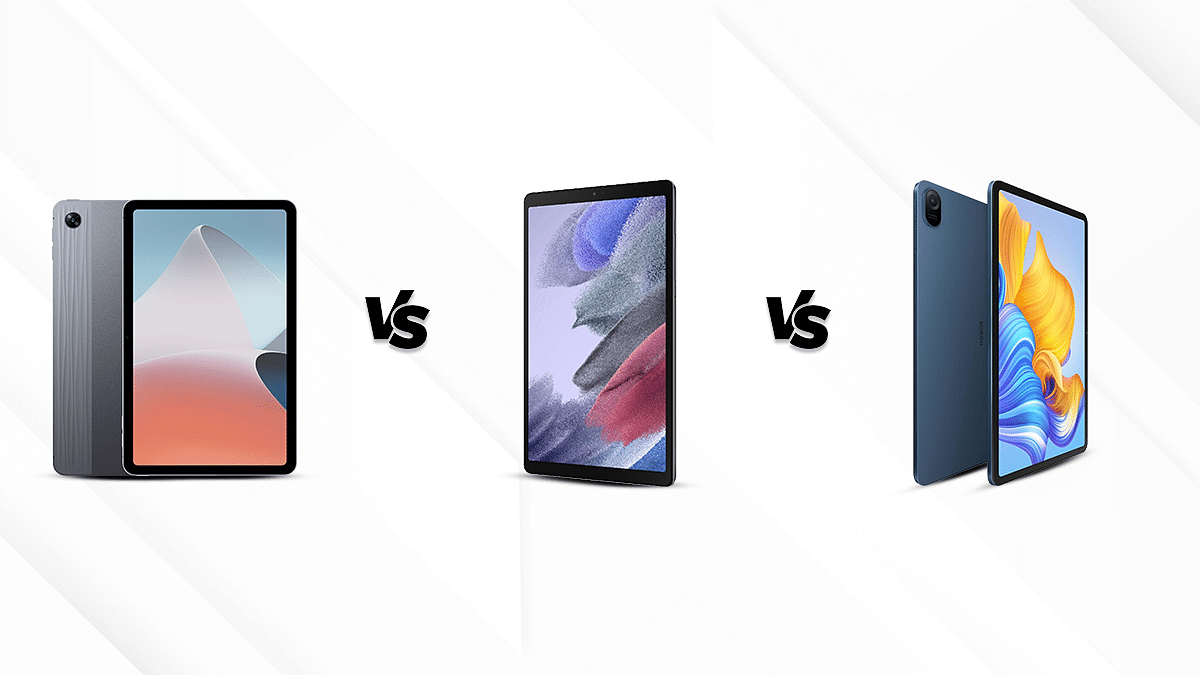
Oppo Pad Air Vs Samsung Galaxy Tab A7 Vs Honor Pad 8: Which Should Be Your Bet

Tablets have seen an upshot in the tech market due to the versatility of functions. As a result, multiple smartphone OEMs have been entering the tablet industry by introducing new models and revamping their portfolios. Similar is the case of the popular smartphone brand Oppo which has forayed into the tablet market by introducing a budget tablet with a premium design and best in-hand feel. Samsung, which already has a strong foothold in the Indian market has been offering stiff competition to others which includes the Chinese tech-giant Honor. So, here we are today to carry out a comparison between the Oppo Pad Air, Samsung Galaxy Tab A7, and the Honor Pad 8.

Display Comparison 

The Oppo Pad Air has a 10.36-inches IPS LCD display. It has a resolution of 1200 x 2000 pixels and a brightness of 360nits.

The Samsung Galaxy Tab A7 has a 10.4 inches display which has a brightness of 1200 x 2000 pixels and a screen-to-body ratio of 79 percent. 

On the other hand, the Honor Pad 8 brings in a 12-inches IPS LCD display and has a resolution of 1200 x 2000 pixels. Moreover, it comes with a brightness of 350nits, which makes it legible even when outdoors. 

Overall, the three tablets offer fairly the same specifications in terms of display. However, the Honor Pad 8 offers the widest screen with a comprehensive visual experience.

Chipset Specifications 

The Oppo Pad Air operates on the Qualcomm Snapdragon 680 crafted using 6nm fabrication. The chipset offers an octa-core CPU cluster and is clubbed with 4GB of RAM/64GB and 128GB storage respectively. It also offers support for expandable memory via a microSD card slot.

The Samsung Galaxy Tab A7 houses Qualcomm Snapdragon 662, which is also an octa-core CPU combined with up to 3GB of RAM along with 32GB and 64GB storage options. This tablet is also available with 4GB RAM and 32GB of internal storage and also offers the feature of expandable memory similar to the OPPO Pad Air. 

The Honor Pad 8 is equipped with Qualcomm Snapdragon 680. It is available in two variants, with 4GB and 6GB of RAM respectively with 128GB of ROM. 

When presented together, we see that the Oppo Air Pad and Honor Pad 8 feature more or less similar performance.

Camera Features 

The Oppo Pad Air has an 8MP (f\2.0) rear camera which supports panorama mode along with a binch of other shooting modes. The Pad Air is also equipped with a 5MP (f\2.2) front camera which allows video recording of 1080P @30fps. The rear camera also has the same 1080p video recording capability.

The Samsung Galaxy Tab A7 also features an 8MP rear camera and a 5MP front camera which is equipped with an autofocus mode and supports 1080P video recording at 30fps. 

The Honor Pad 8 has a 5MP camera, both in the rear and front end. It supports LED flash and also allows video recording of 1080P at 30fps. 

Overall, the Oppo Pad Air and Samsung Galaxy Tab A7 have fairly the same camera features which are good for general photography; specifically, daylight. Also, online conferencing experience will be decent with all three tablets in this list.

Battery and Fast Charging 

The Oppo Pad Air houses a 7100mAh battery which is accompanied by an 18W fast charging technolgy. One full charge can support up to 12 hours of video playback and can be recharged in just two hours. 

The Samsung Galaxy Tab A7 has a 7040mAh battery which can be recharged by the 15W charger in 3 hours. The battery backup claimed isup to 10 hours of video playback. 

The Honor Pad 8 is equipped with a 7250mAh battery which can be fuelled up to full via the 22.5W charger. It takes about two hours to completely charge the tablet to full and can support up to 10 hours of video streaming. 

The Oppo Pad Air has a good battery backup and supports fast charging as well. The Honor Pad 8 and Samsung Galaxy Tab A7 follows. 

Final Verdict 

When we take all the aspects into account, we arrive at the conclusion that all these three tablets are akin to each other. However, if you still would like to choose, the Oppo Pad Air offers to be an effective choice. Overall, the Samsung Galaxy Tab A7 and Honor Pad 8 have offered stiff competition and can be easily seen as its alternatives. 

Categories
Comparison Featured mobile

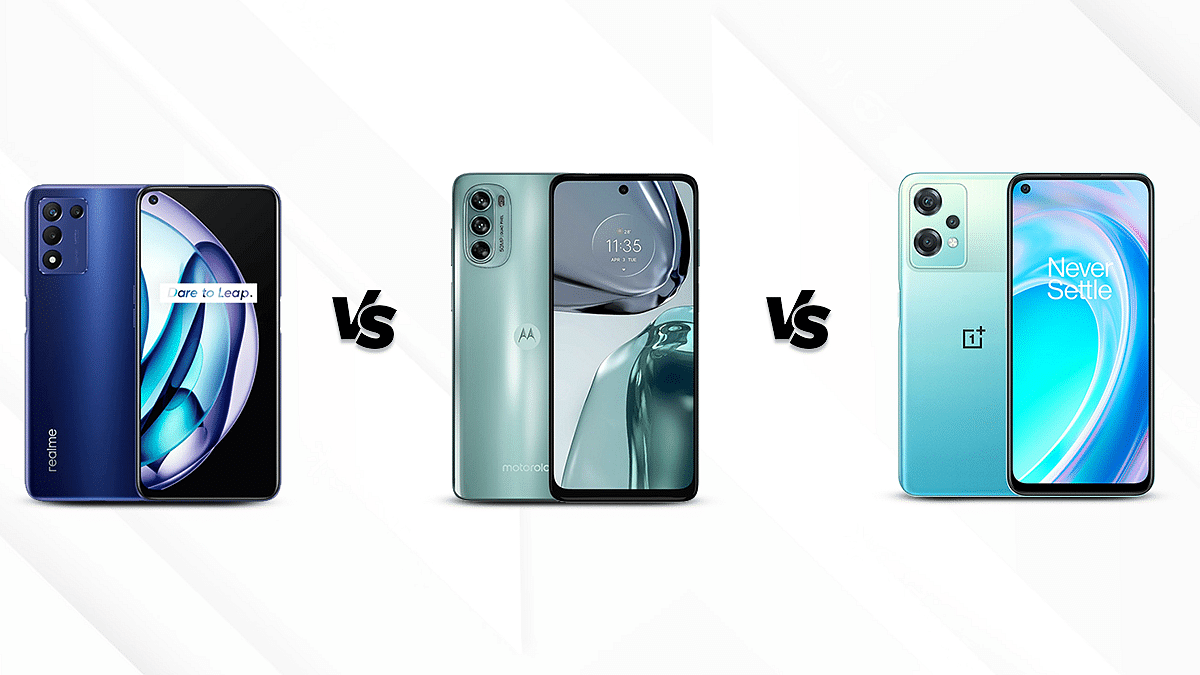
Realme 9 SE Vs Moto G82 Vs OnePlus Nord CE 2 Lite: Best Android Phone Under 20,000 In India

Motorola has continued to introduce new G-series products to the market. The firm wants to compete with a wide range of products in the higher mid-range segment, which at the moment includes products from popular brands such as OnePlus, Redmi, Realme, and more. We decided to compare the Moto G82 5G to the OnePlus Nord CE 2 Lite 5G and the Realme 9 Pro Plus to see how they stack up against the competition.

Display Comparison

The 6.6-inch IPS LCD screen on the Realme 9 SE 5G has a 20:9 aspect ratio and FHD+ resolution of 1080 x 2412 pixels. Additionally, the smartphone wears a thin bezel profile and a punch-hole cutout for the selfie snapper. That’s not it, the Realme 9 SE’s screen has a pixel density of 400ppi and a refresh rate of 144Hz which is the highest in its segment.

The Moto G82’s 6.6-inch P-OLED display has a resolution of 1080 x 2400 pixels and a pixel density of 399ppi. A smooth viewing experience is provided by its 120Hz refresh rate. The display also has a  punch hole design similar to the Realme 9 SE 5G  for the selfie snapper.

The OnePlus Nord CE 2 Lite 5G also has an IPS LCD front screen with an FHD+ resolution of 1080 x 2412 pixels and a 401ppi pixel density. The screen size is 6.59-inches and is surrounded by narrow bezels on the sides. For the selfie camera, this model also has a punch-hole cutout.

Camera Features

The Realme 9 SE has a 48MP f/1.8 main camera supported by a 2MP f/2.4 macro lens and an additional 2MP f/2.4 depth camera with LED flash. Up front, it accommodates a 16MP front camera with an f/2.1 aperture.

The Moto G82 has a 50MP f/1.8 wide-angle main camera at the back. The primary sensor is supported by a 2MP f/2.4 macro camera and an 8MP f/2.2 ultra-wide angle camera. In addition, the camera setup also has LED flash support along with digital zoom, HDR mode, and other shooting modes. The smartphone’s front features a potent 16MP f/2.2 wide-angle selfie shooter.

The OnePlus Nord CE 2 Lite has three cameras at the back including a 64MP f/1.7 primary camera, a 2MP f/2.4 depth camera, and a 2MP f/2.4 macro shooter with an LED flash. Additionally, a 16MP f/2.0 camera up front handles the selfies and video calling department.

Configuration and Battery

The Realme 9 SE runs on a Qualcomm Snapdragon 778G chipset. Additionally, the combination of Adreno 642L GPU and 6GB RAM allows for seamless multitasking and graphics experience. The Realme 9 SE 5G comes with a 5000mAh Li-Polymer battery that is compatible with 30W Dart Charging.

The Moto G82 is equipped with the Qualcomm Snapdragon 695 chipset. With its 6GB RAM and Adreno 619 GPU, the Moto G82  also guarantees fast processing speeds and a rich gaming experience. The Moto G82 has a 5000mAh battery combined with 30W Turbo Power charging.

The OnePlus Nord CE 2 Lite contains the Qualcomm Snapdragon 695 chipset with a 6nm construction process. . Additionally, an Adreno 619 GPU and 6GB of LPDDR4X type RAM are included. The OnePlus Nord CE 2 Lite has a battery capacity of 5000mAh. that supports 33W Super VOOC charging. All three phones have a powerful premium mid-range Qualcomm Snapdragon chipset to deliver a lag-free performance with daily tasks. The gaming experience would be decent with all three phones mentioned in this list.

Storage and Connectivity

The Realme 9 SE 5G has 128GB of internal storage. Using an external microSD card, it can be expanded to up to 1TB. Users can utilize 4G VoLTE networks to make calls for connectivity purposes.  Connectivity aspects on this phone include Bluetooth v5.2, A-GPS with Glonass, 5G, USB Type-C, Mobile Hotspot, and Wi-Fi.

The Moto G82’s internal storage capacity is 128GB. The option to expand by up to 1TB is also available on this phone. Along with A-GPS with Glonass, Bluetooth v5.1, Wi-Fi, USB Type-C, and 4G VoLTE, the smartphone supports also supports 5G and 4G network connections.

The OnePlus Nord CE 2 Lite has a capacity of 128GB. It can be increased up to 1TB. Among the connectivity options are USB Type-C, Bluetooth v5.2, Mobile Hotspot, Wi-Fi, A-GPS Glonass, and USB OTG. Both 4G VoLTE and 5G networks support calling.

Categories
Comparison Featured Tablet

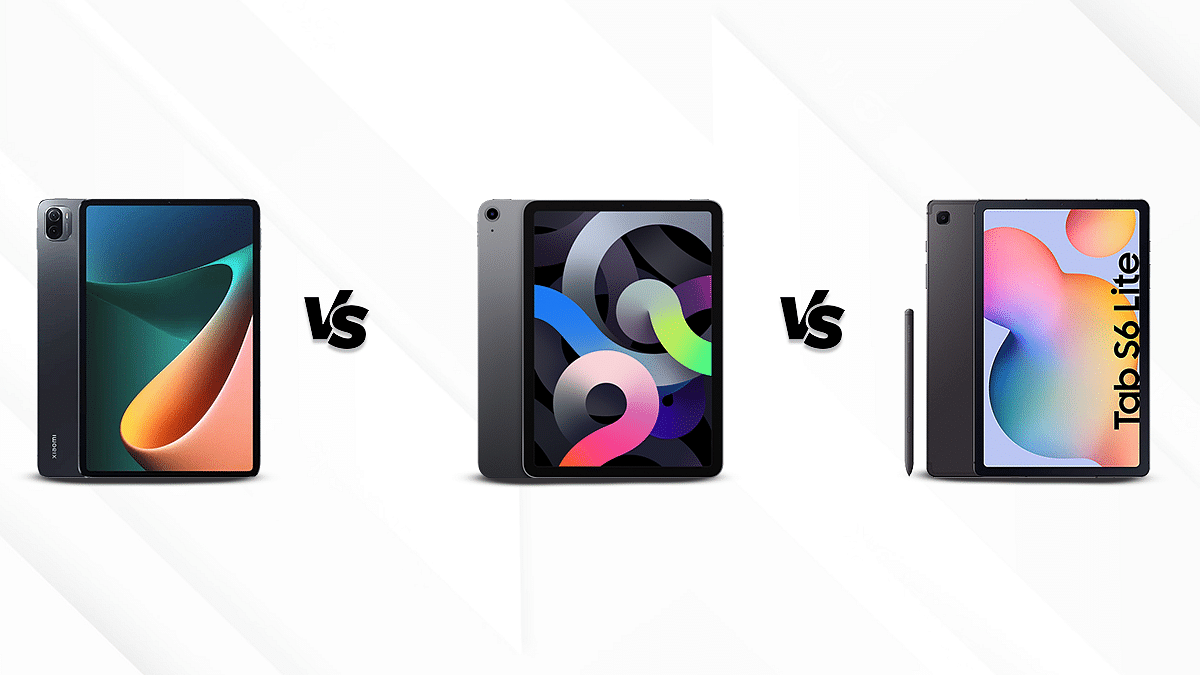
Xiaomi Pad 5 Vs Apple iPad Air Vs Galaxy Tab S6 Lite: The Best Premium Tablets That You Should Consider

Key Highlights

  • The following is the comprehensive comparison between three latest best-selling tablets in India.
  • The Xiaomi Pad 5 offers close competition to the iPad Air and emerged as having a better display. 

The recent decade has witnessed a soaring high demand for tablets. The large screen gadgets have become popular amongst students and work professionals for and versatility in functions. Apple has secured its position in the market for producing high-end flagship gadgets and has faced competition from several Chinese tech giants including Xiaomi which aims at manufacturing cost-effective devices.  Samsung is also popular for its durable gadgets. Today we are comparing three of the best-selling tablets including the Xiaomi Pad 5, the Apple iPad Air, and the Galaxy Tab S6 Lite. Read on to know more- 

SpecificationXiaomi Pad 5Apple iPad AirGalaxy Tab S6 Lite
Display Size11-inch10.9-inch10.4-inch
Resolution1600 x 2560 pixels1640 x 2360 pixels1200 x 2000 pixels
Camera13MP(back); 8MP(front)12MP(back); 12MP(front)8MP(back); 5MP(front)
Processor Snapdragon 860 processorApple M1 chipset Snapdragon 720G chipset
Storage CapacityUpto 6GB RAM and 256GBUpto 8GB RAM and 256GBUpto 4GB RAM and 128GB
Battery 8720 mAh7606 mAh7040 mAh

Display Specifications 

The Xiaomi Pad 5 features an 11-inches screen which has a resolution of 1600 x 2560 pixels. This tablet’s display ensures vivid color production and high brightness levels. It has a refresh rate of 120Hz and a pixel density of 274 PPI which allows for a good viewing experience in general scenarios.

The iPad Air has a liquid retina display which prevents eye fatigue. Moreover, it has a massive screen of 10.9 inches and a pixel density of 264 PPI. Apple tablets are popular for their impressive display output and rich visual experience. Similarly, the iPad Air has a resolution of 1640 x 2360 pixels and comes with a special scratch-resistant glass, which makes it shine as new. 

The Samsung Galaxy Tab S6 Lite is equipped with a 10.4 inches screen with a pixel density of 224 PPI and a resolution of 1200 x 2000 pixels. 

Overall, the Xiaomi Pad 5 offers close competition to the iPad Air and emerged as having a better display. However, the Galaxy Tab S6 Lite isn’t far behind and offers a decent video playback experience.

Chipset Comparison 

The Xiaomi Pad 5 operates on the Qualcomm Snapdragon 860 processor based on a 7nm fabrication process. It is an octa-core CPU with up to 6GB RAM and 256GB storage. It does not feature expandable memory. 

The Apple iPad Air houses an Apple M1 chipset. It is also available in two variants, which have 8GB RAM and 64GB and 256GB of ROM respectively. 

The Samsung Galaxy Tab S6 Lite is equipped with Snapdragon 720G chipset, which is also an octa-core chipset for premium mid-range smartphones and tablets. It is also available in two variants, both of which have 4GB RAM along with 64GB and 128GB of ROM respectively. However, it has an upper edge over the rest of the two in terms of expandable memory. It has a dedicated microSD card slot. 

Overall, the Apple iPad Air offers impressive performance and has higher RAM. 

Camera Features 

The Xiaomi Pad 5 has a 13MP (f\2.0) rear camera which comes with the features such as HDR, panorama mode, 4K, and 1080P video recording. Apart from that, it also comes with an 8MP (f\2.0) front camera for selfies and video calling

On the other hand, the Apple iPad Air has a 12MP (f\1.8) rear camera which supports HDR, PDAF, and 1080P, 4K video recording. It offers electronic image stabilization as well. It also has a 12MP (f\2.4) ultra-wide camera front camera. 

The Samsung Galaxy Tab S6 Lite has an 8MP wide rear camera that supports HDR, panorama mode, and video recording of 1080P@ 30fps. The 5MP ultrawide front camera also captures decent shots. 

The Apple iPad Air has ruled out the others in the camera department. Even though the Xiaomi Pad 5 offers close competition to it. 

Battery and Fast Charging 

The Xiaomi Pad 5 has a massive 8720mAh Li-Po battery. It is accompanied by a 33W fast charging technology. It can be fuelled up to full within just two hours and can support up to 16 hours of video playback. 

The Apple iPad Air features a 28.6Wh battery, which gets charged via the 30W charger. It takes about two hours to completely charge it and it can support up to 10 hours of playback. 

The Samsung Galaxy Tab S6 Lite houses a 7040mAh battery which can be charged by the 15W charger. It takes about three hours and can support up to 13 hours of video playback. 

Overall, the Xiaomi Pad 5 has emerged as the best performer in the battery life department. Moreover, it supports fast chagrin as well. 

Final Verdict: Which One Should You Choose?

The Apple iPad Air emerges as an effective choice over the other two. It has a higher megapixel camera, a richer display, and smooth performance. However, the Xiaomi Pad 5 has succeeded in the battery life and charging department. Overall, the Xiaomi Pad 5 offers stiff competition to the Apple iPad Air and has fairly similar features. The Xiaomi Pad 5 can be chosen as its effective alternative. 

Categories
Comparison Featured mobile

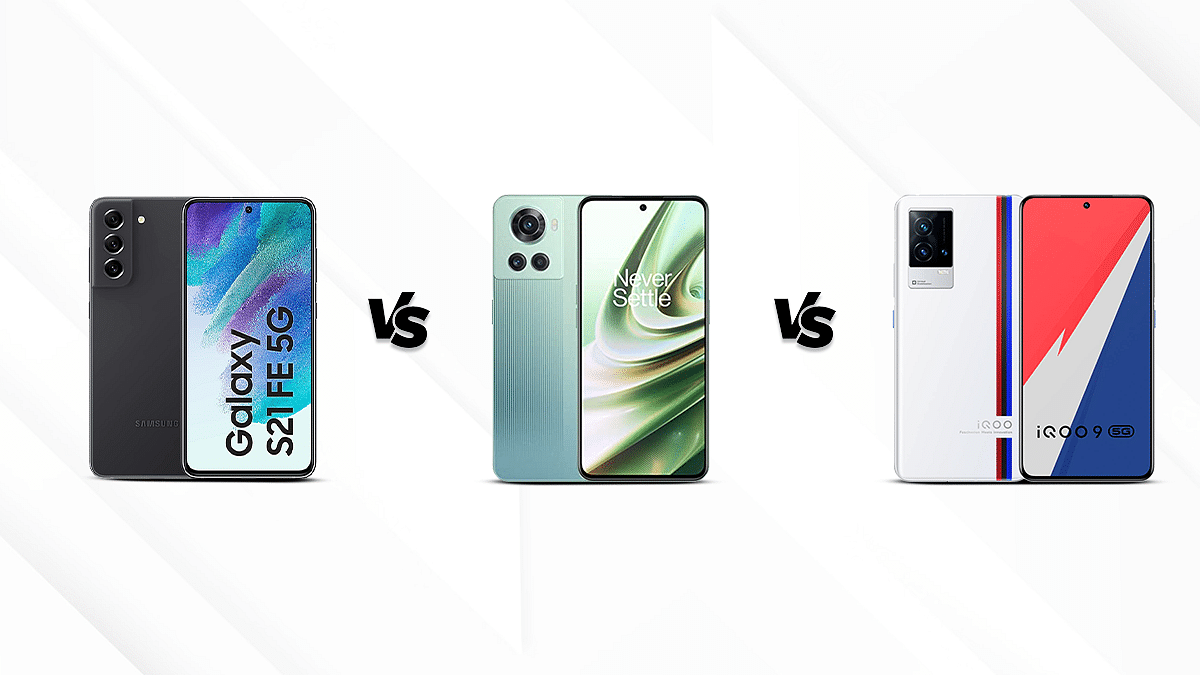
Samsung Galaxy S21 FE Vs OnePlus 10R Vs iQOO 9:Best Premium Gaming phone under Rs.35,000 in India

iQOO despite being a relatively new brand has gained massive popularity amongst the audience for its premium gaming smartphones. The brand has gradually crawled up the ladder and is giving the existing players a stiff competition. Samsung and OnePlus are amongst the top rivals of iQOO in the premium smartphone market. The iQOO 9 is one of the latest gaming handsets that you can buy in India under Rs. 35,000 price mark that goes up against the likes of the Galaxy S21 FE and the OnePlus 10R. But what if you have to buy any one of this model? You can read on this comparison article to be sure of your next buy amongst these three models. Take a look:

Display Specifications

The Galaxy S21 FE comes loaded with a 6.4-inch Dynamic AMOLED display protected by Corning Gorilla Glass Victus layer on top. The panel offers an aspect ratio of 19.5:9 and an FHD+ resolution of 1080 x 2340 pixels. The bezel-less panel sports a punch-hole design for the selfie camera. The panel further supports a 403ppi pixel density besides a refresh rate of 120Hz.

You can get absolute clarity with the OnePlus 10R’s 6.7-inch AMOLED display. This handset definitely offers one of the most vivid and beautiful screens in its league. The QHD+ resolution along with 120Hz refesh rate, and a pixel density of 394ppi makes it suitable for high resolution video playback.

The iQOO 9 features 6.56-inch AMOLED display with a resolution of 1080 x 2376 pixels. For a responsive touch, it offers a refresh rate of 120Hz.  A Corning Gorilla Glass 5 protection layer covers the display on this iQOO phone.

The OnePlus 10R offers a better panel compared to the remaining two specifically if your preference is higher resolution.

Camera Specifications

The Samsung Galaxy S21 FE has a triple camera setup on the back with a 12MP f/1.8 primary camera, an 8MP f/2.4 telephoto shooter, and a 12MP f/2.2 ultra-wide angle lens. The capabilities that are accessible with this configuration includes Dual Pixel autofocus, Phase Detection autofocus, LED flash, ISO Control, Exposure adjustment, Continuous Shooting, HDR mode, Auto Flash, and Face detection. Located on the front is a 32MP sensor with an f/2.2 selfie shooter.

The OnePlus 10R’s rear panel houses a 50MP f/1.8 wide-angle camera, which is supported by an 8MP f/2.2 ultra-wide angle lens and a 2MP f/2.4 macro sensor. A 16MP f/2.4 Wide Angle Camera has been installed on the front of the device by OnePlus, allowing for on-the-go, detailed selfies.

The iQOO 9 is packed with a 48MP f/1.79 primary camera with gimbal stabilization. Aiding the main sensor is a 13MP f/2.2 ultra-wide angle camera, and a 13MP f/2.46 telephoto lens. The front of the device has a 16MP f/2.45 primary camera for taking decent selfies.

Configuration and Battery

The Samsung Galaxy S21 FE draws its power from the Exynos 2100 CPU combined with upto  8GB of RAM. The finest experience is guaranteed with this premium in-house Samsung octa-core chipset. The whole graphics experience is handled by the Mali-G78 MP14 GPU. The 4500mAh Li-ion battery within the Samsung Galaxy S21 FE is strong and it supports 25W fast charging and wireless charging.

The MediaTek Dimensity 8100 Max chipset and 8GB RAM are installed in the OnePlus 10R. The device’s controls all the activities with this high-end Octa-core CPU with a Cortex A78 and Cortex A55 configuration that runs at 2.85GHz. The company has also included a Mali-G610 MC6 GPU, which guarantees a fantastic visual experience. The smartphone has a built-in 5000mAh Li-Polymer battery for power delivery. Additionally, it includes support for an 80W Super VOOC Charging system.

The Qualcomm Snapdragon 888 Plus CPU and a potent 8GB RAM are included in the iQOO 9. Additional features include an Adreno 660 GPU that provide a high-end gaming experience. The smartphone is equipped with a 4350mAh Li-ion battery to enable extended usage. The phone may be fully charged in just 18 minutes thanks to the 120W Flash Charging system.

Storage and Connectivity

There is a huge upto 256GB internal storage capacity on the Samsung Galaxy S21 FE, which is ample for storing photos and videos. It is compatible with A-GPS, 4G VoLTE, 5G, Bluetooth v5.0, Wi-Fi, USB Type-C, Mobile Hotspot, and other connectivity options.

The inbuilt storage on the OnePlus 10R is non-expandable and is upto 256GB. For communication purposes, this handset supports both 4G and 5G VoLTE network connections. Other connectivity options included are Wi-Fi 802.11, b/g/n, Mobile Hotspot, Bluetooth v5.2, USB Type-C, and A-GPS with Glonass.

The iQOO 9 ships with upto 256GB of internal storage. Mobile Hotspot, Wi-Fi, Bluetooth v5.2, NFC, and 5G and 4GVoLTE networks are among the other connectivity choices that are included.

All three phones in this list offer a flagship grade performance under Rs. 35,000 price tag in India. However, The iQOO 9 offers a better gaming experience.

Categories
Comparison Featured Tablet

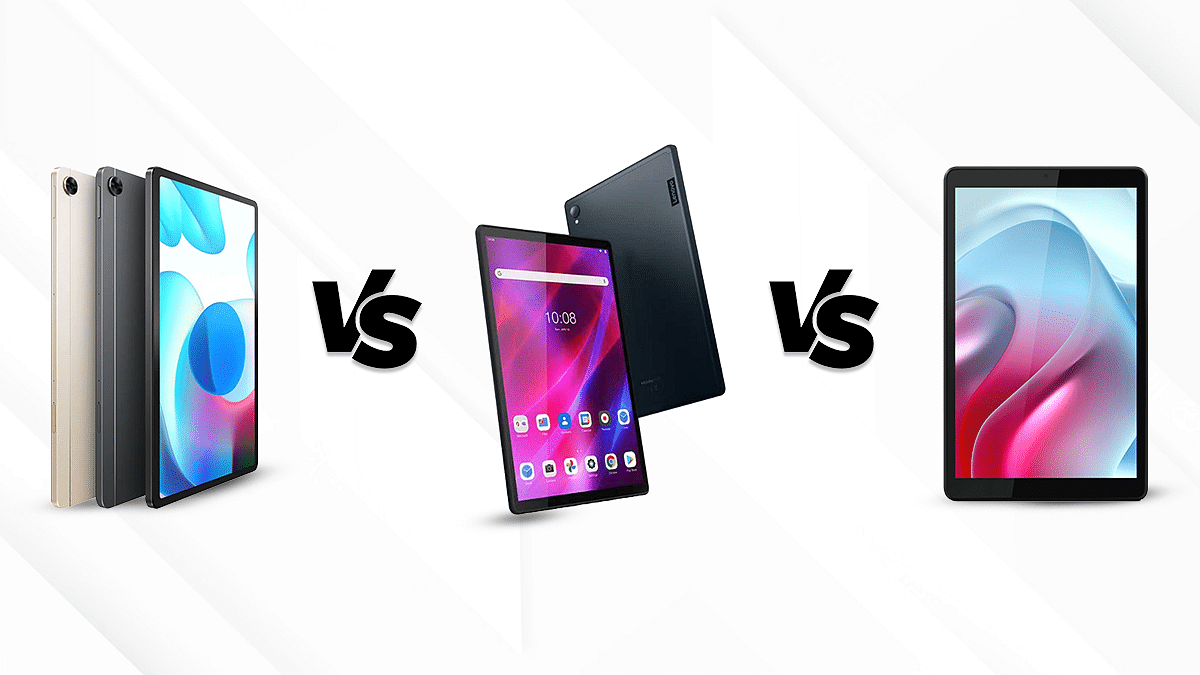
Realme Pad Vs Lenovo Tab K10 Vs Moto Tab G20: Budget-Friendly Tablet You Should Consider

The tablet industry has been throbbing with the incursion of new entry-level tablets into the market. Multiple cost-effective and all-rounder tablets have been launched by the tech behemoths including smartphone OEMs. Lenovo has gained its reputation in the market with its wide range of affordable and flagship tablets and laptops. Similarly, Realme and Motorola have also emerged as the top contenders in the smartphone and tablet industry. Therefore, today we are going to carry out a comparison between Realme Pad, Lenovo Tab K10, and Moto Tab G20 to help you select the best buy

Display Specifications 

The Realme Pad features a 10.4 inches screen with a screen-to-body ratio of 80.2 percent. It is an IPS LCD screen that operates on 1200 x 2000 pixels screen resolution, which ensures an immersive picture quality with video playback. Moreover, it has a brightness of 360nits that allows for average sunlight visibility.

The Motorola Tab G20 features an 8.0 inches IPS LCD display. It has a screen-to-body ratio of 76.5 percent and a resolution of 800 x 1280 pixels that allows for a decent viewing experience on the go. The Moto Tab G20 has a brightness of 350 nits, which ensures a decent output under direct sunlight. 

The Lenovo Tab K10 has a massive display of 10.3 inches which is also an IPS LCD panel similar to the Realme Pad and the Moto Tab G20. This Lenovo budget tablet has a resolution of 1200 x 1920 pixels and a brightness of 330nits which is also identical to that of the Realme Pad. You will get a similar level of viewing experience with the Realme Pad and the Lenovo Tab K10.

Overall, the Realme Pad comes out to offer the best display The Lenovo Tab K10 offers very close competition to it. 

Chipset Comparison 

The Realme Pad operates on the MediaTek Helio G80 chipset that is based on a 12nm fabrication and an octa-core CPU cluster. It is available in three variants, 3GB RAM and 32GB storage, 4GB RAM with 64GB storage, and 6GB RAM along with 128GB native storage capacity. It allows an expandable memory of up to 1TB via a shared SIM card slot. 

The Moto Tab G20 has 3GB RAM and 32GB of ROM. It operates on MediaTek Helio P22T which is also an octa-core chipset for entry-level tablets. However, this processor is slightly less powerful compared to the Helio G80 used on the Realme Pad tablet.

The Lenovo Tab K10 also operates on a MediaTek Helio P22T octa-core chipset similar to the Moto Tab G20. It has a dedicated microSD card slot. It is available in three different variants to choose from including a 3GB RAM and 32GB storage model, 4GB RAM/64GB ROM, and 4GB RAM+128GB ROM. 

Overall, the Realme Pad offers impressive delay-free performance and operates on a more efficient chipset than the other two. 

Camera Features 

The Realme Pad features an 8MP camera, both upfront and at the rear. Moreover, it lets you record 1080p videos@30fps.

The Moto Tab G20 has a 5MP Autofocus rear camera and a 2MP front camera. It also allows video recording of 1080P and 720P at 30 fps respectively. 

On the other hand, the Lenovo K10 is equipped with an 8MP rear camera and a 5MP front camera which supports flash. It also allows video recording of 1080P at 30fps. 

Overall, the Realme Pad offers a higher megapixel camera which is suitable for general photography. However, the overall imaging experience will be quite similar on the Realme Pad and the Lenovo Tab K10 tablets.

Battery and Fast Charging 

The Realme Pad houses a massive 7100mAh battery which is accompanied by an 18W fast charging setup. It takes about three hours to completely charge the tablet and you can expect up to 12 hours of video playback on a single charge. 

The Moto Tab G20 features a 5100mAh battery which can be recharged with the 10W charger. The battery life is about 12 hours with this tablet. On the contrary, the Lenovo Tab K10 brings in a 7700mAh battery that can charge fully within two hours. Moreover, it also can allow 12 hours of video playback like the remaining tablets in this list. 

On comparing all three tablets, we come to the conclusion that all of them offer fairly the same battery backup. However, the Realme Pad has outperformed its competitors in terms of fast charging. 

Final Verdict: Which one should you choose 

After comparing all the key aspects of the three tablets, we arrive at the conclusion that the Realme Pad would be the best choice for the users, which is both affordable and resourceful. The Lenovo Tab K10 has also offered equally tough competition to the former. 

Categories
Comparison Featured Tablet

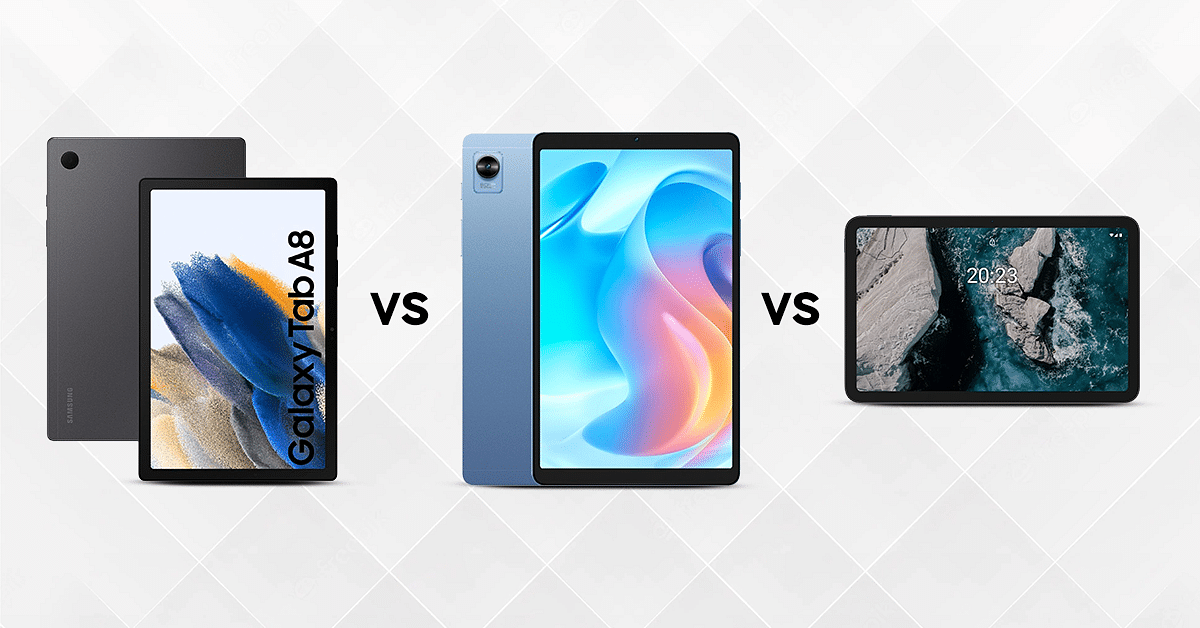
Samsung Galaxy Tab A8 Vs Realme Pad Mini Vs Nokia T20: Best Cost-effective Tablet In India

Tablets have become one of the top preferences for entertainment and professional work. The latest generation Android and iOS tablets assure you of a rich visual experience and powerful day-to-day performance. Realme has been one of the top choices for its premium yet affordable smartphones and tablet models at inexpensive prices. Samsung and Nokia have also emerged as close competitors in the tablet market. Therefore, today we are going to compare three popular budget tablets from these brands. We are pitting down the Samsung Galaxy Tab A8 against the Realme Pad Mini and the Nokia T20. 

Display Specifications 

The Samsung Galaxy Tab A8 features a 10.5 inches TFT LCD display. It has a resolution of 1920 x 1200 pixels, which ensures decent feedback with content production. The panel has a brightness of 330 nits with which offers average outdoor visibility. The Realme Pad Mini has an 8.7-inches LCD screen. The budget Android tablet’s display has a resolution of 1340 x 800 pixels. Moreover, it has a brightness of 360nits with which it will offer a similar outdoor viewing experience as the Galaxy Tab A8. 

The Nokia T20 has a massive screen that measures10.4-inches and is an LCD panel. The display on this budget Nokia tablet operates on a 2K resolution of 1200 x 2000 pixels. It has a maximum brightness of 400nits with which it offers better sunlight visibility compared to the other two models. 

Overall, the Nokia T20 offers better display performance than the rest of the two, it has higher brightness levels along with a 2K resolution. 

Chipset Comparison 

The Samsung Galaxy Tab A8 operates on the Unisoc Tiger T618 processor with an octa-core CPU cluster design. It is available in three different variants 4GB with 64GB and 128GB of internal storage, and 3GB RAM + 32GB storage. Also, the variants are also available in LTE and Wi-Fi models. It additionally supports expandable memory of up to 1TB via an external microSD card. 

The Realme Pad Mini houses the Unisoc T616 octa-core chipset. This is a budget mobile processor for Android smartphones and tablets. The Realme Pad Mini ships with 3GB RAM and 32GB storage, which can be expanded up to 1TB via a microSD card slot.

The Nokia T20 operates on the Unisoc T610 which is also an octa-core chipset for entry level devices. The Nokia T20 is available in three variants, which includes 3GB RAM with 32GB storage and 4GB of RAM along with 64GB of onboard storage. It also has an expandable memory of up to 512GB via a microSD card slot. 

Overall, all three tablets in this list will offer a similar user experience with all tasks with their entry-level Unisoc chipsets.

Camera Features 

The Samsung Galaxy Tab A8 features an 8MP rear camera and a 5MP front camera. Also, the tablet allows you to record FHD videos (1920 x 1080) at 30fps. The Realme Pad Mini is equipped with an 8MP rear camera and a 5MP front camera. Similarly, the Nokia T20 consists of an 8MP rear camera and a 5MP front camera with autofocus. 

Overall, all three tablets feature the same camera specifications and are good for general photography. 

Battery and Fast Charging 

The Samsung Galaxy Tab A8 features a 7040mAh non-removable battery. It is accompanied by a 15W charger, which takes about four hours to refuel it from zero to 100 percent. 

The Realme Pad Mini has a 6400mAh battery and can be completely charged in a little less than three hours via the 18W charger. One single charge can support up to 15.8 hours of video streaming. 

The Nokia T20 has a huge 8200mAh battery, which comes with an a10W fast charger, and can be fuelled up to full within three hours.

In terms of battery life, the Realme Pad Mini offers a long battery life and charges faster than the other two. 

Which One Should You Choose?

 After considering all of their key aspects, we have come to the conclusion that all three tablets offer almost similar specifications. However, the Nokia T20 has an upper hand in the display department, the Samsung Galaxy Tab A8 has a better chipset and Realme is better in the charging category. 

Categories
Comparison Featured mobile

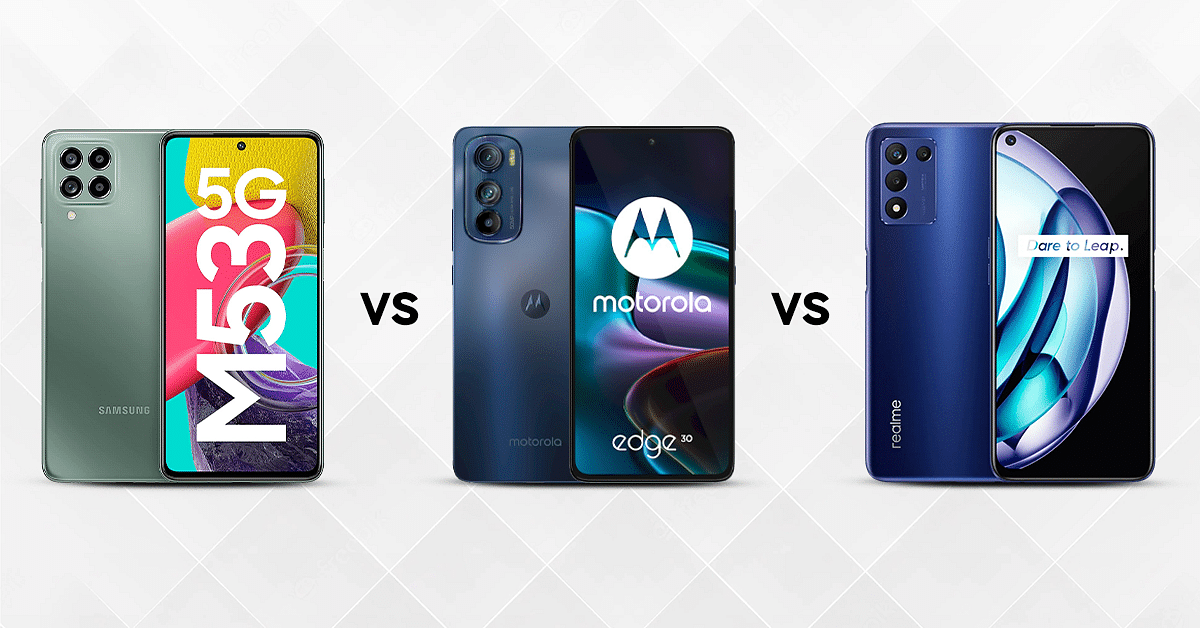
Samsung Galaxy M53 5G Vs Motorola Edge 30 Vs Realme 9 SE 5G: Pocket Friendly 5G Phone In India

If an affordable phone with advanced features is what you are looking for, rest your search. We have compared three phones loaded with quite a variety of user-friendly features. The Samsung Galaxy M53 5G which is a premium mid-range phone that comes at a price of Rs. 23,999. Another good pick in this segment is the recently introduced Motorola Edge 30 which retails at Rs. 26,999 in India.The Realme 9 SE 5G whose price starts at Rs. 16,999 gives both these handsets a tough competition. Which one is the best pick for you? Read on to find out:

Display, Camera And Battery

The Samsung Galaxy M53 5G boasts a large Super AMOLED display measuring 6.7-inches. The screen offers a resolution of 1080 x 2400 pixelsfor a premium viewing experience. The Motorola Edge 30 provides great visual performance with its 6.5 inch FHD+ display . The panel on the latest Motorola Edge series phone supports a resolution of 2400 x 1080 pixels and with DCI-P3 color gamut for high resolution output.

The Realme 9 SE 5G’s display is 6.6 inches IPS LCD gets an FHD screen resolution of 1080 x 2412 pixels and an aspect ratio of 20:9. Also, the bezel-less front screen of the smartphone features a pixel density of 400ppi alongside a refresh rate of 144Hz , providing a fulfilling visual experience.

The Samsung Galaxy M53 5G boasts a rear camera setup  comprising a 108 MP main camera along with an 8 MP ultrawide angle sensor and a 2 MP additional sensor . The front camera has a 32MP lens with an F/2.2 aperture for video calls, photos and selfies.

The Motorola Edge 30 comes with three cameras featuring a 50MP main camera , a 50MP ultra-wide angle camera with 114-degree FOV, and a 2MP third sensor for depth mapping.

The Realme 9 SE features  a 48MP primary camera with an of f/1.8 aperture  . It also has a 2MP macro camera with  f/2.4 dual and an 8MP ultra wide angle camera.

 The Motorola Edge 30 is equipped with a 4020mAh battery which is highly efficient and can deliver over half a day of backup. Thanks to its TurboPower 33W rapid charger that recharging speeds are quick.

The Motorola Edge 30 packs a massive 5000 mAh battery that can be charged via fast charger. The Realme 9 SE 5G is powered by a 5000mAh battery. The battery type is Li-Polymer and compatible with 30W Dart Charging besides being non- be plugged removable by nature.

Processor, RAM And Connectivity

The Samsung Galaxy M53 5G  houses 128GB of internal storage and 8GB RAM.  It has expandable microSD card support as well.

The Motorola Edge 30 runs on Android 12.0 OS and ships with a custom OneUI interface. It runs on the Snapdragon 778G+ 5G chipset for a reliable gaming experience. The Motorola Edge 30 has 6GB / 8GB LPDDR5 RAM to perform best under demanding conditions such as extensive multitasking and gaming. With 128GB internal storage, you’ll have plenty of room to store your photos, music and data all in one place. The Motorola Edge 30 offers a powerful connectivity experience with dual SIM cards, Wi-Fi, Bluetooth, GPS and more.

Inside The Realme 9 SE 5G you’ll find the Qualcomm Snapdragon 778G chipset coupled with 6GB RAM and  128GB internal storage  which can be expanded using a microSD card.

Categories
Chipset Comparison Featured

Qualcomm Snapdragon 888 Vs MediaTek Dimensity 1300 Chipset Quick Comparison

The smartphone industry is evolving with the latest hardware innovations. The modern age mobile phones are all laced with the best-in-class camera, display, and battery features delivering a premium user experience. The chipsets packed inside each smartphone play an equally vital role in delivering a high-end user experience by providing reliable and faster processing speeds.

And when we speak of mobile chipsets, MediaTek and Qualcomm are amongst the two major players offering a wide catalog of options ranging from affordable to the premium segment. We have been consistently comparing the most popular mobile chipsets driving the latest smartphones. This article is a quick comparison between the Qualcomm Snapdragon 888 and the MediaTek Dimensity 1300 processors which are used by some of the best premium Android phones.

Qualcomm Snapdragon 888 Vs MediaTek Dimensity 1300 Processor: CPU Architecture, GPU Comparison

The CPU architecture is one of the most crucial aspects of any processor. Starting with Qualcomm’s premium Snapdragon 888, it has an octa-core CPU cluster with a single Cortex X1 processor with 2.8GHz clock speed, three Cortex A78 cores with 2.42GHz clock speed, and four Cortex A-55 cores with 1.8GHz clock speed. This flagship Qualcomm Snapdragon 800 series processor is fabricated with a 5nm process and ARMv8.4-A instruction set. It offers a frequency range of 2840MHz.

MediaTek has also used an octa-core CPU cluster to design the Dimensity 1300 processor along with the ARMv8.2-A instruction set. The fabrication process used for the Dimensity 1300 processor is 6nm and the frequency range offered is 3000MHz.

Qualcomm has used the Adreno 600 series GPU architecture and integrated the Adreno 660 GPU inside the Snapdragon 888 processor. This flagship grade Qualcomm processor has a high 840MHz frequency range, 1.1 Vulkan, 2.2 OpenCL, and 12 DirectX version.

On the contrary, the MediaTek Dimensity 1300 processor also has the same Vulkan, OpenCL, and DirectX version, but a different Maki-G79 GPU which has a higher 850Mhz GPU frequency. The MediaTek Dimensity 1300 gives tough competition to the Snapdragon 888 SoC in the CPU and GPU performance but falls short by just a few pointers.

Snapdragon 888 Chipset Vs Dimensity 1300 Processor: Memory, Multimedia (ISP)

The memory type supported by the Qualcomm Snapdragon 888 chipset is LPDDR5 with a total memory frequency of 3200 MHz. It can accommodate up to 24GB of maximum memory. The MediaTek Dimensity 1300 processor has the older LPDDR4X RAM support with 4266MHz memory frequency. It offers a maximum memory support of up to 16GB. The storage support offered by the Snapdragon 888 chipset is UFS 3.0 and UFS 3.1, while the Dimensity 1300 just comes with UFS 3.1 storage support.

Speaking of the maximum camera resolution, it’s 2160 x 3840 pixels with the Snapdragon 888 and 1080 x 2520 pixels with the Dimensity 1300. The former enables support for 1 x 200MP and 2 x 25MP max camera resolution which is just 1 x 200MP with the latter. Also, the Snapdragon 888 processor has up to 8K video playback and recording support, while the Dimensity 1300 has 4K@60fps videos recording support.