Categories
Comparison Featured mobile

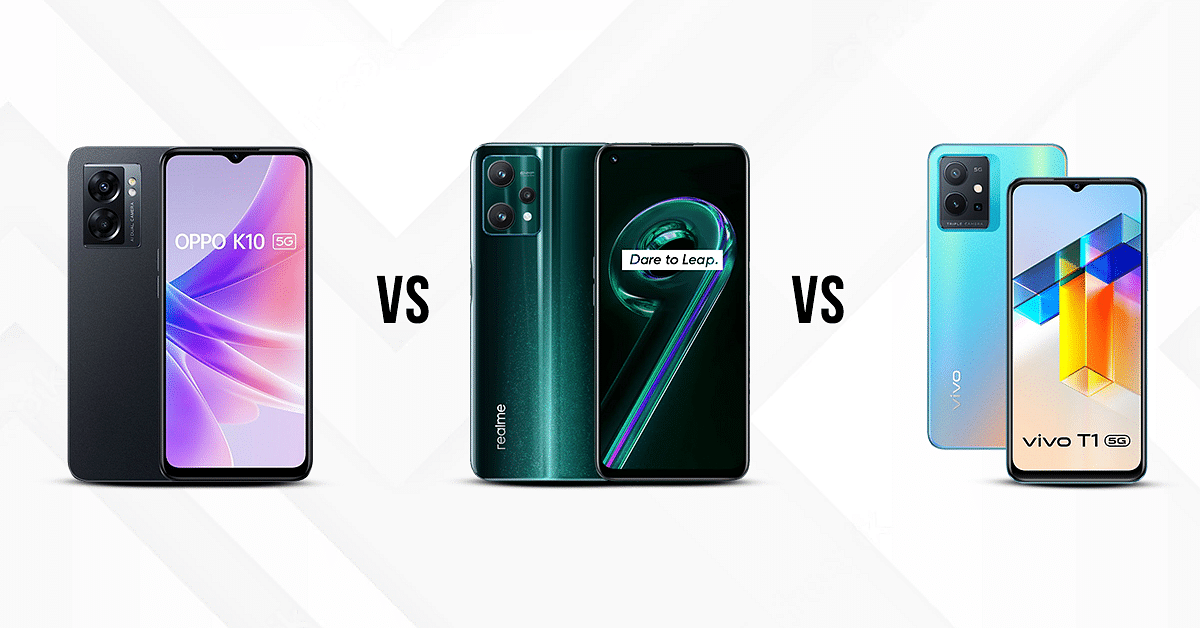
OPPO K10 5G Vs Realme 9 Pro Vs Vivo T1 5G: Mid-Range 5G Mobile Comparison

Looking for an affordable phone under 20k  offering the best specs for a mid-range budget? Look no further. We compared the Oppo K10 5G, Realme 9 Pro, and the Vivo T1 5G in terms of design and performance. The OPPO K10 5G starts at a price of Rs. 16,499, whereas Realme 9 Pro starts at Rs. 18,999, and Vivo T1 5G starts at a price of Rs. 14,999. All these phones cost under 20 thousand and are popular in the budget 5G market. Which model beats the competiton? Read on here: 

Display 

The OPPO K10 5G is designed with an aluminum frame that is dust and scratch-resistant. It is equipped with a 6.56-inch display with a resolution of 1612 x 720 pixels (HD+).The panel offers 90Hz refresh rate for improved visual feedback.

The Realme 9 Pro with its 6.6 inch display that supports a resolution of 2412 x 1080 pixels allows an immersive and vibrant experience on the go. The smooth 120Hz refresh rate cuts down on the usual lag with the frame transitions..

The Vivo T1 also has a powerful display. The screen is big and bright, with a resolution of 2408×1080 pixels. With a 6.58  inch diagonal display and 5G technology, it delivers the best images this side of life. All three phones have a vibrant display for media consumption but the Realme 9 Pro gets better with the high refresh rate.

Camera

The OPPO K10 5G sports a dual-camera setup with a 48-megapixel back. and a 2-megapixel secondary shooter.The rear camera has phase detection autofocus support. The front camera features an 8-megapixels with an f/2.0 aperture for better cclose-upselfies with group pictures.

The Realme 9 Pro packs a punch with its 64MP triple rear camera setup camera.It also boasts a Super Wide camera that measures 8MP and has 119-degree FoV. The Realme 9 Pro is the one of the best selfie camera phones in its league. It features a 16MP selfie snapper inside the punch-hole cutout upfront. The cameras come with a support for Portrait Mode, Beauty Mode, Night Mode, Panoramic view and HDR mode, Face Recognition and more.

The Vivo T1 has a front 16MP camera with f/2.0 aperture. At the rear, it features a 50MP+2MP camera. It also features a 2MP+2MP front-facing selfie camera. With a dual-lens setup, you can also take photos in both portrait and landscape modes. For Video, Portrait mode helps auto detect facial expressions and make emotion transitions in clips seamlessly.

RAM, Storage And Connectivity 

The Oppo K10 5G has 8GB RAM and 128GB internal storage. With 802.11a/b/g/n/ac Wi-Fi and 4G LTE Dual SIM Dual Standby, GPS, Bluetooth v 5.30, NFC support and a USB Type-C port for charging and data transfer. you can connect to the internet wireless on the go.

The Realme 9 pro 5G +5G is a dual sim mobile that comes with 6GB of RAM, 128GB of bbuilt-in storage space, and supports 5G+. This way you can not only stream videos, photos and music flawlessly but you will also be able to play games at higher graphics settings.

Vivo T1 5G is a mid-range phone with with 8GB RAM, 6GB RAM, and 4 GB RAM variants. You can also choose between 128GB and 512GB variants. It has Bluetooth 5.1, Type-C and supports OTG connection. It comes with dust-proof and water-resistant features, as well as NFC support.




Categories
Chipset Comparison Featured

Qualcomm Snapdragon 780G Vs MediaTek Helio G99 Chipset Comparison: Best Mid-Range Gaming Processor

Planning to buy a new smartphone? Specifically an Android handset? Well, you have got numerous of options from multiple popular Chinese and non-Chinese smartphone OEMs when you step out to buy one. And most of the smartphone OEMs are currently relying on chipsets from either Qualcomm or MediaTek to power mid-range and flagship-grade handsets.

Qualcomm’s Snapdragon series and MediaTek Helio, Dimensity mobile processors are the commonly found chipsets in most Android phones. We already have compared several of the latest chipsets from both these brands to see which one offers good performance in terms of CPU, GPU, and memory.  This time we are pitting down two of the most popular premium mid-range chipsets from both these brands. From Qualcomm, we have selected the Snapdragon 780G which is game-centric processor. Whereas, from MediaTek, we have chosen the Helio G99 which is also a mid-range gaming processor.

Qualcomm Snapdragon 780G Vs MediaTek Helio G99 Chipset: CPU Architecture

Starting this comparison with the Snapdragon 780G chipset, Qualcomm has fabricated it on 5nm process and used an octa-core CPU architecture featuring a single Cortex-A78 core clocked at 2.4GHz, three Cortex A-78 cores clocked at 2.2GHz, and four Cortex A55 cores clocked at 1.9GHz.

On the contrary, MediaTek has designed the Helio G99 chipset using a 6nm fabrication process and has used an octa-core COU architecture comprising two 2.2GHz Cortex-A76 cores and six Cortex A55 cores clocked at 2GHz. The frequency range is 2400MHz with the Snapdragon 780G chipset and 2200MHz with the Helio G99 chipset. Qualcomm has used a better CPU cluster compared to MediaTek for its premium mid-range processor.

Snapdragon 780G Vs Helio G99 Processor: GPU Comparison

The Qualcomm Snapdragon 780G ships with the Adreno 642 GPU which is from the Adreno 600 GPU series. Whereas, the Helio G99 chipset has the Mali-G57 MC2 GPU integration which is from Valhall GPU architecture. The Qualcomm chipset comes with 490MHz GPU frequency with two execution units and 384 shading units. It has a 1.1 Vulkan version, 2.0 OpenCL, and 12 DirectX version which is the same as the Helio G99 and its younger sibling, i.e., the Snapdragon 778G processor. In terms of GPU performance, the Qualcomm Snapdragon 780G is slightly battery compared to the Helio G99.

Snapdragon 780G Vs Helio G99 Processor: Memory, Multimedia (ISP)

As far as memory compatibility is concerned, both Qualcomm Snapdragon 780G and the Helio G96 ships with LPDDR4X memory support. However, the memory frequency range is different. The Qualcomm Snapdragon chipset delivers a 2133MHz frequency, while the Helio G99 processor offers 4266MHz frequency range. Also, the maximum RAM allocation with the Snapdragon 780G is higher at 12GB, whereas, the Helio G99 has a lower up to 10GB max memory size support. In terms of storage, the Snapdragon 780G chipset offers the latest UFS 3.1 storage support, while the Helio G99 comes with older UFS 2.2 storage compatibility. 

Speaking of the multimedia support, the Qualcomm Snapdragon 780G chipset offers a max display and camera resolution of 3360 x 1600 pixels and 1x 192MP, 2x20MP respectively. This chipset has the ability to record up to 4K@30fps videos. The video playback support is also the same.

The MediaTek Helio G99 supports 1080 x 2520 pixels max display resolution and 1 x 10⁸MP, 2X 16MP max camera resolution support. This gaming processor has a lower video recording support of 2K@30fps. The Snapdragon 780G outperforms Helio G99 in these segments as well.

Categories
Comparison Featured Tablet

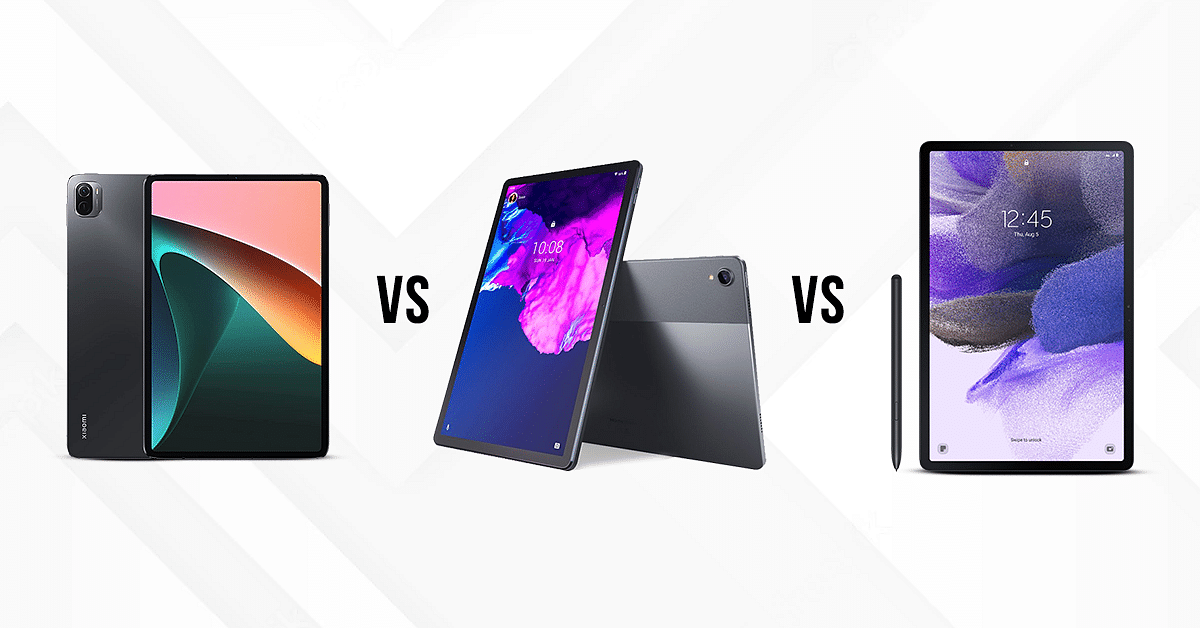
Xiaomi Pad 5 Vs Lenovo Tab P11 Pro Vs Galaxy Tab S7 FE: Premium Mid-Tier Tablet You Should Buy!

Tablets have emerged as effective alternatives to other tech gadgets in recent times, specifically smartphones. As a result, an upsurge has been witnessed with new tablet launches in the market. One of the latest top brands in the tablet industry is Xiaomi which is giving Lenovo and other popular tablet OEMs a hard run for the money. Similarly, Samsung has also launched many entry-level tablets in the market and has also seen its expertise with the flagship Android tablets. Today, we are going to carry out a comparison between the Xiaomi Pad 5, Lenovo Tab P11 Pro, and the Galaxy Tab S7 FE

Xiaomi Pad 5 Vs Lenovo Tab P11 Pro Vs Galaxy Tab S7 FE: Full Spec Sheet Comparison

Display Specifications 

The Xiaomi Pad 5 features an 11-inches screen which is an IPS LCD Panel with a resolution of 1600 x 2560 pixels. It has a pixel density of 275 PPI and a refresh rate of 120Hz which ensures smooth performance. Having a brightness of 500nits, it offers decent sunlight legibility when outdoors. 

The Lenovo Tab P11 Pro is equipped with an 11.5-inches display, Instead of the standard LCD screen, this tablet offers a high-res OLED display with a brightness of 500nits which ensures a clear picture outdoors. In order to prevent eye fatigue, it is low-blue-light certified. It allows superior quality streaming with its 2K screen resolution of 2560 x 1600 pixels. 

The Samsung Galaxy Tab S7 FE is also a premium mid-range Android tablet that features a 12.4 inches TFT panel. This display on this Samsung tablet delivers a resolution of  2560 x 1600 pixels. It has a maximum brightness of 430nits, which ensures clear visuals. 

Overall, the Lenovo Tab P11 Pro stands at the top in the display department since it operates on 2K resolution and has an OLED with high brightness. 

Camera Features 

The Xiaomi Pad 5 is packed with a 13MP rear camera, which captures vivid quality shots. 

The rear camera on the Pad 5 tablet also allows you to record cinematic 4K videos at 30fps and 1080p videos at 30fps. It has an 8 MP front camera, which features Auto Focus, HDR, and Panorama shooting modes for enhanced selfies. ‘

The Lenovo Tab P11 Pro is packed with a powerful set of dual cameras, both in the front and the rear end. It has a 13MP +5MP front camera (with autofocus and fixed focus). It also has a dual front camera, which includes an 8MP+8MP with fixed focus. 

The Galaxy Tab P11 has an 8MP rear camera and a 5MP front camera. It also allows the users to record UHD 4K videos at 30 fps. 

Considering all the camera aspects, the Lenovo Tab P11 Pro came out to be the best since it has dual cameras both up front and back. The Xiaomi Pad 5 and Galaxy Tab S7 FE offer decent camera hardware for general photography. 

Chipset Comparison 

The Xiaomi Pad 5 operates on the Qualcomm Snapdragon 860 chipset octa-core, which can handle intensive tasks with ease. The Pad 5 is available in two variants, both of which feature 6GB RAM along with 128GB and 256GB of onboard storage respectively. However, it does not feature expandable storage support. 

The Lenovo Tab P11 Pro houses the Qualcomm Snapdragon 730G chipset under the hood with an octa-core architecture. This premium range Lenovo tablet has 6GB RAM and 128GB of native storage space. It also allows an expandable memory of up to 256GB via a microSD card slot. 

The Galaxy Tab S7 FE runs on the Qualcomm Snapdragon 750G chipset with an octa-core CPU cluster. It is available in three variants including 4GB RAM + 64GB ROM, 6GB RAM+128GB ROM, and 8GB RAM+256GB. It also allows an expandable memory of up to 1TB via a microSD card slot. 

Overall, the Xiaomi Pad 5 is an efficient performer but does not allow an expandable memory. This feature is best available in Galaxy Tab S7 FE, which allows the users to expand the memory up to a whopping 1TB. 

Battery and Fast Charging 

The Xiaomi Pad 5 is equipped with an 8720mAh battery, which is accompanied by a 33W fast charging technology. One single charge can take up to two hours (zero to 100 percent) and can support up to 16 hours of video playback. 

The Lenovo Tab P11 Pro is furnished with an 8600mAh battery and can be recharged with a 20W charger, this tablet takes about four hours to refuel.

The Galaxy Tab S7 FE is equipped with a 10,090mAh battery, which can support up to 13 hours of video playback. It can get completely changed within 3 hours. 

The Xiaomi Pad 5 comes out to be the top performer since it offers faster quick charging. However, the Galaxy Tab S7 FE has the biggest battery module that will ensure a longer backup.

Final Verdict: Which One Should You Choose?

On carrying out a deep analysis, the Xiaomi Pad 5 stands at the top of the podium. However, the Lenovo Tab P11 Pro offers tough competition in the display and the camera department. The Xiaomi Pad 5 is inexpensive and cost-effective. But, if you want a better camera quality, the Lenovo Tab P11 Pro is a clear alternative. 

Categories
Chipset Comparison Featured

Qualcomm Snapdragon 865 Vs Snapdragon 778G Chipset: Which One Fairs The Competition?

Qualcomm Snapdragon 778G seems to be the favourite mobile chipset for smartphone OEMs. iQOO, Vivo, OPPO, and other major smartphone giants have released several models powered by the SD 778G chipset in recent times.  But the Snapdragon 865 is also getting its share of popularity amongst smartphone manufacturers for premium mid-range offerings. Continuing our series of chipset comparisons, we have added the Snapdragon 865 and the Snapdragon 778G processors to the list.

Qualcomm Snapdragon 778G Chipset Vs Snapdragon 865 Chipset: CPU Architecture Comparison

The Snapdragon 778G is comparatively older than the Snapdragon 865 chipset and is designed using 6nm fabrication. The SD 865 has been fabricated using a 7nm fabrication process. The instruction is ARMv8.2-A on the Snapdragon 865 and ARMv8.4-A on the Snapdragon 778G. Speaking of the core architecture, both these premium mobile processors have octa-cores. The SD 865 features one 2.84GHz Cortex-A77 core, three Cortex-A77 cores with 2.42GHz clock speed, and four Cortex A-55 cores clocked at 1.8GHz.

The Snapdragon 778G processor CPU cluster comprised a Cortex-A78 core clocked at 2.4GHz, three Cortex-A78 cores clocked at 2.2GHz, and four Cortex-A55 cores with 1.9GHz clock speed. This chipset offers improved CPU performance compared to the SD 778G SoC.

Snapdragon 865 Vs Snapdragon 778G Chipset: GPU Performance

Both Qualcomm Snapdragon 865 and the Snapdragon 778G processor feature the same Adreno 600 series GPU architecture. However, the former embeds the Adreno 650 GPU, whereas, the latter has the Adreno 642L GPU. The GPU frequency range is 580MHz with the SD 865 chipset and 490MHz with the Snapdragon 778G processor. Both chipsets offers two execution units, 1.1 Vulkan Version, 2.0 OpenCL version, and 12 DirectX version. Similar to the CPU architecture, the GPU performance is also good with the SD 865 compared to the SD 778G processor.

Snapdragon 865 Chipset Vs Snapdragon 778G Processor: Memory, Multimedia (ISP)

Qualcomm Snapdragon 778G processor and the Snapdragon 865 processor integrate the same LPDDR5 memory type, but the memory frequency range is different on both phones. The former chipset has a 2,750MHz frequency range, whereas, the latter comes with a 3200MHz memory frequency. The maximum memory support is 16GB with both these Qualcomm premium processors.

In terms of storage compatibility, the Snapdragon 865 processor has the UFS 3.0 and UFS 3.1 storage support and the Snapdragon 778G chipset comes with UFS 2.1, UFS 2.2, UFS 3.0, and UFS 3.1 storage type compatibility. Speaking of multimedia compatibility, the Snapdragon 865 processor offers 2160 x 3840 pixels max display resolution, whereas the max camera resolution type is 1 x 200MP and 2 x 25MP resolution.

The Snapdragon 778G chipset comes with 1080 x 2520 pixels max camera resolution support and 1 x 192MP, 2 x 36MP max camera resolution support. The video playback and recording compatibility is 8K@30fps and 4K@120fps with the SD 865. On the other hand, this is just 4k@30fps with the SD 778G processor. The Snapdragon 865 once again offers better multimedia performance.

Categories
Chipset Comparison Featured

Qualcomm Snapdragon 870 Vs Dimensity 9000 Premium Chipset Comaprison: Which Is Better?

Qualcomm and MediaTek mobile chipsets are undeniably the driving force for every other Android smartphone and tablet available in the market. While there are a couple of other players in this market, both these brands have got a stronghold. The Snapdragon 870 is a premium range Qualcomm chipset that offers reliable performance along with 5G network support and has been used by multiple popular premium Android phones. MediaTek has been competing Qualcomm’s high-range Snapdragon 800 series chipsets.

The Dimensity 9000 is one of the latest flagship MediaTek chipset that is giving some tough competition to the new-generation Snapdragon 800 series processors including the Snapdragon 870 SoC. We have compared both these mobile chipsets to see which one offers a better spec-sheet.

Qualcomm Snapdragon 870 Vs Dimensity 9000 Chipset: CPU Architecture

Qualcomm’s Snapdragon 870 is a 7nm chipset that has octa-cores comprising a single 3.2GHz Cortex-A77 core, three Cortex-A77 cores clocked at 2.42GHz, and four Cortex A-55 cores clocked at 1.8GHz. The instruction set is ARMv8.2A and the frequency range is 3200MHz. The MediaTek has used an altered ARMv9-A instruction set for the Dimensity 9000 chipset which is designed on a thinner 4nm fabrication process.

The Dimensity 9000 chipset has a single Cortex-X2 core clocked at 3.05GHz, three 2.85GHz Cortex-A710 cores, and four Cortex-A510 cores clocked at 1.8GHz. The overall frequency range is 3050MHz. Out of both, the Dimensity 9000 processor has a better CPU architecture compared to the Snapdragon 870. However, the Qualcomm chipset doesn’t fall behind much.

Dimensity 9000 Vs Snapdragon 870 Processor: GPU Hardware

The MediaTek Dimensity 9000 chipset ships with an integrated Mali-G710 GPU support which has the Valhall 3 architecture. The Qualcomm Snapdragon 870 chipset embeds the Adreno 600 GPU architecture based Adreno 650 GPU. The Snapdragon 870 processor has a 675Mz of GPU frequency with two execution and 512 shading units.

Whereas, the Dimensity 9000 processor comes with 850MHz GPU frequency and 10 execution, 512 shading units. The Dimensity 9000 processor has 1.1 Vulkan version, 2.0 OpenCL, and 12 DirectX version. The figures are same with the SD 870. The GPU performance is slightly better with the Dimensity chipset.

Qualcomm Snapdragon 870 Vs Dimensity 9000 SoC: Memory, Multimedia (ISP)

The Qualcomm Snapdragon 870 chipset has the LPDDR5 memory integrated, while the Dimensity 9000 processor has the advanced LPDDR5X RAM support. The former chipset comes offers a 2750MHz frequency, while the latter has a higher 3750MHz memory frequency. Qualcomm has integrated support for UFS 3.0 and UFS 3.1 storage, whereas MediaTek has opted for the higher UFS 3.1 storage support only.

The maximum display resolution supported by the Snapdragon 870 chipset is 2160 x 3840 pixels resolution. This is lower on the Dimensity 9000 at 1440 x 2960 pixels. The max camera resolution compatibility with SD 870 is 1 x 200MP and 2 x 25MP. The Dimensity 9000 chipset takes a lead here with 1 x 320MP and 3x32MP camera resolution support. Qualcomm SD 870 can record and playback up to 8K@30fps and the Dimensity 9000 processor can only record and playback up to 4K@30fps videos.

Categories
Comparison Featured TV

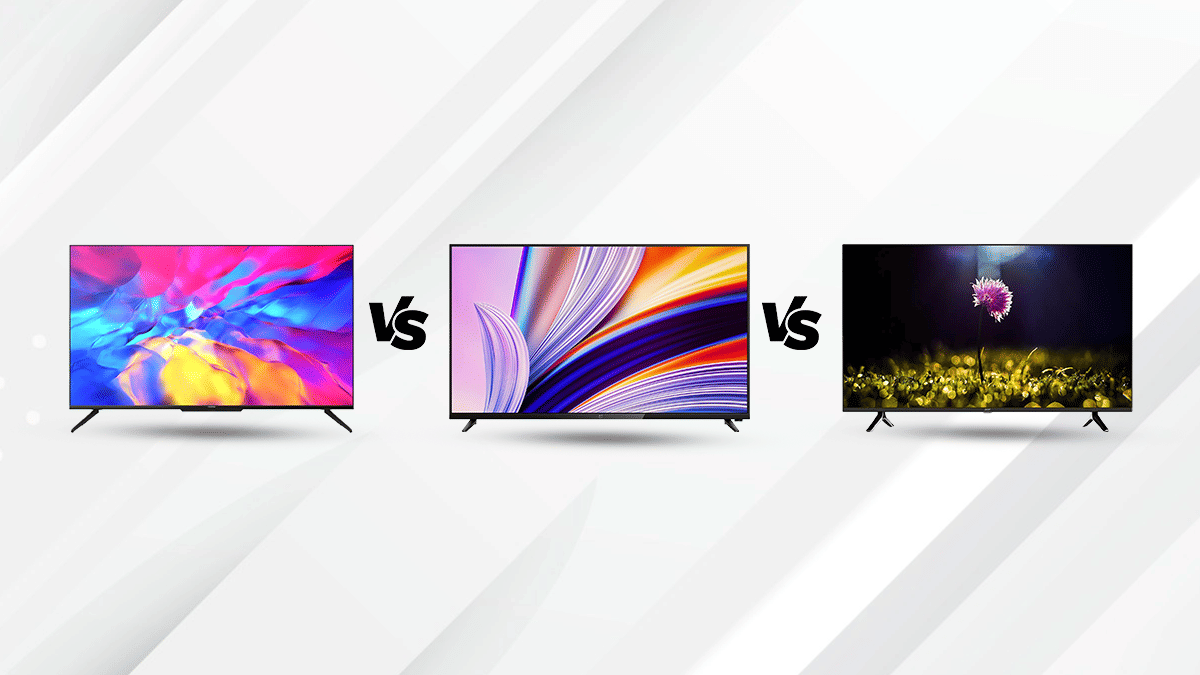
Realme Smart TV 4K Vs OnePlus TV Y1 Vs Acer AR50AP2851UDFL LED 4K TV Comparison: Best Smart TV Under Budget

There are multiple television brands in the market offering numerous options for the audience. So in case, you’re having trouble finding a suitable TV with advanced features, this comparison article can be an aid in your decision. The Realme Smart TV starts at Rs. 29,999, whereas The OnePlus TV 43Y1s Pro starts at a price of Rs. 25,999, and the Acer AR50AP2851UDFL starts at a price of Rs. 29,999

Design And Display

The Realme Smart TV 4K 43-inch is a modern high-end product equipped with the some advanced technologies. It flaunts a large screen size measuring 43-inch with a resolution of 3840 x 2160 pixels. The Realme smart TVs display has a 16:9 aspect ratio, 178° viewing angle, and 1.07 billion colors for a great visual experience. It is equipped with Dolby Vision and Chroma Boost for enhanced picture quality.

The OnePlus 43-inch TV 43Y1s Pro is a Smart TV has resolution of 1920 x 1080 Pixels, that offers great performance in an elegant minimalist package. Featuring 93% DCI-P3 color gamut and HDR, the visual quality becomes  better.The Acer AR50AP2851UDFL 50-inch LED 4K TV comes with a  screen resolution of 3849 x 2160 Pixels. This TV is ideal for home entertainment with the advanced picture and audio quality. With its large screen and high-quality performance; you can easily do your daily activities like watching videos, viewing photos, and browsing the web.

OS And Features

The Realme Smart TV 4k 43inch runs on Android 10 TV OS. The 4K smart TV ships with Dolby ATMOS support  for realistic audio effects. The Smart TV comes with a bunch of built-in apps like Netflix, Amazon, and more. It also comes with google assistant.

The OnePlus TV 43Y1s Pro is a Smart TV that runs on Android 9.0 and supports a 64-bit Quad-Core chipset with Cortex A53 architecture. The OnePlus TV 43Y1s lets you connect with multiple devices and has features such as Dolby Audio surround sound, built-in Google Assistant ,and Alexa. It also has a built-in Chromecast that allows streaming content from a phone or tablet wirelessly.

The Acer AR50AP2851UDFL is equipped with 64-bit Quad Core processor. This TV features google assistant and Chromecast compatibilty, Acer has equipped this TV with 2GB RAM and 16GB of internal storage. It offers standard connectivity options such as HDMI, USB ports, Blu-rays speakers and so on.


Categories
Comparison Featured Tablet

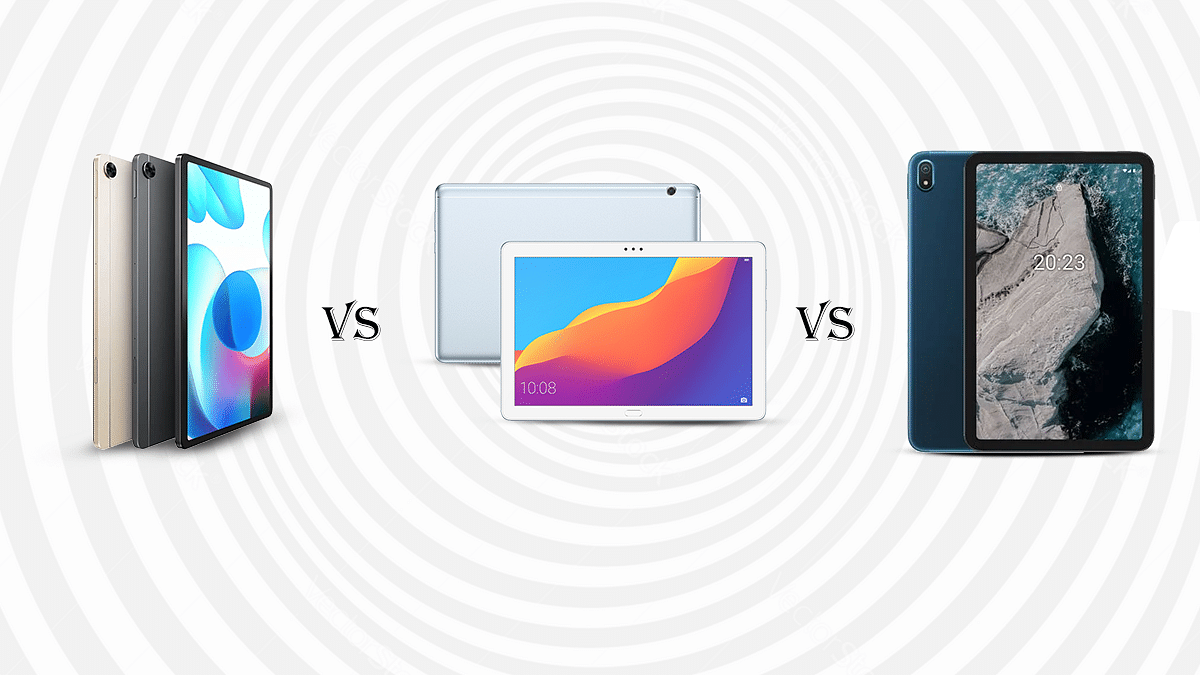
Realme Pad Vs Honor Pad 5 Vs Nokia T20:The Best And Affordable Tablet To Buy In India

The tech market has recently witnessed an upsurge in the entry-level tablets. The OEM’s have been vigorously manufacturing multiple affordable and cost-effective tablets with excellent features. Among them, Realme and Honor have been upgrading their portfolios, by launching new tablets. The former recently forayed in the tablet industry, while the latter is revamping its business with the Honor Pad 5 in India. 

Nokia has also been one of the top performing tablet and smartphone manufacturers and has secured a strong foothold in the Indian market. We are going to compare the Realme Pad, Honor Pad 5 and Nokia T20 affordable tablets in this article. Read on here:

Display Specifications 

The Realme Pad features a screen of 10.4-inches which is an LCD panel. It has a resolution of 2000×1200 pixels and a screen-to-body resolution of 82.5 percent. It has a typical brightness of 360 nits, and the feature of sunlight mode which allows good visibility outdoors.

The Nokia T20 has a 10.4 inches screen, which operates on al 2K resolution of 1200 x 2000 pixelsThis budget Nokia Tablet’s display has a brightness of 400 nits, which is higher, when copmpared to the Realme Pad. It is specifically curated to minimize eye-fatigue with itslow blue light certification.

The Honor Pad 5 is furnished with a 8-inch wide Full HD screen, which delivers rich visuals. It has a resolution of 1920 x 1200 pixels and a pixel density of 283PPI. Moreover, it has a screen-to-body ratio of 74.63 percent. 

Overall, the Nokia T20 and the Realme has an upper hand which ensures crisp and clear output. 

Camera Features 

The Realme Pad features an 8MP HD camera, both in the front and the back. The front camera can capture wide-angle shots, of up to 105 degrees. Moreover, it has a dual-mic setup to ensure a crisp voice during voice and video calls. The face recognition feature can instantly unlock the tablet. 

The Nokia T20 is packed with an 8MP auto-focus front camera and a 5MP front camera with fixed focus. It captures decent shots with good details. 

The Honor Pad 5 is equipped with an 8MP front and back camera, which supports HDR, Digital Zoom, auto flash and CMOS image sensor, which caprtures excellent shots. 

All three tablets offer a basic camera hardware that is suitable for general photography. 

Chipset Comparison 

The Realme Pad houses a gaming processor i.e the Helio G80 based on a 12nm octa-core fabrication. Apart from that,this mid-range Android tablet is available in two different variants, the first one with 3GB RAM and 32GB of storage and the second one with 4GB RAM and 64GB of ROM. Also, it has an additional feature of expanding memory support of up to a whopping 1TB via external microSD card. 

The Nokia T20 operates on the Unisoc T610 which is also an octa-core chipset for entry-level devices. The Nokia T20 is available in two variants, the first one features 3GB RAM and 32GB of internal storage and the second one comes with 4GB of RAM along with 64GB of onboard storage. It also allows an expandable memory of up to 512GB via a microSD card slot. 

The Honor Pad 5 operates on the in-house Kirin 710 processor. The octa-core chipset is combined with 3GB of RAM and 32GB of ROM, which can be expanded up to 512GB via a microSD card slot. 

After taking all the aspects into consideration, the Realme Pad comes out to be the best performer both in terms of chipset and performance. The Nokia T20 and Honor Pad 5 have similar features except Nokia features a much more efficient chipset than the latter. 

Battery and Fast Charging Capabilities 

The Realme Pad is equipped with a 7100mAh Li-ion battery. It is accompanied by an 18W fast charger that takes about three hours to completely charge it. It can allow up to 12 hours of continuous video streaming with one single charge. 

The Nokia T20 offers a huge 8200mAh battery that supports 15W fast charging.However, it comes with a 10W charger. It takes about three hours to completely recharge the tablet, that allows up to ten hours of video streaming.

Unlike other tablets, the Honor Pad 5 features a standard battery of 5100mAh. It is supported by a quick charging technology and one complete charge can offer up to 10 hours of video playback. 

Overall, the Nokia T20 offers the biggest battery among the three. However, as per the company claims the Realme Pad can support up to 12 hours of video play, which is more than the Nokia T20 and the Honor Pad 5. 

Final Verdict- Which One Should you Choose?

When compared, we came to the conclusion that Realme Pad will be the best choice. However, the Nokia T20 has an upper hand in the battery and display display department. Overall, the Realme Pad is an absolute value for money and is a resourceful tablet. 

Categories
Comparison Featured Mobile

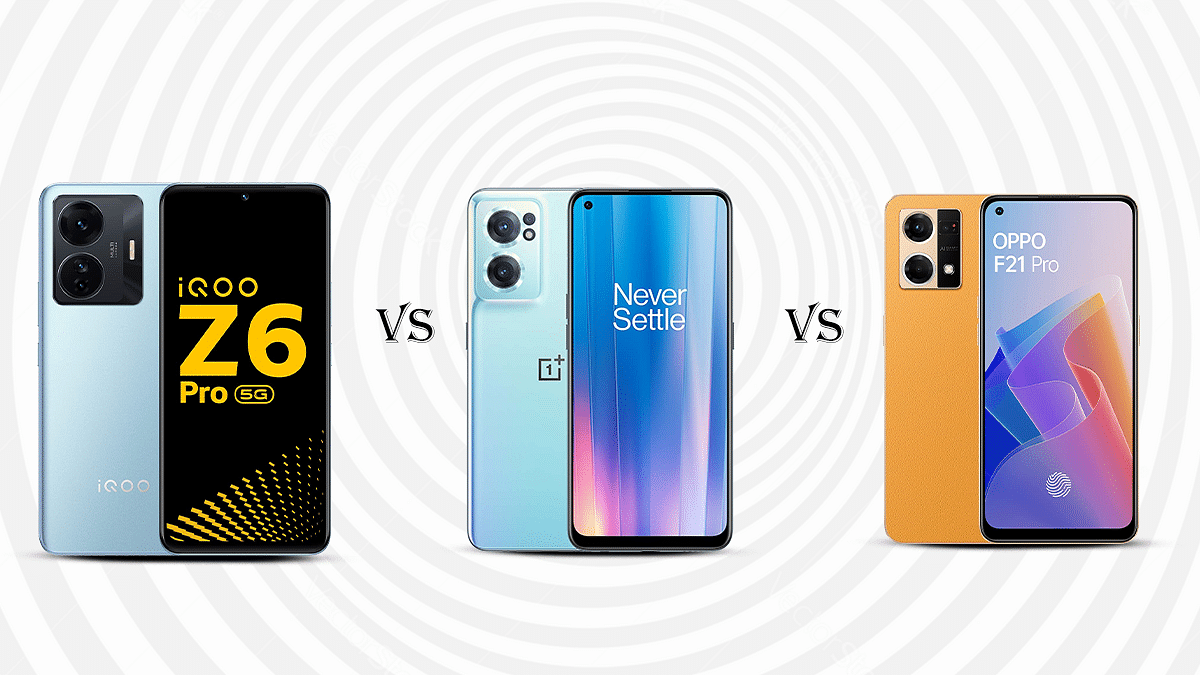
iQOO Z6 Pro 5G Vs OnePlus Nord CE 2 5G Vs Oppo F21s Pro: Best Mid-Range 5G Smartphone To Buy In India

After the introduction of 5G-ready smartphones in the market, multiple smartphone OEMs have flooded the market with mid-range and affordable 5G-ready phones. iQOO, Oppo, and OnePlus have been amongst the top contenders for offering such future-ready smartphones at cheaper rates. Today we are going to carry out a comparison of the iQOO Z6 Pro 5G, OnePlus Nord CE 2 5G, and Oppo F21s Pro are currently the trending mid-range 5G smartphones in India. All three smartphones offer advanced hardware and flagship performance. We have compared their key aspects below:

Display Comparison

The iQOO Z6 Pro 5G features a massive 6.44-inch screen which is  an AMOLED panel. It has an impressive resolution of 2404 × 1080 pixels  which ensures an immersive visual experience. Moreover, it has a refresh rate of  90Hz for fluid scrolling and frame transition with graphics extensive games and  videos. 

The OnePlus Nord CE 2 5G also ensures crisp visuals with its 6.4-inch fluid AMOLED display. This premium mid-range OnePlus Nord CE series offers and has a screen resolution of 2400 x 1080 pixels. It also has a refresh rate of 90Hz similar to the iQOO Z6 Pro 5G and a pixel density of 409ppi.

The Oppo F21s Pro has a 16.33cm AMOLED display and a resolution of 2400 x 1080 pixels. It also comes with a standard refresh rate of 60Hz. 

When compared, all the smartphones have a similar refresh rate and pixel density. Specifically, the iQOO Z6 Pro 5G and the OnePlus Nord CE 2. All three phones will be suitable for video consumption and gaming, but the feedback will be best with the iQOO Z6 Pro 5G and the OnePlus Nord CE 2. 

Chipset, RAM, and Storage 

The iQOO Z6 Pro 5G operates on the efficient Snapdragon 778G 5G chipset. It is available in three variants 6GB RAM with 128GB of ROM, 8GB RAM with 64GB ROM, and 12GB RAM with 128GB of ROM. On the other hand, the OnePlus Nord CE 2 5G houses the MediaTek Dimensity 900 processor, which is also an octa-core chipset for premium mid-range phones. It is available in two variants, the first one comprises 6GB RAM and the second one comprises 8GB RAM, both with 128GB of internal storage. Both this mid-range  Android phones also come with expandable microSD card support for extra storage requirements. 

The Oppo F21s Pro operates on the Qualcomm Snapdragon 695 processor with an octa-core CPU architecture. It is available in only one variant, which has 8GB RAM and 128GB native storage capacity of ROM. 

The iQOO Z6 Pro 5G ranks higher than the other two smartphones in terms of processing power; thanks to its powerful Snapdragon 778G chipset. The Nord CE 2 and the OPPO F21s Pro follows. 

Battery and Fast Charging Differences

The iQOO Z6 Pro 5G features a 4700mAh battery, which comes with 66W fast charging support. It can instantly charge the smartphone to 50 percent in just 18 minutes (as periQOO). It has plenty of battery life which can easily get you throughout the day. 

The OnePlus Nord CE 2 5G is equipped with a slightly smaller 4500mAh battery and is accompanied by a 65W SUPERVOOC fast charger. As per the company’s claims, the battery on the Nord CE is quite reliable and can be fuelled up to full within just 30 minutes. 

On the other hand, the Oppo F21s Pro 5G houses a 4500mAh battery, which is accompanied by a 33W SUPERVOOC charger. It can get completely charged within an hour. 

When compared, the iQOO Z6 Pro 5G delivers top performance in the battery at the top of its game. Since it features a slightly bigger battery and faster quick charging speed. However, the OnePlus Nord CE 2 5G offers a faster-charging speed and doesn’t fall behind with its flagship 65W SUPERVOOC charger. 

Camera Comparison

The iQOO Z6 Pro 5G is equipped with a powerful set of cameras, which includes a 64MP + 8MP wide-angle + 2MP macro camera. Apart from that, the smartphone also has a 16MP front camera, which captures good portraits and selfies. It also offers multiple modes to choose from, which include night mode, dedicated 64MP shots, portrait, panorama, HDR, AI stickers, time-lapse, and slow-motion. 

The OnePlus Nord CE 2 5G boasts a triple camera setup, which comprises a 64MP the primary camera, an 8MP ultra-wide camera, and a 2MP macro camera. Its cameras capture clear and vivid shots with remarkable ease. The 16MP front camera clicks good quality shots. Its camera features include AI scene recognition, AI highlight video, HDR, nightscape, portrait mode, panorama, and retouching. 

The Oppo F21s Pro also possesses a triple camera setup, which includes a 64MP the primary camera, a 2MP macro camera, and a 2MP mono camera. It is equipped with a 32MP front camera, which captures stunning selfies with great detail.  

Overall, the iQOO Z6 Pro 5G and OnePlus Nord CE 2 5G feature the same camera specification and capture high-quality shots. On the other hand, the 32MP  front camera that Oppo F21s Pro features gives it an upper hand over the other two in the selfie camera department. 

Which One To Choose?

Overall, all three smartphones have similar specifications in all spheres but after analyzing all the key aspects, the iQOO Z6 Pro 5G comes out to be the top performer. It has a wider screen, a bigger battery, and a higher resolution display. Moreover, it also offers multiple variants to choose from with different RAM and storage combinations. However, the OnePlus Nord CE 2 5G isn’t lagging behind and gives equally tough competition to the iQOO Z6 Pro 5G. The Oppo F21s Pro has better selfie camera hardware.

Categories
Comparison Featured TV

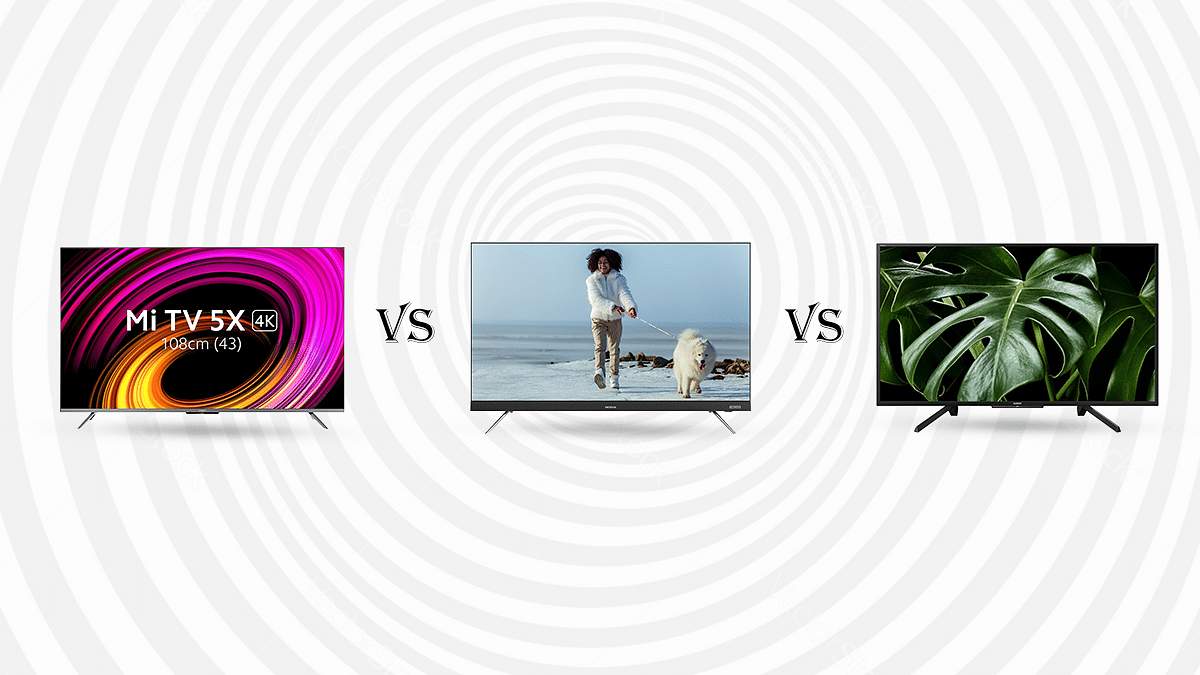
Xiaomi Mi TV 5X 43-inch UHD Smart LED TV Vs Nokia 43TAUHDN 43-inch UHD Vs Sony Bravia 43-inch Full HD Smart TV: Which One To Consider?

In this modern era where we have a plethora of options in the smart TV segment, choosing one is not easy. Specifically, with the availabilty of numerous pocket friendly yet feature rich TVs. ; That’s why we have compared these three 43inch TV’s in this article to help you find the perfect big screen for your living room. The Xiaomi Mi TV 5X 43-inch UHD smart TV starts at a price of Rs. 31,999, while the Nokia 43TAUHDN starts at Rs. 32,999. Both these TVs are quite popular amongst the Indian audience and gets a stiff competiton from Sony which has been the pioneer in the audio/visual market. The Sony Bravia  43-inch UHD TV starts at  Rs. 35,999.

Design And Display

The Mi TV 5X 43-inch LED 4K TV features a  4K UHD resolution of 3840 x 2160 pixels with support for High Dynamic Range (HDR) content. With a wide 178-degree viewing angle and 170 pixels per inch on its total pixel count, this TV delivers sharp and clear output with balanced contrast in every corner of the screen.

The Nokia 43 TAUHDN is a also a 43-inch 4K TV with 3840 x 2160 pixel resolution and 60Hz refresh rate. The black look is a typical Nokia color scheme, with a small chrome logo at the top adds to the appeal. The TV can be mounted on the wall mounted and also on a table-top.

The Sony Bravia 43-inch LCD TV has a Full HD resolution of 1920 x 1080 pixels, perfect for watching high-resolution videos, playing extensive games, and consume other high-end content. It also features X Reality Pro technology for  crystal clear images, deeper blacks, and more realistic shades of color.

OS And Features

The Xiaomi Mi TV 5X is powered by a 64-bit quad-core A55 CPU with Mali G52 MP2 GPU, 2GB RAM, and 16GB RAM internal storage. This smart TV runs on Android 10 with PatchWall 4 OS on top.  The MI TV 43-inch is equipped with several pre-installed apps like Mi Home App, Google Assistant, kids mode with parental lock and IMDb integration.

The Nokia 43 TAUDHN is powered by a powerful Quad Core chipset along with Mali GPU for graphics. This premium mid-range smart TV ships with 2GB RAM and Android 9.0 with 16GB storage. The TV comes with in-built Chromecast and Google Assistant support.

The Sony Bravia runs on Linux operating system. The TV supports FAT16/FAT32/NTFS. The TV comes with In-built screen mirroring and supports apps like YouTube, Netflix, and so on.

Out of all three models, the Xiaomi MI 5X 43-inch UHD and the Nokia 43-inch TAUDHN UHD smart TV offer high-end features at an affordable price. However, all three TVs in this list are perfect for consuming high-resolution content from OTT platforms and from USB drives. The Sony Bravia model will be slightly expensive compared to the remaining two models but will offer an equally good performance with 1080p video playback.

Categories
Comparison Featured Mobile

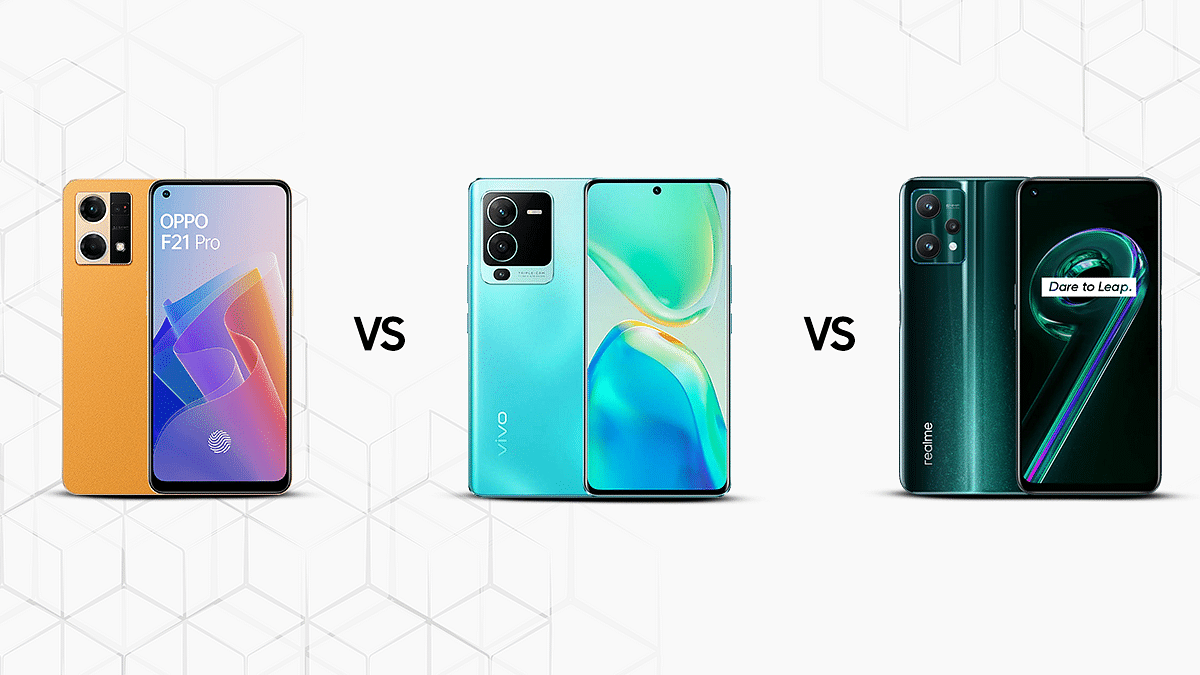
OPPO F21s Pro Vs Vivo V25 Vs Realme 9 Pro: Which Phone Owns The Crown?

OPPO F21s Pro and the Vivo V25 are the new entrants in the mid-range market. Both of these phones are now competing for a slot in this segment alongside the Realme 9 Pro. All three phones include triple-back cameras, fast battery charging, and compelling looks in their own way.

Therefore, it should go without saying that a thorough comparison of these three phones was necessary. Here, we outline the OPPO, Vivo, and Realme phones you should think about purchasing in the sub-Rs. 30,000 price range.

Design And Display

The OPPO F21s Pro comes with orbit light around the camera. It has a glossy plastic finish and a back with a thin retro design at the back that could easily become a fingerprint magnet. It features a 6.43-inch AMOLED screen with full HD+ resolution and a 60Hz refresh rate.

The Vivo V25, on the other hand, has a back panel made of Anti-Glare glass, which can change color when sunshine or UV rays strike it. With a 6.44-inch AMOLED screen and a 90Hz refresh rate, the phone’s display offers Full HD+ resolution.

Moving to the Realme 9 Pro, the phone boasts a 6.60-inch Super AMOLED display with support for Full HD+ resolution at 1080 × 2400 pixels. The phone comes with a 120 Hz refresh rate. The screen of the device has a punch-hole design that houses the front camera.

Performance

Snapdragon 695 is the processor used by the OPPO F21s Pro. The smartphone has 8GB of RAM and 128GB of internal storage. The operating system for the F21s Pro is ColorOS 12.1 which is based on Android 12.

If we talk about the Vivo V25, the MediaTek Dimensity 900 SoC is the chip that drives the Vivo V25. Up to 12GB of RAM and 256GB are available in this device. Additionally, you have the option to virtually increase the RAM to 8GB. The device uses Android 12-based Funtouch OS 12 out of the box.

Besides, Realme has used an octa-core Qualcomm Snapdragon 695 processor to power the 9 Pro device. The phone comes paired with either 6GB or 8GB RAM and 128GB internal memory that is further expandable. The phone runs on Realme UI 3.0 based on Android 12.

Cameras

The triple rear camera system on the OPPO F21s Pro includes a 64MP primary sensor, a 2MP depth sensor, and a 2MP macro sensor. Up front, the device has a 16MP selfie camera.

The Vivo V25, on the other hand, has three cameras on the back: a 2MP macro camera, an 8MP ultra-wide sensor, and a 64MP primary sensor with optical image stabilization. The V25 boasts a massive 50MP front camera with eye AF for selfies.

The Realme 9 Pro comes with a quad rear camera that consists of a 64MP primary sensor, 8MP ultra-wide-angle sensor, and 2MP sensor. On the front, you get a 16MP selfie camera to click selfies and video calls.

Battery

While the OPPO F21s Pro has a 4,500mAh battery that supports 33W fast charging out of the box, the Vivo V25 packs a 4,500mAh battery and supports 44W fast charging. Moving to the Realme 9 Pro, the phone houses a 5,000mAh battery that supports fast charging via a USB Type C port.

Verdict

OPPO F21s Pro is another mid-range phone that tries to differentiate with its color-changing design. The display of all three phones is pretty much the same, except for the 120Hz refresh rate support from Realme. OPPO and Realme are using the same chipset to power the phone, which has been an effective option in this price range.

The cameras aren’t too dissimilar either, but Vivo clearly takes the crown with its 50MP selfie camera. Realme 9 Pro gives you a bigger and more long-lasting battery than the other two.