Categories
Comparison Featured Tablet

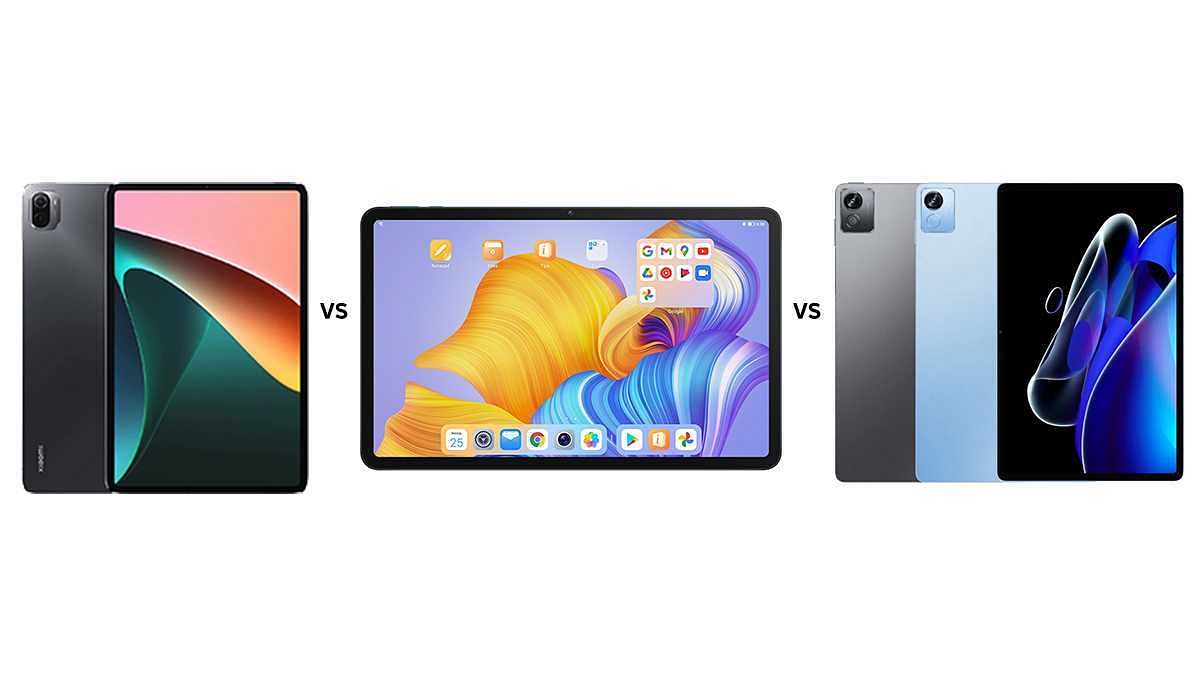
Xiaomi Pad 5 Vs Honor Pad 8 Vs Realme Pad X: Best Premium Mid-Range Tablet

Android tablet industry is witnessing a major spike in new launches and sales. Smartphone OEMs are contributing fairly to the business and are flooding the market with products in different segments. In the premium mid-tier league, the Xiaomi Pad 5 is one of the best models that cater to students and working professionals with its powerful internals and a high-resolution display.

The Realme Pad X also brings in some heat with an affordable price tag and 5G network support. Both these tablets get a new rival in the Indian market in the Honor Pad 8. We have compared all these three tablets to see which one has a better price-to-specs ratio.

Xiaomi Pad 5 Vs Honor Pad 8 Vs Realme Pad X: Display Specifications

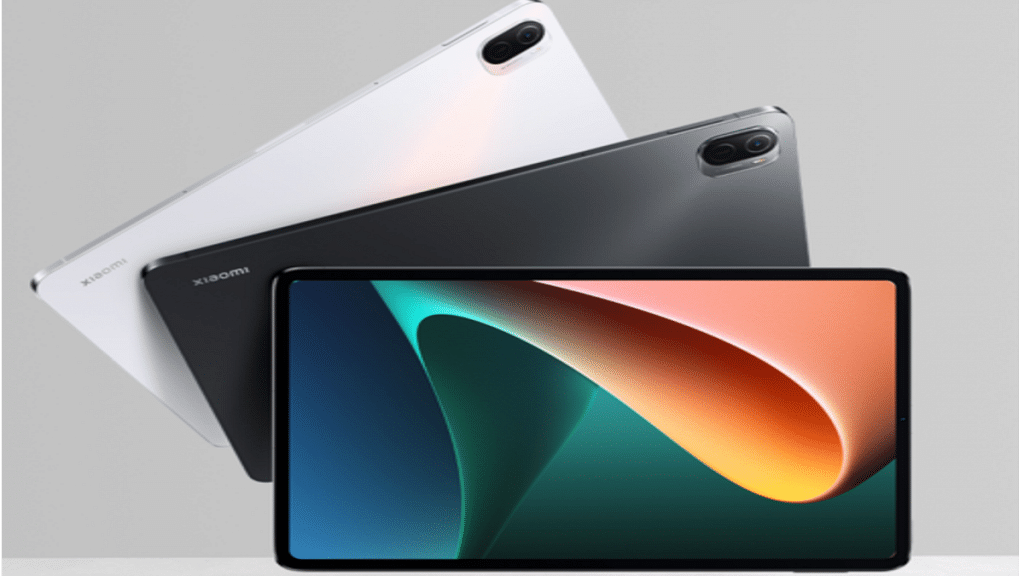
The Xiaomi Pad 5 flaunts an 11-inch display which is an IPS LCD panel supporting a 1600 x 2560 pixels resolution. The additional 120Hz refresh rate and HDR10 Dolby certification make it perfect for consuming high-res videos via online streaming platforms and also fluid gaming visuals.

The Honor Pad 8 competes fairly with its bigger 12-inch display which is also an IPS LCD panel with 350 nits peak brightness level. The display has a 1200 x 2000 pixels screen resolution which is also suitable for binge-watching content on the go.

The Realme Pad X’s 10.95-inch IPS LCD screen also delivers an immersive visual experience with a 1200×2000 pixels screen resolution. The brightness levels are better on this model comparatively with 450 nits peak brightness.

Xiaomi Pad 5 Vs Honor Pad 8 Vs Realme Pad X: Hardware Performance

The Xiaomi Pad 5 runs on the Qualcomm Snapdragon 860 7nm processor. The octa-core CPU has Adreno 640GPU support which can render some of the extensive graphics with ease. RAM capacity is up to 6GB which is ample for multitasking, while up to 256GB storage is sufficient for storing daily files and media.
The Honor Pad 8 is also driven by a mid-range Qualcomm Snapdragon processor. However, Honor has used a Snapdragon 600 series chipset. The Snapdragon 680 chipset powers this tablet which is a standard 4G chipset, unlike the remaining two models. The Honor Pad 8’s octa-core chipset gets Adreno 640 GPU support for graphics and up to 6GB RAM and 128GB storage configuration.

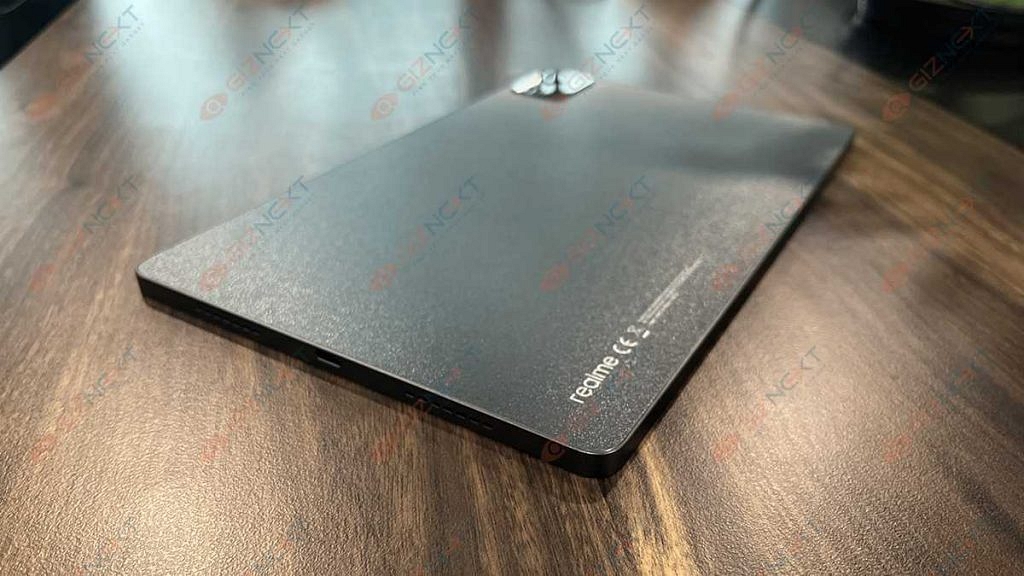
The Realme Pad X is powered by the Snapdragon 695 5G octa-core processor. The device churns out a good amount of power for daily tasks and gaming. This tablet also comes with up to 6GB RAM and 128GB storage configuration.

Xiaomi Pad 5 Vs Honor Pad 8 Vs Realme Pad X: Camera Specification

If a better camera is your preference for frequent online conferencing, the Xiaomi Pad 5 and the Realme Pad X will make the best fit in this list. Both these 5G tablets feature a 13MP main camera lens and an 8MP selfie sensor. On the contrary, the Honor Pad 8 has a set of 5MP sensors for selfies as well as primary imaging.

Xiaomi pad 5 Vs Honor Pad 8 vs Realme Pad X: Battery, Fast Charging Support

The Xiaomi Pad 5 has an 8,720 mAh battery unit with 33W fast charging support, while the Honor Pad 8 has a relatively smaller 7,250 mAh battery unit with 22.5W fast charging. The Realme Pad X gets its juice via an 8340 mAh battery unit that is aided by 33W fast charging. A bigger battery and faster charging support is an advantage with the Xiaomi Pad 5 and the Honor Pad 8.

Which Tablet To Consider?

If budget constraints isn’t an issue, the Xiaomi Pad 5 is the best in the lot considering faster performance speeds. The Realme Pad X makes for an equally good companion with the affordable price tag premium mid-range Snapdragon 695 chipset.
Categories
Chipset Comparison Featured

Samsung Exynos 850 Vs MediaTek Helio G80 SoC: Budget Mobile Chipset Comparison

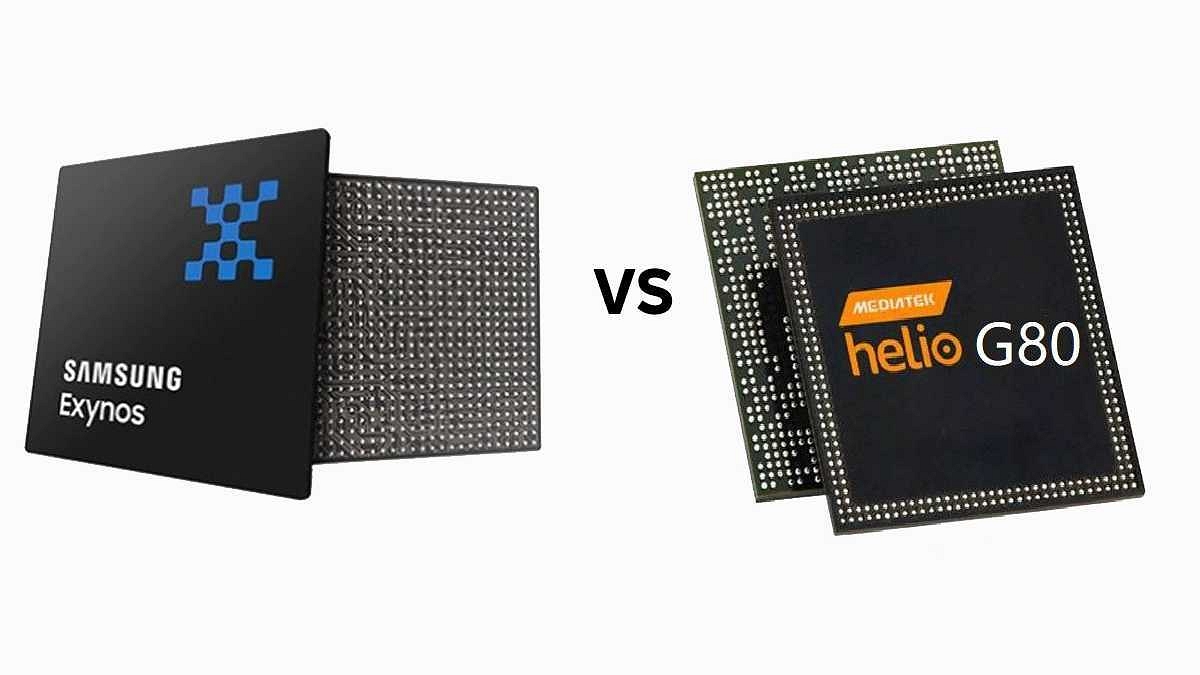
Samsung has launched numerous budget smartphones in the last few years and is giving Chinese brands a hard time with its value-for-money products. Samsung uses Exynos series chipsets for all its smartphones including affordable, mid-range, and premium models. The Exynos 850 is one of the most capable mobile processors from the South Korean tech giant. Samsung is taking on MediaTek Helio processors with its affordable Exynos processors. The Helio G80 for instance. The comparison between these two chipsets is listed here. Take a look:

Samsung Exynos 850 Vs MediaTek Helio G80 Chipset: CPU Comparison

Samsung Exynos 850 chipset has an octa-core CPU cluster with all eight cores clocking at 2GHz speed. This chipset is made using an 8nm process and has a 2000MHz frequency. The octa-core Helio G80 chipset also comes with an octa-core CPU cluster and has two Cortex-A75 cores with 2GHz clock speed and six Cortex-A55 cores with 1.8GHz clock speed.

However, MediaTek has designed it using a thicker 12nm fabrication process. This processor is also able to achieve around 2000MHz of frequency. CPU processing capabilities are equivalent on both of these processors, but the Exynos 850 gets an advantage with its thinner fabrication process.

Exynos 850 Vs MediaTe Helio G80 SoC: GPU Comparison

GPU integrated inside the Exynos 850 is Mali-G52 MP1 which is the same as the MediaTek Helio G80 processor. The Bifrost architecture is used to design this GPU. While the GPU is the same with both these chipsets the frequency range differs.

The Exynos 850 GPU frequency is 820MHz, while the Heli G80 churns out around 950MHz frequency. The graphics rendering capability is decent with both of these budget mobile chipsets.

Exynos 850 Vs Helio G80: Memory, Multimedia (ISP)

The Samsung Exynos 850 chipset and the Helio G80 have the same LPDDR4X RAM memory support. The frequency range is different here as well. The Exynos 850 processor has an 1866 MHz frequency range and the Helio G80 has around 180MHz frequency range. The max memory size compatible with the Exynos 850 chipset is 8GB which again is same with the Helio G80. Storage support is also similar that is eMMC 5.1 with the Exynos 850 and an additional UFS 2.1 with the Helio G80.

If we speak of the multimedia type, the maximum display resolution syport is 1080 x 2520 pixels with both Helio G80 and the Exynos 850, while the max camera resolution is 1x48MP, 2X16MP. But the Helio G80 has a higher 2K@30fps video recording and playback support unlike 1K@60fps offered by the Exynos 850. Overall, both these budget mobile chipsets give a neck-to-neck competition to each other.

Categories
Chipset Comparison Featured

Qualcomm Snapdragon 778G Vs MediaTek Helio G88 Chipset: Which Mid-Range Mobile Processor Wins?

Smartphone OEMs are majorly targeting mid and premium mid-range smartphone buyers in India. We have multiple brands competing in this league with their value-for-money deals. All noted smartphone companies including Xiaomi, OPPO, Vivo, Realme, Poco, iQOO, and others have been quite proactive in the premium mid-range Android smartphone race with their 5G-ready handsets.

Qualcomm and MediaTek are the first preference for both smartphone companies and general audiences when we speak of mobile chipsets. Both these mobile chipset brands have launched numerous new options in the last few years in India. Both Qualcomm and MediaTek have created a dedicated mobile chipset lineup for gaming phones. And not just the flagship but the mid-range category also has some of the best options to consider.

From Qualcomm, it’s the Snapdragon 778G game-centric processor unleashing prowess with premium mid-tier Android phones. Whereas, MediaTek competes in this race with multiple of its chipsets. However, the Helio G88 is one of the best gaming chipsets by the company for the affordable range of Android phones. Which of the two has the best processing speeds, CPU, and GPU performance? Read on here:

Qualcomm Snapdragon 778G Vs Helio G88 Processor: CPU Comparison

The Qualcomm Snapdragon 778G is more powerful compared to the Helio G88. While both these processors have an octa-core CPU cluster, the Qualcomm SD 778G has a thinner fabrication processor. It is designed using 6nm fabrication compared to the 12nm process used by the Helio G88 chipset.

Qualcomm has used a single 2.4GHz Cortex-A78 core, three Cortex-A78 cores with 2.2GHz clock speed, and four Cortex-A55 cores with 1.9GHz clock speed, while the Helio G88 has two Cortex-A75 cores with 2GHz clock speed and six Cortex-A55 cores with 1.8GHz. The frequency range is higher with the Snapdragon 778G processor, i.e., 2400MHz. The Helio G88 offers a lower frequency range of 2000MHz.

Snapdragon 778G Vs Helio G88: GPU Comparison

The GPU integrated with the Qualcomm Snapdragon 778G is the Adreno 642L which offers around 490MHz of GPU frequency. On the other hand, the Helio G88 features the Mali G52 MC2 GPU which offers a higher 1000MHz. The execution unit is 2 with both chipsets, Vulkan Version is 1.1, the OpenCL version is 2.0, and the DirectX version is 12.

Snapdragon 778G Vs Helio G88: Memory, Multimedia (ISP) Compatibility

The Qualcomm Snapdragon 778G chipset features LPDDR5 RAM compatibility, while the Helio G88 is integrated with LPDDR4X RAM support. The memory frequency is higher with the Snapdragon 778G at 3200MHz and 1800MHz with the Helio G88.

The Snapdragon 778G processor supports a maximum 16GB memory size, while the Helio G88 has 8GB RAM maximum memory compatibility. The storage compatibility is UFS 2.1, UFS 2.2, and UFS 3.3, and UFS 3.1 with the Snapdragon 778G processor. Whereas, the Helio G88 has only eMMC 5.1 storage support.

Speaking of the display and camera resolution, the Snapdragon 778G ships with 1080 x 2520 pixels resolution and 1x 192MP, 2X36MP respectively. The Helio G88 offers the same display resolution of 1080 x 2520 pixels but a different 1x64MP, 2x 16MP max camera resolution. The video recording and playback support is 4K@30fps with the SD 778G and 2k@30fps with the Helio G88.

Final Verdict: Which One Is Better

The Qualcomm Snapdragon 778G is a better performer in terms of CPU and GPU performance. Overall performance and speed reliability are also good with the Snapdragon 778G processor compared to the Helio G88. A thinner fabrication makes it more premium compared to the MediaTek processor.

Categories
Chipset Comparison Featured

Qualcomm Snapdragon 778G Vs MediaTek Dimensity 810 Chipset: Best Mid-Range 5G Mobile Processor

Qualcomm and MediaTek mobile chipsets are the powerhouses of modern days smartphones. Both these brands have been consistently showing their expertise with mobile processors and are fabricating the thinnest and most premium offerings for Android phones. For the affordable 5G phones, Qualcomm has the Snapdragon 778G as one of the strongest contenders, while MediaTek competes in this race with the Dimensity 810 chipset. The comparison between both these two processors are listed below:

Qualcomm Snapdragon 778G Vs MediaTek Dimensity 810 Processor: CPU Architecture

Qualcomm is fabricating most of the latest premium and mid-range chipsets with a thinner process. The Qualcomm Snapdragon 778G chipset is fabricated using a 6nm process and features an octa-core CPU cluster. The cores cluster comprises a single Cortex A78 cores clocked at 2.4GHz, three Cortex-A78 cores clocked at 2.2GHz, and four Cortex-A55 cores with 1.9GHz clock speed.

Likewise, MediaTek has also designed the Dimensity 810 chipset with a 6nm process. This affordable 5G processor also features an octa-core CPU cluster with two Cortex-A76 cores clocked at 2.4GHz and six Cortex-A55 cores with 2GHz clock speed. The frequency range is 2400MHz with both these chipsets. Both these processors have good CPU performance and compete fairly against each other.

Snapdragon 778G Vs Dimensity 810: GPU Architecture

The GPU integration with the Snapdragon 778G chipset is Adreno 642L GPU, while the Dimensity 810 chipset has Mali-G57 MC2 GPU support. The GPU architecture that Qualcomm has used is 600, whereas, the Dimensity 800’s GPU is based on Valhall architecture. The GPU frequency is 490MHz with the Snapdragon 778G processor and 850MHz with Dimesity 810 5G chipset. Both these processors have two execution units, 1.1 Vulkan version, 2.0 OpenCL version, and 12 DirectX version. The GPU performance is also good with both these mobile processors, but the Snapdragon chipset is slightly better with rendering extensive graphics.

Snapdragon 778G Chipset Vs Dimensity 810: Memory, Multimedia (ISP)

The memory type supported by the Qualcomm Snapdragon 778G chipset is LPDDR5 RAM, while the Dimensity 810 chipset comes with LPDDR4X RAM support. The memory frequency is higher at 3200MHz with the Snapdragon 778G chipset. However, it is lower at 2133MHz with LPDDR4X with the MediaTek Dimensity 810 chipset.

Both these chipsets support up to 16GB maximum memory type. As for storage compatibility, Qualcomm has added support for UFS 2.1, UFS 2.2, UFS 3.0, and UFS 3.1. On the other hand, the Dimensity 810 has just the UFS 2.2 storage support.

Both Snapdragon 778G and the Dimensity 810 chipset offer a max display resolution of 1080 x 2520. The camera resolution is better with the Snapdragon 778G chipset, i.e.,  1 x 192MP and 2x 36MP. Whereas, the Dimensity 810 chipset has 1 x 64MP and 2x16MP support. The video recording and capture support is 4K@30fps with the Snapdragon 778G and 2K@30fps with the Dimensity 810.

Which One Is Better

Out of these two chipsets, the Snapdragon 778G offers a faster and more reliable performance in the CPU and GPU departments. The memory and multimedia compatibility is also good with the Snapdragon 778G chipset. But the MediaTek Dimensity 810 processor isn’t lagging far behind from the SD 778G in terms of performance.

Categories
Comparison Featured Mobile

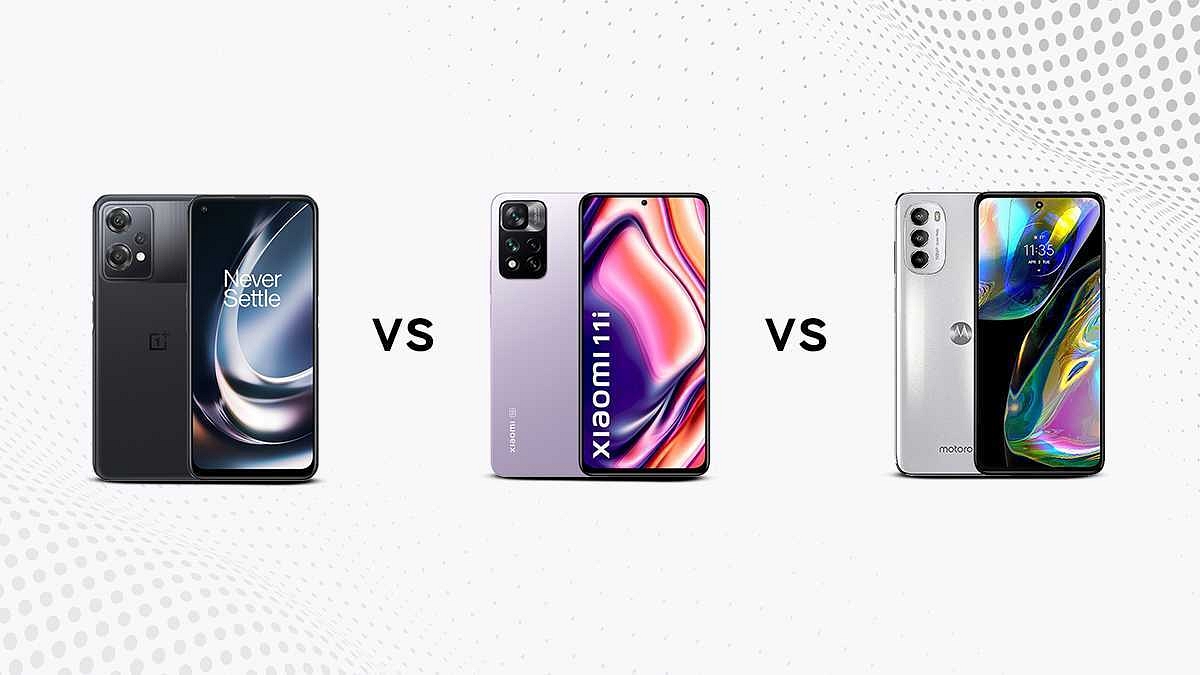
OnePlus Nord CE 2 Vs Xiaomi 11i Vs Moto G82: Top Premium Mid-Range Phone Comparison

Xiaomi has introduced a number of smartphones in India in recent years. The Xiaomi 11i 5G is one of the country’s most popular premium mid-range phones.  The OnePlus Nord CE 2 with 5G connectivity is another trending phone in the country in the sub-25K segment. Regarding specs and functionality, the Nord CE 2 is an improvement over the previous model. The G82 is unquestionably the new sweet spot of the Moto G line, and it serves as a nice reminder that Motorola is adept at producing high-end smartphones at reasonable prices. This smartphone checks several boxes, but is it worthwhile to purchase? Let’s investigate.

Display

The OnePlus Nord CE 2 is equipped with a pixel density of 409ppi, a 20:9 aspect ratio, and a resolution of 1080 x 2400 pixels, the bezel-free punch-hole display. Additionally, the smartphone has a 6.43 display and fluid AMOLED display type.

The Xiaomi 11i has a 6.67-inch AMOLED Dot display with a bezel-less resolution of 1080 x 2400. Along with the highest-in-class 395ppi pixel density, Xiaomi has added a Corning Gorilla Glass v5 layer, a 120Hz refresh rate, and a 20:9 aspect ratio.

The Moto G82 comes with a bezel-free, 6.6-inch P-OLED display with a resolution of 1080 x 2400 pixels and a pixel density of 399ppi. It delivers a seamless viewing experience thanks to its 120Hz refresh rate. Additionally, the display has a 20:9 aspect ratio and a punch hole in the top center.

Camera

The OnePlus Nord CE 2 has a triple camera setup, supported by an LED Flash. In addition to an 8MP f/2.2 ultra-wide angle lens and a 2MP f/2.4 macro camera, the main camera is a 64MP f/1.79 primary camera. The entire back camera setup is fairly well-equipped, with capabilities like HDR mode, ISO adjustment, digital zoom, and Touch to Focus among them. A second 16MP f/2.4 selfie camera is mounted on the front.

The Xiaomi 11i comes with a triple camera setup a 108MP f/1.89 wide-angle primary camera, an 8MP f/2.2 wide-angle camera, and a 2MP f/2.4 macro shooter makes up the smartphone’s triple camera setup on the rear. The front of the device is equipped with a 16MP f/2.45 wide-angle primary selfie camera.

The Moto G82 has a 50MP f/1.8 wide-angle main camera, A 2MP f/2.4 macro camera, and an 8MP f/2.2 ultra-wide angle camera. Along with digital zoom, HDR mode, and other capabilities, this triple-camera configuration has an LED flash as well. The smartphone’s front features a potent 16MP f/2.2 Wide-Angle Main Shooter.

Configuration and Battery

In terms of the operational segment, The OnePlus Nord CE 2 has the LPDDR4X type 6GB RAM, MediaTek Dimensity 900 MT6877 chipset, and Mali-G68 MC4 GPU. Also guiding the same is an octa-core Cortex A55 and A78 configuration. The internal battery’s capacity is 4500mAh and is of the Li-ion variety, while, Using 65W Super VOOC technology, rapid charging is promised.

The Xiaomi 11i has 6GB LPDDR4X RAM and MediaTek Dimensity 920 MT6877T processor. An Octa-core (Dual-core, 2.5GHz, Cortex A78 + Hexa-core, 2GHz, Cortex A55) CPU and Mali-G68 MC4 GPU combination ensure lag-free performance. The smartphone comes with a 5160mAh Li-Polymer battery and supports 67W Turbo Charging. The cell is naturally non-removable and charges to 50% in 13 minutes.

The Moto G82 simulates a twin Kryo 660 configuration and is equipped with a Qualcomm Snapdragon 695 chipset. With the aid of its 6GB of RAM and Adreno 619 GPU, it also guarantees lightning-fast speed and an immersive visual experience. The smartphone has a 5000 mAh power the Moto G82. It is a Li-Polymer battery with 30W Turbo Power Charging capability.

Storage and Connectivity

The OnePlus Nord CE 2 comes with 128GB of internal storage space which supports up to 1TB of external storage. Mobile Hotspot, Bluetooth v5.2, A-GPS Glonass, NFC, 4G VoLTE, 5G, and USB Type-C are among the connectivity options available to customers.

The Xiaomi Mi 11i has a sizable UFS 2.2 type 128GB internal storage that can be expanded to 1TB. There are several built-in connectivity choices, including Wi-Fi, Mobile Hotspot, Bluetooth v5.2, A-GPS Glonass, USB Type-C charging, and 5G & 4G VoLTE networks.

The Moto G82’s internal storage capacity is 128GB. The option to expand by up to 1TB is also available to users. Along with A-GPS with Glonass, Bluetooth v5.1, Wi-Fi, USB Type-C, and 4G VoLTE, the smartphone supports 5G and 4G network connections.

Final Verdict

All three phones pack ample punch to be a good daily driver. The price range of all three phones is under Rs. 25,000 which doesn’t burn a hole in your pockets. You can consider an of the models, but if faster charging is your preference, the Xiaomi Mi 11i is a perfect choice.

Categories
Comparison Featured mobile

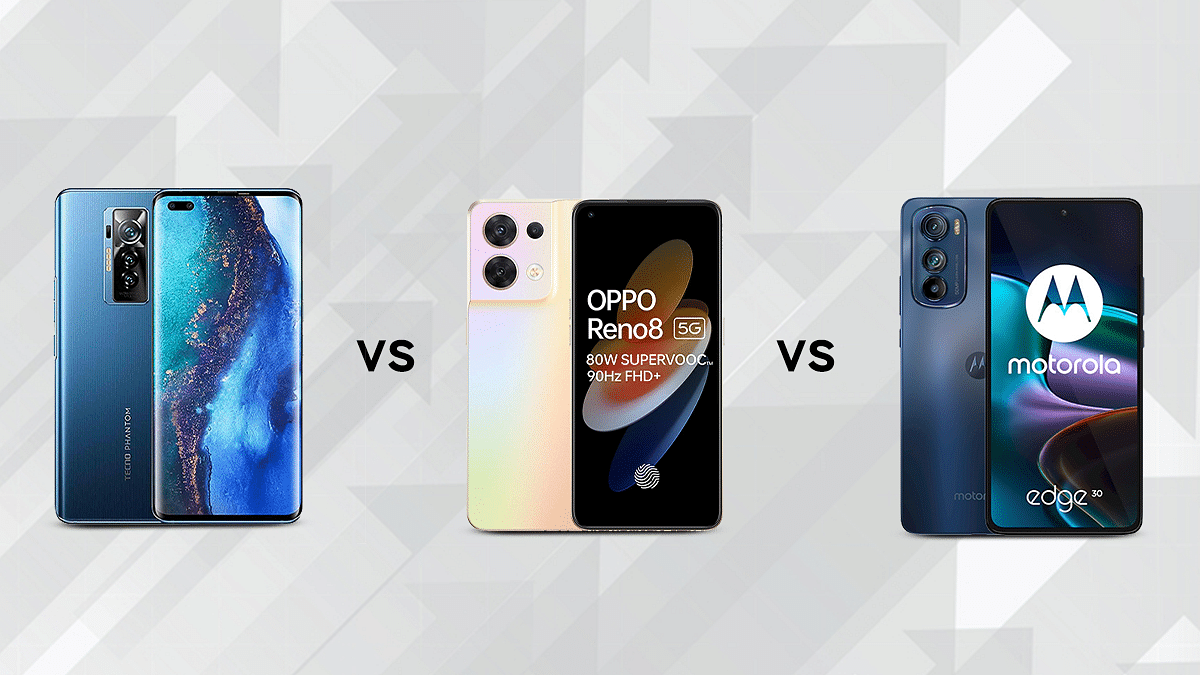
Tecno Phantom X Vs OPPO Reno 8 Vs Motorola Edge 30: Trending Premium Mid-Range Phones Comparison

Smartphones priced under Rs. 30,000 are currently one of the best value-for-money devices. They offer good build quality and performance with capable cameras and good-looking designs. That said, there are some smartphones in the price range that outperform rivals.

In this article, we have compared the specifications of three phones, i.e., Tecno Phantom X, OPPO Reno 8, and Motorola Edge 30. The Motorola Edge 30 5G is currently available for Rs. 27,999 whereas the Tecno Phantom X will cost you Rs. 25,999. On the other hand, the OPPO Reno 8 is available at a price of Rs. 29,999. The post will clarify which phone you should go for under 30k which offers somewhat similar specifications. Let’s dive in.

Display

The Tecno Phantom X has a broad 6.7-inch Super AMOLED display along with a pixel density of 385ppi, a refresh rate of 90Hz, and a screen resolution of 1080 x 2340 pixels. The smartphone’s bezel-free front screen boasts a 19.5:9 aspect ratio. Additionally, the display is being protected by Corning Gorilla Glass v5.

On the other hand, the OPPO Reno 8 has a 6.4-inch AMOLED screen with 1080 x 2400 pixel resolution and a pixel density of 411ppi. A bezel-free display with a Corning Gorilla Glass v5 layer is also included in the smartphone’s features list.

Moving to the Motorola Edge 30, it has a 6.5-inch P-OLED front screen with an aspect ratio of 20:9 and a resolution of 1080 x 2400 pixels. The smartphone’s bezel-free screen has a pixel density of 405ppi and a refresh rate of 144Hz.

Camera

The Tecno Phantom X houses a Quad-LED Flash alongside a 50MP primary camera, a 13MP camera, and an 8MP ultra-wide angle lens. Additionally, the device has a 48MP front camera.

The triple-core camera system on the OPPO Reno 8 includes a 50MP main camera, an 8MP camera, and a 2MP camera on the back. The camera includes features such as Autofocus, ISO Control, LED Flash, Digital Zoom, HDR mode, Exposure Compensation, Face Detection, and Touch to Focus. The smartphone comes with a 32MP front camera.

On the other hand, the Motorola Edge 30 has a triple camera configuration on the back of the phone. It consists of a 50MP wide-angle primary camera, a 50MP ultra-wide angle camera, and a 2MP depth sensor. The primary camera system’s other standout features are Exposure Compensation, Digital Zoom, Auto Flash, ISO Control, and HDR Mode. The smartphone has a 32MP front camera.

Configuration and Battery

The Tecno Phantom X is equipped with an 8GB RAM and MediaTek Helio G95 CPU. The smartphone has an Octa-core processor that combines a 2.05GHz Dual-core Cortex A76 and a 2GHz Hexa-core Cortex A55 architecture. The device has a Mali-G76 MC4 GPU installed to handle the graphic needs. In addition, a 4,700mAh Li-Polymer battery powers the smartphone with the 33W Flash Charging system.

Moving to the OPPO Reno 8, the phone has the MediaTek Dimensity 1300 MT6893Z chipset inside. A CPU with a Cortex A78 and A55 configuration that can operate at the maximum speed of 3GHz is in charge of the device’s internal operations. Additionally, the phone comes with an 8GB RAM module and a Mali-G77 MC9 GPU. The smartphone has a 4,500mAh battery capacity. It is additionally compatible with an 80W VOOC charging system.

For extended gaming sessions, the Motorola Edge 30 is equipped with the Qualcomm Snapdragon 778G Plus CPU and a whopping 6GB of RAM. The smartphone’s Octa-core processor also incorporates a triple Kryo 670 arrangement for smooth operations. A 4,020mAh battery powers the smartphone that works with 33W Turbo Power Charging technology.

Storage and Connectivity

The Tecno Phantom X has a massive 256GB internal memory that can be increased to 512GB. In addition to supporting 4G VoLTE networks, it is also compatible with Bluetooth v5.0, Mobile Hotspot, Wi-Fi 802.11, b/g/n, and A-GPS.

With the OPPO Reno 8, users receive 128GB of non-expandable internal storage. The smartphone guarantees an incredibly clear video and voice connection via 4G VoLTE networks. Wi-Fi, Mobile Hotspot, USB Type-C, 5G, Bluetooth v5.3, and A-GPS with Glonass are its additional connectivity options.

The Motorola Edge 30 has an internal storage capacity of 128GB. It has decent connectivity features like Bluetooth v5.2, Mobile Hotspot, A-GPS Glonass, Wi-Fi 802.11, b/g/n, and USB OTG.

Final Verdict

The Tecno Phantom X and The Motorola Edge 30 are the better options if you place greater value on performance, camera, and design. Oppo Reno 8 is the better choice if, however, the display and connectivity are your top priorities.

Categories
Comparison Featured Tablet Tech Gadgets

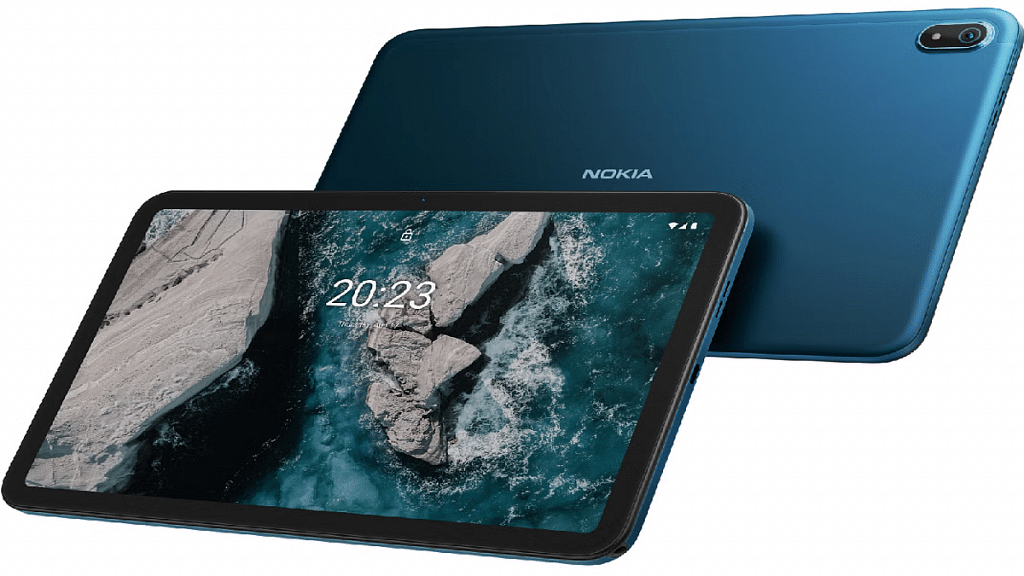
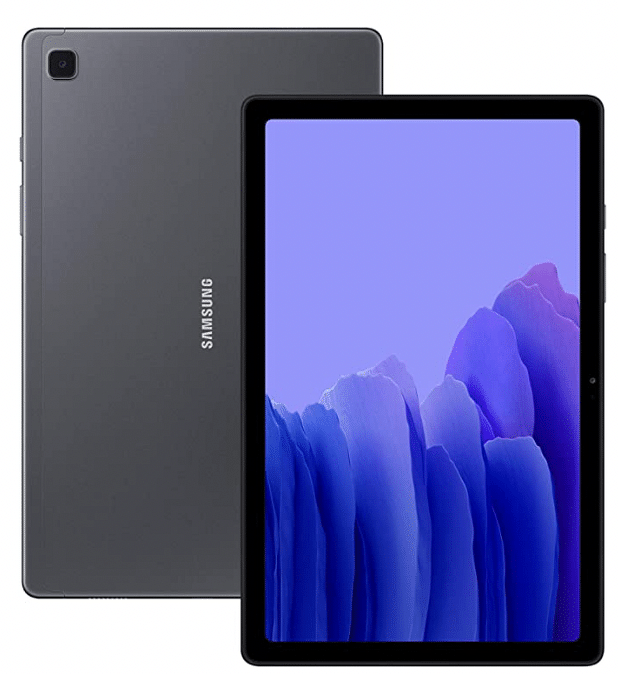
Nokia T10 Vs Nokia T20 Vs Samsung Galaxy Tab A7 Lite: Best Budget Tablets For Students In India

Nokia has marked its presence in the tablet industry by introducing entry-level tablets. Nokia tablets have become widely popular among the budget masses with their durable design and user-friendly interface. The Nokia T10 and the Nokia T20 tablets have emerged as popular choices. The Galaxy Tab A7 Lite has been one of the foremost reinventions by Samsung which falls in the budget segment. Here we are comparing the Nokia T10, the Nokia T20, and the Galaxy Tab A7 Lite 

Also Read: Samsung Galaxy Tab A8 Vs Nokia T10 Vs Moto Tab G62: Which Tablet Makes The Best Option For Budget Audience

Display Comparison 

The Nokia T10 features an 8 inches IPS LCD display which has a typical brightness of 360nits. Moreover, it has a resolution of 800 x 1280 pixels.

On the other hand, the Nokia T20 has a 10.4 inches IPS LCD display which has a resolution of 1200 x 2000 pixels. This model has a typical brightness of 400 nits which is higher than the Nokia T10 and offers better visibility outdoors. Its screen has scratch-resistant glass as well. The Galaxy Tab A7 Lite has an 8.7 inches TFT LCD display which has a resolution of 800 x 1340. 

Overall, the Nokia T20 offers an immersive visual experience through its high-resolution expansive display. It will deliver clear output compared to the remaining models and will be suitable for high-res video consumption.

Chipset Specifications 

The Nokia T10 has the Unisoc T606 chipset with a 12 nm fabrication and an octa-core CPU architecture. It is available in two different variants to choose from. The base model, includes 3GB RAM and 32GB ROM, while the top model features 4GB RAM along with 64GB onboard storage. 

The Nokia T20 runs on the Unisoc T610 which is also fabricated with a 12nm TSMC process. It is also available in two variants to choose from including 3GB of RAM+ 32GB storage and the second one offers 4GB of RAM and 64GB of storage. 

The Samsung Galaxy Tab A7 Lite houses the  MediaTek Helio P22T with a 12 nm architecture. This tablet also comes in dual configurations with the base model offering 2GB RAM along with 32GB of ROM, and the second variant featuring 3GB RAM+32GB storage and 4GB RAM+ 64GB storage.

Overall, all three tablets offer similar performance since they are equipped with an entry-level chipset based on a 12nm architecture. However, the Nokia T10 and Nokia T20 are slightly better performers with daily tasks. 

Camera Features 

The Nokia T10 has an 8MP rear camera and a 2MP front camera. It supports LED flash and allows video recording of 720P and 1080P respectively.

The Nokia T20 also has an 8MP AF rear camera and a 5MP front camera. It also supports LED flash and video recording of 1080P at 30fps. 

The Galaxy Tab A7 Lite is equipped with an 8MP AF rear camera and a 2MP front camera. It allows the users to record videos of 1080P at 30fps. 

Overall, the Nokia T20 has a higher megapixel selfie camera that captures vivid and detailed selfies. On the other hand, both Nokia T10 and Galaxy Tab A7 Lite are good for general photography. 

Also Read: Nokia T21 Vs Nokia T20 Vs Realme Pad Mini Tablet Comparison: Best Entry-Level Android Tablet For Daily Use

Battery and Fast Charging 

The Nokia T10 has a battery of 5250mAh which can be fueled up by a 10W charger. The company claims that it has a battery life of up to a day. 

The Nokia T20 is equipped with a massive battery of 8200mAh which is supported by a 15W charger, which fuels up its battery to full in three hours. It has a battery life of about 5 hours. 

The Galaxy Tab A7 Lite has a 5100mAh battery which is accompanied by a 15W charger. It takes about three hours to completely charge it. Moreover, once fully charge it can last up to 10 hours 

Overall, the Nokia T20 ranks on top since it has a longer battery backup. 

Final Verdict 

After comparing all the key aspects of the three tablets, we have arrived at the conclusion that Nokia T20 offers the best value for money, keeping in mind its widescreen, rich display, smooth performance, and good battery backup, it becomes an obvious choice. The Galaxy Tab A7 Lite and Nokia T10 follow 

Also Read: Oppo Pad Air Vs Samsung Galaxy Tab A7 Vs Honor Pad 8: Which Should Be Your Bet

Categories
Comparison Featured mobile

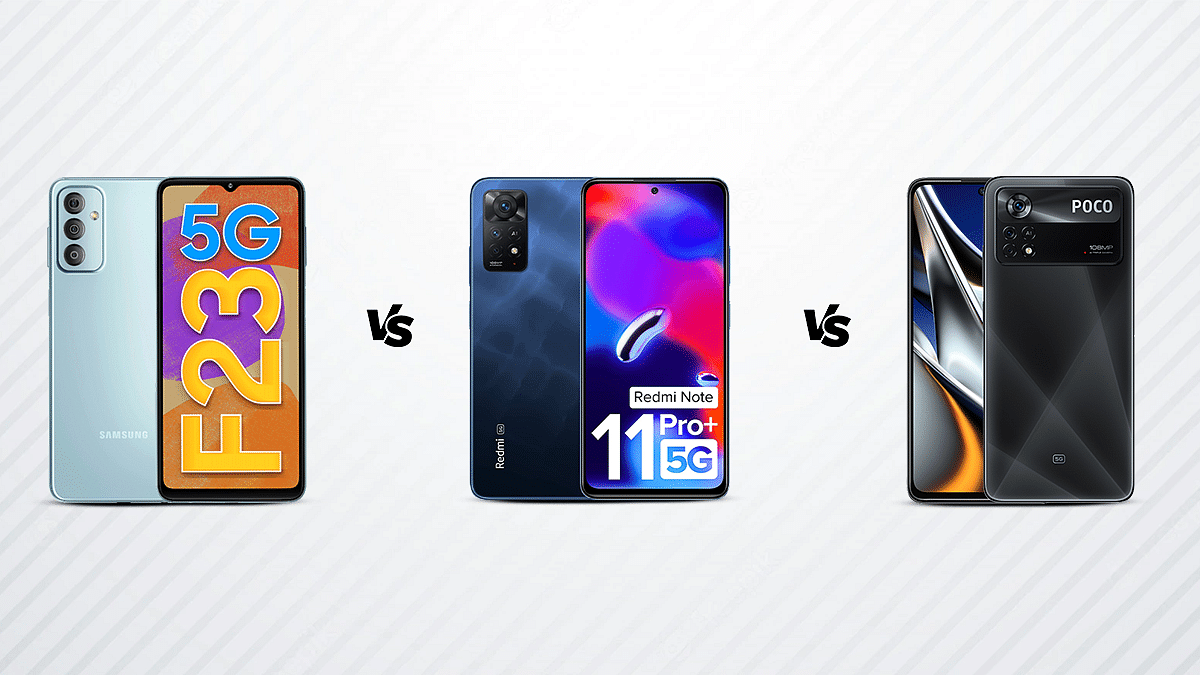
Galaxy F23 5G Vs Redmi Note 11 Pro Plus Vs Poco X4 Pro 5G: This Should Be Your Pick Under Rs. 20,000

After debuting in the Global Market at the MWC 2022 event, the POCO X4 Pro has made its way to the Indian Smartphone Market. Surprisingly, the smartphone ships with a 64MP primary sensor, considering its global counterpart comes with a 108MP camera. Redmi Note 11 Pro+, which launched in India,  earlier this year packs similar specifications to the newly launched POCO X4 Pro 5G. The Samsung Galaxy F23 5G is equipped to get you going whether you’re a die-hard gamer, a movie buff, or prefer to keep connected to the outside world on social media.  As these phones come with a similar price tag as well and could make it harder for you to choose between these three, we are going to compare all the crucial aspects of these phones to help you figure out which one suits your needs better.

Display Specifications

The Samsung Galaxy F23 5G is equipped with a 6.6-inch TFT display. Additionally, its bezel-free display features a resolution of 1080 x 2408 pixels, a 20:9 aspect ratio, and a pixel density of 400ppi, providing excellent graphics overall.

The Xiaomi Redmi Note 11 Pro Plus come with a 6.67-inch AMOLED DOT display and has a resolution of 1080 x 2400 pixels. Also boasting a high refresh rate of 120Hz and a pixel density of 395ppi is the device’s bezel-free display.

The Poco X4 Pro sports a huge 6.67-inch AMOLED DOT with no bezels. The smartphone features a punch-hole structure with a screen that has a resolution of 1080 x 2400 pixels and a pixel density of 395ppi.

Camera Specifications

The Samsung Galaxy F23 5G has a 50MP primary camera along with an 8MP ultra-wide angle camera with an f/2.2 aperture and a 2MP macro camera with an f/2.4 aperture. The smartphone features an 8MP front camera.

The Xiaomi Redmi Note 11 Pro Plus 5G has a triple camera configuration on the back, with a 108MP f/1.9 wide-angle primary camera, an 8MP f/2.2 ultra-wide angle camera, and an additional 2MP f/2.4 macro camera. A few of the key features included are Face Detection, Auto Flash, ISO Control, Autofocus, Continuous Shooting, Digital Zoom, HDR mode, and Exposure Compensation. On the front, there is a 16MP primary camera with an f/2.4 aperture for taking selfies.

The Poco X4 features three cameras on its back and front, including a 64MP f/1.8 main camera, an 8MP f/2.2 ultra-wide angle lens, and a 2MP f/2.4 macro camera. Among the built-in camera capabilities are dual native ISO and 9-in-1 Pixel binning technology. On the front, there is a 16MP selfie camera.

Configuration and Battery

The Samsung Galaxy F23 5G is equipped  with Qualcomm Snapdragon 750G chipset, 4GB of RAM, and Octa-core processor. The specific processor guarantees lag-free performance thanks to a dual Kryo 570 arrangement that is present and operating at the maximal frequency of 2.2GHz. The final component is an Adreno 619 GPU, which handles the graphic requirements. The Samsung Galaxy F23 5G has  large 5000mAh Li-ion battery with 25W Fast Charging mechanism.

The Xiaomi Redmi Note 11 Pro Plus 5G has an Octa-core processor with a Dual Kryo 660 architecture and a Qualcomm Snapdragon 695 chipset. Furthermore, a powerful Adreno 619 GPU and 6GB of RAM provide outstanding performance. A 5000mAh Li-Polymer battery along with  67W Turbo Charging.
The Poco X4 features dual Core Kryo 660 2.2GHz and Hexa Core Kryo 660. A flawless operating experience is guaranteed by a 6GB RAM and Qualcomm Snapdragon 695 CPU. Additionally, the Adreno 619 GPU handles the graphic requirements. A strong 5000mAh Li-Polymer battery is included in the smartphone. In addition the cell is compatible with 67W Sonic Charging technology.

Storage and Connectivity

The Samsung Galaxy F23 5G has 128GB of internal storage. This storage capacity may be increased by as much as 1TB with the aid of a micro SD card. The smartphone supports Bluetooth v5.0, A-GPS, USB Type-C, Wi-Fi, and network connectivity for both 5G and 4G VoLTE.

There is 128GB of internal storage on the Xiaomi Redmi Note 11 Pro Plus 5G. Along with USB Type-C, Glonass, A-GPS, Bluetooth v5.1, USB OTG, Wi-Fi 802.11, ac/b/g/n/n, and Mobile Hotspot, the smartphone is equipped with 4G VoLTE and 5G network connectivity. The internal storage of the Poco X4 Pro is 64GB, however it can be increased by up to 1TB with the use of a microSD card. The smartphone comes with capabilities for connectivity like Mobile Hotspot, A-GPS, USB Charging, Wi-Fi, 5G, and 4G VoLTE.

Categories
Chipset Comparison Featured

Qualcomm Snapdragon 778G Vs MediaTek Dimensity 1300 Chipset: Quick Comparison

Key Highlights

  • The Snapdragon 778G is based on the 6 nm fabrication process, while the Dimensity 1300 is also fabricated on a 6 nm processor.
  • The Snapdragon 778G has better memory compatibility with LPDDR5 RAM and UFS 3.

Qualcomm ventured into the mobile chipset space long ago and has been bringing in some of the best options for smartphone OEMs. The Snapdragon mobile processors have been used by numerous smartphone brands as a powerhouse for their offerings. Likewise, MediaTek has also been present in the mobile chipset industry for a while and has seen a massive surge in its demand. Both these chipset OEMs are meeting the demands of general and high-end users with their powerful chipset ranges.

The latest mobile chipsets from these brands are thinner despite integrated modem support for 5G connectivity. Qualcomm even has released a dedicated gaming chipset series. The Snapdragon 778G gaming processor is one of the best game-centric mobile chipsets used by some of the best latest Android phones including the Vivo T1 Pro 5G, iQOO Z6 Pro 5G, and others.

Similarly, MediaTek’s Dimensity 1300 chipset is one of the best examples of a premium mid-tier mobile chipset used by popular devices like the OnePlus Nord 2T, Vivo V25 Pro, OPPO Reno8 Pro 5G, and others.  The Qualcomm Snapdragon 778G battle and the Dimensity 1300 is quite stiff. Which one out of the two has a better CPU and GPU performance? Read on to know:

Also Read: Qualcomm Snapdragon 8 Gen 2 Vs MediaTek Dimensity 9200 Chipset Comparison: Most Advanced 5G Flagship Mobile Processor?

Qualcomm Snapdragon 778G Vs MediaTek Dimensity 1300 Processor: CPU Architecture And Performance

The Qualcomm Snapdragon 778G is an octa-core chipset with the CPU cluster featuring one 2.4GHz Cortex-A78 core, three Cortex-A78 cores with 2.2GHz clock speed, and four Cortex-A55 cores clocked at 1.9GHz. This chipset offers around 2400MHz of the frequency with its ARMv8.4-A instruction set. Qualcomm has used a 6nm fabrication which is used by MediaTek as well to design the Dimensity 1300 chipset.

MediaTek has also used an octa-core CPU cluster with ARMv8.2-A Instruction set and a 3200MHz frequency range. The cores included are one Cortex-A78 core with 3GHz clock speed, three Cortex A-78 cores clocked at 2.6GHz clock speed, and four Cortex-A55 cores clocked at 2GHz. Both SD 778G and the Dimensity 1300 have a solid CPU architecture and the performance delivery is also good.

Snapdragon 778G Vs Dimensity 1300 Chipset: GPU Hardware

Starting with the Snapdragon 778G processor, Qualcomm has used an Adreno 642L GPU which has around 490MHz GPU frequency. On the other hand, MediaTek has integrated the Mali-G77 MC9 GPU with the Dimensity 1300 chipset which offers around 850MHz. Execution units are 2 and 9, while the shading units are 384 and 144 with the Snapdragon 778G and the Dimensity 1300 respectively. Both these processors ship with the same 1.1 Vukan, 2.0 OpenCL, and 12 DirectX versions. You can expect a lag-free graphic rendering with both these premium mid-range processors but the Snapdragon 778G has a slightly better GPU performance.

Also Read: MediaTek Dimensity 9200 Processor Vs Qualcomm Snapdragon 8 Gen 1 Chipset: High-End Mobile Chipset Comparison

Snapdragon 778G Vs Dimensity 1300 SoC: Memory, Multimedia (ISP)

Memory compatibility is where the game changes and the Qualcomm chipset takes the lead. The Snapdragon 778G processor has LPDDR5 RAM support, while the Dimensity 1300 features LPDDR4X RAM. The memory frequency is 3200MHz with the SD 778G and 4266 with the Dimensity 1300. Both these processors have up to 16GB max memory support. As for the storage, UFS 2.1, UFS 2.2, UFS 3.0, and UFS 3.1 with the Snapdragon 778G and UFS 3.1 with the Dimensity 1300. Again, the Snapdragon processor is better with multiple storage support.

If we talk of multimedia support, the Snapdragon 778G has a 1080 x 2520 pixels max display and 1x192MP, and 2x36MP max camera resolution respectively. The MediaTek Dimensity ships with the same max display resolution by only 1x 200MP max camera resolution which is higher than the Snapdragon chipset. While the Snapdragon 778G can record and playback 4K@30fps videos, the Dimensity 1300 can record and playback 4K@60fps videos. The Dimensity 1300 offers better multimedia support.

Also Read: Qualcomm Snapdragon 750G Vs Snapdragon 732G: Premium Mid-Tier Gaming Chipset Comparison
Categories
Comparison Featured Tablet

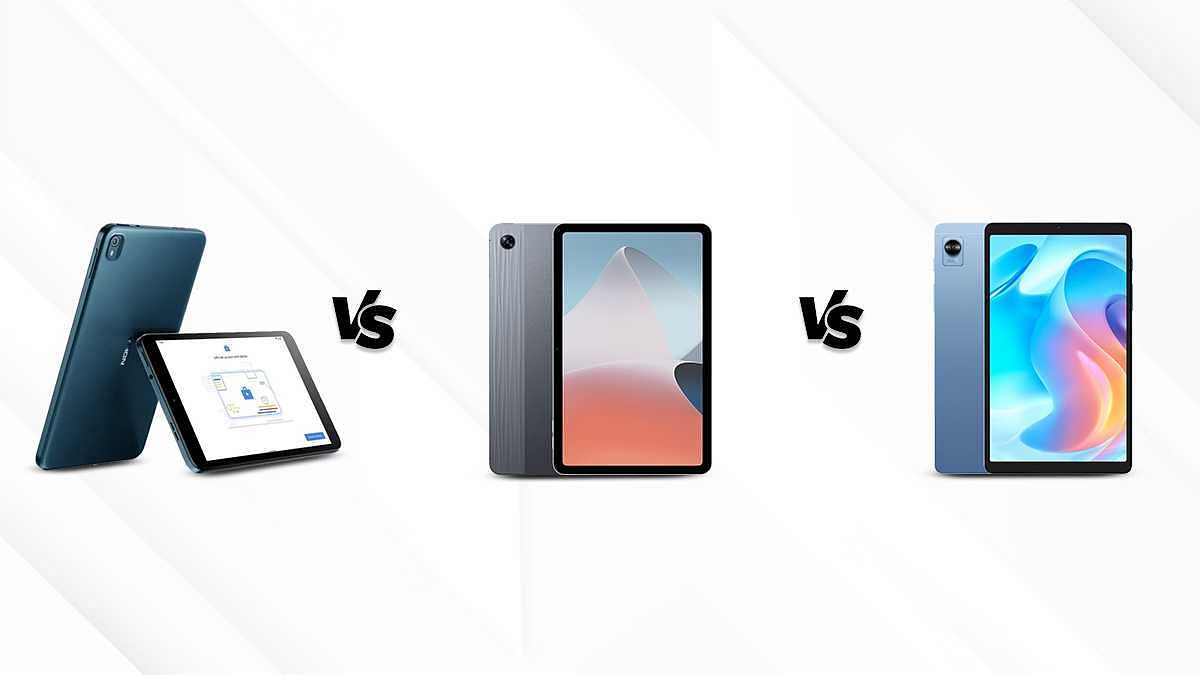
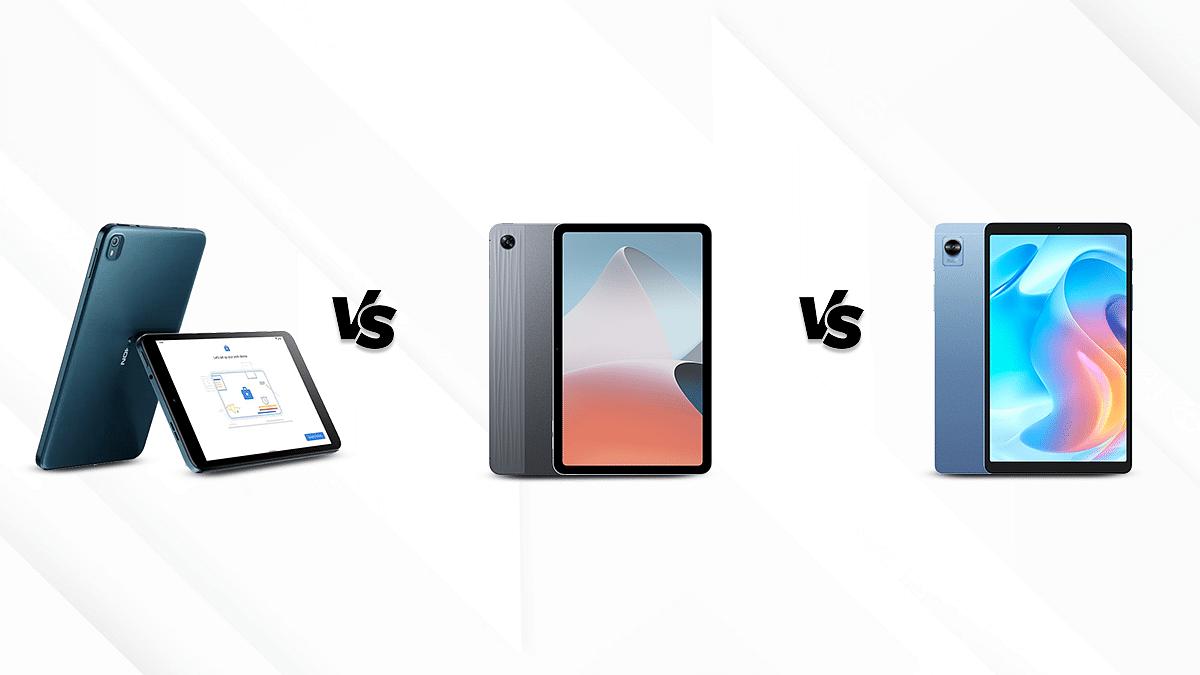
Nokia T10 Vs Oppo Pad Air Vs Realme Pad Mini: Best Budget Tablet To Buy In India?

India has been a hub for smartphone and tablet OEMs. The vast majority of usage share for these companies lies in the Indian market, where they have secured the reliability of their users. Nokia has seen soaring demand in the tablet industry primarily because of its durable products at affordable prices 

On the other hand, relatively new entrants in the tablet industry include Oppo and Realme. The former has introduced the Oppo Pad Air, while the latter had launched the Realme Pad Mini for the budget masses. These three OEMs are in a tight race against each other in the smartphone as well as tablet market. So, here we compare the best tablets of these three companies: Nokia T10 Vs Oppo Pad Air Vs Realme Pad Mini. 

Display Comparison 

The Nokia T10 has an 8-inches IPS LCD display with a resolution of 800 x 1280 pixels. It has a typical brightness of 360 nits and a screen-to-body ratio of 72.4 percent. 

On the other hand, the Oppo Pad Air features a 10.36-inches IPS LCD display. It has a 1200 x 2000 pixels resolution and a screen-to-body ratio of 80.5 percent. 

The Realme Pad Mini is furnished with an 8.7 inches IPS LCD display and has a resolution of 800 x 1340 pixels. Moreover, it has a screen-to-body ratio of 81.5 percent.

Overall, the Oppo Pad Air outshines the other tablets in terms of display and screen size. It offers a richer and more immersive visual experience. The Realme Pad Mini and Nokia T10 offer a decent experience  

Chipset Specifications 

The Nokia T10 operates on the Unisoc T606 chipset with a 12nm fabrication and has an octa-core CPU unit. It is available in two different variants to choose from including 3GB RAM+32GB storage and 4GB of RAM along with 64GB of storage. 

The Oppo Pad Air houses the Qualcomm Snapdragon 680 octa-core chipset with 6nm architecture. It is available in two variants to choose from, both of which have 4GB of RAM and feature 64GB and 128GB of ROM respectively. 

The Realme Pad Mini is equipped with a Unisoc Tiger T616 chipset with an octa-core CPU unit.  It is also available in two variants, the first one has 3GBRAM along with 32GB of ROM and the second one has 4GB of RAM+64GB storage option. 

The Oppo Pad Air emerges as a top performer with its powerful chipset. The Snapdragon 680 chipset can deliver some powerful performance compared to the remaining Unisoc series chipset used by the Nokia tablets.

Camera Features 

The Nokia T10 has an 8MP rear camera that supports LED flash and allows video recording of 1080P at 30fps. Upfront, it has a 2MP selfie camera that can record 720P videos. 

The Oppo Pad Air has an 8MP (f\2.0) rear camera and a 5MP (f\2.2) front camera. It offers panorama mode and 1080P video recording at 30fps. 

The Realme Pad Mini has more or less similar camera specifications as the former and has an 8MP (f\2.0) rear camera and a 5MP (f\2.2) front camera. It also allows video recording of 1080P at 30fps. 

As seen above, the Oppo Pad Air and Realme Pad Mini are both good for general photography. 

Battery and Fast Charging 

The Nokia T10 is furnished with a 5250mAh massive battery that can be fueled up by a 10W charger in about three hours. Once fully charged, it can easily get you throughout the day. 

The Oppo Pad Air houses a whopping battery of 7100mAh and is accompanied by an 18W fast charging setup that charges it within two hours. A single charge can deliver a backup of around an entire day on a single charge.

The Realme Pad Mini has a 6400mAh battery that supports an 18W fast charging setup and takes a little over two hours to completely charge it. Once fully charged it can last up to two days. 

Overall, the Realme Pad mini and Oppo Pad Air have fairly the same battery life and offer fast charging. 

The Crux: Which One Should You Consider?

While going through all the aspects, we arrived at the concussion that Oppo Pad Air emerges as an effective choice against the other two. However, the Realme Pad Mini has offered fierce competition to the former in terms of camera and battery life. Both tablets are good and can be considered cost-effective. You would need to pay a bit extra for the OPPO Pad Air, but that would be a good investment in the longer run.