As the Assistant Editor, Sandeep is generating tech-oriented content and also monitoring the content published on the website. He has over six years of experience in tech journalism and has expertise in product reviews, news articles, listicles, and media campaigns.
Introductory price in India starts at Rs. 15.49 lakh
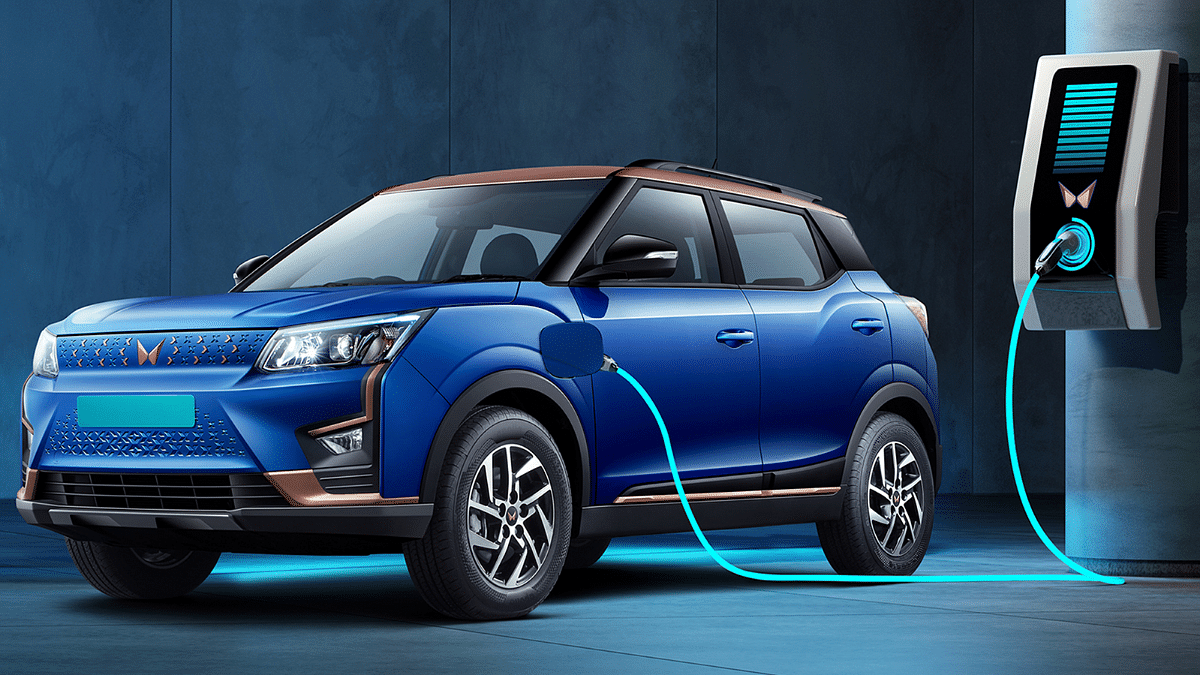
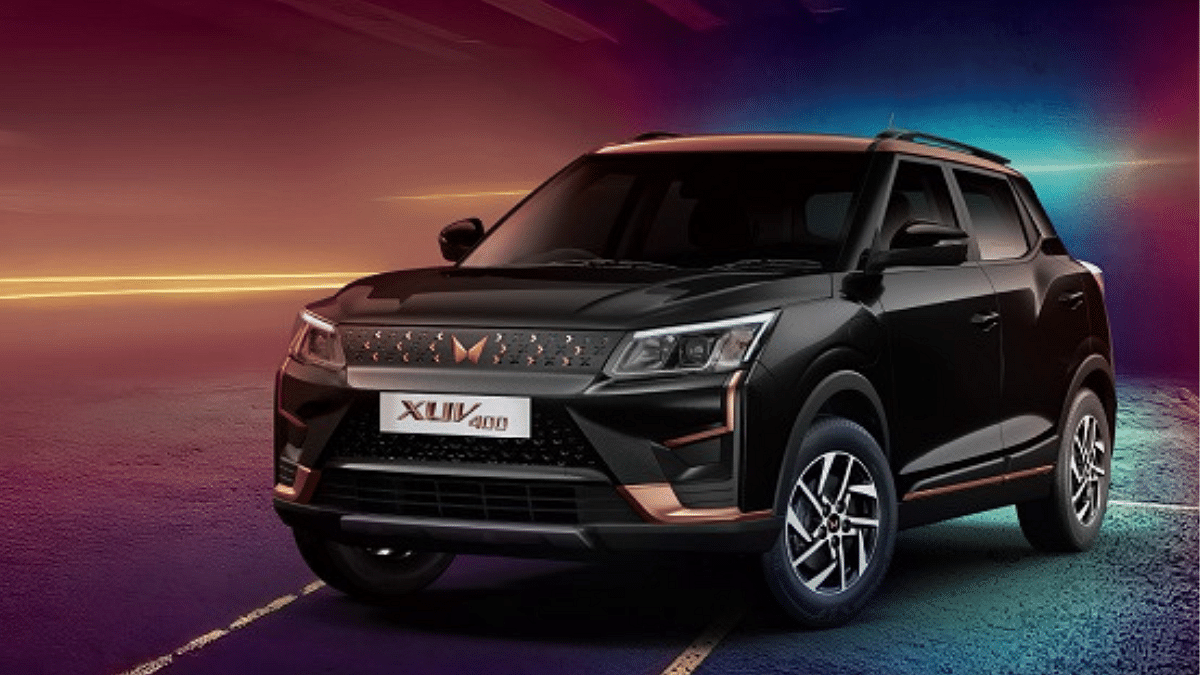
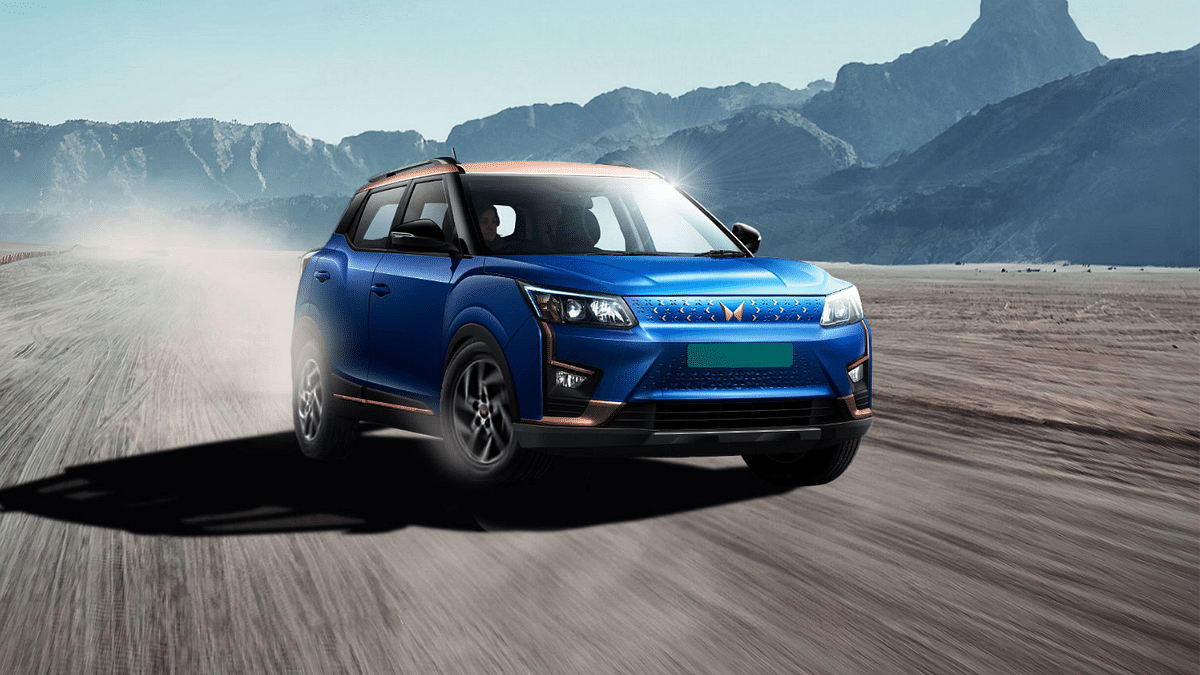
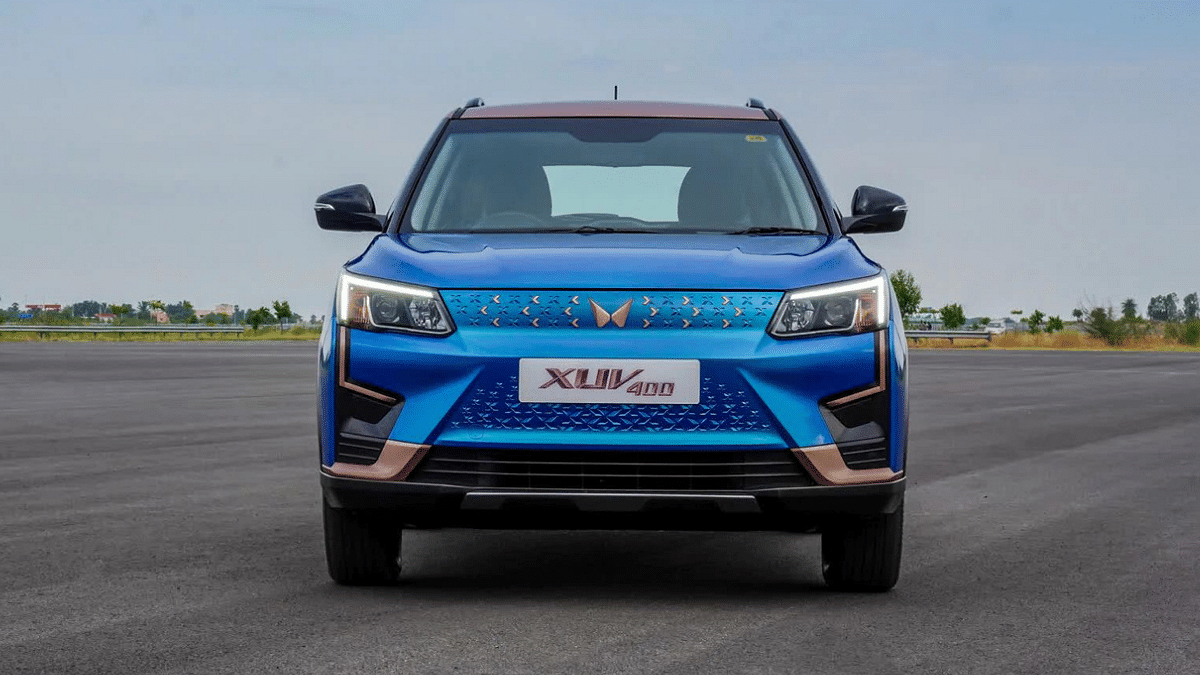
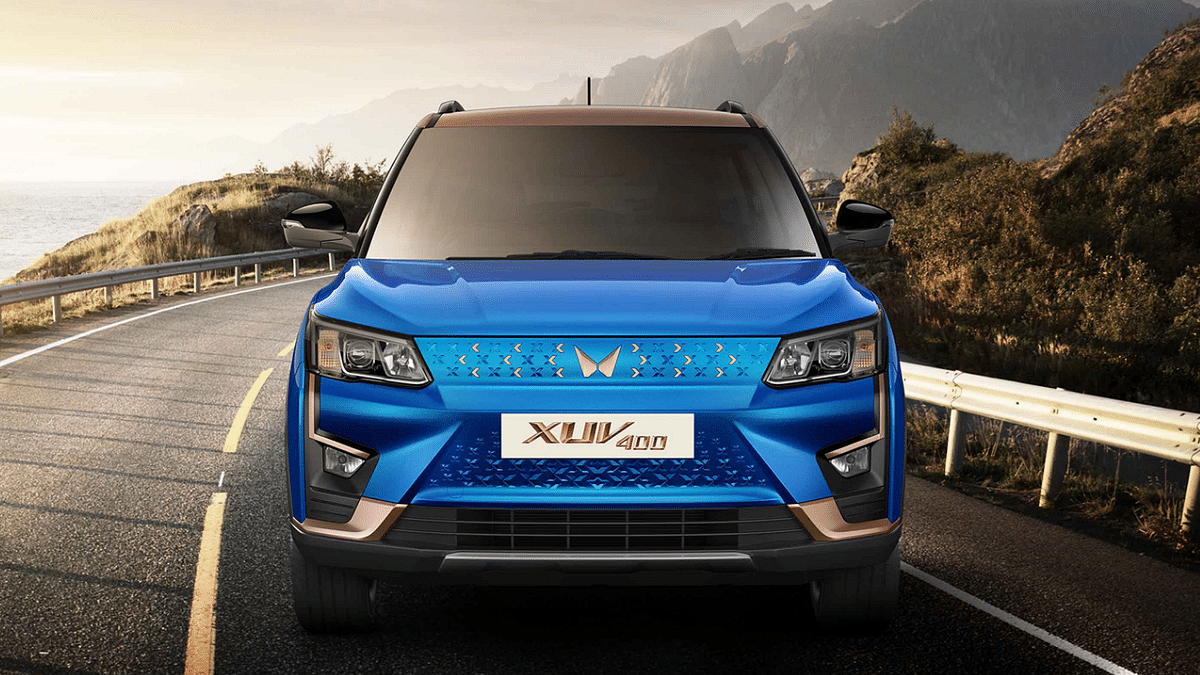
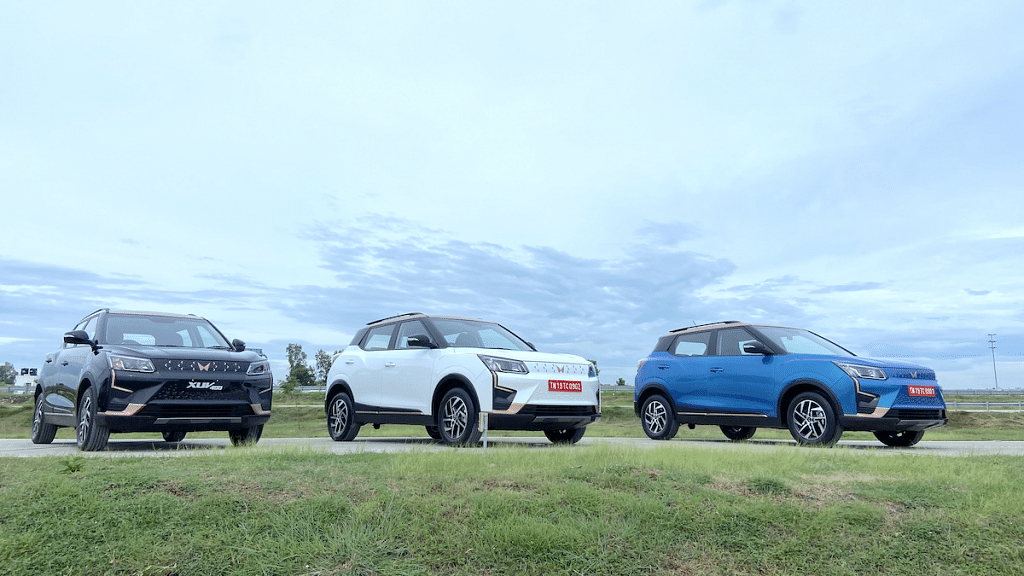
Mahindra and Mahindra has kickstarted this new year with a new electric SUV launch. The Indian automobile giant has now upgraded its EV fleet with two new XUV 400 Pro models. The latest variants released includes the XUV 400 EC Pro and the XUV 400 EL Pro. The latest Mahindra XUV 400 electric SUV’s Pro models comes with revamped interiors and additional set of features. Pricing and powertrain details for the new Mahindra XUV 400 EC Pro and XUV 400 EL Pro models are mentioned below:
Mahindra XUV 400 EC Pro, EL Pro E-SUV Variants: What’s New
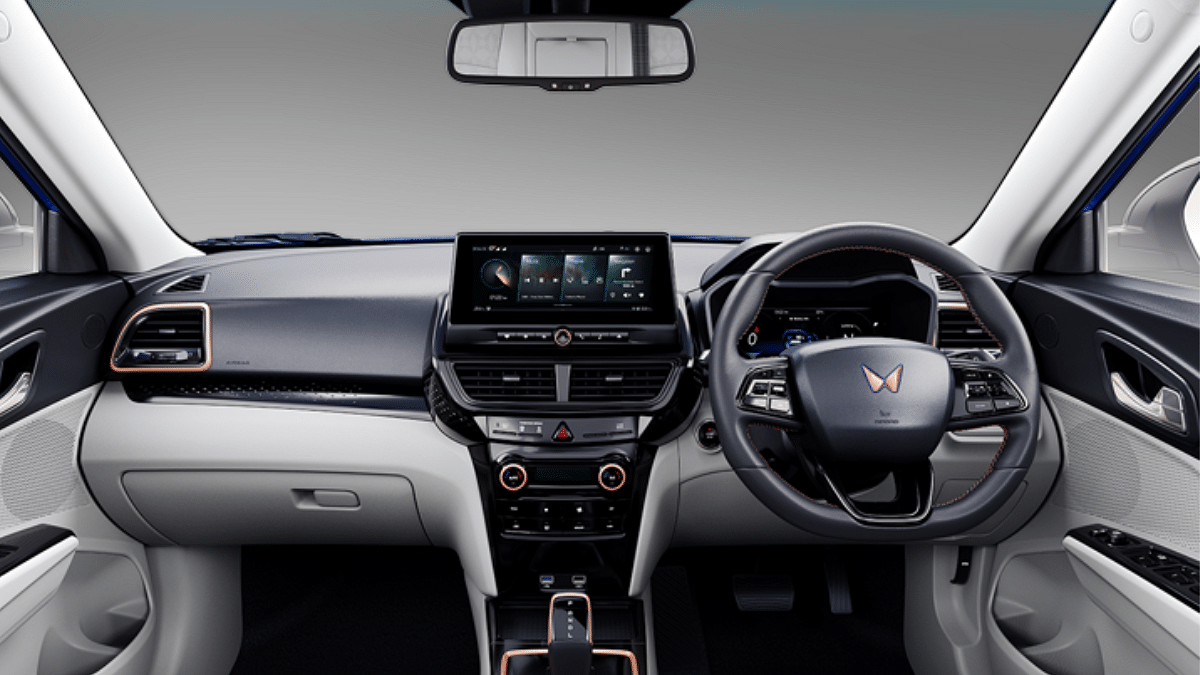
The latest Mahindra XUV 400 electric variants called the XUV 400 EL Pro and the XUV 400 EC Pro comes as the upgraded version of the current-generation model. Both these variants have been launched with a newly designed dashboard.
The cabin now gets dual-tone finish which makes the cabin look both premium as well as spacious. The XUV 400 EC Pro and the XUV 400 EL Pro also gets an upgraded infotainment system which measures 10.5-inches in size.
That’s not all. The XUV 400 electric SUV’s Pro variants also feature an XUV700-inspired three-spoke steering wheel in addition to the new digital instrument cluster. The seats of the new XUV 400 EL and EC Pro models also get leatherette upholstery combined with copper stitching that adds to the elegant finish.
Additionally, the new XUV 400 EL Pro and the EC Pro models are equipped with dual zone auto temperature control and Adrenox connected car system. It comes with both Android Auto and Apple Car Play support.
Mahindra XUV 400 EC Pro, EL Pro E-SUV Variants: What’s Retained From Existing Variant?
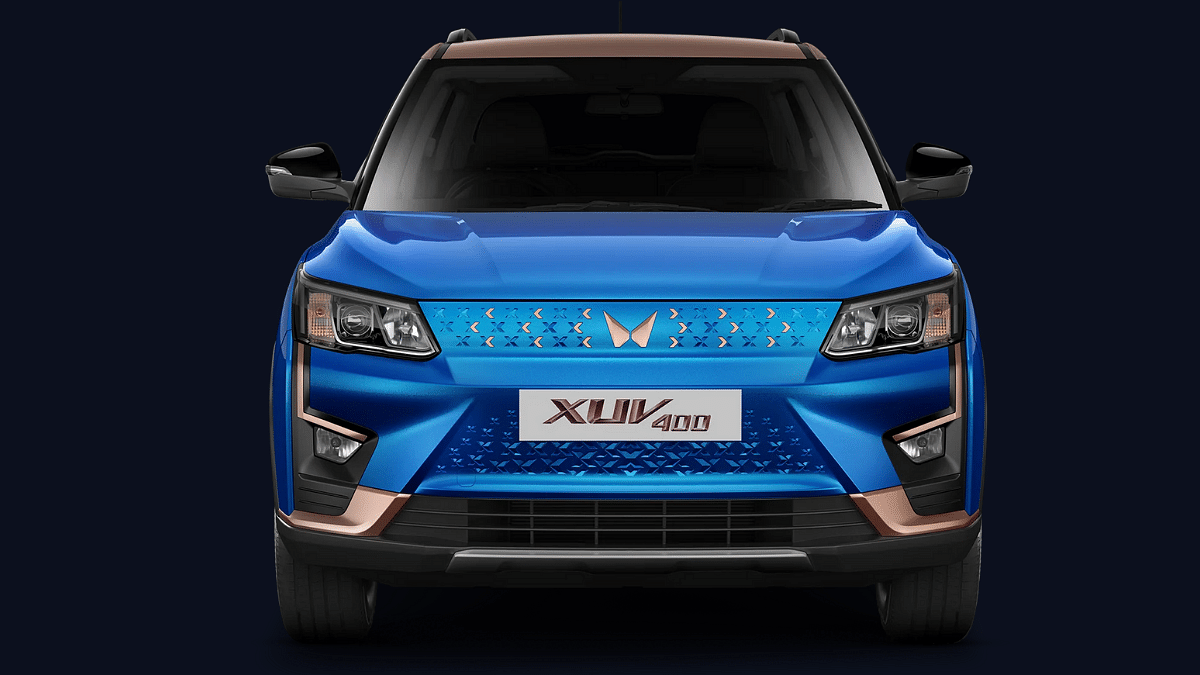
Besides the interiors, the Mahindra XUV 400 EC Pro and the XUV 400 EL Pro models don’t get any design overhaul. The exterior design remains untouched and so does the powertrain. The new models will be available with the same dual battery pack option which include the 34kWh and 39.5kWh options.
The XUV 400 with 34 kWh battery can deliver around 250 km range on a single charge, while the 39.5 kWh battery variant of the XUV 400 offers around 290 km range with each charge. With the bundled 7.2 kW charger, the XUV 400 electric SUV’s battery takes around six hours for a full 100 percent charge.
Mahindra XUV 400 EL Pro, XUV 400 EC Pro India Pricing Details
The Mahindra XUV 400 EL Pro model price in India starts at Rs. 16.49 lakh, whereas, the EC Pro model can be purchased at Rs. 17.74 lakh. It is wort adding that Mahindra has introduced both these models as the replacements to the standard XUV 400 EC and EL models. Also, the starting price is lower compared to the previous variants which should give Mahindra an extra thrust with the sales.
The latest move by Mahindra to replace the existing EV models with new updated variants should help the brand to grab some attention from the Indian consumers. Besides, it is clear that Mahindra is trying to achieve the top spot in the growing EV sector in India. Also, the lower rates allows the XUV 400 to compete India’s current favorite Nexon EV. The reduced costs and the addition of new features along with design adds to the positive aspect of the newly launched Mahindra XUV Pro variants.
To be equipped with multiple advanced features such as ADAS and more
Gensol Electric Vehicles PVT LTD, an EV startup recently revealed its plan to launch the first Made-in-India electric car called the Gensol EV. The brand had earlier shared the teaser video of its upcoming electric car which apparently is scheduled to launch this year itself in the Indian market. With the approaching launch, insight into the upcoming Gensol EV is being supplied via different sources. The latest one is the first ever sighting of the Gensol EV test mule which indicates an imminent launch as well as reveals the crucial design elements.
Gensol EV “Made In India” Electric Car Spy Shots Leaked
The spy shots of the Gensol EV electric car has been shared by an automobile enthusiast called K Pratham. The first electric car from Gensole will move away from the conventional four-wheel drive. As seen in the leaked test mule image, the Gensol EV will be featuring a three-wheel hatchback design.
It will be the first time we get to see this kind of design language with any functional electric car. Notably, this test mule of the Gensol EV has been spotted being tested on the roads of Chukan, Pune, Maharashtra. If we go by the reports, the car has been spotted at the manufacturing facility of the brand in Pune.
The HQ are said to be situated at Mundhwa which is also in the Pune district. The leaked image of the Gensol EV test mule can also be seen with a temporary registration number plate. It is being suggested that the registrations have been approved by Chinchwad RTO for the testing.
What Do The Leaked Spy Shots Of Gensol EV Test Mule Reveal?
Unfortunately, we only get to see the fasica of the Gensol EV’s test mule that too with a camouflaged wrapping. Hence, it becomes difficult to anticipate the key design elements besides the three-wheel design.
Nevertheless, going by the information available we can expect the Gensol EV to offer a two-seater seating arrangement. We might also get to see a digital infotainment system with touchscreen compatibility. This setup will be positioned at the centre console. The Gensol EV will also come with manual air conditioner controls and feature a basic drive mode selection unit too.
The Gensol EV three-wheeler hatchback is also expected to offer over 200 km range per charge and is likely to reach a top speed of 80 km/h. Gensol is also rumored to add a moonroof and AI-based cloud services to the Gensol EV three-wheeler hatchback.
A trial run of Pravaig Veer EV in Uttarakhand goes wrong
Crash kills four during test run
Investigation of the incident underway
Indian automobile industry is witnessing a gradual shift towards EV. The emphasis from Indian government to boost this ecosystem is helping the country adapt to the cleaner and efficient mode of transportation. While he developments across the EV space is rapid, incidents if EV accidents are also becoming frequent. We have come across numerous reports citing electric scooters and motorcycles going up in flames due to battery faults. Now, a fresh mishap is being reported from Uttarakhand where a trial run of an EV became fatal for the individuals. What is this entire incident and what does the EV brand says on the matter? Read below for details:
Pravaig EV Trial Run Accident: What Really Happened?
The tragic incident which involves the trial run of the Praviag EV took place in Uttarakhand’s Rajaji National Park. According to the reports online, the all-terrain electric SUV was being tested on Monday evening when four members died after the accident. A video footage of accident has also been shared by PTI sourcing some third party on X (previously Twitter.
STORY | Trial EV accident: EV company deeply saddened; driver says was forced to speed, overload
Four people, including two forest rangers, died after their trial EV met with an accident in Uttarakhand's Rajaji Tiger Reserve on Monday evening. The accident was recorded in the… pic.twitter.com/7xObtnfVFZ
The trial EV is said to have met with the accident after the driver was asked to speed up the vehicle which led it to loosing control and eventually crashing and killing two forest rangers along with two others. Five more personnels have reportedly sustained major injuries due to the accident. Those who retained injuries have been admitted to the hospital for further treatments.
Two forest rangers were killed while a woman warden went missing after a trial electric vehicle they were in met with an accident in Uttarakhand’s Rajaji Tiger Reserve, reported news agency PTI. Five others in the vehicle were injured and were admitted to a hospital with injuries.
Going by the video of the incident and the reports available, the driver of the test vehicle was forced by the forest officials to not only overload but also drive in high speed on off road track. This was during the second trial run which was scheduled for the afternoon.
The all-wheel drive electric car had a maximum seating capacity of 8 passengers but the officials forced the driver to take along 9 passengers. The total of 10 members onboard in addition to the high speed is said to be the primary reason for this crash.
An FIR has been registered by the Uttarakhand police on this matter and investigation is underway. However, there are reports that Pravaig Dynamics wants the police department to log a fresh FIR as the brand believes crucial facts haven’t been considered.
This incident involving deaths of the passengers during the EV testing is a reality check that safety shouldn’t be compromised and guidelines must be followed. If the car wasn’t pushed beyond its limits this major accident could have been avoided. Hence. it’s always advises to avoid such mishaps by simply following the standard safety procedures.
Will be available in two different variants and multiple trims
Fresh teaser reveals first look of the interiors
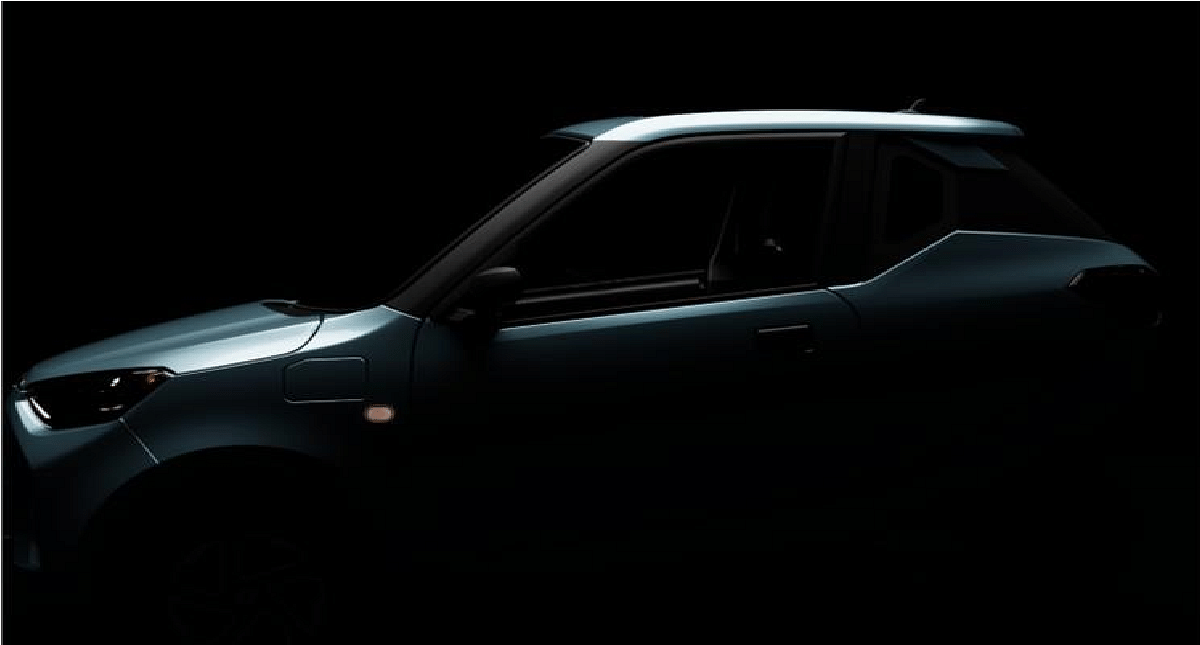
Tata Punch EV is the talk of the town and ever Tata has now started sharing official teasers giving us a sneak peek of the upcoming electric SUV. The latest teaser from Tata EV has revealed the interiors of the Punch EV giving us an insight into the premium features it brings to the table.
Tata Punch EV Interiors First Look
The Tata Punch EV’s latest teaser has been shared on the popular social media platform Instagram. As mentioned above, we have got a sneak peek of the micro electric SUV’s interiors and not the full view. Going by the teaser, it is clear that the centre console gets a makeover over the ICE version.
The two spoke steering wheel is also visible in the teaser post which has been tipped by the previous leaks as well. One of the prominent upgrades that the Tata Punch EV gets over the ICE version is the new 10.25-inch infotainment system which is inspired by the Nexon facelift.
The two-spoke steering wheel of the Tata Punch EV gets touch-enabled controls to control music playback and more. The fresh teaser images further reveals dual-tone seat shade. It is expected that the Punch EV will be featuring leatherette ventilated seats which as per the teaser will flaunt white and grey combi shade.
Some reports suggests that Tata will be offering different customizations with the cabin. But that will be depending on the variant. We will also get to see a 360-degree camera system that will improve the ride safety and also assist with parking at tight spots.
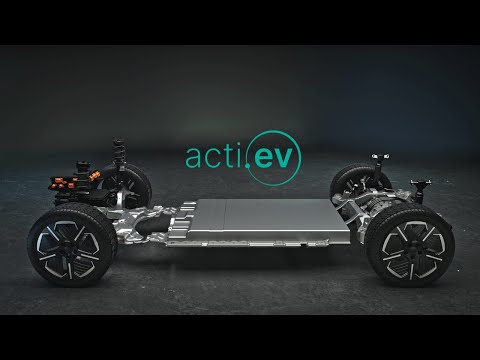
The Punch EV is being built on Tata’s second-generation Pure EV architecture called acti.ev. Tata has revealed this same architecture will be used for the future generation EVs from Tata. This micro electric SUV will be launched in two different variants namely Long Range and Medium Range and will gave six broader trims.
The Punch EV’s Medium Range model is expected to be driven by a 25 kWh battery pack, while a bigger 35kWh battery module is expected to power the Long Range variant. Range delivery expected by the Tata Punch EV is around 400 km per charge. But this is a speculative figure and the exact numbers are expected to be revealed during the launch or prior that via teasers.
Ather 450S electric two-wheeler scooter gets fresh discount
Prices axed by up to Rs. 20,000
Now starts at Rs. 1.09 lakh in India
Ather Energy us widely popular for its range of pocket-friendly and premium two-wheeler electric scooter. Recently, the Indian EV startup upgraded its portfolio with a high-speed electric scooter called the 450 Apex and now is back in the headlines for axing price of its entry-level e-scooter. Which Ather e-scooter has now received discounts? Read details inside:
Ather 450S Prices Axed: How Much Does It Cost Now?
Model
Discounted Price
Ather 450S (Without Pro Pack)
Rs. 1.09 lakh (ex-showroom)
Ather 450S (With Pro Pack)
Rs. 1.19 lakh (ex-shoroom)
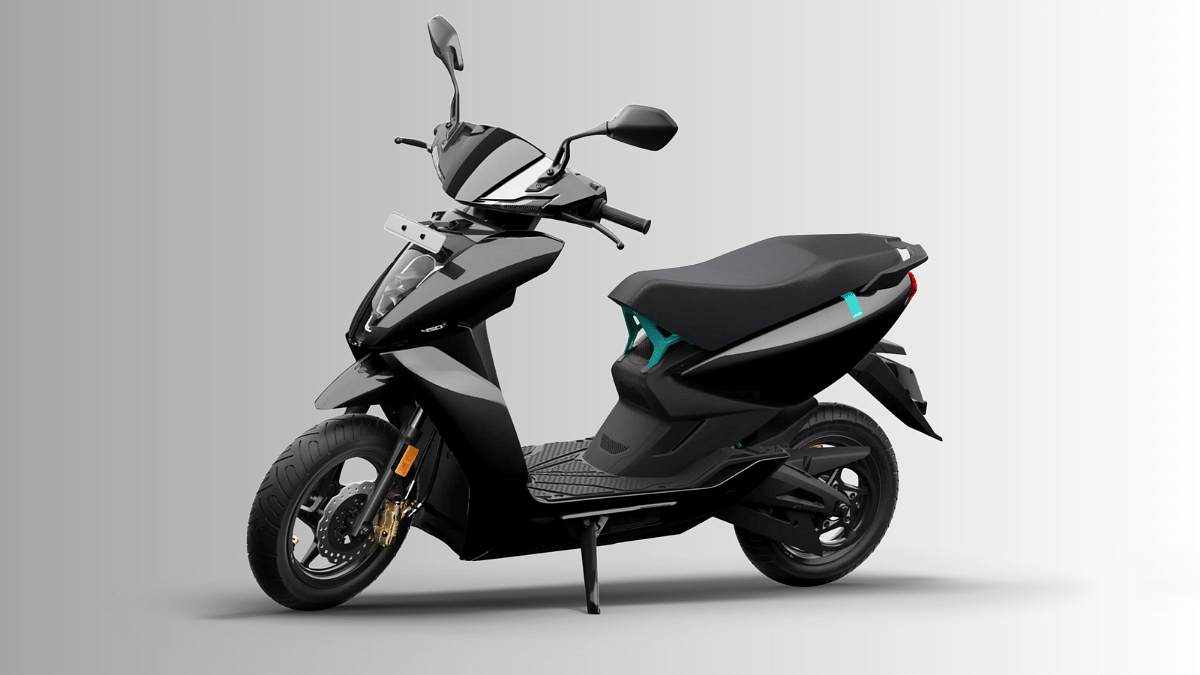
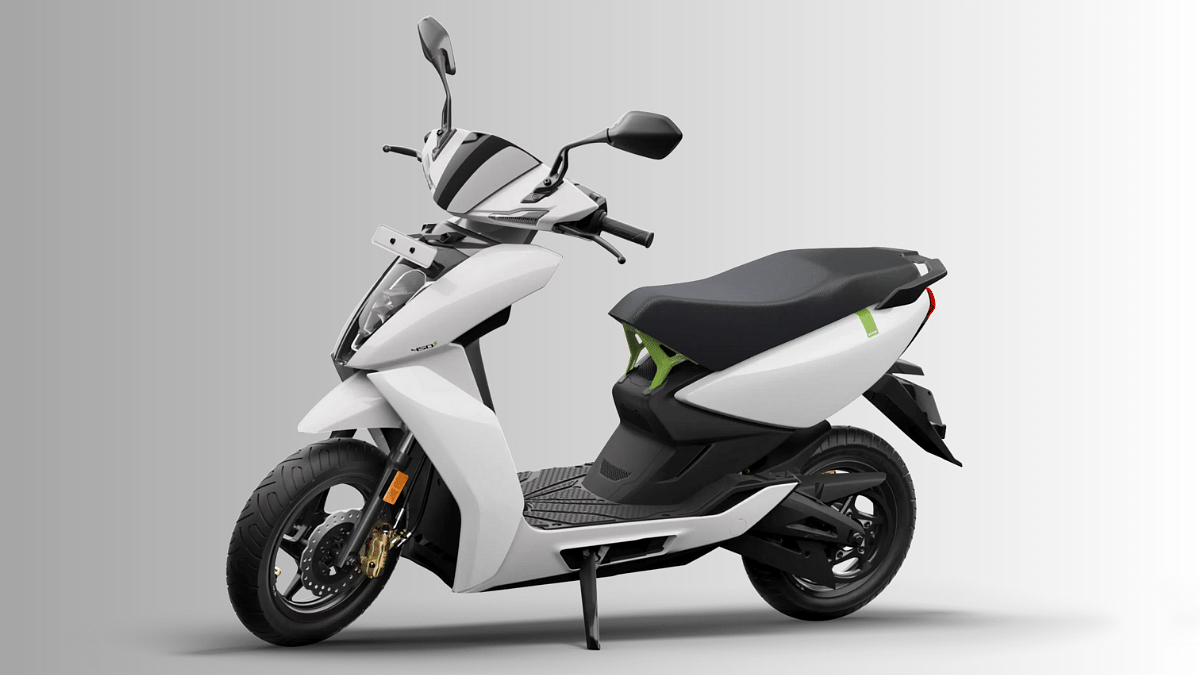
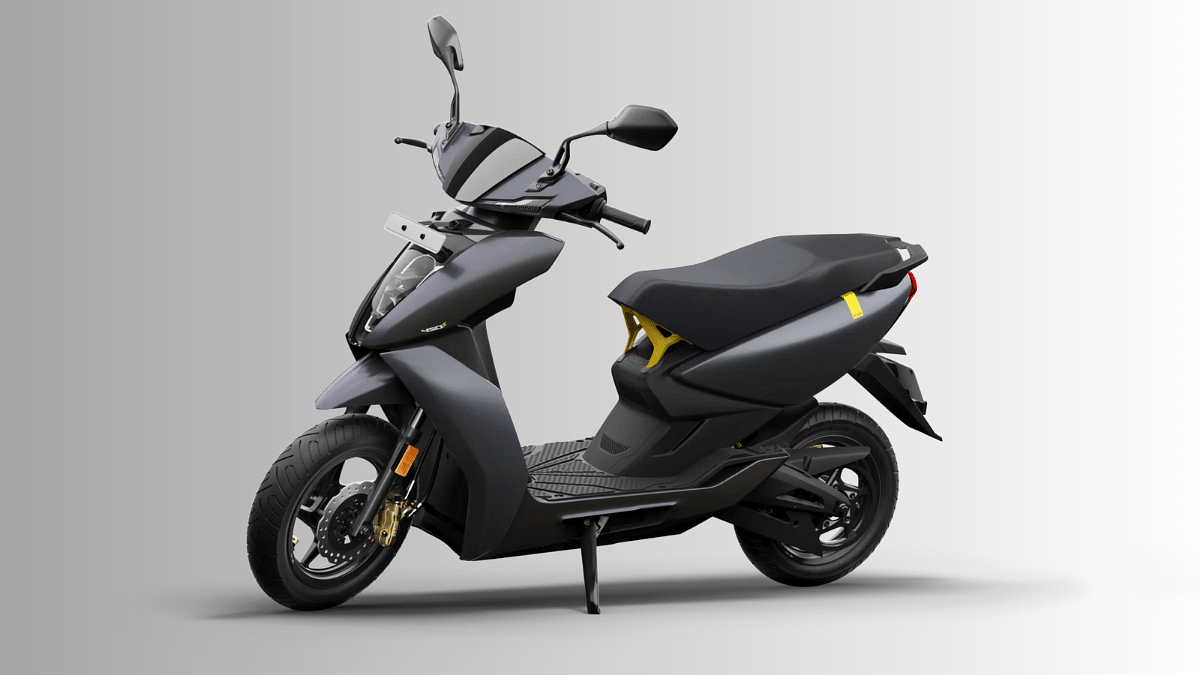
The latest Ather electric scooter to receive a massive price cut is the 450S. It is the entry-level two-wheeler electric scooter from the company which has become more affordable with the fresh discount. Ather has announced up to Rs. 25,000 price cut on the 450S budget e-scooter.
Speaking of the new prices, the Ather 450S electric scooter’s base variant will now be available at 1.09 lakh in Bengaluru. This is the cost without the Pro Pack. The Ather 450S with Pro Pack will now be up for grabs at Rs. 1.19 lakh.
The Pro Pack variant will be loaded with a range of smart features as well as connected tech system. Do note that the price for the Ather 450S electric scooter’s base model will be available starting at Rs. 97,500 in Delhi.
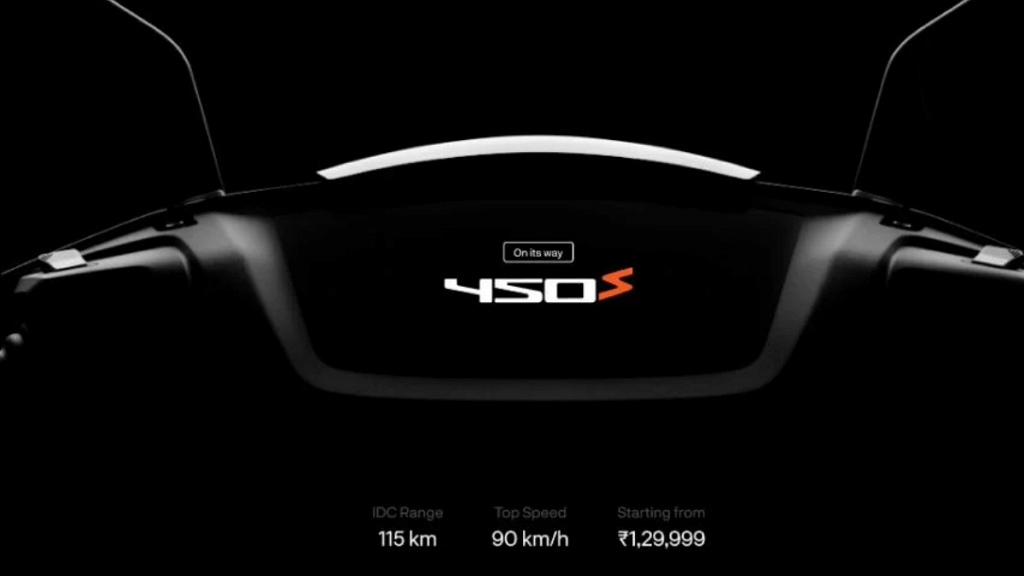
The Ather 450S comes with an all-electric drivetrain which includes a powerful 5.6 kW electric motor that churns out 22Nm of peak torque. This affordable electric scooter from Ather is further packed with a 2.9 kWh battery module that allows it to deliver around 115km range per charge. Charging time taken by the Ather 450S is approx. 6 hours 36 min for 0-80 percent using standard home charger. It can reach a top speed of up to 90km/h.
The advanced set of features that the Ather 450S electric scooter is packed with includes Park Assist, Auto Hold (slope assist mode), side stand sensor, and Auto indicator off. It offers 22l boot space and also has a frunk (front trunk storage space). This low-cost Ather electric scooter uses monoshock shock absorption system.
Ather 450S is currently the best deal with the given discount of up to Rs. 25,000 in India. This e-scooter is definitely worth a purchase if your budget doesn’t exceed over Rs. 1.20 lakh and requirements are primarily for city runs.
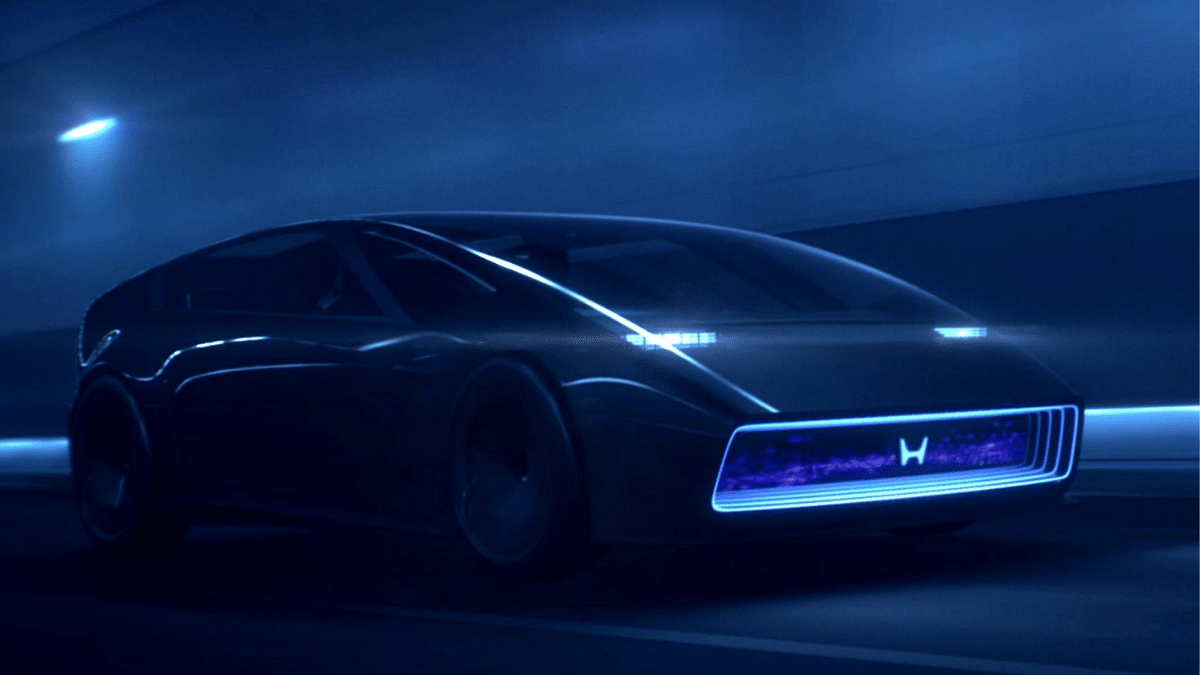
Honda Motor Co., is ramping up its portfolio with new electric cars and is likely to upgrade its fleet proactively in the coming years. At the ongoing CES, 2024 event being held in Las Vegas, Nevada, U.S, the Japanese automobile giant has showcased two new global EV models that are currently in the concept stage and expected to go official by 2026 in the market. Debuting under the Honda 0 series, the upcoming variants are said to be introduced with the new “H” badging and feature a thin and light design.
Honda 0 Series Electric Cars: Which Are The Two Concept Global EVs Unveiled?
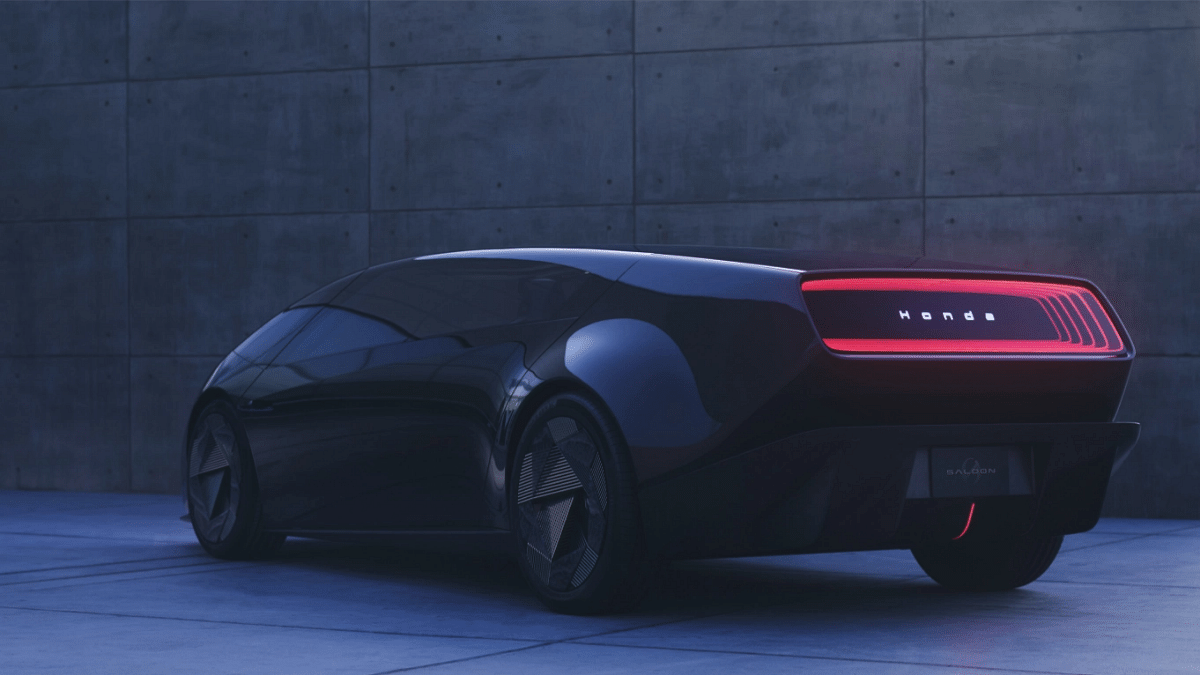
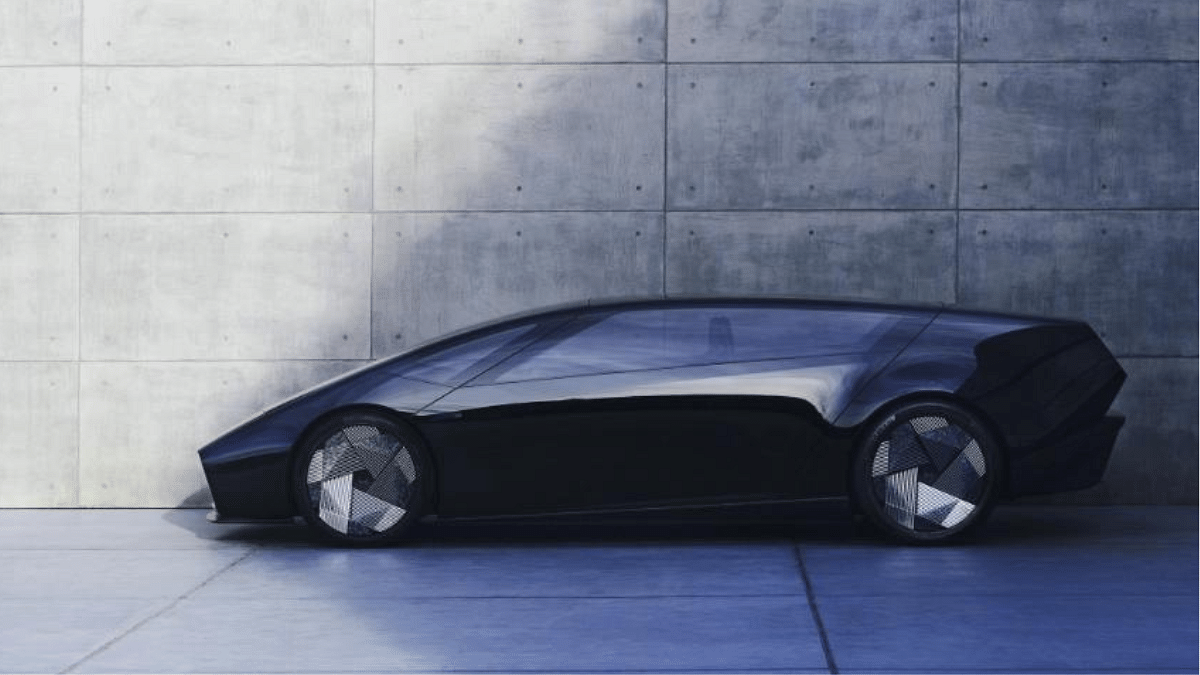
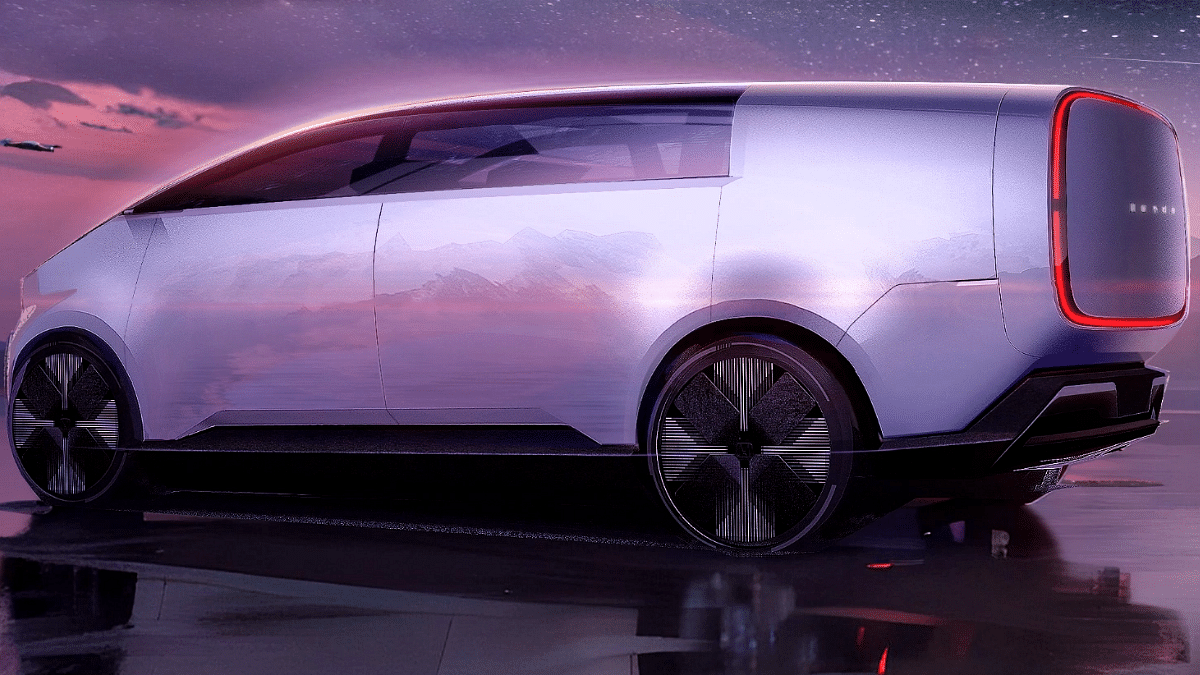
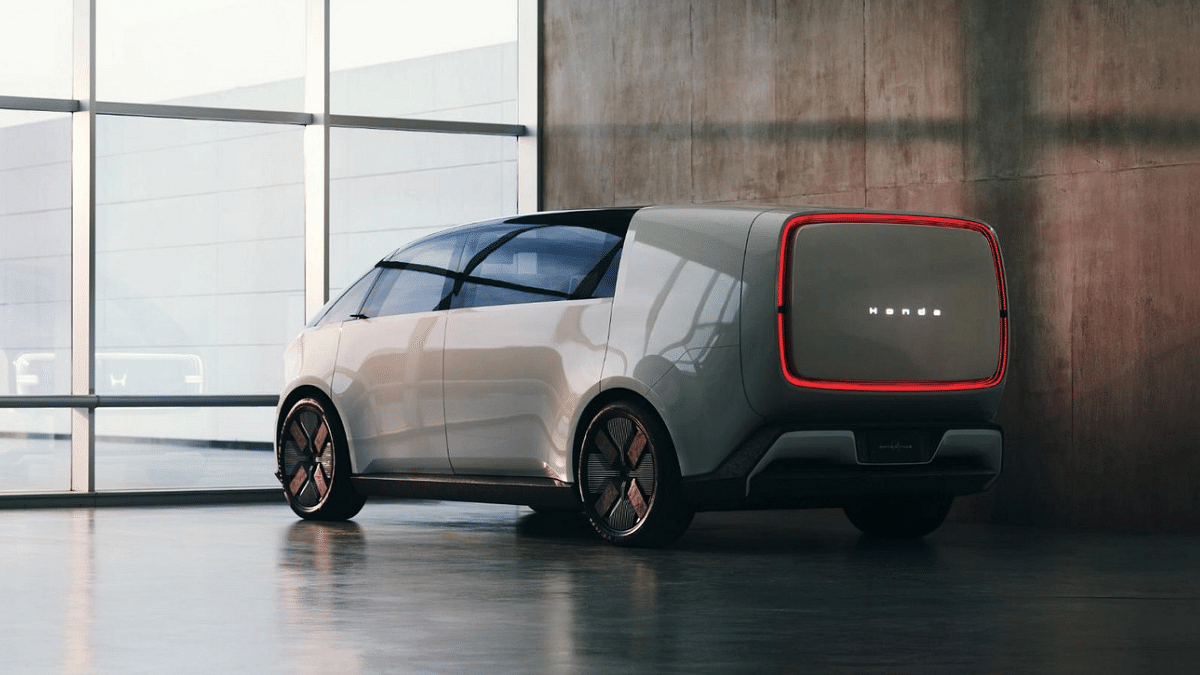
Honda’s upcoming electric car concept models that have beeb premiered at the CES 2024 will be a part of the Honda 0 series. These variants will be monikered as the Saloon and Space-Hub. It is being suggested that both these new electric cars will be utilizing Honda’s latest electric design architecture and engineering.
While the Honda Saloon EV appears to be an all-electric sedan, the Space-Hub is apparently a futuristic minivan with spacious cabin for more comfortable rides.
As mentioned above, the upcoming Honda 0 series electric cars will be based on an entire new approach. The brand suggests the models debuting in this lineup will have the “Thin, Light, and Wise” design approach.
This means all new Honda electric cars that in the coming generation will boast and thin and lightweight design and will also offer a sportier drive experience despite being battery propelled.
Furthermore, these new electric cars debuting under the Honda 0 series will be incorporating some of the most advanced technologies that will elevate the driving experience with EVs. Honda has additionally revealed that the new EV platform which it’s working on is inspired by M/M approach which stands for “man maximum/ machine maximum”.
This is nothing but the enhanced efficiency which the all-electric Honda cars and SUVs will offer to the owners. Honda is also expected to use large-sized “high-density” batteries to drive the future-generation EVs. The claims are up to 80 percent battery charging with just 15 minutes of a plug-in.
Honda is expected to introduce the new range of electric cars and SUVs under the 0 series by 2026. The initial markets it is expected to hit is North America followed by the remaining markets in the global region.
New tech revealed to drive Afeela EV via PS5 controller
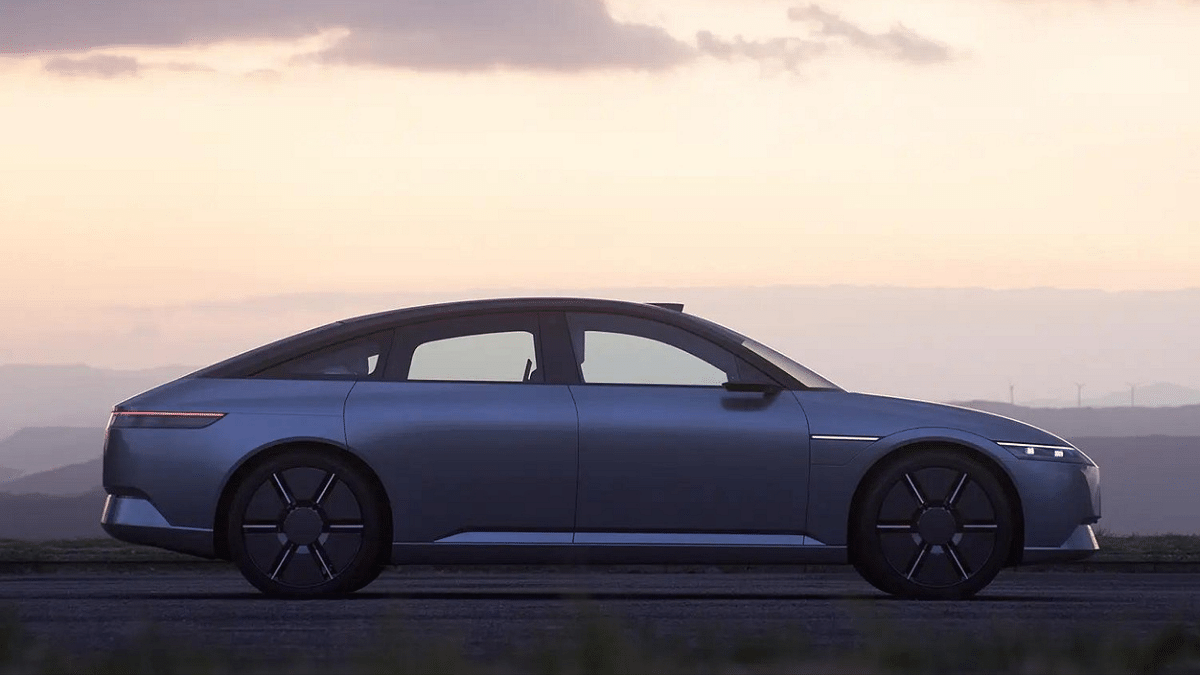
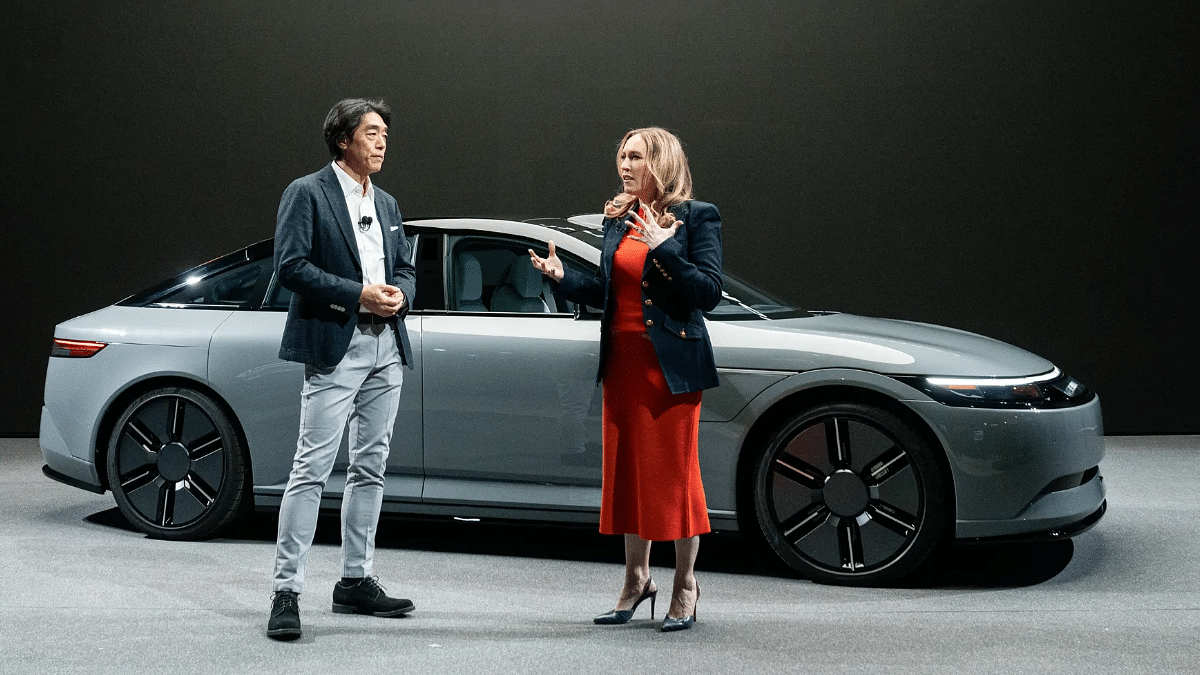
CES 2024 kickstarted yesterday and all the tech giants including some of the popular EV brands have lined up to showcase their future tech advancements. Last year, Sony and Honda revealed their collaborative unveiled a new electric car called Afeela laced with Qualcomm Digital Chassis technology. However, the car was in concept stage scheduled for 2026 launch. As we are inching closer to the launch, developments across the Afeela are coming to surface. At the CES 2024, Sony showcased how advance the Afeela would be in terms of technologies loaded. What did the brand reveal during the ongoing tech fair? Find out below:
Honda Afeela EV Drive Compatibility With PS5 Controller
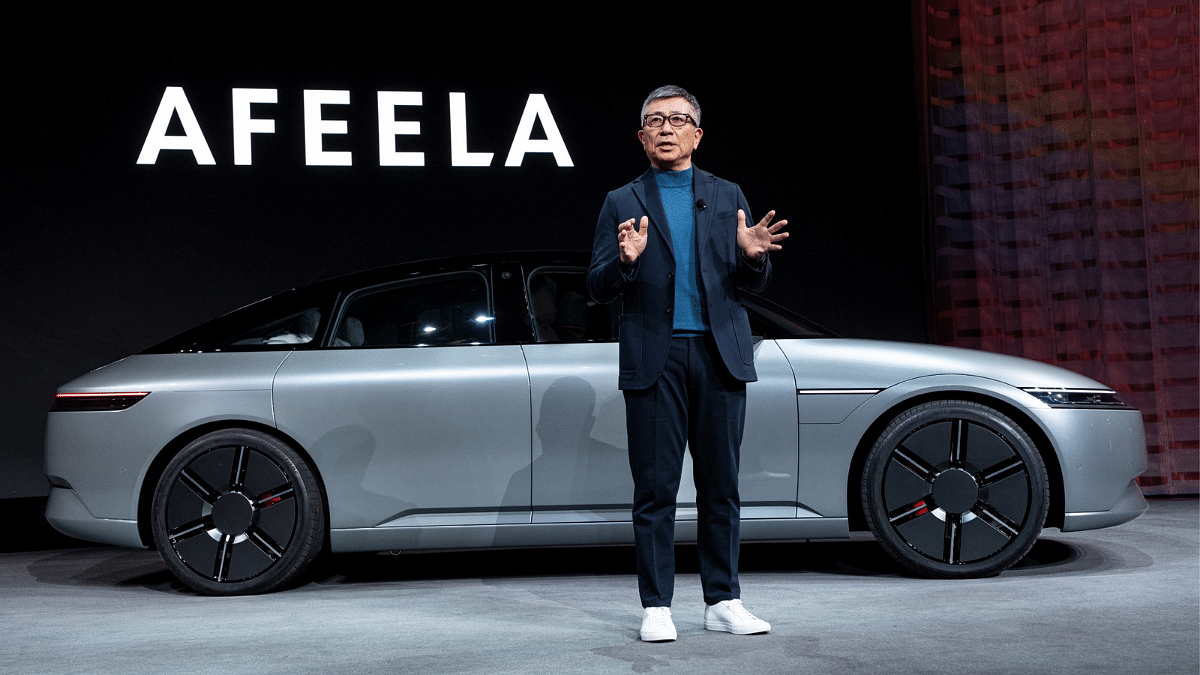
Sony Honda Mobility COO and President, Izumi Kawanishi took the CES 2024 centerstage this time and showed what the brand has in store for its fans. Kawanishi showcased the driving compatibility of the Afeela electric car using a PS5 controller.
Yes, you read that right. This new innovation which Sony and Honda have collectively developed will allow the consumers to drive the Afeela EV using just the PS5 game controller. The DualSense controller of PS5 easily handled the driving which definitely some advancement that we would like to see coming to reality.
Well, the Afeela EV with a PlayStation controller isn’t getting commercial anytime soon. The same has been confirmed by Kawanishi during the demo. He revealed that the upcoming electric car will not come with this feature when it goes production ready. Rather, the brand has just showcased the possibilities in terms of tech advancements that we will witness in the future.
Sony Honda Afeela Electric Car: Details We Know So Far
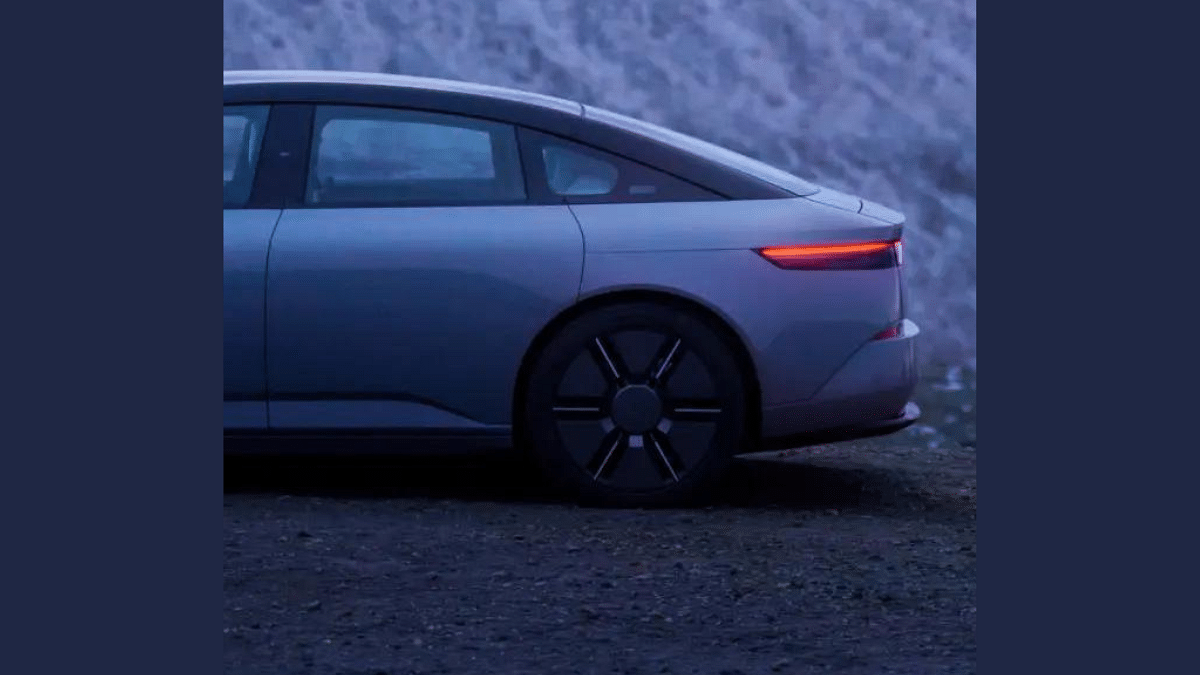
The Afeela EV is a brainchild of the Sony and Honda’s joint venture. The upcoming electric cat is expected to be packed with a dual motor system which will have 400kW capacity. The battery pack for the Afeela EV remains unspecified, but it is said to offer an all-wheel drive module which will tag it in the premium segment.
Additionally, the Afeela EV is said to reach up to 240km/h top speed. This electric car will be loaded with multiple advanced technologies including Qualcomm’s Digital Chassis and Epic Games’ Unreal Engine 5.3 for enhanced D navigational compatibility.
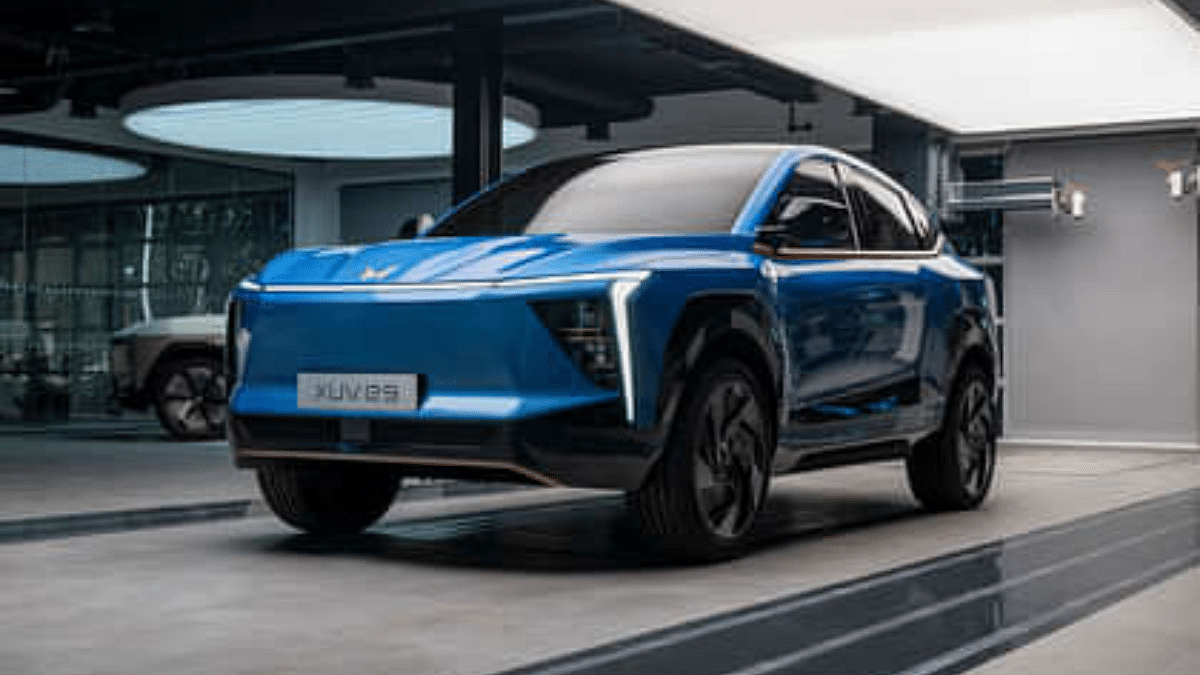
Mahindra is getting its game stronger in the EV space and will be bringing multiple option for the Indian consumers this year itslef. The electric fleet from the company is confirmed to get the XUV 400 EV facelift, XUV 300 electric version, and also the XUV e.8. While the first two models are expected to go official in the first half, the third model could break covers by the end of 2024. Test mule images of the upcoming Mahindra electric SUVs have been popping up frequently online. The latest one has revealed the XUV e8 electric SUV without any additional wrap.
Mahindra XUV e8 New Production-Ready Images Out: Only Exteriors Revealed
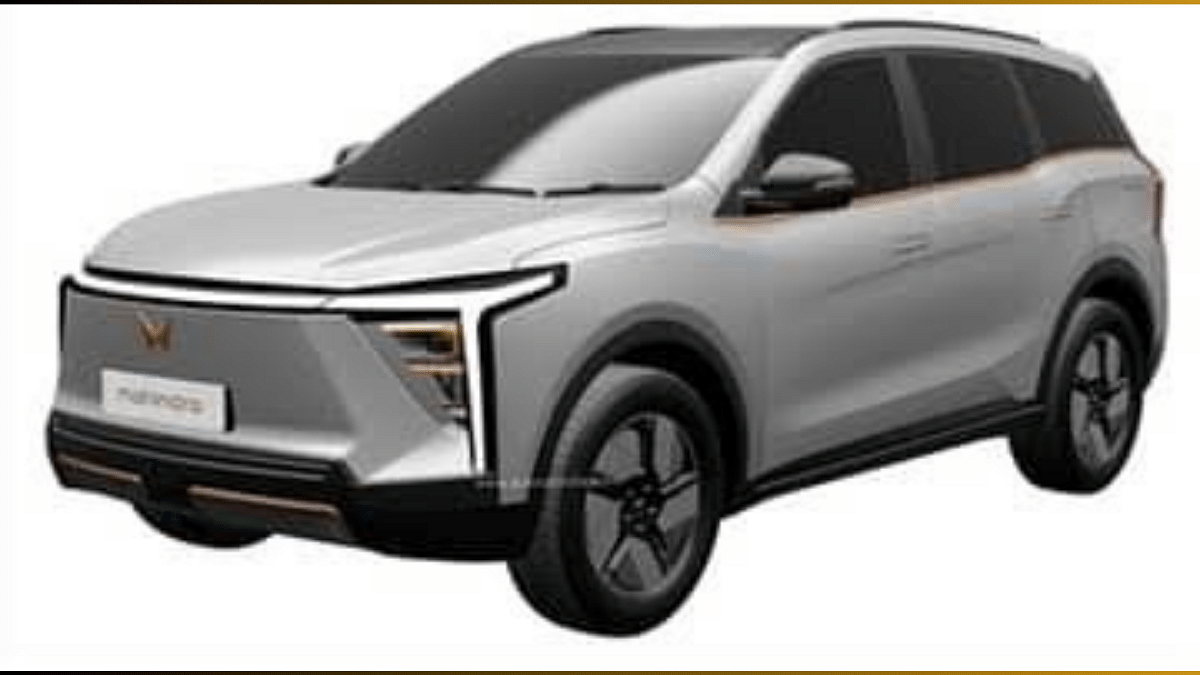
The latest production-ready image of the upcoming Mahindra XUV e8 rests the rumors that indicated an all-electric version of the XUV 700 in the making. Just for reference, there have been reports indicating the XUV e8 to be essentially the electric version of current-gent XUV 700 (ICE model).
Now, the fresh set of XUV e8 image which doesn’t have any camouflage covering due to which we can see the familiarities that both these models share in terms of design. While some of the hardware components seems missing from the images, one can clearly make out the key design aspects from the casings.
The front fascia including the bonnet and the side appeal is prominently similar to the XUV 700 ICE version. The XUV e8 will be distinguished with a connected LED DRL upfront along with triangular-shaped headlamps. This does match with the concept version which Mahindra had showcased earlier.
The latest set of production-ready images of the Mahindra XUV e8 has only given the sneak peek of the exteriors. The cabin design have not been disclosed. But there is plenty information related to the same. It is rumored that the XUV e8 could offer a three-screen layout which will enhance the luxury appeal inside the cabin when combined with the remaining aspects including a sunroof.
This triple-screen module is said to be positioned horizontally making it convenient for the driver, co-passenger, as well as the rear passengers.
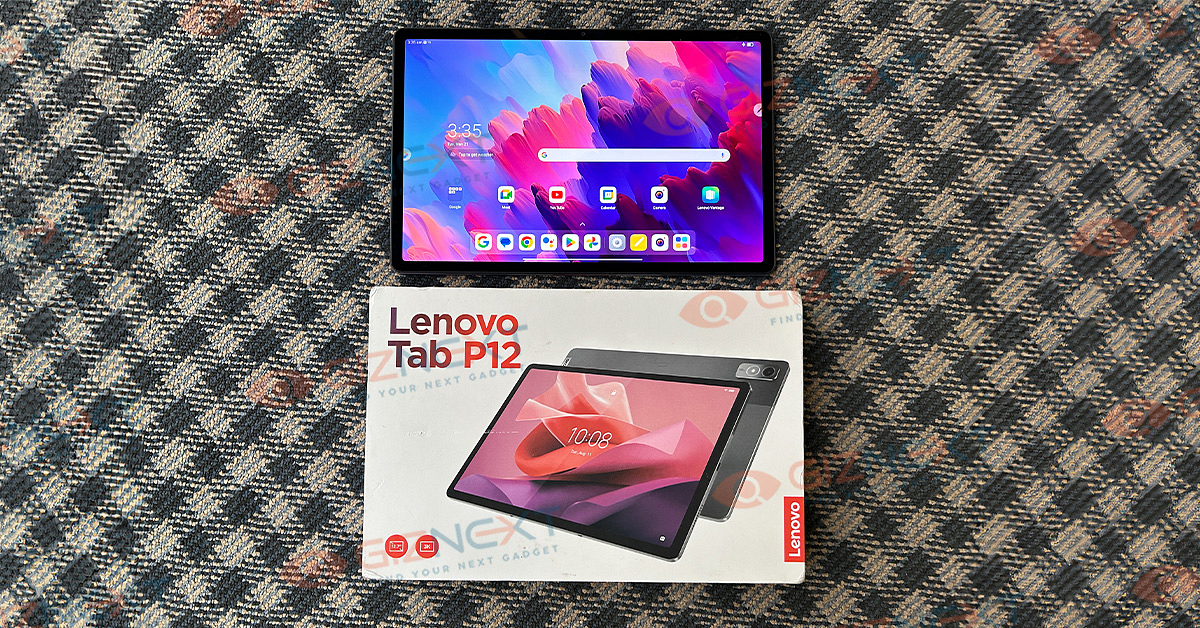
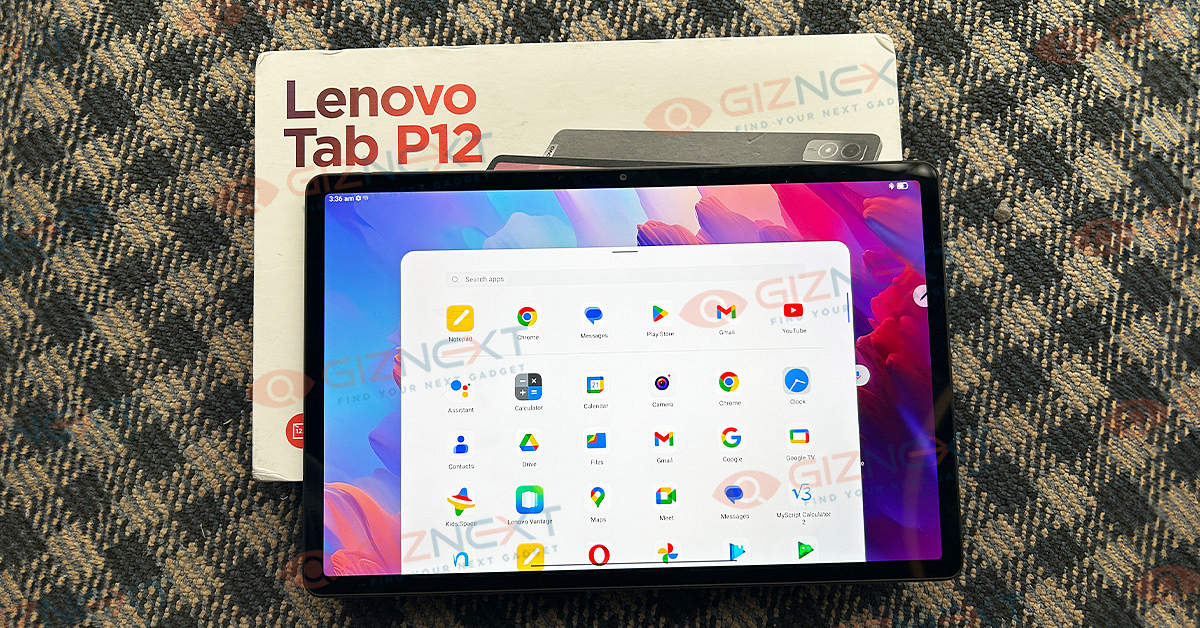
Tablet market has witnessed some extensive growth in the last few years. In India too, the demand for feature-loaded tablets is all time high. This has led to the frequent new tablet launches in the country. The numbers are high with Android tablet and not just PC giants but smartphone OEMs are equally contributing to populate this segment with new models. Lenovo‘s latest bet comes in the form of Tab P12 which marked its debut towards the end of 2023 in India. Starting at Rs. 34,999, the Lenovo Tab P12 comes as one good contender in the mid-range segment. But is the price justified? Should you invest in this Lenovo Tab P series tablet and if yes then why? We at Giznext got a chance to review the Lenovo Tab P12 tablet and have broken down the pointers what makes it a good purchase.
What’s Inside The Box
Lenovo Tab P12 tablet (main unit)
User Manuals And Warranty Card
Power adapter
USB Type-C cable
Design: Robust And Practical Ergonomics
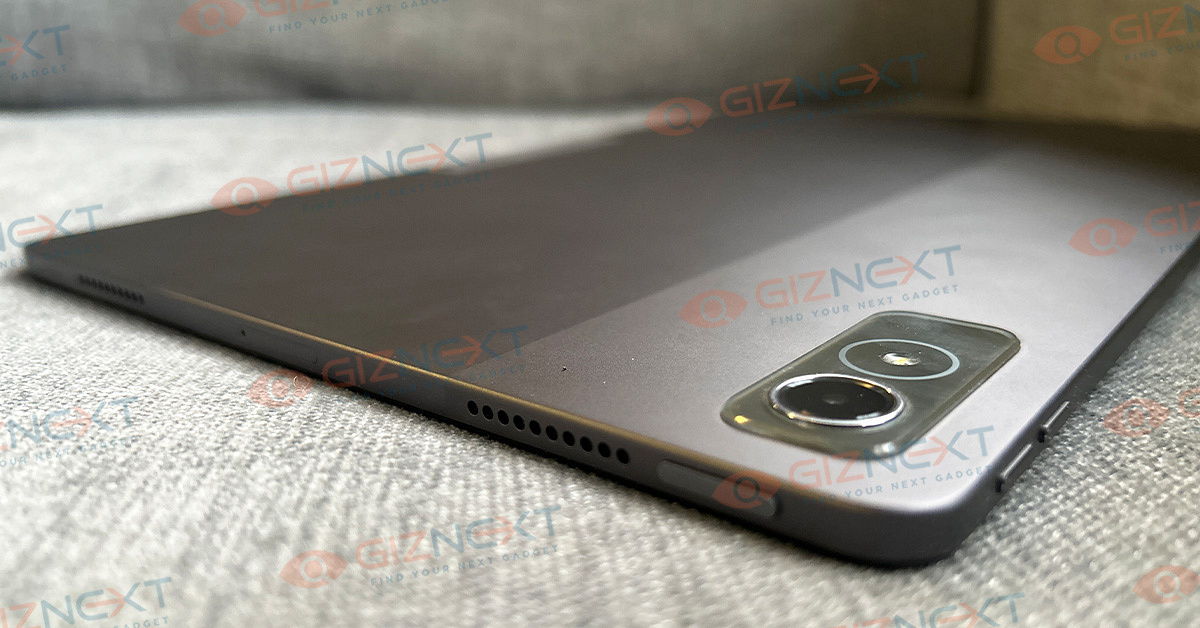
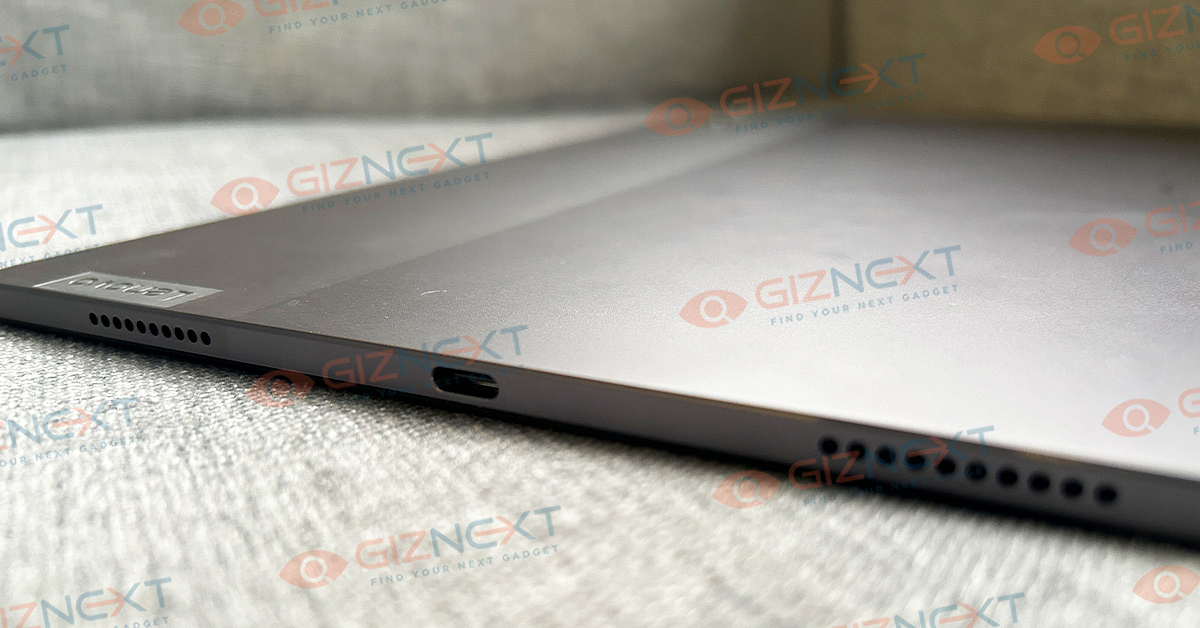
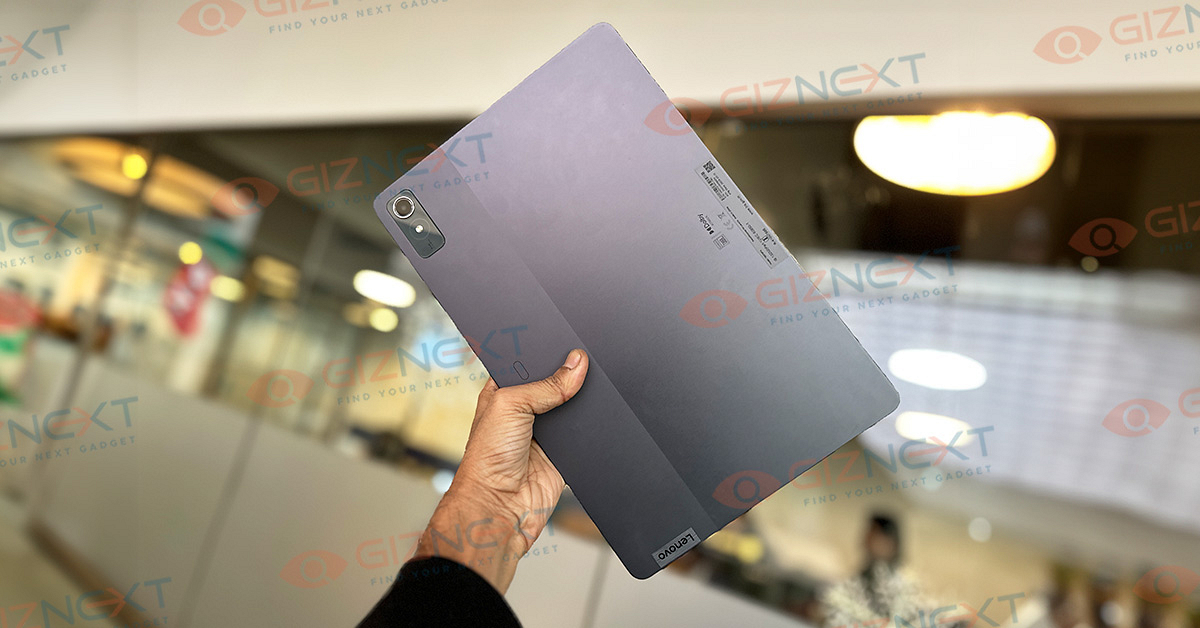
The Lenovo Tab P12 isn’t your regular compact PC tablet. It rather flaunts a large form factor comprising a large 12.7-inch screen. The aluminum build makes it all rugged but at the same time doesn’t really add on the heft or bulkiness. This tablet features an 8.44mm thickness and measures 293.37 x 190.76 x 6.9 mm in dimensions.
The dual tone (Storm Gray) finish is further an enhancement to the overall design language. This does look familiar to the Lenovo Tab P12 Pro model. The button placement is standard and you get the fingerprint scanner integrated within the power key.
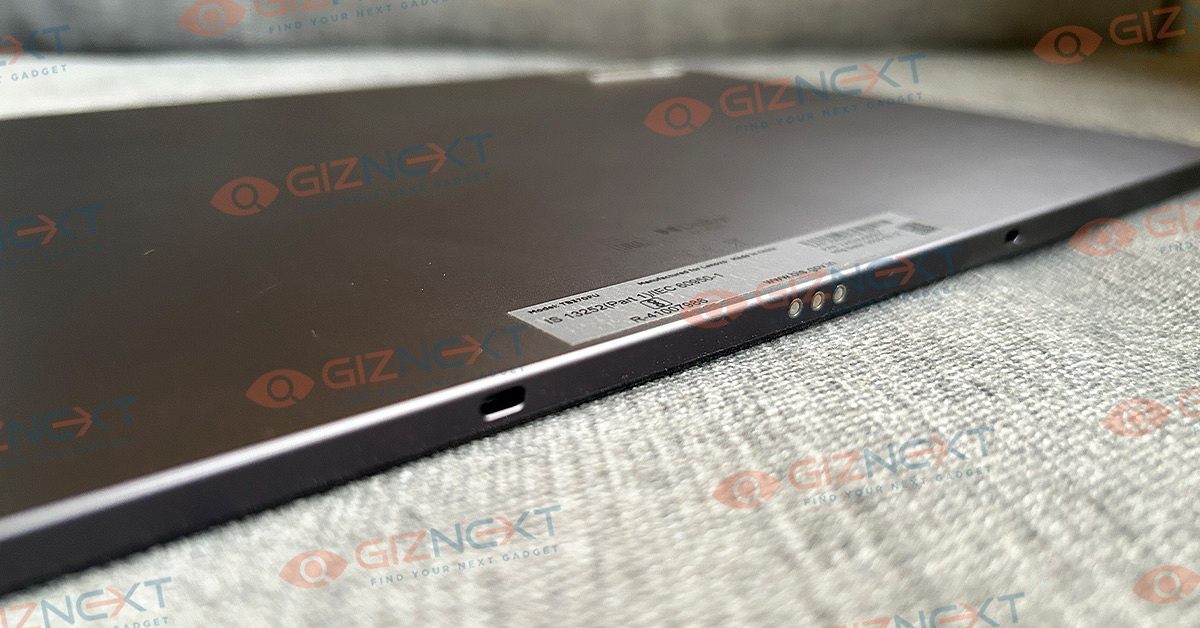
The power key is placed on the top, while the right spine accommodates the volume keys. Pogo pin connecters are placed on the left panel that will latch on to the keyboard magnetically. Notably, the Tab P12 comes void of a 3.5mm headphone jack which might drop in as a bummer for some consumers.
Another reason why this comes as a drawback is due to the fact that this is a big-sized tablet and multiple audio connectivity options wold only have added to the convenience. But that said, the Lenovo Tab P12 is ergonomically designed where despite the tall built it isn’t difficult to operate with one hand during basic tasks and video playback.
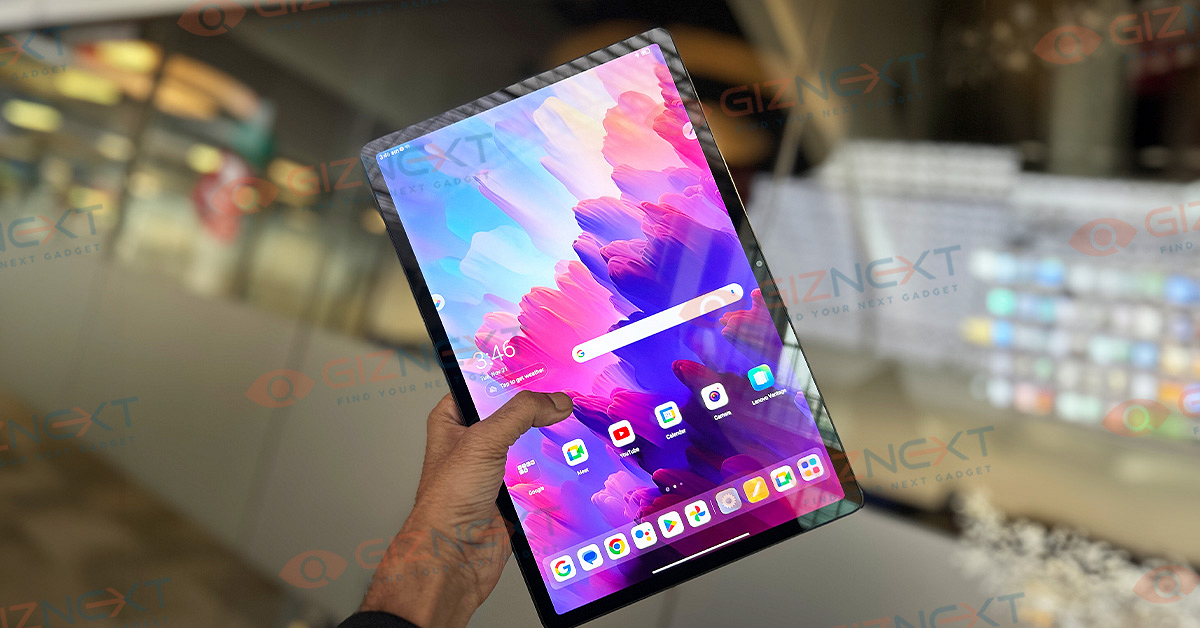
As stated above, the Lenovo Tab P12 tablet features a 12.7-inch display. The large screen used here is an LCD panel which comes with a 2944 x 1840 pixels 3K resolution. Now, this is a treat for consumers who prefer binge watching movies and TV shows on a mobile device rather than laptops or smart TVs.
The panel provides refined clarity with all formats of pictures and videos. Colors are stabilized and it doesn’t appear that the picture quality gets overtly saturated at any given point. The Tab P12’s display has 16:10 aspect ratio and 273 PPI pixel density .
The brightness levels offered is 400 nits and the refresh rate is 60Hz. Only these two are the figures where we believe the Lenovo Tab P12 could have been better. Specifically, that’s when the competitions such as the Xiaomi Pad 6 series offer higher brightness levels as well refresh rate.
It’s the smoothness with the higher refresh rate that you’ll probably miss while using this tablet. But nevertheless, the performance is adequate overall. Thanks, to the higher screen resolution and pixel density the viewing experience remains premium.
Enhancing the visuals additionally is the Quad-JBL sound speaker module combined with Dolby Atmos audio tech. Protecting the Lenovo Tab P12’s screen is the Corning Gorilla Glass 3 layer which adds resistance from unwanted scratches. There is also a Lenovo Precision Pen (stylus) support but that you have to purchase separately.
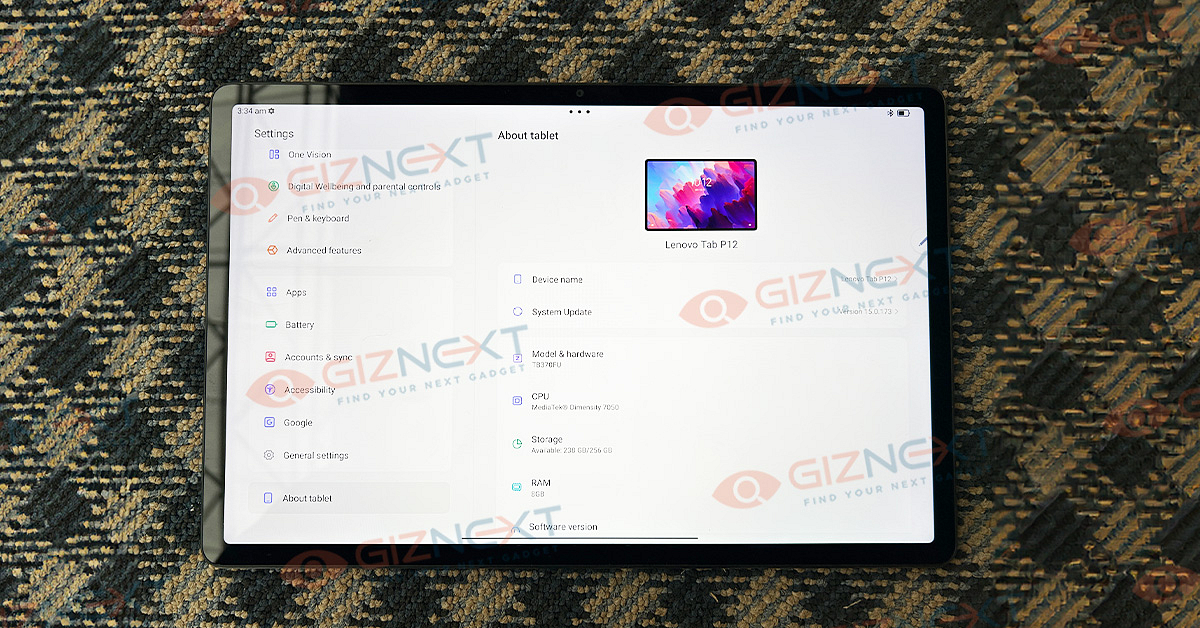
Lenovo has used a mid-range mobile chipset from MediaTek to drive the Tab P12 tablet. It employs the MediaTek Dimensity 7050 processor which MediaTek had introduced last year itself. This octa-core SoC includes two Cortex-A78 cores with 2.6GHz clock speed combined with six Cortex-A55 cores with 2.0GHz clock speed.
When we speak of the performance delivery, this new Lenovo tablet performed adequately with varied set of tasks. It is capable to take on general tasks that range from calling/ texting, multimedia playback, and web browsing. Complex tasks which including usage of heavy-sized applications and even gaming is also a fair experience overall with the Lenovo Tab P12 tablet.
There isn’t any noticeable lag when you make a switch between multiple apps. In fact, apps fire up instantly and you don’t struggle with launching multiple apps at once. The mid-range octa-core Dimensity 7050 chipset combines Mali-G68 GP that aids it with rendering some of the extensive graphics smoothly.
Moving on to the memory configuration, the Lenovo Tab P12 model we received has an 8GB RAM capacity. The RAM type os LPDDR4x which offers good speeds during multitasking. We experience fast performance overall with this RAM capacity. The onboard storage space integrated within the model we received is 256GB UFS 2.2.
Do note that the Tab P12 also gets an expandable microSD card support. This tablet has up to 1TB additional storage space that can be added via the microSD card. This means no crunch even if you load this tablet with large sized videos, images, and other graphics.
Lenovo ships the Tab P12 tablet with Android 13 OS which is further topped with the in-house ZUI 15 user interface. Despite a custom skin, the tablet’s UI is much cleaner compared to the other popular options in this league including the Xiaomi and OnePlus tablets.
Pre-loaded bloatware is also limited which helps maintaining a neater user interface. There are a bunch of customized apps that allows it to be used as a laptop. The built-in Freestyle app is one good example of the same using which you can easily mirror your Laptop/ PCs screen directly on the tablet. Multi/split screen view can also be used on the Tab P12 tablet.
Camera Performance: Decent Imaging And Video Recording
Imaging aspect on the Lenovo Tab P12 tablet is taken care of by a single lens sensor at the front and the rear. At the back panel, the primary sensor packed measures 13MP and it captures decent photos when the subject is shot with good lights in the surrounding. The same is the case with the 8MP selfie snapper. The self-portraits turn out to be better when the lighting conditions are good overall.
Images captured in the low-light background using both rear and the front camera have some levels of background noise. The dynamic range as well as the edge detection is fairly decent when the captured images have decent lights in the surrounding compared to the low-light or night shots.
The same goes for the video recording experience nothing too special. It gets the job done appropriately. Besides, if you are using this tablet for video conferencing, you’ll get a good feedback overall.
Under the hood, the Lenovo Tab P12 employs a 10,200 mAh (typical capacity) battery to keep the lights on. The backup is somewhere close to eight hours with continuous and extensive usage. It’s the lower display refresh rate and mid-range hardware that helps with lower power consumption eventually improving the battery backup.
Expect a faster battery drainage when playing graphic-hungry games or while binging on high-res videos on OTT platforms. The Lenovo Tab p12 gets a 20W fast charging support which is lower than what the competitions offer. Faster charging speeds (over 25W or 33W) would have added to the positives.
Our experience with the Lenovo Tab P12 throughout the usage have been great. It is one powerful tablet that is currently available in the mid-tier Android tablet segment. With a large 3K display and quad-JBL speaker system, it is one potent tablet that can live up to the expectations of binge watchers. Not just multimedia, but the added support for keyboard and stylus pen makes it the best option for creative tasks too. So, for a mid-range price you get a flagship-grade multi-functionality tablet.
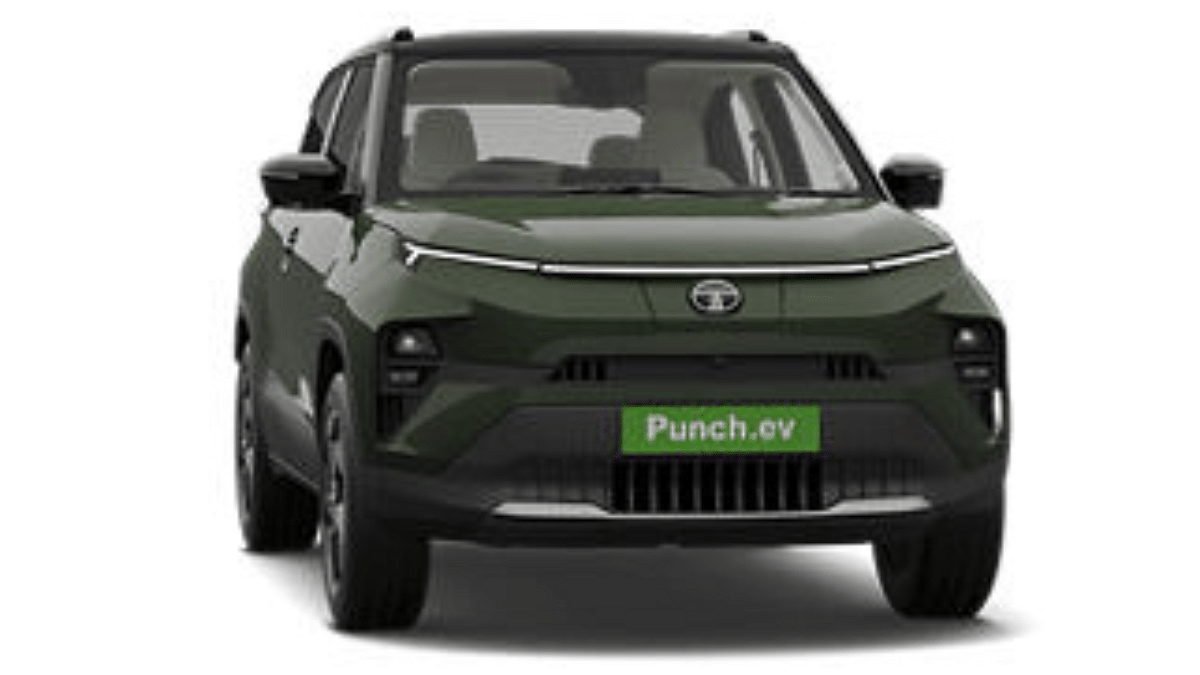
Tata Punch EV is certainly the most hyped micro electric SUVs in the Indian market. After months of anticipations, Tata Motors have officially unveiled the Punch EV and have revealed all of the trims that buyers will get to select from. Powertrain details for the Punch EV have also been confirmed by Tata.
Tata Punch EV Powertrain Variants
The Tata Punch EV has been introduced in two powertrain options including Standard and Long Range. This is much like the Nexon EV which also comes in dual powertrain options. Besides, Tata has used the all-new acti.ev architecture which will also be used in future-generation Tata EVs.
This second-generation pre EV architecture from Tata is claimed to improve the ride dynamics and also performance and allow a riding range from 300- 600 km per charge. It is being anticipated that the Tata Punch EV will offer around 400 km range with a single charge.
But the specific figures for the variant wise range remains unspecified. That said, the Tata Punch EV standard model is expected to be powered by a 25kWh battery pack. On the other hand, the Punch EV’s Long Range model is expected to be driven by a bigger 35 kWh battery module. The latter will be offering a higher range per charge cycle.
Both Tata Punch EV Standard and Long Range models will further be segregated in different trims. The variants will include Smart, Smart+, Adventure, Empowered, and Empowered+. The Standard Range variant will be available in all the aforementioned trims, while the Long Range model will come in Adventure, Empowered, and Empowered+ trims.
Tata Punch EV Design: Overhaul Or Identical To ICE Version?
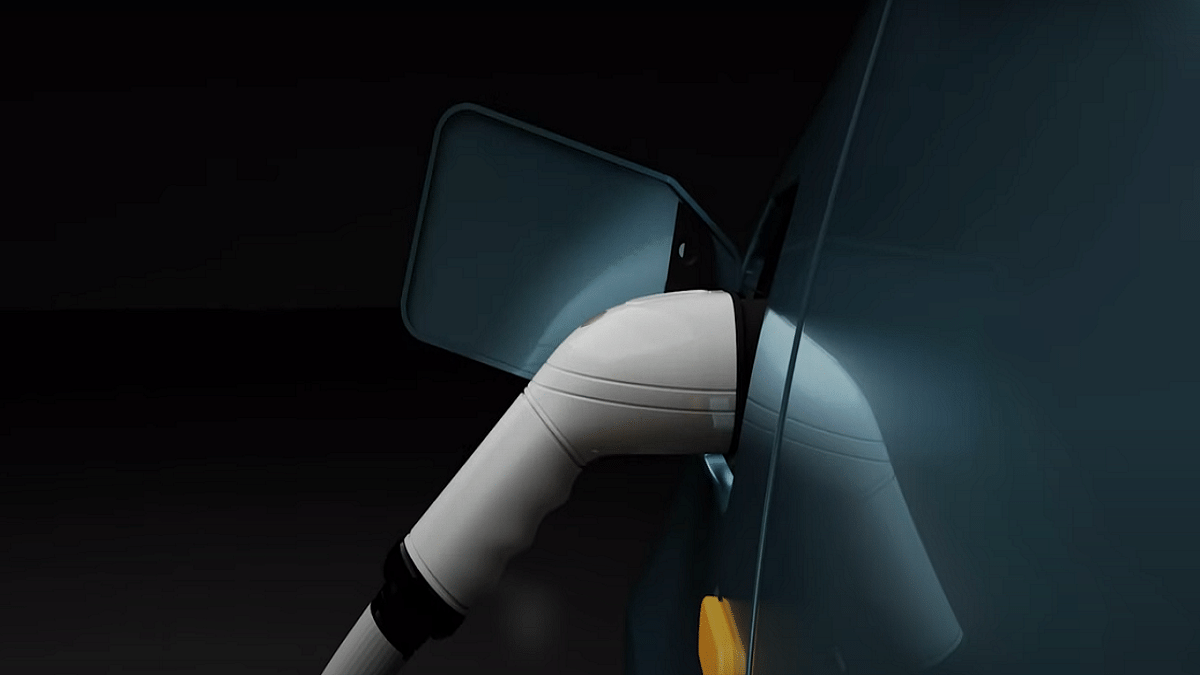
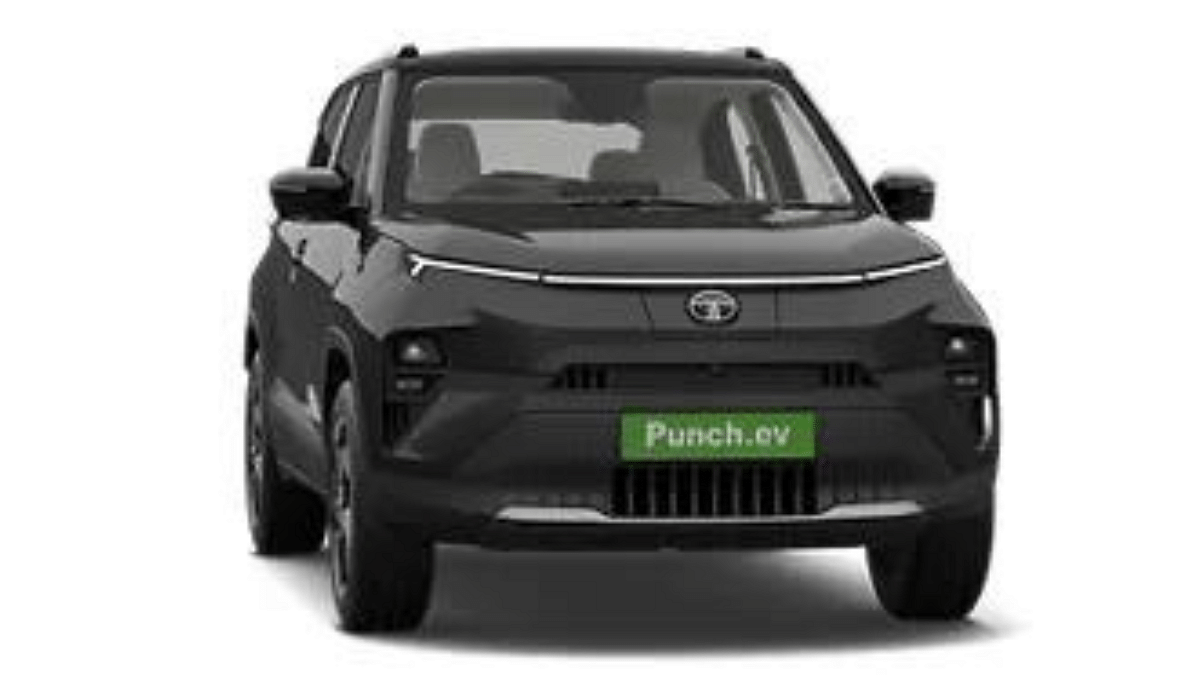
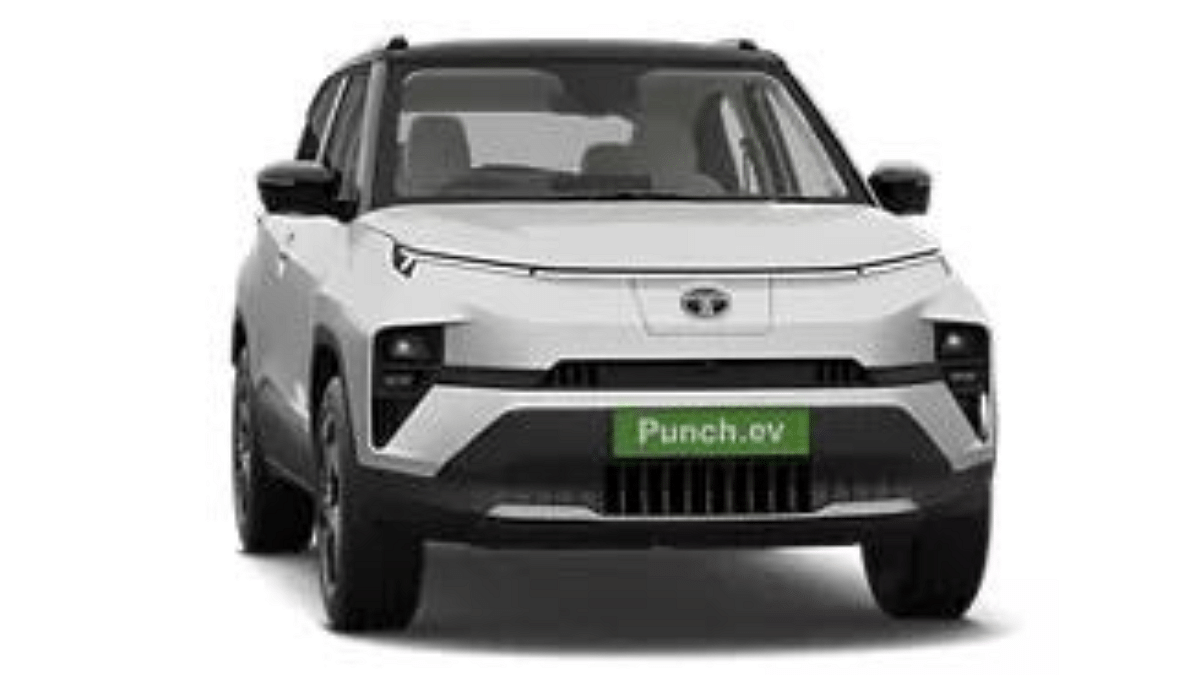
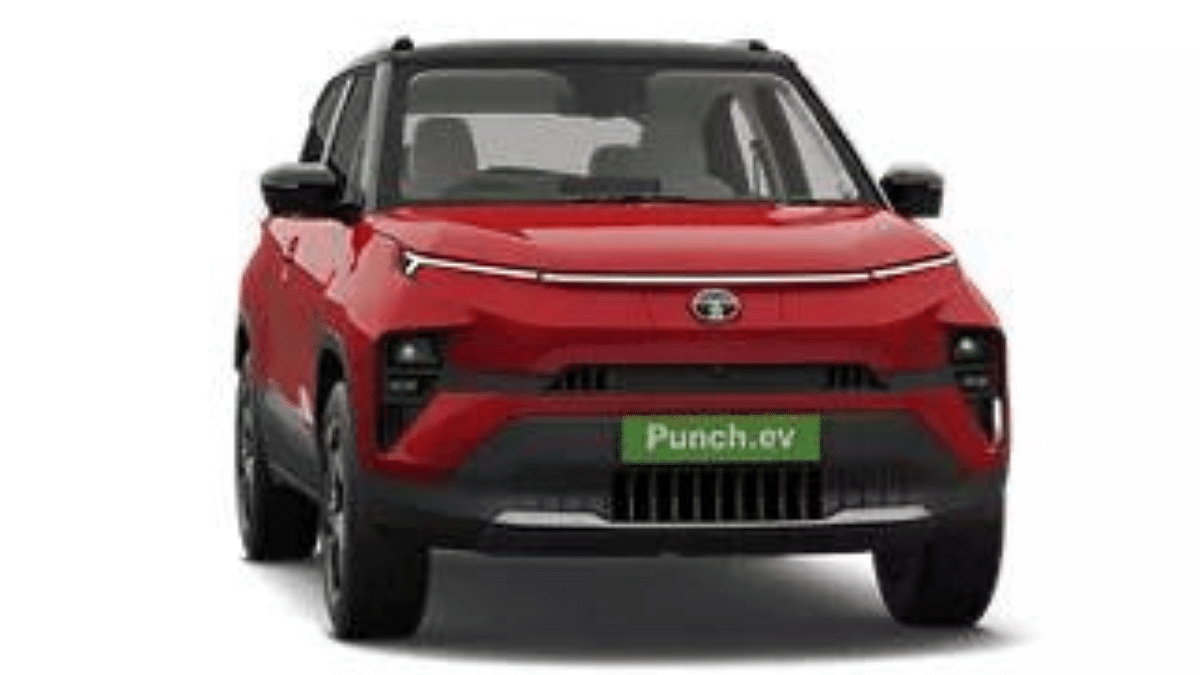
The Tata Punch EV flaunts a continuous running LED DRL upfront which seems familiar to the new-gen Nexon EV facelift model. As indicated by the previous leaks, the charging slot is mounted at the front neatly tucked inside the charging flap with the Tata logo.
The Tata Punch EV looks distinctive when compared to the ICE version in many aspects. It has a more bold and masculine form factor which is further complemented by the dual tone bumper design and spoiler mounted on the roof. Also the Punch EV has become the first electric SUV from Tata to offer trunk space upfront.
Tata Punch EV Pre-Booking, Price, And Delivery Timeline
Tata Punch EV is expected to be priced starting at Rs. 12 lakh in India. The exact variant wise pricing details are not revealed currently, but Tata could soon share some information regarding the same. Also, the Tata Punch EV can be pre-booked with a token amount of Rs. 21,000 in the country. It is being indicated that Tata could commence Punch EV’s deliveries starting this month itself.