Categories
Featured Leaks Mobile

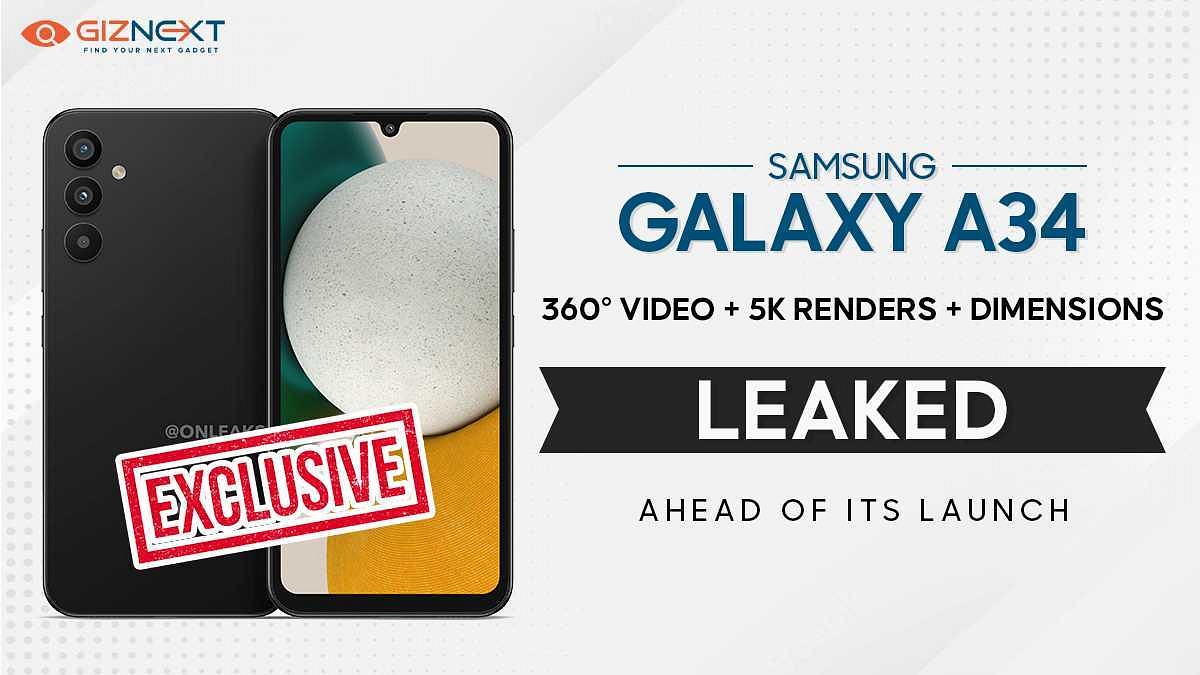
[Giznext Exclusive]: Samsung Galaxy A34 First Look Revealed; Take A Look At 5K Renders, 360-degree Video, Key Specs Here

Key Highlights

  • Samsung Galaxy A34 exclusive 5K renders and 360-video leaked
  • Flat design
  • 6.5-inch Infinity U display with waterdrop notch
  • Triple rear cameras and an LED flash
  • USB Type-C port, 3.5mm headphone jack at the bottom
  • Black color option
  • Expected launch in 2023

Samsung apparently has sent a couple of new Galaxy A series phones to the production bay. The Galaxy A34 is the latest model that joins this list. We previously leaked the Galaxy A14’s exclusive 5K renders and 360 videos revealing the design. Now, Giznext has once again managed to get the first look and some of the key specifications of the next Galaxy A series phone, i.e., the Galaxy A34.

Samsung Galaxy A34 5K Renders Exclusive Leak

Samsung Galaxy A34 Details
Dimensions 161.3 x 77.7 x 8.2mm
DesignFlat
Display6.5-inch Infinity U
CamerasTriple rear camera
Expected Launch2023

This time as well, Giznext has teamed up with tipster @Onleaks for the Galaxy A34’s exclusive 5K renders, 360-degree video, and specifications. The renders we received show the design language of the next Galaxy A series from all angles. For a change, we will see a flat frame design on a budget Samsung phone. However, the handset still retains some curves at the edges and is not an entirely flat frame.

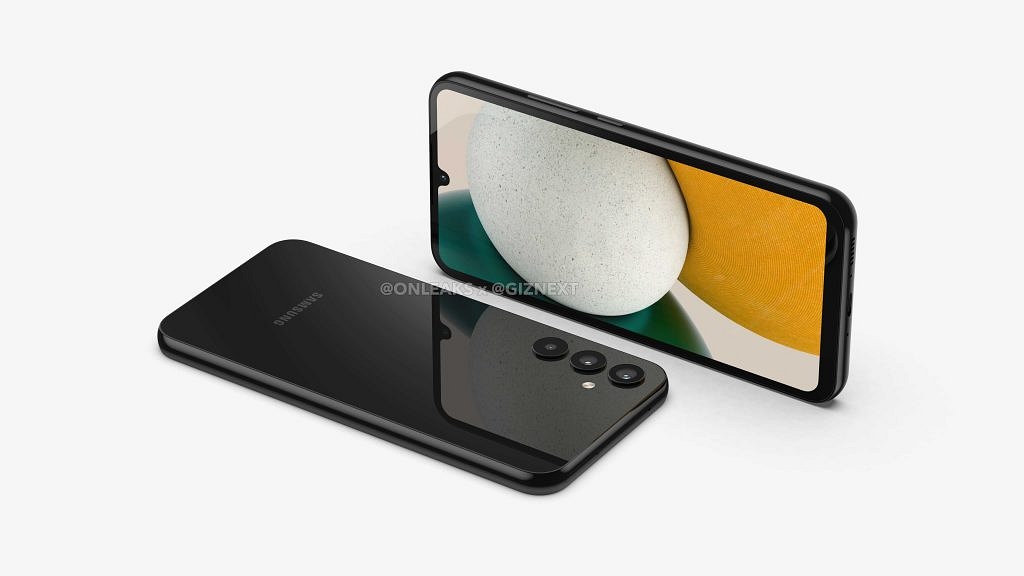
Up front, the Galaxy A34 like the recently leaked Galaxy A14 features a waterdrop notch for the selfie camera. The bezels are trimmed giving making room for some extra screen space on the Infinity-U panel. The chin is slightly thicker compared to the remaining bezels but isn’t as large as previous generation models.
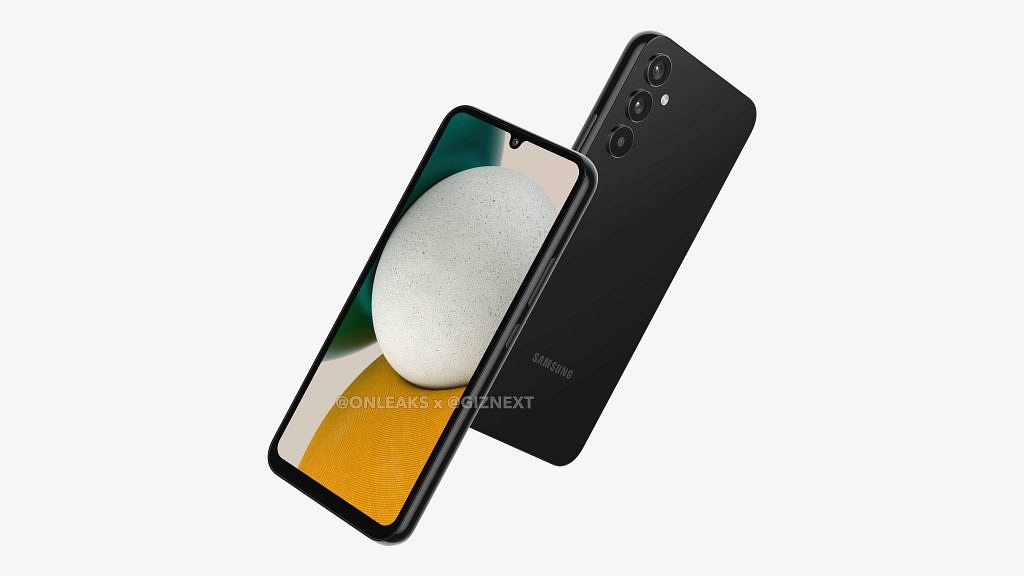
Speaking of the remaining design elements, the Samsung Galaxy A34’s right spine packs both volume rockers and the power key. It seems the power button will have the physical fingerprint scanner integrated for biometrics. At the bottom, the USB Type-C port along with a 3,5mm headphone jack and mic can be seen, whereas, the SIM card tray is positioned at the top this time.
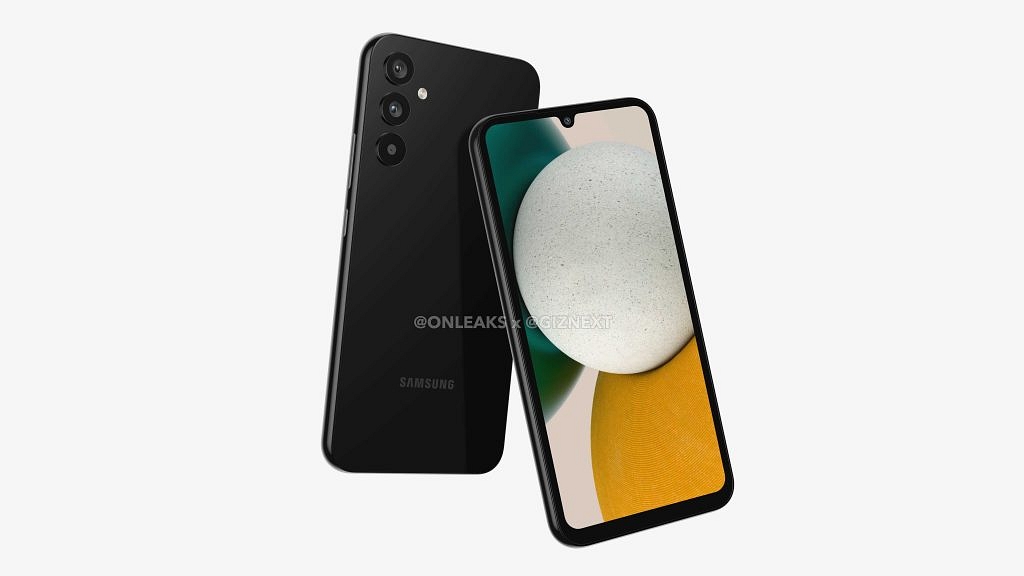
The fresh lot of leaked Galaxy A34 5K renders and 360-degree video we received have confirmed a single black color option. However, Samsung will launch other color variants as well. The back panel appears gradient. Also, three camera sensors are stacked vertically on the top left of the back panel along with the LED flash. The Samsung badging is inscribed at the bottom. Samsung has definitely improved the design language with this Galaxy A series phone over the last generation models.

Also Read: [Giznext Exclusive]: Samsung Galaxy A14 Leaked 5K Renders, Video Reveals Design In Full Glory: Here’s The First Look

Samsung Galaxy A34 Rumored Specifications
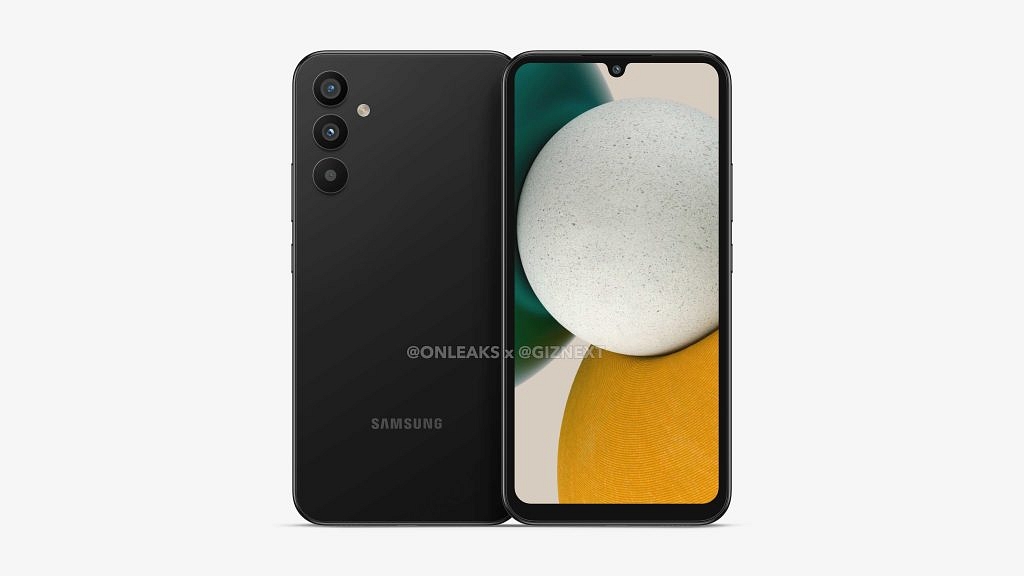
Going by the information provided by the tipster, the Galaxy A34 will measure 161.3 x 77.7 x 8.2mm in dimensions. The Infinity U-panel is said to be of 6.5-inches, however, the panel type and resolution is not tipped just yet. We are expecting Samsung to use a sAMOLED panel as its predecessor, i.e., the Galaxy A33 5G. 

https://newsimg.giznext.com/mobile/production/news/wp-content/uploads/2022/11/24134323/GALAXY-A34.mp4

Speaking of which, we are not sure if this model will come with 5G network support or just 4G. We are expecting the former since 5G phones are becoming a new norm. Additionally, a triple rear camera with a flash is confirmed on the Galaxy A34 5G by our source and the 5K renders.

Also Read: Samsung Phone Sensors Secret Codes: What Is It And How To Check?

Samsung Galaxy A34 Expected India Launch, Price

The Galaxy A34 launch timeline is a mystery. Since this phone is comparatively new at the rumor mill, it is unlikely to make a debut by this year. We can expect Samsung to launch the Galaxy A34 possibly in the first half of 2023 in India and other markets. As for the pricing, it is also kept under wraps as the launch timeline. However, our speculation is under Rs. 30,000 price range. We will keep a tap on all the details and will keep you posted.
Also Read: Samsung Unveils New Air Purifiers In India: Check Out Features And Price
Categories
Comparison Featured Tablet

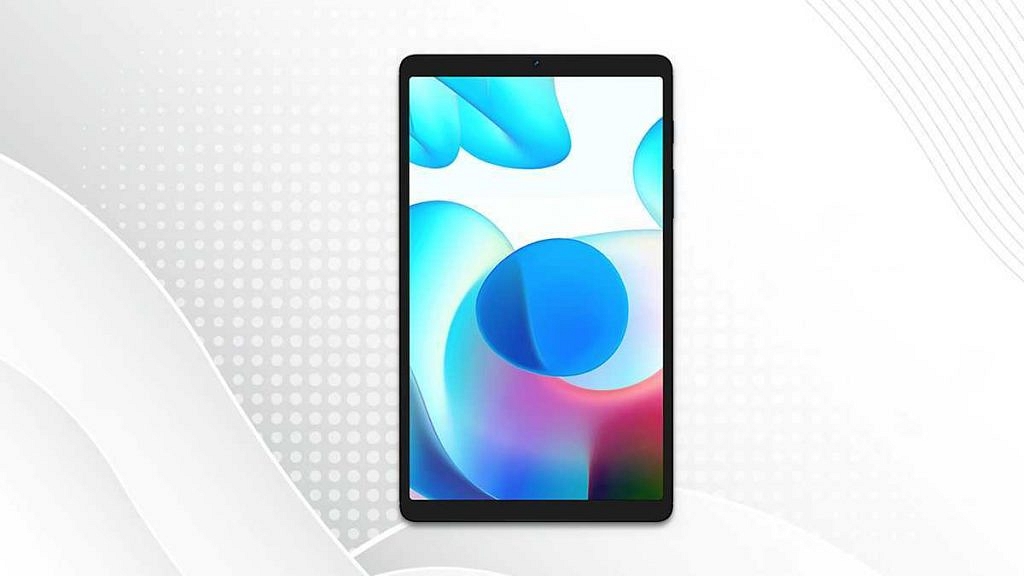
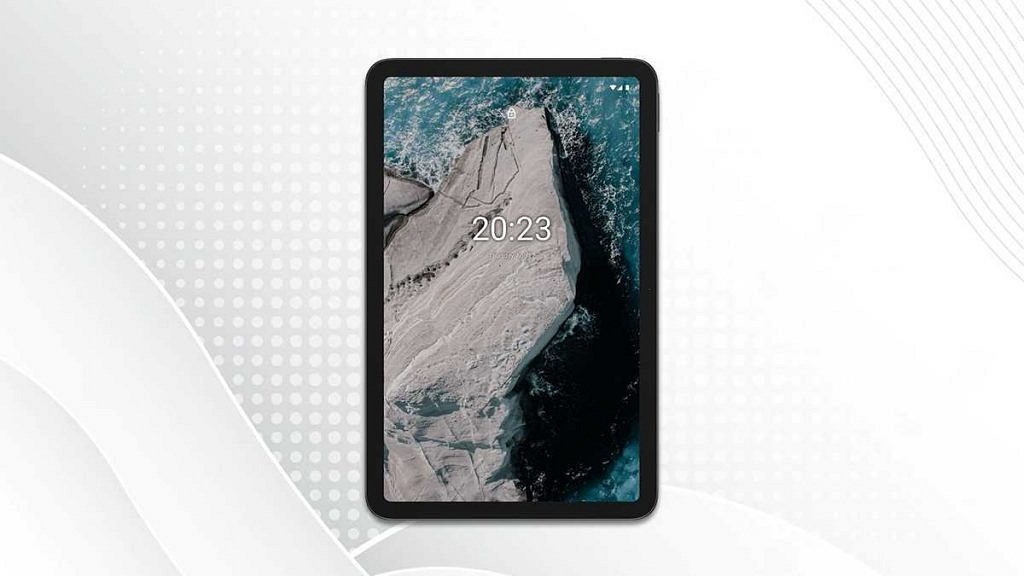
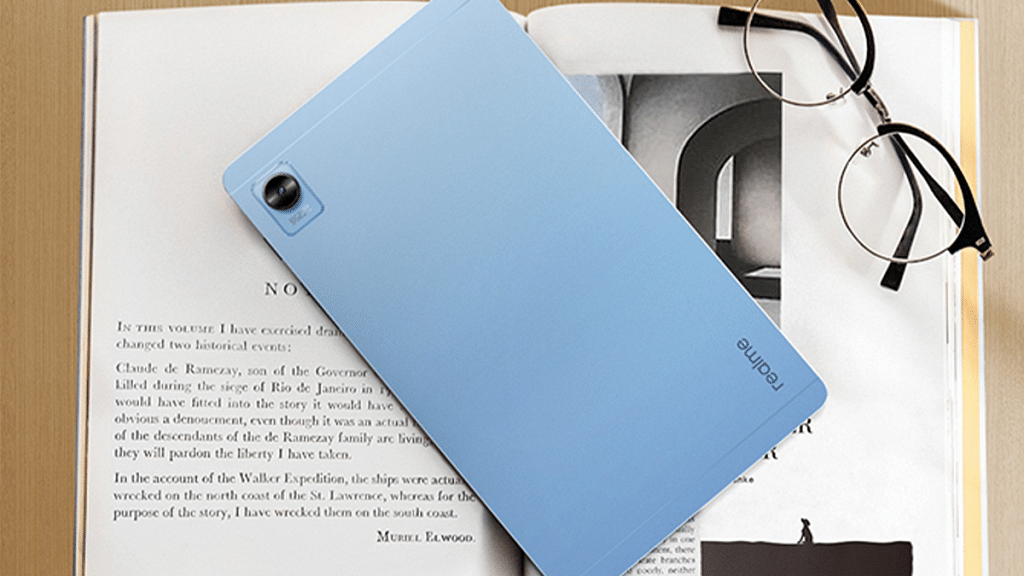
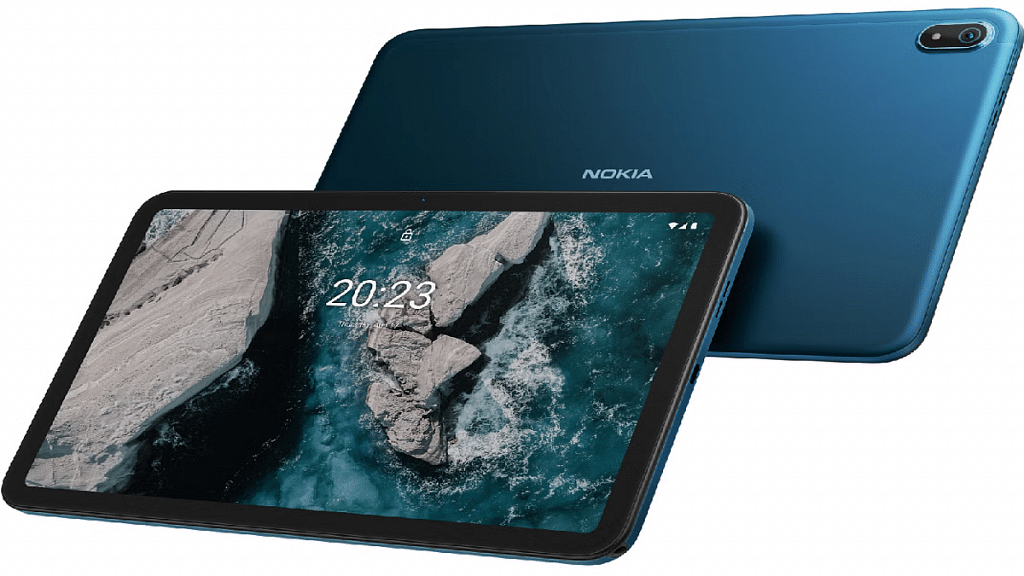
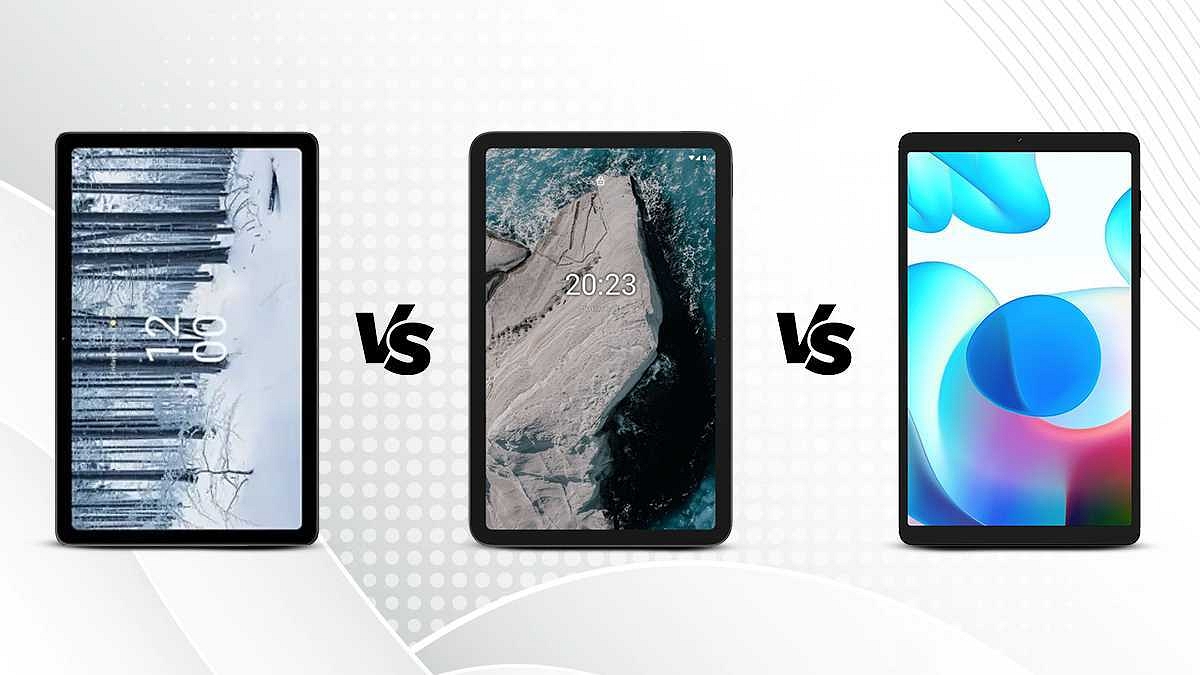
Nokia T21 Vs Nokia T20 Vs Realme Pad Mini Tablet Comparison: Best Entry-Level Android Tablet For Daily Use

Key Highlights

  • Nokia T21 is the latest entry-level Android tablet in the market
  • Nokia T20 and the Realme Pad Mini are the prime rivals of Nokia T21
  • All three models feature an IPS LCD screen
  • An 8MP rear camera handles photography on all three tablets

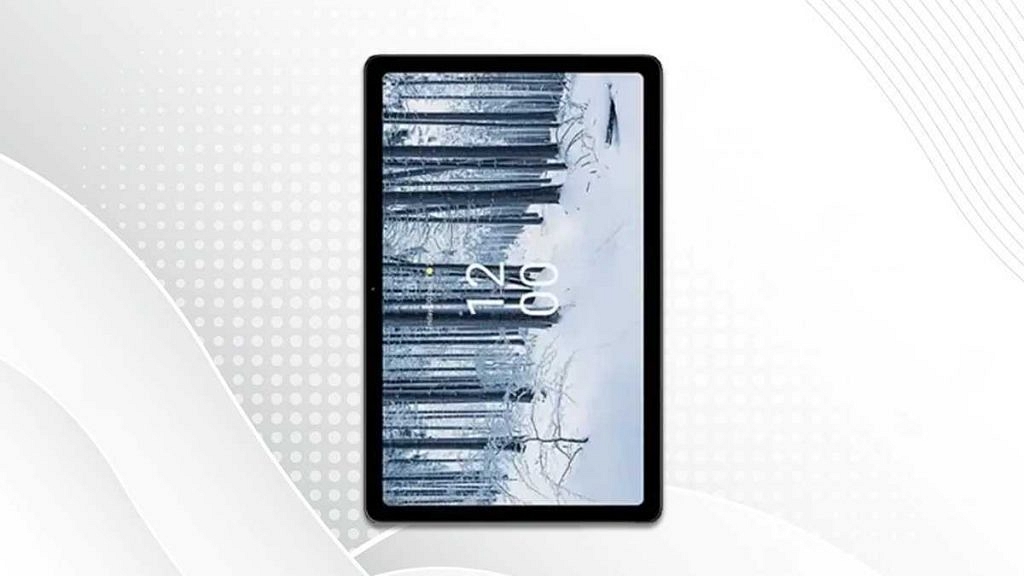
HMD Global just added a new budget mobile tablet to its product portfolio. The brand has now released the successor of the Nokia T20 which was released earlier this year. The Nokia T21 is the latest tablet model from the Finnish tech giant that has arrived in the international market. It borrows some of the features from its precursor such as the display and camera. Both these Nokia tablets have emerged as the best option for budget audiences.

But we have a bunch of tablets from other brands that make for a good fit when you have a tight budget. The Realme Pad Mini is one of the models that has been topping the charts in the affordable tablet market. We are doing a quick comparison between all these three tablets that will eliminate all your confusion related to a new purchase.

SpecificationsNokia T21Nokia T20Realme Pad Mini
Display10.3-inch IPS LCD
1200 x 2000 pixels
10.4-inch IPS LCD
1200 x 2000 pixels
8.7-inch IPS LCD
800 x 1340 pixels
Rear Camera8MP8MP8MP
Selfie Camera 8MP5MP5MP
ChipsetUnisoc T612Unisoc T610Unisoc T616
Battery 8200 mAh8200 mAh6400mAh
Fast Charging 18W15W18W
PriceAprrox. Rs. 17,000Starts at Rs. 15,499Starts at Rs. 10,999
Nokia T21 Vs Nokia T20 Vs Realme Pad Mini Specs comparison

Nokia T21 Vs Nokia T20 Vs Realme Pad Mini: Display Specifications

HMD Global has used an IPS LCD screen on both Nokia T20 and the Nokia T21 but has used a different screen size for both variants. The latest model, i.e., the Nokia T21 features a 10.36-inch display which has a 2K screen resolution of 1200 x 2000 pixels.

The brand has used a toughened glass material and has support for Widevine L1 which enables HD video playback on Netflix. The panel has SGS low blue light certification and 400 nits peak brightness that aids with clear visibility outdoors.  

The older model, i.e., the Nokia T20 has a marginally bigger 10.41-inch screen which also supports a 2K resolution and 400 nits peak brightness levels. Comparatively, the Realme Pad Mini employs an 8.7-inches of IPS LCD screen with 84.9 percent screen-to-body ratio and 800 x 1340 pixels screen resolution.

If the display is your primary requirement, consider the Nokia T20 or the Nokia T21 as the options. This is because you get a larger panel along with a better screen resolution.

Also Read: Realme Pad Vs Lenovo Tab K10 Vs Moto Tab G20: Budget-Friendly Tablet You Should Consider

Nokia T21 Vs Nokia T20 Vs Realme Pad Mini: Camera Hardware

The camera hardware, specifically, the rear snapper is the same on all three tablets. The Nokia T20, Nokia T21, and the Realme Pad Mini sport an 8MP camera at the back that can capture some decent level of clarity with the captured shots along with balanced colors. This is a basic camera setup that is common across budget Android tablets.

The selfie camera segment is where the game changes. The Nokia T21 leads the selfie camera race with its 8MP front sensor. Whereas, the Nokia T20 and the Realme Pad Mini are equipped with a 5MP selfie camera. Out of all three models, the Nokia T21 will be the best pick for online conferencing and general photography.

Also Read: Nokia T10 Vs Nokia T20 Vs Samsung Galaxy Tab A7 Lite: Best Budget Tablets For Students In India

Nokia T21 Vs Nokia T20 Vs Realme Pad Mini: Chipset, Configuration

Nokia has used an entry-level Unisoc processor in both of these tablets. Realme also has opted for a Unisoc series processor to power the Pad Mini. The Nokia T21 runs on the octa-core Unisoc T612 chipset, while the Nokia T20 has the Unisoc T610 processor. On the other hand, the Realme Pad Mini has the Unisoc T616 processor which is slightly more powerful compared to the remaining two processors.

 You can buy the Nokia T21 with 4GB RAM and up to 128GB storage options, while the Nokia T20 comes with 3GB/4GB RAM and 32GB/64GB storage options. The Realme Pad Mini comes with up to 4GB RAM and 64GB storage options. All three tablets also feature a microSD card storage expansion feature.

Also Read: Xiaomi Pad 5 Vs Honor Pad 8 Vs Realme Pad X: Best Premium Mid-Range Tablet

Nokia T21 Vs Nokia T20 Vs Realme Pad Mini: Battery Specification

Both Nokia T21 and the T20 tablets pack an identical battery size of 8,200 mAh. However, the fast charging speeds are slightly altered in both models. The Nokia T21 features 18W fast charging, while the Nokia T20 has only 15W fast charging speeds.

The Realme Pad Mini is backed by a smaller 6,400 mAh battery combined with 18W fast charging. The large battery capacity makes the Nokia T20 and the Nokia T21 a better alternatives compared to the Realme Pad Mini.

Also Read: Nokia T10 Vs Oppo Pad Air Vs Realme Pad Mini: Best Budget Tablet To Buy In India?

Nokia T21 Vs Nokia T20 Vs Realme Pad Mini: Final Verdict

All three tablets in this list are decent in terms of features and performance. You wouldn’t find differences in terms of power delivery from these three tablets. If we take a look at the overall spec sheet, the Nokia T21 has the least compromises. But currently, this tablet is not launched in India, therefore opting for either the Nokia T20 or the Realme Pad Mini makes more sense.

Categories
Apps Featured Info

Worried About WhatsApp Group Privacy? Top WhatsApp Security Features You Should Use Daily For Enhanced Privacy

Key Highlights

  • WhatsApp has released multiple security features for enhanced security
  • For group users Block&report, group privacy settings, and silent group exit are few of the features
  • WhatsApp also has a dedicated Fact check chatbot to verify authenticity of the information shared

WhatsApp has evolved from being just an instant messaging application for smartphones. The Meta-owned brand has incorporated numerous features over the last few years to provide a secure yet feature-rich platform for messaging. With WhatsApp, you aren’t just limited to sending messages or making voice/video calls to a single individual, but also to groups. You can create or be a part of any WhatsApp group and can access all the messaging features with a single contact.

You can create personal or professional groups as per your convenience and use all private messaging services simultaneously. While WhatsApp groups have all privacy elements, there can be some situations that can compromise user security. Being added to an unwanted group is one of the major concerns among users. Group admins and users can find it a challenging situation when others take over the control in any group.

Safety Features That Ensure Privacy With WhatsApp Groups And Standard Chats

Block & Report

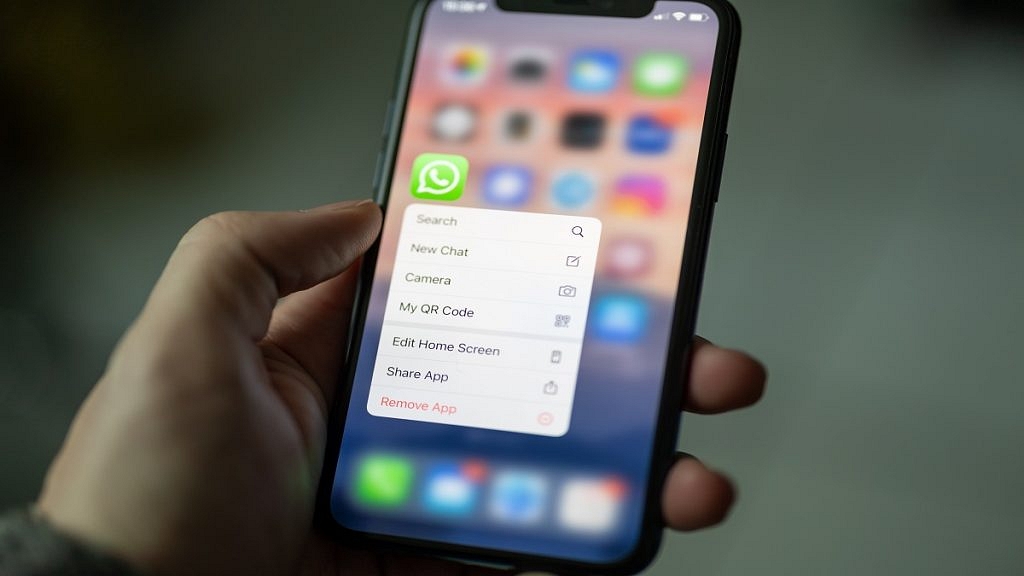
 WhatsApp unlike any other traditional SMS app offers several privacy and security measures. Block and report is amongst the top security feature using which you can easily notify WhatsApp of any scam or spam profile and messages. WhatsApp is stringent with its privacy policies and any account reported will be monitored closely. WhatsApp also now lets users keep the reported messages on their devices so that they can be used in the future in case of legal actions.

Also Read: WhatsApp Polls: What Is It And How Can You Create WhatsApp Polls For Individual User Or Groups?

Group Privacy Settings

Another useful security feature offered by WhatsApp is the Group privacy settings. If you toggle on this option, you can apply the settings as to who can add you to any group. You can select from everyone, only contacts, and selected contacts who can add you to any group.

Also Read: WhatsApp To Allow You To Use The App On More Than One Phone Soon

Forward Limits

WhatsApp grabbed some major attention with multiple reports of false news and information spreading using this messaging app. WhatsApp soon capped the message forwarding limit and also added a “forward” label to the messages sent multiple times by multiple users. The reduced forwarding limit and label lets users identify the authenticity of the messages or the news shared on the platform.

Also Read: Now Hide Your WhatsApp Online Status: Here’s How

Silent Group Leaving Option

WhatsApp previously notified group members if any of the added members has left the group. Later, the brand added the silent group exit feature which once enabled doesn’t notify if anyone has left the group. Only the group admins will be notified about the exits and not all the contacts.

Also Read: WhatsApp Security Code: What Is It? How To Get WhatsApp Security Code Notification On Android, iPhones, And Laptop/ PC?

Admin Control

WhatsApp offers the provision to all the group participants to change the group information such as the icon and subject. However, the brand has also enabled administrator settings with which admins can decide which users can send messages to the group or can make modifications to the group subject or icon.

Also Read: WhatsApp Customised Avatar For Profile Pictures, Video Calling Arriving Soon

Fact Checking Feature

WhatsApp has released a chatbot developed by Poynter Institute’s IFCN group that helps users verify the authenticity of any information. This Fact checking chatbot has been released with the aim to curb the spread of fake and false information on the messaging application. Using this IFCN chatbot, WhatsApp users will be able to verify fake-sounding news and messages.

Also Read: Not Receiving WhatsApp Message Notifications On Google Chrome? Here’s The Fix
Categories
Featured Info Tablet

Nokia T21 Budget Tablet With Unisoc T612 Chipset Announced: When Is It Coming To India?

Key Highlights

  • Nokia T20 launched in Indonesia with Unisoc T612 processor
  • Flaunts a 10.36-inch IPS LCD display with 1200 x 2000 pixels screen resolution
  • Sports 8MP rear and 8MP front camera
  • Packs 8,200 mAh battery with 18W fast charging

HMD Global has been proactive with a new smartphone as well as tablet launches in the market this year. The Finnish OEM has launched multiple budget Android tablets including the Nokia T10 and the Nokia T20. Now, the brand seems to have concluded this year’s product lineup with the launch of the Nokia T21 tablet. The latest Android tablet comes as a budget option like the previous-gen model but brings some upgrades as well.

Nokia T21 Tablet Specification Upgrades

Nokia T21 SpecsDetails
Display 10.36-inch IPS LCD
1200 x 2000 pixels screen resolution
Chipsetocta-core Unisoc T612
Camera 8MP (rear)
8MP (front)
Battery8,200 mAh
Fast Charging18W

The Nokia T21 budget Android tablet has been announced as the successor to the Nokia T20. Nokia has opted for an aluminum body material that makes the tablet durable for daily usage.

The display panel is the same as the previous-gen model, i.e., an IPS LCD screen. The screen size is 10.36 inches and the resolution support is 1200 x 2000 pixels. This tablet’s display delivers around 400 nits of peak brightness level that will provide average sunlight visibility.

Moving on to the Nokia T21’s camera hardware, there is an 8MP primary camera at the rear with autofocus. The tablet features an 8MP sensor upfront for selfies and video calling.

At its core, the Unisoc T612 processor with octa-core CPU cluster and Mali-G57 GPU. The processor is clubbed with 4GB LPPDR4 RAM along with 64GB and 128GB storage variants. There is an additional up to 512GB microSD card support. The firmware pre-installed is Android 12 and the UI is stock.

The Nokia T21 like the remaining Nokia tablets will get three major OS updates. The tablet comes with both Wi-Fi+ LTE connectivity options. The tablet also features IP52 certification which allows dust and water resistivity. The battery capacity powering the Nokia T21 is 8,200 mAh with 18W fast charging support.

Also Read: Nokia T10 Vs Nokia T20 Vs Samsung Galaxy Tab A7 Lite: Best Budget Tablets For Students In India

Where Is Nokia T21 Launched? How Much Does It Cost?

The Nokia T21 has been launched in Indonesia starting at 3299000 Indonesian rupiah. This is around Rs. 17,000 in Indian currency. The color option launched is single, i.e., grey and the official sale is slated for December this year.

Also Read: Samsung Galaxy Tab A8 Vs Realme Pad Mini Vs Nokia T20: Best Cost-effective Tablet In India

When Is Nokia T21 Tablet Launching In India?

Currently, only the Nokia T20 is available for sale in the Indian market. The brand is yet to reveal details related to the latest Nokia T21 tablet’s availability timeline in the country. The possibility of it arriving in the first quarter of 2021 is highly likely.

Categories
Tech Gadgets

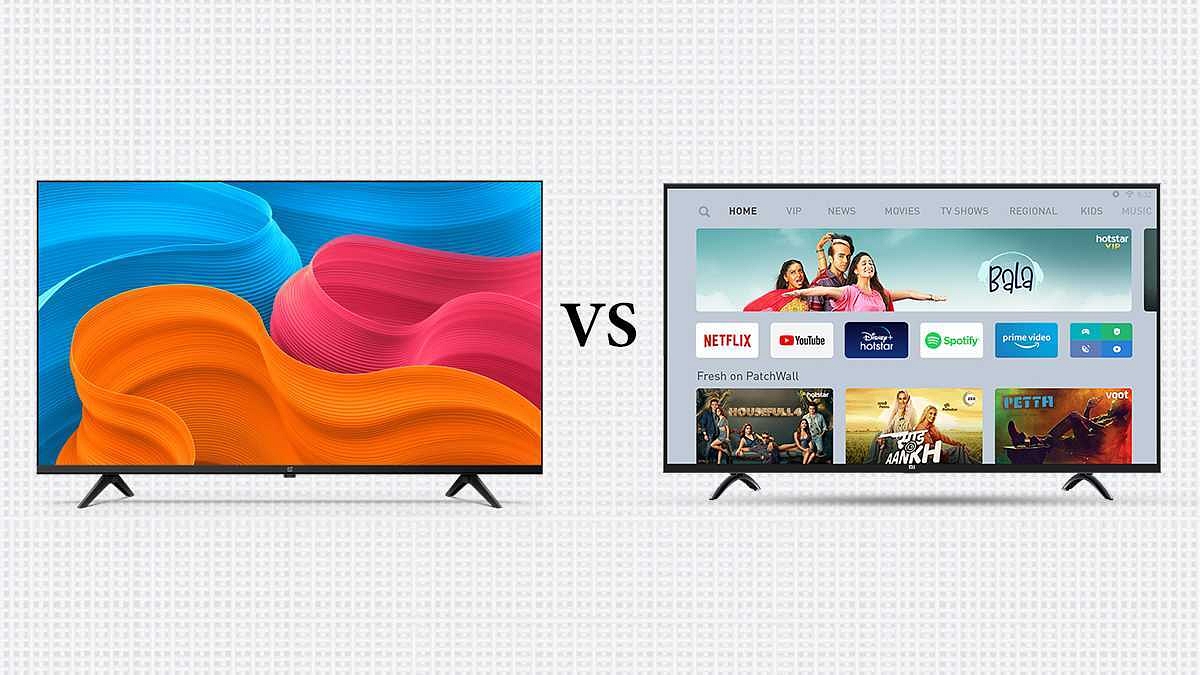
OnePlus TV Y1s Pro Vs Xiaomi MI TV 4X: Best 43-inch Smart TV Model Under Rs. 30,000 In India

Key Highlights

  • OnePlus and Xiaomi are the prime rivals in the budget smart TV market
  • The OnePlus TV Y1s Pro 43-inch model is one good option under Rs. 30,000 in India
  • The MI TV 4X 43-inch model is another best smart TV under Rs. 30,000
  • Display resolution is 2160 x 3840 pixels on both smart TVs
  • OnePlus TV Y1s Pro offers a louder 24W audio output compared to 20W audio offered by Xiaomi MI TV 4X

OnePlus and Xiaomi are among the strongest rivals in the consumer electronics market. Both these brands initially strengthened their portfolios with smartphones and then with other consumer gadgets such as smart wearables and smart TVs. Both OnePlus and Xiaomi are the preferred choices for budget consumers demanding premium-range TVs at cheaper rates. The OnePlus TV Y1s Pro and the Xiaomi MI TV 4X series are amongst the two most-sold smart TVs in the country. Which of the two smart TVs offers a value-for-money deal? Let’s find out in this quick comparison article:

Quick Specification Comparison

Model OnePlus TV Y1s Pro Xiaomi MI TV 4X
Display 43-inch 4K HDR43-inch UHD 4K
Audio24W (dual channel speakers)20W (dual channel speakers)
Android TV YesYes
Configuration2GB+ 8GB2GB+ 8GB
OSPatchWall OSOxygen Play UI
Wi-Fi+ BluetoothAvailable Available
OnePlus TV Y1s Pro Vs Xiaomi MI TV 4X spec-sheet comparison

OnePlus TV Y1s Pro Vs Xiaomi MI TV 4X: Design And Display

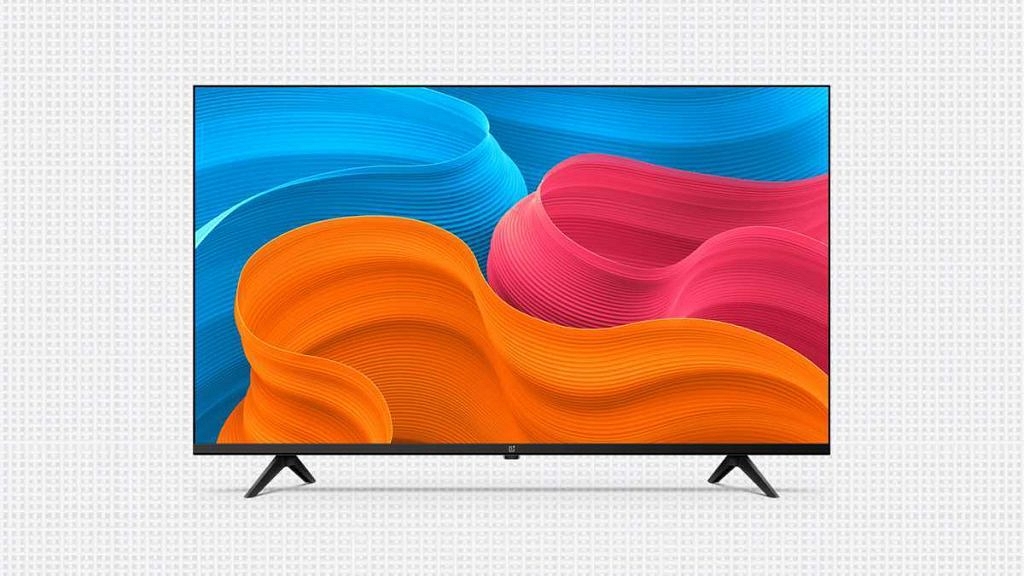
The OnePlus TV Y1s Pro is a modern-looking smart TV with 95.7cm x 8.6cm x 56.4 cm dimensions (without stand) and 95.7cm x 21cm x 61.2cm (with stand). It weighs around 5.9kg and 6kg without and with stand respectively. Whereas, the Xiaomi Mi TV 4x ships with 97cm x 56.9 x 61.3cm dimensions. Without the stand, the Xiaomi Mi TV 4x weighs around 7.07kgs, while with the stand it weighs around 7.13kgs. The lower weigh profile is an added benefit of the OnePlus TV Y1s Pro’s design compared to the Xiaomi MI TV 4X.

Moving on to the display, we are comparing the 43-inch variant of the OnePlus TV Y1s Pro and the Xiaomi MI TV 4X. The OnePlus TV Y1s Pro’s display delivers a screen resolution of 3840 x 2160. This 4K HDR TV also has HDR10+, HDR10, and HLG compatibility for an enhanced visual with all types of content. This OnePlus smart TV can also deliver a premium experience with streaming platforms such as Netflix, Amazon Prime Videos, Disney+ Hotstar, and others.

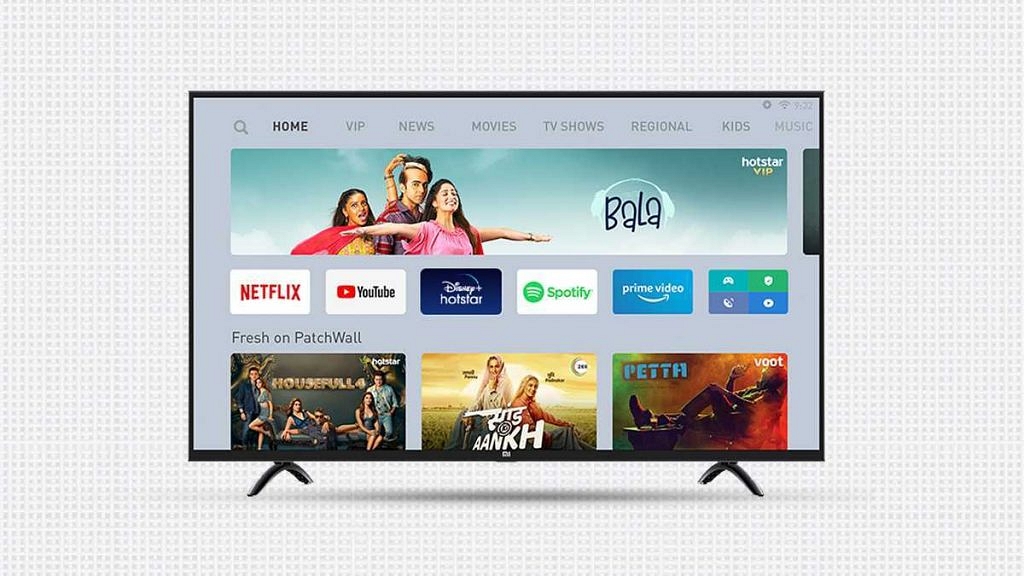
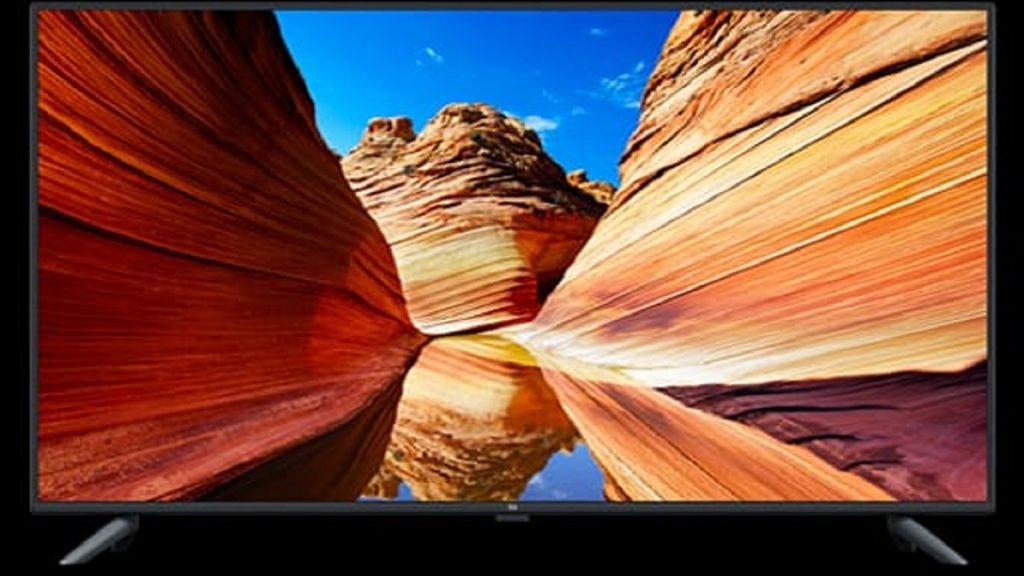
The Xiaomi MI TV 4X also packs a capable 4K HDR display measuring 43-inches. You can also choose different screen sizes depending on your requirements. This TV’s display offers the same 2160 x 3840 pixels screen resolution as the OnePlus TV Y1s Pro along with a 60Hz refresh rate. However, this Xiaomi smart TV comes void of HDR format support. You still can binge-watch your favorite shows via Netflix and other OTT platforms that are compatible with the PatchWall OS.

Also Read: OnePlus TV Display Issues? How To Fix OnePlus Smart TV Display Errors Easily

OnePlus TV Y1s Pro Vs Xiaomi MI TV 4X 43-inch: Operating System, Features

The OnePlus TV Y1s Pro smart TV is powered by a Gamma Engine and has MEMC technology for improved picture quality. This OnePlus 43-inch smart TV features Oxygen Play UI and has Android TV 10 firmware using which you can download multiple supported third-party applications. This TV also features digital voice assistant support and is compatible with Alexa and Google Assistant. This TV has 2GB RAM and 8GB storage configuration.

On the other hand, the Xiaomi MI TV 4X runs on a 64-bit quad-core Amlogic A53 processor. It is also based on Android TV platform like the OnePlus TV Y1s Pro and has the PatchWall OS UI which is used by all Xiaomi smart TVs. The configuration of this Xiaomi TV is the same as the OnePlus model, i.e., 2GB RAM and 8GB storage. The screencast feature is also available with this TV. Also, a bunch of third-party apps is pre-installed, but you can download additional apps using Play Store.

Also Read: Xiaomi Mi TV 5X 43-inch UHD Smart LED TV Vs Nokia 43TAUHDN 43-inch UHD Vs Sony Bravia 43-inch Full HD Smart TV: Which One To Consider?

OnePlus TV Y1s Pro Vs Xiaomi MI TV 4X: Audio, Connectivity Ports

The audio delivery on the OnePlus TV Y1s Pro is handled by a dual speaker system. The maximum audio output produced by this two-channel speaker system on the OnePlus TV is 24W. There is an additional Dolby Audio support that improves the overall audio quality.

Speaking of the connectivity ports, the OnePlus TV Y1s Pro features one ethernet (RJ45), three HDMI 2.1 ports, one AV port, two USB 2.0 ports, and one Digital Audio output port.

Xiaomi has also used a dual speaker module on the MI TV 4X for audio. The speakers churn out a total of 20W output which is lower compared to the OnePlus TV. This TV also has Dolby Audio, DTS audio technologies for a rich listening experience with any TV show or movie.

If we speak of the available ports, the Xiaomi MI TV 4X offers two USB 2.0 ports, three HDMI ports, one AV port, one RF, one S/PDIF port, and a 3.5mm headphone jack. Both OnePlus TV Y1s Pro and the Xiaomi MI TV 4X support Wi-Fi and Bluetooth wireless networks as well.

Also Read: Best Smart TVs To Buy On EMI And Zero Down Payment: Samsung, OnePlus, And More

OnePlus TV Y1s Pro Vs Xiaomi MI TV 4X: Which Beats The Competition?

Feature and performance-wise, the Xiaomi MI TV 4X gives the OnePlus TV Y1s Pro tough competition. Both the 4K HDR TVs have a high-screen resolution that brings out the best output with video playback. However, the OnePlus TV Y1s Pro has a bunch of elements such as added HDR 10 compatibility and louder audio output that make it slightly better compared to the Xiaomi MI TV 4X.  

Categories
Comparison Featured Tablet

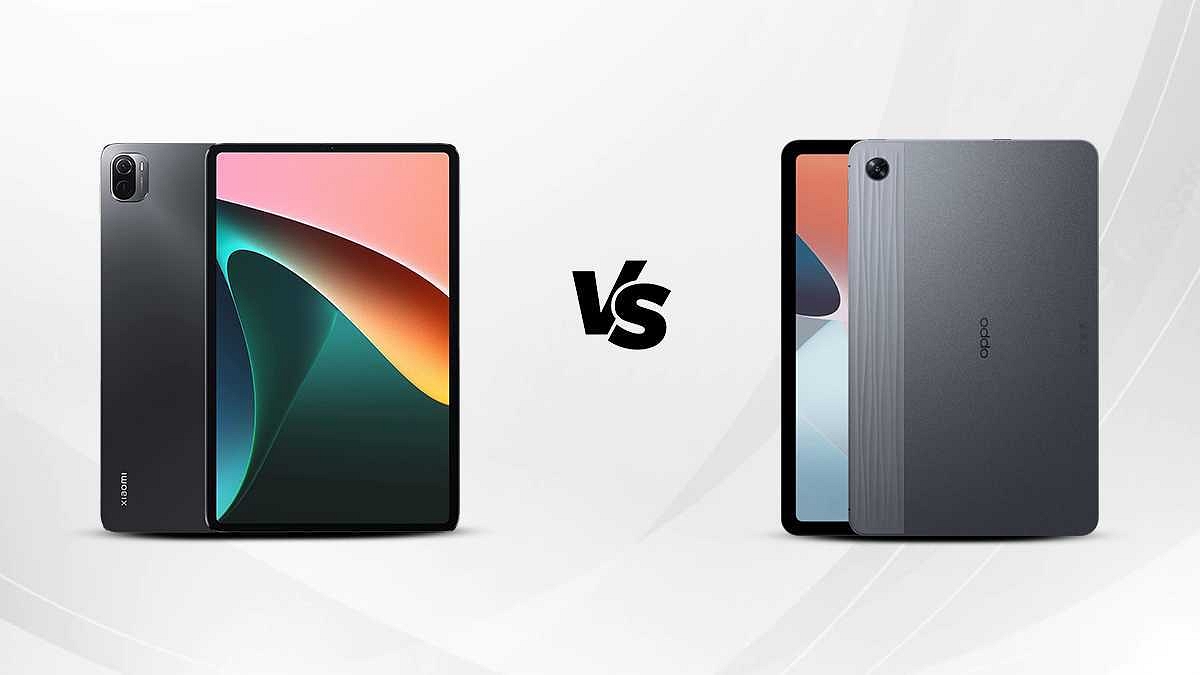
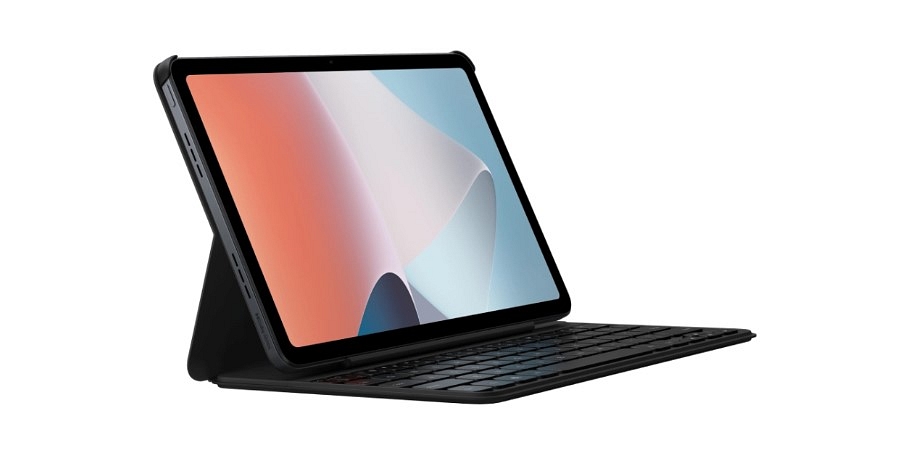
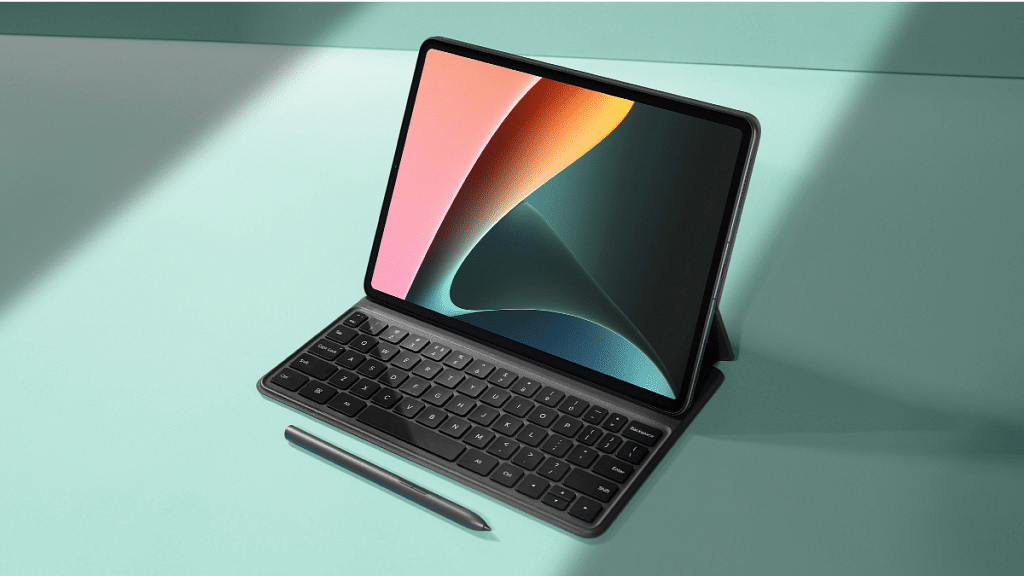
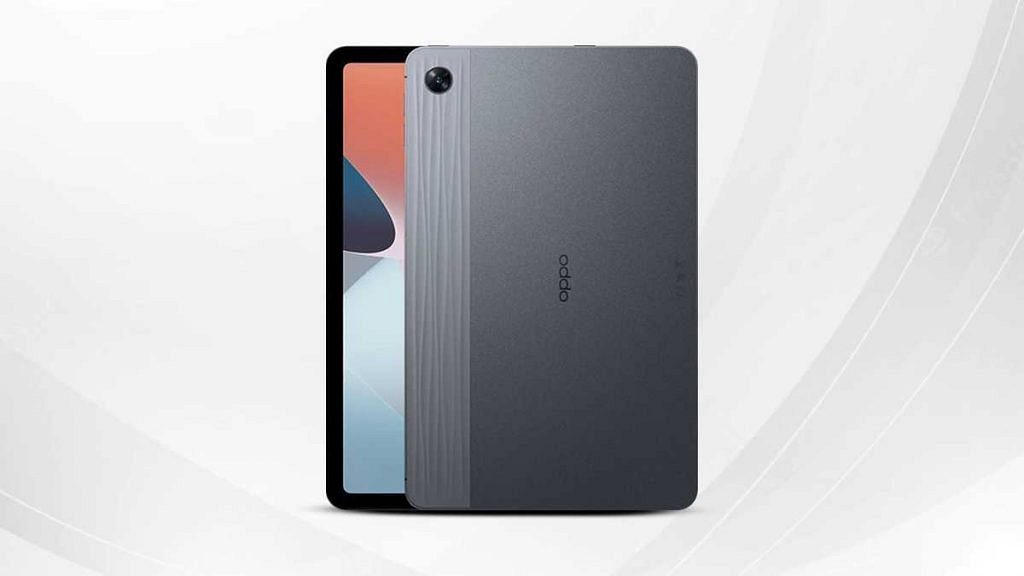
Xiaomi Redmi Pad Vs OPPO Pad Air Tablet: Which Budget Android Tablet Should Be Your Next Buy?

Key Specification Comparison

ModelXiaomi Redmi PadOPPO Pad Air
Display10.61-inch IPS LCD
1200 x 2000 pixels resolution
10.31-inch IPS LCD
1200x 2000 pixels resolution
Camera 8MP (rear)
8MP (front)
8MP (rear)
5MP (front)
Chipset MediaTek Helio G99 SoCQualcomm Snapdragon 680 4G
RAM, Storageup to 6GB RAM, 128GB storageup to 6GB RAM, 128GB storage
Android OSAndroid 12Android 12
Battery8,000 mAh 7,100 mAh
Fast charging 18W18W
PriceStarts at Rs. 14,999Starts at Rs, 16,999
Redmi Pad Vs OPPO Pad Air specs comparison

Xiaomi and OPPO are two of the most popular smartphone OEMs in India with a wide product catalog for both affordable and premium end consumers. In addition to smartphones, both these brands also have shown their expertise with other popular consumer gadgets such as smart wearables and smart home appliances. Mobile tablets are a new segment for both these brands with only a handful of models being introduced in recent years.

Xiaomi has launched the Redmi Pad tablet for budget consumers, while OPPO has the Pad Air model competing against the Redmi Pad in the affordable segment. Which of these two mobile tablets offers better performance and should be on your buying list? Read this comparison article to clear up the confusion.

Xiaomi Redmi Pad Vs OPPO Pad Air Tablet: Display Features

The display is a prime factor considered by a major chunk of users when buying a new tablet or smartphone. Xiaomi has used a large 10.61-inch display which is an IPS LCD panel on the Redmi Pad tablet. The screen on this budget Redmi tablet has an 80.9 percent screen-to-body ratio with a 1200 x 2000 pixels screen resolution and 220 PPI pixel density.

The Redmi Pad tablet’s display further supports 400 nits peak brightness that offers sufficient visibility outdoors under direct sunlight. It additionally offers a 90Hz refresh rate for a fluid touch response. OPPO has used a 10.36-inch display which is slightly smaller compared to the Redmi Pad tablet.

The panel type is LCD on this tablet as well which supports 1200 x 2000 pixels screen resolution and a 225 PPI pixel density. You wouldn’t find much difference in terms of display quality when you compare both Redmi Pad and the OPPO Pad Air tablets. Both these tablets will offer clear visuals with video playback and games.

Also Read: Oppo Pad Air Vs Samsung Galaxy Tab A7 Vs Honor Pad 8: Which Should Be Your Bet

Xiaomi Redmi Pad Vs OPPO Pad Air: Chipset, Android Version, Battery Capacity

Under the hood, both Redmi Pad and the OPPO Pad Air use a powerful mid-range mobile processor. The Redmi Pad runs on the MediaTek MT8781 processor which is otherwise known as the Helio G99 SoC.

This is an octa-core processor by MediaTek designed specifically to handle extensive gaming requirements at a budget price point. The Redmi Pad tablet’s chipset is coupled with Mali-G57 MC2 GPU for graphics and 3GB/4GB/6GB RAM options for multitasking. Storage options that you can select from include 64GB and 128GB.

Whereas, the OPPO Pad Air uses the octa-core Snapdragon 680 chipset for power delivery that is clubbed with Adreno 610 GPU to handle all the graphics requirements. OPPO has launched the Pad Air tablet with 4GB RAM/64GB storage, 4GB RAM/128GB storage, and 6GB RAM/128GB storage configuration.

The firmware used by both Redmi Pad and the OPPO Pad Air is Android 12 OS along with a custom UI. If performance delivery is your concern, you wouldn’t be disappointed by both of these tablets. Since a mid-range gaming chipset is employed for all tasks, the Redmi Pad and the OPPO pad Air can easily take on all extensive tasks without flinching a muscle.

The battery capacity packed inside the OPPO Pad Air is 7,100 mAh clubbed with 18W fast charging. On the other hand, the Redmi Pad tablet has a bigger 8,000 mAh battery capacity with 18W fast charging.

Also Read: Xiaomi Pad 5 Vs Honor Pad 8 Vs Realme Pad X: Best Premium Mid-Range Tablet

Redmi Pad Vs OPPO Pad Air Tablet: Camera Features

The imaging hardware isn’t much different on both Redmi Pad and the OPPO Pad Air tablets. An 8MP primary camera with an f/2.4 aperture and AF (autofocus) support handles all the photography requirements. The primary camera on these tablets can easily shoot 1080p videos at 30fps. The colors and details captured are decent by the rear camera on the Redmi Pad and the OPPO Pad Air tablets.

It’s the selfie camera department where things are slightly different. The Redmi Pad takes a lead here with an 8MP selfie snapper that has an f/2.2 aperture. On the contrary, the OPPO Pad Air features a smaller 5MP sensor with an f/2.0 aperture for self-portraits and video calls. The Redmi Pad will offer better performance with online video conferencing apps compared to the OPPO Pad Air.

Also Read: Nokia T10 Vs Oppo Pad Air Vs Realme Pad Mini: Best Budget Tablet To Buy In India?

Redmi Pad Vs OPPO Pad Air: Which Budget Tablet Is Better?

Both Redmi Pad and the OPPO Pad Air tablets offer a good spec sheet when you consider their price range. Be it chipset, display, or battery segment, the competition is stiff between both these tablets. But if a better selfie camera and a large battery is your preference, the Redmi Pad makes a good option out of the two.

Categories
Featured Info Mobile

Vivo X90 5G, X90 Pro 5G, X90 Pro Plus 5G Official Launch Live Stream: How To Watch? What All To Expect?

Key Highlights

  • Vivo X90 5G series launching today in China
  • Vivo X90 5G and X90 Pro 5G will feature Dimensity 9200 processor
  • Vivo X90 Pro 5G will be powered by Snapdragon 8+ Gen 1 chipset
  • 32MP selfie camera and Android 13 OS on all models
  • Global launch yet to be announced

Vivo X series is getting refreshed today with the X90 lineup. Vivo is said to launch the X90 5G alongside the X90 Pro and the X90 Pro+ with advanced camera features and the latest Qualcomm Snapdragon and MediaTek Dimensity processors. The Vivo X90 series is being announced today in China via an online event. How can you watch the Vivo X90 series launch live stream event and what all features are we expecting from the latest Vivo flagship phones? Read on below:

Vivo X90 5G Series Official Launch: Where And How To Watch Live Stream Event

Vivo has scheduled the X90 5G series launch today, i.e., November 22 in its home country China. All three models including the Vivo X90 5G, X90 Pro 5G, and the X90 Pro+ 5G will be introduced to the audience via an online event which the brand will be streaming via its official social media handles.

Since the launch is for the Chinese market exclusively at this point and not the global markets, Vivo will be routing to the local video streaming platforms and the Chinese microblogging website Weibo. Do not that, Weibo is inaccessible directly in India.

 However, you can use private web browsers with active VPN services to watch the event streaming live uninterrupted. The X90 5G series launch time is scheduled for 7 PM in China (4.30 PM IST). Vivo might also stream the X90 5G series launch event via YouTube, but at the time of writing, no dedicated page was updated for the same.
Also Read: Vivo X90 5G, X90 Pro 5G, X90 Pro+ 5G Massive Leak Reveals Full Specifications: Upgrades Worth Checking

Vivo X90 5G, X90 Pro 5G, X90 Pro+ 5G Expected India Launch And India Price

Vivo has not given any clues that hint the availability of the X90 5G series in India. However, the brand will possibly launch this lineup in the first half of 2023 in the country. As far as pricing is concerned, there is no confirmation on the same. But we might see identical pricing as the previous-gen models. That said, we can expect the price of the X90 series to start at Rs. 45,000 with the top-end model costing as high as Rs. 80,000. Do note that this pricing is based on the recent leaks and the actual cost could differ.

Also Read: Vivo X90 Pro Plus Specifications Tipped Online: Know More

Vivo X90 5G, Vivo X90 Pro 5G Key Features And Specifications

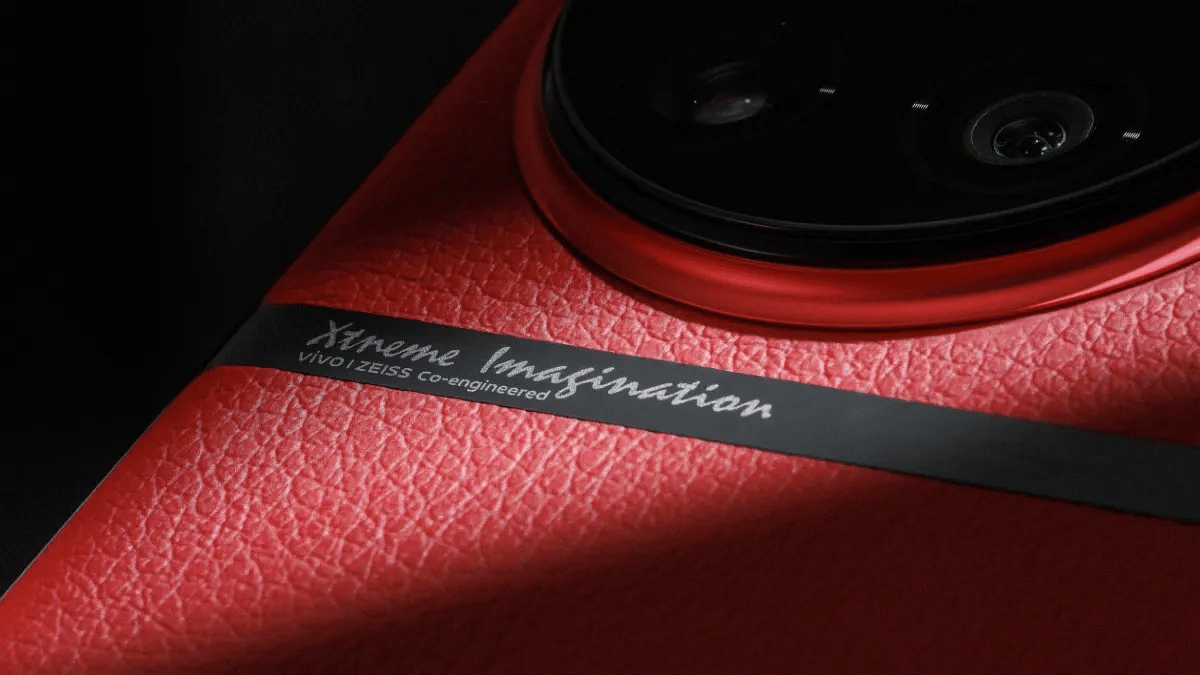
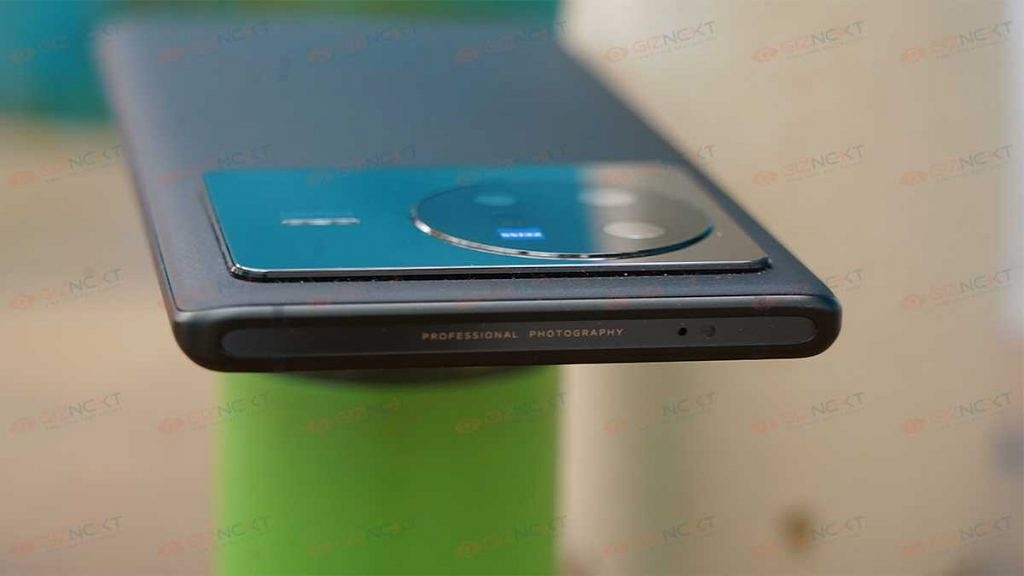
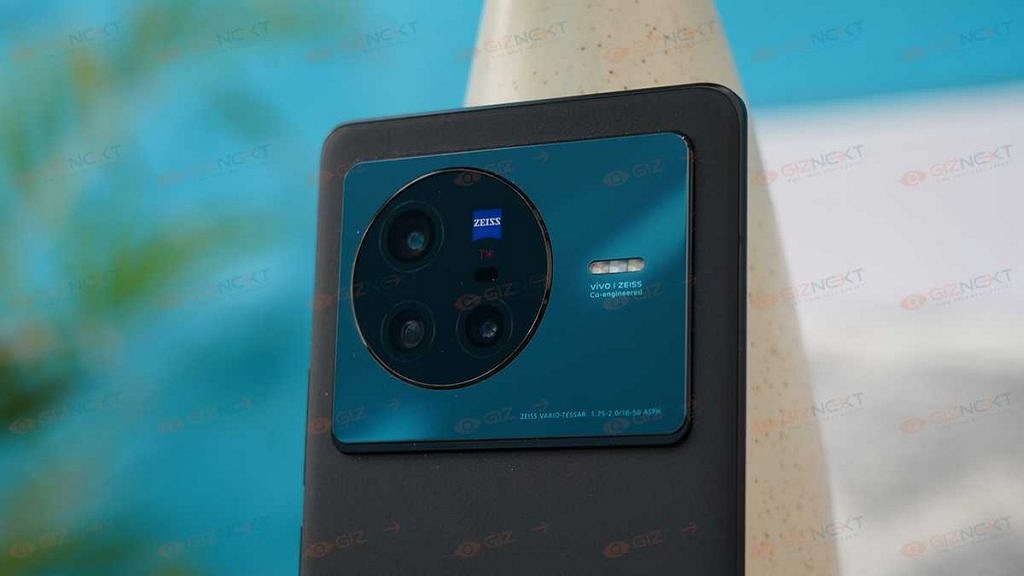
The Vivo X90 5G series is bringing some upgrades compared to the past generation models. All three models will be flaunting a curved display design along with a large camera sphere island at the back along with the Zeiss logo.

Vivo will be using a 6.78-inch display (AMOLED) on both X90 5G and the X90 Pro 5G. Both these phones’ displays will support a 120Hz refresh rate and feature a punch-hole camera cutout for the selfie camera. The chipset will also be the same, i.e., the Dimensity 9200 chipset.

The camera setup will be slightly different on these two models. While the Vivo X90 5G will have a 50MP+ 12MP+ 12MP rear camera setup, the X90 Pro 5G will be packed with a 50MP+50MP+12MP setup at the rear. The standard Vivo X90 5G is rumored to launch with a 4,700 mAh battery that will have 80W fast charging support, whereas the X90 Pro is said to come with 120W fast charging support.

The Vivo X90 Pro+ 5G will be equipped with the Snapdragon 8+ Gen 1 chipset and will be packing a better display compared to the reaming two models. This variant will be packed with a QHD+ AMOLED screen that will support a 120Hz refresh rate. The imaging setup on the X90 Pro+ 5G has an upgraded setup comprising a 50MP+ 50MP+ 48MP lens. All three models will feature a 32MP selfie lens and Android 13 OS.

Also Read: Vivo Might Launch X90 Pro Smartphone With Snapdragon 8 Gen 2 SoC: See Details And Specifications
Categories
Chipset Comparison Featured

Qualcomm Snapdragon 778G Vs Dimensity 9000 Chipset: Premium Mid-Range Mobile Processors

Key Highlights

  • Qualcomm Snapdragon 778G chipset is a premium mid-range chipset built on 6nm process
  • MediaTek Dimensity 9000 SoC is fabricated using a 4nm process
  • Both chipsets offer 5G network support

Qualcomm Snapdragon 778G might be an older release but is still one of the most preferred mobile chipsets by OEMs for their premium mid-range handsets. We have compared this mobile chipset with several other popular counterparts. MediaTek has multiple chipsets that compete with the SD 778G in different performance aspects including CPU, GPU, and Multimedia (ISP). We are now comparing the Snapdragon 778G with MediaTek’s Dimensity 9000 processor which is a recent release.

Qualcomm Snapdragon 778G Vs MediaTek Dimensity 9000 Chipset: CPU Architecture Comparison

Starting with the Snapdragon 778G processor, it is a 6nm chipset which has octa-core CPU cluster featuring one Cortex-A78 core with 2.4GHz clock speed, three Cortex-A78 cores with 2.2GHz speed, and four Cortex-A55 cores with 1.9GHz clock speed. MediaTek has fabricated the Dimensity 9000 chipset using a thinner 4nm process and octa-core CPU cluster comprising a 2.05GHz Cortex-X2 core, three 2.85GHz Cortex-A710 cores, and four Cortex-A510 cores with 1.85 GHz speed. The Dimensity 9000 processor gets an edge in terms of CPU design and performance.

Also Read: Qualcomm Snapdragon 8 Gen 2 Advanced Mobile Chipset With Ray Tracing, WiFi 7 Unveiled: List Of Phones To Launch With SD 8 Gen 2 Processor

Qualcomm Snapdragon 778G Vs Dimensity 9000 Processor: GPU Performance

The premium mid-range Snapdragon 778G processor has an Adreno 642L GPU support. This processor’s GPU has 490MHz frequency with two execution and 384 shading units. On the contrary, the Snapdragon 778G processor features the Mali-G710 GPU with 850MHz frequency range, 10 execution, and 512 shading units. Both processors have an identical 1.1 Vulkan version, 3.0 OpenCL version, and 12 DirectX version.

Snapdragon 778G Vs MediaTek Dimensity 9000 SoC: Memory, Multimedia (ISP)

The Qualcomm Snapdragon 778G chipset has LPDDR5 RAM support, while the MediaTek Dimensity 9000 processor features advanced LPDDR5X RAM. The memory frequency range is 3200MHz with the former and 3750MHz with the latter. The maximum memory support is 16GB with the SD 778G and 24GB with the Dimensity 9000 processor. Memory compatibility is UFS 2.1, UFS 2.2, and UFS 3.0/3.1 with the SD 778G and just UFS 3.1 with the Dimensity 9000 processor.

Maximum display resolution is 1080 x 2520 pixels and 1440 x 2960 pixels with the Snapdragon 778G and Dimensity 9000 chipsets respectively. The former supports 4K@30fps video recording and playback, while the latter supports 4K@30fps videos.

Also Read: MediaTek Dimensity 9200 Processor Vs Qualcomm Snapdragon 8 Gen 1 Chipset: High-End Mobile Chipset Comparison

Snapdragon 778G Vs Dimensity 9000 Processor: Final Verdict

The Qualcomm Snapdragon 778G is undeniably a powerful option for premium mid-tier smartphones. However, the Dimensity 9000 chipset has a better CPU architecture, GPU performance, and a thin fabrication process making it a better alternative compared to the Snapdragon 778G chipset.

Also Read: Qualcomm Snapdragon 750G Vs Snapdragon 732G: Premium Mid-Tier Gaming Chipset Comparison
Categories
Featured Leaks Mobile

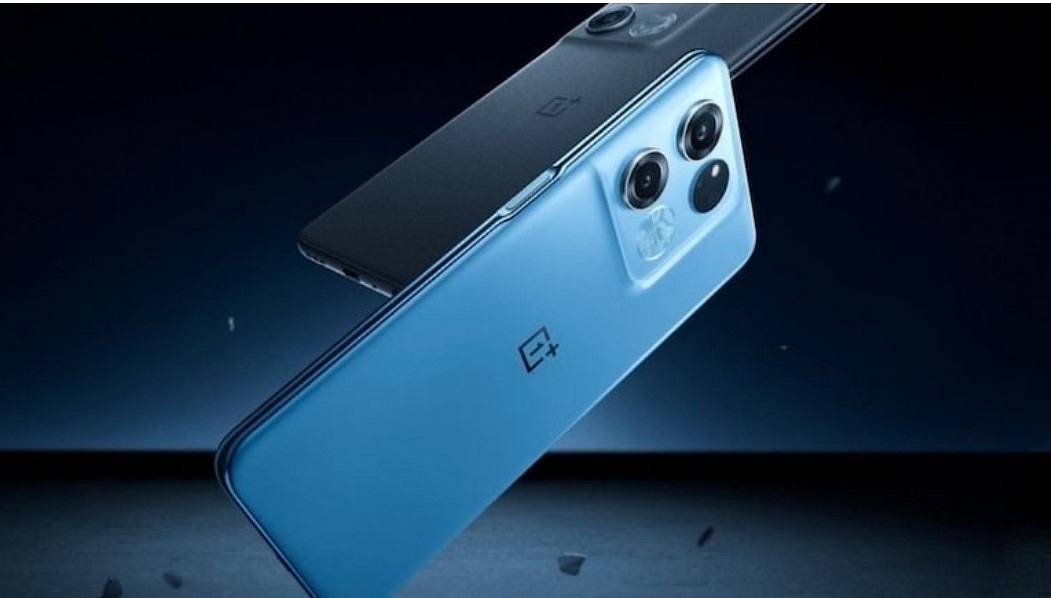
OnePlus Ace 2 Leaked With Snapdragon 8+ Gen 1 Chipset, 120Hz Display, 100W Charging: Is It Launching In India?

Key Highlights

  • OnePlus Ace 2 specs leaked
  • Tipped to sport 6.7-inch Fluid AMOLED display with a 120Hz refresh rate and 1.5K resolution
  • 50MP triple rear cameras and 16MP sefie camera
  • Snapdragon 8+ Gen 1 chipset, up to 16GB RAM

OnePlus 11 series leaks are flooding the online space but that’s not the only smartphone lineup the company is working on. The brand is also gearing up to expand its Ace series with the second-gen model. The OnePlus Ace 2 is possibly launching soon with some top-of-the-line hardware. A fresh leak revealing the expected specification of the OnePlus Ace 2 has made its way online.

OnePlus Ace 2 Leaked Specifications: Display And Camera

Tipster Yogesh Brar has shared a tweet detailing the full spec sheet of the OnePlus Ace 2. The tipster has revealed the next OnePlus Ace model will sport a 6.7-inch display. The OnePlus Ace 2’s display will be a Fluid AMOLED panel that will support a 120Hz refresh rate and 1.5K pixels screen resolution.

There will be a punch-hole cutout for the selfie snapper. The cutout will feature a 16MP lens for self-portraits and video calls as per the leak. Furthermore, three cameras at the rear will be handling the primary imaging. The photography setup will include a 50MP main Sony IMX890 sensor combined with an 8MP ultrawide-angle lens and a 2MP third lens likely for depth or macro shots.

Also Read: OnePlus Ace 2, Realme GT Neo 4 Key Specifications Leaked: All Details

Processor And Battery Specifications

The OnePlus Ace 2 will be a premium-end phone just like the upcoming OnePlus 11 and its predecessor, i.e., the OnePlus Ace. The chipset used by the Ace 2 will be the octa-core Qualcomm Snapdragon+ Gen 1. This premium range Qualcomm processor on the OnePlus ACE 2 will be coupled with up to 16GB RAM.

The storage capacity could be up to 512GB. The device is further said to run on Android 13 OS which will possibly be combined with ColorOS interface. The device is said to use 100W fast charging and a 5,000 mAh battery for power delivery.

Also Read:OnePlus Ace Vs OnePlus 10Pro 5G: Quick Specification Comparison

Is OnePlus Ace 2 The OnePlus 11?

OnePlus Ace is an exclusive lineup that has limited availability in China. The brand has not expanded the OnePlus Ace series’ availability to other markets such as India. However, the OnePlus Ace 2 isn’t completely identical to the OnePlus 11 but rather will have some similarities in the hardware department. Similar to its predecessor, the OnePlus Ace 2 is also unlikely to make its debut in the Indian market anytime soon.

Categories
Auto Tech

Upgrading To Electric Cars? Top Upcoming Electric Cars Under Rs. 10 Lakh In India In 2023

Key Highlights

  • The demand of EV cars, bikes and scooters is an all time high in India
  • Multiple brand are planning new electric car launch and sales staring 2023 in India
  • PMV EaS-E will be the cheapest electric car with Rs. 4.8 lakh starting price
  • Tata Tiago EV sales are also expected to start in 2023.
  • Citroen C3 EV and MG Air EV will be other two high-end EVs available under Rs. 10 lakh

India is emerging as one of the biggest markets with EVs (Electric Vehicles). The transition is rapidly happening across the automotive market with manufacturers bringing in new EV cars, bikes, and scooters. And just like the standard automobile industry, car manufacturers are witnessing a major demand for budget EV vehicles. We anticipate a bunch of new EV cars targeted at budget consumers in India next year. If you have already started managing your finances to buy an electric car under Rs. 10 lakh in 2023, this list is worth stopping by.

List Of Best Upcoming EV Cars Under Rs. 10 Lakh In India In 2023

Tata Tiago EV Budget Electric Car

Tata has got a stronghold in the budget as well the mid-tier automobile segment in India. The brand has crawled up the popularity ladder in recent years with its robust yet feature-rich cars. Tata has also set its foot in the EV category and has launched the Tiago EV for the users demanding an affordable electric car with a hatchback design.

 Similar to the PMV EaS-E micro Electric car, the Tata Tiago EV has also been introduced in the Indian market starting at Rs. 8.49 lakh (ex-showroom). However, the official sales and deliveries are scheduled to start in 2023 in India. The Tata Tiago EV will make the best electric car for you if you need high travel range and power performance. This electric car comes with 250 km and 315km range offered by 19.2kWh and 24.2KWh battery models respectively.

Tata Tiago Details
Expected Availability2023
PriceStarts Rs. 8.49 lakh (Ex-Showroom)
Battery19,2kWh/ 24.2kWh
Range250km/315km
TypeHatchback
Also Read: Purchasing the Tata Nexon EV? Read about this omission first!

PMV EaS-E Micro Electric Car

PMV EaS-E has been introduced just a few days ago as India’s cheapest electric car. With a price tag of Rs. 4.78 lac, it tops the charts of the most affordable EV car in the country. While the brand has unveiled this car this year, the availability is expected starting May or June 2023. The complete specifications of this micro electric car are under wraps. However, available details include a 70km/h top speed and an electric motor generation of around 13bhp power and 50nm torque. The battery is claimed to get a full charge in four hours via a standard 15A power socket.

PMV EAS-EDetails
Expected Availability June 2023
Price Rs. 4.78 lakh
Top speed70km/h
TypeMicro electric
Also Read: India’s Cheapest Electric Car Priced at Rs 4.70 lac – Meet the PMV EaS-E

MG Air EV Under Rs. 10 Lakh

MG is also planning to launch a new all-electric car. The MG Air EV which grabbed the limelight at 2020 Auto Expo is coming to the Indian market with a price range starting under Rs. 10 lakh. The MG Air EV electric car has two battery variants including 13.3kWh and 26.7kWh offering a range of 200km and 300km respectively. MG is expected to start selling the EV Air starting in 2023 in India.

MG Air EVDetails
Expected Availability 2023
PriceUnder Rs. 10 Lakh
Battery 13.3kWh/ 26.7kWh
Range200km/ 300km
Also Read: MG ZS EV Excite Base Version Priced At Rs 22.58 Lakh

Citroen C3 EV Electric Hatchback Car

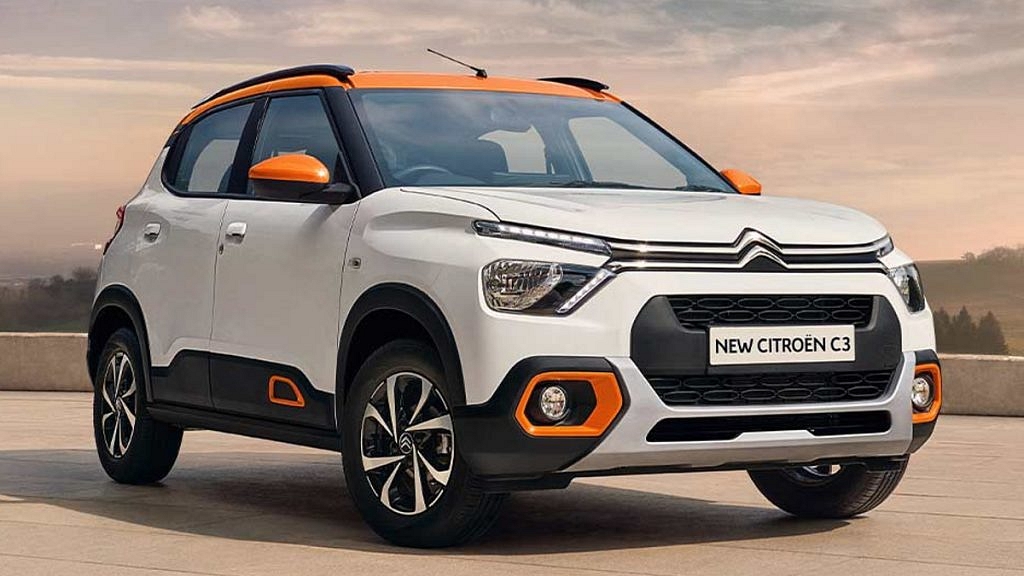
Another top contender in the budget EV car segment is the French car maker’s Citroen C3. This is also a hatchback electric car that gets the Tata Tiago EV as is direct rival. The Citroen C3 electric car will be available starting Rs. 5.88 lakh (ex showroom) from 2023. The under Rs. 10 lakh price range with features such as a 300km range. The exact specifications would be unwrapped once the car goes official later this year.

Citroen C3 EV Electric carDetails
Expected Availability 2023
Price Starting s. 5.88 lakh
Range 300 km
Type Hatchback
Also Read: Citroen C3 Goes Electric – India Launch Soon.

Renault Kwid EV Budget Electric Car

Another budget electric car option that we are expecting to be available in India in 2023 is the Renault Kwid EV. However, the availability is just speculation since Renault has not yet announced any plans to dive into the EV segment in India soon. Nevertheless, the Renault Kwid EV could be the first model by the brand for the budget audience in the country with a starting price under Rs. 10 lakh (Rs. 5 to 7 lakh approx.). The Renault Kwid EV budget electric car is said to offer up to 370km range on a single charge. The battery inside this EV is said to take a full charge in 4 hours via the standard port.

Renault Kwid EVDetails
Expected Availability 2023 or later
Price Within Rs. 5 to 7 lakh
Range 370km
Type Hatchback
Also Read: BYD Atto 3 Electric Car With 521 Km Mileage Range Launched In India At Rs. 34 Lakh – Rivals MG ZS & Tata Nexon EV